Reading Time: 14 Minutes
Difficulty Level: Beginner to Intermediate
Reviewed By: FinanceInfoIn Editorial Team
Table of Contents
- The Startling Reality of Noisy Stops
- Isolating the Sound: Where Is It Coming From?
- Morning Dew vs. Real Mechanical Issues
- The Math Behind Ignoring the Noise
- Visual Inspection: What You Can See Without Tools
- Understanding Brake Pad Materials and Noise
- When Heat Causes Glazing on Your Rotors
- Expert Tips for a Quieter Ride
- The Final Checklist Before Seeing a Mechanic
Quick Summary
Brake squeaking is often a built-in warning system telling you your brake pads are dangerously low. However, this noise can also be caused by harmless morning moisture, trapped dust, or improper lubrication. By paying attention to when the sound happens and visually inspecting your wheels, you can easily identify the root cause. Catching the issue early saves money and ensures your safety on the road.
Key Takeaways
- High-pitched squeals are usually intentional warnings from your brake pad wear indicators.
- Morning moisture causes temporary surface rust that squeaks but disappears after a few stops.
- Ignoring a small squeak can quickly turn a cheap pad replacement into an expensive rotor repair.
- Glazed rotors from heavy braking can create a glass-on-glass screeching effect.
- Ceramic brake pads are generally quieter and produce less dust than metallic ones.
The Startling Reality of Noisy Stops
I was driving home late one evening after a very long and exhausting day. The neighborhood was completely silent, and I had my windows rolled down to enjoy the cool night air.
As I approached the stop sign at the end of my street, I gently pressed the brake pedal. Instantly, an ear-piercing, high-pitched screech shattered the quiet night.
A person walking their dog actually jumped and turned to stare at me. I felt my face flush with immediate embarrassment. I gently let off the pedal, hoping the sound would stop, but the moment I pressed it again, the scream returned.
Beyond the embarrassment, a heavy knot formed in my stomach. I instantly started calculating how much money this was going to cost me.
We depend on our cars to get us to work, pick up our children, and handle daily life. When your car starts making frightening noises, it strips away your peace of mind. Every red light becomes a source of anxiety.
You start wondering if your car is going to safely stop at all. You worry about being taken advantage of by a repair shop because you have no idea what is actually wrong.
That feeling of helplessness is incredibly common, but it is completely avoidable. You do not need a degree in automotive engineering to figure out what your car is trying to tell you.
Isolating the Sound: Where Is It Coming From?
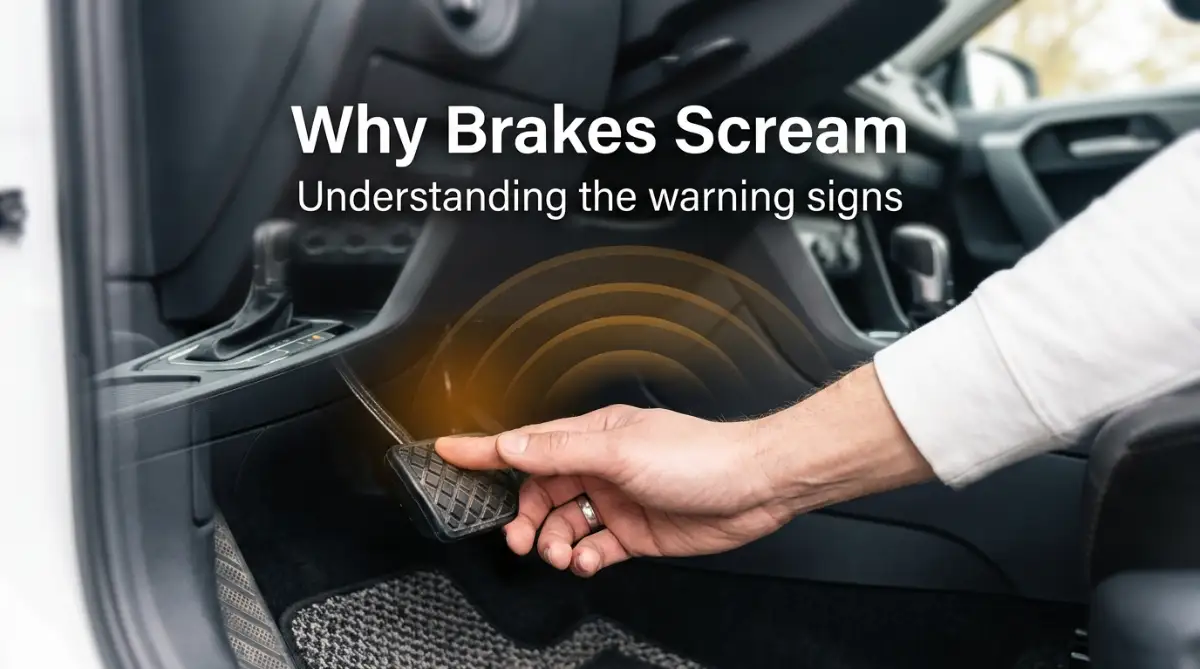
Diagnosing a squeaking sound when applying your car brakes starts with being a good listener. Not all brake noises are created equal.
You need to pay close attention to the specific conditions under which the sound happens. Turn off your radio, roll down your windows, and find an empty parking lot.
Drive at a slow speed and apply the brakes gently. Does the sound come from the front wheels or the back wheels? Most braking power happens in the front, so front brake pads wear out much faster.
Next, pay attention to the pedal pressure. Does it squeak when you tap the pedal lightly, or only when you press down hard?
Sometimes, a squeak only happens when the brakes are hot after a long drive. Other times, the noise is only present for the first few stops in the morning.
Tracking these specific symptoms is the most helpful thing you can do. It gives you the exact clues you need to solve the mystery.
Common Brake Noises and What They Mean
Morning Dew vs. Real Mechanical Issues
One of the biggest sources of confusion for drivers is the morning squeak. You pull out of your driveway, hit the brakes, and hear a terrible noise.
You immediately assume your brakes are ruined. But after three or four stoplights, the sound completely vanishes.
This happens because brake rotors are made of cast iron. When they sit overnight in humid conditions or rain, a microscopic layer of rust forms on the surface.
When you apply the brakes the next morning, the pads scrape off this thin layer of rust. That scraping creates a temporary squeaking sound.
This is completely normal and harmless. However, if the noise persists all day long, you have a real mechanical issue that needs attention.
Confusing Alternative Comparison
The Math Behind Ignoring the Noise
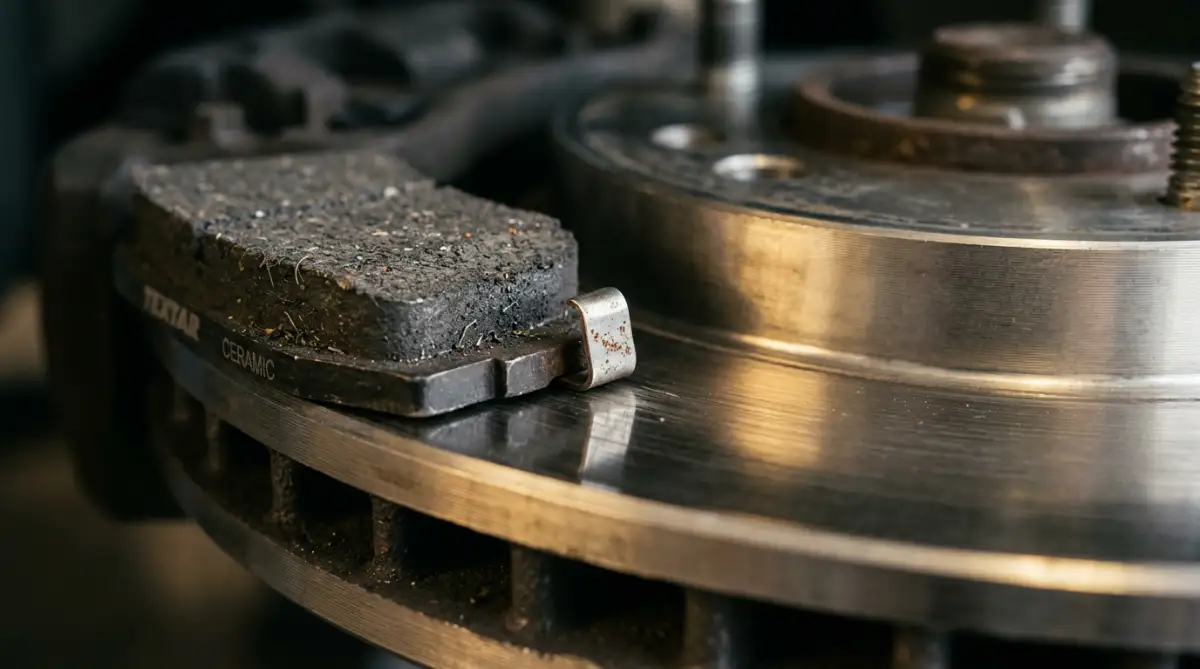
Let me share a very real scenario that happens every day. Sarah started hearing a high-pitched squeak from her front right tire.
She was busy with work and decided to turn up the radio to ignore the noise. She drove like this for exactly three weeks.
Originally, her car just needed a simple set of front brake pads. A quality set of replacement pads costs about $50.
Because she ignored the warning squeak, the metal wear indicator eventually snapped off. The rough metal backing plate of the brake pad started gouging deep grooves into her smooth brake rotor.
When she finally took it to the shop because the car was shaking violently, the mechanic gave her the bad news. She needed new pads, new premium rotors, and labor for the extended damage.
Her simple $50 problem had escalated into a massive $400 repair bill. That is an 800% increase in cost simply because she ignored the initial squeak.
Catching the sound early is not just about peace of mind. It is about protecting your bank account from entirely preventable damage.
Expert Tip: Whenever you get an oil change, specifically ask the technician to measure your brake pad thickness. Knowing the exact millimeter measurement helps you plan for future replacements before they start screaming.
Visual Inspection: What You Can See Without Tools
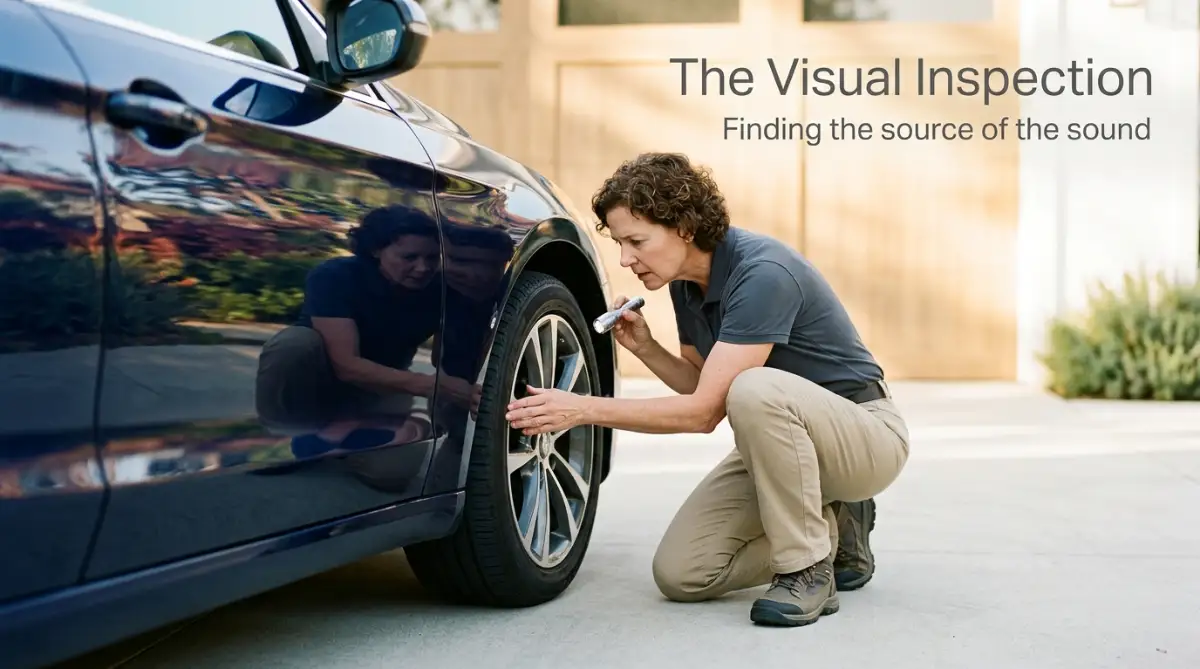
You can actually learn a lot about your brakes just by looking through the spokes of your wheels. Park your car on a flat surface in the daylight.
Take a flashlight and shine it directly onto the shiny metal disc behind your wheel. This is your brake rotor.
Follow the edge of the rotor until you see a metal clamp wrapping around it. This is your brake caliper, and it holds the brake pads.
Look closely at the gap between the caliper and the rotor. You should be able to see the thickness of the brake pad friction material.
If that material looks thinner than a standard pencil eraser, your pads are dangerously low.
Pro Tip: I once spent hours trying to diagnose a squeak, convinced my pads were gone. I finally realized a small pebble had bounced up from a gravel road and wedged itself between the rotor and the metal dust shield. Sometimes, a quick visual check saves you from overthinking a very simple problem.
Before we look deeper into the mechanical components, check out this excellent visual breakdown of exactly what to look for when inspecting your wheels.
The Pros and Cons of DIY Diagnosis
Understanding Brake Pad Materials and Noise
The material your brake pads are made of plays a massive role in how much noise they produce. Not all brake pads are identical.
Many economy cars come from the factory with semi-metallic brake pads. These are highly durable and offer great stopping power, but they contain actual metal shavings.
When these metal shavings press against the metal rotor, they naturally create a bit of a squeaking sound. It is just the nature of the material.
On the other hand, ceramic brake pads are made from a dense ceramic compound with copper fibers. They are significantly quieter and produce far less brake dust.
If your brakes have squeaked ever since you got them replaced, it might not be a failure. You might just have a loud compound.
Knowing what type of pads are on your car helps you set realistic expectations for noise levels.
When Heat Causes Glazing on Your Rotors
Have you ever driven down a very steep mountain road and kept your foot on the brake the entire time? That creates a massive amount of friction.
Friction generates an incredible amount of heat. When brake pads get too hot, the friction material can actually melt slightly.
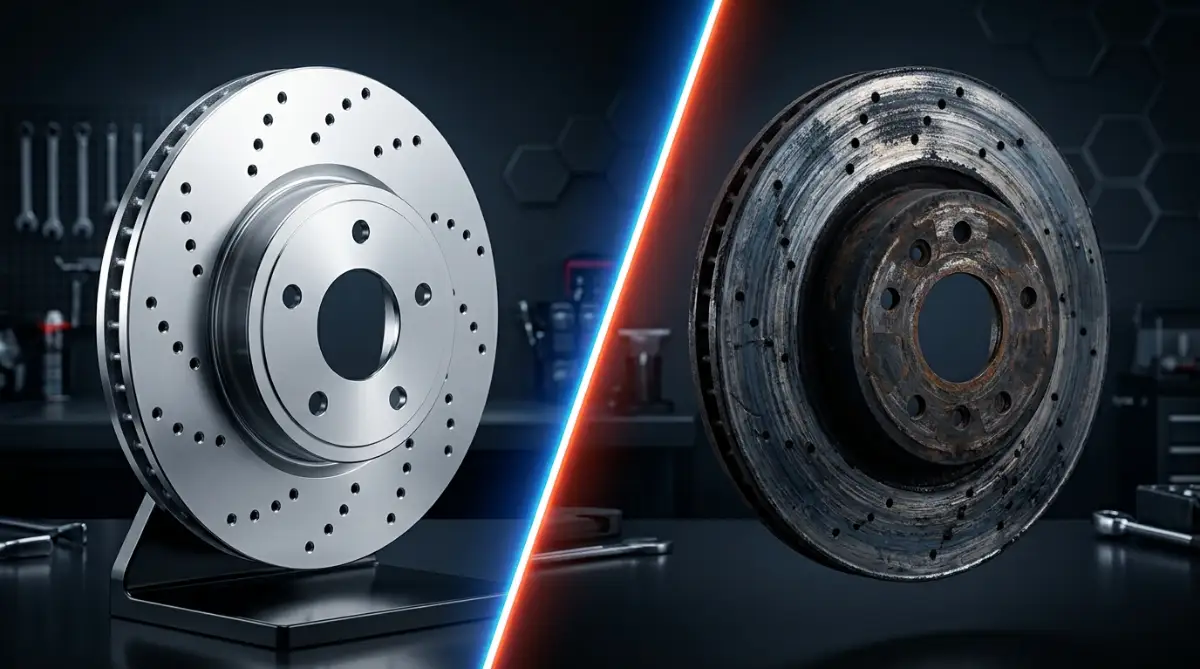
This melted material transfers onto the surface of the brake rotor, creating a hard, smooth, glass-like finish. This condition is known as brake glazing.
When you apply the brakes on a glazed rotor, the pad cannot grip the metal properly. Instead, it slides across the slick surface.
This sliding action creates a very loud, annoying squeak. It is exactly like rubbing a wet finger across the rim of a crystal glass.
Rotor Condition Checklist
The Role of Caliper Pins and Lubrication
Your brake calipers are designed to squeeze the brake pads together and then slide apart when you release the pedal. They slide on metal guide pins.
Because these pins are exposed to extreme heat, water, and road salt, the grease inside them can dry up. When the pins dry out, the caliper cannot slide smoothly.
Instead of releasing fully, one brake pad might stay slightly pressed against the rotor while you are driving.
This constant light contact causes a continuous, annoying squeak. It also causes that specific brake pad to wear out twice as fast as the others.
Applying high-temperature silicone brake grease to these slide pins is a standard part of any professional brake job. If your mechanic skipped this step, noise is almost guaranteed to follow.
Expert Tip: Never use standard WD-40 or regular chassis grease on brake parts. The extreme temperatures of braking will instantly melt normal grease right onto your rotors, completely ruining your stopping power. Always use dedicated, high-temp silicone brake lubricant.
The Final Checklist Before Seeing a Mechanic
By now, you have a solid understanding of how to diagnose a squeaking sound when applying your car brakes. You are no longer driving in the dark.
If you have confirmed that your pads are thick, your rotors look smooth, and there is no trapped debris, the issue might be deeper. It could be a warped rotor or a sticking caliper piston.
At this point, taking your car to a trusted professional is the smartest move. The difference is, now you can walk into that shop with confidence.
You can clearly explain the symptoms, tell them when the noise happens, and share what you have already inspected.
This knowledge protects you from being sold parts you do not need. It ensures your car gets exactly the care it requires.
A quiet car is a safe car. Take the time to listen to your brakes today, so you can enjoy a peaceful, worry-free drive tomorrow.
Pro-Level Maintenance Secrets for Silent Stops
Keeping your vehicle running silently requires more than just replacing worn-out parts. It requires a shift in your everyday driving habits.
Many drivers unknowingly abuse their braking systems during their daily commutes. Riding the pedal down long hills or stopping aggressively at the last second generates massive amounts of heat.
This extreme temperature change is the exact reason why rotors warp and pads become glazed. To maintain a quiet ride, practice coasting to a stop whenever possible and leave plenty of space between you and the car ahead.
If you drive a modern battery-powered car, your braking system works a bit differently. Because these cars rely heavily on electric motor resistance to slow down, the physical friction pads are rarely used.
This lack of use often allows thick rust to build up on the rotors, leading to a terrible morning squeal. If you are trying to maximize your electric vehicle range on long road trips, you are likely using maximum regenerative braking.
To prevent rust-induced noise, safety experts at the National Highway Traffic Safety Administration (NHTSA) suggest safely performing a few hard stops in a controlled environment once a week. This action scrapes the rotors clean and keeps the system functioning perfectly.
Just like you would learn how to extend the battery life of an electric vehicle, you must also learn to manually clear the rust off your rarely used friction brakes.
Pro Tip: Never wash your car immediately after a long drive. Spraying cold hose water onto extremely hot brake rotors will instantly warp the metal. Always let your wheels cool completely before washing them to prevent permanent damage and future squeaking.
Weather also plays a massive hidden role in component longevity. Cold temperatures naturally shrink metal parts and stiffen rubber seals around the caliper pistons.
If you live in a snowy region, road salt easily works its way into these components, drying out the necessary lubrication. Interestingly, the same extreme weather that forces you to figure out how to safely charge your electric car in freezing temperatures is simultaneously attacking your wheel assemblies.
Taking the time to pressure wash the undercarriage of your car during winter prevents salt buildup and keeps those moving parts sliding smoothly.
Dangerous Pitfalls When Trying to Stop the Squeal
When faced with an annoying sound, human nature often drives us to look for a cheap, instant fix. This mindset leads to catastrophic mistakes when dealing with automotive safety systems.
Common Mistakes Drivers Make:
- Applying regular WD-40 or standard oil directly onto the squeaking brake rotor.
- Ignoring a high-pitched metallic scream for weeks, hoping it goes away.
- Replacing only one brake pad on a single side instead of changing them in pairs.
- Skipping the application of high-temperature silicone paste on the caliper slide pins.
- Continuing to drive while the steering wheel vibrates violently during stops.
The absolute worst mistake anyone can make is applying liquid lubricants to stop a noise. Brakes require pure, raw friction to physically stop a heavily moving vehicle.
Spraying a lubricant on a noisy rotor completely destroys your stopping power. You might silence the sound, but you will also slide right through the next red light.
If your home garage setup allows you to inspect your own vehicle, similar to how to set up your electric vehicle home charger step-by-step, always ensure you are using the correct dry chemical cleaners. Specialized aerosol brake cleaner is the only liquid that should ever touch a rotor.
Sometimes, the simplest problems cause the most frustrating delays. You might find yourself searching for answers about why is my EV charging so slow, only to realize it is a basic software glitch.
The same logic applies to mechanical noises. Do not immediately assume you need a thousand-dollar repair.
Often, a tiny anti-rattle clip has just wiggled loose inside the wheel assembly. Taking a systematic, calm approach always yields the safest and most cost-effective results.
Your Preparatory Inspection Checklist
Before you attempt to diagnose the issue in your driveway, you need a few basic items. Having these ready prevents frustration and keeps you safe.
- A high-lumen LED flashlight to see through the dark wheel spokes.
- A small inspection mirror on a telescopic stick.
- A reliable tire pressure gauge.
- A notepad and pen to document exactly when the sound occurs.
- Thick protective gloves to keep your hands clean from heavy carbon dust.
The Exact Step-by-Step Diagnostic Action Plan
You can start figuring out the root cause of the noise right now. Follow these safe, practical steps to isolate the issue without taking anything apart.
Step 1: Perform the Cold Visual Check
Before starting the engine, park on a flat, well-lit surface. Shine your flashlight directly through the gaps in your wheel rims. Look closely at the metallic disc for any deep circular grooves, dark blue heat spots, or heavy rust buildup.
Step 2: Check the Pad Thickness Gap
Locate the brake caliper clamping over the rotor. Peek inside the tiny gap to find the actual friction pad touching the metal. If the pad looks thinner than a standard pencil eraser, it is time to schedule a replacement.
Step 3: The Low-Speed Listening Test
Roll down all your windows and turn off the climate control and radio. Drive at a slow walking speed in an empty, safe parking lot. Tap the pedal gently and listen carefully to determine if the noise is isolated to the front left, front right, or the rear.
Step 4: The Reverse Braking Trick
While in that same empty lot, put the car in reverse and slowly back up while tapping the brakes. If a piece of small gravel is trapped behind the dust shield, the reverse motion often dislodges it immediately, completely eliminating the noise.
Step 5: Document and Consult
Write down every symptom you just experienced. Note if the sound was a squeal, a grind, or a thump. Take this specific information to an ASE Certified mechanic so they know exactly where to look.
Quick Action Checklist
- Turn off the radio and listen carefully during your next commute.
- Identify whether the sound happens when moving or only when pressing the pedal.
- Visually inspect the rotors for rust or deep metal gouges.
- Look for the wear indicator tab scraping against the metal.
- Schedule a professional inspection if the noise lasts longer than one day.
Regaining Your Peace of Mind on the Road
Understanding exactly what your car is trying to tell you completely removes the fear of driving. A squeal is no longer a mystery; it is simply a mechanical alert.
By paying close attention to your daily driving habits, avoiding harsh stops, and performing regular visual inspections, you take full control of your safety. You protect your wallet from extended damages and ensure your vehicle responds perfectly when you need it most.
I remember the profound relief I felt the first time I correctly identified a worn brake pad just by looking at it. Instead of panicking, I calmly drove to the parts store, completely confident in my own diagnosis.
That exact same empowerment is completely available to you right now. You have the knowledge and the tools to figure out the problem today.
Which wheel are you planning to inspect first with your flashlight tonight? Let me know your findings in the comments below!
Answers to Your Most Pressing Brake Noise Questions
Can I just ignore a squeaking brake if it still stops the car?
No, you should never ignore persistent noises. The squeak is an intentional warning that the pads are critically thin, and ignoring it will eventually ruin the expensive metal rotors beneath them.
Why do my new brakes squeak immediately after being replaced?
New friction material requires a "bedding-in" process to properly transfer a microscopic layer of material onto the smooth rotor. If this process is skipped, or if the mechanic forgot to lubricate the slide pins, the new setup will squeal loudly.
Does rain make brakes squeak more often?
Yes, rain and high humidity cause a thin, harmless layer of surface rust to form on cast-iron rotors overnight. This rust creates a loud grinding or squealing sound for the first few stops until the pads naturally scrape it clean.
What is the difference between a squeal and a grinding sound?
A high-pitched squeal is usually the built-in metal wear tab warning you that pad life is low. A deep, guttural metal-on-metal grinding sound means the pad is entirely gone, and you are actively destroying your rotors.
Are ceramic pads really quieter than metallic ones?
Yes, high-quality ceramic compounds generate significantly less noise and leave behind much less black wheel dust. However, they are generally more expensive than standard semi-metallic options.
Can a loose wheel bearing sound like a bad brake?
Yes, a failing wheel bearing can create a rhythmic squeaking or humming sound that changes as you steer. However, a wheel bearing noise happens constantly while moving, whereas brake noise usually changes when you press the pedal.
How much does it cost to fix a squeaky brake?
If caught early, replacing simple front pads usually costs between $150 and $300 at a shop. If you wait until the rotor is destroyed, the repair bill can easily exceed $600.
Can hitting a pothole cause my brakes to squeal?
Hitting a deep pothole can slightly bend the thin metal dust shield sitting directly behind the rotor. When this shield bends inward, it continuously scrapes against the spinning metal, causing an awful screech.
Should I spray WD-40 on my rotors to stop the noise?
Absolutely never apply any oil or liquid lubricant to your stopping components. This will completely destroy the friction material, causing total brake failure and creating a massive safety hazard.
How long do brake pads actually last on average?
Depending on your driving style and traffic conditions, a standard set of front pads lasts between 30,000 and 50,000 miles. Stop-and-go city driving wears them out much faster than smooth highway cruising.
Trusted Automotive Safety & Consumer Resources
- National Highway Traffic Safety Administration (NHTSA)
- Automotive Service Excellence (ASE)
- AAA Foundation for Traffic Safety
- Consumer Reports Automotive Guide
- Car Care Council
- Edmunds Auto Maintenance Guide
Important Legal & Safety Disclaimer: The content provided in this FinanceInfoIn article is strictly for educational and informational purposes only. Automotive maintenance carries inherent physical risks. We are not certified mechanics, and this guide does not replace professional automotive diagnostics. Never attempt to repair or modify your vehicle's braking system if you are not fully qualified, as improper repairs can result in catastrophic brake failure, severe injury, or death. Always consult with a licensed, professional technician before making any maintenance decisions. FinanceInfoIn and its authors assume no liability for any property damage, financial loss, or personal injury resulting from the use or application of the information contained herein.
About the Author
Reviewed by Mithun Halder (Personal Finance & SEO Expert) & The FinanceInfoIn Editorial Team
The FinanceInfoIn Editorial Team researches personal finance, investing, insurance, mortgages, cryptocurrency, and consumer financial topics. Every article is carefully reviewed to provide clear, practical, and trustworthy educational information based on credible sources and industry best practices.
©2026 FinanceInfoIn. All rights reserved.