
Reading Time: 12 Minutes
Difficulty Level: Beginner to Intermediate
Reviewed By: FinanceInfoIn Editorial Team
The Silent Panic of a Dropping Battery
I remember driving down a pitch-black stretch of highway with my family fast asleep in the back seat. My electric vehicle dashboard suddenly beeped loudly, showing only a 5% battery charge left. The nearest charging station was still 20 miles away, and the temperature outside was dropping rapidly.
My palms started sweating immediately. A tight knot formed in my stomach as I gripped the steering wheel, watching the estimated miles tick down faster than my actual distance. I completely turned off the heater and shivered in the freezing cold just to save every single drop of energy.
That deep, sinking feeling is something nobody wants to experience. Range anxiety is a very real and heavy burden that steals the joy out of driving. Instead of enjoying the beautiful scenery or listening to your favorite music, you spend hours obsessing over a tiny battery icon on your screen.
Many drivers face this exact same daily struggle. You bought an electric car to enjoy a smooth, quiet, and eco-friendly ride, but the fear of being stranded on the side of a busy highway ruins your mental peace. Planning a family vacation turns into a stressful mathematical equation of charging stops and mileage limits.
You do not have to live with this constant worry. We are going to completely change how you handle your next long drive. I will show you exactly how to stretch your battery capacity so you can finally relax and enjoy the journey.
Quick Summary
Getting the most distance out of your electric car depends heavily on how you manage energy before and during your drive. Preparing your battery temperature while still plugged in at home gives you a massive head start. Controlling your highway speed, using smart braking techniques, and managing your cabin climate will easily add extra miles to your display.
Key Takeaways
- Warming up or cooling down your battery while plugged into the wall saves your actual driving power.
- Driving just a little bit slower on the highway drastically reduces wind resistance and saves massive amounts of energy.
- Letting the car brake for you captures lost energy and pushes it straight back into your battery pack.
- Heating your seats instead of the entire cabin air will preserve a huge portion of your total range.
What Highway EV Driving Really Costs
Planning an EV road trip is as much about your travel budget as it is about reaching your destination.
Fast chargers along highways usually come at a premium, often three to four times what you'd pay for electricity at home. And every 10% of range you lose to speed, wind drag, or under-inflated tires can push you into one more expensive charging stop.
The bigger risk is misjudging your range on a quiet stretch of interstate. If you run out of charge, a flatbed tow can cost anywhere from $300 to $600, and that's a painful way to end a trip.
The good news is that a little planning goes a long way. Driving efficiently isn't only about saving time. It's about keeping more money in your pocket, mile after mile.
Table of Contents
- The Silent Panic of a Dropping Battery
- Preparing the Battery Before You Leave Home
- Aerodynamic Drag: How Speeding Drives Up Your Highway Charging Bill
- The Magic of Energy Recovery Braking
- Smart Cabin Comfort Strategies
- Planning Topography Like a Pro
Preparing the Battery Before You Leave Home
Your electric car battery is very similar to a human athlete. If an athlete tries to sprint right after waking up in the freezing cold, their muscles will not work efficiently. They need a proper warm-up to perform at their absolute best.
Your vehicle operates the exact same way. If you pull your car out of a cold garage and immediately hit the highway, the system has to spend a massive amount of its own stored energy just to warm up the battery cells. This drains your available miles before you even make it out of your neighborhood.
The smartest thing you can do is use a feature called pre-conditioning. This simply means you use the smartphone app to warm up the battery and the cabin while the car is still plugged into your home charger. By doing this, you use electricity directly from your house wall, completely saving your car's stored energy for the actual road.
Expert Tip: Always set your departure time in your car's navigation system the night before a big trip. The computer will automatically calculate exactly when to start pulling electricity from the wall so the battery is perfectly warmed up the exact second you open the door.
When you start your journey with a perfectly conditioned battery, the chemical reactions inside the cells happen smoothly. This allows the motors to extract power easily without working overtime. It is the absolute best way to start a long road trip on the right foot.
Aerodynamic Drag: How Speeding Drives Up Your Highway Charging Bill
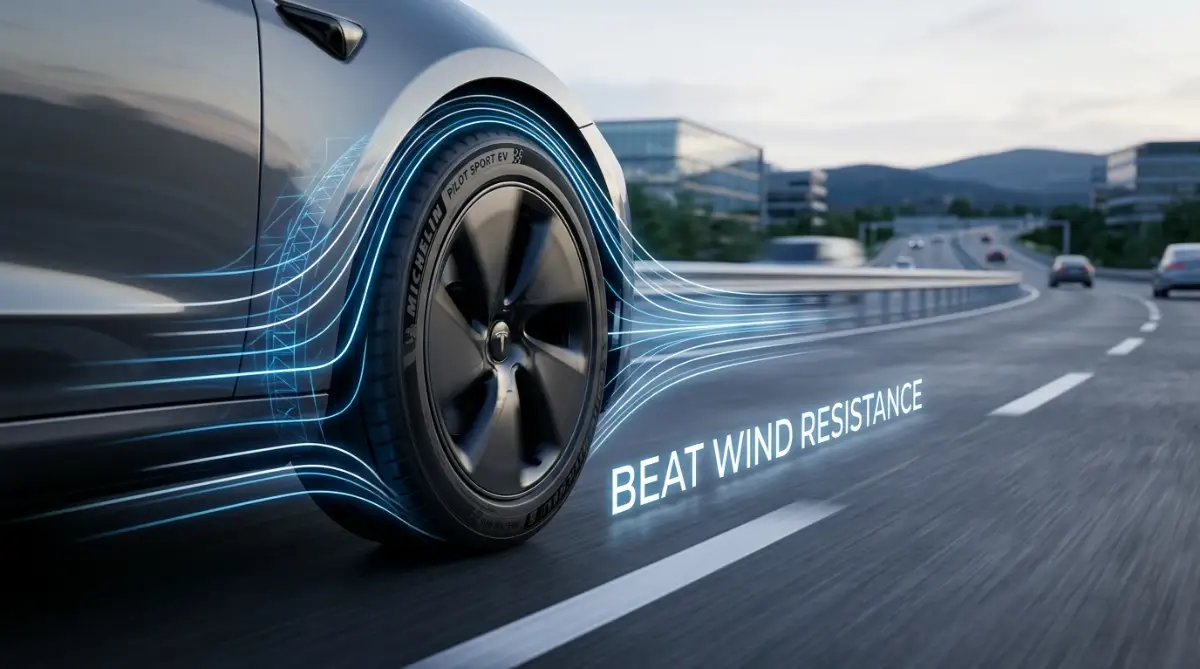
Once you get on the open highway, a completely invisible enemy starts fighting against your car. That enemy is wind resistance, also known as aerodynamic drag. Pushing a heavy metal box through the air takes a lot of effort, and the faster you go, the harder the wind pushes back.
Think about sticking your hand out the window of a moving car. At 30 miles per hour, the wind just gently pushes against your fingers. But if you do the exact same thing at 75 miles per hour, the wind practically rips your arm backward.
Your electric motors have to work incredibly hard to fight that high-speed air pressure. Driving just 10 miles per hour over the speed limit might save you a few minutes, but it will absolutely destroy your total driving distance.
My Realization on Speed:
I used to always drive 80 miles per hour on the interstate because I wanted to get to my destination faster. I quickly realized that the time I "saved" by speeding was completely lost because I had to stop and charge for an extra 40 minutes. Slowing down to 65 miles per hour actually got me home much faster overall.
Finding the sweet spot between a good pace and maximum efficiency is the key to stress-free travel. Most electric vehicles hit their peak aerodynamic efficiency between 60 and 65 miles per hour.
Simply locking your cruise control to a reasonable speed keeps your energy output smooth and steady. Sudden bursts of acceleration to pass trucks will spike your energy graph and drain your cells rapidly. Drive smoothly, and your dashboard numbers will stay remarkably stable.
The Magic of Energy Recovery Braking
Every time you step on the brake pedal in a normal gas car, all that forward momentum turns into useless heat and gets completely wasted. Electric vehicles have an amazing trick to fix this massive waste of energy. It is called regenerative braking.
When you lift your foot off the accelerator, the electric motors instantly run in reverse. Instead of pushing the car forward, they act like giant generators. They capture the forward motion of the car, turn it directly back into electricity, and shove it straight into the battery pack.
This process feels a little weird at first because the car slows down aggressively as soon as you let off the pedal. Many people call this "one-pedal driving" because you rarely ever need to touch the actual brake pedal.
You can usually adjust how strong this pulling feeling is inside your screen settings. For long road trips, especially if you are driving through mountains, setting this to the maximum level is incredibly beneficial.
When you drive down a long, steep hill, you are essentially getting free electricity. Gravity pulls the car down, the motors resist the fall, and your battery percentage actually goes up. It is like pouring fuel back into your tank just by driving down a mountain.
Learning to use this feature smoothly requires a little practice. Instead of completely lifting your foot off the pedal, you learn to gently ease it back to maintain a smooth speed. Once your brain gets used to this rhythm, you will recover massive amounts of power over a long journey.
Smart Cabin Comfort Strategies
Keeping yourself comfortable inside the car uses a surprising amount of electricity. Traditional gas cars use waste heat from the engine to warm you up for free. Electric motors are so efficient that they do not create enough waste heat, so the car has to power a giant electric heater.
Running the main cabin heater is one of the fastest ways to watch your range drop. It is basically like running a massive space heater off your battery pack. If you are trying to reach a charger that is far away, you have to manage your internal temperature strategically.
Instead of heating the entire volume of air inside the car, focus on heating your actual body. Heated seats and heated steering wheels use a tiny fraction of the energy compared to the main air blower.
If you must use the main air system, try to use the "driver only" setting if you are traveling alone. This smart feature stops blowing air into empty passenger seats, saving a significant amount of power.
During the summer, the air conditioning system uses less energy than the winter heater, but it still has an impact. Interestingly, driving on the highway with the windows rolled down creates so much aerodynamic drag that it actually wastes more energy than just turning on the AC. Keep the windows rolled up tight when you are moving fast.
Planning Topography Like a Pro
Many drivers look at a map, see a destination 150 miles away, look at their 200-mile range, and assume they are perfectly fine. They completely forget to check if those 150 miles involve driving straight up a massive mountain range.
Elevation changes play a massive role in how far you can travel. Pushing thousands of pounds of metal up a steep grade requires extreme amounts of torque and power. If your route involves climbing high elevations, you need to subtract a large percentage from your estimated distance.
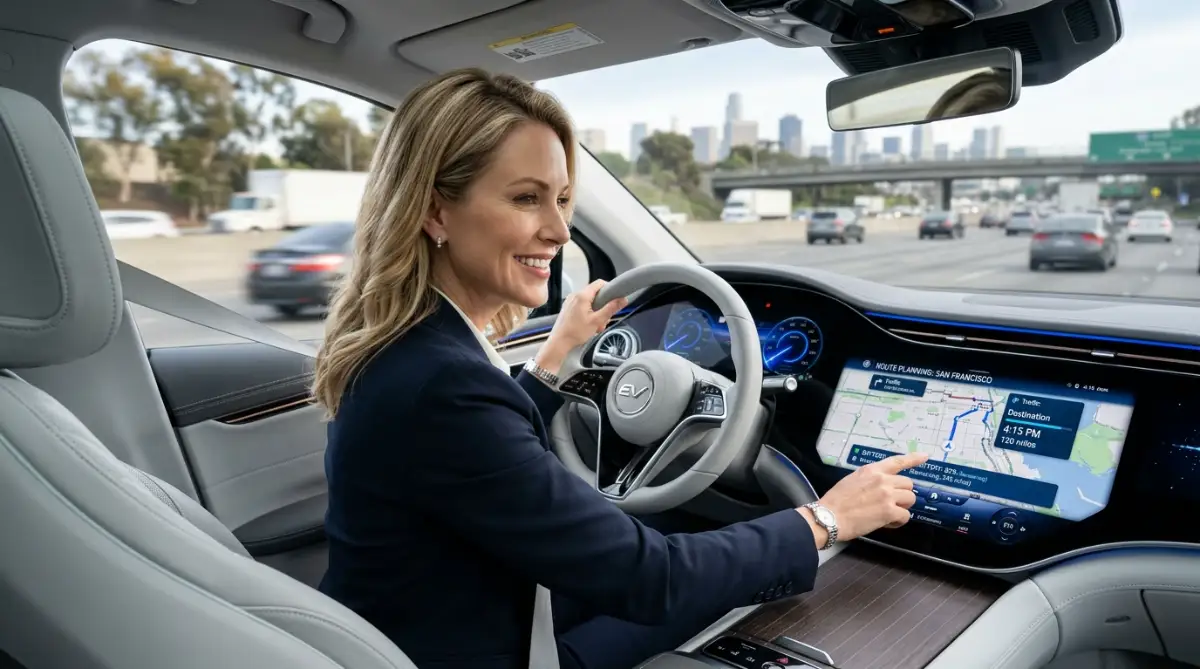
Modern built-in navigation systems are getting very smart about this. They automatically look at the hills and valleys on your route and adjust your battery arrival estimate accordingly. Always trust the car's built-in computer over your own mental math when mountains are involved.
By understanding the terrain before you leave, you can plan your charging stops at the bottom of the hills rather than hoping you make it over the peak. Being completely aware of your environment turns a stressful drive into a highly calculated, relaxing adventure.
Mastering the Hidden Settings of Your EV
You already know that slowing down and managing your cabin heater will save massive amounts of energy. Now, let us move to the advanced strategies that truly separate an average driver from a road trip expert. These small tweaks often go completely unnoticed, but they add up to give you huge gains on the highway.
The most ignored component of any electric vehicle is the rubber touching the road. Your tires play a massive role in how far you can drive. When your tires are under-inflated, they flatten out slightly at the bottom. This creates a larger surface area rubbing against the pavement, which is called rolling resistance.
Your car has to push much harder to overcome this sticky friction. Keeping your tires at the absolute perfect pressure is non-negotiable. According to the U.S. Department of Energy’s advanced vehicle testing data, under-inflated tires severely reduce overall efficiency. You are literally bleeding energy into the pavement.
Pro Tip: Check your tire pressure early in the morning when the rubber is completely cold. Hot air expands, so checking them after driving will give you a false reading. Adding just one extra PSI above the recommended limit can harden the tire slightly and reduce friction, buying you free miles.
Next, you have to ruthlessly manage the weight and shape of your car. I completely understand wanting to bring everything on a family vacation, but roof boxes are an aerodynamic nightmare.
A sleek electric car is designed in a wind tunnel to slice through the air perfectly. When you bolt a big plastic storage box to the roof, you act like a parachute catching the wind. If you must carry extra gear, try using a hitch-mounted cargo carrier instead. It hides behind the car in a slipstream, doing far less damage to your aerodynamics.
If you want to ensure the long-term health of your vehicle, you should read about how to extend the battery life of an electric vehicle. Knowing how your battery degrades over time will help you plan your trips much better.
Quick Action Checklist
- Buy a high-quality digital tire pressure gauge and keep it in your glovebox.
- Remove unused roof racks, bike carriers, or cargo boxes before hitting the highway.
- Clean your car thoroughly; a smooth, waxed exterior actually glides through the air better.
- Check your navigation system for software updates to ensure the most accurate routing.
- Pack heavier luggage low in the trunk to keep the car's center of gravity stable.
Different accessories drain your power in very different ways. Look at this breakdown to see exactly where your energy disappears when you modify your vehicle's exterior.
Costly Road Trip Mistakes: How Bad Driving Habits Drain Your Travel Budget
We all make mistakes when we are learning something new. Driving a battery-powered car requires a completely different mindset compared to a traditional gas vehicle. The biggest errors usually happen when people try to apply old habits to new technology.
One major pitfall is waiting until the battery is nearly empty before looking for a fast-charging station. In a gas car, running until the low fuel light comes on is normal. In an electric vehicle, this is a dangerous game. Fast chargers sometimes break down, or they might be occupied by other drivers.
If you pull into a station with only 2% power left and the machine is broken, you are completely stuck. You always want to arrive at a charging stop with at least a 15% buffer. This gives you enough juice to comfortably drive to a backup location if needed.
Common Mistakes
- Not using battery pre-conditioning before fast charging: Your car needs to warm up the battery cells before you plug into a high-speed charger to accept the maximum flow of electricity.
- Charging all the way to 100% on a road trip: The last 20% of a battery charges incredibly slowly. You waste hours sitting there. Charge to 80% and keep moving.
- Ignoring the weather forecast: Extreme rain or snow forces the tires to push heavy water out of the way, which drains power extremely fast.
- Blasting the heat on short trips: Turning the cabin heater on full blast for a 10-minute drive wastes energy before the car even gets fully warm.
Another massive mistake happens right in the driveway. People often forget how to set up your electric vehicle home charger step-by-step to maximize overnight efficiency. If you leave your car sitting outside in freezing temperatures unplugged, the battery will literally lose power just trying to keep itself from freezing solid.
You have to be very careful in cold weather. Learning how to safely charge your electric car in freezing temperatures is an absolute must if you live in a snowy area. The cold slows down the chemical reactions inside the battery, which naturally limits your total driving distance.
Always look closely at how weather and charging habits interact.
Making smart choices on the road also applies to your general lifestyle. Just like planning a route saves your battery, having a solid plan for your personal finances and smart budgeting gives you peace of mind in every aspect of life. Both require thinking ahead and avoiding