The Constant Worry of Every Electric Car Owner
When I bought my first electric vehicle, I thought the biggest change would be never stopping at a gas station again. Instead, I found myself checking the battery percentage far more often than I expected.
Every charging session made me wonder if I was doing something wrong and slowly shortening the life of the most expensive part of my car. It took time, plenty of reading, and a few lessons from experienced EV owners before I realized that keeping a battery healthy is much simpler than most people think.
You buy an electric vehicle because you want a clean, quiet, and modern ride. The feeling of driving past gas stations without spending a single dollar is incredibly satisfying.
However, as the weeks pass, a small seed of worry begins to grow in the back of your mind. Every time you turn on your dashboard, you find yourself staring at the battery health percentage.
You worry about how much range you might lose during cold winter nights or hot summer afternoons. The thought of paying thousands of dollars for a replacement battery pack in the future can keep you awake at night.
This daily anxiety can quickly take away the joy of owning a modern vehicle. You feel like you are walking on eggshells, constantly worrying if your charging habits are slowly killing your car.
Why Finding Clear EV Advice Feels Impossible
Getting honest and simple advice about protecting your electric car battery is surprisingly difficult. Here is why so many new owners end up confused and frustrated:
- Conflicting online forums: Self-proclaimed experts online give opposing advice, leaving you unsure of who to actually trust.
- Overwhelming technical jargon: Many battery guides are filled with complex chemical equations that do not help the average driver in daily life.
- Vague manufacturer manuals: Car companies often provide very basic instructions that do not explain the true reasons behind battery wear.
- Misleading social media trends: Short videos often promote quick charging tricks that actually damage your battery cells in the long run.
How Battery Anxiety Steals Your Peace of Mind
This constant confusion does more than just waste your time. It has a real impact on your daily life and your driving experience:
- Fear of taking road trips: You worry that using public fast chargers will permanently reduce your battery’s overall lifespan.
- Loss of financial confidence: You feel anxious that your vehicle’s resale value is dropping with every single charging cycle.
- Constant range calculation: Instead of enjoying the music and the road, you are constantly calculating miles in your head.
- Guilt over simple choices: You feel guilty for using the car heater or the air conditioning because you fear it drains the battery health.
The Practical Blueprint to Protecting Your Electric Car Battery
We want to make this process incredibly simple and stress-free for you. You do not need a degree in chemistry to keep your electric car running smoothly for many years.
By understanding a few basic rules, you can protect your investment and drive with total peace of mind. Let us look at the first three simple steps you can take today to keep your battery healthy.
Step 1: Master the Golden 20-80 Charging Percentage Rule
The most important habit you can build is managing your daily charging limits. Many new owners treat their electric cars like smartphones, plugging them in to reach 100% every single night.
The Stress of High and Low Voltages
Lithium-ion batteries are happiest when they are in a relaxed physical state. When you charge your battery to 100%, you force a massive amount of electrical energy into the cells, creating high voltage stress.
Similarly, letting your battery drop all the way to 0% drains the cells of pressure, which can damage the internal structure. Think of your battery like a simple rubber band. If you stretch the rubber band to its absolute limit and leave it there, it will eventually lose its elasticity. If you let it go completely slack, it can become brittle.
Keeping the rubber band gently held in the middle is the best way to make it last for a very long time.
So buy an EV and clene your environment.
How to Set Your Daily Limits
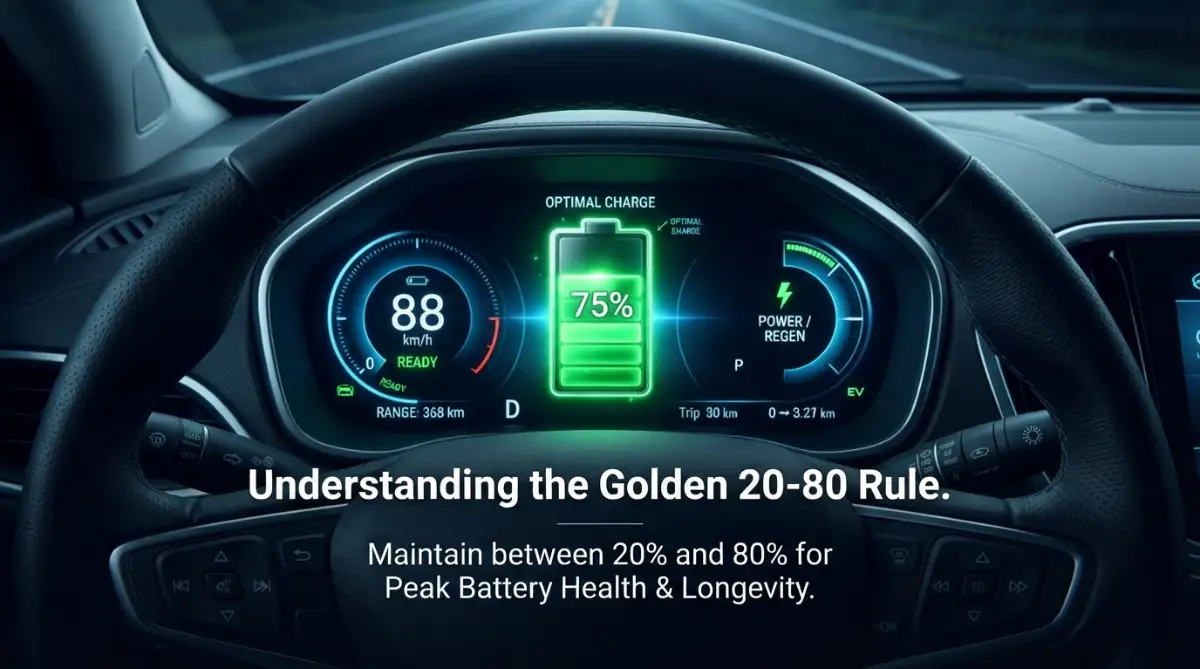
To keep your battery relaxed, you should try to keep its charge level between 20% and 80% for your daily commute. Most modern electric vehicles allow you to set a maximum charging limit directly through the dashboard screen or a smartphone app.
Simply set your charging limit to 80% for your everyday driving needs. Only charge the battery to 100% when you are planning a long road trip and intend to drive the car immediately after charging.
Real-Life Scenario: The Tale of Two Drivers
Let us look at a quick comparison between two owners, Mark and David. Mark charges his car to 100% every single night and lets it sit in his warm driveway for hours before work.
Within two years, Mark notices that his maximum driving range has dropped significantly.
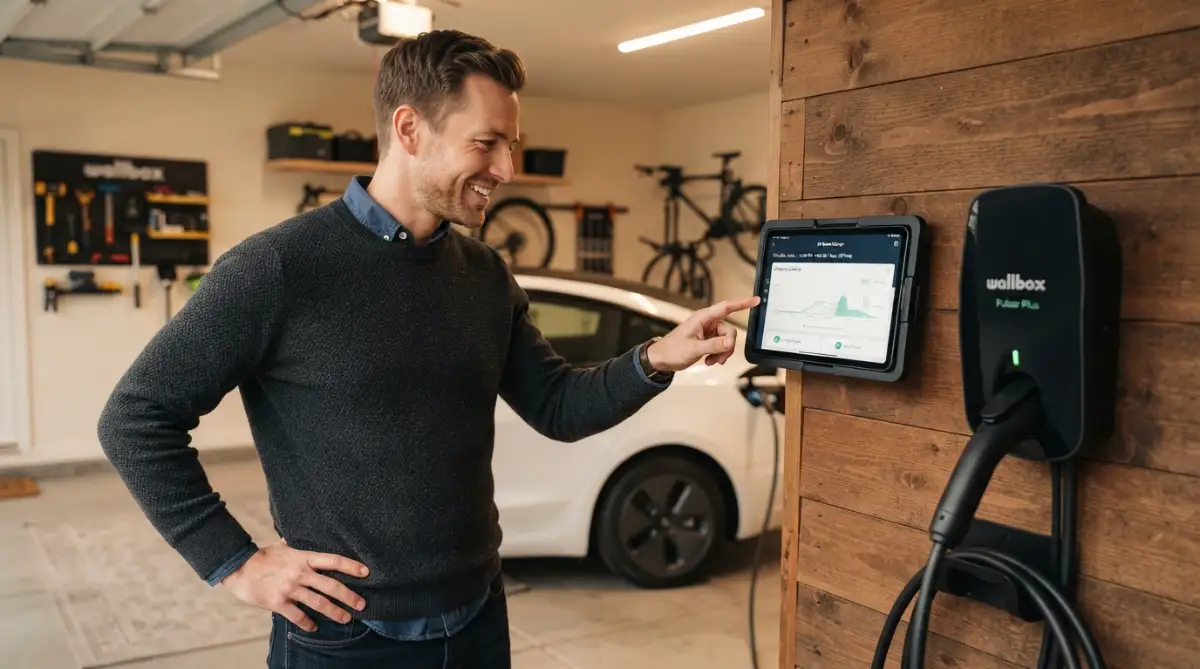
On the other hand, David sets his home charger to stop automatically at 80% each night. He only dips below 20% on rare weekend trips.
After several years of daily driving, David’s battery remains incredibly healthy, holding nearly the same amount of charge as the day he bought it.
A Little Electric Humour: The 20-80 Rule
I was proudly explaining the "Golden 20-80 Rule" of electric vehicle battery care to my grandfather yesterday.
I said, "You see, grandpa, to keep the battery happy and stress-free, you should never let it drop below twenty percent, and you should rarely charge it over eighty percent."
He stared at me, completely silent for a moment, and then replied:
"So, let me get this straight... you spent a small fortune on a highly advanced car, but you are only allowed to use sixty percent of it? Back in my day, we just called that a broken fuel tank!"
Step 2: Minimize the Frequent Use of Rapid DC Chargers
Public rapid chargers are incredibly convenient when you need to add miles quickly during a long journey. However, using them as your primary source of power can take a heavy toll on your vehicle.
The Problem with Extreme Heat
Rapid chargers work by pumping a massive amount of direct current (DC) into your battery pack in a very short amount of time. This process generates an immense amount of internal heat within the individual battery cells.
Heat is the absolute number one enemy of lithium-ion battery chemistry. Over time, this intense heat breaks down the protective layers inside the cells, leading to faster degradation.
The Funnel Analogy
To understand this better, imagine trying to fill a small bottle with water. If you pour the water gently from a pitcher, the bottle fills up cleanly and safely.
This gentle pouring is like using a standard Level 2 home charger overnight.
Now, imagine blasting water into that same small bottle using a high-pressure fire hose. The water will splash everywhere, and the pressure might even damage the bottle itself.
This high-pressure hose is exactly how a rapid charger behaves.
Smart Charging Habits
- Save rapid charging for road trips: Use slow home or workplace chargers for your daily energy needs.
- Avoid charging when the battery is hot: Let your car sit in a cool place for a few minutes before plugging into a rapid charger after a long drive.
- Stop at 80% at public stations: Rapid charging speeds slow down dramatically after 80% anyway to protect the battery, so unplugging early saves you both time and money.
Step 3: Keep Your Battery Pack Away from Temperature Extremes
Extreme weather conditions can significantly affect how your electric vehicle’s battery performs and ages over time. Both extreme heat and freezing cold present unique challenges to your battery management system.
The Hidden Danger of Summer Heat
When your car is parked under the baking sun on a hot summer afternoon, the temperature inside the battery cells can rise dangerously high. If the battery sits in this extreme heat while fully charged, the chemical degradation process speeds up dramatically.
To combat this, modern electric cars have active cooling systems that run automatically to lower the battery temperature. However, running these cooling systems drains your range and strains the battery components if the car is left unplugged in the heat.
How Cold Weather Affects Your Battery
In freezing winter temperatures, the liquid electrolyte inside your battery cells becomes thick and sluggish. This slows down the movement of energy, making your vehicle less efficient and reducing your maximum range temporarily.
Charging a frozen battery can also cause microscopic damage to the cell anodes. This is why many modern electric vehicles automatically limit charging speeds when the battery pack is too cold.
Simple Protective Steps for Every Season
- Park in shaded areas: During hot summer days, look for parking garages or shady trees to keep your vehicle cool.
- Use your garage in winter: Keeping your car parked inside a closed garage protects it from freezing wind chills.
- Leave your car plugged in: When your vehicle is plugged into a home charger, it can use grid power instead of battery power to run its climate control systems. This allows the car to pre-warm or pre-cool the battery pack safely before you start your drive.
We are excited to share these advanced strategies to help you protect your electric vehicle battery.
Understanding vehicle systems can be simple when you look at verified data from institutions like the U.S. Department of Energy on electric car performance.
By taking simple preventative measures, you can ensure your transportation stays reliable, a topic also discussed in automotive safety reports by the U.S. Environmental Protection Agency online.
Learning to manage your vehicle properly will save you money, similar to how Forbes recommends smart financial planning for major household investments.
Let us look at how you can apply professional planning techniques to your next vacation.
Want to see these battery care tips in action? Watch this short video to learn how everyday charging habits, temperature, and driving style affect your EV battery. Then continue reading below to discover even more simple ways to extend your battery's lifespan for years to come.
Smart Driving Habits and Battery Management Secrets
Step 4: Utilize Smart Preconditioning Tools Before Driving
Preconditioning is one of the most effective secrets of veteran electric car owners. This feature allows you to warm up or cool down both your car cabin and the battery pack while the vehicle is still plugged into your home charger.
When you start a trip with a battery that is already at its optimal operating temperature, you prevent immediate thermal stress. If you heat the car using battery power while driving, you drain the range and place sudden electrical loads on the cold cells.
By using grid power to precondition your car, you preserve your battery charge for the road ahead. Most vehicles allow you to set a daily departure timer on your smartphone app so the car preconditions itself automatically.
Think of preconditioning like stretching your muscles before running a long race. If you run a fast sprint with cold muscles, you risk pulling a muscle or hurting your joints.
Similarly, forcing a cold battery pack to deliver high power suddenly can degrade the chemical layers over time. Taking five minutes to precondition your vehicle ensures that your battery is relaxed and ready for the journey.
One mistake I made in the beginning was charging to one hundred percent almost every night because I thought it was the safest option.
After learning more about how EV batteries work, I switched to an eighty percent daily charging limit and only charged to full before longer trips. That small change gave me more confidence and helped me stop worrying about every single charging session.
Step 5: Manage Your Highway Speeds to Reduce Heat Build-up
Driving fast on the open highway is thrilling, but it causes your electric motor to pull energy from the battery pack at a rapid rate. This continuous high-energy draw creates intense resistance, which leads to high internal temperatures in the battery cells.
Wind resistance also increases exponentially as your speed rises, meaning your car has to work twice as hard to maintain high speeds. By simply reducing your speed from eighty miles per hour to seventy miles per hour, you can reduce energy consumption by up to twenty percent.
This simple change keeps your battery cells running cool and increases your actual driving range significantly. It also reduces the need for your car’s active cooling fans to run at maximum power, saving even more energy.
The Long-Term Framework for Everyday EV Owners
To keep enjoying great battery health, you must make these smart habits a natural part of your daily routine. Setting up automated charging profiles on your home charger is an easy way to stay consistent without thinking about it.
Just as we must prepare our personal finances by understanding how to lower your debt-to-income ratio before a mortgage application, we must also view EV charging as a long-term economic strategy. Managing your vehicle's health correctly ensures you do not face sudden, expensive battery replacement costs down the road.
Additionally, always remember to update your vehicle’s software whenever the manufacturer releases a new version. These software updates often contain small tweaks to the battery management system that improve thermal regulation and cell balancing.
When updating your car’s software or monitoring your charging through a mobile app, keeping your accounts safe is highly important. You should protect your vehicle login credentials by using easy security steps to secure your crypto wallet to guard your private accounts against digital threats.
Five Mistakes That Can Ruin Your Electric Car Battery
Mistake 1: Leaving Your Car Parked at Extreme Charge Levels for Weeks
One of the most damaging mistakes you can make is parking your electric car at one hundred percent charge while you go on a long vacation. When a battery sits completely full for days in a warm garage, the chemical pressure inside the cells remains dangerously high.
This sustained pressure causes the internal materials to degrade at a highly accelerated rate. The same damage occurs if you leave your vehicle parked with a nearly empty battery, as the cells can fall into a deep discharge state.
If you plan to leave your electric car parked for more than a week, always leave the battery charge level at around fifty percent. This is the most stable state for lithium-ion chemistry and protects the cells from unnecessary tension.
Mistake 2: Ignoring Dashboard Warning Signs and Diagnostics
Your electric vehicle's dashboard displays warning lights and error messages for a very good reason. If you notice a warning indicator regarding your battery's thermal management system or cell balancing, do not ignore it.
Ignoring warning indicators in your vehicle is a big risk, similar to overlooking major warning signs in a home inspection which can lead to expensive structural issues later. A small cooling system malfunction can easily turn into a complete battery pack failure if left unresolved.
Always schedule a diagnostic check with a certified service center as soon as your car alerts you to an issue. Early intervention saves you from facing massive repair bills and keeps your vehicle safe on the road.
Mistake 3: Frequent Aggressive Acceleration in Sport Modes
Many electric cars are famous for their instant torque and incredibly fast acceleration. While launching your car in sport mode is fun, doing it repeatedly places massive electrical stress on the battery pack.
Aggressive acceleration draws high currents from the cells instantly, raising internal temperatures to extreme levels. This sudden heat spike causes the battery materials to expand and contract rapidly, leading to micro-cracks in the cell structures.
Try to use eco or normal driving modes for your daily commute to keep the energy flow smooth and steady. Save the high-performance sport modes for special occasions when you truly want to enjoy the car's power safely.
Mistake 4: Relying Solely on Public Fast Chargers
Using fast chargers as your main source of power because you do not have a home charger is a common trap for apartment dwellers. While public stations are convenient, relying on them daily will accelerate battery degradation over time.
The high-voltage current from fast chargers forces lithium ions into the anode too quickly, causing a build-up of metallic lithium on the surface. This process, known as lithium plating, permanently reduces the battery's capacity and can even cause short circuits.
If you cannot charge at home, try to find slow Level 2 public chargers at shopping malls, parks, or workplaces. Using slow chargers for the majority of your energy needs will keep your battery healthy for a much longer time.
Mistake 5: Failing to Budget for Transport Overhead in Business
If you use your electric vehicle for delivery services, ride-sharing, or commercial operations, you must manage your operating costs carefully. Many business owners forget to factor in battery degradation and charging expenses when calculating their daily profits.
If you are a solo traveler running your own business, you must manage your cash flow carefully because a lack of liquid funds is why bootstrapped startups collapse early in their first few years. Keeping a small financial reserve for future vehicle maintenance ensures your business remains profitable and stable over time.
Your Path to a Longer Lasting Electric Journey
Caring for your electric vehicle's battery does not require you to change your entire lifestyle. By making small, smart adjustments to your daily routine, you can protect your car’s most expensive component easily.
Simple actions like setting your daily charge limit to eighty percent and parking in the shade can add years of life to your battery pack. These habits keep your vehicle running efficiently while saving you thousands of dollars in long-term maintenance costs.
The transition to clean transportation is an exciting journey that should bring you joy, not daily anxiety. By following the practical steps we have shared, you can take full control of your vehicle's health and drive with confidence.
Do not wait until you notice a drop in your driving range to start practicing good battery habits. Adjust your charging settings on your smartphone app tonight, and enjoy a reliable, long-lasting ride for many miles to come.
5 SEO-Friendly Short Notes for: How to Extend the Battery Life of an Electric Vehicle: The Ultimate Guide
01. Avoid Frequent Full Charges
For daily driving, keep your EV battery between 20% and 80% whenever possible. This simple habit helps reduce battery stress and supports long-term performance.
02. Use Fast Charging Only When Necessary
DC fast charging is convenient for road trips, but relying on it too often can generate extra heat. Regular home or Level 2 charging is generally better for battery health.
03. Drive Smoothly and Maintain a Moderate Speed
Gentle acceleration, steady speeds, and regenerative braking reduce energy consumption while minimizing wear on the battery and drivetrain.
04. Protect the Battery from Extreme Temperatures
Park in shaded or covered areas during hot weather and precondition the battery in cold climates. Keeping the battery within its ideal temperature range improves efficiency and longevity.
05. Follow the Manufacturer's Maintenance Recommendations
Install software updates, monitor battery health, and follow the recommended service schedule. Proper maintenance helps maximize battery lifespan and keeps your electric vehicle performing at its best.
Looking back, I realize the biggest improvement was not just protecting my battery, but enjoying my car without constantly thinking about battery health. Once these simple habits became part of my routine, driving felt relaxing again. If you start with just one good charging habit today, your future self will probably thank you every time you get behind the wheel.
Still have questions? Here are answers to some of the most common questions electric vehicle owners ask about extending battery life and maintaining long-term performance.
Frequently Asked Questions (FAQs)
1. How long does an electric vehicle battery typically last?
Most modern EV batteries are designed to last 8 to 15 years or more, depending on driving habits, climate, battery chemistry, and how the vehicle is maintained. Many manufacturers also provide long battery warranties.
2. Is it bad to charge my EV battery to 100% every day?
For most electric vehicles, charging to 80% for everyday driving is recommended because it can reduce battery stress. Charging to 100% is generally best reserved for longer trips when you need the extra driving range. Always follow your vehicle manufacturer's recommendations.
3. Does frequent DC fast charging damage the battery?
Occasional DC fast charging is perfectly fine, especially during road trips. However, relying on fast charging for most of your charging sessions may increase battery wear over time compared with regular Level 2 charging.
4. Do extreme temperatures affect EV battery life?
Yes. Very hot and very cold temperatures can temporarily reduce battery performance and may contribute to faster battery aging over many years. Parking in shaded areas, using a garage, and preconditioning the battery can help.
5. Should I leave my electric car plugged in when it is parked?
Many manufacturers recommend leaving the vehicle plugged in if it will be parked for an extended period. This allows the battery management system to maintain the battery more efficiently. Always follow the guidance in your owner's manual.
6. What driving habits help extend EV battery life?
Smooth acceleration, moderate highway speeds, gentle braking, avoiding unnecessary hard acceleration, and using regenerative braking when appropriate can all help improve efficiency and reduce battery stress.
7. What is the best way to keep an EV battery healthy for years?
The best long-term approach is to charge responsibly, avoid frequent full charges and deep discharges, minimize unnecessary fast charging, keep the battery within a moderate temperature range, install software updates, and follow the maintenance recommendations provided by your vehicle manufacturer.
Disclaimer (Automotive & Ev Guide):
The information provided in this guide is for educational and general informational purposes only. Electric vehicle systems, charging technologies, and manufacturer recommendations are subject to change. Always consult your vehicle's official owner's manual or contact a certified electric vehicle technician before performing any maintenance, modifications, or diagnostic procedures.