Waking Up to a Freezing Nightmare: My Electric Vehicle Reality
A few winters ago, I experienced something that many EV owners can relate to. After leaving my electric vehicle outside overnight, I was surprised by how much driving range I had lost by morning. That experience encouraged me to learn more about how cold weather affects EV charging and battery performance.
I felt completely helpless. I had to rush back inside, wake up my partner, and beg to borrow their gas car just to get to work on time. I spent the entire commute feeling anxious, frustrated, and totally confused about what went wrong. I followed the manual, or so I thought.
Living with an EV during the freezing months can honestly feel like a massive chore if you do not know the hidden rules. You constantly worry about the range dropping the moment you turn on the heater. You sit in a freezing cabin, wearing a heavy coat, just to save a few miles of battery life. It completely drains your mental peace.
Every time you look at that battery percentage dropping faster than the temperature outside, a wave of anxiety hits you. Will you make it home? Will you get stranded on a dark, snowy highway? This is the harsh reality for so many EV owners who are simply unaware of how extreme cold affects lithium-ion chemistry.
We buy these amazing, high-tech cars for convenience, environmental reasons, and smooth driving. Yet, winter has a sneaky way of turning that dream into a daily stressful puzzle. The constant math in your head—calculating miles, weather drops, and charging station distances—is exhausting.
But I soon realized the cold weather was not the actual enemy. The real problem was my own charging habits. Once I understood how batteries behave in freezing temperatures, everything changed.
The Science of Frigid Batteries: Why Your EV Hates the Snow
To solve this daily frustration, we have to look closely at what is happening under the floorboards of your car. Electric vehicle batteries are remarkably similar to human beings. When we wake up in a freezing room, we are sluggish, grumpy, and move very slowly.
Your lithium-ion battery acts exactly the same way. The chemical reactions inside the battery cells slow down significantly when the temperature drops below freezing. The ions physically struggle to move through the cold liquid electrolyte.
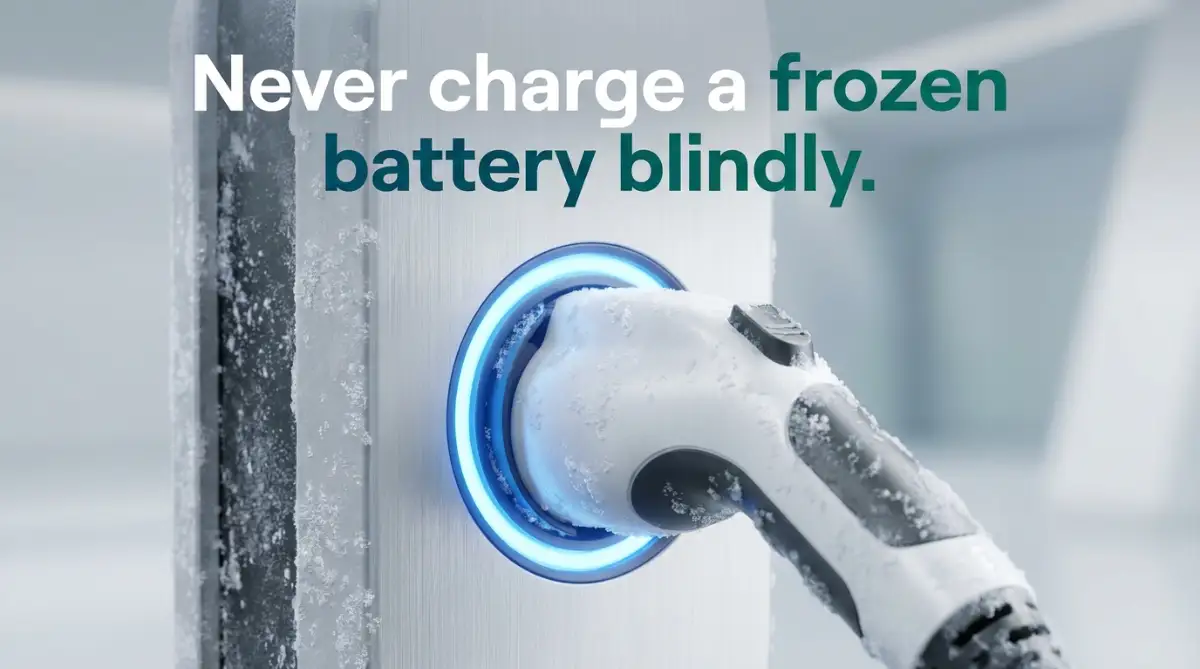
Because of this sluggish movement, the battery cannot accept an electrical charge as quickly as it does on a warm summer day. If you try to force energy into a frozen battery, it is like trying to pour thick, cold syrup through a tiny funnel. It just overflows and causes a mess.
In the battery world, this "mess" translates to permanent internal damage. Understanding this simple biological analogy is the first step to protecting your expensive car. Let us look at the most damaging habits you need to break right now to keep your battery healthy.
Myth vs. Reality: The Cold Charging Illusion
The Myth: Plugging your car into a high-speed charger in the freezing cold will warm up the battery fast and get you on the road quicker.
The Reality: DC fast charging with a very cold battery may be slower because the vehicle automatically limits charging speed until the battery reaches a suitable temperature. This protective behavior helps reduce the risk of battery damage.
The Danger of the "Cold Soak" Trap
One of the biggest errors you can make is leaving your car parked outside in freezing temperatures unplugged for long periods. Industry experts call this a "cold soak." When a battery cold soaks, the entire battery pack drops to the ambient outdoor temperature.
Waking up a cold-soaked battery requires a massive amount of energy. When you finally turn the car on, the vehicle has to pull energy straight from the battery just to warm itself up. This is why you might see a 10% range drop before you even leave your driveway.
To avoid this, always keep your car plugged in when parked at home during winter. Even if it is just a standard wall outlet, the car can draw small amounts of power from the grid to keep the battery management system active and slightly warm.
Pro Tip from My Own Experience: I used to think leaving my car at 40% battery overnight without plugging it in was completely fine because I had a short commute. I learned the hard way that a cold battery has less usable capacity. Now, I always leave it plugged in, allowing the car to use wall power to manage its thermal system. This simple habit completely eliminated my morning range anxiety.
Why Preconditioning is Your Absolute Best Friend
If there is one feature you must learn to use this winter, it is preconditioning. Think of preconditioning as a gentle morning stretch for your car. You are simply telling the vehicle to warm up its battery and cabin before you actually start driving.
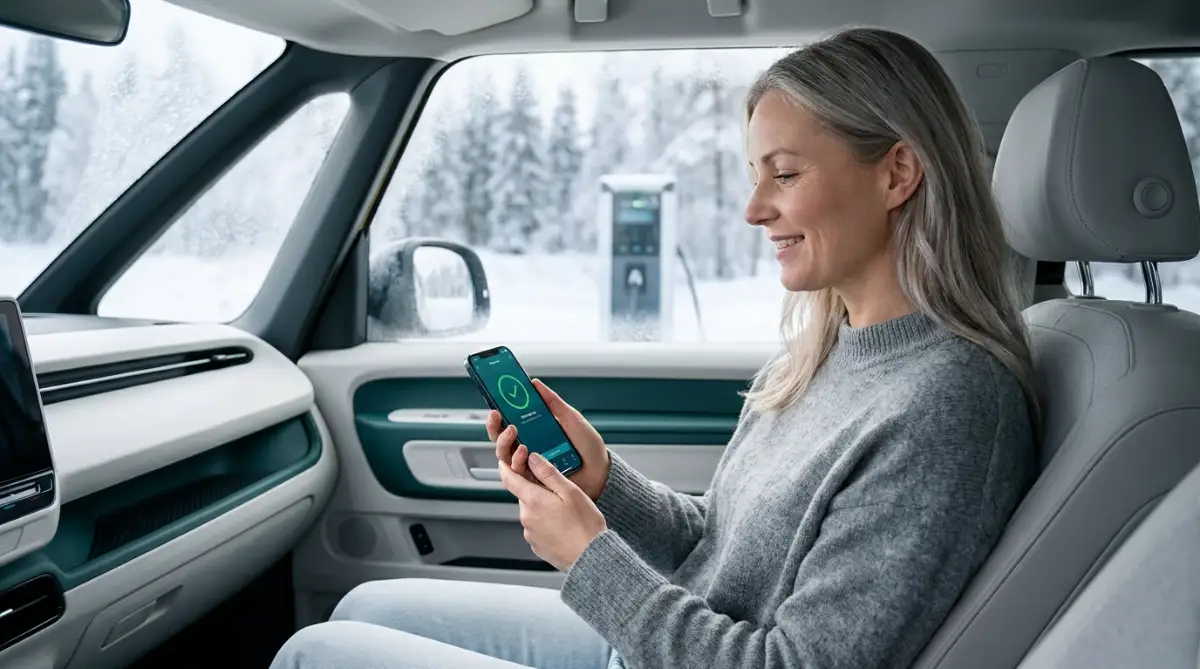
When your car is plugged in, scheduling a departure time through your mobile app allows the car to pull electricity from your house rather than the battery. It warms up the battery pack to the perfect operating temperature. It also heats the cabin, melts the ice off your windshield, and warms the steering wheel.
By the time you sit in the driver's seat, the car is toasty warm, and you still have a full 100% battery. You completely bypass the massive energy drain that normally happens during the first fifteen minutes of a winter drive.
Here is a great visual breakdown of why warming up your battery before driving changes everything about your winter commute:
Charging Immediately After Driving (The Golden Rule)
Another major mistake people make is coming home from work, parking the car in the cold garage, and waiting until the next morning to plug it in. This is a massive missed opportunity.
When you return from a drive, your battery pack is naturally warm from the friction and energy usage of the commute. The internal chemistry is active, happy, and ready to accept a charge efficiently.
If you plug the car in immediately upon arriving home, the battery absorbs the electricity quickly and safely. If you wait until morning, the battery will have frozen solid overnight. The car will then have to waste precious grid energy just to heat the battery back up before it can even begin charging.
Relying Too Much on DC Fast Chargers in Winter
DC fast chargers are absolute lifesavers on long road trips. However, using them incorrectly in winter can be incredibly frustrating. Many new owners pull up to a fast charger with a freezing cold battery and wonder why they are only getting a fraction of the advertised charging speed.
If you navigate to a fast charger without telling your car's navigation system where you are going, the battery arrives cold. The charger communicates with the car, detects the freezing temperature, and intentionally throttles the charging speed to prevent damage.
Always use your car's built-in navigation system to route to a fast charger. When you do this, the car knows you are about to charge. It will automatically start warming up the battery twenty minutes before you arrive.
Comparing Charging Behaviors: Cold vs. Warm Battery
As you can see from this simple comparison, preparing your battery is not just about saving time. It is about protecting the long-term health of your vehicle.
The Hidden Trap of Regenerative Braking
Most electric vehicle drivers love regenerative braking. It allows for smooth one-pedal driving and captures energy back into the battery when you slow down. However, winter weather changes the rules of this feature entirely.
When your battery is completely cold, it cannot accept high amounts of sudden energy. Regenerative braking sends a sharp spike of electricity back into the battery pack. Because the battery is cold and resistant, the car's computer will heavily limit or completely disable regenerative braking.
If you are not expecting this, you might lift your foot off the accelerator expecting the car to slow down, only to find yourself coasting rapidly toward a stop sign. This is a terrifying experience on an icy road.
Always be prepared to use your physical brake pedal during the first few miles of a winter drive. As the battery warms up from driving, the regenerative braking system will slowly return to its normal strength.
Ignoring the Snow and Ice in the Charging Port
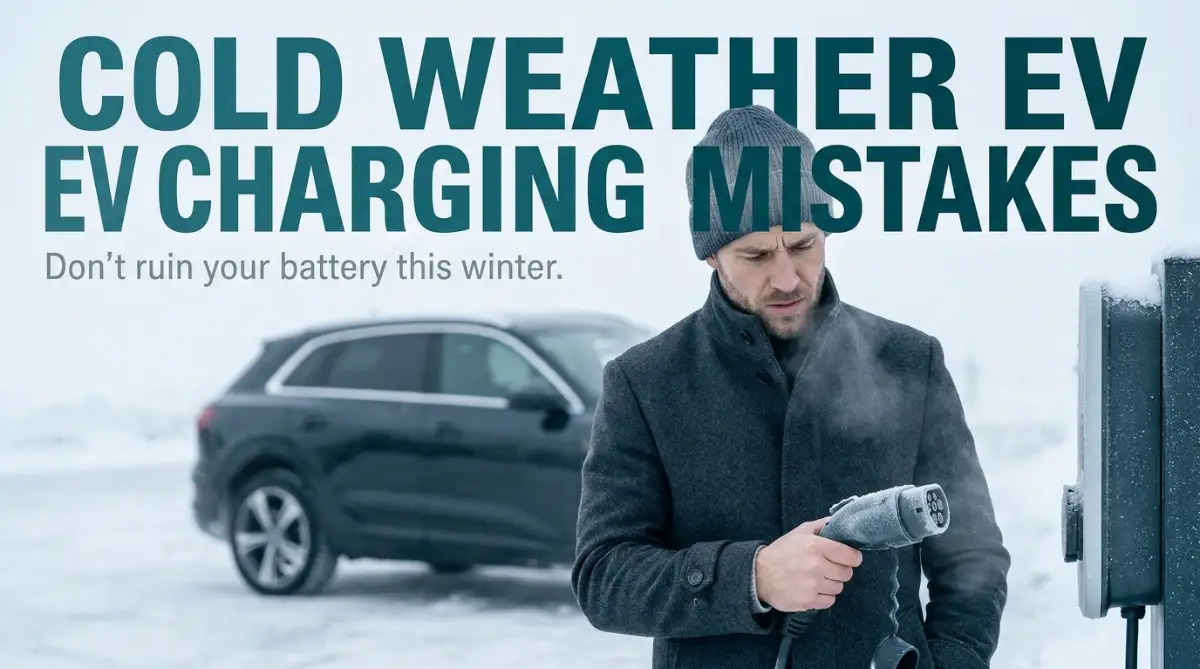
This might sound like basic common sense, but you would be surprised how often people ignore it. Leaving your charging port open to the elements, or forcing a charging plug into an icy port, is asking for trouble.
Snow and freezing rain can easily get trapped inside the connector pins. If you force the plug in, you risk damaging the delicate electrical connections. Even worse, the locking pin that holds the cable securely in place can freeze solid, trapping your charging cable in the car.
Always take a second to brush away snow from the port before plugging in. If your car is parked outside during a heavy snowstorm while charging, consider buying a cheap magnetic charging port cover. These simple covers keep snow from accumulating in the crevice.
If your charging cable ever does get frozen and stuck, never yank it with force. Most modern EVs have a manual release cable hidden in the trunk or under the hood. Alternatively, using a hair dryer on a low setting or a warm towel wrapped around the handle can gently melt the ice and free the plug.
Overlooking the Power of Seat and Steering Wheel Heaters
While this relates more to range preservation than direct charging, it directly affects how often you need to charge in the cold. Heating the entire cabin of an electric vehicle uses a tremendous amount of electricity.
You are essentially running a massive electric space heater using your car's battery. If you blast the cabin heat to 75 degrees, you will watch your estimated range drop like a stone.
Instead, rely heavily on your heated seats and heated steering wheel. Heating a specific surface area touching your body requires a fraction of the energy compared to heating the air in the entire cabin.
By keeping the cabin temperature slightly lower and using seat warmers, you conserve battery power. This means you will return home with a higher charge, requiring less time and money to top up the battery overnight.
Setting the Wrong Charge Limit for Winter
Many manufacturers recommend keeping your daily charge limit to 80% to preserve the longevity of the lithium-ion cells. This is generally great advice for spring, summer, and fall.
Depending on the vehicle, temperature, speed, and heater use, many drivers may experience around 10% to 30% lower driving range. If you limit your charge to 80%, and then lose another 30% to the cold, your daily usable range becomes incredibly small.
During extreme cold snaps, it is perfectly acceptable to increase your daily charge limit to 90% or even 100%. The minor wear on the battery from charging higher is far better than the anxiety of running out of power on a snowy highway. Just remember to lower the limit back down once the spring weather arrives.
By paying attention to these specific cold-weather details, you completely change your winter driving experience. You stop fighting the car and start working with its natural chemistry.
Your mornings become stress-free. You step into a warm, comfortable cabin with a battery that is ready to perform. You no longer stare anxiously at the range estimator, praying it holds up.
Adapting your charging habits requires a small mental shift, but the rewards are massive. You protect the most expensive component of your vehicle while ensuring your own safety and comfort on freezing winter roads. Knowing the difference between warm-weather habits and cold-weather necessities is what separates a frustrated owner from an empowered one.
Next-Level Winter EV Secrets: Managing Your Battery Like a Pro
Now that we understand the basic chemistry of a cold battery, we can look at some professional strategies to maximize your range. These are not just basic tips you read in a user manual. These are real-world habits developed by drivers who survive freezing winters with zero anxiety.
The secret to mastering cold weather driving is treating your car's thermal system as a tool. A warm battery is an efficient battery, and keeping it that way requires a bit of smart planning. Let us look at how you can manipulate your charging routine to completely outsmart the freezing temperatures.
The Power of Departure Scheduling Over Immediate Charging
Most new owners plug their car in as soon as they get home and let it charge immediately. While this is better than nothing, it is actually not the most efficient way to prepare for a freezing morning commute.
If you charge the car at 7:00 PM, the battery will likely reach its target by 10:00 PM. From that point until you leave for work the next morning, the car just sits in the freezing cold. By the time you wake up, the battery pack has completely cooled down and is practically frozen solid again.
Instead, use your car's mobile app or dashboard screen to set up a scheduled departure time. Tell the car exactly when you plan to leave the house, for example, 7:30 AM.
The computer will wait all night and perfectly time the charging session to finish right at 7:30 AM. Because the physical act of accepting electricity creates internal heat, your battery pack will be perfectly warm exactly when you pull out of the driveway. This simple scheduling trick easily gives you back the range you normally lose during the first ten miles of driving.
If you are looking to upgrade your current electrical setup to handle these features better, learning how to set up your electric vehicle home charger step-by-step can completely change your winter experience. A reliable wall unit handles scheduling much better than a basic portable cable.
Why Level 1 Chargers Fail Miserably in the Snow
A lot of drivers try to survive winter using a standard 120-volt wall outlet, known as Level 1 charging. During the summer, this slow trickle of electricity might give you four or five miles of range per hour. In the dead of winter, however, in extremely cold conditions, a Level 1 charger may struggle to provide enough power for both battery heating and charging, making charging much slower.
When a battery pack is freezing cold, the vehicle's computer will activate an internal battery heater to safely accept the charge. This battery heater requires a significant amount of electricity to run.
A standard wall outlet only provides about 1.4 kilowatts of power. In extreme cold, the car will use all 1.4 kilowatts just to run the battery heater, leaving absolutely zero electricity to actually charge the cells. In very cold conditions, charging gains may be much smaller than expected because much of the available power is used to warm the battery first.
To prevent this nightmare, investing in a Level 2 (240-volt) charger is highly recommended for cold climates. A Level 2 unit provides enough power to keep the battery warm while simultaneously pushing plenty of range into the vehicle.
The Secret Strategy of "ABC": Always Be Charging
In the electric vehicle community, there is a famous rule called ABC: Always Be Charging. This does not mean you constantly need a 100% full battery. It means that whenever your car is parked at home or at work. When practical, keeping your EV plugged in during extended winter parking allows the battery management system to maintain a healthier operating temperature.
Even when the car is not actively filling the battery, simply being connected allows the vehicle to protect itself. When temperatures drop to extreme lows, the car will pull tiny amounts of electricity from the grid to occasionally warm the battery cells.
If your car is not plugged in, it will pull this energy directly from its own battery pack. This is called phantom drain. Leaving your car unplugged in a freezing driveway for three days can easily drain 15% of your total range just to keep the car's computer systems safe.
The Most Dangerous Winter Charging Traps to Avoid
Even with the best intentions, it is very easy to fall into bad habits when you are freezing cold and rushing to get inside the house. Unfortunately, these tiny mistakes can lead to major damage and expensive repair bills over time.
Making errors with an internal combustion engine usually just means a trip to the mechanic. Making errors with an electric vehicle battery can permanently reduce the lifespan of the most expensive part of your car.
Let us look closely at the worst things you can do to your vehicle during the winter months. Avoiding these pitfalls will save you immense amounts of stress and keep your daily commute completely safe.
Pushing the Battery Below 20% on Freezing Days
Many drivers treat their battery gauge exactly like a gas tank, waiting until it is almost completely empty before looking for a place to charge. In the middle of July, arriving at a charging station with 5% battery is perfectly fine. In the middle of January, it is a massive risk.
As your battery percentage drops, its ability to output high power and heat the cabin heavily decreases. A cold battery already struggles to provide energy. When it is both cold and nearly empty, you risk entering a severely reduced power mode.
Your car might suddenly limit your top speed to 30 miles per hour just to protect the remaining cells. Furthermore, if you get stuck in a sudden snowstorm or heavy traffic jam, you need extra energy to run the heater and keep yourself warm.
Always treat 20% as your absolute zero during the winter. As soon as you hit that mark, it is time to plug in. Keeping that bottom buffer protects your battery health and ensures you never get stranded in dangerous weather.
Forgetting About the 12-Volt Battery (The Silent Killer)
This is one of the most misunderstood concepts in the entire electric vehicle industry. Your car has a massive lithium-ion battery under the floor, but it also has a standard 12-volt battery under the hood, just like a gas car.
This small 12-volt battery runs the computer screens, the door locks, the interior lights, and most importantly, the main battery management system. If this small battery freezes or dies in the cold, your entire car is completely dead.
The large main battery cannot engage to start the car or even charge itself unless the 12-volt battery turns the computer on first. Countless drivers have towed their fully charged cars to the dealership in winter, only to find out a frozen 12-volt battery was the only problem.
If you park outside for long periods in sub-zero temperatures, ensure your car is plugged in. The vehicle's main system will periodically top off and warm the 12-volt battery. If your EV is more than three years old, get that small battery tested before winter begins to avoid a frustrating morning.
The Airport Parking Nightmare
Taking a winter vacation to a tropical location is a great feeling. Leaving your electric car unplugged in a freezing open-air airport parking lot for two weeks is a terrible idea.
Many people park their cars with 40% battery, thinking it will be fine while they travel. Due to extreme cold and phantom drain, the car fights to keep its systems from freezing. You might return from your sunny vacation to find a totally dead car covered in snow.
According to data from the National Renewable Energy Laboratory, cold-soaked batteries lose efficiency rapidly when left unmanaged in extreme environments. The chemical fluids inside simply need some level of thermal management.
If you must leave your car at the airport during winter, always look for a parking structure that offers 120-volt wall outlets or Level 2 chargers. Even a basic outlet is enough to provide the trickle of power needed for thermal management while you are away.
Relying on Guess-O-Meters Instead of Navigation
The range display on your dashboard is affectionately called the "Guess-O-Meter" by many owners. It constantly adjusts based on your recent driving speed, heater usage, and outside temperature.
Many people make the mistake of looking at this number in the morning and trusting it completely. They see 150 miles of range, know their trip is 120 miles, and assume they will easily make it without stopping to charge.
They fail to realize that driving into a heavy winter headwind while blasting the cabin heater will absolutely destroy that estimate. You might only get 90 actual miles on that trip.
To avoid this dangerous trap, always use your car's built-in navigation system, even if you know the exact route. The car's computer calculates the elevation, the current outdoor temperature, and the required battery heating to give you a highly accurate arrival percentage. If the car knows it will be too close, it will automatically route you to a safe charging station along the way.
Embracing a Stress-Free Winter Driving Experience
Winter driving does not have to be a miserable, anxiety-filled chore. By simply shifting how you manage your vehicle's energy, you can completely master the freezing temperatures. You now hold the knowledge to protect your battery chemistry and ensure you always have enough power.
Instead of fighting against the cold, you are now working alongside the advanced technology built into your car. Scheduling your departures, utilizing smart home charging, and avoiding the dangerous 20% trap will make your daily commutes incredibly smooth.
You no longer have to sit shivering in a freezing cabin just to save a few miles. You can enjoy the heated seats, knowing your battery was perfectly preconditioned while safely connected to your home grid.
Proper financial planning and management around your daily energy costs and charging habits will save you a lot of money in the long run. An efficient battery simply costs less to maintain over the life of the vehicle.
My Personal Takeaway: When I first bought my car, I hated winter driving. Now, I actually prefer it. Waking up to a fully defrosted, perfectly warm cabin every single morning without ever standing outside at a gas pump is an incredible luxury. Once I stopped making these simple charging mistakes, my daily anxiety completely vanished. Take control of your charging habits tonight, and these habits can help make winter EV charging more reliable and less stressful over time.
5 Quick Tips for Charging Your Electric Car Safely in Cold Weather
1. Precondition the Battery Before Charging
If your EV supports battery preconditioning, warm the battery before plugging in. A warmer battery charges more efficiently and can reduce charging time in freezing temperatures.
2. Keep the Charge Level Between 20% and 80%
For everyday driving, avoid letting the battery stay completely empty or fully charged for long periods. Maintaining a charge between 20% and 80% can help support long-term battery health.
3. Use a Level 2 Charger Whenever Possible
Level 2 chargers are generally more effective than standard household outlets during cold weather, providing faster and more consistent charging.
4. Park in a Garage or Sheltered Area
Keeping your EV in a garage or protected parking area helps reduce battery exposure to extreme cold, making charging more efficient and improving overall performance.
5. Avoid Charging Immediately After a Cold Start
If the battery is extremely cold, drive for a short time or use the vehicle's battery preconditioning feature before charging. This allows the battery to reach a better temperature for faster and safer charging.
Common Questions About Winter EV Charging
Should I charge my electric vehicle to 100% in the winter?
Follow your vehicle manufacturer's recommended charging limit. Some EV models are designed for regular 100% charging, while others are best kept at a lower daily limit. If you need extra driving range during extremely cold weather, temporarily charging to a higher level may be appropriate, provided it matches the manufacturer's guidance.
Why is my home charger so slow when it is freezing outside?
Your charger is likely dedicating most of its electricity to warming the battery pack rather than actually charging the cells. Cold batteries cannot accept energy quickly. Upgrading to a more powerful Level 2 charger usually solves this slow charging issue.
Does starting the climate control remotely use up my battery range?
If your car is not plugged into a charger, remote starting the heater will drain a small amount of your battery range. However, if your car is plugged in, it will pull the electricity from your house to warm the cabin. This keeps your battery completely full for your trip.
Can an electric car battery freeze completely solid?
While the heavy liquid electrolytes inside the cells can technically freeze in extremely brutal arctic temperatures, the car's computer works hard to prevent this. As long as the vehicle has some battery left or is plugged in, it will periodically run internal heaters to keep the chemistry active.
How much driving range will I actually lose in freezing weather?
On average, most drivers see a range reduction of about 20% to 30% in freezing temperatures. This drop happens because the cold slows down the battery chemistry and running the electric cabin heater demands a huge amount of power.
Is it safe to plug in my electric car during a heavy snowstorm?
Yes, electric vehicle charging systems are completely sealed and designed to handle rain, snow, and extreme moisture safely. Just make sure to brush any heavy snow or ice out of the charging port connector before you click the plug into place.
Do I need to park my car inside a heated garage in the winter?
You do not strictly need a heated garage, but parking inside an enclosed space blocks the harsh wind and keeps the battery slightly warmer than parking outside. Even a standard unheated garage makes preconditioning much faster and more efficient than sitting in an open driveway.
Disclaimer: This article is for informational and educational purposes only. It is not intended to serve as professional automotive advice. Charging equipment, battery chemistry, and manufacturer guidelines vary heavily by vehicle model and location. Always consult your specific vehicle’s owner manual and a certified automotive technician before modifying your daily charging habits or installing new electrical equipment in your home.