
Reading Time: 10 Minutes
Difficulty Level: Beginner to Intermediate
Reviewed By: FinanceInfoIn Editorial Team
The Unspoken Fear of Water and Electricity
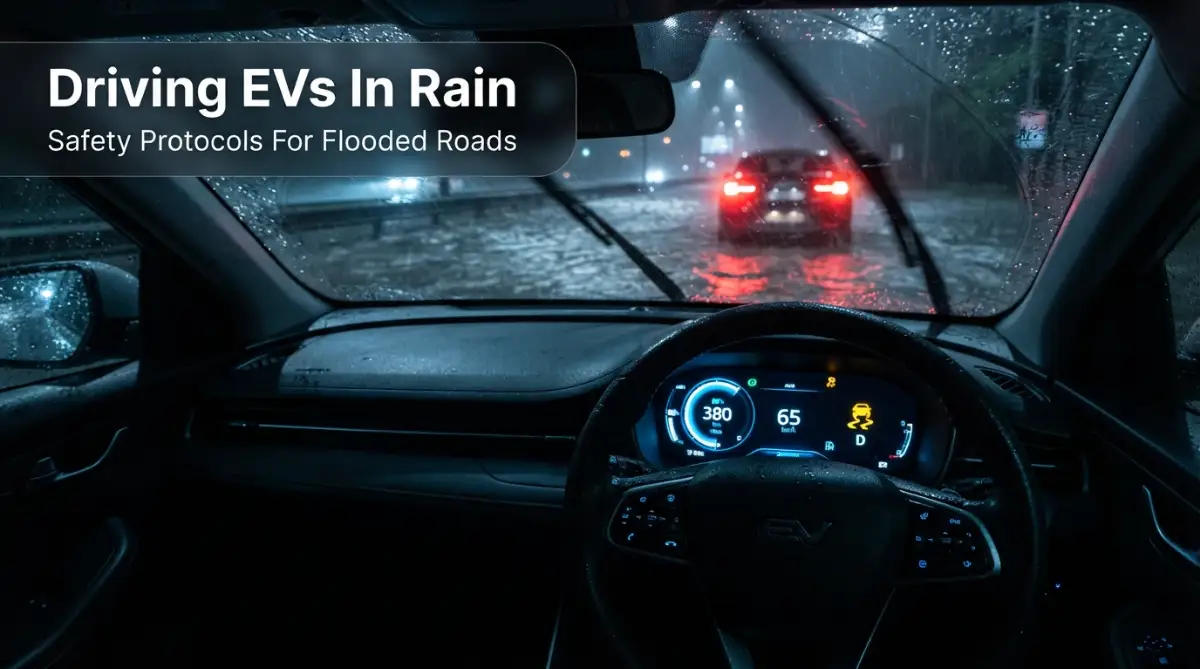
I vividly remember the panic setting in as the heavy rain pounded against my windshield, blurring the road ahead into a gray, unpredictable soup. My battery gauge was hovering around 40%, and the quiet suburban street in front of me was rapidly turning into a rushing river. The complete silence of my electric motor suddenly felt less like a futuristic luxury and more like a terrifying mystery.
Growing up, we were all taught one simple, unbreakable rule: water and electricity are a deadly combination. So, sitting on top of a massive high-voltage battery pack while navigating deep puddles naturally sends a shiver down your spine. I gripped the steering wheel so hard my knuckles turned white, wondering if one wrong move would cause a short circuit, leave me stranded, or worse. The anxiety of not knowing how my electric car would react to the rising floodwaters completely ruined my peace of mind.
Countless electric vehicle owners face this exact nightmare every time the sky turns dark. You worry about expensive water damage to the battery cells. You stress over the heavy weight of the car causing it to slide uncontrollably on slick roads. The fear is real, and it makes everyday commutes incredibly stressful during monsoon seasons or sudden flash floods. We just want to get home safely to our families without destroying our primary mode of transportation.
What Driving Through Floods Could Really Cost You
Driving an electric car through heavy rain and rising water isn't only a driving challenge. It can be a serious financial gamble.
An EV's battery is sealed against road spray, so normal rain is nothing to fear. But if water gets into the passenger cabin or the wiring inside the car, insurance companies will often declare the car a total loss. Repairing a water-damaged high-voltage system can easily top $15,000, which is sometimes more than the car is actually worth.
Even a single hydroplaning accident can hurt. You may end up paying hundreds of dollars in deductibles, and your premiums could climb for years afterward.
The good news is that careful driving in wet weather is your best protection. A little caution now can save you from a very costly mistake later.
Quick Summary
Driving an electric car in heavy rain requires understanding your vehicle's specific waterproof ratings and adjusting your driving habits. EVs have sealed, IP67-rated batteries that prevent short circuits in water. However, the heavy weight and instant torque demand careful use of regenerative braking to avoid hydroplaning. Regular post-flood inspections ensure long-term battery health and safety.
Key Takeaways
- Never assume your electric car can act as a submarine; respect the manufacturer's maximum wading depth.
- Turn down regenerative braking settings in heavy rain to prevent unexpected traction loss.
- The battery pack is highly sealed (IP67), meaning it can withstand temporary submersion without electrocuting you.
- The extra weight of an EV helps maintain road grip, but it also increases braking distance on wet surfaces.
- Charging in the rain is entirely safe due to built-in communication pins that only release electricity when a secure connection is made.
Understanding the Waterproof Shield: How It Prevents $15,000 Component Damage
The most common misconception about electric cars is that they will instantly spark and fail if they drive through a deep puddle. This simply is not true. Modern EVs are built with incredibly strict safety standards to prevent water intrusion.
The heart of your car, the battery pack, is typically housed in a heavily reinforced, completely sealed shell. Engineers use advanced gaskets and pressure valves to ensure no moisture can enter the delicate internal components.
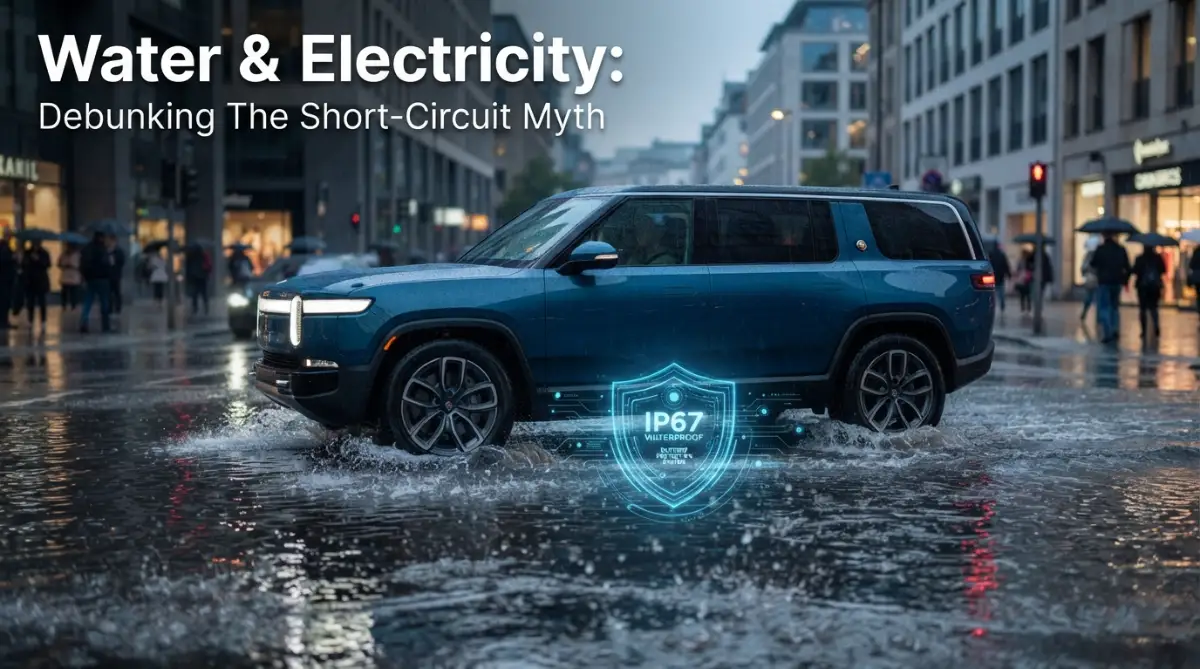
To put this into perspective, most electric cars carry an IP67 rating for their battery enclosures. This means the battery is completely protected against dust and can handle being submerged in up to three feet of water for about 30 minutes. You do not have to worry about getting electrocuted while driving through a flooded intersection.
Despite this impressive engineering, you should never treat your car like a boat. Driving into floodwaters of unknown depth is incredibly dangerous for any vehicle.
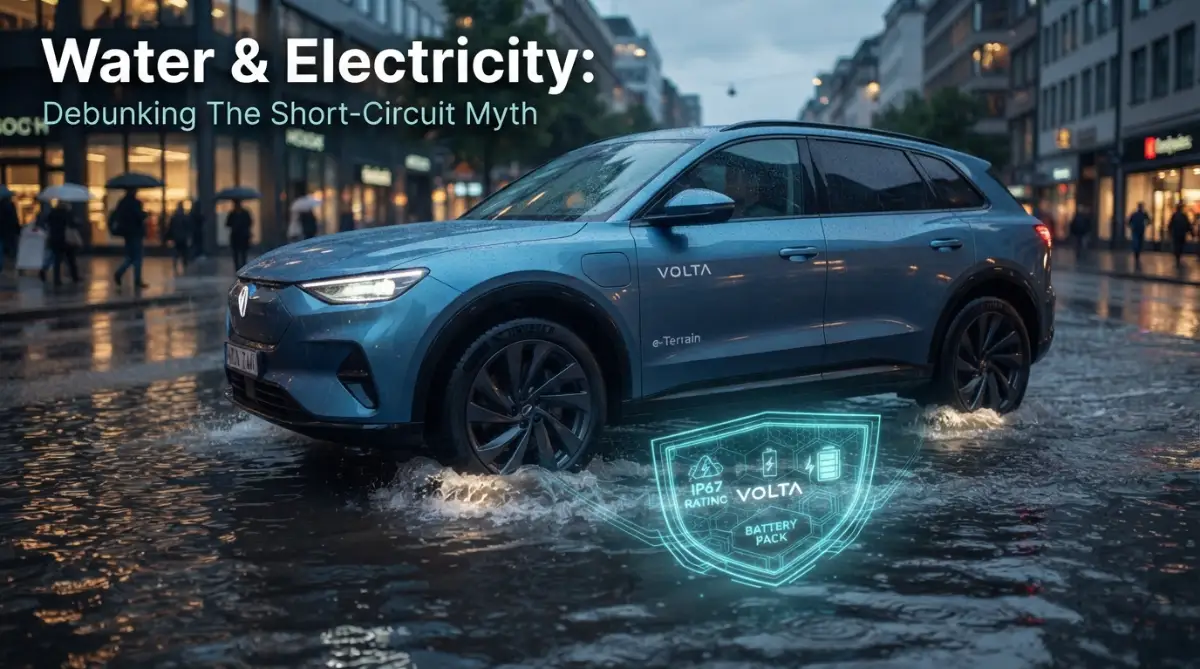
Water can still seep into your cabin, damaging the interior electronics, carpets, and sensitive sensors. Always prioritize finding an alternate route if the water level looks higher than the center of your wheels.
Hydroplaning Risks: How Vehicle Weight Affects Control and Insurance Claims
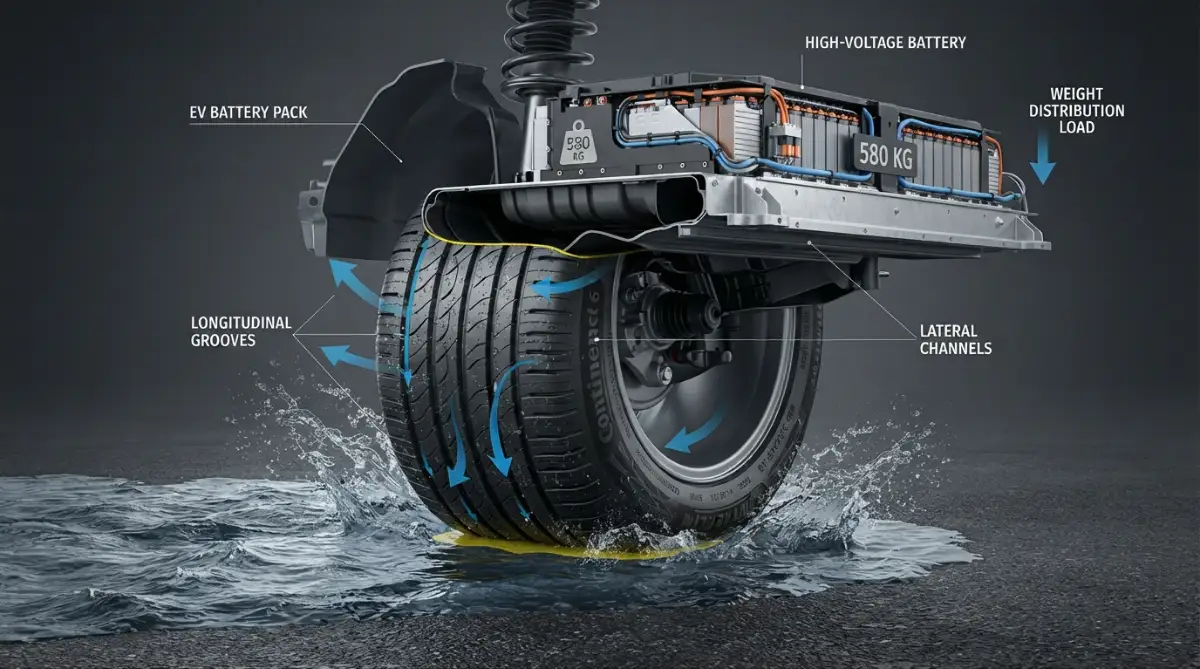
Hydroplaning happens when your tires lose contact with the road and glide on a thin layer of water. This causes a complete loss of steering and braking control. Because electric cars carry massive battery packs, they are significantly heavier than standard gas cars of the same size.
Many people wonder if this extra weight is a blessing or a curse in heavy rain. The truth is, it acts as a double-edged sword.
On one hand, the heavy weight pushes the tires down firmly against the pavement. This helps cut through the standing water, effectively reducing the chances of hydroplaning at moderate speeds. The low center of gravity keeps the car feeling planted and secure during strong crosswinds in a storm.
Let us look at a real-life math scenario. Meet David. He drives an electric sedan weighing 4,500 pounds, while his neighbor drives a gas car weighing just 3,000 pounds. David is driving at 40 miles per hour through a street with two inches of standing water. The upward lifting force of the water tries to push the tires off the ground. Because David's EV exerts 1,125 pounds of downward force per tire (compared to his neighbor's 750 pounds), David’s tires successfully slice through the water and maintain road contact. His heavier car effectively resists the upward water pressure.
However, once an EV does lose traction, that massive weight becomes a huge problem. A heavier car carries far more momentum, making it much harder to regain control once a slide begins.
Always ensure your tires have deep, healthy treads to channel the water away. Smooth or worn tires on a heavy electric car will turn into ice skates during a heavy downpour.
The Hidden Trap of Regenerative Braking
Electric cars have a unique feature called regenerative braking, which captures energy to recharge the battery when you lift your foot off the accelerator. In dry conditions, this is amazing for efficiency. In heavy rain, it can accidentally become your worst enemy.
When you release the pedal, regenerative braking applies a strong braking force specifically to the motor-driven wheels. On wet, slippery roads, this sudden deceleration can easily break the tires' grip on the pavement.
Pro Tip: I learned this the hard way during a massive thunderstorm last spring. I let off the accelerator too quickly while taking a wet curve, and the aggressive regen braking caused my rear wheels to slip instantly. I now make it a strict habit to switch my regenerative braking to the lowest or "creep" setting the moment the rain starts pouring.
This simple adjustment makes the car coast more naturally. It forces you to use the physical brake pedal, applying equal stopping power to all four wheels.
Here is exactly why adjusting your braking matters:
When you use the physical brake pedal, modern anti-lock braking systems (ABS) perfectly manage the traction across all four tires. You maintain total steering control, which keeps you safe.
If you are a visual learner, watching a clear demonstration can completely change your perspective on wet weather driving.
Check out this fantastic breakdown on how traction works on wet roads:
Can You Actually Charge in a Downpour?
One of the biggest anxieties new owners face is running low on battery during a severe rainstorm. The thought of plugging a high-voltage cable into a machine while standing in a puddle feels like a terrible idea.
Thankfully, charging equipment is specifically engineered for all weather conditions. You can absolutely plug in your car during a torrential downpour.
The charging ports and cables use a smart communication system. When you plug the handle into your car, the metal pins make physical contact first.
The charger and the car's computer then run a quick diagnostic check to ensure the connection is fully secure and waterproof. Only after this safety check passes does the actual high-voltage electricity begin to flow. If any water gets into the connection point, the system instantly shuts off the power to protect you.
The Honest Pros & Cons: Driving EVs in Heavy Rain
The Pros:
- No internal combustion engine to flood or stall in deep water.
- Heavy vehicle weight provides superior road grip and stability.
- Instant torque allows for precise power control on slippery surfaces.
The Cons:
- Aggressive regenerative braking can cause unexpected loss of traction.
- Water intrusion into the cabin can destroy expensive interior electronics.
- Heavy weight increases stopping distance on wet, slippery roads.
Post-Flood Maintenance: How to Prevent Costly Undercarriage Corrosion
Getting home safely after driving through a flooded area is a huge relief. However, your responsibility does not end the moment you park in your garage.
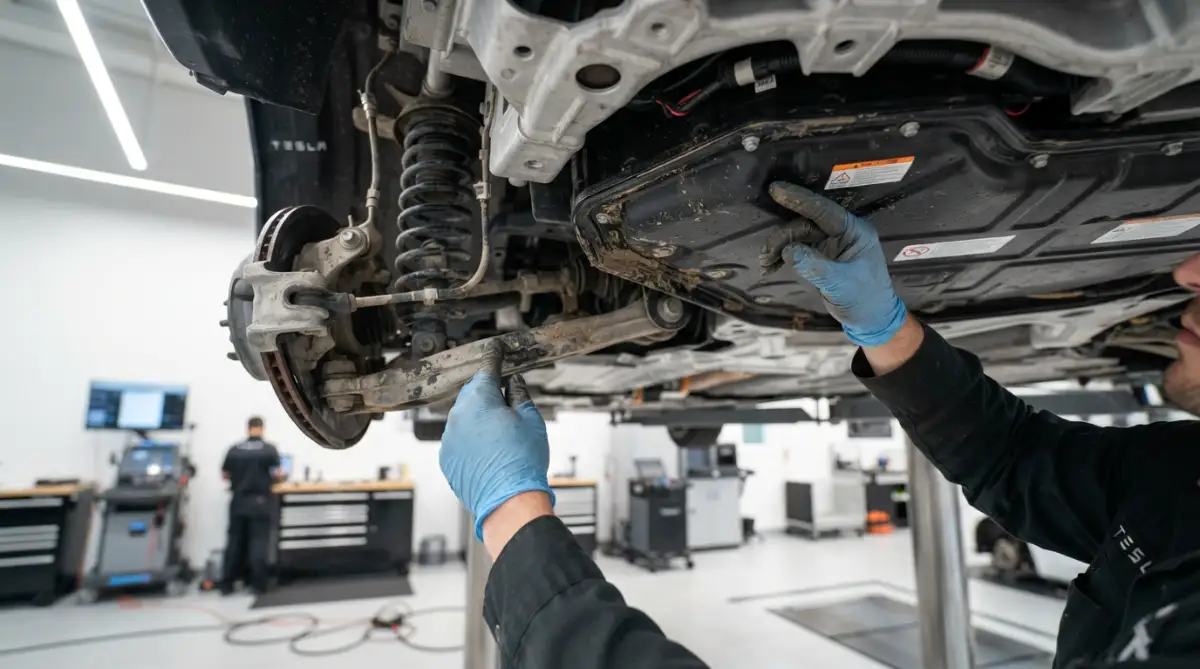
Floodwaters are rarely just clean rainwater. They are often mixed with corrosive mud, raw sewage, salt, and sharp debris from the streets. Leaving this toxic mixture on your car's undercarriage can cause long-term hidden damage.
Whenever you drive through deep water, make time to thoroughly wash the bottom of your car. Pay special attention to the suspension components and the edges of the battery enclosure.
You should also test your brakes. After emerging from a deep puddle, gently tap your brake pedal a few times while driving at a very low speed. This friction helps generate heat, quickly drying off the brake rotors and pads so they are ready when you actually need them.
Always trust your instincts. If your steering feels unusually heavy or you hear a weird grinding noise after a flood, do not ignore it.
Electric cars are incredibly resilient machines, built to handle the harshest weather mother nature can throw at them. By understanding your vehicle's limits, managing your speed, and staying calm, you can safely navigate even the most intimidating rainy days. Protect your investment by taking these simple precautions, and enjoy the smooth, quiet ride no matter what the weather looks like outside.
Mastering Wet Weather Driving Like a Pro
Handling an electric vehicle during a severe downpour goes far beyond simply turning on your windshield wipers. You need a solid strategy to protect your car and maintain total control over your steering. Because EVs operate differently than traditional gas cars, mastering a few advanced techniques will make your rainy commutes entirely stress-free.
The first thing you need to focus on is how your tires interact with the road surface. Because electric cars are heavy, they require tires specifically designed to handle high torque and extra weight. When heavy rain mixes with road oils, the asphalt becomes incredibly slick during the first 30 minutes of a storm.
You must check your tire tread depth specifically before the rainy season begins. A worn tire on a heavy electric car acts like a smooth rock skipping across a pond. You want deep grooves that act as water channels, forcing the puddles away from the center of the tire so the rubber can grip the solid pavement.
Pro Tip: I always keep a digital tire pressure gauge in my glovebox. Dropping your tire pressure by just 1 or 2 PSI during extreme rainy seasons can slightly widen the tire's footprint on the road, giving you a tiny bit of extra grip when you need it most.
Another major factor to consider is your vehicle's range. Driving through standing water increases rolling resistance, meaning the motors have to work harder to push the car forward. This extra effort, combined with running the headlights, wipers, and defroster, will drain your battery faster than usual. If you are planning a longer trip in bad weather, you need to understand how to maximize your electric vehicle range on long road trips by managing your cabin climate controls smartly.
Using the heated seats instead of blasting the cabin heater saves a massive amount of energy. It keeps you warm and focused without putting unnecessary strain on the battery.
Separating Fact From Fiction
Before we look at the common traps drivers fall into, we need to clear up some widespread misinformation. Many drivers still hold onto outdated fears about electricity and water. Let us look at what is actually true.
Costly Wet-Weather Mistakes That Can Total Your Electric Car
Even experienced drivers can make sudden mistakes when a thunderstorm hits without warning. The biggest trap you can fall into is placing too much trust in your car's automated safety syst