
🕒 Reading Time: 13 Mins | ✍️ Reviewed By: FinanceInfoIn Editorial Team
The Unexpected Nightmare at the Charging Station
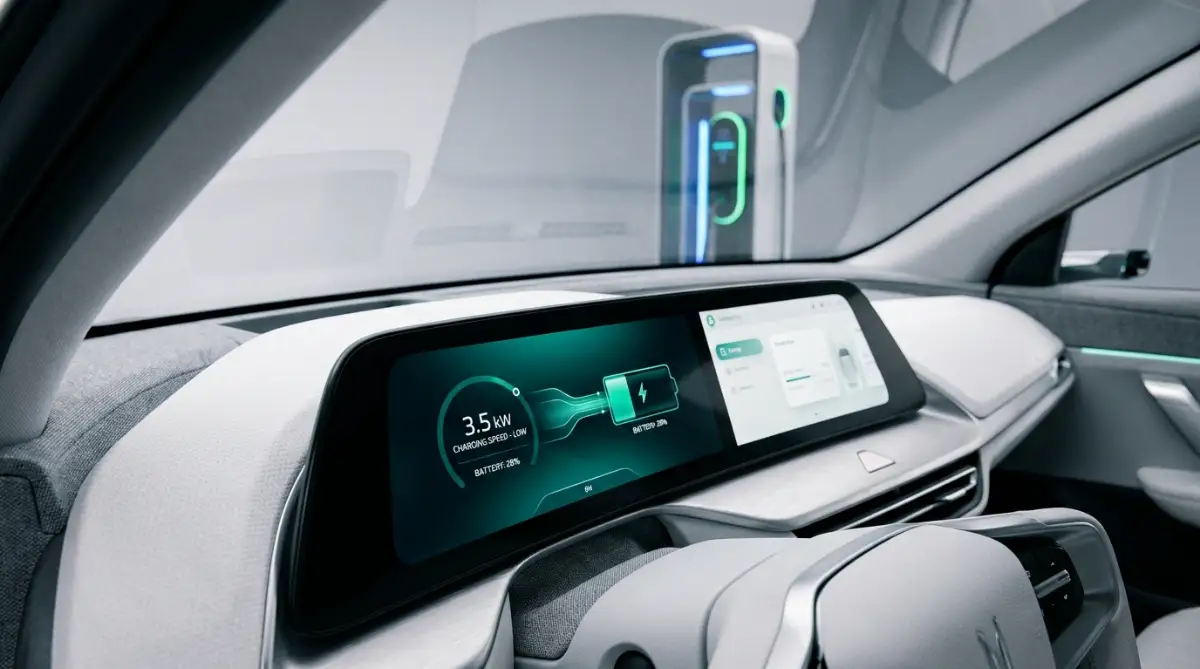
I still remember sitting in my electric car late one evening, completely exhausted after a long day of meetings. I had plugged into my favorite local fast charger, expecting a quick top-up so I could head home and finally relax. But when I looked at the dashboard, my heart sank. The charging speed was barely moving, crawling at a fraction of what it normally pulls.
I unplugged the heavy cable and plugged it back in, hoping it was just a random glitch. I even restarted my car's infotainment screen, thinking maybe the software was frozen. Nothing worked, and I was stuck sitting in a dark parking lot for almost an hour just to get enough range to reach my driveway. That night, I felt incredibly frustrated and started questioning if buying an electric vehicle was a huge mistake.
This is a scenario thousands of new and experienced EV owners face every single week. You plan your day around a quick thirty-minute charging session, only to realize the machine is dripping power like a leaky faucet. It completely ruins your schedule and spikes your anxiety, especially if you have a family waiting for you or a strict deadline to meet.
People are missing important appointments, getting stuck in uncomfortable weather, and dealing with massive range anxiety simply because their cars refuse to charge at the advertised speeds. We buy these amazing modern machines to make our lives easier and more efficient. So, when the battery meter barely moves, that promised peace of mind instantly turns into panic.
You find yourself constantly staring at the charging app on your phone, refreshing it every two minutes. You start wondering if your expensive battery pack is already degrading, or if the public charging network is just scamming you. The fear of an expensive repair bill starts creeping into your mind.
But you are not alone, and your car is probably not broken at all. There are actually very logical, hidden reasons behind this frustrating slowdown. Let me explain exactly what is going on behind the scenes.
📌 Key Takeaways at a Glance
✔ Most slow charging issues are normal battery protection—not vehicle faults.
✔ Charging is fastest between 10% and 50% battery level.
✔ Cold and hot weather can dramatically reduce charging speed.
✔ Public chargers often share power between multiple stalls.
✔ Charging beyond 80% takes much longer and is usually unnecessary.
How Slow Charging Quietly Drains Your Wallet
A slow-charging EV is more than an annoyance. It can hit your bank account too.
In many places, public charging networks bill by the minute rather than by the amount of electricity you actually use. So when your car's charging speed drops by half, you're still paying the same rate for each minute, which means the cost of each kilowatt-hour effectively doubles.
It gets pricier if you stay plugged in past 80% just to squeeze out a few extra miles. Charging slows down a lot at that point, and if you linger after you're done, some stations add idle fees, often $0.50 to $1.00 for every extra minute. Those minutes add up faster than you'd think.
The best way to stop money slipping away at public chargers is to understand why your car slows down in the first place. Once you know that, you can plan your stops smarter and keep more of your money in your pocket.
Unlocking the Secrets Behind Slow Electric Car Charging
When you first experience a massive drop in charging speed, your first instinct is to blame the charging station or your car's hardware. However, electric vehicles are basically giant, rolling computers that prioritize safety above everything else. Your car actively controls how much power it accepts to protect the internal battery cells from permanent damage.
Understanding this system will completely change how you plan your road trips and daily commutes. Instead of guessing why the power output keeps fluctuating, you will know exactly how to optimize your charging sessions. Let us break down the exact physical and technical factors that are slowing down your vehicle right now.
The 80% Charging Trap: Why Topping Off Wastes Both Time and Money
One of the most common reasons your electric vehicle charges slowly is simply because the battery is already quite full. This concept is known as the charging curve, and every single electric car on the market has one. When your battery is almost empty, it can accept a massive flow of electricity very quickly.
Think of your battery like a completely empty sports stadium opening its doors for a big game. When the doors first open, thousands of fans can rush inside all at once without bumping into each other. This is why your car charges incredibly fast from ten percent to fifty percent. The battery cells have plenty of empty space to store the incoming energy safely.
But as the battery gets closer to being full, the car's computer intentionally slows down the energy flow. Going back to our stadium analogy, when the seats are almost completely packed, people have to walk very slowly to find the last few empty spots. If they kept running at full speed, they would crash into each other and cause a disaster.
In battery terms, forcing too much power into a nearly full pack creates extreme internal pressure and heat. To prevent a catastrophic fire or permanent cell degradation, the vehicle will drastically reduce the kilowatt limit. Once your battery crosses the eighty percent mark, the charging speed drops off a cliff.
If you are sitting at a public fast charger trying to reach a perfect one hundred percent, you are wasting both your time and your money. The last twenty percent can easily take as long as the first eighty percent combined.
Extreme Temperatures Are Your Battery’s Worst Enemy
Electric vehicle batteries are surprisingly similar to human beings when it comes to weather preferences. They operate best in comfortable, moderate temperatures, usually around room temperature. When the weather gets extremely cold or brutally hot, your charging speed will immediately suffer the consequences.
Let us look at cold weather first, which is notoriously tough on electric cars. Inside your battery pack, chemical reactions happen to store and release energy. When lithium-ion cells get freezing cold, these chemical reactions slow down dramatically. The internal resistance of the battery goes way up, making it physically harder for electricity to enter the cells.
If you plug a freezing cold car into a rapid charger, the vehicle's computer will instantly reject high speeds to protect the cold cells from damage. Instead, the car will pull a very small amount of power just to run the battery heaters. Once the internal temperature reaches a safe level, the charging speed will gradually start to climb.
Pro Tip from My Experience: I learned the hard way that you should never navigate to a fast charger using your phone's map app if you want high speeds in winter. I always use my car's built-in navigation system now. When I do this, the car knows I am heading to a charger and will automatically pre-heat the battery while I am driving, allowing me to get maximum speed the second I plug in!
Hot weather creates a completely different set of problems for your electric vehicle. Fast charging generates an enormous amount of heat on its own. If you are charging on a blistering hot summer day after driving on the highway, your battery is already cooking.
To stop the battery from literally melting or catching fire, the car's thermal management system will step in. It will heavily throttle the incoming power while running the cooling fans at maximum speed. You will hear the car sounding like a jet engine, but the dashboard will show a surprisingly low charging rate.
Watch this quick explanation to understand battery temperature limits perfectly. This short video perfectly demonstrates why thermal management is the biggest bottleneck in modern electric vehicles.
Shared Power Stalls: Paying Full Price for Half the Charging Speed
Sometimes, the slow speed has absolutely nothing to do with your car, your battery, or the weather. The problem often lies entirely within the public charging infrastructure. Not all charging stations are created equal, and many of them have hidden power-sharing rules that companies rarely advertise.
Many public charging stations are built on shared electrical circuits. This means that two charging cabinets sitting next to each other might share a single power source from the grid. If you pull up to a station that advertises a high speed, you might only get half of that power.
For example, imagine a station that offers one hundred and fifty kilowatts of power. If you are the only person plugged in, your car will happily accept the full amount. But the moment another electric vehicle plugs into the stall right next to you, the station automatically splits the power straight down the middle. Suddenly, your charging speed instantly drops to seventy-five kilowatts.
It can be incredibly frustrating to watch your charging time double just because someone parked next to you. To avoid this, experienced owners try to pick a charging stall that is not paired with an active user. If stall A and stall B share power, and someone is using stall A, you should park at stall C or D instead.
Furthermore, the local electrical grid itself can sometimes limit the station's output. During peak energy hours in the late afternoon, the power company might ask the charging network to reduce output to prevent grid overloads. You might plug in during a hot summer afternoon and experience heavily throttled speeds. The station is simply protecting the local power grid from collapsing.
Hardware Mismatches and Cable Restrictions
Another hidden factor that confuses many drivers is the physical limitation of the charging equipment itself. You cannot just look at the size of a charging cable and assume it will give you the maximum speed your car can handle. There is a very specific communication happening between the cable, the station, and your car's onboard inverter.
When you charge at home using a standard alternating current (AC) wall box, the speed is limited by your car's internal converter. Public fast chargers use direct current (DC), which bypasses the car's converter and goes straight into the battery. However, every single DC fast charger has a maximum amperage limit printed on its data plate.
Some older public chargers are physically limited to low amperage, even if they claim to be fast chargers. If the heavy cable is not liquid-cooled, it cannot push massive amounts of power without overheating. The station's computer monitors the temperature of the charging handle continuously. If the handle gets too warm in your hand, the station will automatically reduce the power flow to keep things safe.
If you frequently use adapters to charge your vehicle, you might be adding another layer of restriction. Cheap or damaged adapters can create electrical resistance. Your vehicle's safety systems will detect this slight resistance and automatically drop the charging speed to prevent an electrical fire. Always make sure your charging ports are completely free of dirt, snow, or debris before plugging in.
The Impact of Long-Term Battery Degradation
We also have to talk about something most drivers want to ignore, which is battery aging. Just like the battery inside your smartphone, your electric vehicle's battery slowly loses its original capacity over years of use. This is a completely natural chemical process called degradation.
As the lithium-ion cells age, their internal resistance naturally increases. An older battery simply cannot handle the same massive rush of electricity as a brand-new battery. The car's battery management system knows the exact age and health of the cells. To protect an aging battery pack from premature failure, the software will permanently lower the maximum allowed charging speed.
If you are driving an electric vehicle that is several years old with very high mileage, you will never see the same rapid charging speeds you saw on day one. It is not a malfunction; it is the car taking care of itself.
Myth vs Reality: Common Charging Misconceptions
There is a lot of misinformation floating around the internet about electric vehicles. Let us clear up some of the most common myths regarding charging speeds right now.
Myth: Using a faster public charger will force your car to charge quicker.
Reality: Your car always dictates the speed, not the charger. If your car is built to accept a maximum of fifty kilowatts, plugging it into a massive three-hundred-kilowatt charger will not make a difference. Your car will still only pull fifty kilowatts.
Myth: Charging to one hundred percent every day is totally fine for modern cars.
Reality: Regularly forcing your battery to sit at one hundred percent puts massive stress on the cells. This habit will accelerate battery degradation over time. Unless you are leaving for a long road trip, setting your daily charge limit to eighty percent is the smartest move for battery longevity.
Myth: Slow home charging damages the battery over time.
Reality: Slow alternating current charging at home is actually the healthiest way to charge your car. It generates very little heat and keeps the internal cell pressure extremely low. Frequent fast charging is what causes long-term wear and tear, not slow home charging.
The Real-World Data Breakdown
To make this completely clear, let us look at a simple comparison of how battery percentage directly affects your waiting time.
Looking at this breakdown, you can easily see why staying plugged in past eighty percent is causing you so much frustration. You are fighting against the basic laws of physics and chemistry.
How Your Driving Style Impacts Your Next Charge
Believe it or not, how you drive in the thirty minutes before reaching a charger heavily influences your charging speed. If you are driving on a highway at very high speeds, rapidly accelerating and braking, you are pulling massive amounts of energy. This aggressive driving heats up the battery pack significantly.
When you pull into a station with an overheated battery, the car has to spend the first few minutes trying to cool itself down. Instead of dumping energy straight into the cells, the system routes power to the liquid cooling pumps and radiator fans. Smooth, relaxed driving before a charging stop keeps battery temperatures stable.
On the flip side, if you are driving in freezing weather and moving very slowly through city traffic, the battery never gets a chance to warm up. City driving uses very little energy, which means the battery stays cold. This creates the exact opposite problem when you finally plug in. Finding the sweet spot in battery temperature is the ultimate key to predictable charging times.
We have covered the physical, environmental, and infrastructure-related reasons holding your electric car back. By adjusting your habits and understanding what your vehicle needs, you can completely eliminate the anxiety of slow public charging. Taking care of your battery today ensures you will have a reliable, fast-charging vehicle for many years down the road.
Insider Strategies to Maximize Your EV Charging Speed
Now that you know exactly what is happening inside your car's computer, it is time to take complete control of the situation. You do not have to sit around feeling helpless while your vehicle slowly pulls energy from the grid. By changing just a few simple habits, you can drastically cut down your waiting time at public stations.
Over the last few months, I have tested several different charging methods to see what actually works in the real world. These are not just theoretical ideas; these are practical steps you can use today. Let us look at how you can trick your car into accepting power much faster.
Master the Art of Battery Preconditioning
This is probably the biggest secret that dealership salespeople completely forget to tell new owners. Your car has a built-in battery heater and cooler, but it needs time to do its job. If you just surprise your car by pulling up to a random charger, the battery will not be ready.
Instead, always use your car's built-in navigation screen to route yourself to the charging station. When the car's computer knows you are heading to a plug, it automatically starts warming or cooling the battery pack along the way. According to the National Renewable Energy Laboratory, proper thermal management can safely double your charging speed in extreme weather conditions.
By the time you actually plug the cable into your car, the internal cells are at the perfect temperature. This simple trick allows the vehicle to instantly pull maximum power the moment the session begins. It completely eliminates that annoying ten-minute slow period where the car tries to adjust its temperature.
Learn Your Specific Vehicle's Power Curve
Every single electric car model has a completely different charging profile programmed into its computer. A system that works perfectly for a Tesla might not apply to a Hyundai or a Ford. You need to understand exactly when your specific car starts dropping its charging speed.
Some cars pull massive amounts of power up to fifty percent and then slow down aggressively. Other cars maintain a steady, moderate speed all the way up to eighty percent before dropping off. If you want to stop wasting time, you should only plug into fast chargers when your battery is extremely low.
Arriving at a station with ten percent battery is going to give you a much faster and better experience than arriving with sixty percent. You can actually extend the battery life of your electric vehicle by keeping your charging sessions within this sweet spot.
Create a Reliable Home Charging Routine
If you constantly rely on public fast chargers, you are eventually going to run into slow speeds and broken machines. The ultimate cheat code for electric vehicle ownership is avoiding public chargers altogether for your daily driving. You can easily do this by setting up a dedicated Level 2 wall box in your own garage.
When you charge at home while you sleep, the charging speed honestly does not matter at all. Even a slow alternating current charger will easily fill up your battery over an eight-hour night. If you do not have one yet, you should definitely learn how to set up your electric vehicle home charger correctly.
Waking up every single morning with a full "tank" completely changes the way you view driving. It removes all the stress of hunting for a working public plug on your way to work. Plus, charging at home puts way less strain on your battery cells compared to blasting them with direct current every day.
Update Your Vehicle's Software Regularly
Because your car is basically a computer on wheels, the software running the battery management system is incredibly important. Automakers are constantly gathering data from millions of cars on the road to improve charging efficiency. Sometimes, they discover new ways to safely push more power into the battery.
When the manufacturer releases an over-the-air update, they often include hidden tweaks to the charging curve. Research from battery engineering experts at Cadex Electronics shows that software limits are often the main bottleneck in charging speeds. If you ignore these software updates, you are actively holding your car back from its full potential.
Always connect your car to your home Wi-Fi network and allow it to install updates overnight. I once received a free software update that instantly increased my maximum charging speed by twenty kilowatts! It felt like I got an entirely new car without paying a single dime.
Silent Mistakes That Are Sabotaging Your Battery
Even with the best intentions, many drivers accidentally form bad habits that ruin their charging experience. These mistakes might seem harmless at first, but they can permanently damage your battery cells over time. Let us walk through the most common traps you need to avoid to keep your vehicle running perfectly.
Chasing 100%: How the Last 20% Spikes Your Bill and Risks Idle Fees
This is without a doubt the most annoying mistake new electric vehicle owners make at public stations. We are completely trained by our smartphones and gas-powered cars to always fill up to the absolute maximum. But doing this at a direct current fast charger is a terrible idea for several reasons.
Once your battery hits eighty percent, the charging speed intentionally drops to a painful crawl to prevent heat damage. Sitting at a public charger waiting for those last twenty percentage points can easily take forty-five minutes. You are wasting your own valuable time and blocking other drivers who desperately need a charge to get home.
On top of that, forcing a lithium-ion battery to sit at maximum capacity creates massive internal stress. Unless you are immediately leaving for a long cross-country road trip, you never need a full battery. Set your daily charging limit to eighty percent and enjoy a much faster, healthier charging experience.
⚠️ Important Charging to 100% every day is unnecessary for most drivers. For daily use, keeping your battery between 20% and 80% helps reduce battery stress, improves long-term battery health, and shortens charging time. Reserve a full 100% charge only when preparing for a long-distance trip.
Leaving an Empty Battery in Freezing Weather
Cold weather is already tough on electric cars, but leaving an empty battery outside in the freezing cold is a recipe for disaster. If you park your car overnight with less than ten percent battery in the winter, the car struggles to keep its own systems warm. The battery management system might even shut the car down completely to protect the remaining energy.
When you finally try to plug it in the next morning, the deeply frozen cells will refuse to accept any fast power. You will be stuck staring at a painfully slow charging screen for hours. It is highly recommended to learn how to safely charge your electric car in freezing temperatures to avoid this exact nightmare.
If you know a winter storm is coming, make sure you plug your car in the night before, even if using a standard wall outlet. The simple act of charging generates a tiny amount of heat that keeps the battery comfortable. A warm, happy battery will always accept power much faster than a frozen one.
Using Cheap or Damaged Aftermarket Cables
Electric vehicle charging involves pushing massive amounts of electrical current through a single wire. This is not the place to try and save money by buying unverified, cheap accessories from random online stores. A poorly made adapter or a damaged extension cable creates dangerous electrical resistance.
Your car is incredibly smart and constantly monitors the flow of electricity coming through the port. If it detects uneven power, extreme heat, or high resistance from a cheap cable, it will instantly slow down the charge. It does this to prevent the port from melting or starting an electrical fire in your garage.
Always inspect your home charging cable for heavy wear, exposed wires, or bent connector pins. If you frequently use public adapters, make sure they are certified by recognized safety organizations. The US Department of Energy clearly warns drivers that using non-certified charging equipment is a major fire hazard.
Relying Too Heavily on Fast Public Chargers
Public fast chargers are absolutely amazing for long road trips and weekend vacations. They give you the freedom to travel anywhere without worrying about running out of power. But treating a fast charger like a traditional gas station for your daily commute is a huge mistake.
Constantly blasting your battery with high-voltage direct current generates extreme heat inside the cells. Over time, this repetitive heat stress causes the chemical components inside the battery to break down faster. As the battery degrades, the car will permanently lower your charging speed to keep things safe.
Try to do at least eighty percent of your charging at home using a gentle alternating current charger. Save the powerful public stations for the times when you are actually traveling far from home. Your battery will easily last much longer, and your daily wait times will completely disappear.
Slow Charging Troubleshooting Checklist
Before assuming your EV has a serious problem, go through this quick checklist. In many cases, the issue can be identified and fixed within a few minutes.
1. Check Your Charging App Before You Leave Home
Quick Tips
- Check charger availability before leaving.
- Read recent user reviews inside the app.
- Confirm charging speed and connector type.
- Avoid stations with repeated fault reports.
2. Keep Your Charging Port Clean Throughout the Year
Quick Tips
- Inspect the charging port regularly.
- Remove dust with a soft cloth.
- Never use metal tools inside the port.
- Keep the protective cover closed when not charging.
3. Avoid Charging Immediately After Extreme Driving
Quick Tips
- Let the battery cool briefly after aggressive driving.
- Park in a shaded area during summer.
- Avoid repeated back-to-back fast charging.
- Monitor battery temperature if your EV displays it.
4. Use Off-Peak Hours Whenever Possible
Quick Tips
- Charge early morning when possible.
- Avoid evening rush hours.
- Plan long trips around quieter charging times.
- Use apps to monitor station traffic.
5. Don't Ignore Charging Error Messages
Quick Tips
- Read every charging notification carefully.
- Restart the session once before switching stations.
- Record repeated error codes.
- Contact your vehicle manufacturer if the issue continues.
Your Action Plan for Stress-Free Driving
Dealing with an electric car that simply refuses to charge fast can definitely test your patience. But as we have uncovered today, your vehicle is almost never broken; it is just protecting itself. The complex combination of battery temperature, current state of charge, and station power all play a huge role in your final speed.
Once you stop fighting the science and start working with your car's natural charging curve, everything becomes much easier. You can stop wasting hours staring at your dashboard and start enjoying the quiet, smooth ride of electric driving. Plan your trips smarter, precondition your battery before arriving, and never waste time chasing that perfect one hundred percent.
You made a brilliant choice switching to electric driving, and the growing pains are just a small part of the journey. As long as you treat your battery with a little bit of care, it will reward you with reliable, inexpensive transportation. Feel free to explore more resources on financeinfoin.com to master every aspect of your electric vehicle ownership.
My Personal Takeaway: When I finally stopped stressing over every single kilowatt and just trusted my car’s internal systems, my road trips became so much more relaxing. I now use my quick charging stops to stretch my legs, grab a fresh coffee, and enjoy a few minutes of peace. Embrace the slight change of pace, take care of your battery, and your electric car will honestly be the best vehicle you ever drive!
Related EV Guides
• How to Install an EV Home Charger
• Best EV Charging Apps for Road Trips
• EV Battery Lifespan Explained
• Fast Charging vs Slow Charging
Not every charging method is ideal for every situation. The table below compares the three most common EV charging options to help you choose the right one.