Reading Time: 12 Minutes
Difficulty Level: Beginner to Intermediate
Reviewed By: FinanceInfoIn Editorial Team
Quick Summary
When your solar system underperforms, the culprit is usually temporary shading, heavy dirt buildup, or a tripped breaker. Extreme heat can also lower panel efficiency, while inverter errors might completely stop energy production. By checking your monitoring app, cleaning the panels, and resetting your system, you can quickly restore your home’s energy output.
Table of Contents
- The Shocking Power Bill You Never Expected
- Why The Weather App Is Lying To Your Solar Dashboard
- The Invisible Power Thief: Shading and Debris
- Equipment Hiccups That Secretly Drain Megawatts
- String Inverters vs. Microinverters: What You Actually Have
- Step-by-Step Fixes You Can Try Right Now
- When Is It Time To Call Your Installer?
- Key Takeaways
Key Takeaways
- Dust and bird droppings can reduce your system's total energy output by up to 25%.
- Solar panels actually lose efficiency on extremely hot days due to temperature coefficients.
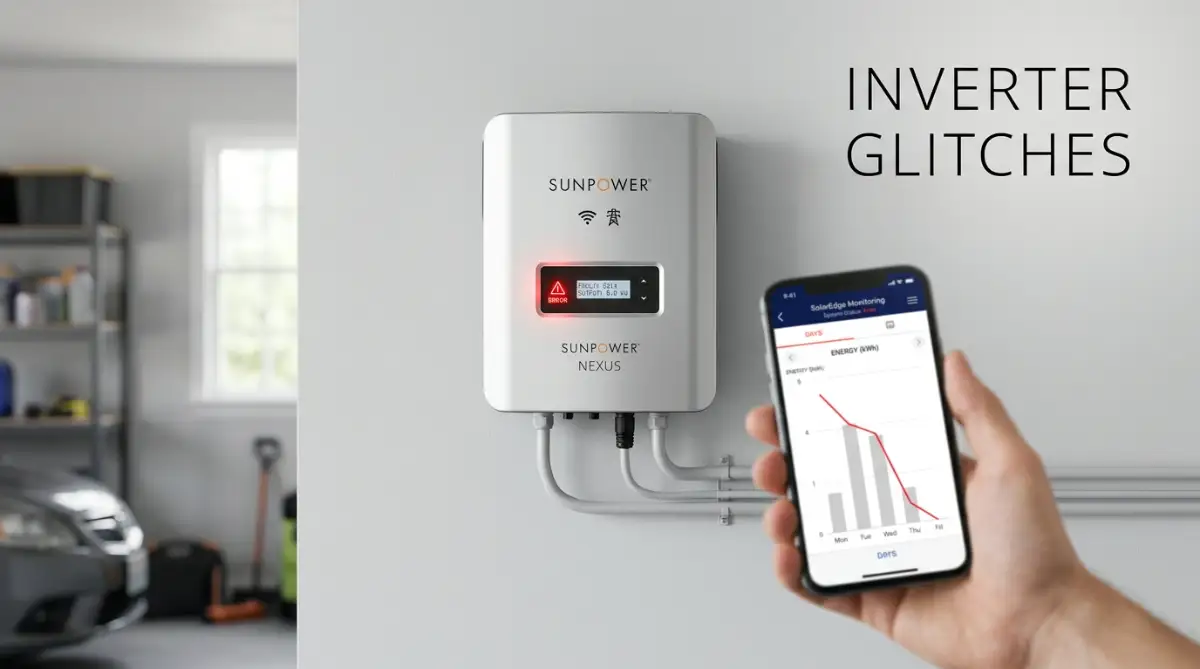
- A red light on your inverter usually means your system is not sending power to the grid.
- Rebooting your solar system often fixes temporary software glitches in the monitoring app.
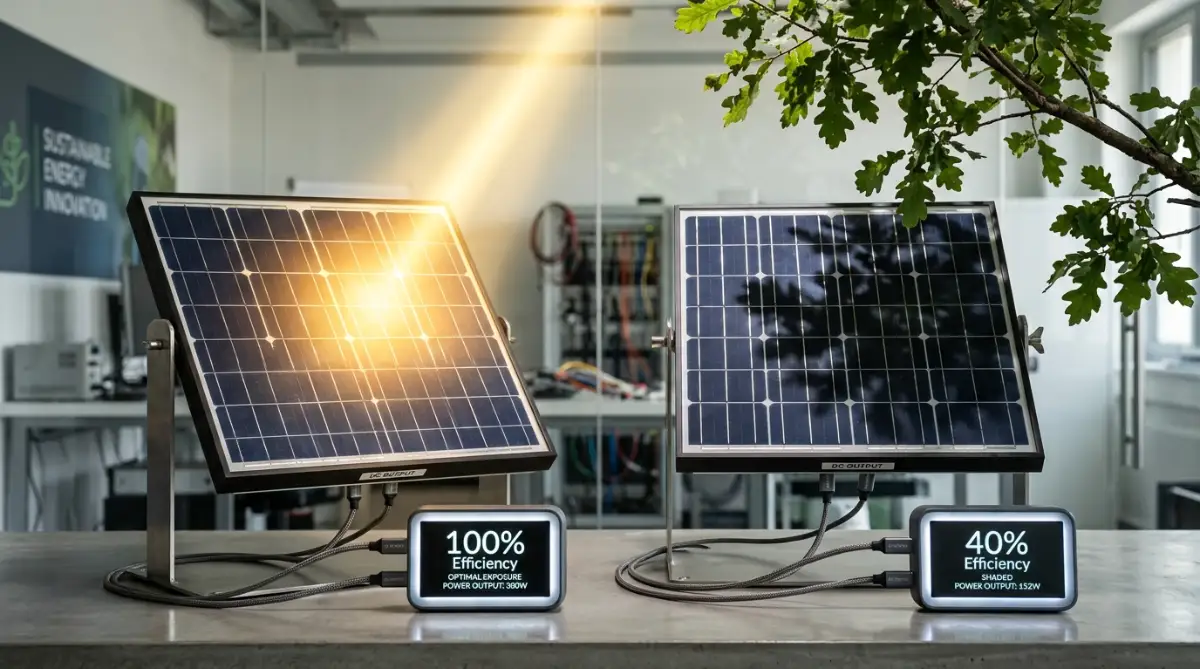
- Shading on a single panel can drag down the performance of the entire roof if you use a string inverter.
The Shocking Power Bill You Never Expected
You tear open the envelope from the utility company, expecting to see a tiny grid connection fee. Instead, a massive three-digit number stares right back at you. Your stomach instantly drops.
You walk outside, look up at your roof, and wonder if those expensive shiny panels are just acting as giant paperweights. I have been in that exact situation, holding a piece of paper that made absolutely zero sense.
You invested heavily in this system to escape the constant stress of rising electricity costs. Now, you feel entirely trapped by a setup that was supposed to give you financial freedom.
Checking the solar monitoring app becomes a daily source of anxiety. You see the production lines dipping low, but the app does not tell you why it is happening. The worst part is the feeling of helplessness.
You pay your monthly solar loan, and now you have to pay the utility company too. This double payment drains your bank account and completely destroys your peace of mind.
We are going to find out exactly why your system is failing to deliver. You do not need an electrical engineering degree to figure this out. You just need to know where to look.
Why The Weather App Is Lying To Your Solar Dashboard
Most people assume that a bright, sunny summer day means maximum energy production. Surprisingly, that is not how solar technology actually works.
Solar panels run on light, not heat. When the temperature outside pushes past 90 degrees, your panels get incredibly hot.
Once panels get too hot, the electrical flow inside them becomes sluggish. This is called the temperature coefficient.
For every degree over 77 Fahrenheit (25 Celsius), a standard panel loses about 0.5% of its efficiency. So on a blistering afternoon, your system might actually produce less power than on a cool, crisp spring morning.
The Real-Life Math: David’s Shading Problem
Let us look at a real scenario. Meet David, who owns a standard 6kW solar system.
When David first got his system, it covered 100% of his power bill. Two years later, a large oak tree in his neighbor's yard grew just three extra feet.
That single tree cast a harsh shadow over two of David’s panels every day between 1:00 PM and 3:00 PM. Because of the way his system was wired, this shadow reduced his total daily output by a massive 25%.
David lost about 220 kWh of electricity that month. At his local rate of $0.20 per kWh, that missing power added an extra $44 directly to his utility bill.
Over a full year, that single tree branch cost him over $500. This shows exactly how a tiny change on your roof creates a massive hole in your wallet.
The Invisible Power Thief: Shading and Debris
Sometimes the problem is not a tree. It is exactly what is sitting directly on top of your panels.
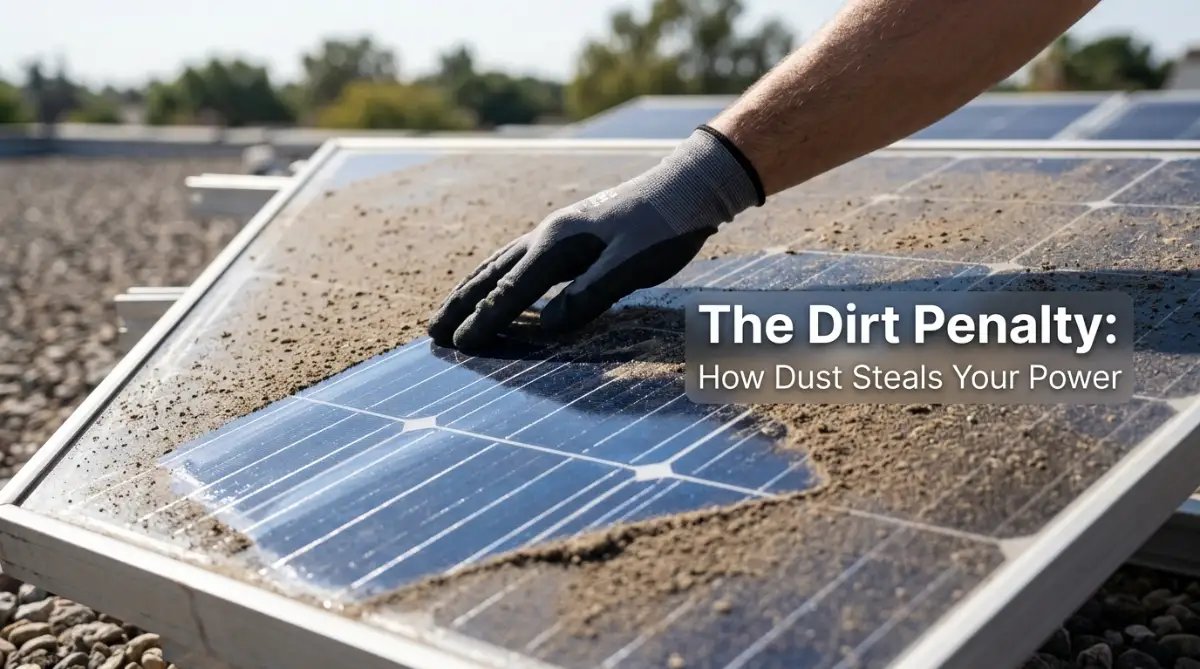
Over the months, a thick layer of dust, pollen, and smog settles onto the glass. If you live near an active construction site or a busy highway, this buildup happens incredibly fast.
Bird droppings are especially damaging. They are completely opaque, meaning zero sunlight gets through that specific spot on the glass.
If it has not rained heavily in your area for a few months, your panels might be suffocating under a blanket of dirt.
Honest Pros & Cons: Cleaning Panels Yourself vs Hiring a Pro
When you realize your panels are filthy, your first instinct is to grab a ladder and a bucket. Before you climb onto your roof, you should carefully weigh your options.
Cleaning Them Yourself
- The Pros: It is completely free. You can do it immediately without waiting for an appointment. You get a close-up look at your roof to spot any physical damage.
- The Cons: Working on a slanted roof is incredibly dangerous. Using the wrong soap or hard water can leave a permanent cloudy film on the glass. Spraying cold water on baking-hot panels can shatter the glass instantly.
Hiring a Professional Solar Cleaner
- The Pros: They use specialized soft-bristle brushes and deionized water to prevent water spots. They have safety harnesses and insurance. They often include a free visual equipment inspection.
- The Cons: It costs anywhere from $150 to $300 per visit. You have to schedule around their availability.
Equipment Hiccups That Secretly Drain Megawatts
If your roof is spotless and the weather is perfect, the problem is likely hiding in your equipment. The brain of your entire solar setup is the inverter.
Solar panels create Direct Current (DC) power. Your home appliances run on Alternating Current (AC) power.
The inverter is the heavy metal box that translates DC into AC. If the inverter crashes, your panels could be capturing massive amounts of sunlight, but your house cannot use a single drop of it.
Walk over to your main inverter box. You are looking for a small LED status light.
A solid green light means everything is working perfectly. A red light, a flashing orange light, or a completely blank screen means your system is dead.
Confusing Alternative Comparison: String vs. Microinverters
People constantly get confused about what type of system they actually own. Knowing the difference is the only way to troubleshoot accurately.
Many homeowners think they have a single unified system. In reality, how your panels talk to your home depends entirely on your inverter type.
Pro Tip: I once spent an entire month stressing over a completely blank solar dashboard. I assumed my expensive panels were broken and I was losing hundreds of dollars. It turned out, my router had simply updated its password. The solar system was producing maximum power the whole time, it just could not send the data to my phone. Always check your Wi-Fi connection before panicking about hardware failure.
Why Understanding Your Inverter Matters
Step-by-Step Fixes You Can Try Right Now
You do not have to wait for an expensive technician to show up. There are a few very safe things you can do right this minute to wake your system back up.
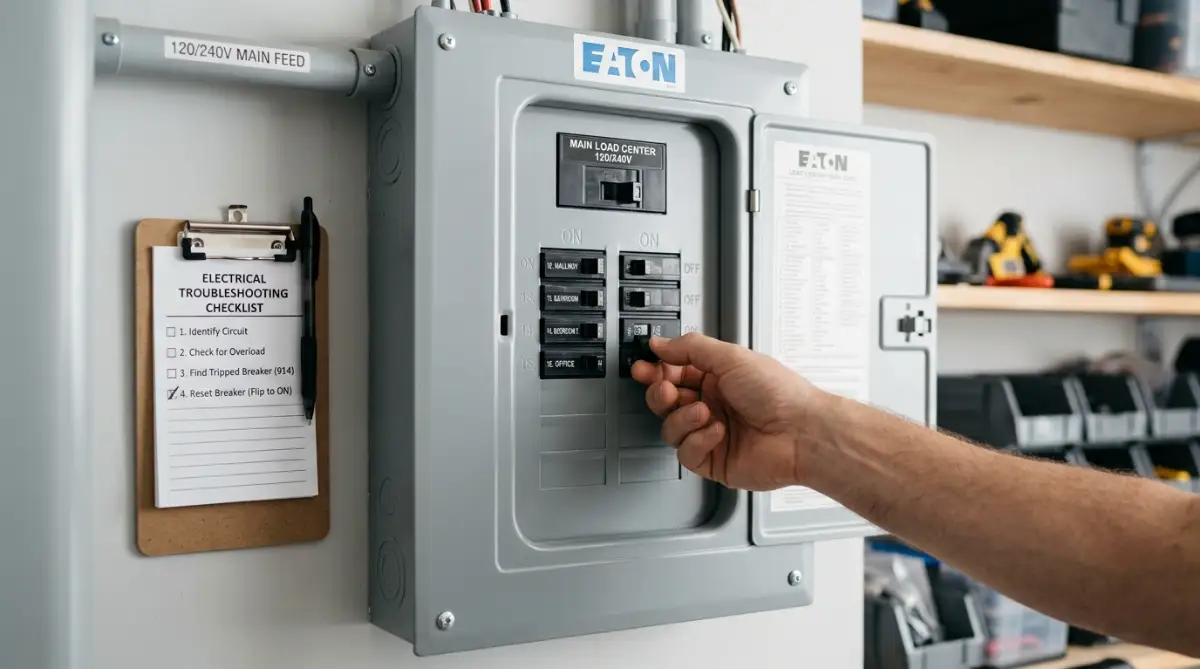
First, go to your main electrical panel. This is usually in your garage or on the side of your house.
Look for the specific breaker switch labeled "Solar" or "Photovoltaic." Sometimes, a small power surge from the local grid will trip this breaker to protect your house.
If the switch is resting in the middle or flipped to the "Off" position, you found your culprit. Simply push it all the way to "Off," and then firmly snap it back to "On."
The Hard Reset Method
If the breaker is fine, try rebooting the inverter. Think of your solar inverter like a giant desktop computer.
Sometimes the internal software freezes and just needs a fresh start. Locate the AC disconnect box near your main meter.
Pull the lever down to shut it off. Then, find the DC disconnect switch near the inverter and turn that off too.
Wait for a full five minutes. This allows all the internal capacitors to drain their remaining charge.
Turn the DC switch back on first, followed by the AC lever. Wait about ten minutes for the system to boot up and reconnect to the grid.
Dealing With Extreme Grid Voltage
Sometimes your system is working flawlessly, but your local utility company is pushing back. Your inverter has safety limits built into its software.
If the voltage coming from the street grid gets too high, your inverter will intentionally shut down. It does this to prevent your home's wiring from melting.
This usually happens in neighborhoods where almost every house has solar panels. On a sunny day, everyone is pushing power into the grid at the same time.
The local power lines get overwhelmed. If you notice your system shutting down every day exactly at noon, grid voltage is probably the issue.
You cannot fix this yourself. You will need to call your installer and ask them to widen the voltage parameters on your inverter, or contact the utility company to upgrade the local transformer.
Knowing When To Call Your Installer
If you have cleaned the panels, reset the breakers, and checked the Wi-Fi, you might have a real hardware failure. Solar panels are built to last for decades, but the small wires connecting them can degrade.
Squirrels and roof rats love to chew on the rubber insulation protecting your solar cables. One exposed wire will cause the entire safety system to trip and shut down.
Do not ever attempt to climb on your roof and inspect high-voltage DC wiring yourself. This is incredibly dangerous.
Call your installation company and clearly explain the steps you have already taken. Because you already did the basic troubleshooting, they will know exactly what tools to bring.
Most equipment is covered by a 10 to 25-year warranty. You likely will not have to pay a single dime for a replacement inverter or a patched cable.
Taking a few minutes to understand your system puts the power back in your hands. You can easily spot the difference between a little dust and a major electrical failure. Keep your panels clean, check those breaker boxes, and watch your electricity bills drop right back down to zero where they belong.
Maximizing Your Solar Yield: Next-Level Strategies
Once you handle the basic resets and dust removal, it is time to look deeper into your system's performance. Many homeowners completely ignore the subtle warning signs hiding inside their daily energy data.
You need to pay close attention to something called inverter clipping. This happens when your panels generate more direct current than your inverter can actually process into usable home power.
If you look at your monitoring app and see a perfectly flat line at the top of your production graph on a sunny day, your system is clipping. The panels are working fine, but the inverter is intentionally throwing away extra energy to protect itself from overloading.
Pro Tip: I always tell people to check their panel output during the spring, not the summer. Spring provides the perfect combination of bright, direct sunlight and cool temperatures, which is when panels hit their absolute peak performance.
Another hidden issue involves micro-cracks inside the solar cells. These are tiny fractures in the silicon that you cannot see with the naked eye.
These cracks usually happen if someone steps on the panels or if severe hail hits your roof. Over several months, these micro-cracks expand, slowly draining your total power output without triggering a system error.
To spot this, you should occasionally review reports from independent energy researchers. For example, reading through solar panel degradation studies from the National Renewable Energy Laboratory helps you understand what a normal aging process looks like for your specific equipment.
If your energy output is dropping twice as fast as the national average, you have physical damage on your roof. This means you need to call your installer and demand a physical inspection.
Myth vs Reality: The Truth About Solar Output
The Financial Traps: What Ruins Your Solar Investment
When people see a massive drop in energy production, panic usually sets in. This panic leads to rushed decisions that can instantly destroy a $20,000 piece of equipment.
I have seen frustrated homeowners grab a regular garden hose and spray freezing cold tap water onto baking-hot solar panels in the middle of a July afternoon. The extreme temperature difference causes thermal shock, instantly shattering the protective glass across the entire array.
Another huge trap is trying to act like an amateur electrician. Opening up the inverter box and poking around the high-voltage direct current wires is not just a great way to void your warranty, it is a fatal safety hazard.
You must protect yourself from making these costly, emotionally driven errors. Here is a breakdown of the biggest pitfalls you need to avoid today.
Common Mistakes
- Using abrasive chemicals: Scrubbing panels with harsh dish soap or stiff brooms will scratch the anti-reflective coating forever. If you want to learn the safe way to do this, you can read our guide on how to clean solar panels safely without scratching them.
- Ignoring roof health: Waiting for a roof leak to fix a sagging panel mount will rot your attic. Always know how to prep your roof for solar panels and avoid costly leaks.
- Misunderstanding your billing: Assuming low output means broken panels when it might just be a utility billing error. Brushing up on how net metering works will save you hours of unnecessary stress.
- Failing to trim trees: Letting new branches grow over your roof will slowly kill your daily production curve.
- Hiring unverified handymen: Letting a standard roofer remove and reinstall your panels will completely void your original solar warranty.
Your Immediate Action Plan
You need a clear, structured plan to get your system back online without wasting money. Complaining to the power company will not fix the hardware on your roof.
First, you have to gather hard data to prove that your system is actually underperforming. Installers will not send a technician to your house for free unless you have solid proof of a malfunction.
Do not rely on your monthly power bill as proof. Utility companies estimate bills all the time, which means the dollar amount on your paper statement might not reflect the actual power your panels produced.
You must look directly at your solar monitoring application. This is the only accurate source of truth for your equipment.
The Exact Step-by-Step Execution Guide
Step 1: Document the Data Drop. Open your solar app and screenshot the daily production graphs for the last seven days. Compare this to the same exact week from the previous month.
Step 2: Perform the Visual Safety Check. Walk outside during daylight hours and look at your inverter box. Write down exactly what color the lights are flashing and check if the main breaker is tripped.
Step 3: Analyze the Shading Factor. Stand in your yard at noon and look closely at your roof. Note if any new tree branches, satellite dishes, or heavy debris are casting direct shadows on the glass.
Step 4: Contact the Warranty Department. Call your original installation company, not a random local electrician. Tell them clearly that you have performed a hard reset, checked the breakers, and have screenshots showing a massive production drop.
Required Document Checklist
Before you dial the phone to demand a warranty repair, gather these specific items. Having these ready will force the customer service agent to take your claim seriously immediately.
- Your original signed installation contract and interconnection agreement.
- The exact model numbers for your inverter and panels (found on the side of the inverter box).
- Your login credentials for the solar monitoring app.
- The most recent utility bill showing your current rate plan and usage.
- Clear screenshots of your production app showing the exact day the power dropped.
Knowing exactly what your home needs makes these conversations much easier. If you feel like your installer undersized your system from day one, you should review how to calculate home solar panel requirements easily to verify their math.
Quick Action Checklist
- Check the local weather history for heavy cloud cover over the last week.
- Verify your home Wi-Fi router is successfully communicating with the inverter.
- Flip the main solar breaker off, wait five minutes, and flip it back on.
- Inspect the roof from the ground for thick dust, leaves, or bird droppings.
- Look at the physical inverter box for any glowing red warning lights.
Reading up on major solar panel installation mistakes can also help you figure out if the original crew wired something wrong. Sometimes, a poorly installed conduit box simply fills with rainwater and shorts out the system.
Taking Back Control of Your Energy Bill
Dealing with a failing solar system feels incredibly overwhelming, especially when the utility bills start piling up again. But you are no longer in the dark about how this technology actually works.
I remember staring at my own broken inverter, feeling completely helpless and angry at the money I was losing every hour. The moment I took a breath, reset the breaker, and documented the exact error codes, the anxiety completely vanished.
You have the tools, the checklists, and the exact steps to force your system back into maximum production. Take your phone, walk outside right now, and look at the lights on your inverter box.
Which troubleshooting step are you going to try first today? Let me know in the comments below!
Common Questions About Solar System Performance
Why did my solar production suddenly drop to zero?
A sudden drop to absolutely zero usually means your inverter lost connection to the power grid. This happens if the main solar breaker trips, or if the utility company experiences a massive voltage spike in your neighborhood.
Do solar panels lose their maximum efficiency over time?
Yes, all solar panels naturally degrade over their lifespan. Most modern panels lose about 0.5% of their total power generating capacity every single year.
Can heavy rain damage my solar electrical system?
Properly installed systems are completely waterproof and designed to handle severe storms. However, if the installers did a poor job sealing the roof penetrations, water can enter the conduit and short out the wires.
How often should I look at my solar monitoring app?
You do not need to obsess over it every day, but you should log in at least once a week. Catching a red-light error early saves you from discovering a dead system at the end of the month.
What happens if my solar inverter fails completely?
If the inverter dies, your panels will still collect sunlight, but your house cannot use the power. You will need to contact your installer to get a free replacement unit under your equipment warranty.
Will washing my dirty panels actually lower my electric bill?
Yes, thick dust and smog can block sunlight and reduce your energy yield by up to 20%. Washing them restores that lost energy, which directly lowers the amount of power you have to buy from the utility company.
How does extreme summer heat affect my solar energy?
Solar panels run on pure light, not physical heat. When the glass gets extremely hot on a summer afternoon, the electrical flow becomes sluggish and your system actually loses efficiency.
Should I manually turn off my panels during a severe thunderstorm?
You do not need to touch anything during a storm. Your system has automatic rapid-shutdown technology that safely cuts the power to prevent lightning damage or electrical fires.
Can one single shaded panel ruin my entire system?
If you have a standard string inverter, one heavily shaded panel will drag the entire roof's performance down to match it. If you have modern microinverters, only the shaded panel will drop in power.
How do I know if my solar meter is actually broken?
If your solar app shows you are producing massive amounts of power, but your utility bill says you are producing nothing, the utility meter is likely faulty. You must call your power company and demand a physical meter test.
Trusted Legal Resources
- Federal Trade Commission (FTC) - Solar Energy Guide
- National Renewable Energy Laboratory (NREL)
- Department of Energy (DOE) - Homeowner Solar Guide
- Environmental Protection Agency (EPA) - Green Power
- Solar Energy Industries Association (SEIA) - Consumer Protection
- Consumer Product Safety Commission (CPSC) - Electrical Safety
Disclaimer: The information provided on FinanceInfoIn is for general educational and informational purposes only. It should not be construed as professional electrical, financial, or legal advice. Attempting to repair high-voltage solar equipment yourself can result in severe injury, death, or the voiding of manufacturer warranties. Always consult with a licensed, certified solar technician or electrician before performing any physical maintenance or troubleshooting on your home energy system. FinanceInfoIn and its authors are not liable for any personal injuries, property damage, financial losses, or warranty cancellations resulting from the use or misuse of this information.
About the Author
Reviewed by Mithun Halder (Personal Finance & SEO Expert) & The FinanceInfoIn Editorial Team
The FinanceInfoIn Editorial Team researches personal finance, investing, insurance, mortgages, cryptocurrency, and consumer financial topics. Every article is carefully reviewed to provide clear, practical, and trustworthy educational information based on credible sources and industry best practices.
©2026 FinanceInfoIn. All rights reserved.