
Reading Time: 12 Minutes
Difficulty Level: Beginner to Intermediate
Reviewed By: FinanceInfoIn Editorial Team
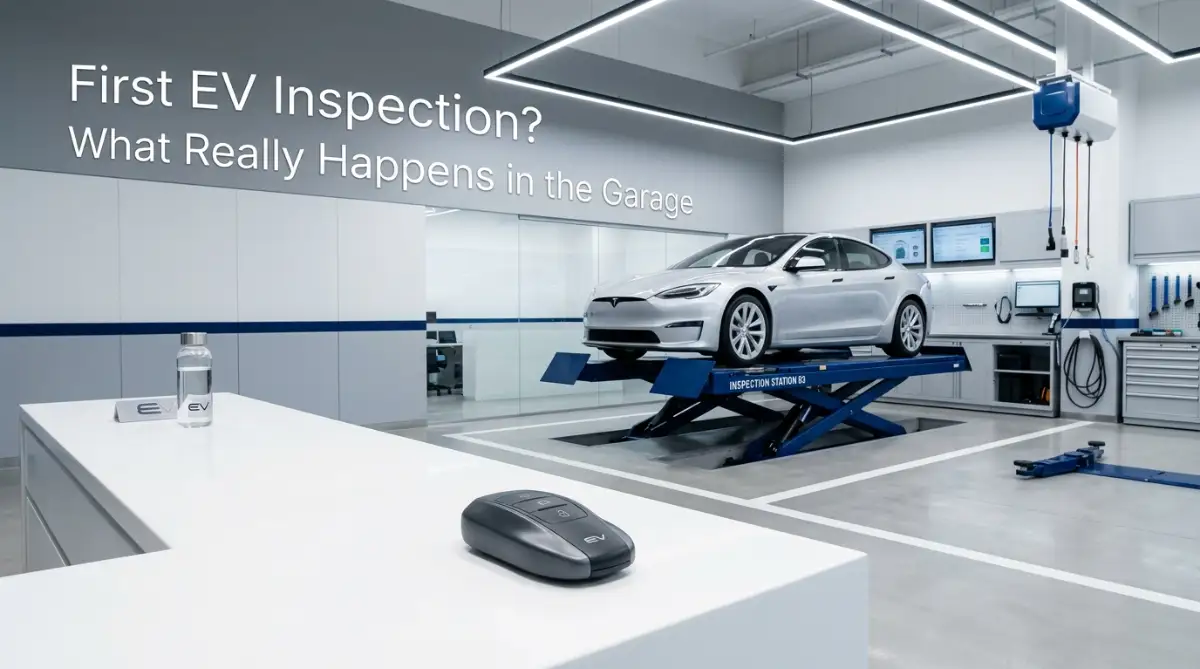
The Sweaty-Palm Reality of Your First EV Checkup
I was standing by the coffee machine in the dealer's waiting room, staring blankly at a daytime TV show I wasn't actually watching. My palms were a little sweaty.
I had just handed over the keycard to my very first electric car for its first official safety checkup. For months, I loved the silent driving, the instant speed, and skipping the gas station entirely. But right then, a dark cloud of anxiety was hanging over my head.
I kept thinking, "What if I ruined the battery by fast-charging it too often on that road trip? What if there is some hidden electrical fault that will cost me thousands of dollars?"
When you own a gas car, you know the drill. You worry about oil leaks, worn-out spark plugs, or a failing transmission. The noises tell you when something is wrong.
But an EV is completely silent. It feels like a giant computer on wheels. And because it is so quiet, the fear of the unknown becomes incredibly loud. You have no idea what goes on underneath that flat floorboard.
You worry about the orange high-voltage cables. You stress over software glitches. You wonder if your local mechanic even knows what they are looking at.
If you are feeling this exact same knot in your stomach right now, take a deep breath. You are absolutely not alone. Transitioning to new technology is scary, especially when your hard-earned money is on the line.
Let us walk through exactly what happens behind those garage doors, so you can walk into your next appointment with total confidence.
What an EV Checkup Really Costs, and How to Avoid Overpaying
Taking your electric car in for an inspection isn't only about passing a safety test. It's also about protecting your wallet.
A standard EV inspection is usually inexpensive, often between $50 and $150, since there's no oil or emissions system to check. Where people lose money is in the upsells. Many owners, unsure what their car actually needs, end up paying hundreds for fluid flushes and extras they never needed.
Your paperwork matters too. Keeping a clear record of your car's service history is one of the best ways to protect your 8-year/100,000-mile battery warranty. If you skip checkups and can't show that the car was looked after, you could risk your coverage on a battery pack worth around $15,000. That's a lot to put at risk to save a small fee.
So let's look at what a mechanic really needs to check, so you never pay a penny more than you have to.
Quick Summary
Your first EV safety inspection is entirely different from a traditional car checkup. Mechanics focus heavily on digital diagnostics, battery degradation, high-voltage cable safety, and unique wear-and-tear issues like rusting brake pads and rapidly wearing tires. Knowing these specific touchpoints helps you avoid surprise bills and keeps your electric ride running safely.
Key Takeaways
- Software over Hardware: Diagnostics happen on a computer screen before any tools touch your car.
- Tire Wear is Real: The extreme weight and instant torque of EVs eat through tires much faster.
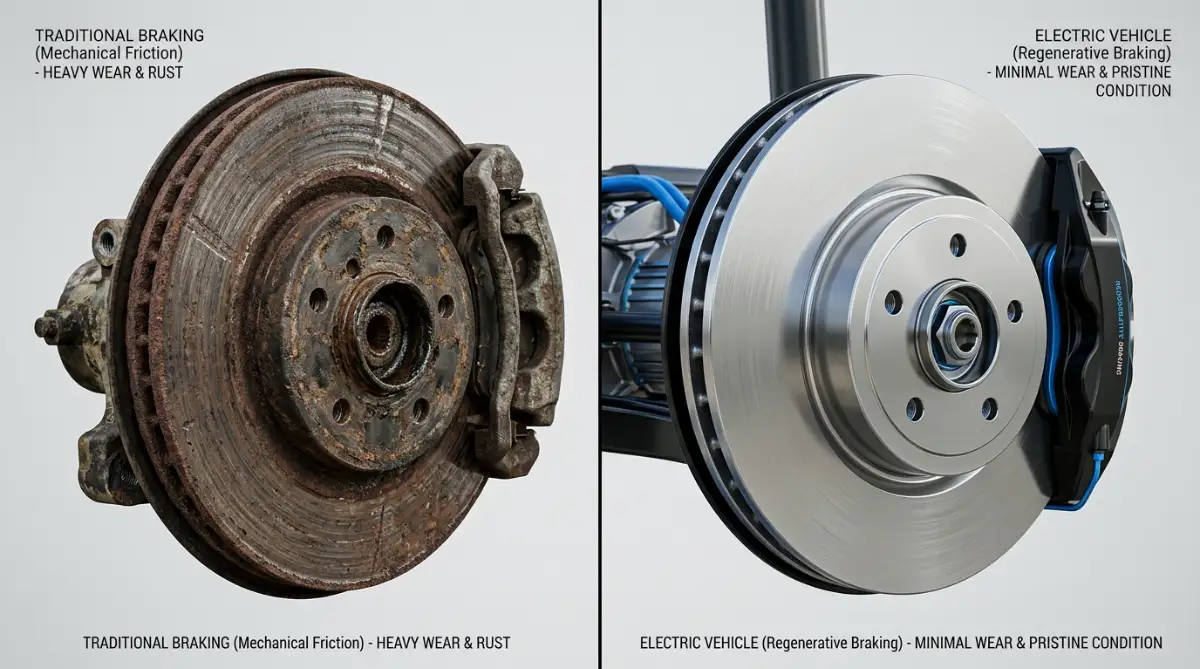
- Brake Rust: Because regenerative braking does most of the stopping, traditional friction brakes often suffer from rust and lack of use.
- Cooling is Everything: Battery thermal management systems are closely inspected to prevent overheating.
The Big Mix-Up: Standard vs. Electric Checkups
Most drivers get highly confused about what an EV inspection actually covers. People assume it is just a regular state safety check without the emissions test.
That is a dangerous assumption. While a standard inspection looks at general roadworthiness, an electric vehicle check goes deep into proprietary electrical systems. If you take your car to a mechanic who does not understand this difference, they might miss hidden dangers.
Here is a clear breakdown of how they differ.
Understanding this difference is your first step to taking control of your car's health. You need a technician who speaks the language of volts and amps, not just oil and gears.
Connecting to the Digital Brain
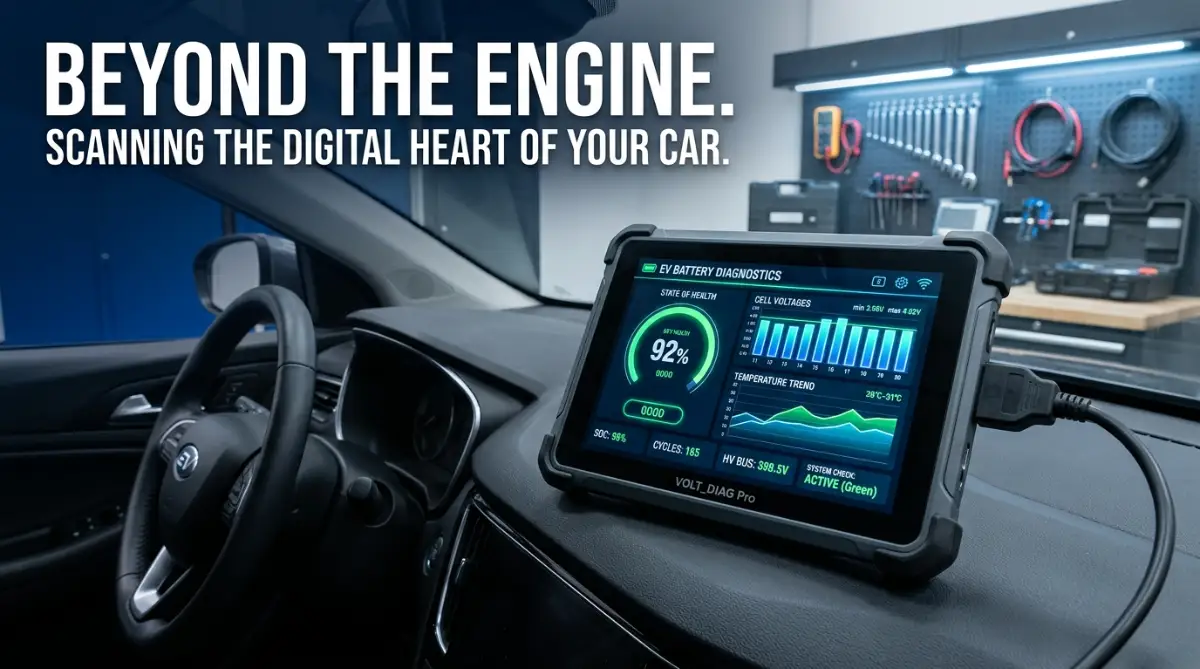
When the technician pulls your car into the bay, they do not grab a wrench first. They grab a laptop or a specialized tablet.
Your electric car is essentially a highly advanced network of sensors. The inspection begins by plugging into the diagnostic port. The mechanic runs a full system scan to talk to the battery management system.
They are looking for error codes that never triggered a warning light on your dashboard. This includes checking if all the battery cells are holding a balanced charge. If one cell is weaker than the others, the computer will flag it.
They also check to see if your car's software is fully up to date. Just like your smartphone, an EV needs firmware updates to manage power delivery safely and efficiently.
Real-Life Math: The Battery Health Reality
Let us look at a practical example to understand what the mechanic sees on their screen. Meet David. He brings his three-year-old EV in for its first major inspection.
David originally bought the car with a stated range of 300 miles per full charge. During the scan, the mechanic checks the Battery State of Health (SOH). The computer shows David's battery is at 92% SOH.
This means David has experienced an 8% degradation over three years.
Mathematically, his new maximum theoretical range is now 276 miles (300 x 0.92).
The mechanic explains that an 8% drop over this time frame is perfectly normal and healthy. Because David sees the exact math, his anxiety about a failing battery instantly vanishes. He knows exactly what he is working with.
The Heavy Weight Reality: Suspension and Tires
Electric vehicles are heavily loaded machines. The massive battery packs make them weigh significantly more than gas cars of the exact same size.
Because of this extreme weight, mechanics spend extra time looking at your suspension components. Shocks, struts, and control arms take a massive beating every time you hit a pothole.
Then, there is the tire situation. The instant torque of an electric motor feels amazing when you press the pedal. However, that fast acceleration literally scrubs the rubber off your tires.
Mechanics will closely measure your tire tread depth. Do not be shocked if you need new tires much sooner than you ever did with your old gas-powered sedan. It is just the reality of driving a heavy, powerful computer.
The Hidden Brake Rust Problem
This is one of the most surprising parts of an EV checkup. On a normal car, mechanics check the brakes to see if they are worn down from overuse.
On an electric car, they check the brakes for underuse.
Because you use regenerative braking to slow down, your actual physical brake pads rarely squeeze the metal rotors. If you live in a damp climate or an area that salts the roads in winter, moisture sits on those metal rotors.
Without the friction of regular braking to scrape the rust off, the brakes can seize up. The mechanic will physically inspect the calipers to ensure the sliding pins are lubricated and moving freely.
Watch exactly how technicians handle these hidden EV issues before you take your car in.
Inspecting the High-Voltage Lifeline
Underneath your car runs a network of bright orange cables. These are the high-voltage lines that carry massive amounts of electricity from the battery to the motors.
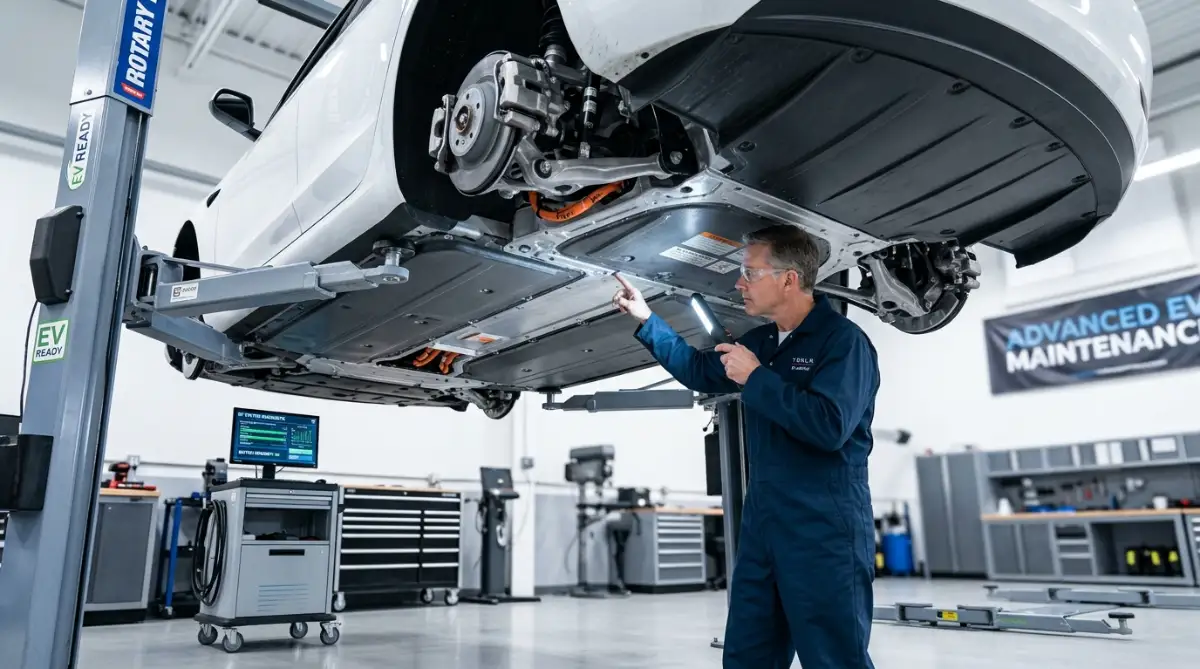
During the safety inspection, the mechanic will raise the car on a hoist. They will walk underneath with a bright flashlight, looking for any physical damage to these cables.
They are checking for road debris strikes, chafing against the frame, or even rodent damage. A compromised high-voltage cable is a serious fire and safety hazard.
They also inspect the armored shield that protects the main battery pack. If you ran over a large rock recently, this is when they will check to see if the battery casing took any structural damage.
Expert Insight: A Lesson Learned the Hard Way
I learned a massive lesson during my own inspection that I want to pass on to you. I used to rely solely on the car's screen to tell me my tire pressure was fine.
I never physically walked around the car to look at the tread. During my inspection, the mechanic showed me the inside edge of my rear tires. They were completely bald, down to the dangerous wire cords, even though the outside looked brand new.
The heavy weight and aggressive alignment of my EV had caused extreme uneven wear. Now, I turn the steering wheel all the way to one side once a month and physically inspect the entire width of the tire with my own eyes. Do not just trust the digital sensors.
The Cooling System: Preventing a Meltdown
Your battery gets incredibly hot when you use DC fast chargers on the highway. To prevent a dangerous meltdown, EVs pump liquid coolant through the battery pack.
This thermal management system is critical for your safety. During the inspection, the technician will check the coolant levels and inspect the hoses for any microscopic leaks.
If the cooling system fails, your car will intentionally limit your speed and charging rate to protect itself. Mechanics ensure the pumps are running quietly and efficiently so you never get stranded on a hot summer day.
Honest Pros & Cons of EV Maintenance
To give you a completely transparent view, here is what you can expect overall regarding EV safety checks.
The Pros:
- No oil changes, spark plug replacements, or exhaust system repairs ever again.
- Inspections are generally cleaner and faster than traditional gas cars.
- Software diagnostics catch problems long before they become catastrophic failures.
- Brake pads can easily last over 100,000 miles due to regenerative braking.
The Cons:
- You must find a specifically certified high-voltage technician.
- Tire replacement costs are much higher and happen more frequently.
- If a proprietary computer module fails, it is often a very expensive replacement.
- Wait times for EV-specific parts can be frustratingly long.
Common EV Safety Issues Discovered
To help you prepare mentally and financially, it is good to know what mechanics find most often. It is rarely a failing battery.
Instead, the issues are usually mundane but specific to the platform. Here is a breakdown of the most frequent items flagged during a first-time inspection.
Notice the last point on that table. Yes, your modern electric car still has an old-school 12-volt battery sitting in the front.
It runs the computers, the doors, and the lights. If that small battery dies, your entire giant car turns into a heavy brick. Mechanics will always test the health of this small battery during your safety check.
Preparing Your Car Before Rolling In
You want to make the inspection as smooth as possible. There are a few things you can do right in your driveway before handing over the keys.
First, make sure your car is charged to at least 50%. The technician needs enough battery power to run active heating and cooling tests. If you bring it in near zero, they will have to waste time charging it first.
Second, clean out the trunk and the back seat. Mechanics often need to access hidden panels under the floorboards to check the high-voltage disconnect switches.
Finally, write down any weird behaviors you have noticed. Did the screen glitch last Tuesday? Did you hear a faint clicking noise when turning left?
Because the car is so quiet, these small clues are incredibly helpful for the diagnostic process. Handing the mechanic a small list of observations shows you are an active participant in your car's health.
Walking into the garage does not have to be a sweaty, anxious experience. Your electric vehicle is a masterpiece of engineering. By knowing exactly how they check the software, tires, rust, and cables, you are completely back in the driver's seat.
Take a breath, hand over the keycard, and enjoy the peace of mind that comes with understanding your machine.
Mastering Your Electric Ride: Advanced Maintenance Secrets
Taking care of an electric car requires a slight shift in your daily habits. You do not have to worry about oil changes, but you do need to manage the digital and chemical health of your vehicle. The way you drive and charge directly impacts what the mechanic finds during your safety check.
One of the smartest things you can do before your appointment is to calibrate your battery management system (BMS). The BMS is the computer that tells you how much range you have left. If you only charge your car in small bursts, the computer gets confused about the battery's true capacity.
To fix this, let your battery drain down to about 20%, and then charge it up to the manufacturer's recommended limit. Doing this a few days before your inspection gives the mechanic a highly accurate reading of your battery health. This is a core part of how to extend the battery life of an electric vehicle, ensuring you get the most out of your investment.
Another massive secret is actively managing your regenerative braking. If you always drive in "one-pedal" mode, your physical brake pads are just collecting dust and moisture. Once a week, safely shift your car into neutral on an empty road and press the brake pedal firmly.
This forces the physical brake pads to clamp down on the metal rotors. It scrapes away the surface rust and keeps the sliding pins lubricated. Mechanics love seeing a clean set of brake rotors on an EV, and it saves you hundreds of dollars in unnecessary replacements.
Pro Tips: Always ask your mechanic to print out or email you the exact Battery State of Health (SOH) diagnostic report. Keep this physical record in your glovebox. When it comes time to sell your car, having a documented history of excellent battery health will significantly increase your resale value.
Weather also plays a massive role in how your car performs on the diagnostic scanner. If you bring your car in on a freezing winter morning with a cold battery, the diagnostic tools might show reduced charging efficiency. Knowing how to safely charge your electric car in freezing temperatures helps keep the thermal management system happy before you roll into the service bay.
The Hidden Pitfalls: Common Mistakes
When making the jump from gas to electric, people bring their old habits with them. This usually leads to expensive surprises when the car is finally put on a lift. The most frequent trap is completely ignoring the tires.
Because electric motors deliver instant power to the wheels, your tires experience massive torque every time you pull away from a stoplight. If you do not rotate your tires every 5,000 miles, they will wear out incredibly unevenly. I have seen owners forced to replace all four tires after just a year because they skipped basic rotations.
Here is a clear breakdown of how traditional car habits fail electric vehicle owners.
Another major pitfall is attempting to fix high-voltage issues yourself. You might see a loose orange cable under the hood and think you can just push it back into place. Never touch those cables.
Those bright orange lines carry enough electrical current to cause severe or fatal injuries instantly. If you notice any damage, back away and let an ASE-certified EV technician handle it. The safety systems are built to protect you, but human error is always the biggest risk.
People also panic when they experience slow charging speeds right before an inspection, assuming the battery is dead. Most of the time, the issue is environmental or software-related. Understanding why your EV charging is so slow will save you from asking the mechanic to diagnose a problem that does not actually exist.
Myth vs Reality
The internet is full of terrifying stories about electric vehicle maintenance. Let us clear up the confusion so you can walk into the shop with facts, not fear.
The Exact Step-by-Step Execution Guide
You are ready to get your car checked out, but you want to do it right. Follow these exact steps to ensure a smooth, transparent, and affordable experience at the garage.
Step 1: Locate a Certified Specialist
Do not just drive to the shop on the corner. Call ahead and explicitly ask, "Do you have a certified high-voltage technician on duty today?" If they hesitate, hang up and find a dealership or a specialized EV garage.
Step 2: Update the Brain
The night before your appointment, park your car near your home network. Check your mobile app or dashboard for any pending software updates and install them. You do not want to pay a mechanic an hourly labor rate just to press "update" on a screen.
Step 3: Document the Range
Write down your current estimated range at an 80% or 100% charge. This gives you a baseline to compare against the mechanic's official battery health report. Knowing how to maximize your electric vehicle range starts with knowing your true baseline capacity.
Step 4: Communicate Clearly
When you arrive, hand over a small written list of your concerns. Mention any odd sounds, screen glitches, or unusual tire wear you have noticed. This focused approach saves diagnostic time and builds instant respect with your technician.
Quick Action Checklist
Before you leave your driveway for the service center, make sure you have everything ready. Being prepared stops unnecessary delays.
- Key Fob and Keycards: Bring all physical keys. Sometimes the technician needs to re-sync them after a major software update.
- Mobile App Access: Make sure your phone is charged and logged into your car's companion app. You may need to grant the mechanic remote access to start the diagnostic mode.
- Wheel Lock Key: If your EV has custom aerodynamic wheels, the mechanic needs the specialized lug nut key to remove the tires for brake inspection.
- Charging Adapter: Leave your home charging adapter in the trunk. The mechanic might want to test the pins for heat damage. Speaking of home charging, ensuring your home setup is flawless is just as important. You can review how to set up your electric vehicle home charger to make sure your daily routine is safe.
Confident Driving Ahead
I used to dread taking my car into the shop because I felt completely at the mercy of the mechanic's clipboard. But once I understood how the digital diagnostics worked and why my tires were wearing out, the anxiety completely vanished. You are now armed with the exact knowledge you need to protect your vehicle and your wallet.
Driving an electric car is an amazing experience, and maintaining it should be just as smooth. By staying on top of your software updates, rotating your tires, and finding the right certified professional, you will enjoy years of silent, reliable driving.
What part of the EV inspection makes you most nervous, or what surprised you the most about the process? Let me know in the comments below!
Common Questions About EV Maintenance
Do electric cars need annual inspections?
Yes, electric cars require regular safety checks just like gas cars. While they do not need emissions tests, mechanics must inspect the high-voltage systems, brakes, and heavy-duty suspension annually.
How much does an EV safety check cost?
An electric vehicle inspection is often slightly cheaper than a traditional car. Because there are no exhaust systems or complex engine components to evaluate, the labor time is usually reduced.
Can a regular mechanic inspect my electric vehicle?
No, you should never let an uncertified mechanic work on your EV. They need specific high-voltage safety training and proprietary computer software to properly read the battery management system.
Do they check the EV battery during an inspection?
Yes, but they do it digitally rather than physically opening the battery pack. They plug a computer into the diagnostic port to read the cell balance, temperature history, and overall state of health.
How often do EV brakes need to be checked?
Brakes should be visually inspected at least once a year. Because regenerative braking does most of the work, the physical pads last a long time, but the metal rotors are highly prone to dangerous rust buildup.
What happens if my high-voltage cable is damaged?
If a mechanic finds damage to the orange high-voltage cables, the car is considered unsafe to drive. The cables must be replaced immediately to prevent electrical fires or power failure on the highway.
Will my car fail inspection for a software update?
Usually, an outdated software version will not cause you to fail a legal safety inspection. However, mechanics strongly recommend updating it, as new software often patches critical safety bugs in the braking or charging systems.
Why do EV tires fail safety checks faster?
Electric vehicles are extremely heavy due to the battery pack, and electric motors deliver instant torque to the wheels. This aggressive combination grinds the rubber down significantly faster than a traditional gas-powered car.
Is the 12V battery checked during an EV service?
Absolutely. Even though your car has a massive high-voltage battery, a standard 12-volt battery runs the computers and door locks. If this small battery fails, your entire electric car will refuse to start.
How long does an electric car inspection take?
A standard safety and diagnostic check usually takes about an hour. If the mechanic needs to perform a major firmware update or clean rust off the brake calipers, it can take slightly longer.
Trusted EV Inspection & Safety Resources
To verify certified technician standards, official safety guidelines, and federal electric vehicle recall histories, explore these authoritative resources:
-
-
National Institute for Automotive Service Excellence (ASE) – EV Technician Certification: (Official credentialing standards for certified high-voltage electric vehicle mechanics)
-
National Highway Traffic Safety Administration (NHTSA) – EV Recalls & Safety: (Federal database for safety recalls, battery defects, and component safety standards)
-