
🕒 Reading Time: 14 Mins | ✍️ Reviewed By: FinanceInfoIn Editorial Team
The Moment a Surprise Medical Bill Drains Your Bank Account
Nothing prepares you for the sick feeling of opening a routine hospital letter and finding a balance due of $8,450. Three weeks after an unexpected emergency room visit for severe abdominal pain, I stared at that number in absolute disbelief. I had health insurance and had diligently paid every single monthly premium.
Yet, between routine imaging scans and an out-of-network specialist I never knowingly agreed to see, my entire emergency cushion vanished on paper in a matter of seconds. That paralyzing sense of financial panic is a harsh reality millions of hardworking families wake up to every single day.
I spent the next few weeks waking up with a tight chest, terrified to check my mailbox. Every envelope that looked like it came from a hospital or a collection agency sent a shockwave of panic through my body. My sleep schedule was destroyed.
This kind of financial pressure does not just hurt your bank account. It slowly eats away at your mental peace, your relationships, and your overall health. You start snapping at your loved ones over minor things.
You find yourself staring blankly at the ceiling at 3 AM, doing mental math that never seems to add up. You cancel plans with friends because you are too afraid to spend even five dollars on a cup of coffee. The constant fear of losing your savings or ruining your credit score is paralyzing.
But eventually, I realized that ignoring the letters was only making the nightmare worse. I had to face the reality of my situation and take back control of my finances, one small step at a time.
Quick Summary
Unexpected hospital bills can cause extreme anxiety, but you have more control than you think. By requesting an itemized invoice, checking for billing errors, and negotiating directly with the provider, you can often drastically reduce the total amount owed. Setting up a zero-interest payment plan or applying for a financial hardship program is a realistic way to handle the balance. Protecting your mental health is just as important as protecting your wallet during this process.
The Hidden Toll of Surprise Healthcare Bills
Financial anxiety from healthcare expenses is incredibly common. Even if you have good insurance coverage, out-of-pocket maximums and out-of-network charges can completely blindside you.
People often feel a deep sense of shame when they cannot afford their care. They assume they did something wrong with their budgeting. The truth is, one major health event can easily exceed an average family's entire emergency fund.
You might be tempted to put the whole amount on a high-interest credit card just to make the problem go away. But making emotional money decisions out of fear is the worst thing you can do right now.
Step 1: Breathe, Pause, and Do Not Pay Immediately
When you receive a huge invoice, your first instinct is to panic and drain your savings account. Do not do that. A medical bill is not a final legal verdict.
It is simply an initial offer from the billing department. They fully expect that the insurance company, or you, will push back on the total amount. Take a deep breath and put the paper in a folder.
Give yourself a few days to calm down before taking any action. You need a clear, logical mind to handle the upcoming negotiations. Rushing to pay could mean throwing away money you did not actually owe.
Expert Tip: Whenever you speak to a billing representative on the phone, always write down their name, the date, and a summary of what they told you. Having this paper trail can save you if there is a dispute later.
Step 2: Demand an Itemized Breakdown
Never accept a summary bill that simply says "Lab Services" or "Emergency Room Visit." You need to see exactly what they are charging you for, down to the single bandage.
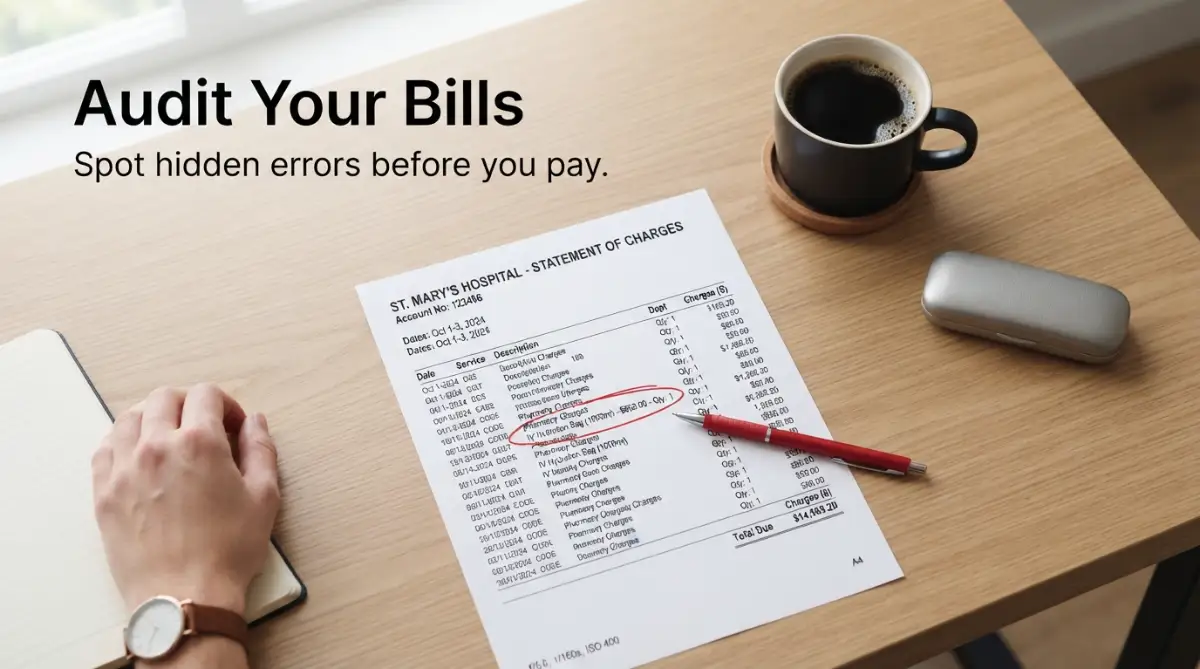
Call the billing department and formally request an itemized statement. This document will show specific codes for every single procedure, pill, and consultation you received.
Once they know you are looking at the itemized list, they often drop certain inflated charges automatically. They realize you are an informed patient who is paying close attention.

Breaking Down the Math (Real-Life Case Example)
Let us look at David and Sarah's situation. After Sarah had a minor surgery, they received a shocking bill for $12,500. They were panicked because they only had $3,000 in their savings.
Instead of paying it right away, David asked for the itemized statement. He noticed they were charged $1,200 for a medication Sarah never actually received, and $800 for an extra night in the hospital they did not stay for.
By pointing out these exact errors, the hospital immediately adjusted the bill down to $10,500. Then, David applied for the hospital's financial assistance program, which reduced the bill by another 40%. They were left with a final balance of $6,300. They set up a $150 monthly payment plan, completely saving their emergency fund.
Step 3: Check for the Silent Billing Errors
Medical billing is an incredibly complex system run by humans, which means mistakes happen constantly. You need to become your own auditor.
Look out for duplicate charges. Sometimes a nurse and a doctor will both accidentally log the same procedure. Also, watch out for canceled tests that somehow still made it onto the final invoice.
If you see a CPT code you do not understand, type it into Google. Make sure the code matches the actual treatment you received.
Know Your Legal Rights Under the No Surprises Act
Under the federal No Surprises Act, consumers are legally protected from unexpected out-of-network balance billing for emergency services, as well as non-emergency care provided by out-of-network doctors at in-network facilities. If you receive a surprise balance bill from an out-of-network provider that you did not explicitly choose, you are legally only required to pay your normal in-network cost-sharing amount. Always remind the billing supervisor of your federal No Surprises Act protections before agreeing to any settlement.
Step 4: The Art of Asking for Financial Assistance
Almost every non-profit hospital has a charity care policy legally required by the government. Even many for-profit clinics have internal financial hardship programs.
Do not assume you earn too much to qualify. These policies often cover individuals earning up to three or four times the federal poverty level. Ask the billing department for their financial assistance application immediately.
They will ask for your tax returns, pay stubs, and a list of your current expenses. Be completely honest and thorough. If approved, your bill could be slashed in half, or entirely forgiven.
I learned this the hard way when I tried to drain my retirement account to pay a bill. I had no idea that a simple hardship application could have saved me thousands. My pride almost cost me my future security. Always ask for the hardship application before you offer them a single dime.
Exploring Your Settlement Options
If you do not qualify for complete forgiveness, you can still negotiate a lump-sum settlement. Providers know that sending a bill to a collection agency means they will only get pennies on the dollar.
If you have a bit of cash saved up, offer them a lump sum. For example, if you owe $4,000, tell them you can pay $2,000 today if they consider the account paid in full.
Honest Pros & Cons: Settling for a Lump Sum
The Pros:
- You wipe out the debt instantly and stop the constant worry.
- You often save a massive percentage of the original total.
- You completely avoid the risk of the account going to a collection agency.
The Cons:
- You have to give up a large chunk of your cash savings all at once.
- It requires bold negotiation skills and back-and-forth phone calls.
- You must get the agreement in writing before you actually send the money.
Confusing Alternatives: How Should You Pay?
When you realize you have to pay the debt over time, you will face a few different choices. It is easy to get confused by the different financial products available.
Many offices will try to push you toward a medical credit card. While this sounds convenient, it can be a massive financial trap if you are not careful.
Always push for the in-house payment plan first. Tell the billing department exactly what you can afford each month, even if it is only $50. As long as you are making consistent payments, they will usually accept it.
Protecting Your Mental Well-Being Along the Way
Handling aggressive medical invoices will definitely test your patience. It is completely normal to feel angry, exhausted, and overwhelmed.
You need to establish boundaries to protect your mental health. Do not check your hospital portal or open billing mail right before you go to bed.
Set aside one hour on a specific day, like Saturday morning, to make your phone calls and organize your paperwork. Once that hour is up, close the folder. Give yourself permission to live your life for the rest of the week without thinking about the debt.
What Happens If You Ignore the Bills?
Avoidance is the most dangerous coping mechanism. If you throw the letters in the trash, the hospital will eventually sell your debt to a third-party collector.
Once it goes to collections, it becomes much harder to negotiate. The calls will become more frequent, and your credit score could take a serious hit.
Even if you can only pay ten dollars a month, keep the lines of communication open. Let the billing office know you are trying your best. Hospitals prefer dealing with a responsive patient over one who completely disappears.
By staying proactive, checking your itemized statements, and asking for help, you can absolutely survive this financial storm. Your health is your most valuable asset. Do not let the stress of paying for it destroy the quality of your life today.
Advanced Strategies to Lower Your Medical Balances
Once you have reviewed your itemized statement, you can take your negotiation strategy to the next level. You do not have to fight the hospital billing department completely on your own. There are independent professionals who specialize in lowering healthcare costs for everyday patients.
Consider hiring a medical billing advocate if your invoice is overwhelmingly large. These experts understand complex coding systems and know exactly where hospitals hide inflated charges. They typically charge a percentage of the money they save you, meaning you only pay them if they successfully reduce your balance.
You can also leverage state-specific consumer protections. The Consumer Financial Protection Bureau (CFPB) regularly updates regulations that prevent aggressive medical debt collection. Many states now legally limit how much a hospital can charge uninsured patients for emergency care.
If you feel completely stuck, reach out to a non-profit legal aid society in your area. They often provide free advice on how to navigate aggressive collection agencies. Protecting your rights is just as important as managing personal budget adjustments during this stressful time.
The Most Dangerous Traps to Avoid
When panic sets in over a large hospital invoice, it is easy to make quick decisions that ruin your long-term financial health. The biggest mistake people make is converting zero-interest medical balances into high-interest consumer debt.
Never put a massive hospital bill on your everyday credit card just to get the billing department off your back. The moment you do this, you lose all your rights to negotiate the medical charge. Instead, you are now trapped paying exorbitant interest rates to a bank.
Another major pitfall is ignoring the letters completely out of fear. When a medical bill gets sent to a third-party collection agency, it can severely damage your credit score. A ruined credit profile can make it impossible to secure a fair interest rate on future loans, directly impacting your debt-to-income ratio.
Common Mistakes
- Emptying your retirement accounts: Pulling money from a 401(k) or IRA triggers massive tax penalties and robs your future self of financial security.
- Ignoring the Explanation of Benefits (EOB): Throwing away letters from your insurance company means you might miss proof that they accidentally denied a covered service.
- Paying the very first bill you receive: Hospitals expect negotiations. Paying the initial summary statement almost guarantees you are overpaying for hidden administrative errors.
- Signing up for medical credit cards blindly: Many people fail to read the fine print on deferred interest promotions, ending up with thousands in unexpected fees.

Pro Tip: If an aggressive debt collector calls you, legally request that they only communicate with you in writing. This simple step instantly stops the harassing phone calls and forces them to provide physical proof that you actually owe the money.
If you have already made the mistake of using a credit card, you are not out of options. You can still learn about negotiating with credit card companies to see if they will temporarily lower your APR while you catch up.
Your Action Plan for Debt Relief
Taking back control of your financial life requires a structured approach. You need to gather your paperwork, organize your thoughts, and approach the billing department with confidence.
The Exact Step-by-Step Execution Guide:
- Step 1: Call the billing department and request a complete hold on your account for 30 days while you review the charges.
- Step 2: Request a detailed itemized statement and your insurance company's Explanation of Benefits (EOB).
- Step 3: Compare the two documents line by line, highlighting any duplicate charges or denied coverages.
- Step 4: Submit a formal request for the hospital's financial hardship or charity care application.
- Step 5: If you do not qualify for full forgiveness, propose a monthly payment plan that comfortably fits within your current income.
To ensure your application is processed quickly, you must have your financial documents ready before you make the call. Missing a single piece of paper can delay your relief by several weeks.
Required Document Checklist:
- Your most recent federal and state tax returns.
- Two to three months of recent pay stubs from all employers.
- Complete bank statements for all checking and savings accounts.
- A documented list of your monthly living expenses (rent, utilities, groceries).
- Any letters of denial or approval from your health insurance provider.
Quick Action Checklist
- Check your mailbox today and open all unopened medical envelopes.
- Create a dedicated physical folder strictly for healthcare invoices and insurance letters.
- Check your hospital's official website to see if their financial assistance policy is posted online.
- Review your bank statements to ensure no unauthorized auto-drafts are taking place.
If you notice suspicious activity while paying bills online, take immediate action to protect your personal bank account from potential fraud. Always use secure payment portals directly linked to your healthcare provider.
Myth vs Reality: The Truth About Hospital Billing
You do not need to be wealthy to fight back against unfair healthcare costs. Even if you are just building an emergency fund with a tight budget, you have the right to demand fair and accurate billing.
Taking Back Your Peace of Mind
Navigating the complex world of healthcare expenses is undeniably exhausting. But remember, every single phone call you make and every error you find keeps your hard-earned money in your pocket.
You have the power to protect your family's financial future. Do not let a temporary health crisis define your permanent financial reality.
I know firsthand how dark those sleepless nights can feel when the bills are piling up. But the moment I finally picked up the phone and asked for an itemized statement, the fear started to fade. You can do this, and you deserve a life completely free from financial anxiety.
Have you ever successfully negotiated a surprise hospital bill? Let me know your experience in the comments below!
Common Questions About Medical Debt Handling
Can a hospital force me to pay my entire bill at once?
No, hospitals cannot legally force you to empty your bank account on the spot. Almost all healthcare providers will allow you to establish a monthly payment plan if you simply ask.
What should I do if my insurance wrongly denies a medical claim?
You have the legal right to file a formal appeal directly with your insurance provider. If they still refuse to pay, you can file a complaint with your state's department of insurance.
Do medical bills expire after a certain amount of time?
Yes, every state has a specific statute of limitations on debt collection, which typically ranges from three to six years. Once that time passes, collectors cannot legally sue you for the balance, though the debt may still exist.
Will applying for financial assistance hurt my credit score?
Applying for a hospital's internal charity care program does not require a hard credit check. It is completely separate from your credit report and will not negatively impact your score.
Can a debt collector garnish my wages for an unpaid hospital bill?
If a collector sues you in court and wins a judgment, they can legally garnish your wages. However, this is usually a last resort, and you can easily avoid court by negotiating a settlement early on.
Should I use a home equity loan to pay off my hospital debt?
Absolutely not. Using your house as collateral to pay an unsecured healthcare bill puts your actual home at risk of foreclosure if you miss a payment.
Are there government programs that help pay off existing medical debt?
While the federal government does not directly pay off private medical debt, programs like Medicaid can sometimes offer retroactive coverage for recent bills. You should check your state's Medicaid eligibility rules immediately after an emergency.
What happens if I find an error on my itemized hospital bill?
You must immediately contact the billing department in writing, highlighting the specific error. They are required to investigate the charge and issue a revised statement with the corrected balance.
Can I negotiate a lower price before a planned surgery?
Yes, asking for the "cash pay" or uninsured discount before a procedure can save you thousands. Hospitals love upfront payments and will often reduce the total cost significantly if you pay early.
Does medical debt affect my ability to buy a house?
Recent changes in credit reporting laws have made medical debt less damaging to your overall score than in the past. However, a massive unpaid collection account can still make mortgage lenders nervous.