
Reading Time: 12 Minutes
Difficulty Level: Beginner to Intermediate
Reviewed By: FinanceInfoIn Editorial Team
Table of Contents
- Quick Summary
- The Hidden Roadblock to Your Dream Home
- What Exactly Are Mortgage Lenders Looking At?
- Step 1: Identifying Your True Monthly Debt
- Step 2: Finding Your Actual Gross Income
- Step 3: Doing the Simple Math
- What Numbers Do Mortgage Lenders Actually Want?
- Smart Ways to Improve Your Numbers
- Key Takeaways
Quick Summary
To get a home loan, you must know your debt-to-income (DTI) ratio. Lenders use this number to see if you can afford monthly mortgage payments. You calculate it by dividing your total monthly debt payments by your gross monthly income. Keeping this number below a certain percentage makes getting a mortgage much easier.
The Hidden Roadblock to Your Dream Home
I still remember sitting at my small kitchen table, staring blankly at a polite rejection letter from a mortgage lender. My chest felt heavy, and a knot formed in my stomach. I had saved up a decent down payment and had a steady job. I thought I was totally ready to buy my first home.
But I was completely blind to a massive hidden roadblock. My income was good, but the amount of money leaving my bank account every month for car loans and credit cards was just too high. The lender told me my "DTI" was simply too risky for them.
I had no idea what that meant at the time. I felt embarrassed and defeated, thinking I would be stuck renting forever. It felt incredibly unfair to work so hard and still hit a brick wall.
Every single day, hardworking people face this exact same frustration. You pay your bills on time, you work long hours, and yet the banking system says you do not qualify. It destroys your peace of mind and makes financial freedom feel like a total illusion.
The stress of not understanding why you are being rejected is exhausting. You start second-guessing every financial decision you make. You wonder if buying a cup of coffee is the reason you cannot buy a house.
The good news is that this problem is entirely fixable once you understand the math. Let me show you exactly how to take back control of your numbers.
What Exactly Are Mortgage Lenders Looking At?
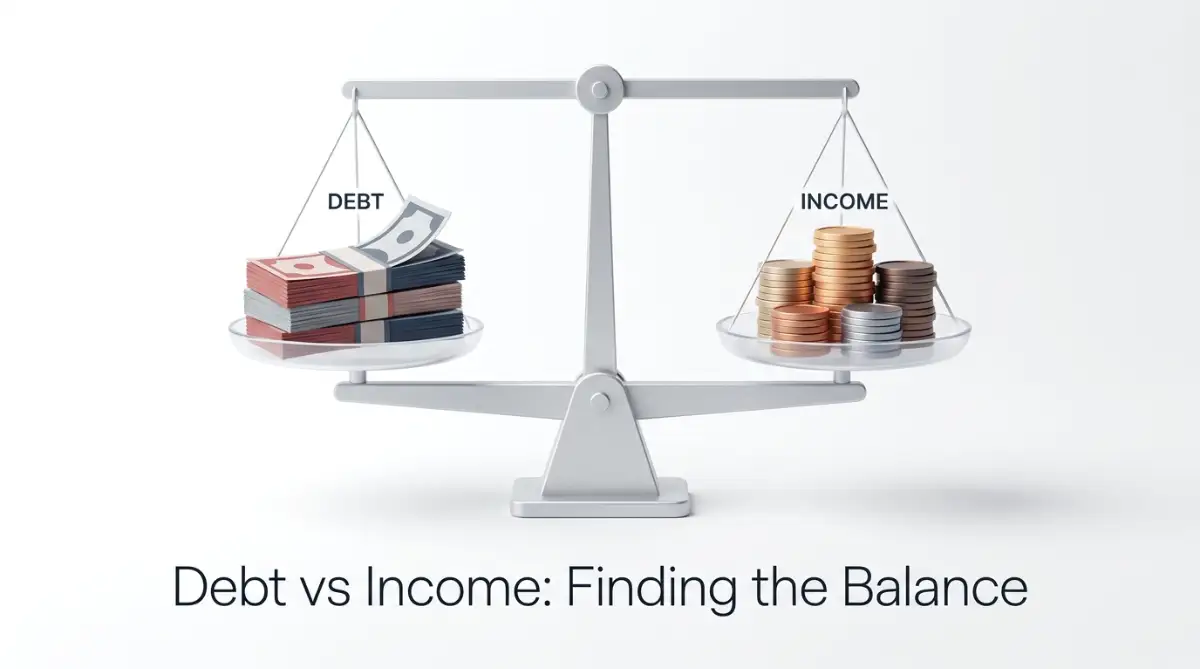
Think of your personal finances like a heavy backpack you carry on a long hike. Your income is your physical strength, and your monthly debts are the heavy rocks inside that backpack. Lenders want to make sure you are strong enough to carry your current rocks, plus the massive new rock of a home loan.
If your backpack is already overflowing with car payments, student loans, and credit card minimums, adding a mortgage might cause you to collapse. That is exactly what the Debt-to-Income ratio measures. It is simply a mathematical way to weigh your rocks against your strength.
By calculating this ratio yourself, you remove the mystery from the home-buying process. You get to see exactly what the bank sees before they even run your credit report. This puts all the power back into your hands.
Step 1: Identifying Your True Monthly Debt
The very first thing you need to do is gather a list of your recurring monthly debts. We are only looking at specific obligations that show up on your credit report. We are not looking at your utility bills, groceries, or Netflix subscriptions.
You need to write down the minimum monthly payment for each of your actual debts. Do not write down the total balance you owe. The lender only cares about the cash flow leaving your account every thirty days.
Here is a quick look at what you should and should not include in this list.
Make sure you are brutally honest with yourself when making this list. Missing a debt will only hurt you later when the underwriter reviews your file. Add all of these minimum payments together to get your Total Monthly Debt.
Expert Tip: Pull a free copy of your credit report before making this list. Sometimes there are old debts or errors on your report that lenders will see, and you want to catch those early.
Step 2: Finding Your Actual Gross Income
Now we need to figure out your total income before any taxes or deductions are taken out. This is called your gross monthly income. Many people make the mistake of using the number that hits their checking account, which is their net income.
Lenders always use your gross income to run their calculations. If you are paid a steady salary, finding this number is incredibly easy. Just take your annual salary and divide it by twelve.
If you get paid hourly, it takes a little bit more math. You will need to calculate your weekly earnings and multiply that out for the month. Let us look at a few common examples.
If you rely on heavy bonuses, overtime, or commissions, lenders usually need to see a two-year history of that extra money to count it. For now, stick to your guaranteed base pay to be safe. Write this final number down as your Gross Monthly Income.
Step 3: Doing the Simple Math
You now have the two numbers you need to find your exact ratio. Grab your phone or a calculator for this final step. We are going to divide your debt by your income.
First, enter your Total Monthly Debt. Next, hit the divide button and enter your Gross Monthly Income. Finally, multiply that result by 100 to turn it into a percentage.
Real-Life Scenario: Let us say your total monthly debt payments equal $1,500. Your gross monthly income before taxes is $5,000.
You would do the math like this: $1,500 ÷ $5,000 = 0.30.
Multiply by 100, and your ratio is 30%.
This single percentage is the magic number every mortgage broker will ask you about. Knowing it right now gives you a massive advantage.
I actually used to think my rent payment should be included in my current debt calculation before applying for a mortgage.
Pro Tip: Do not include your current rent payment in your calculation. The lender is trying to figure out if you can afford the new mortgage payment, which will be replacing your rent anyway. Including your rent will make your numbers look terrifyingly bad for no reason.
Here is a great resource to help you understand what happens next:
Check out this detailed video breakdown on what lenders expect from your application.
What Numbers Do Mortgage Lenders Actually Want?
Not all loan programs are created equal. Different types of loans have different rules about how much debt you can carry. However, they all follow a general guideline.
Lenders look at two different ratios, often called the "front-end" and the "back-end." The front-end only looks at your proposed new housing payment compared to your income. The back-end looks at your new housing payment plus all your other debts combined.
The back-end ratio is the one that causes the most people to get rejected. Let us look at the standard limits that most banks try to stick to.
If your calculation from Step 3 is already above 40% before you even add a mortgage payment, you have some work to do. You will likely struggle to get approved for anything. If you are sitting around 10% to 20%, you are in a very strong position to buy a house.
Smart Ways to Improve Your Numbers
If your percentage is too high right now, do not panic. I have been exactly where you are, and you can absolutely fix this. You just need a solid plan of attack.
Your first option is the most obvious: pay down your existing debt. Focus on eliminating the debt with the highest monthly payment first, not necessarily the highest balance. Wiping out a $300 a month car payment frees up a massive amount of room in your ratio.
Your second option is to increase your gross income. This could mean asking for a raise, picking up overtime, or starting a documented side hustle. Remember, though, lenders need to see a history of this new income, so start early.
Finally, consider paying off small credit card balances entirely. If you have a card with a $500 balance and a $35 minimum payment, wiping it out instantly improves your monthly cash flow. Every single dollar counts when you are trying to impress a mortgage underwriter.
Key Takeaways
- Your debt-to-income ratio compares your required monthly debt payments to your gross, pre-tax income.
- Do not include living expenses like groceries, cell phone bills, or utility payments in your debt list.
- Lenders prefer a total back-end ratio of 43% or lower to approve most standard home loans.
- Paying off high-payment debts like car loans or credit cards is the fastest way to improve your qualifying chances.
Smart Strategies to Master Your Mortgage Ratios
I remember when I first realized my debt numbers were holding me back from buying a house. I felt completely stuck and frustrated. But once you know your baseline percentage, you can take immediate action to reshape your financial profile. You do not have to wait for a miracle to happen. You just need a smart, targeted plan to clean up your cash flow.
One of the best secrets I learned was to stop focusing only on cutting daily expenses and start focusing on restructuring my liabilities. For example, if you have three credit cards with high minimum payments, a debt consolidation strategy might be a great option. By moving those balances into a single personal loan with a lower interest rate, your required monthly payment often drops significantly.
Pro Tip: Never close a credit card account immediately after paying it off if you are preparing to buy a house. Closing the account reduces your total available credit, which can accidentally drop your credit score and mess up your loan application. Just pay it down to zero and leave it open.
Another powerful move is to find unrecorded income that the bank might accept. Do you receive consistent child support or alimony? If you can prove you have received it for the last six months and it is scheduled to continue, many underwriters will let you add it to your gross earnings. The same rule applies to permanent disability payments or steady pension income.
Quick Action Checklist
- Review your credit report for errors and dispute them immediately.
- Pay down revolving credit card balances to under 30% of their limit.
- Pause all new credit applications until after your home closes.
- Ask your employer for a formal letter stating your guaranteed base salary.
- Set up automated payments so you never miss a due date.
If you find yourself living paycheck to paycheck, it is incredibly hard to find extra money to pay down balances. I highly recommend learning how to create a personal budget when living paycheck to paycheck. A clear budget reveals exactly where your cash is hiding so you can redirect it toward your goals.
Understanding these tiny mathematical shifts is exactly how to lower your debt to income ratio before a mortgage application. You do not need to pay off absolutely everything you owe to get a house. You simply need to lower the monthly minimums enough to satisfy the banking rules.

Dangerous Financial Traps That Ruin Loan Approvals
I have seen so many hardworking people ruin their chances of buying a home because of a few simple misunderstandings. The banking system is incredibly unforgiving when it comes to late changes in your credit profile. You might think you are making a smart financial move, but the lender might see it as a massive red flag.
The most heartbreaking mistake is financing a new vehicle right before applying for a mortgage. I had a friend who bought a new truck to celebrate his upcoming home purchase. The new $600 monthly car payment instantly pushed his ratios over the acceptable limit, and the bank denied his home loan on the spot.
Common Mistakes That Will Hurt Your Application:
- Co-signing a loan for a family member: Even if you do not make the payments yourself, that debt belongs to you in the eyes of the bank. It gets added directly to your monthly obligations.
- Changing jobs abruptly: Lenders love stability and predictability. Switching from a steady salaried job to a commission-based job right before applying can pause your approval for up to two years.
- Forgetting about deferred student loans: Even if you do not have to pay your student loans right now, lenders will calculate a hypothetical monthly payment. They usually estimate 1% of the total balance and add it to your file.
- Moving large amounts of cash: Suddenly depositing huge amounts of cash into your account without a clear paper trail makes underwriters extremely nervous. They will suspect you took out an undocumented secret loan.
If you have heavy student debt dragging your numbers down, it is worth looking into how to pay off student loans faster using the debt snowball method. Tackling the smallest balances first can quickly eliminate individual monthly payments and free up your cash flow.
You can learn more about how lenders view large cash deposits and lending standards by checking the official guidelines from the Consumer Financial Protection Bureau. Being educated on federal lending standards keeps you safe from nasty surprises during the underwriting process.
Common Questions About Mortgage Qualifications
I know this entire process can feel overwhelming and confusing at times. Let us break down the most common questions people ask when trying to secure a home loan.
What is a good debt-to-income ratio to buy a house?
Most traditional lenders look for a final number at or below 36%. However, many government programs will allow up to 43%, and sometimes even higher if you have an excellent credit score.
Do student loans affect my mortgage approval?
Yes, they absolutely do affect your chances. Even if your loans are currently in deferment, the bank will calculate an estimated monthly payment and add it to your total liabilities.
Does my current rent count against my DTI?
No, your current rent payment is completely ignored in this specific calculation. The lender will replace your old rent expense with your projected new mortgage payment to see if you can afford it.
Can I include my side hustle in my gross income?
You can only use side hustle money if you have reported it on your official tax returns for the last two years. Lenders need a documented, consistent history to count self-employment money.
Should I pay off my credit cards before applying?
Yes, lowering your revolving credit balances is the fastest and easiest way to improve your numbers. Just make sure you do not close the actual accounts after paying them to zero.
How does a car lease impact my loan application?
A car lease is treated exactly like a traditional car loan by underwriters. The monthly lease payment is fully added to your overall debt calculation.
Are utility bills included in my monthly debt?
No, regular living expenses like electricity, water, and cell phone bills are never included. Lenders only care about fixed debts that report to the major credit bureaus.
Can I get a mortgage with a 50% DTI?
It is mathematically possible, but it is very difficult. You usually need a very high credit score, a massive down payment, and significant cash reserves in the bank to qualify at 50%.
Do medical bills affect my home buying chances?
Generally, medical bills do not hurt your application. However, if those medical bills have gone to collections and are showing up as negative marks on your credit report, they will cause problems.
How fast can I improve my ratios?
You can improve your numbers in just one single billing cycle by paying off small credit cards. Once the new zero balance reports to the bureaus, your percentage drops immediately.
Trusted Legal Resources
- Consumer Financial Protection Bureau (CFPB)
- Federal Housing Administration (FHA)
- U.S. Department of Housing and Urban Development (HUD)
- Federal Deposit Insurance Corporation (FDIC)
- Office of the Comptroller of the Currency (OCC)
- National Credit Union Administration (NCUA)
Your Blueprint for Mortgage Success
Buying a home is one of the most exciting and rewarding milestones in your entire life. Do not let intimidating bank jargon or confusing math steal that joy from you. Now that you know exactly how to measure your financial strength, you hold the steering wheel.
Take a deep breath, sit down with a piece of paper, and map out your actual numbers today. You might be surprised to find you are much closer to approval than you originally thought. Every single small payment you make toward your existing debts is a giant step toward unlocking your new front door.
My personal journey to homeownership was incredibly bumpy, but getting my numbers in line changed absolutely everything for me. I want you to feel that same incredible relief when the bank finally says yes. Stay completely focused on your goals, keep paying down those small balances, and trust that your hard work will absolutely pay off soon.
Disclaimer
The information provided in this article is for general educational and informational purposes only and does not constitute financial, legal, or tax advice. Mortgage rates, qualification guidelines, and lending standards are subject to change without notice. We strongly recommend consulting with a licensed financial advisor, certified credit counselor, or professional mortgage broker before making any major financial decisions. The FinanceInfoIn team and its authors are not responsible for any financial losses, loan rejections, or damages resulting from the use of this information.
About the Author
FinanceInfoIn Editorial Team
The FinanceInfoIn Editorial Team researches personal finance, investing, insurance, mortgages, cryptocurrency, and consumer financial topics. Every article is carefully reviewed to provide clear, practical, and trustworthy educational information based on credible sources and industry best practices.
© FinanceInfoIn. All rights reserved.