The Sleepless Nights of Living Paycheck to Paycheck
I remember staring at my phone screen in the middle of the night, watching my bank balance dip dangerously close to zero. My car had just broken down, and the mechanic handed me a bill that felt like a heavy brick dropping on my chest. I had no savings, no backup plan, and my income at the time was barely enough to cover my monthly rent and groceries. The panic that rushed through my body that day is something I will never forget. I felt completely trapped, wondering how I was ever going to survive the week, let alone the rest of the month. I realized right then that living without a financial safety net was destroying my mental health.
When you do not make a lot of money, saving even a single dollar feels impossible.
Every time you try to put a little cash aside, an unexpected expense pops up and steals it away.
This is the harsh reality for so many hard-working people today. You wake up early, you work long hours, but at the end of the month, your pockets are totally empty.
This constant cycle creates extreme stress, anxiety, and a feeling of being stuck in a never-ending loop. A simple medical bill, a broken phone, or a sudden home repair can instantly push you into deep credit card debt.
Understanding How Common This Problem Is
Example:
- Millions of households worldwide struggle to cover unexpected expenses.
- Many financial surveys consistently show that a large percentage of adults would find it difficult to pay an unexpected emergency bill without borrowing money or selling something valuable.
- These findings highlight why building even a small emergency fund can dramatically reduce financial stress.

The lack of money is not just a math problem; it is an emotional heavy weight that steals your joy and peace of mind.
You deserve to sleep peacefully at night without worrying about how you will pay for tomorrow's emergencies. You might think you need a massive salary to fix this, but that is a big myth. Even with a tiny paycheck, you can absolutely protect yourself and your family.
Rewiring Your Money Mindset for Success
The biggest roadblock to saving money is the belief that small amounts do not matter. We often tell ourselves that we will start saving when we finally get a raise or find a better job.
This is a dangerous trap that keeps you broke forever.
The truth is, building financial security is about creating a strong habit, not just having a large income. If you cannot save one dollar out of ten dollars, you will never save one hundred dollars out of a thousand.
Think about your savings like planting a tiny seed in your backyard.
You water it with just a few drops a day. At first, you see nothing happening above the ground. But underneath, strong roots are growing. Eventually, that tiny seed turns into a strong tree that gives you shade during terrible storms.
Financial experts often emphasize that successful saving is less about earning a high income and more about building consistent habits over time. Small actions repeated regularly often produce stronger long-term results than occasional large deposits.
The Power of Micro-Saving on a Tight Budget
When your income is small, you cannot afford to wait for "leftover" money at the end of the month. Because let us be honest, there is never any money left over.
Instead, you need to adopt a strategy called micro-saving.
This means saving extremely small, unnoticeable amounts of money every single week. We are talking about $5 or even $2.
It sounds too small to make a difference, right? But let us do the simple math.
If you manage to put away just $3 a day by making your coffee at home instead of buying it, you save $21 a week. That is nearly $90 a month. In a few months, you will have a solid cash buffer that can cover a sudden prescription cost or a flat tire.
Take Action Today: Open a completely separate bank account right now. Do not keep this money in your main spending account. Link your accounts and set up an automatic transfer of just $5 every Friday. You will not even miss that $5, but your safety net will slowly start to grow.
Weekly Emergency Fund Checklist
✔ Saved at least $5
✔ Avoided one unnecessary purchase
✔ Reviewed subscriptions
✔ Cooked meals at home
✔ Added extra income to savings
✔ Avoided new debt
Stop Leaking Cash: Finding Hidden Money in Your Life
Most of us have a "leaky bucket" when it comes to our daily spending.
Money slips away through small cracks, and we do not even notice it until the bucket is totally dry.
To build your emergency fund quickly, you must find these hidden leaks and plug them up immediately.
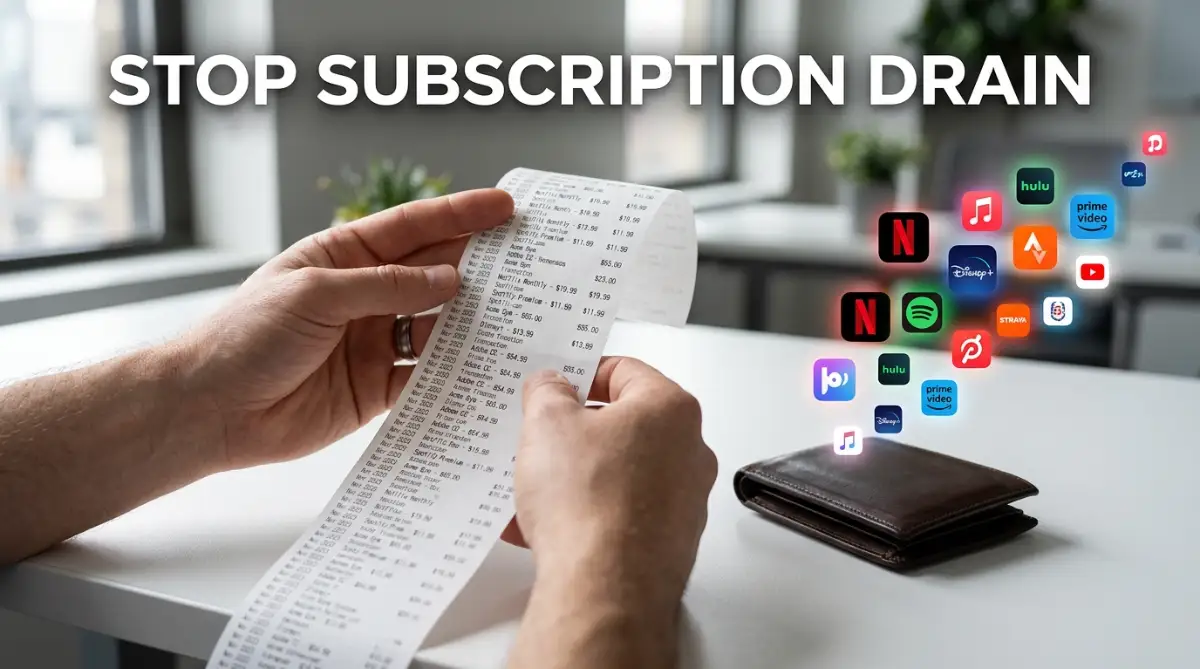
Look closely at your monthly subscriptions. Are you paying for three different streaming services but only watching one? Cancel the other two and send that exact amount straight to your new emergency fund.
What about your grocery shopping habits? Going to the supermarket without a strict list is a guaranteed way to overspend.
When you wander the aisles, you end up buying snacks and items you do not really need. Stick to a basic list, buy generic brands, and stop paying extra for fancy packaging. These small changes can easily free up $50 to $100 a month without changing your lifestyle too much.
Expert Insight: Do you really need the latest smartphone plan with unlimited data? Check your actual data usage. Most people use Wi-Fi all day at home and work. Switching to a cheaper, lower-data mobile plan can save you hundreds of dollars over a short time.
How Much Should You Actually Save?
A lot of financial advisors will tell you that you need six months of living expenses saved up.
When you have a small income, hearing that massive number is terrifying. It makes you want to quit before you even start.
Let us ignore that big number for now. Your first and only goal is to save a $500 starter fund.
Why $500? Because studies show that most minor daily emergencies cost $500 or less.
Once you hit that first milestone, you will feel a massive sense of relief. The heavy weight on your chest will start to lift.
After you reach $500, your next target is one full month of basic living expenses. Do not rush it. Just keep taking small, steady steps forward. Consistency will always beat speed when you are building wealth from the ground up.
Emergency Savings Priority
- Save your first $100.
- Reach a $500 emergency fund.
- Build one month of essential expenses.
- Expand to three months.
- Aim for six months if possible.
Check out this highly effective strategy to speed up your savings:
This simple visual trick completely changed how I look at my daily spending and helped me find extra cash I didn't know I had.
The Side Hustle Solution for Extra Cash
If you have cut your expenses down to the bone and still cannot find any extra cash, you need a different approach.
You cannot cut your way to wealth if your income is simply too low.
You must focus on generating a temporary burst of extra money.
Look around your home right now. You likely have old clothes, unused electronics, or books sitting in a closet collecting dust.
Take clear photos of these items and list them on online marketplaces. Selling things you no longer use is the absolute fastest way to jumpstart your emergency fund.
Beyond selling items, consider offering your skills in your local community.
Can you walk dogs on the weekends? Can you tutor a neighbor's child? Can you clean a few houses or do yard work?
All the money you make from these extra jobs should go straight into your safety net. Treat this extra income as if it does not exist for your regular spending.
I made a huge mistake when I first started my savings journey. I kept my emergency money in my everyday checking account, thinking I was disciplined enough not to touch it. One weekend, I saw a beautiful jacket on sale, and without thinking, I spent a big chunk of my safety net. I felt terrible afterward. Always keep your emergency money in a separate, hard-to-reach account so you are not tempted to spend it on impulse purchases.
Avoid These Side Hustle Scams
Be cautious of opportunities that promise guaranteed income with little effort, require upfront payments, or ask for sensitive financial information. Legitimate side hustles rarely require you to pay before you earn.
Myth vs Reality: Understanding Your Emergency Fund
- The Myth: Credit cards act as a safe emergency fund.
- The Reality: Credit cards are debt traps. If you use a credit card for an emergency, you will pay massive interest fees, making your financial situation much worse.
- The Myth: I must save 20% of my income every month.
- The Reality: Saving 1% or 2% is perfectly fine when you are just starting. Something is always better than zero.
- The Myth: Emergency funds are for vacations or new car parts.
- The Reality: This money is strictly for unpredictable events like job loss, medical issues, or keeping the lights on.
Common Emergency Fund Mistakes
- Waiting until income increases
- Using savings for shopping
- Keeping money in an everyday checking account
- Forgetting to replace money after using it
- Saving inconsistently
Setting Up a Financial Shock Absorber
Think of your new savings account as the shock absorbers on a car.
When you hit a massive pothole on the road, the shock absorbers take the heavy impact so the car does not break apart.
Life is full of unexpected financial potholes.
Without this money, every single bump will cause major damage to your daily life.
With it, you just feel a small bump, and you keep driving forward smoothly.
Comparing Where to Keep Your Money
You want your money to be safe, but you also want it to grow just a little bit while it sits there.
Look for online banks offering high-yield savings accounts with zero monthly maintenance fees. You do not want a bank charging you a fee just to hold your hard-earned cash.
The Psychological Shift of Becoming a Saver
Building this fund is going to change more than just your bank balance.
It is going to change how you walk, how you talk, and how you feel every single day.
When you know you have cash ready for a rainy day, you stop operating out of fear.
You no longer have to panic when the boss is in a bad mood, because you have a small backup plan. You do not have to accept unfair treatment just because you are desperate for the next paycheck.
This cash gives you options, and having options is the true definition of freedom.
Start today. It does not matter if you only have $1 to start. Open the account, move the money, and prove to yourself that you can do this. The journey to financial peace begins with a single, tiny step forward.
Unlocking Pro-Level Strategies to Grow Your Safety Net
Once you have your first few hundred dollars saved, a massive psychological shift happens. You suddenly realize that you are in control of your money, rather than your money controlling you.
But how do you keep this momentum going when your paycheck is still small? You need to upgrade your daily habits.
The easiest way to speed up your progress is by capturing "invisible money" that comes into your life. We are talking about tax refunds, birthday cash gifts, or a tiny bonus at work.
When people living on a tight budget get a sudden windfall, the first instinct is to treat themselves. You might think, "I work so hard, I deserve a nice dinner or a new pair of shoes."
While you absolutely deserve nice things, you deserve financial peace of mind even more.
Every time you get unexpected cash, split it right down the middle. Take half of it and treat yourself to something small that brings you joy. Take the other half and instantly drop it into your safety net account.
This simple split method prevents you from feeling deprived while still aggressively growing your protection fund.
Negotiating Your Way to Extra Cash
Most people accept their monthly bills as fixed, unchangeable facts of life. This is a massive missed opportunity for anyone trying to save on a tiny income.
You would be shocked at how many companies will lower your monthly rate if you just call and ask. Your internet provider, your car insurance company, and even your medical providers all have retention departments.
Set aside one hour this weekend to call your service providers. Tell them politely that you are experiencing financial hardship and ask if they have any lower-tier plans or current promotions.
If you manage to knock $20 off your internet bill and $30 off your car insurance, you just found an extra $50 a month. Send that exact amount to your savings account automatically.
If you are struggling with keeping track of these new bills, learning the basics of building a personal budget can completely change your perspective on where your money goes.
Protecting Your Savings from Debt Traps
One of the biggest hurdles to saving money is the heavy weight of existing debt. When you have multiple credit cards maxed out, saving cash feels like pouring water into a bucket with a massive hole in the bottom.
You have to tackle both problems at the exact same time.
Do not stop paying your minimum balances just to save cash. However, you also cannot put every spare penny toward debt and leave yourself with zero cash for emergencies.
If you have zero cash, the next time your car breaks down, you will be forced to use that credit card again. This keeps you trapped in the debt cycle forever.
To break this cycle, you need to understand how to lower your financial liabilities. Focusing on lower your debt-to-income ratio is a great strategy to free up your future income.
If you are dealing with heavy educational debt, reading about paying off student loans faster can help you create a balanced attack plan.
The Envelope Method for Daily Spending
When you swipe a debit card, you do not actually feel the money leaving your hands. It is just a piece of plastic, and the transaction feels fake.
To stop overspending immediately, switch to a cash-only system for your daily variable expenses like groceries and gas. Go to the bank, pull out your weekly grocery budget in cash, and put it in a physical envelope.
When that envelope is empty, you are done shopping for the week.
This creates a physical boundary that your brain understands instantly. According to recent economic research on financial shocks, having strict physical boundaries for spending is one of the most effective ways low-income households protect their cash reserves.
If you have $10 left in the grocery envelope on Sunday night, do not roll it over to the next week. Put that $10 straight into your emergency jar or deposit it at the bank.
Small Daily Changes That Add Up
Why You Need a Banking Upgrade
Keeping your hard-earned savings in a standard checking account that pays zero interest is a bad move. You are losing money to inflation every single day your cash sits there.
You need to move your money to a high-yield savings account that actually pays you for keeping your money with them. Make sure you are choosing an insured banking institution so your money is completely safe from bank failures.
By earning a small amount of interest every month, you are letting your money do some of the heavy lifting for you.

Dangerous Money Traps That Destroy Your Savings
Building your cash reserve is hard work, but destroying it is incredibly easy. I have seen so many people work for months to save a few hundred dollars, only to blow it all on a single bad decision.
The most common trap is completely misunderstanding what an actual emergency is.
Let us get one thing straight right now. A massive weekend sale at your favorite clothing store is not an emergency.
Your friends inviting you on a last-minute road trip is not an emergency. Upgrading your perfectly fine phone because a newer model came out is definitely not an emergency.
An emergency is a situation that threatens your health, your ability to earn an income, or your basic shelter.
The Danger of Easy Access
If you keep your safety net linked directly to your everyday debit card, you are setting yourself up for failure. When you are standing in a store and you see something you really want, the temptation to just transfer the money instantly is too high.
I used to do this all the time. I would tell myself, "I will just borrow $50 from my savings and pay it back next Friday."
Spoiler alert: I never paid it back.
You have to create friction between you and your savings. Put the money in a completely separate online bank that takes two or three days to transfer funds back to your main account.
That time delay gives your brain a chance to cool off and realize that you do not actually need to buy that item. Setting up these physical roadblocks is highly recommended by experts for building automatic saving habits.
Ignoring the Small Leaks
Another fatal mistake is getting too comfortable once you hit your first $500 milestone. You might start relaxing your budget, thinking you are totally safe now.
You start buying daily coffees again. You re-subscribe to those streaming services you previously canceled.
Before you know it, those small leaks drain your daily cash flow, and you stop contributing to your safety net entirely. You must remain disciplined and understand understanding consumer budgeting basics to keep your spending in check.
Remember, $500 is just the starting line. Your ultimate goal is to have enough money to survive for several months if you completely lose your job.
Falling for Risky Investment Schemes
When money is tight, people get desperate for a quick fix. You might see someone on social media promising massive returns if you invest your cash into a new crypto token or a stock trading program.
Do not ever put your emergency money into the stock market or cryptocurrency.
Investments go up and down every single minute. Imagine putting your $1,000 safety net into a volatile coin, and the next day your car breaks down. You go to pull your money out, and the market has crashed, leaving you with only $400.
Emergency money is not designed to make you rich; it is designed to act as an insurance policy. While learning about protecting your digital assets or studying crypto project whitepapers is great for your long-term investing portfolio, your safety net must remain in boring, safe cash.
Your Roadmap to Lasting Financial Freedom
Breaking out of the paycheck-to-paycheck cycle is one of the hardest things you will ever do. It requires immense patience, daily discipline, and a willingness to say "no" to things you want right now.
But the reward for this hard work is absolute freedom.
When you have cash sitting in the bank, you walk differently. Your stress levels drop, you sleep better at night, and your relationships improve because you are no longer arguing about unpaid bills.
You do not need a massive six-figure salary to achieve this peace. You just need to start with whatever small amount you have in your pocket today.
How Saving Changes Your Daily Life
- Better sleep
- Lower financial stress
- More confidence
- Greater career flexibility
- Healthier family relationships
- Better decision making
Focus on Consistency, Not Speed
Do not beat yourself up if you can only save a few dollars a week. Progress is still progress, no matter how small it looks on a spreadsheet.
If you have a bad week and accidentally overspend, do not panic and do not quit. Just reset your mindset, forgive yourself, and start fresh the very next morning.
Financial security is a lifelong marathon, not a quick weekend sprint. You are completely rebuilding your relationship with money, and that takes time.
Keep your goals highly visible. Write down your target savings number on a sticky note and put it on your bathroom mirror so you see it every single morning.
Celebrate your small wins along the way. When you hit your first $100, give yourself a mental high-five, because you are officially doing better than millions of people who have zero cash reserves.
Key Takeaways
- Start saving immediately, even if it is only $1.
- Keep emergency money in a separate savings account.
- Build habits before focusing on large amounts.
- Protect your savings from unnecessary spending.
- Increase income whenever possible.
- Replace emergency fund money after using it.
Real Questions You Might Have About Saving on a Low Income
Can I really build a safety net if my income barely covers my rent?
Yes, you absolutely can, but it requires extreme prioritization. Start by saving just your loose change or dropping $1 a day into a jar. The goal right now is building the habit of saving, not hitting a massive dollar amount immediately.
Should I pay off my high-interest credit cards before saving cash?
No, you need to do both simultaneously. If you put all your money into debt and have no cash, your next unexpected expense will go right back onto the credit card. Save a starter fund of $500 first, then aggressively attack your credit card debt while paying minimums.
Where is the absolute safest place to keep my emergency cash?
The safest place is a high-yield savings account (HYSA) with an online bank that is fully insured. These accounts pay you a little bit of interest and keep your money separated from your daily spending debit card. Do not keep large amounts of cash hidden in your house due to the risk of theft or fire.
How do I handle family members who constantly ask to borrow money?
You have to set firm emotional boundaries and learn to say no. Be honest with them and say, "I am currently struggling to pay my own bills and cannot afford to lend money right now." You cannot set yourself on fire just to keep someone else warm.
What if I have to use my emergency fund for a real crisis?
That is exactly what the money is there for! Do not feel guilty or defeated if you have to drain the account to fix a broken water heater or pay a hospital bill. Simply pat yourself on the back for being prepared, and start rebuilding the fund from scratch the next day.
Is it a good idea to work a second job just to fund my savings?
Working a temporary side hustle is an excellent strategy to build your cash buffer extremely fast. Just make sure you do not burn yourself out completely. Set a specific goal, work the extra hours until you hit that goal, and then return to your normal schedule.
How do I stay motivated when the savings process feels so slow?
Track your progress visually by coloring in a chart on your fridge every time you save $10 or $20. Seeing the visual proof of your hard work tricks your brain into feeling a sense of accomplishment. Also, remind yourself daily of the intense panic you used to feel before you started saving.
Can I save money if I have irregular income?
Yes. Save a percentage of every payment you receive instead of aiming for a fixed dollar amount each month. This approach works well for freelancers, seasonal workers, and gig economy earners.
Should my emergency fund earn interest?
Yes. A high-yield savings account allows your money to remain accessible while earning modest interest, helping your savings grow over time.
When should I stop adding to my emergency fund?
Once you have accumulated three to six months of essential living expenses, you may shift additional savings toward long-term goals such as retirement, investing, or paying down high-interest debt while continuing to maintain your emergency reserve.
A Personal Note Before You Go
I know exactly how exhausting it feels to count every single penny, but I promise you that the struggle is completely worth it. When I finally hit my first major savings goal, the heavy anxiety that lived in my chest for years simply vanished. You have the power to take control of your money starting today, and I am rooting for your success every step of the way.
Trusted Financial Resources
For additional guidance, consider reviewing educational resources from trusted organizations such as:
- Consumer Financial Protection Bureau (CFPB)
- Federal Deposit Insurance Corporation (FDIC)
- National Foundation for Credit Counseling (NFCC)
Your Next Step Starts Today
Financial security does not begin with a large paycheck. It begins with one decision.
Open a separate savings account today, automate your first small deposit, and commit to protecting your future one dollar at a time. Every small contribution brings you one step closer to greater confidence, lower stress, and lasting financial stability.
Disclaimer: The information provided in this article is for educational and informational purposes only and should not be construed as professional financial advice. Always consult with a certified financial planner or advisor before making any major financial decisions.
About the Author
About the Author
This article was written by the FinanceInfoIn Editorial Team, a group of writers and researchers dedicated to creating practical, easy-to-understand financial education for everyday readers. Our content is carefully researched, fact-checked, and regularly updated to reflect reliable financial information and best practices. We focus on helping individuals make informed decisions about budgeting, saving, debt management, investing, and long-term financial well-being through clear, trustworthy, and actionable guidance.
© FinanceInfoIn. All rights reserved.