🕒 Reading Time: 15 Mins | ✍️ Reviewed By: FinanceInfoIn Editorial Team
The Cost of Bad Energy Ratings: How Older European Homes Could Hurt Your Mortgage Approval
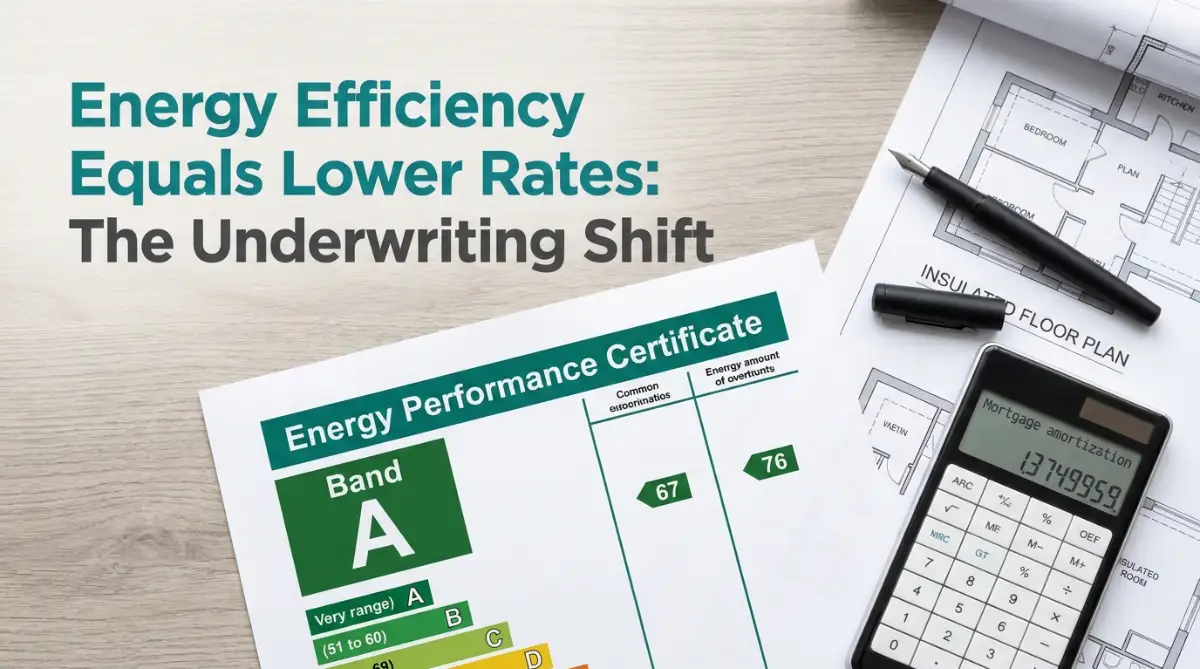
A solid brick townhouse with high ceilings in Ghent, Lille, or Florence looks like an undeniable asset until an underwriter runs an automated heating stress model against your payslips. Most buyers believe borrowing limits hinge entirely on income, savings, and credit history. In reality, a two-letter slip on a building efficiency score can quietly erase the borrowing power of an entire second earner.
"Modern European mortgage approvals no longer evaluate only the borrower's ability to pay; they stress-test the property's physical ability to retain heat."
The financial shock hits at the worst possible moment. You spend weeks touring properties, negotiating terms, and paying out-of-pocket surveyor fees, only for the credit committee to pull back right before contract signing. That hesitation leaves households scrambling to bridge unexpected five-figure cash gaps while sellers threaten to walk away with deposits.
Living in an uninsulated home isn't just an issue of drafty rooms and high winter heating bills. To a modern credit committee, an inefficient house represents an asset facing rapid depreciation, stricter leasing laws, and an elevated risk of default.
Quick Summary
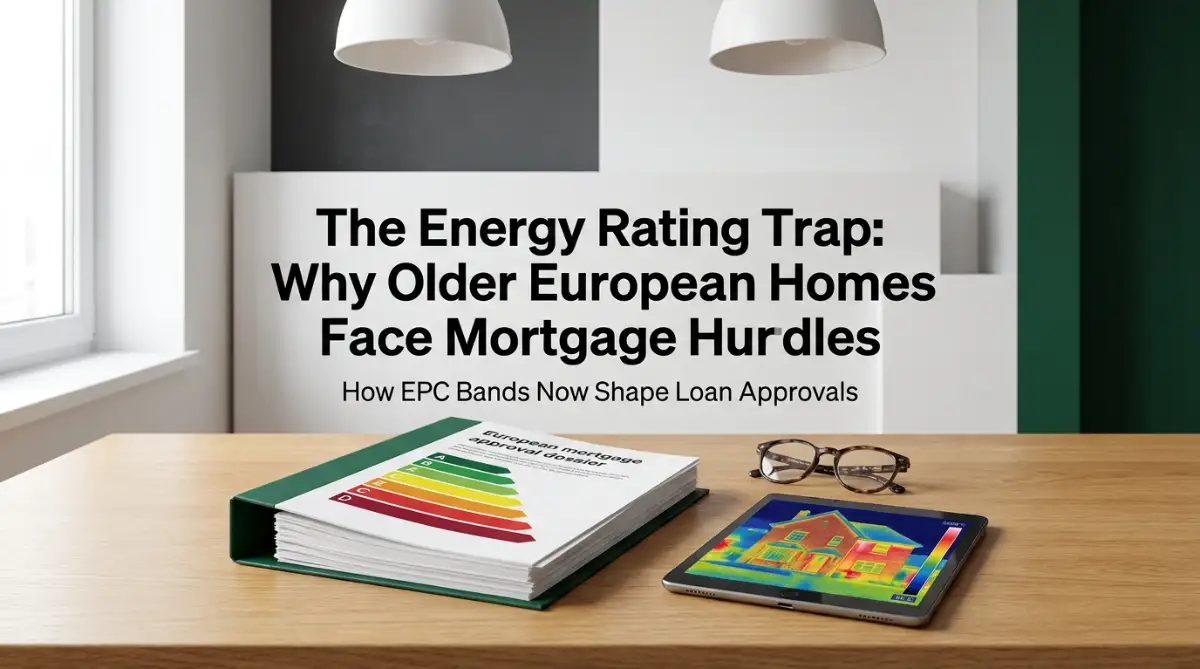
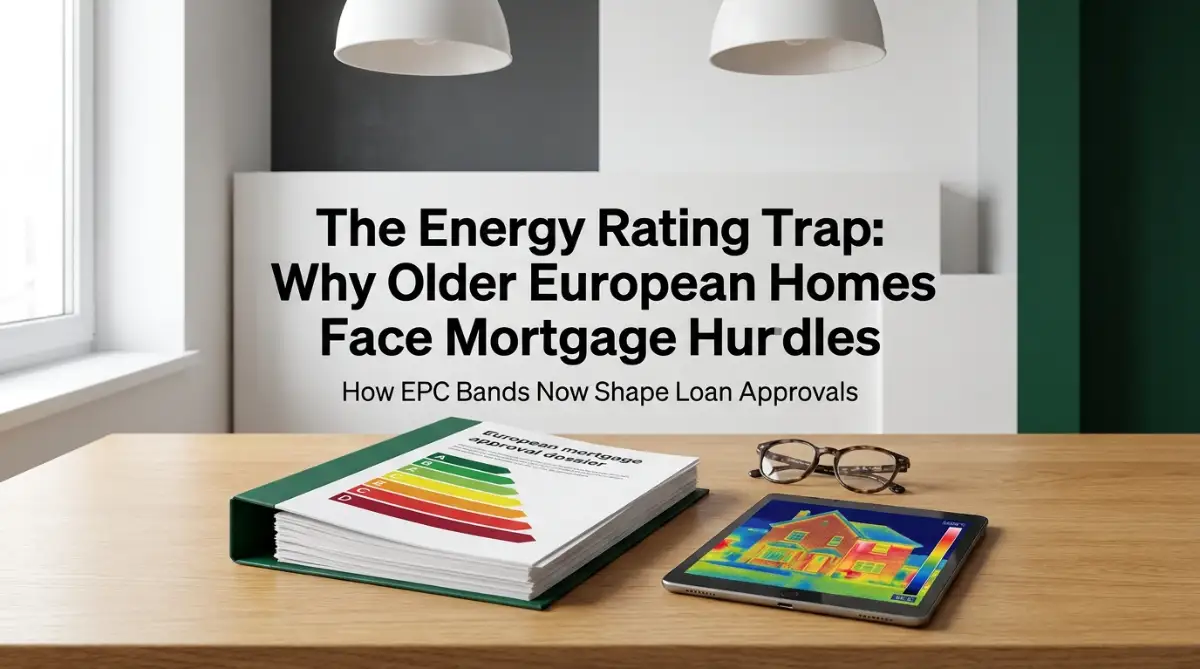
European mortgage lenders now systematically factor Energy Performance Certificate (EPC) ratings directly into automated affordability models. Older residential properties falling into low efficiency bands (E, F, and G) face mandatory collateral valuation discounts, tighter debt-service-to-income limits, and compulsory renovation escrows.
Understanding these internal underwriting rules allows buyers to structure loan applications strategically, claim green financing discounts, and prevent unexpected loan reductions before closing.
Key Takeaways
-
Underwriting Utility Penalties: Banks substitute real-world energy bills with aggressive, worst-case utility cost projections when testing low-rated properties, reducing maximum borrowing capacity.
-
Collateral Valuation Haircuts: Surveyors routinely deduct the estimated expense of thermal retrofits straight from a home's recognized market value.
-
Escrow Retainage Mandates: Lenders often freeze between 10% and 20% of approved mortgage funds until licensed contractors complete mandatory insulation upgrades.
-
Refinancing Hurdles: Properties failing to meet minimum standards face reduced liquidity, meaning future remortgaging options become significantly more expensive.
-
Green Concessions: Upgrading an older home through integrated transition mortgages can secure interest rate discounts of up to 50 basis points.
The Shift in Lending: How EPC Bands Enter Underwriting Algorithms
For generations, residential lending relied on a simple formula. If your down payment met the threshold and your income comfortably exceeded the monthly note, underwriters approved the transaction. Property inspections existed primarily to confirm that the foundations were stable and the roof was structurally intact.
That straightforward environment has shifted across the continent. Under policy tracking from the European Central Bank and supervisory frameworks published by the European Banking Authority, financial institutions face mandatory reporting on balance-sheet carbon exposures. When a commercial bank carries thousands of mortgages on energy-inefficient properties, it faces direct regulatory capital penalties.
To insulate themselves from these capital penalties, banks have built automated energy rating checks directly into their loan origination software. The moment an application is logged, the system queries regional property registers to verify the building's current EPC score. If the property sits in band E, F, or G, algorithmic risk flags trigger before an underwriter ever reviews your bank statements.
This screening leads directly to what institutional analysts call a collateral haircut. Lenders assume that drafty, energy-draining homes will suffer from a persistent "brown discount" in resale markets. To protect against future losses, the bank simply reduces the valuation baseline they are willing to finance today.
"The bank isn't acting out of environmental goodwill; they are calculating the future auction value of the property if you run into financial trouble and default."
Why Bad Insulation Shrinks Your Borrowing Capacity
A lot of people assume their approved mortgage amount is a static figure based on their employment contract. The reality is that underwriters evaluate your application through the Debt-Service-to-Income (DSTI) ratio. This metric calculates exactly how much usable cash remains each month after paying taxes, insurance, living expenses, and property running costs.
Spiking energy markets have forced banking risk committees to rethink baseline living expenses. When a house carries an F rating, underwriters don't use standard utility averages. Instead, internal software applies an elevated utility expense model to reflect the home's poor thermal envelope.
Those modeled utility expenses eat directly into your repayment buffer. If an algorithm assumes you must spend four hundred euros a month simply to keep an uninsulated house warm, that is four hundred euros less you can put toward your loan balance. Your allowable borrowing ceiling drops accordingly.
On top of this baseline drag, lenders run stress tests simulating rising interest rates alongside elevated utility costs. Older homes with solid masonry walls and drafty single glazing struggle to clear this double affordability test without a reduced loan offer.

A Real-World Underwriting Calculation
Consider a practical mortgage file we audited involving an older brick property carrying an EPC rating of F. The agreed purchase price was €340,000. Under baseline underwriting rules, a buyer with an 80% Loan-to-Value (LTV) target anticipated a mortgage approval of €272,000.
When the file entered underwriting, the bank's automated affordability model adjusted projected annual utility expenses from a standard baseline of €1,200 up to €4,800. That €3,600 annual difference represents €300 every month in vanished disposable income.
When stressed over a 25-year amortization schedule at a test rate of 4.5%, that lost monthly cash flow stripped nearly €54,000 from the buyer's maximum borrowing limit. The bank capped the final loan offer at €218,000 instead of the expected €272,000.
The buyer was left with an immediate choice: find an extra €54,000 in liquid cash within ten business days or walk away from the property. Because they lacked those emergency reserves, the deal collapsed. This exact scenario plays out across European property markets every single week.
Green Mortgages vs. Standard Loans on Older Properties
If you want to purchase a historic property, you'll want to look at how different financing structures treat energy improvements. Some buyers push for standard residential mortgages, while others utilize structured green retrofit products.
Gaining a complete understanding of the mortgage underwriting process helps buyers select the right vehicle before submitting initial paperwork.
Before moving forward with an older property, watch how lenders assess physical building risks during credit underwriting:
This practical walkthrough explains how European energy mandates directly influence bank risk models and individual loan terms.
The Regulatory Squeeze: Why Minimum Energy Standards Drive Bank Rules
Banks do not operate in a vacuum. Major central institutions evaluate balance-sheet climate risks through structured supervisory audits. When regulatory agencies examine lending books, they monitor asset depreciation risks linked directly to government environmental mandates.
Multiple European jurisdictions have introduced Minimum Energy Efficiency Standards (MEES). Under these frameworks, homes sitting in the lowest energy bands face strict leasing prohibitions and future resale constraints unless properly upgraded. A lender holding a mortgage on a building that cannot legally be rented or sold faces an unacceptable credit risk.
Underwriters therefore apply an automatic regulatory discount. If an older building requires substantial capital to replace inefficient boilers, install external insulation, and add multi-pane windows, the bank subtracts that projected capital expenditure directly from their collateral assessment.
In several countries, lenders enforce this policy by holding back approved mortgage capital in an escrow account. The borrower only receives access to those funds after certified contractors complete the required energy upgrades.
The Reality of Older Property Financing
Before putting an offer on a vintage home, it pays to balance the tangible benefits against the strict financing hurdles.
The Pros:
-
Distinct Architectural Character: Historic homes often occupy prime central locations with high ceilings and craftsmanship that modern developments rarely offer.
-
Pricing Leverage: A low EPC rating gives you documented justification to negotiate a meaningful purchase price reduction with the seller.
-
Targeted Government Grants: Many European authorities provide non-repayable subsidies and interest-free loans to help buyers modernize vintage building envelopes.
The Cons:
-
Valuation Discounts: Lenders routinely reduce their maximum loan-to-value ratios on inefficient homes, requiring significantly larger upfront cash deposits.
-
Mandatory Escrow Holds: Banks frequently freeze renovation funds until licensed tradespeople finish insulation projects and pass re-inspection.
-
Unforeseen Structural Costs: Upgrading solid stone or uninsulated brick walls often uncovers hidden masonry problems that exceed initial budgets.
Practical Steps to Protect Your Mortgage Application
You can secure mortgage financing on an older home by taking proactive steps before your formal application reaches the credit committee.
First, never rely on an older EPC certificate supplied by the real estate agent. Certificates can remain valid on regional registers for a full decade, meaning the score may not reflect recent code adjustments or testing standards. Always commission an independent energy assessment before finalizing your loan terms.
Second, engage an independent retrofit specialist to verify all planned improvements before speaking with a lender. When you present an underwriter with an itemized contractor quotation and a practical timeline, the bank views your file as an organized project rather than a credit hazard.
Here's a quick tip: ask the seller for itemized winter utility statements covering the past two heating seasons. Having actual utility data allows your broker to challenge the overly conservative automated heating models used by the lender's underwriting system.
My advice would be to work with a mortgage broker who has documented experience handling historic real estate and green improvement loans. High-volume brokers often rely on automated portals that reject low-rated properties without human review.
At the end of the day, an older European home remains an attractive investment if you understand how underwriters evaluate building physics. Treating thermal performance as an essential borrowing metric keeps your transaction secure.
"Respect the energy certificate early, build renovation costs directly into your financing structure, and keep your cash reserves intact before the bank raises questions."
Inside the Credit Committee: How Banks Calculate Energy Transition Risk
When your file passes automated screening, it lands on the desk of a senior credit risk analyst. This is where discretionary lending buffers come into play. Risk officers aren't just verifying whether you can afford repayments today; they model how the property will hold its value as regional regulations tighten.
Under supervisory rules monitored by the European Banking Authority, lenders must assign specific risk weights to their real estate assets. Low-efficiency homes carry elevated transition risk weights, requiring the institution to hold more regulatory capital against your loan balance.
Holding excess capital reserves reduces a bank's net return. To maintain profitability, lenders pass that cost directly back to the borrower. They widen the interest rate margin, lower the loan-to-value threshold, or demand additional guarantees that wouldn't apply to a modern home.
The Mechanism of Collateral Haircuts
When an appraiser visits an older home, they run a simulated valuation alongside standard comparable sales checks. If the property carries an E, F, or G rating, the appraiser applies an automatic collateral haircut. This haircut reduces the home's recognized market value before loan ratios are calculated.
For example, if you agree to purchase an uninsulated historic home for €300,000, the surveyor's model might deduct 12% to cover deferred thermal maintenance. The bank now treats the property as though it is worth €264,000. If your maximum loan-to-value cap is 80%, you receive 80% of €264,000—leaving you to find the difference in cash.
That unexpected shortfall causes major friction right before scheduled closing dates. These calculations happen deep inside internal risk models, catching unprepared buyers completely off guard.
Pro Tips: If you are bidding on an older property with an energy rating below band D, request an advance copy of the seller's full survey breakdown rather than relying on the single-page certificate. Look specifically for the calculated primary energy use figure. You can ask your mortgage broker to run that specific energy figure through the bank's affordability matrix before you sign a binding purchase contract.

Critical Pitfalls in Older Property Transactions
Buying a vintage property requires financial discipline. When buyers fall in love with historic architecture, they often overlook how banking regulations interact with aging structures. Failing to plan for these rules can wipe out your liquid savings.
A frequent issue involves learning that local planning rules restrict the exact exterior insulation methods needed to upgrade your certificate. Looking closely at the overlooked zoning rule that can freeze your renovation plans is a smart step before allocating capital toward external renovations.
Common Mistakes
-
Assuming Seller Disclosures Protect You: Many buyers assume that providing an energy certificate means the seller has disclosed all operational heating issues. In reality, sellers carry little legal responsibility for poor efficiency, which mirrors the legal loophole that lets sellers hide property defects legally.
-
Missing Escrow Retainage Clauses: Some borrowers sign commitments without realizing the bank will hold back 15% to 20% of the loan amount. Those funds remain locked until accredited contractors finish thermal upgrades and an updated audit is logged.
-
Treating Estimates as Fixed Costs: Vintage buildings hide structural surprises behind plaster and stone. Assuming an initial contractor bid represents your final cost usually exhausts credit reserves midway through construction.
-
Overleveraging Debt to Fund Improvements: Relying on expensive personal loans to cover boiler and insulation updates alongside a major mortgage strains monthly cash flow. You can see how this compounding pressure works by reviewing the hidden way rising interest rates are shrinking your property equity.
The True Capital Gap: Renovation Outlays vs. Lending Power
Financing an older property successfully requires careful capital allocation. You have to balance the price paid for the home against the cash needed to bring its energy performance up to code.
Before committing funds, review the honest math behind home renovation ROI to ensure your planned investments build real equity rather than simply clearing a bureaucratic hurdle.
Step-by-Step Execution Guide: Securing Approval on an Older Home
If you plan to buy a historic property with a low energy score, a structured approach keeps your financing on track. Taking these practical steps helps present your purchase as an organized project rather than a credit hazard.
Step 1: Commission an Independent Energy Assessment
Avoid relying solely on the seller's documentation. Hire an accredited energy surveyor to examine the property before loan submission. Request an improvement plan showing the exact measures needed to raise the building into an acceptable rating band.
Step 2: Assemble an Itemized Renovation Dossier
Secure fixed quotations from licensed contractors who have verified experience with older masonry structures. Separate the proposals into thermal envelope works, heating mechanics, and ventilation systems. Banks require detailed contractor bids rather than generalized allowances.
Step 3: Explore Dedicated Renovation Financing
Look into structured mortgage programs that combine purchase and renovation capital under one umbrella. Learn how to fund an older home renovation safely to avoid expensive, high-interest personal borrowing.
Step 4: Request a As-Completed Valuation
Have your mortgage broker request a formal appraisal based on the property's projected post-renovation condition. This enables the lender to calculate borrowing limits against the improved value of the home, protecting your loan size.
Step 5: Protect Your Liquidity Reserves
Make sure your financial plan preserves an emergency cushion after closing. Never wipe out your cash savings to satisfy a bank's down payment requirements on a property that requires immediate thermal upgrades.
Required Document & Preparation Checklist
-
Independent Energy Performance Audit: A complete technical report detailing primary energy demand in kWh/m² per year.
-
Binding Contractor Quotations: Itemized proposals specifying materials, installation costs, and projected thermal improvements.
-
Conservation Office Clearances: Written confirmation from local planning authorities verifying that planned insulation or window upgrades comply with architectural preservation codes.
-
Historical Utility Statements: Actual energy invoices from the seller to counter aggressive automated bank utility estimates.
-
Proof of Contingency Funds: Bank verification showing liquid cash equal to at least 15% of the overall renovation budget.
Quick Action Checklist
- Verify the expiration date and testing methodology of the existing energy certificate.
- Check local municipal regulations for mandatory renovation deadlines on residential purchases.
- Request your broker run your numbers through an energy-adjusted affordability calculator.
- Confirm whether target lenders offer green interest rate discounts for multi-band upgrades.
- Ensure all proposed energy upgrades align with local architectural conservation codes.
Charting Your Path Forward
Purchasing a vintage European home with historic appeal does not have to result in a rejected mortgage application. Success comes from recognizing that lenders view real estate through the lens of capital safety, long-term liquidity, and regulatory compliance.
Using smart mortgage strategies to secure property wealth allows you to turn an inefficient building into a strong negotiating position. By identifying energy weaknesses before the bank's underwriter does, you can negotiate purchase price reductions that fund your modernization and satisfy lending criteria.
In my years analyzing mortgage credit files, I have watched well-prepared buyers turn drafty, low-rated properties into high-performance homes simply by respecting the underwriting data early. My experience has shown that thorough preparation always beats market friction, and taking charge of the technical details today protects your investment for decades to come.
Are you currently balancing the character of an older property against potential renovation requirements, or has an energy certificate already altered your loan options? Share your experiences and questions in the comments below!
Common Questions About Property Energy Ratings and Mortgage Approvals
Can a bank outright reject my mortgage application solely because of a low EPC score?
Yes, lenders can decline an application if a building's poor rating violates internal risk rules or falls below regional efficiency thresholds. Most institutions prefer to trim the loan amount or impose renovation covenants rather than issue an outright decline, but properties in the lowest bands face significantly higher cancellation rates.
What is a mortgage retainage or escrow retention for energy upgrades?
A retainage occurs when a lender withholds a percentage of your approved borrowing until you complete specified property upgrades. The bank releases those frozen funds only after a qualified surveyor inspects the completed works and verifies that the building meets agreed efficiency benchmarks.
How much does an F or G energy rating typically reduce borrowing power?
While individual bank models vary, underwriters often account for elevated heating costs by reducing allowable borrowing limits by 10% to 20%. In practice, this can cut maximum loan offers by tens of thousands of euros compared to an identical income profile financing an energy-efficient home.
Do green mortgages offer genuinely lower interest rates?
Many major European lenders offer green mortgages with interest rate margins discounted by 0.10% to 0.50% below standard loan products. These programs require the building to meet top efficiency bands or demonstrate a verified improvement of at least two rating bands through planned renovations.
Can I challenge the utility cost assumptions used in my bank's affordability test?
You can challenge automated figures by submitting two years of verified utility invoices from the previous owner alongside an independent energy survey. While underwriters are not required to override internal models, well-documented consumption records provide strong justification for an exception review.
What happens if I fail to complete mandatory renovations within local regulatory timeframes?
Failing to meet mandated local upgrade schedules can result in municipal fines, restrictions on leasing the property, and difficulties when seeking future refinancing. In severe cases, your mortgage contract may treat ongoing non-compliance as a technical loan default.
Is an energy performance certificate required for historic or listed buildings?
In many jurisdictions, designated historic or architecturally protected buildings receive exemptions from standard energy mandates to protect heritage features. Even so, commercial lenders often continue to apply internal valuation haircuts when calculating mortgage amounts for these homes.
Does installing a modern heat pump immediately lift a home out of low rating bands?
A modern heat pump significantly improves primary energy metrics, but pairing it with proper insulation and draft proofing produces the most reliable rating jump. Installing a heat pump in an uninsulated, drafty building often results in elevated electricity expenses without lifting the certificate out of low bands.
Can I include the cost of energy retrofits in my primary purchase mortgage?
Many European lenders provide integrated loans that combine purchase and renovation capital into a single mortgage balance. These structures calculate borrowing limits against the projected post-renovation value of the property, helping buyers avoid expensive short-term loans.
How often should an energy rating certificate be updated during a renovation process?
You should commission an updated energy audit as soon as all major envelope, window, and mechanical upgrades are completed and signed off. Registering the updated certificate with national registries allows your lender to release escrow funds and adjust your loan terms to reflect the higher efficiency band.
Trusted Legal Resources
-
European Commission Energy Performance Framework – The official European portal detailing building directives, efficiency targets, and national compliance frameworks for residential properties [1].
-
European Banking Authority Sustainable Lending Hub – Official guidelines and technical standards governing how financial institutions integrate environmental factors into mortgage underwriting.
-
Royal Institution of Chartered Surveyors Valuation Standards – Authoritative valuation protocols and appraisal methodologies used by professional surveyors assessing building condition and thermal performance.
-
Financial Conduct Authority Mortgage Rules – Comprehensive regulatory handbooks covering responsible lending standards, affordability stress testing, and borrower protection frameworks.
-
Banque de France Household Credit Observatory – Official central banking research and supervisory publications monitoring mortgage lending criteria, debt ratios, and housing market stability.
-
Gov.uk Energy Performance Certificate Registry – The official public registry for checking, verifying, and comparing residential energy performance assessments and upgrade recommendations.
Disclaimer
The information provided in this article by FinanceInfoIn is for general educational and informational purposes only. It does not constitute formal financial, investment, legal, or mortgage underwriting advice. Real estate lending criteria, energy rating frameworks, and national housing directives vary widely by region, jurisdiction, and individual lender. While our editorial team makes every effort to verify data against established regulatory sources, property market conditions and credit rules change continuously.
Neither Mithun Halder nor FinanceInfoIn accepts any legal liability for financial losses, denied credit applications, construction cost overruns, or regulatory penalties resulting from actions taken based on this content. Readers should always consult an accredited mortgage broker, a licensed financial adviser, and a qualified building surveyor before signing binding property contracts or entering loan agreements.
About the Author & Review Process
Written & Fact-Checked by: Mithun Halder & The FinanceInfoIn Editorial Team
Mithun Halder is a dedicated personal finance researcher and educator with a deep focus on insurance, investing, and wealth management. At FinanceInfoIn, our editorial team rigorously researches and cross-references every topic with official government resources, insurance regulations, and industry best practices. Our mission is to break down complex financial jargon into clear, actionable, and trustworthy guidance, helping you make informed decisions about your financial security.
📧 Contact Mithun: [email protected] | 💼 Connect on LinkedIn: Mithun Halder