🕒 Reading Time: 14 Mins | ✍️ Reviewed By: FinanceInfoIn Editorial Team
Financing Eco-Renovations: How to Get Favorable Mortgage Terms for Sustainable European Homes
A property inspection report showing an Energy Performance Certificate (EPC) rating of "G" usually feels like a financial death sentence. Staring at an annual heating estimate north of €4,200 while your mortgage lender quotes standard unsecured borrowing rates at 7.8% is enough to stop any renovation before it starts. Yet, the moment an accredited assessor shows that replacing an oil furnace and sealing the attic jumps that rating to a "B," the entire conversation with your bank shifts.
European lenders don't offer rate discounts out of charity. Under pressure from central bank mandates, commercial banks actively hunt for low-carbon residential assets to balance their loan books.
When you package your energy retrofit correctly, banks will cut their profit margins, bump your borrowing limits, and discount your interest rate.
Quick Summary
Eco-renovations across Europe now offer direct financial leverage inside the mortgage underwriting process. By improving a residential property's energy rating by two or more EPC bands, homeowners can access institutional green mortgage discounts (often cutting borrowing spreads by 25 to 75 basis points). Commercial banks reward these upgrades because lower energy bills reduce borrower default risk, while energy-efficient collateral protects the bank against regulatory devaluation.
Key Takeaways
-
The "Greenium" Discount: European banks offer direct interest rate discounts on mortgages backed by energy-efficient properties to satisfy regulatory Green Asset Ratios.
-
Cash Flow Shielding: Every euro saved on monthly heating and electricity increases disposable income, strengthening your debt coverage profile during credit underwriting.
-
Valuation Lift: Lenders routinely evaluate eco-renovations using "as-completed" valuations, allowing you to borrow against the future modernized equity of the home.
-
Stacking Capital: Combining senior commercial green mortgages with zero-interest state development loans dramatically lowers your overall blended borrowing cost.
-
Milestone Retentions: Banks disburse retrofit capital in phases; keeping detailed technical documentation prevents costly holdbacks on your final contractor payments.
The daily reality for millions of European households is an endless cycle of drafty living rooms and volatile winter power bills. Watching monthly heating invoices eat away at discretionary income strains family budgets and causes constant financial anxiety.
Meanwhile, navigating bank appointments feels like deciphering a foreign language filled with bureaucratic red tape and rigid debt rules.
You want a comfortable, future-proof home, but you dread locking yourself into high-interest consumer credit to pay for insulation and heat pumps.
The secret lies in understanding how the bank views your home's thermal efficiency as credit collateral.
Once you learn how underwriting algorithms price energy risk, you can turn necessary property repairs into major mortgage savings.
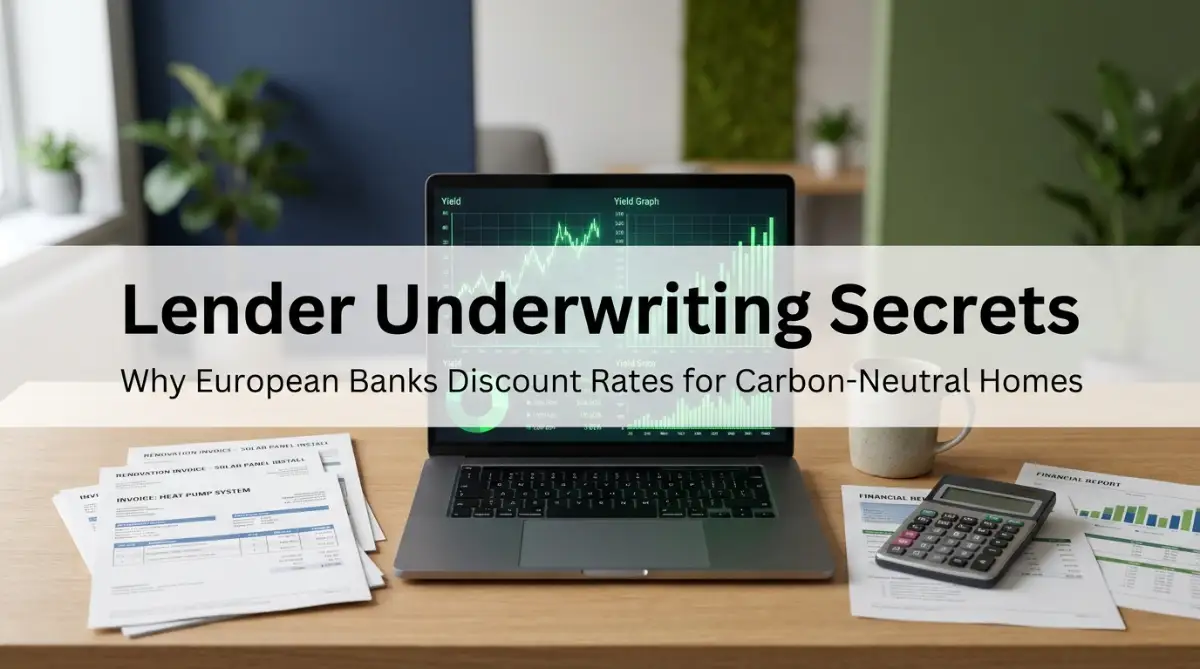
The Hidden Economics of European Green Mortgages
A lot of people assume banks treat eco-renovations like cosmetic kitchen updates. That couldn't be further from reality. When a lender assesses a standard mortgage, they evaluate your loan-to-value (LTV) ratio and your debt-service-to-income (DSTI) profile.
When it comes to sustainable housing, regulatory institutions give commercial lenders lower capital reserve requirements for financing energy-efficient collateral.
To put it simply, holding a loan backed by a home with an EPC rating of A or B costs the bank less internal capital than backing an energy-draining home with an EPC of F.
Because the bank's internal cost of capital drops, they pass part of that margin back to you as an interest rate haircut. This pricing break is widely known in institutional finance as a "greenium."
You'll find that banks also look closely at operational household cash flow. A homeowner spending €450 a month on heating oil has less disposable cash to handle mortgage payments during economic downturns.
By replacing that obsolete setup with an air-to-water heat pump and modern triple glazing, monthly energy bills often drop down toward €90. That savings directly strengthens your debt coverage ratio. Underwriters see that operational cushion, and their automated credit risk models reward it with better terms.
Real-Life Math: Standard Financing vs. Green Mortgage Retrofit
Let's look at why this happens in hard numbers. The following breakdown shows how an EPC upgrade from an inefficient rating up to an optimal standard changes total long-term borrowing costs:
Looking at the numbers, it seems obvious that an interest rate discount of just 70 basis points saves thousands over the life of the loan. When you combine that interest savings with lower power bills, the retrofit pays for itself much faster than standard retail lending allows.
Why European Banks Offer Margin Discounts on Green Debt
Lenders operate under clear institutional mandates. Market tracking from international financial stability boards reveals that residential properties with poor thermal ratings suffer faster market devaluation than insulated, efficient buildings.
If energy prices spike, inefficient homes lose market liquidity. In a worst-case scenario where a borrower defaults, the bank risks holding a home that requires massive capital expenditure just to find a buyer.

Lenders protect themselves against this devaluation by encouraging property owners to modernize immediately. When you take out an integrated green mortgage, underwriters often use what is called an "as-completed valuation."
Instead of basing your borrowing limit on what your drafty house is worth this afternoon, they evaluate the post-renovation market value once the planned upgrades are certified.
Here's how to get it done without hitting underwriting roadblocks:
-
Provide official, pre-works technical audits carried out by an accredited independent energy advisor.
-
Submit detailed contractor bids specifying exact thermal conductivity values (U-values) for all insulation materials.
-
Match your target specifications directly against the national energy rating thresholds recognized by your lender's green bond framework.
Understanding the Trade-Offs: Green Mortgages vs. Alternative Debt
You've got a few options when deciding how to structure your renovation funds. It's easy to mix up specialized green mortgages with standard unsecured eco-loans or simple equity top-ups. Each vehicle serves a different project scope and financial threshold.
Watch out for financing costs on short-term contractor credit. While it requires less paperwork up front, the interest charges will wipe out your monthly energy savings in a heartbeat.
Structuring Your Eco-Renovation Proposal for Underwriting Approval
Getting a bank to grant prime terms requires speaking the underwriter's language. A loan officer doesn't evaluate a heat pump based on its brand; they evaluate it based on whether it moves your home across an official regulatory benchmark.
In most European territories, moving a property by at least two full energy classes unlocks preferred rate tiers.
Check out this detailed visual walkthrough covering how European energy ratings interact with institutional mortgage underwriting:
Before approaching a branch or mortgage broker, assemble your technical documentation package. Your package needs to prove not just what you plan to spend, but how those expenditures systematically reduce energy demand per square meter.
Step 1: The Pre-Renovation Energy Audit
Never rely on an outdated energy certificate from when you bought the property. Hire an accredited domestic energy assessor to run a comprehensive thermal assessment.
This audit pinpoints thermal bridging, wall insulation depth, and HVAC system losses. It establishes the legal baseline that the bank's underwriting algorithms use to calculate your interest discount.
Step 2: Contractor Scopes with Verified Technical Data
Lenders reject vague contractor estimates that say things like "replace exterior windows." They need to see specific performance metrics.
Your contractor quotes must cite the window solar heat gain coefficient, the exact U-value of the glass frames, and compliance with local building standards. If you are adding roof solar, include the estimated annual kilowatt-hour generation alongside inverter capacity specs.
Step 3: Layering State Subsidies with Bank Debt
A huge mistake many borrowers make is applying for private mortgage capital without accounting for national and regional grant programs.
Across Europe, state development banks work side by side with commercial lenders. You can frequently combine public cash grants with commercial bank loans.
When you plug state funds directly into your project budget, you lower your borrowing need, drop your overall LTV ratio, and instantly secure a more favorable interest rate tier.
Retrofit Project Financing Stack:
Certified Pre-Audit Baseline ➔ Establishes starting energy deficit.
Contractor Scopes with Strict U-Values ➔ Confirms engineering targets.
Regional Green Subsidies Application ➔ Injects non-repayable equity.
As-Completed Green Mortgage Valuation ➔ Secures final discounted senior debt.
Here's a quick tip: Don't request loan payouts as a single lump sum if your bank offers milestone-based disbursements. Paying interest on money sitting idle in your checking account while waiting for drywall contractors is just throwing cash away. Keep funds in the bank's escrow account until each completed phase passes technical sign-off.
Navigating Valuation Retentions and Escrow Draws
My advice would be to watch out for what lenders call a "valuation retention." When I audited my own first multi-stage retrofit package, I was blindsided to discover that the bank froze 20% of the renovation credit until a certified post-works EPC was uploaded to their portal.
That left an unexpected cash shortfall right at the end of the project when paying final balances to trade specialists.
Keep in mind that green mortgage providers run tight quality controls. They don't release the final tranche of discounted debt on trust alone. They hold back capital until you submit an updated post-works energy performance certificate proving the planned efficiency target was reached.
Plan your working liquidity around that retention. Set aside a cash buffer or negotiate deferred milestone payment terms with your primary contractors so you don't get squeezed while awaiting the final bank sign-off.
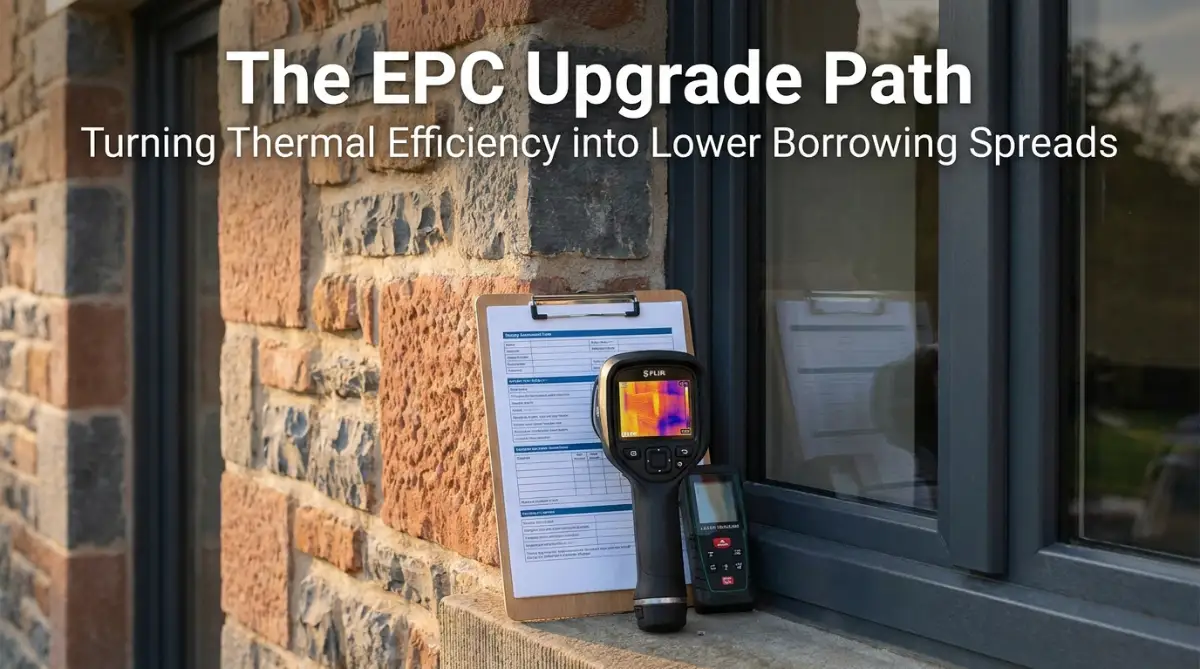
The Pros and Cons of Green Mortgage Financing
Before signing a long-term credit agreement, weigh the real-world advantages against the administrative commitments required.
The Pros:
-
Tangible Margin Discounts: Lenders routinely shave between 20 and 75 basis points off your ongoing borrowing rate.
-
Higher Loan-to-Value Ceilings: Many European banks permit borrowing up to 90% or even 95% LTV specifically for verified green improvements.
-
Fee Waivers: Financial institutions regularly waive standard mortgage arrangement, property appraisal, and legal setup charges on certified green products.
-
Protected Asset Value: Sustainable homes trade at a consistent premium and avoid the regulatory rent-caps or listing restrictions targeting inefficient properties.
The Cons:
-
Heavy Technical Bureaucracy: You cannot simply DIY your renovations on weekends; banks require certified trade professionals and formal third-party audits.
-
Upfront Verification Expenses: Independent thermal audits, structural engineering sign-offs, and administrative filing fees must usually be paid out of pocket before loan approval.
-
Penalty Risks on Target Shortfalls: If your completed renovation fails to achieve the projected EPC improvement level, lenders reserve the right to revert your interest rate back to their standard retail pricing.
Insider Underwriting Secrets: What Loan Officers Don't Publicize
If you want the upper hand when sitting across from a lending officer, you have to understand how their performance targets work. Retail banks across the continent have published strict public commitments to expand their Green Asset Ratios.
Loan officers carry direct incentives to originate loans that meet internal sustainable finance taxonomies. If your property deal fits cleanly into their green reporting bucket, the branch manager wants your loan approved just as much as you do.
Another internal mechanic involves algorithmic property valuations. Many automated bank valuation models automatically deduct value from older homes with low energy classes due to anticipated carbon regulations.
When you bring a fully costed plan showing an immediate leap to top-tier efficiency, you remove an automated discount from the bank's risk assessment engine.
To get the most out of your bank meeting:
-
Ask the mortgage specialist directly which specific energy threshold triggers their lowest rate tier.
-
Inquire whether the bank partners with dedicated energy auditing firms that offer subsidized pre-assessments for their borrowers.
-
Request a written confirmation detailing exactly what documentation will be required to release your final loan tranche.
On the flip side, steer clear of contractors who refuse to guarantee their performance metrics in writing. If an insulation installer won't sign off on the exact material efficiency rating on their final invoice, walk away.
Your bank will not disburse funds based on vague promises, and you could find yourself stuck servicing bridge debt at retail pricing.
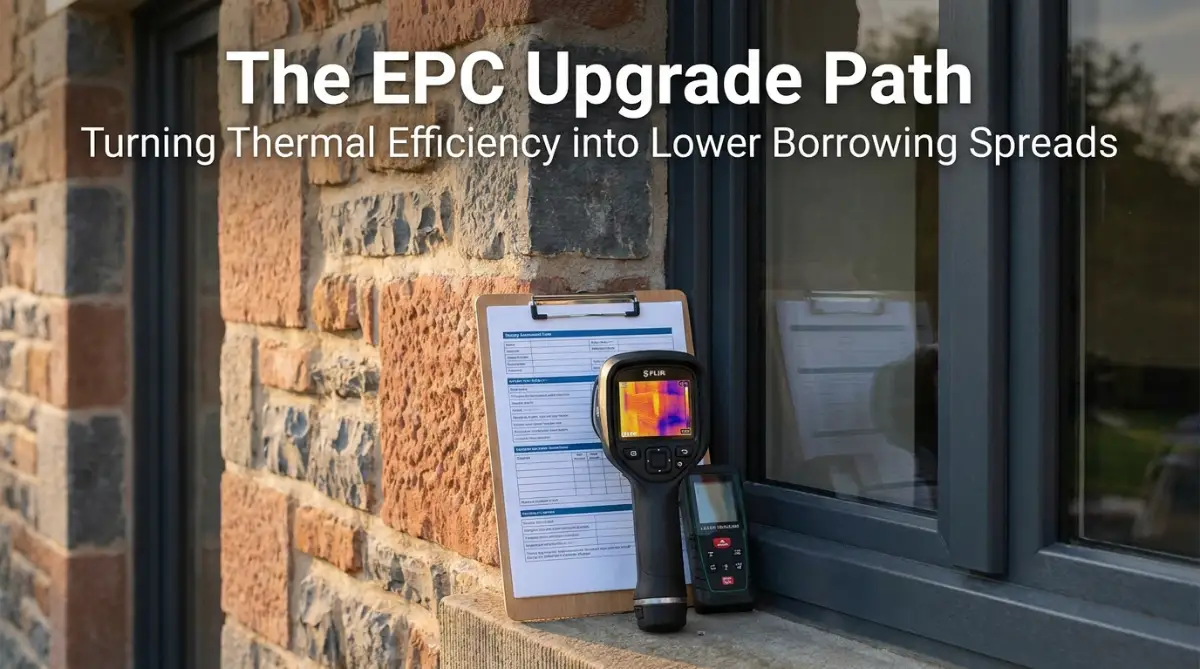
Advanced Strategies for Securing Top-Tier Green Mortgage Terms
Securing a discounted interest rate on an eco-renovation isn't just about handing over contractor estimates. You'll want to look at how institutional lenders package green debt behind closed doors. Under guidelines issued by the European Banking Authority, financial institutions monitor their loan book exposure against climate vulnerability scores.
When you present a renovation plan that demonstrably improves your EPC by two or more rating bands, your loan transforms into prime collateral for the bank's green covered bonds.
Knowing this gives you substantial leverage during credit negotiations. Instead of simply accepting standard retail margins, you can request a spread reduction from senior loan underwriters.
One effective strategy is blending senior mortgage financing with junior public development loans. For instance, pairing a commercial bank mortgage with concessionary funds from state lenders like Germany's KfW, France's MaPrimeRénov, or regional European energy transition funds lowers the overall blended borrowing rate.
This structure reduces the primary lender's exposure, dropping your loan-to-value tier and automatically triggering lower risk-pricing matrices.
To put it simply, lower exposure makes your credit profile look safer. When a bank sees that a portion of the project is backstopped by public subsidies, their internal credit rating algorithms flag your file as low risk.
Before committing your savings, it helps to understand the honest math behind home renovation ROI before you spend a dime so that your projected utility savings cover any residual debt service.
Pro Tip: Always negotiate for a "trailing rate reduction clause" in your initial credit agreement. This legal provision guarantees that your interest rate will automatically drop by an agreed number of basis points the moment you submit your certified post-renovation EPC, without requiring a costly loan refinancing or appraisal fee.
Another advanced tactic involves timing your energy audit with bank inspection cycles. If your initial building assessment misses localized heat loss issues, the bank's automated appraisal will reflect a lower terminal market valuation.
Savvy borrowers hire independent thermal imaging specialists to document building envelope defects before submitting plans, ensuring the lender's surveyor recognizes the full post-renovation equity upside.
Understanding the mortgage underwriting process: what banks actually check before saying yes will give you a clear head start in navigating these technical conversations with credit analysts.
Capital Staging: Tranche Releases and Cash Flow Preservation
Managing capital distribution during a deep energy retrofit requires disciplined treasury management. Banks rarely disburse green modernization loans in an upfront lump sum.
Instead, they release capital in stages based on independent engineer sign-offs, which can create working capital bottlenecks if your contractor payment schedules do not match bank release milestones.
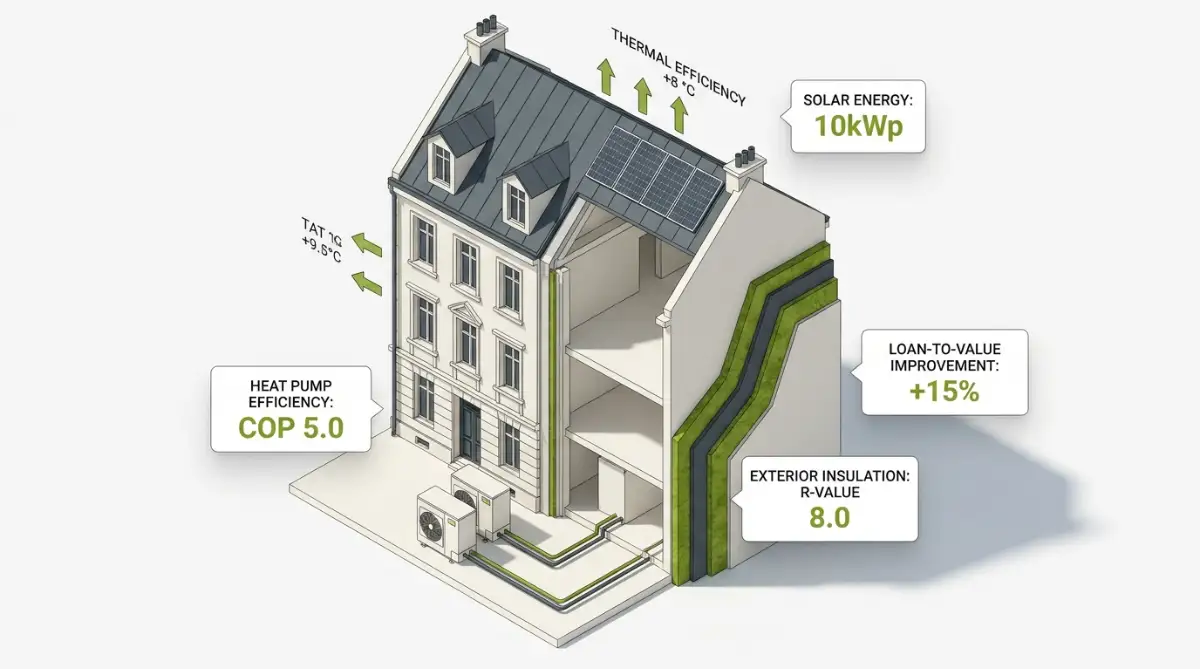
Common Traps That Derail Sustainable Home Financing
A lot of people assume that every building contractor understands the paperwork banks require for green lending. In reality, working with uncertified tradespeople is one of the quickest ways to lose your preferential rate.
If your contractor fails to deliver itemized technical datasheets that match regional energy building codes, underwriters will reject your milestone drawdown requests.
Another painful pitfall involves ignoring legal property restrictions before signing equipment purchase agreements. Installing high-efficiency exterior insulation or mounting rooftop solar arrays can trigger strict local conservation rules.
Falling victim to the overlooked zoning rule that can freeze your renovation plans can leave you holding thousands of euros in specialty building materials that your local municipality won't allow you to attach to the facade.
Watch out for hidden structural property issues when budgeting your energy overhaul. If you open up interior walls to install modern airtight membranes only to discover moisture damage or outdated wiring, your renovation budget can blow out before you even touch heating upgrades.
Take time to learn about the legal loophole that lets sellers hide property defects legally so you don't inherit hidden defects that cannibalize your green renovation budget.
Common Mistakes
-
Failing to check minimum technical thresholds: Buying heat pumps or window frames that fall just shy of the bank's minimum seasonal performance factor, entirely forfeiting your interest rate discount.
-
Underestimating soft project expenses: Forgetting that acoustic surveys, structural engineer approvals, and dual EPC filings cost thousands of euros out of pocket before loan approval.
-
Over-leveraging short-term bridge debt: Using high-interest personal loans to cover construction cost overruns while waiting for the bank's milestone inspection.
-
Overlooking equity erosion during economic shifts: Failing to evaluate the hidden way rising interest rates are shrinking your property equity when setting your overall borrowing ceiling.
-
Skipping the contingency fund: Operating without a dedicated 15% liquid reserve to handle unexpected contractor price adjustments or materials lead-time delays.
Separating Eco-Renovation Fact from Lending Fiction
Navigating the intersection of property engineering and mortgage underwriting often means unlearning outdated assumptions. Misinformation can easily cost you thousands in lost subsidies and inflated interest charges.
Action Plan: Executing Your Green Mortgage Application
Here's how to get it done efficiently without running into procedural roadblocks at your local branch. Preparing your application like a professional real estate developer makes approval seamless for underwriting teams.
The Step-by-Step Execution Guide
Phase 1: Baseline Assessment and Scoping
Start by commissioning a certified Energy Performance Certificate audit from an independent domestic energy assessor.
Instruct the assessor to deliver a formal simulation report outlining exactly what thermal insulation, heating retrofits, and ventilation improvements will be required to bring the home into an A or B energy efficiency band.
Phase 2: Procuring Performance-Compliant Quotes
Gather detailed, fixed-price tenders from certified contractors.
Ensure that each quote specifies precise technical performance metrics, such as window U-values below 0.8 W/m²K or heat pump coefficient of performance ratings exceeding 3.5, as required by your lender's green borrowing guidelines.
Phase 3: Structuring the Financing Stack
Approach lenders that offer specialized eco-renovation mortgages or preferential rate discounts.
Present your loan request as an integrated package: your baseline EPC, the projected post-works simulation, contractor performance specifications, and any approved public grant subsidy letters.
Phase 4: Managing Phased Disbursements
Once your loan gets approved, execute your construction works according to the agreed draw schedule.
Coordinate with your contractors to ensure that invoices provide clear, photographic proof and compliance certificates for each stage so the bank inspects and releases funds without payment delays.
Phase 5: Final Validation and Margin Locking
Immediately after completing the retrofit, bring back your certified energy assessor to conduct the final post-works audit.
Submit the newly registered high-tier EPC directly to your mortgage underwriter to lock in your permanent interest rate discount for the remaining term of your financing.
Technical Compliance Comparison Across Retrofit Measures
Different renovation measures yield different underwriting impacts. Lenders assign varying risk-mitigation weight to envelope improvements compared to cosmetic or mechanical updates.
If your property has extensive age-related repair needs beyond standard thermal updates, explore our guide on how you need to renovate an older home? Here’s how to fund it safely to prevent compounding credit strain.
Quick Action Checklist
- Schedule an accredited pre-works independent energy audit.
- Verify your local municipality's facade and rooftop solar planning regulations.
- Collect fixed-price contractor bids that state explicit material efficiency ratings.
- Apply for regional and national renewable energy grant schemes.
- Confirm your lender's milestone inspection protocols and drawdown fees.
- Establish an emergency cash buffer for potential valuation holdbacks.
Required Document Checklist for Lenders
-
Current registered domestic Energy Performance Certificate (EPC).
-
Certified post-works building energy simulation report.
-
Itemized contractor quotes containing confirmed thermal U-values and system COP ratings.
-
Government or municipal grant eligibility confirmations.
-
Proof of certified installer credentials (e.g., MCS, Qualit'EnR, or regional equivalent).
-
Standard mortgage underwriting documentation (pay stubs, tax declarations, proof of equity).
Moving Toward a Resilient, Energy-Independent Home
Upgrading your home's thermal envelope and ditching obsolete fossil-fuel heating isn't just an environmental choice. From a financial perspective, it is one of the most effective ways to shield your household from recurring energy price volatility while building long-term equity.
When you align your renovation goals with the capital requirements of forward-thinking European lenders, you turn modern building science into immediate borrowing power.
Take the process one step at a time, document your efficiency improvements thoroughly, and refuse to accept standard, overpriced consumer borrowing terms for work that makes your home an institutional-grade asset.
When I closed the financing on my first complex home retrofit, I realized that preparation turns an intimidating bank review into an easy, collaborative conversation.
My best advice is to treat your home like a valuable, long-term asset and demand the favorable mortgage rates your hard work justifies.
Which energy upgrade are you planning to tackle first for your property? Let me know in the comments below!
Clear Answers About Financing Sustainable European Home Upgrades
What is the minimum EPC improvement required for a green mortgage discount?
Most European lenders require a jump of at least two full energy performance bands, or an overall energy demand reduction of at least 30%, verified by a certified post-renovation audit.
Can I combine national government retrofit grants with a commercial green mortgage?
Yes, commercial lenders routinely encourage stacking state subsidies with green mortgage products because public grants lower overall loan-to-value exposure and reduce borrower default risk.
What happens if my renovation fails to reach the projected energy band?
If the post-works energy assessment misses the target threshold, the lender will generally eliminate your preferential margin discount and reset your borrowing rate to their standard variable or fixed retail tier.
Do banks cover the upfront cost of pre-renovation energy audits?
While borrowers usually pay for initial audits out of pocket, many green lenders reimburse these inspection costs or waive administrative origination fees upon formal loan approval.
Are DIY energy-efficiency installations eligible for green mortgage financing?
No, lenders require verified installations carried out by certified trade professionals to ensure building compliance, insurance validity, and technical performance targets.
How do milestone disbursements work during an eco-renovation?
Capital is held in an escrow-style loan account and released in pre-agreed stages only after an approved surveyor or engineer verifies the completion of specific project phases.
Does a green mortgage discount apply for the entire amortization period?
Margin discounts typically apply across your chosen fixed-rate term; when refinancing or resetting terms, your property will usually retain preferential rates as long as its certified EPC remains valid.
What is an "as-completed" property valuation?
An as-completed valuation is an underwriter appraisal based on the estimated future market worth of the property once all planned renovations and thermal retrofits are finished.
Can I get favorable mortgage terms for retrofitting a historic or listed property?
Yes, but you will need specialized heritage-approved building materials and architectural sign-offs to satisfy both municipal conservation authorities and bank credit committees.
Do solar panel installations alone qualify for a discounted mortgage rate?
Solar panels help reduce grid reliance, but lenders usually demand a balanced upgrade that addresses building insulation alongside power generation before granting green mortgage terms.
Trusted Legal and Regulatory Resources
-
European Central Bank – Sustainable Finance Framework: Official guidelines outlining institutional banking decarbonization standards and collateral frameworks.
-
European Banking Authority – ESG Risks and Green Lending: Regulatory rules detailing how European commercial lenders assess energy efficiency in retail mortgage portfolios.
-
European Commission – Energy Performance of Buildings Directive (EPBD): The core European legislative framework governing Energy Performance Certificates and residential retrofit goals.
-
Energy Efficient Mortgages Initiative (EEMI): An industry-standard framework standardizing favorable financing terms for energy-efficient homes across Europe.
-
KfW Development Bank – Energy-Efficient Building Financing: The benchmark European state lending model for stacking public renovation grants with commercial debt.
-
European Mortgage Federation – European Covered Bond Council: Primary statistical and legal insights on the pricing of green covered bonds and European residential mortgage trends.
Disclaimer
The material presented in this article is prepared strictly for educational, informational, and research purposes. It does not constitute formal financial, mortgage, tax, or legal advice.
Mortgage terms, credit eligibility, and regulatory subsidy programs vary widely across jurisdictions, individual lenders, and personal economic circumstances.
Neither the author nor FinanceInfoIn assumes any legal liability, financial responsibility, or professional obligation for actions taken based on this content.
Readers must consult an accredited independent financial advisor, a licensed mortgage broker, and certified building engineers before entering into legally binding borrowing agreements or structural renovation contracts.
About the Author & Review Process
Written & Fact-Checked by: Mithun Halder & The FinanceInfoIn Editorial Team
Mithun Halder is a dedicated personal finance researcher and educator with a deep focus on insurance, investing, and wealth management. At FinanceInfoIn, our editorial team rigorously researches and cross-references every topic with official government resources, insurance regulations, and industry best practices. Our mission is to break down complex financial jargon into clear, actionable, and trustworthy guidance, helping you make informed decisions about your financial security.
📧 Contact Mithun: [email protected] | 💼 Connect on LinkedIn: Mithun Halder