🕒 Reading Time: 13 Mins | ✍️ Reviewed By: FinanceInfoIn Editorial Team
The Green Mortgage Revolution: How a High EPC Rating Can Instantly Slash Your Interest Rate
The loan officer looked at my rate-lock request, tapped a few keys into the underwriting portal, and shaved twenty-five basis points off the quotation in under ten seconds. There was no aggressive bargaining, no point-buying fee on my closing disclosure, and no change to my credit score. The entire rate reduction came down to a single alphanumeric character entered from an Energy Performance Certificate (EPC): a verified Band B.
Most buyers think mortgage interest rates are carved in stone based purely on credit history and loan-to-value ratios. That outdated assumption quietly costs borrowers thousands of dollars every single year. Behind closed doors, lenders have rolled out preferred pricing brackets for energy-efficient homes, treating high thermal performance as a major credit safeguard.
Quick Summary
A green mortgage offers discounted interest rates (often 10 to 40 basis points lower) and upfront cashback for properties rated EPC Band A or B. Lenders provide these savings because energy-efficient properties demonstrate lower default rates and trade at a premium on institutional bond markets. Upgrading insulation, heating, and solar arrays can quickly bump an older home into discounted borrowing territory.
Key Takeaways
-
Lower Borrowing Costs: A verified Band A or B rating can instantly reduce your interest rate by 0.15% to 0.40%, saving thousands over a standard fixed-rate term.
-
Dual Cash Savings: You save on monthly debt service while simultaneously cutting baseline electric and gas bills.
-
Lender Risk Hedge: Banks offer these perks because lower utility overhead directly reduces a borrower's likelihood of mortgage default.
-
Smart Upgrades Pay Fast: Basic building envelope retrofits often generate higher mortgage savings than expensive cosmetic remodels.
A lot of homeowners find themselves trapped in an exhausting financial squeeze. You work hard to keep up with monthly housing payments, yet volatile utility bills continually wipe out extra household cash flow. It creates a steady feeling of frustration where you feel like you are working simply to heat a leaky structure while paying peak market interest rates on your debt.
The stress runs deeper when you realize your home’s physical condition directly dictates how a lender prices your risk. Most people never connect their attic insulation or window seals to their mortgage payment. But when a home constantly bleeds thermal energy, the property bleeds cash, making it harder to handle sudden financial emergencies or rate adjustments.
That continuous drain takes away everyday financial peace of mind. You end up delaying family vacations, holding off on home repairs, or stalling retirement contributions just to keep up with bloated utility costs and standard loan terms. It feels inherently unfair because traditional mortgage advice rarely mentions that energy efficiency and borrowing spreads are directly connected.
The lending industry has responded by rewriting its core underwriting rulebooks. Financial institutions are no longer looking at energy performance as an environmental talking point. They are putting real money on the table through discounted spreads and upfront cashback for properties that achieve verified efficiency scores.
Here is the breakdown of how these programs operate behind the scenes and how you can secure these preferred rates for yourself.
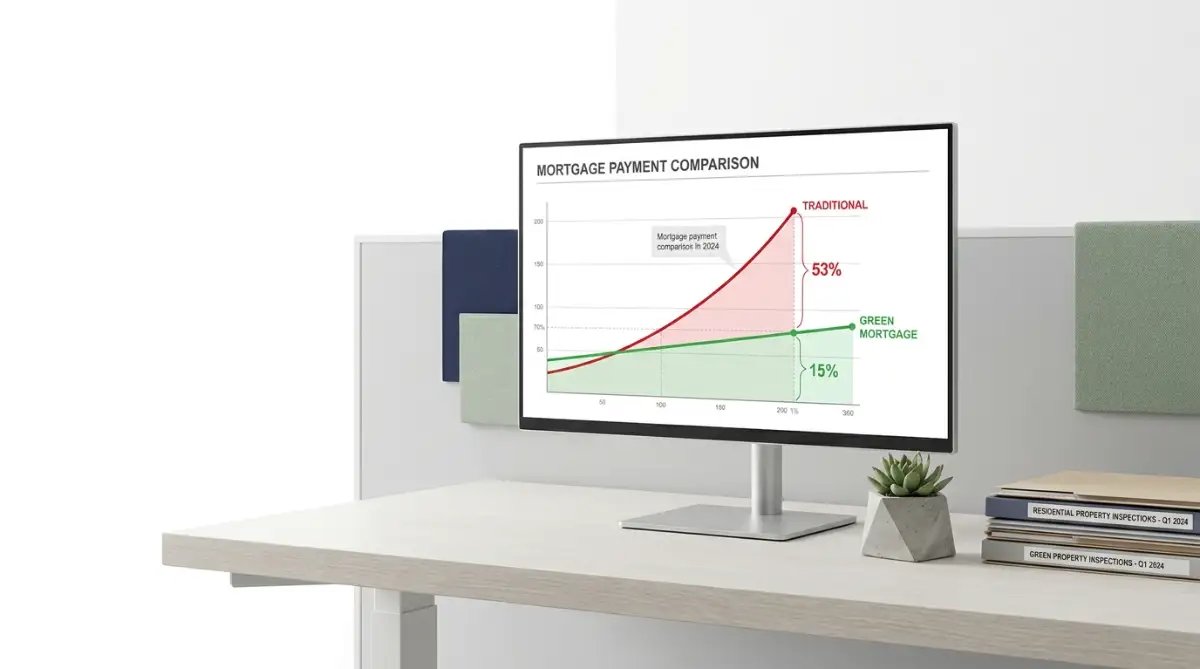
What Is a Green Mortgage and Why Are Banks Cutting Rates?
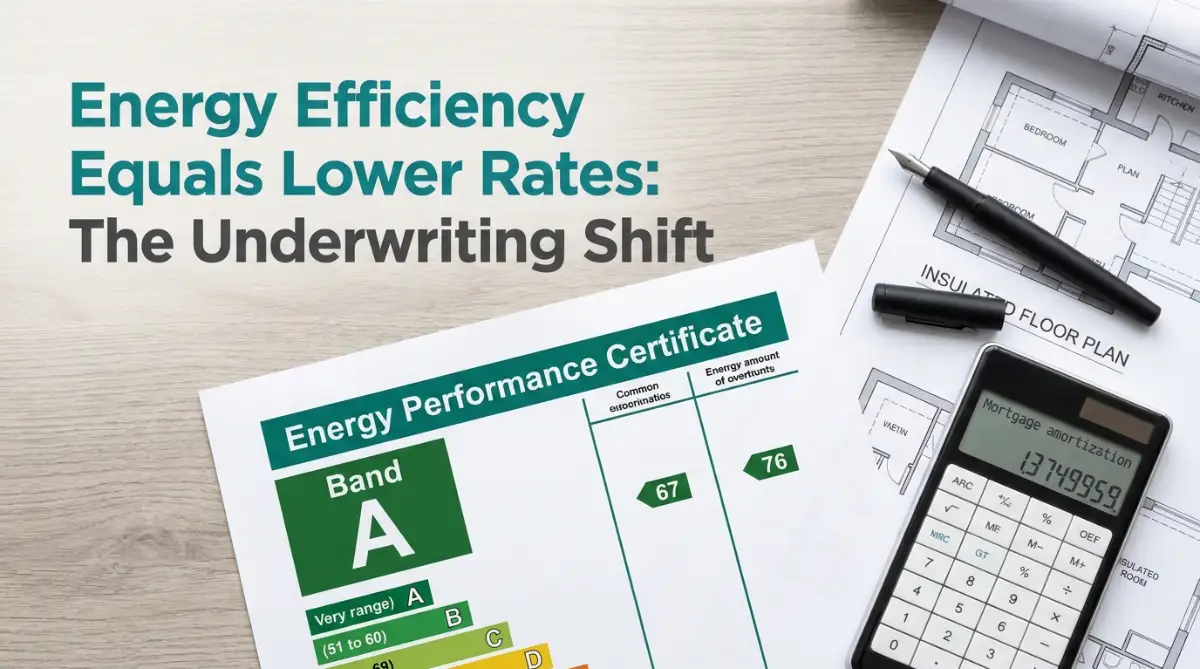
A green mortgage is a specialized home loan product that provides discounted interest rates, reduced application charges, or upfront cashback to borrowers purchasing or refinancing an energy-efficient home. In the vast majority of cases, financial institutions require an official Energy Performance Certificate rating of Band A or Band B to qualify for these preferred terms.
You might wonder why a profit-driven financial institution would voluntarily cut its own profit margins for an insulated home. The reality comes down to institutional risk modeling and secondary market funding mechanics rather than goodwill.
"Recent tracking by major central banking research networks shows that borrowers living in properties with high EPC ratings exhibit statistically lower mortgage default rates across diverse economic cycles."
When your property requires half the energy to stay warm or cool, your household retains significantly more disposable income every single month. That steady cash cushion means you are far less likely to miss a mortgage payment if an unexpected medical bill or vehicle repair pops up. Underwriters recognize this buffer and reward it by shrinking your loan's credit risk premium.
At the same time, banks package mortgages into securities and sell them to international pension funds and institutional investors. Global capital markets now pay a premium—frequently referred to as a "greenium"—for asset-backed securities composed entirely of certified eco-friendly homes. Because banks can securitize green mortgages at cheaper funding spreads, they pass a portion of those wholesale savings directly back to you in the form of a lower retail interest rate.
EPC Rating Bands vs. Typical Green Mortgage Pricing
To see how this pricing structure looks in practice, review how major residential lenders categorize loan discounts across different energy performance bands:
(Note: Exact basis-point discounts and cashback tiers depend on your loan-to-value ratio, regional market conditions, and individual bank underwriting rules.)
The Hidden Underwriting Mechanics: How Efficiency Protects Collateral
Inside bank underwriting departments, credit officers look at residential properties through a metric known as collateral preservation. When a lender issues a long-term loan against a property, they must ensure the home will retain its value over decades of market shifts.
Inefficient homes face what property analysts call "brown discounting." As environmental regulations tighten and home buyers demand lower utility overhead, properties with poor energy ratings linger on the market and sell for lower prices. If a lender holds a long-term lien on a drafty, energy-wasting home, that asset poses an elevated collateral risk on their balance sheet.
By offering a rate discount on a Band A or B property, the lender actively protects their own downside. They secure an asset that will easily command strong resale demand while backing a borrower with lower monthly maintenance expenses.
Looking at the numbers, it seems clear that energy ratings have become a primary credit variable. Underwriters now view EPC certificates with the same analytical scrutiny once reserved strictly for debt-to-income ratios and credit scores.
Real-Life Math: How Much Can a High EPC Save You?
Let's look at how these basis-point discounts translate into actual dollars and cents over a standard mortgage timeline. Small fractional discounts look minor on paper until you apply them to a real residential loan balance.
Consider a typical homeowner financing or refinancing a loan balance of $340,000 on a 30-year fixed loan term.
On a standard mortgage for an older, unrenovated Band D property, the borrower might receive a baseline market rate of 6.75%. That puts their monthly principal and interest payment at roughly $2,205.
Now look at that same borrower securing an energy-efficient home certified at EPC Band A, where the lender applies a green mortgage discount of 0.30% (30 basis points).
-
Standard Loan Rate (Band D): 6.75% = $2,205 per month
-
Green Mortgage Rate (Band A): 6.45% = $2,137 per month
-
Monthly Loan Savings: $68 per month
-
Total 5-Year Mortgage Savings: $4,080
A monthly savings of $68 might seem like a modest win, but that is only half of the picture. Because this home operates at Band A efficiency, the household also saves an estimated $150 to $230 each month on baseline heating, cooling, and electric bills compared to the leaky Band D property.
"When you add the mortgage rate discount to the utility savings, the total household cash benefit reaches roughly $250 to $300 every month, returning over $16,000 to the homeowner within the first five years alone."
Pro Tip: When planning home improvements, many borrowers spend thousands on aesthetic upgrades like custom cabinetry while completely ignoring their building envelope. I made this exact mistake early on, only to discover that spending that budget on airtight insulation and a heat pump would have qualified my property for a green mortgage tier, saving far more cash over the life of the loan.
Green Mortgages vs. Alternative Home Improvement Financing
Borrowers frequently confuse green first-lien mortgages with alternative financing tools, such as unsecured energy loans or home equity lines of credit (HELOCs).
Understanding how these products differ helps you choose the right path before signing any loan agreement:
If you are already purchasing a property or preparing to refinance an existing loan, a green first mortgage is almost always your cheapest route. It spreads the low rate over a long repayment term and locks in predictable monthly expenses.
On the other hand, if you already hold an exceptionally low fixed interest rate from previous years, you will want to avoid refinancing your entire principal balance. In that situation, using a targeted, fixed-rate home improvement loan or exploring municipal incentive programs is often the smarter financial move.
Watching the Expert Breakdown on Green Financing
Before spending capital on contractors, it helps to see how licensed mortgage brokers and energy assessors evaluate these loan products in the real world.
Take a few minutes to watch this practical walkthrough detailing how energy ratings influence mortgage approvals and long-term interest calculations:
How to Move Your Home Up an EPC Band: Step-by-Step
If your property currently sits in Band D or E, you are not permanently excluded from green rate discounts. Many progressive lenders now offer "Green Further Advance" or "Retrofit Refinance" programs. These products let you borrow additional renovation funds at discounted rates, with the lender lowering your primary interest rate once you verify your new, higher EPC score.
Here are the most effective, high-yield improvements to lift your score:
1. Seal the Building Envelope and Maximize Loft Insulation
Roughly twenty-five percent of heat in an uninsulated home escapes straight through the roof structure. Increasing loft insulation depth to modern building standards is one of the most cost-effective retrofits available. It provides substantial point increases on an energy assessor's calculation sheet relative to its modest price tag.
2. Upgrade to High-Efficiency Heating Systems
Replacing an old gas or oil boiler with an air-source heat pump or modern hybrid system delivers an immediate leap in your primary energy rating. Heat pumps transfer thermal energy rather than creating it from combustion, delivering high performance ratios that assessors score very favorably.
3. Install Rooftop Solar Photovoltaics (PV) with Battery Storage
Generating electricity on-site dramatically reduces your property's calculated reliance on the public grid. Adding a moderate rooftop solar array paired with a storage battery can push a home straight from a middle Band C into a solid Band B or Band A.
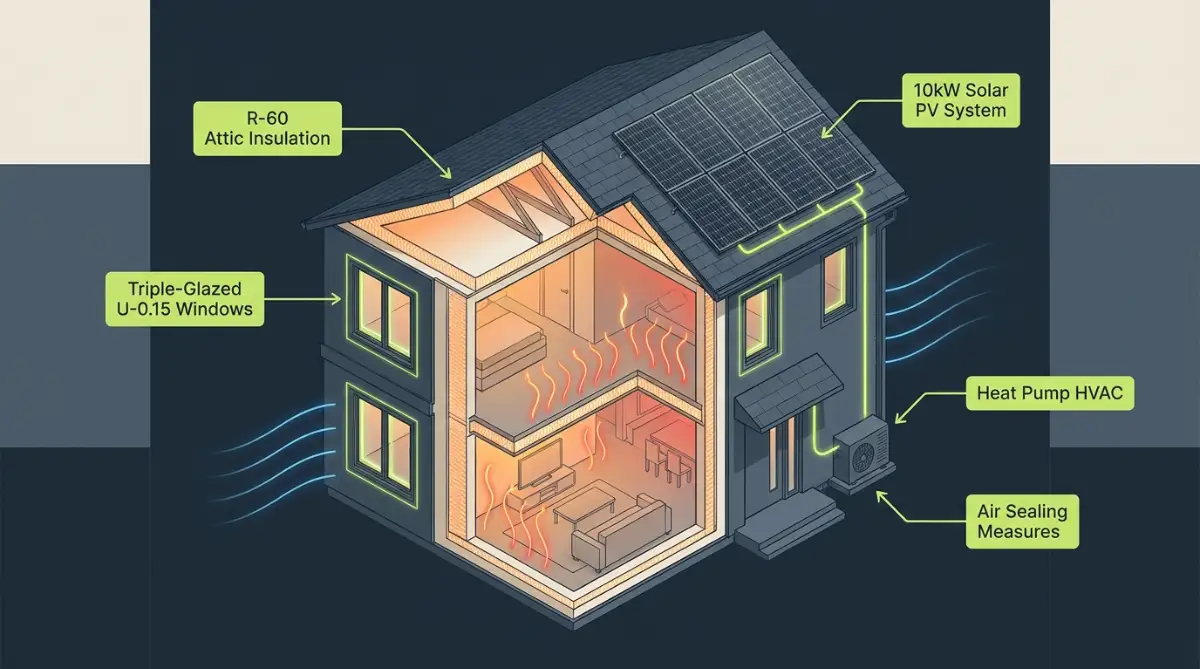
High-Impact Upgrades, Approximate Point Gains, and Costs
To help organize your renovation budget, here is how standard retrofits compare in terms of scoring impact and upfront investment:
Insider Strategies to Maximize Your Energy-Backed Borrowing Power
Getting the most out of a green mortgage requires approaching your application like an experienced credit analyst. Lenders do not evaluate renovations as interior upgrades; they view them as hard data points designed to minimize long-term risk.
Federal banking reviews and market reports indicate that household utility volatility remains a primary trigger for loan defaults during economic downturns. When baseline heating or cooling expenses jump, borrowers with tight cash reserves struggle to meet monthly debt obligations. A verified Band A or B property provides credit underwriters with an operational cushion that standard automated underwriting systems favor.
To capture the highest rate discount, pay close attention to your lender's property database updates. Automated valuation systems regularly refresh their records from public building registers. Make sure your certified assessor has officially uploaded your new EPC certificate to the national register before your loan officer pulls your property file.
You can also use an improved energy rating to contest a conservative property valuation during a refinance. Borrowers who want to see exactly how credit committees balance property collateral against applicant income can review the mortgage underwriting process to negotiate with confidence.
Pro Tip: If your rating lands right on the edge of a tier—such as an 80-point score that sits one point below Band B—do not accept the final report right away. Ask your assessor if small, inexpensive adjustments like high-output LED lighting or thermostatic radiator valves can push your home over the 81-point threshold to lock in the lower interest bracket.
Energy Retrofit Strategy vs. Lender Risk Assessment
Before spending money on upgrades, look at how underwriters evaluate different improvements when reviewing loan files:
(Note: Data patterns reflect aggregated scoring matrices used across modern institutional automated valuation systems.)
If you need financing to complete these energy upgrades before applying for a refinance, choose your borrowing method carefully. Homeowners looking to upgrade older homes without straining their monthly cash flow can read our guide on how to need to renovate an older home safely.
Costly Pitfalls Homeowners Make When Chasing Green Rates
Upgrading a property to capture a green mortgage discount requires careful planning. Many well-meaning homeowners spend substantial sums on high-visibility tech while ignoring the thermal dynamics that assessors score most heavily.
A common misstep is spending heavily on rooftop solar while leaving an uninsulated attic completely untouched. Energy assessors examine the overall heat retention of the building envelope first. If warm air easily escapes through the ceiling, solar panels will not offset that calculated structural inefficiency on your scorecard.
Another expensive error is working with contractors who fail to provide proper technical paperwork. Assessors cannot award points for wall insulation or underfloor work if they cannot physically inspect the layers or verify approved manufacturer specification sheets.
Local building rules can also create unexpected roadblocks. Adding exterior insulation to a historic building or installing solar panels without checking neighborhood covenants can result in project delays or fines. Before starting exterior renovations, take a look at the overlooked zoning rule that can freeze your renovation plans to avoid legal headaches.
Common Mistakes
-
Ordering an EPC Assessment Too Early: Requesting an assessment while work is still underway locks in an incomplete score that remains on the public register until you pay for a new survey.
-
Ignoring Early Repayment Charges (ERCs): Leaving an existing fixed-rate mortgage early to chase a green rate can trigger penalty charges that completely outweigh your interest savings.
-
Over-Upgrading Past Band B: Spending thousands of extra dollars just to move from 88 points (Band B) to 93 points (Band A) rarely delivers enough additional rate reduction to justify the investment.
-
Failing to Keep Receipts and Technical Sheets: Energy assessors must assume the worst-case historical default for your home's build era if you cannot show invoices detailing modern insulation materials.
-
Skipping Whole-Market Lender Comparison: Sticking with your current retail bank without comparing competitors leaves money on the table, as green rate discounts vary significantly across lenders.
To separate lending facts from persistent rumors, review these common misconceptions before making financial decisions:
Myth vs. Reality in Green Mortgage Borrowing
Understanding these points protects you from investing in improvements that fail to lower your monthly debt load. If you want to check the financial logic of your project beforehand, reviewing the honest math behind home renovation ROI can help you prioritize upgrades that deliver real equity gains.
The Action Plan: Step-by-Step Application Roadmap
Securing an energy-discounted mortgage does not have to be complicated. Following a clear, organized sequence will keep your loan application moving smoothly through underwriting.
Here is how you can execute this strategy from start to finish:
Step 1: Audit Your Current Energy Rating
Pull your property's existing certificate from the official government register. Check the recommendation report on the back of the document, which outlines specific retrofits proven to lift your score.
Step 2: Calculate Your Net Break-Even Timeline
Get itemized quotes for the required retrofits and compare the costs against your projected interest savings. If spending $2,500 on attic insulation and smart controls cuts your borrowing rate on a large loan balance, the combined interest and utility savings will recover that expense quickly.
Step 3: Complete Retrofits with Full Documentation
Hire certified contractors and take clear photos of insulation materials before drywall or flooring is installed. Collect signed completion certificates, U-value specs, and manufacturer datasheets for every piece of equipment.
Step 4: Book an Accredited EPC Assessment
Hire an independent domestic energy assessor to complete a fresh post-renovation inspection. Provide them with your organized binder of invoices and spec sheets so they can record verified thermal ratings instead of estimated defaults.
Step 5: Submit for Green Mortgage Approval
Present your newly issued Band A or B certificate to your mortgage broker or lender. Apply specifically for their green lending product, confirming that all interest discounts and cashback perks are clearly stated in your formal loan offer.
For homeowners managing properties during changing market conditions, using smart mortgage strategies can protect your baseline equity regardless of broader real estate shifts.
Quick Action Checklist
- Before speaking with a loan officer, make sure you have checked off these core preparatory items:
- Checked your current energy rating on the official national database.
- Reviewed your active mortgage paperwork for any early exit penalties.
- Confirmed the exact score threshold your target lender requires for preferred pricing (typically 81+ points)
- Prioritized improvements that deliver the highest score increase per dollar spent.
- Gathered signed warranties, installation invoices, and product data sheets from your contractors.
- Verified that your new EPC certificate is publicly active and visible on the official registry.
Required Document & Preparation Checklist
Underwriters reviewing green mortgage files require clear documentation before approving discounted rates. Keep these records organized in a digital folder:
-
Current Energy Performance Certificate (EPC): Must show an active, certified Band A or Band B rating.
-
Energy Assessor Recommendation Report: Documents your baseline and improved scoring metrics.
-
Contractor Invoices and Payment Receipts: Confirms that all declared home upgrades were fully paid for.
-
Product Specification Documents: Verifies insulation thickness, boiler efficiency ratings, or heat pump output.
-
Microgeneration Certification (MCS): Required if claiming points for solar arrays or heat pump installations.
-
Building Control Sign-Offs: Local authority permits for structural alterations or new window installations.
-
Standard Mortgage Files: Recent pay stubs, bank statements, and current mortgage balance verifications.
Keeping these items ready eliminates processing delays during underwriting. For borrowers dealing with high monthly obligations, understanding how rising interest rates shrink equity shows why securing a discounted borrowing spread is so valuable.
Document Verification Requirements for Green Mortgage Underwriting
Taking Control of Your Home Borrowing Costs
Connecting your property's energy performance to your mortgage is one of the most effective personal finance moves you can make today. You do not have to sit back and accept high utility bills or peak borrowing rates as unavoidable realities. By treating your property as an efficient financial asset, you remove unnecessary waste from your monthly budget while earning preferred pricing from institutional lenders.
Looking back at my own mortgage journey, taking the time to audit my property's energy certificate completely changed how I manage my housing costs. Fixing drafty spaces and qualifying for a certified green mortgage rate put money back into my pocket every single month, turning an ongoing maintenance headache into long-term wealth building. You have the exact same opportunity to review your paperwork, complete smart retrofits, and lock in the discounted rates you deserve.
Which energy upgrade are you planning to tackle first to boost your home rating? Let me know in the comments below!
Frequently Asked Questions About Green Mortgages and EPC Savings
What is the minimum EPC rating required for a green mortgage?
Most retail lenders require an EPC rating of Band B (81 points or higher) or Band A (92 points or higher) to unlock discounted green mortgage interest rates. A few institutions offer minor cashback tiers for properties moving from Band D to Band C, but preferred interest rates remain reserved for Band A and B homes.
Can I switch to a green mortgage rate mid-term on a fixed-rate loan?
You generally cannot change rate tiers in the middle of an existing fixed-rate term without paying early repayment charges, unless your contract includes a specific green adjustment option. Most borrowers take advantage of green rates when their current fixed term expires or when executing a full refinance.
How much does an updated EPC assessment cost?
A standard residential EPC survey typically costs between $75 and $175, depending on the property's size, layout, and region. That small upfront expense is easily outweighed by potential monthly interest savings and lender cashback incentives.
Do green mortgages offer lower rates on new builds compared to older homes?
Lenders evaluate the verified EPC score rather than property age, meaning a retrofitted older property with a Band B rating qualifies for the same green rate as brand-new construction. However, new builds often meet Band A or B standards right away, while older homes require deliberate renovation work.
What happens if my green mortgage application is approved, but the EPC expires before closing?
EPC certificates remain legally valid for ten years from their issue date. If your certificate expires while your loan is undergoing underwriting, the lender will place the application on hold until an accredited assessor conducts a new survey and registers an updated score.
Are green mortgages available for buy-to-let or investment properties?
Yes, many commercial and residential lenders offer green buy-to-let products that reward property investors for leasing energy-efficient rentals. Landlords can secure lower interest rates or reduced loan arrangement fees, helping improve net operating yields across their portfolios.
Can rooftop solar panels alone raise an EPC rating from Band D to Band B?
Rooftop solar provides a noticeable score increase, but it rarely bridges a large gap on its own if the building envelope is leaky. Achieving Band B generally requires pairing solar generation with improved loft insulation, wall insulation, or high-performance glazing.
Will an energy assessor accept receipts if insulation is hidden under floors or behind walls?
Yes, accredited assessors rely on formal contractor invoices, clear photo evidence, and manufacturer product specification sheets when insulation cannot be visually inspected. Retaining these records is necessary to receive the full points your improvements deserve.
Do green mortgages come with higher closing fees?
Green mortgages rarely charge higher closing costs and often feature waived administrative fees or substantial cashback bonuses compared to standard loan tiers. Banks use these incentives to attract low-risk, energy-efficient collateral onto their balance sheets.
How does an EPC score impact property resale value beyond mortgage savings?
Homes with higher EPC ratings routinely sell faster because prospective buyers anticipate lower utility expenses and easier mortgage qualification. Energy performance has become a standard search consideration for buyers, helping Band A and B properties stand out in competitive markets.
Trusted Legal and Regulatory Resources
-
Energy Saving Trust Home Guidance: Independent, research-backed benchmarks detailing estimated household cost savings and retrofit priorities for residential properties.
-
U.S. Department of Energy Efficiency Standards: Official federal standards, building envelope guidelines, and performance metrics for modern residential systems.
-
National EPC Public Register: The official public database for checking, verifying, and downloading verified Energy Performance Certificates and recommendation reports.
-
Building Research Establishment (BRE Group): A globally recognized authority providing technical building assessment standards and sustainable construction data.
-
Freddie Mac Green Advantage Program: Institutional underwriting criteria, loan product structures, and property metrics for green residential lending.
-
Bank for International Settlements Green Finance Studies: In-depth central bank research analyzing climate risk modeling, mortgage collateral resilience, and green bond pricing dynamics.
Disclaimer
The material provided in this article is published exclusively for informational and educational purposes and should not be construed as individualized mortgage, legal, taxation, or financial advice. Mortgage underwriting criteria, interest rate discounts, energy scoring systems, and lending guidelines vary based on jurisdiction, property characteristics, credit profile, and individual lender policies.
Neither Mithun Halder nor the FinanceInfoIn team serves as an authorized mortgage broker, certified loan underwriter, or licensed legal advisor. Readers must consult with a qualified, independent mortgage professional, accredited domestic energy assessor, or certified financial planner before executing home renovations, canceling existing loans, or entering into legally binding debt contracts. Neither the author nor FinanceInfoIn assumes any liability for financial actions taken, loan application outcomes, or contractor investments made based on the information provided herein.
About the Author & Review Process
Written & Fact-Checked by: Mithun Halder & The FinanceInfoIn Editorial Team
Mithun Halder is a dedicated personal finance researcher and educator with a deep focus on insurance, investing, and wealth management. At FinanceInfoIn, our editorial team rigorously researches and cross-references every topic with official government resources, insurance regulations, and industry best practices. Our mission is to break down complex financial jargon into clear, actionable, and trustworthy guidance, helping you make informed decisions about your financial security.
📧 Contact Mithun: [email protected] | 💼 Connect on LinkedIn: Mithun Halder