
Reading Time: 12 Minutes
Difficulty Level: Beginner to Intermediate
Reviewed By: FinanceInfoIn Editorial Team
Quick Summary
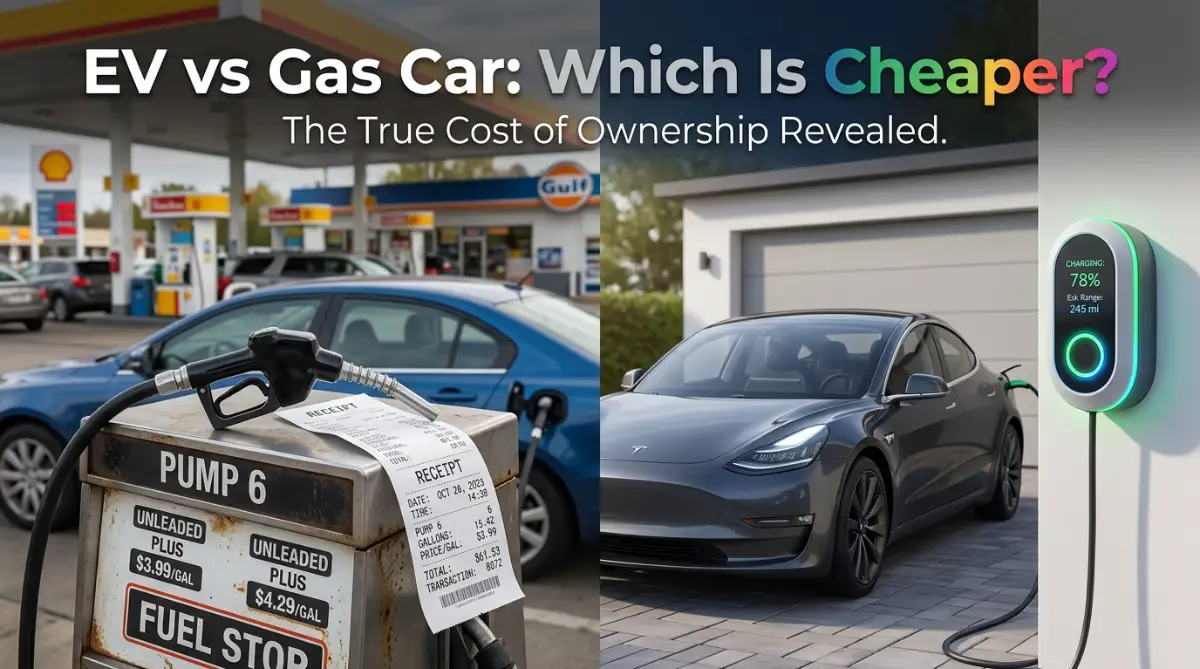
Choosing between an electric vehicle and a gas car goes far beyond the sticker price at the dealership. While traditional gas cars often cost less upfront, their long-term fuel and maintenance expenses add up quietly but aggressively. Electric vehicles demand a heavier initial investment, especially for home charging setups, but offer massive daily operational savings. Ultimately, the cheaper option depends entirely on your daily mileage, access to home electricity, and how long you plan to keep the vehicle.
Key Takeaways
- Electric cars almost always win in day-to-day operational costs if you charge at home.
- Gas cars require significantly more ongoing maintenance due to thousands of moving parts.
- Public EV charging can sometimes be as expensive as pumping gas.
- Upfront costs for EVs, including home charger installation, can take a few years to break even.
- Insurance premiums for electric cars are generally higher due to specialized repair parts.
The Daily Financial Drain We All Accept
Staring at a pump screen demanding ninety dollars for a single tank of gas is the fastest way to reconsider every financial choice you have ever made. I clearly remember standing in the freezing rain, watching those digital numbers spin out of control. It felt like I was physically taking cash out of my wallet and setting it on fire just to get to work the next week.
We have all been conditioned to accept this reality. We plan our budgets around volatile gas prices that jump every time there is a slight shift in global news. It is a slow, continuous financial drain that quietly eats away at your hard-earned income. You fill up the tank, you drive, you watch the needle drop, and the cycle repeats itself endlessly.
Then comes the dreaded check engine light. You take a morning off work, sit in a waiting room smelling like stale coffee and rubber, only to be handed a massive repair bill for an oxygen sensor or a transmission flush you barely understand. These unpredictable expenses completely ruin household budgets. They turn a peaceful weekend into an absolute nightmare of financial stress.
The mental toll of owning a traditional vehicle is heavy. You are always one bad pothole or one strange engine noise away from losing a large portion of your savings. This constant state of anxiety makes the silent, seemingly maintenance-free promise of an electric vehicle incredibly tempting. But does that shiny new technology actually stop the financial bleeding, or just change how you pay for it?
Real-Life Math: Sarah’s Gas Habit vs. David’s EV Switch
Sarah and David drive the same 15,000 miles a year, but their fuel bills look very different.
Sarah drives a reliable mid-sized gas sedan that gets 30 miles per gallon. With gas at an average of $3.50 a gallon, she burns through about 500 gallons a year, which comes to roughly $1,750 annually just to keep her car moving. Over five years, that's $8,750 gone out the exhaust pipe.
David bought an electric car and charges it at home overnight. His EV gets about 4 miles per kilowatt-hour (kWh), so those same 15,000 miles take 3,750 kWh of electricity. At an average national rate of $0.16 per kWh, he spends about $600 a year on power. Over five years, that's just $3,000.
On energy alone, David saves $5,750 over five years compared with Sarah. That's money that could go toward a vacation, an emergency fund, or simply less stress at the end of the month.
Confusing Alternatives: Hybrids vs Full EVs
People often get incredibly overwhelmed when trying to leave the standard gas car behind. They walk onto a lot and are immediately hit with confusing terms like HEV, PHEV, and BEV. It is easy to accidentally buy the wrong technology for your specific lifestyle.
A standard Hybrid (HEV) still runs entirely on gasoline, using a small battery just to assist the engine and boost fuel economy. You never plug it in. A Plug-in Hybrid (PHEV) has a larger battery that lets you drive 30 to 40 miles entirely on electricity before the gas engine kicks in. Finally, a Battery Electric Vehicle (BEV) removes the gas engine completely.
If you have a very short daily commute, a plug-in hybrid might give you the best of both worlds without range anxiety. However, you are still carrying around an internal combustion engine that requires oil changes, spark plugs, and traditional mechanical upkeep.
The Hidden Reality of Maintenance Costs
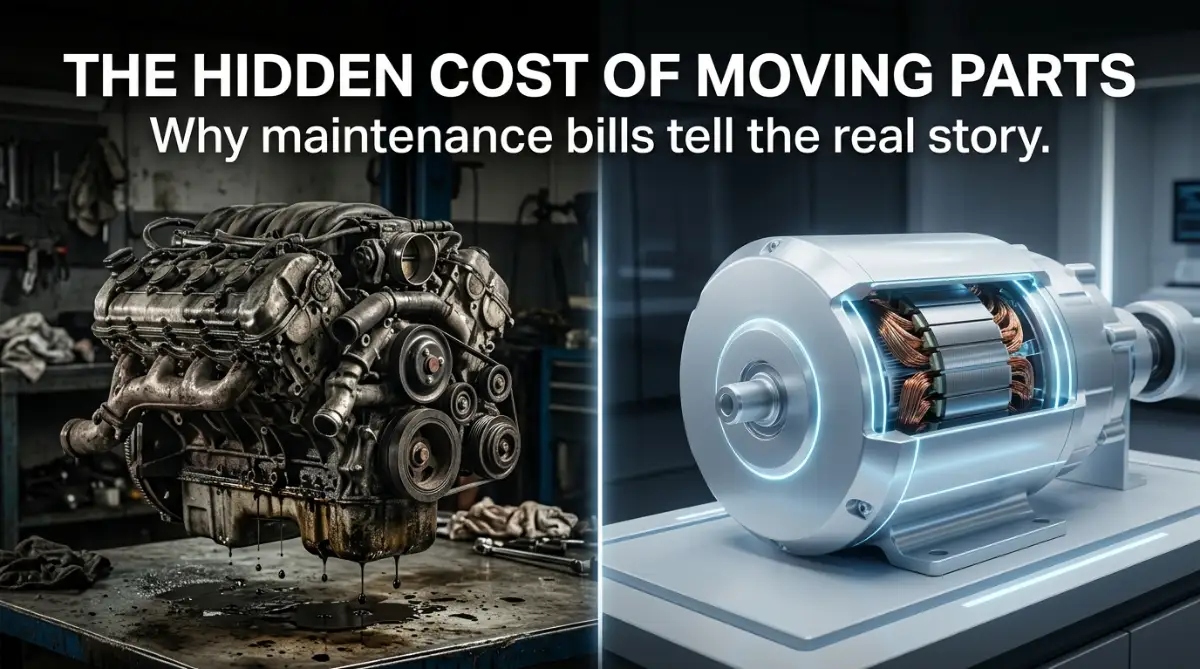
Gas engines are essentially controlled explosion machines. They rely on thousands of tiny, perfectly synchronized moving parts to push you forward. Because of this intense friction and heat, they require constant lubrication and cooling.
You need engine oil, transmission fluid, radiator coolant, spark plugs, timing belts, and fuel filters. Every single one of these components will eventually degrade and fail. It is not a matter of if, but when.
Electric motors, by contrast, are laughably simple. A standard EV has just a fraction of the moving parts found in a gas engine. There is no oil to change. There is no transmission to flush. There are no spark plugs to replace.
Even the brakes last incredibly long on an EV. Because electric cars use regenerative braking—using the motor to slow the car down and capture energy back into the battery—the physical brake pads barely get used. Many EV owners go over 80,000 miles before ever needing a brake pad replacement.
Home Charging Setup: The Silent Upfront Cost
Before you buy an EV, take a few minutes to watch this practical breakdown of real home charging installation costs. Seeing the electrical requirements upfront will save you from expensive surprises later.
While the daily savings are fantastic, we have to talk about the initial setup. When I first looked into buying an electric car, I completely forgot to factor in how I was actually going to power it at my house.
Plugging a modern EV into a standard wall outlet is like trying to fill a swimming pool with a drinking straw. It gives you maybe 3 to 4 miles of range per hour of charging. For anyone driving a normal daily commute, this is completely useless.
You will almost certainly need a Level 2 charger installed in your garage or driveway. This requires a 240-volt outlet, similar to what a large electric clothes dryer uses.
Expert Tip: I highly recommend calling a licensed electrician for a home assessment before you ever sign the paperwork for an EV. Depending on your home's electrical panel, adding a Level 2 charger can cost anywhere from $500 to over $2,000 if your entire panel needs an upgrade. Factor this directly into your purchase budget.
If you rely entirely on public fast chargers, the financial math completely falls apart. Public charging stations charge a massive premium for the convenience. In some areas, exclusively using public fast chargers costs exactly the same per mile as driving a gas car.
Insurance Premiums: The Unexpected Variable
One area where traditional cars still hold a strong financial advantage is auto insurance. When you call your insurance agent to swap your policy to a new electric vehicle, you might get a bit of sticker shock.
EVs are generally more expensive to insure for a few specific reasons. First, the cars themselves often have a higher initial purchase price. Second, because the technology is advanced and highly integrated, repairing an EV after a crash requires specialized mechanics.
A minor fender bender in a gas car might just mean swapping a bumper. In an EV, that same impact could damage a handful of highly sensitive sensors or require battery safety inspections. This increased repair cost gets passed directly to you through higher monthly insurance premiums.
Resale Value and Depreciation Trends
Cars are terrible investments. The moment you drive off the lot, the vehicle starts losing its value. But how do gas cars and EVs compare when it is time to sell?
Historically, electric vehicles depreciated faster than traditional cars. The technology was advancing so rapidly that a three-year-old EV felt ancient compared to the newest model. Range was shorter, and charging speeds were slower.
However, the market is stabilizing. As electric ranges hit the 300-plus mile mark, used EVs are holding their value much better. Buyers are also realizing that a used EV with 80,000 miles is often in much better mechanical shape than a gas car with the same mileage.
That being said, gas trucks and popular SUVs still hold the crown for retaining the highest resale value over a ten-year period.
Honest Pros & Cons of the Switch
Sometimes you just need to see the good and the bad laid out clearly. Here is the realistic breakdown of owning an EV long-term.
The Pros of EV Ownership:
- Wake up every morning with a "full tank" of range.
- Massive daily savings on fuel costs compared to gasoline.
- Extremely low routine maintenance (No oil changes, long-lasting brakes).
- Silent, smooth driving experience with instant acceleration.
- Zero tailpipe emissions polluting your garage or neighborhood.
The Cons of EV Ownership:
- Higher upfront purchase price compared to similar gas models.
- Installing a home charger is an annoying and sometimes expensive hurdle.
- Road trips require planning your route around charging stations.
- Insurance premiums run noticeably higher than standard vehicles.
- Cold weather temporarily drops your battery range.
Key Takeaways for Your Wallet
So, which is actually cheaper in the long run? The answer is mathematically clear, provided you meet a few specific conditions.
If you own your home, can install a Level 2 charger, and drive a normal daily commute, an electric vehicle will absolutely save you thousands of dollars over a five-to-ten-year period. The upfront cost stings, but the day-to-day operational savings easily absorb that premium over time.
However, if you live in an apartment, rely entirely on expensive public charging, or frequently take massive cross-country road trips, a traditional gas car or a plug-in hybrid remains the safer financial choice for now.
Take a hard look at your daily driving habits. Do the math on your local electricity rates. The best financial decision always comes from matching the right machine to your actual, everyday reality.
Smart Strategies to Maximize Your Savings Over Time
Once you decide to move away from traditional gas stations, the real financial game begins. Owning an electric vehicle changes your daily habits, and playing it smart can save you an incredible amount of money. The most successful owners do not just buy the car; they optimize how they use it.
Your biggest advantage is controlling when and how you refuel. Unlike gasoline prices that fluctuate wildly at the pump, your local utility company offers predictable rates. You can easily predict your exact driving costs months in advance.
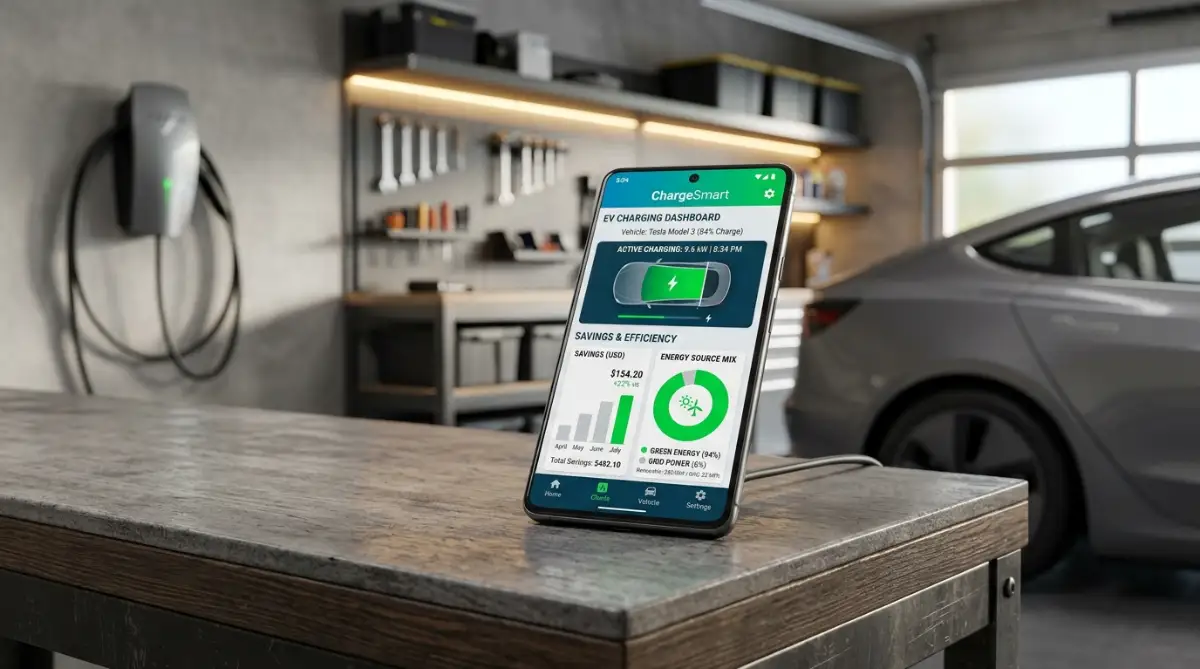
Pro Tip: Always call your electricity provider and ask to switch to a Time-of-Use (TOU) billing plan. This simple five-minute phone call allows you to charge your car overnight at extreme discount rates, drastically lowering your overall household energy bill.
Another secret involves learning how your driving style impacts battery health. Aggressive acceleration is fun, but it burns through electricity and destroys your tires. Because these vehicles are incredibly heavy and produce instant torque, frequent hard stops will force you to buy new tires much sooner than a standard sedan. Smooth, steady driving keeps your energy costs low and your tires intact.
To help you get the most out of your battery over the long haul, you should learn how to extend the battery life of an electric vehicle. Simple habits like keeping the charge between 20% and 80% for daily driving will protect the battery cells for years.
Below is a helpful breakdown of the most common assumptions people make when comparing these two types of vehicles.
The Financial Traps New Owners Fall Into
Making the switch without proper research can easily turn a smart investment into a massive headache. One of the biggest errors new buyers make is purchasing far more battery range than they actually need.
Dealerships will try to upsell you on the heavy, expensive 350-mile extended battery package. However, if your daily commute is only 30 miles round trip, you are paying a huge premium for capacity you will rarely use. Buying a standard range model saves thousands upfront and still covers 95% of your driving needs perfectly.
Common Mistakes
Here are the most frequent financial traps drivers fall into when switching away from gas:
- Relying on Public Chargers: Exclusively using public fast chargers completely erases the daily cost savings of driving on electricity.
- Ignoring Cold Weather Drops: Failing to understand how to safely charge your electric car in freezing temperatures can lead to unexpected range loss during winter months.
- Skipping the Home Inspection: Buying the car before knowing if your home electrical panel can handle a Level 2 charger setup.
- Misunderstanding Charge Speeds: Getting frustrated and wondering why is my EV charging so slow because you plugged into a basic wall outlet instead of a dedicated circuit.
- Forgetting Tire Budgets: EV tires handle more weight and wear out roughly 20% faster than traditional gas car tires.
Failing to avoid these common traps can lead to heavy frustration. You might find yourself stranded at a broken public charger or paying unexpected electrical upgrade fees at home. Take the time to understand the technology before signing any paperwork.
Your Exact Step-by-Step Execution Guide
If you are ready to stop buying expensive gasoline, you need a clear action plan. Do not just walk onto a dealership lot without doing your homework first. Following these exact steps will protect your wallet and ensure a smooth transition.
Step 1: Audit Your Daily Driving Habits
Track exactly how many miles you drive every day for a full week. Be deeply honest with yourself about how often you actually take road trips that exceed 200 miles.
Step 2: Check Your Home Electrical Panel
Go to your garage or basement and look at your main breaker box. You are looking for at least 200-amp total service to comfortably add a dedicated charging circuit. If you are unsure what is the difference between Level One and Level Two electric vehicle charging, a quick consultation with an electrician is a smart move.
Step 3: Secure Quotes for Home Installation
Before looking at cars, call two local, licensed electricians. Ask them for a written estimate to install a 240-volt NEMA 14-50 outlet near your parking space. For a complete guide, read about how to set up your electric vehicle home charger.
Step 4: Research Available Tax Incentives
Visit the official Department of Energy website to check current federal tax credits. Many states and local utility companies also offer heavy cash rebates just for installing a charger at your house.
Step 5: Call Your Auto Insurance Agent
Provide your agent with the exact VIN (Vehicle Identification Number) of the model you want to buy. Ask for a realistic premium quote so the monthly insurance bill does not surprise you later.
Quick Action Checklist
Before you head to the dealership or order online, make sure you have these specific items checked off and ready to go:
- Written estimate from a licensed electrician.
- Confirmation of your utility company's lowest overnight rate.
- Printed list of approved federal and state tax credits.
- Updated auto insurance quote for the specific model.
- A clear understanding of local public charger locations.
Preparing your home is the most important part of this journey. The table below illustrates the typical expenses you should budget for before bringing the vehicle home.