Reading Time: 12 Minutes
Difficulty Level: Beginner to Intermediate
Reviewed By: FinanceInfoIn Editorial Team
The Unfair Reality of Doing Everything Right
I stood at the bank counter, clutching the final payoff receipt for my car loan. A massive weight instantly lifted off my shoulders. I was finally free from that monthly payment. I walked out of that building feeling like an absolute financial genius.
But that amazing feeling vanished exactly two weeks later. I opened my credit monitoring app, expecting to see a perfect, shining score. Instead, my heart sank. My score had dropped by 34 points overnight.
Panic set in immediately. Was this some kind of technical error? Did someone steal my identity while I was not looking?
It felt like a massive slap in the face. You work hard, save your money, and make every single payment on time. You do exactly what society tells you to do to be responsible. Yet, the system punishes you for actually achieving the goal.
This unexpected dip causes so much anxiety for hard-working people. You might be planning to buy a house, apply for a new apartment, or get a better insurance rate. Seeing those numbers fall can make you feel completely helpless and confused.
The mental toll of trying to understand financial rules can be exhausting. Everyday people are losing sleep wondering why their good habits are resulting in bad numbers. We sacrifice our daily coffee, skip vacations, and aggressively tackle our debt. To see your credit profile take a hit after all that hard work just feels entirely broken and unfair.
You are not alone in this frustration. Millions of people experience this exact same shock every single day. Let us break down exactly why this unfair penalty happens and how you can easily recover from it.
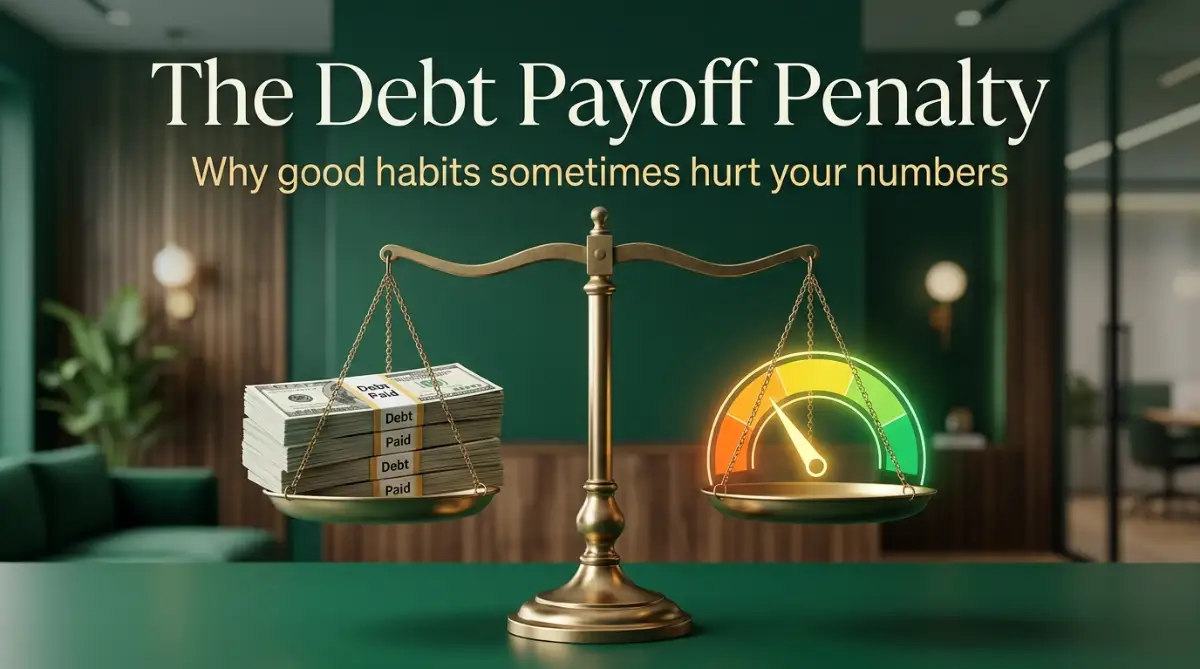
Table of Contents
- The Unfair Reality of Doing Everything Right
- How The Credit Scoring System Actually Views Debt
- Real-Life Math: The Anatomy of a Dropping Score
- The Big Confusion: Revolving Debt vs Installment Debt
- The Pros and Cons of Closing a Loan Early
- Step-by-Step Action Plan to Recover Your Score
- Expert Tips to Protect Your Future Credit Profile
Quick Summary
Your credit score often drops after paying off a loan because the account is marked as closed. This action negatively impacts your overall "credit mix" and reduces the total amount of active, positive payment history. Additionally, closing an older loan can lower your average age of open accounts. Fortunately, this dip is usually temporary, and your score will bounce back within a few months with responsible financial habits.
Key Takeaways
- Paying off an installment loan closes the account, changing your active credit profile.
- Your "credit mix" (having different types of loans) makes up 10% of your total score.
- The drop is entirely normal and happens to almost everyone.
- Closing an old loan can lower the average age of your active accounts.
- The dip is temporary, and your score typically recovers within 30 to 90 days.
How The Credit Scoring System Actually Views Debt
To understand this frustrating situation, we have to look at how credit bureaus calculate your numbers. Think of your credit score like a high school GPA. Your GPA requires you to consistently take classes and pass them to prove you are a good student.
When you pay off a loan, you are essentially dropping a class. You passed with flying colors, but now you have one less class to prove your ongoing capability.
The credit bureaus want to see how you manage debt right now, in the present moment. An open, active loan with a perfect payment history shows lenders that you are currently responsible. Once you make that final payment, the account is officially closed.
This closed status triggers a few immediate changes in your credit profile. First, you lose a source of active, on-time monthly payments. Payment history is the biggest factor in your overall score. When that positive data stops flowing in every month, your score loses some of its momentum.
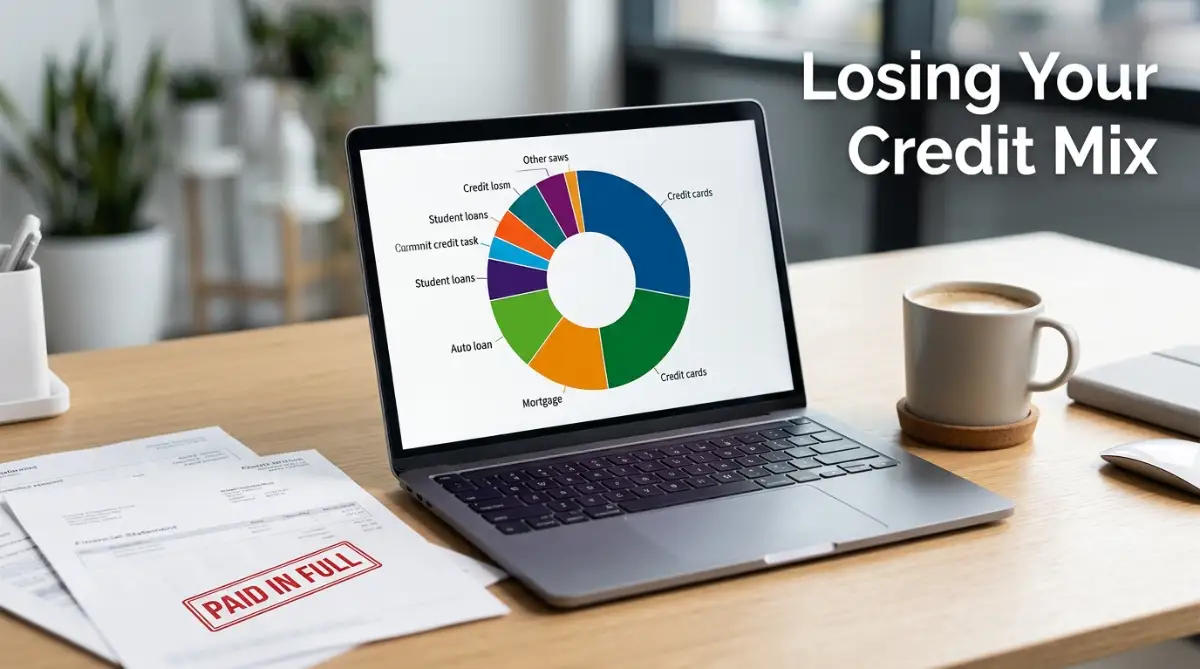
Secondly, you are altering your active credit mix. Lenders like to see that you can handle different types of financial obligations simultaneously. They want to see a combination of credit cards and fixed loans. When you eliminate the fixed loan, your mix becomes less diverse.
Real-Life Math: The Anatomy of a Dropping Score
Let us look at a practical example to make this completely clear. Meet David. David has a decent financial profile and a credit score of 740.
David has three credit cards and one auto loan. He has had the auto loan for exactly five years. His credit cards are relatively new, open for only about two years each.
Because David has an auto loan (installment) and credit cards (revolving), he gets maximum points for his credit mix. His auto loan also bumps up his average age of credit because it is his oldest active account.
David finally pays off the last $500 of his car loan. The bank reports the account as closed.
Suddenly, David's active credit mix goes from diverse to just credit cards. More importantly, his oldest active account (five years old) is no longer part of his open account average. His active account age drops down to just two years.
Because of this sudden shift in credit mix and active account age, David’s score drops from 740 down to 715. He did absolutely nothing wrong. He simply changed the mathematical structure of his active credit profile.
Expert Tip: Do not panic over a 20 or 30-point drop if you are not applying for a major mortgage next month. A closed loan in good standing remains on your credit report for up to 10 years, continuing to positively anchor your history behind the scenes.
The Big Confusion: Revolving Debt vs Installment Debt
A lot of people get confused because they hear that paying off debt is always great for their score. This confusion happens because people mix up different types of debt.
Paying off a credit card balance will almost always raise your score. Paying off a car or personal loan will often lower it temporarily. Why? Because they are entirely different products in the eyes of the credit bureaus.
Credit cards are "revolving" debt. You have a limit, you borrow against it, and you pay it back. The account stays open even when the balance is zero. Paying this down lowers your credit utilization ratio, which is amazing for your score.
Loans are "installment" debt. You borrow a fixed amount once and pay it down to zero. Once it hits zero, the relationship is over. The account closes. You cannot borrow from that exact same loan again.

The Pros and Cons of Closing a Loan Early
Sometimes people have the cash to pay off a five-year loan in just two years. They wonder if they should pay it off and take the credit score hit, or keep paying interest just to keep their score high.
Let us look at the honest reality of this situation.
The Pros of Paying Off a Loan Early:
- You save hundreds or thousands of dollars in interest payments.
- You free up monthly cash flow for investing or emergencies.
- You lower your debt-to-income (DTI) ratio, which mortgage lenders love.
- You gain incredible peace of mind by being completely debt-free.
The Cons of Paying Off a Loan Early:
- You will likely see a temporary 15 to 40-point drop in your credit score.
- Your active credit mix will become less diverse.
- Your average age of open accounts might decrease.
- You stop building fresh, active payment history on that specific account.
I learned this the hard way a few years ago. I kept a small personal loan open for an extra six months, paying useless interest, simply because I was terrified of my score dropping.
Pro Tip: Never pay unnecessary interest to a bank just to manipulate a credit score. The money you save in interest by paying debt off early is always more valuable than a temporary dip in your credit profile.
Here is a highly recommended video explanation on how lenders view paid-off debt and why your score reacts this way:
Step-by-Step Action Plan to Recover Your Score
Now that you know why your score dropped, it is time to fix it. The good news is that you do not need to do anything drastic. Your score will naturally heal over time.
Here are the exact steps you can take to speed up the recovery process and build an even stronger financial profile.
Keep Your Remaining Accounts Active
Since you lost a source of active payment history, you need to maximize the history on your remaining accounts. If you have credit cards, make sure you use them for small, everyday purchases.
Buy your groceries or gas with your credit card and pay the entire balance off immediately. This generates a fresh "on-time payment" status every single month. This consistent positive data will quickly overwrite the slight dip caused by the closed loan.
Slash Your Credit Utilization
Your credit utilization ratio is the amount of credit you are using compared to your total limits. This factor makes up a massive 30% of your total score.
Because your score took a hit from the closed loan, you need to gain easy points somewhere else. Keep your credit card balances exceptionally low. Try to keep your total utilization under 10%. If you have a card with a $10,000 limit, never let the statement balance exceed $1,000.
Ask for a Credit Limit Increase
This is a clever strategy to instantly improve your utilization ratio. Call your current credit card providers and simply ask for a limit increase.
If they raise your limit from $5,000 to $8,000, your available credit expands. As long as you do not spend more money, your utilization percentage drops instantly. This can quickly generate a positive bump in your credit score, helping to offset the penalty from your paid-off loan.
Avoid Opening Unnecessary New Accounts
When people see their score drop, their first instinct is often to open a new account to fix their credit mix. Please do not do this.
Applying for a new loan or credit card will trigger a "hard inquiry" on your credit report. This hard inquiry will temporarily lower your score even further. Plus, a brand new account will heavily reduce your average age of credit. Just be patient and let your existing accounts do the heavy lifting.
Monitor Your Report for Errors
Sometimes, a lender might report a closed loan incorrectly. They might accidentally report it as a missed payment or a defaulted account instead of "Paid in Full."
Pull a fresh copy of your credit report exactly 30 days after making your final payment. Ensure the status clearly says "Closed - Paid as Agreed" or "Paid in Full." If you see any negative remarks, dispute them immediately with the credit bureaus.
Moving Forward With Confidence
Seeing your credit numbers drop after doing the right thing is undoubtedly frustrating. But you have to look at the bigger financial picture.
You eliminated a debt. You increased your monthly cash flow. You lowered your debt-to-income ratio. Lenders look at more than just a three-digit number; they look at your entire financial health.
If you apply for a mortgage tomorrow, the underwriter will see that your score dipped slightly because you paid off a loan early. They view this as a highly responsible financial behavior, not a risk.
Stay focused on your great habits. Keep paying your credit cards on time, keep your balances low, and celebrate your massive accomplishment. The dip is just a temporary mathematical recalculation. Your financial freedom, however, is permanent.
Next-Level Strategies to Master Your Financial Profile
Now that you understand the mathematical reasons behind your score drop, you need a long-term plan. Fixing the immediate dip is easy, but maintaining an excellent credit profile takes a bit of smart planning. I want to share some insider strategies that most people completely ignore after wiping out their debt.
When you successfully use the debt snowball method to eliminate a huge balance, your cash flow increases instantly. You now have extra money sitting in your checking account every month. The absolute worst thing you can do is let that money sit idle or spend it on unnecessary lifestyle upgrades.
Instead, you must redirect those funds to strengthen other areas of your financial life. One of the best moves you can make is to build an emergency fund immediately. Having cash reserves means you will never have to rely on high-interest credit cards if your car breaks down or a medical emergency happens. This directly protects your credit utilization ratio from spiking unexpectedly.
You also want to focus on keeping your remaining credit lines highly active. The credit scoring algorithms love to see consistent, low-level activity. Treat your oldest credit card like a debit card. Buy your daily groceries with it, wait for the statement to generate, and then pay the entire balance off immediately.
This simple habit constantly feeds fresh, positive payment data to the credit bureaus. It shows them you are actively managing revolving credit responsibly. Over time, this thickens your credit file and makes the loss of that closed installment loan completely unnoticeable.
Pro Tip: Set up automatic payments for all your active credit cards. Even a single missed payment can tank your score by up to 100 points, instantly destroying all the hard work you just put into paying off your loan.

The Hidden Traps: What Not to Do Right Now
Whenever good people see their hard-earned score take a sudden dive, panic usually sets in. That panic often leads to impulsive decisions that cause far more damage than the initial drop. I have seen so many people ruin their financial progress simply because they tried to fix a temporary problem too fast.
If you react emotionally, you might end up in a situation where your credit card application was denied, which only adds insult to injury. You must stay calm and avoid these common emotional traps.
Common Mistakes
- Applying for new loans immediately: People think they need to replace the closed account right away to fix their credit mix. Every new application triggers a hard inquiry, which lowers your score even more and makes lenders view you as desperate for credit.
- Closing old credit cards in anger: Sometimes people decide they are entirely done with the banking system and close their oldest credit cards. This slashes your available credit and destroys your average age of accounts, creating a massive secondary drop in your score.
- Paying for useless credit repair services: Scammers prey on people who just experienced a score drop. They will promise to "erase" the closed account data for a huge fee. This is a complete waste of money because the closed account is accurate and legal.
- Ignoring the final statement: Assuming the loan is closed without checking the final zero-balance statement is a huge risk. A leftover balance of just two dollars can trigger late fees and a 30-day late mark on your report.
The Exact Step-by-Step Execution Guide
You have paid the final bill, but the administrative work is not entirely done. To make sure your credit profile recovers smoothly, you need to actively monitor how the bank reports your massive achievement.
If you are planning to buy a house soon, you need to make sure this closed account helps you lower your debt-to-income ratio properly. Lenders rely on accurate data. Here is exactly what you need to do starting today.
Step 1: Secure the Official Payoff Letter
Do not trust a simple phone call or a verbal confirmation. Demand a physical or secure digital document from the lender that clearly states the account is "Paid in Full" with a zero balance. Store this document safely.
Step 2: Wait the Full Reporting Cycle
Banks do not update the credit bureaus every single day. They usually send bulk data once a month. Give your lender a full 30 to 45 days to transmit your final payoff data to Equifax, Experian, and TransUnion.
Step 3: Pull Your Official Reports
Head over to the government-mandated AnnualCreditReport website and pull your fresh data. Do not rely on third-party tracking apps for this specific task. You need to see the raw data the bureaus have on file.
Step 4: Verify the Account Status
Check the specific tradeline for your recently paid loan. The status must clearly read "Closed - Paid as Agreed" or "Paid in Full." The current balance must show exactly zero dollars.
Step 5: File a Dispute if Necessary
If the lender accidentally reported the account as "Settled" or left a random remaining balance, you must act fast. Use your official payoff letter as proof and file a direct dispute with the credit bureaus to correct the error.
Required Document / Preparation Checklist
- The final payoff confirmation email or physical letter from the lender.
- Your last three bank statements showing the final payment clearing your account.
- Your current login credentials for all three major credit bureaus.
- A digital copy of your government-issued ID (needed if you have to file a formal dispute).
- A simple spreadsheet for creating a personal budget to redirect your newly freed-up cash flow.
Moving Forward to Total Financial Peace
Seeing a lower number on your screen can feel like a punishment for being responsible. But you must remember that algorithms do not define your true financial health. The peace of mind you gain from eliminating a monthly payment is infinitely more valuable than a temporary fluctuation in your credit file.
You took control of your money, executed a plan, and won your freedom back. The system is simply adjusting to your new, debt-free reality. Within a few short months of practicing good financial habits, your score will bounce back stronger than ever before.
Quick Action Checklist
- Celebrate your massive financial victory without guilt.
- Verify your zero balance on your next official credit report.
- Keep your credit card utilization well under 10 percent.
- Set up auto-pay for all remaining open accounts.
- Redirect your old monthly payment amount straight into a savings account.
I know how stressful it is to navigate these confusing banking rules. I remember staring at my screen, feeling totally defeated, until I realized my net worth was actually growing despite the dropping score. Do not let a temporary mathematical formula steal the joy of your incredible achievement.
Which debt are you planning to pay off first? Let me know in the comments below!
Common Questions About Post-Payoff Credit Drops
Will my score definitely drop when I pay off my car loan?
Not always, but it is highly common. If it is your only installment loan, you will likely see a temporary dip due to a change in your credit mix and active payment history.
How long does it take for my credit score to bounce back?
For most people, the score recovers within 30 to 90 days. As long as you maintain low balances on your credit cards and pay everything on time, the dip is very short-lived.
Should I keep a small balance on my loan to keep my score high?
Absolutely never. Paying unnecessary interest just to satisfy a credit scoring algorithm is a terrible financial strategy. Always pay off debt as soon as you are financially able to.
Does paying off a loan erase it from my credit history?
No, the account does not disappear. A loan that was paid as agreed will remain on your credit report for up to ten years, providing a strong anchor of positive history.
Why did my score drop 40 points after paying off a personal loan?
A drop that large usually happens if the closed loan was your oldest active account. Closing it significantly lowers your average age of open accounts, which heavily impacts your overall number.
Can I dispute a credit score drop?
You cannot dispute the drop itself, as it is a mathematical calculation. However, you can dispute any inaccurate information on your report, such as a lender failing to mark the account as paid in full.
Will applying for a new credit card fix the score drop?
No, applying for new credit will trigger a hard inquiry, which lowers your score temporarily. It is better to let your existing accounts naturally heal your profile over the next few months.
Does paying off a mortgage cause the same drop?
Yes, paying off a mortgage behaves exactly like paying off a car or personal loan. It closes a major installment account, which often results in a temporary decrease in your score.
Is a credit score drop after paying debt bad for buying a house?
No, mortgage underwriters manually review your entire report. They will see the slight drop was caused by paying off debt, which actually lowers your debt-to-income ratio and makes you a much safer borrower.
How can I quickly boost my score after it drops?
The fastest way to recover points is to slash your revolving credit card utilization. Pay your credit card balances down to zero multiple times a month to ensure a very low balance is reported to the bureaus.
Trusted Legal Resources
- Consumer Financial Protection Bureau (CFPB) - Understanding Credit Reports
- Federal Trade Commission (FTC) - Free Credit Reports Guide
- AnnualCreditReport.com - The Official Government Mandated Source
- FICO Educational Hub - How Credit Scores Are Calculated
- Office of the Comptroller of the Currency (OCC) - Consumer Protection
- Federal Deposit Insurance Corporation (FDIC) - Credit and Borrowing Basics
Disclaimer: The information provided in this article is for educational and informational purposes only and does not constitute financial, legal, or professional advice. Credit scoring algorithms are complex and individual results may vary. Always consult with a certified financial advisor or legal professional before making major financial decisions. The author and the FinanceInfoIn team are not responsible for any financial losses or damages resulting from the use of this information.
About the Author
Reviewed by Mithun Halder (Personal Finance & SEO Expert) & The FinanceInfoIn Editorial Team
The FinanceInfoIn Editorial Team researches personal finance, investing, insurance, mortgages, cryptocurrency, and consumer financial topics. Every article is carefully reviewed to provide clear, practical, and trustworthy educational information based on credible sources and industry best practices.
©2026 FinanceInfoIn. All rights reserved.