🕒 Reading Time: 13 Mins | ✍️ Reviewed By: FinanceInfoIn Editorial Team
The Trap of the Growing Rewards Balance
I recently sat down to audit a rewards account that had been quietly accumulating points for months. The balance showed 150,000 points, which initially felt like a solid financial safety net. But when I cross-referenced the current redemption charts with the previous version, the math didn't look so great.
The airline had quietly increased the cost of a standard flight by a massive margin. Suddenly, that hard-earned balance lost a huge chunk of its purchasing power without a single warning email. It’s a frustrating reality check that completely changes how you view those digital numbers on your screen.
If you're anything like me, you probably look at a massive points balance and feel a sense of security. You save them up for that dream vacation, a massive first-class upgrade, or a rainy-day luxury expense.
But watching those points sit idle while travel costs skyrocket is incredibly draining. It feels like you are doing everything right by being patient, only to be penalized by the very banks that promised you value.
All these things combined mean that your patience is actively being punished. Families save for years to take a specific trip, only to log in and realize they are now 50,000 points short for the exact same itinerary. It is a quiet, frustrating loss of value that creates unnecessary financial stress.
Quick Summary
Here is the breakdown of why sitting on a massive pile of credit card points is actually working against you. The reality is, reward programs are designed to slowly drain your value over time through hidden devaluations and sudden price hikes. If you treat your digital points like a long-term savings account, you are silently losing money and purchasing power every single month.
Key Takeaways
-
Points are not real cash: They are essentially IOUs from the bank. The loyalty programs can—and will—change their value overnight without sending you a warning.
-
Inflation destroys digital value: As the cash price of flights and hotels goes up, so does the point cost. Your unredeemed balance buys significantly less today than it did last year.
-
The hidden opportunity cost: Leaving value locked in a rewards portal means you are missing out on the real compound interest you could be earning in a high-yield savings account.
-
The smartest strategy: Adopt a simple "earn and burn" mindset. Cash out your rewards or book your trips as quickly as possible to lock in the current value.
How Inflation Quietly Eats Your Points
The most important thing is understanding that credit card points are not actual currency. They are entirely controlled by the financial institutions and loyalty programs that issue them.
When it comes to the banking industry, recent tracking by groups like the Consumer Financial Protection Bureau (CFPB) shows a clear trend of program devaluations. When broad economic inflation hits the travel sector, airlines and hotels pass those costs onto the banks.
In turn, the banks adjust the "exchange rate" of your points to protect their profit margins. This isn't a glitch, it's actually by design.
Because points don't earn interest, they are completely defenseless against inflation. If a hotel room costs $200 tonight and requires 20,000 points, that’s a decent deal.
But next year, when that room costs $250, the loyalty program will likely bump the requirement to 25,000 points. Your existing balance just lost 20% of its buying power while sitting in your account.
Looking at the numbers, it seems clear that treating points like a savings account is a losing game. The reality is, points only have value at the exact moment you redeem them.
The Balance Sheet Secret You Need to Know
Here’s a quick tip on how lenders actually view your account. Banks treat unredeemed points as financial liabilities on their balance sheets.
Every point you hold is an IOU that the bank eventually has to pay out. To manage their internal risk premium and keep shareholders happy, banks routinely look for ways to clear these liabilities cheaply.
They do this by running limited-time "transfer bonuses" or, more commonly, by silently devaluing the points. Financial advisors often recommend spending points as fast as you earn them to avoid being caught in these routine balance-sheet cleanups.
You’ll find that loyalty programs rarely give you advance notice before making dynamic pricing changes. The less notice they give, the fewer people can rush to cash out at the older, better rates.
This creates an algorithmic trust issue. You trust the bank to maintain the value of your rewards, but their algorithms are designed to slowly erode that value to protect the bank's bottom line.
Expert Pro Tip:
"I used to hoard points for years, convinced I would eventually book a massive around-the-world ticket. My advice would be to stop waiting for the perfect redemption. I ended up losing nearly 30% of my point value when an airline suddenly removed their fixed award chart, and I’ve never let a balance sit idle since."
The Opportunity Cost of Holding Out
A lot of people assume that leaving rewards in their account has zero negative impact. But you’ve got a few options when it comes to rewards, and ignoring the opportunity cost is a massive mistake.
Consider a typical household replacing an HVAC system with a $15,000 purchase on a 2% cash-back card. That purchase generates $300 in rewards.
If they leave that $300 sitting in the credit card portal for three years, it remains exactly $300. But if they had cashed it out immediately and placed it in a standard high-yield savings account earning a modest APY, that money would have actively grown.
You can get a much better return by simply moving the value out of the bank's control and into your own. Every day your rewards sit unredeemed, you are missing out on potential interest.
This is the exact reason why financial analysts stress the concept of "velocity of money." Keeping assets stagnant, even digital assets like points, works against basic wealth-building principles.
Here's how to get it done: set a calendar reminder every quarter to audit and zero out your rewards balances.
Stop Waiting for the Perfect Booking
Are you holding out for a first-class ticket that you might never actually book? Watch out for the psychological trap of "point wealth."
Here is a quick breakdown to help you rethink your strategy before the next major devaluation hits.
Smart Strategies for Redeeming Rewards
To put it simply, you need an exit strategy for your points. Don't get burned by sudden changes to airline alliances or hotel category shifts.
The takeaway is simple: earn the bonus, plan the trip, and book it.
If you are dealing with flexible points from major credit card issuers, your best defense is utilizing their travel transfer partners. Transferring points directly to an airline usually yields a much higher cent-per-point value than buying travel through the bank's own portal.
But keep in mind, once you transfer points to an airline, you usually cannot move them back. You might run into availability issues if you transfer before confirming the exact flight you want.
Always search for the award space on the airline's website first. Only move the points over when you are ready to click "book" immediately.

Breaking the Hoarding Habit
There's a chance you feel a bit overwhelmed by the constant shifting of loyalty program rules. That’s probably a bad idea to track manually every single day.
Instead, focus on a straightforward "earn and burn" mentality.
If you have no travel planned for the next 12 to 18 months, I'd steer clear of travel-specific cards entirely. Earning a flat-rate cash-back reward is often much safer and infinitely more flexible.
Cash doesn't devalue overnight because a hotel chain decided to change its award tiers. Also, don't forget to think about annual fees.
If you are holding onto a premium card just to keep your hoarded points alive, you are actively paying the bank for the privilege of losing money to inflation.

Next-Level Moves to Maximize Your Reward Balance
If you want to beat the banks at their own game, you need to understand how the credit card industry manages its liabilities. Lenders factor in a concept called "breakage." This is the internal industry term for the percentage of earned rewards that will simply never be redeemed by consumers.
By letting your points sit untouched, you are actively helping the bank's profit margins. Recent insights from the Consumer Financial Protection Bureau regarding credit card reward programs highlight that program terms are often designed to be complex specifically to increase this breakage rate.
The mechanics behind the scenes are fascinating. Airlines sell miles to banking institutions for cold, hard cash. The banks then distribute those miles to you as an incentive to swipe your card.
However, when the airline needs to clear its financial books, it simply raises the ticket prices in miles. You might log in hoping to book a standard domestic flight, only to find the cost has doubled. The bank already paid the airline, so the loss in value falls entirely on your shoulders.
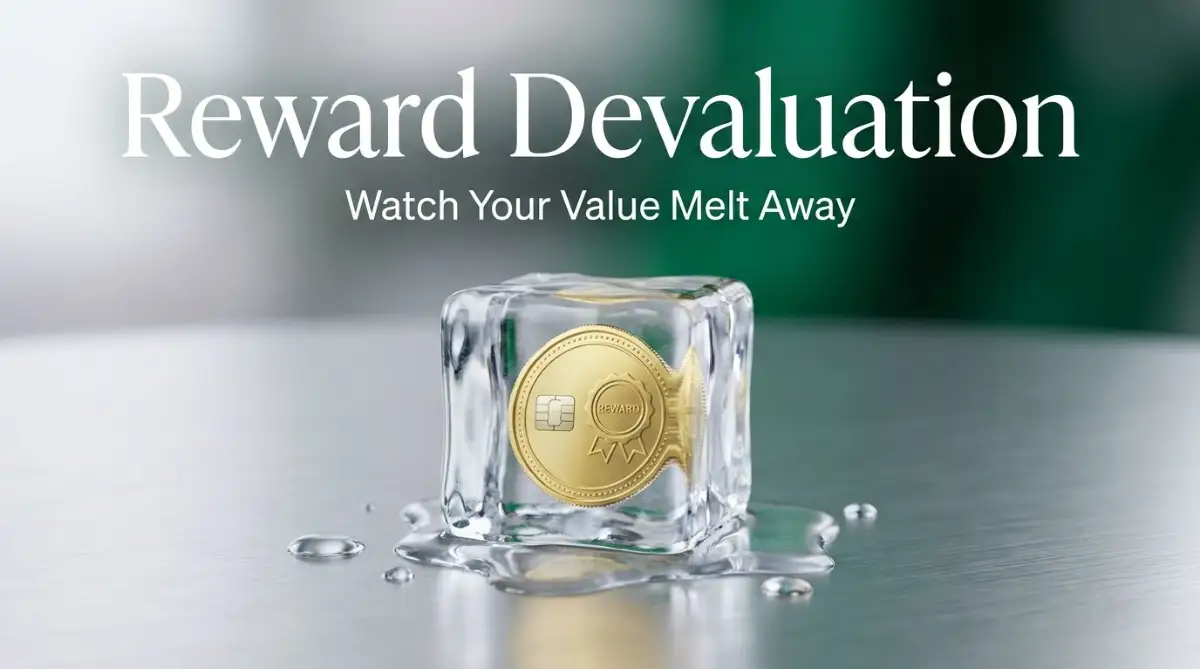
This is why financial analysts stress moving your assets quickly. A smart consumer treats reward points like a melting ice cube. You’ll find that when you create a personal budget, factoring in your cash-back rewards as immediate income is a much safer bet than treating points as a long-term investment.
To get the most out of your spending, you have to outsmart the system. One effective strategy is to map out your redemption plan before you even apply for a new card.
If you are struggling with high interest, you might also want to learn how to negotiate with credit card companies rather than focusing solely on earning more points.
Focus on flexible travel currencies that allow you to transfer to multiple different airlines or hotel chains. This gives you a backup plan if your primary choice suddenly devalues its reward chart.
The Most Common Mistakes Point Hoarders Make
It is incredibly painful to see people save for a dream vacation, only to find out their account was closed due to inactivity. This happens more often than you think. Banks constantly monitor accounts for inactivity to clear out unused liabilities.
A lot of people assume their digital points are safe forever, but nearly every program has an expiration policy hidden in the fine print.
Another massive error is holding onto premium travel cards and paying a $500+ annual fee just to keep a stash of points active. If you are paying high fees but not traveling, you are actively draining your own wealth.
Experts suggest downgrading to a no-annual-fee version of the same card family. This usually keeps your points alive without the heavy carrying cost.
You might also run into trouble if you try to manage too many point ecosystems at once. Spreading your spending across five different reward systems means you will never accumulate enough points in one place to actually book something meaningful.
Your Step-by-Step Execution Guide to Redeeming Points
Here is how to get it done today and protect your hard-earned value from disappearing.
Step 1: Audit Your Total Balances
Log into every banking and travel portal you use. Write down your exact point totals and the minimum redemption threshold for each account.
Step 2: Calculate the Cash Equivalent
Determine what those points are worth if you cashed them out today at one cent per point. Compare that number to the travel portals to see if holding them is actually giving you a better return.
Step 3: Execute the Transfer or Cash Out
If you have no concrete travel plans, redeem the points for a statement credit. Move the equivalent cash amount into a high-yield savings account where it can earn real interest.
If you recently applied for a new card to consolidate balances but hit a roadblock, you should understand why your credit card application was denied before moving forward. Managing your credit profile is just as important as managing your rewards.
Quick Action Checklist
Before you start transferring or redeeming your points, you’ll want to have a few things ready. Having these details on hand prevents errors and locked accounts.
-
Active login credentials for your bank and your target airline/hotel loyalty accounts.
-
Your exact travel dates and backup travel dates (if booking a trip).
-
A linked checking account (if you are opting for direct cash back).
-
A secure internet connection to protect your bank account from online phishing scams while making transfers.
-
The bank's customer service number handy in case the transfer gets flagged for fraud protection.
Always remember that the financial institution is not holding your points as a favor. They are holding them because it benefits their balance sheet.
Taking back control of your value means recognizing that points are a temporary currency meant to be spent.
Take Control of Your Digital Wealth Today
The reality is, your money should always be working for you, not for the financial institution. Every day you let points sit idle, you expose yourself to inflation and silent policy changes.
Instead of waiting for a magical trip that might be years away, use your rewards to improve your life today. Whether that means taking a weekend getaway, covering your grocery bill, or helping you build an emergency fund, the value is only real when you use it.
I finally stopped treating my rewards portal like a retirement fund, and my financial stress dropped significantly. Getting that cash value back into my checking account felt incredibly empowering.
Which points balance are you planning to cash out or redeem first? Let me know in the comments below!
Common Questions About Credit Card Points
Do credit card points expire?
Yes, in many cases they do. Most loyalty programs will expire your points if there is no earning or redeeming activity on your account for 12 to 24 months.
Why did the cost of my award flight go up?
Airlines now use dynamic pricing instead of fixed award charts. This means the point cost goes up based on cash demand, holidays, and available seating.
Is it better to get cash back or travel points?
Cash back is safer and easier to use, while travel points can offer a higher overall value if you know how to use transfer partners.
What happens to my points if I close my credit card?
If you close the card before redeeming or transferring your points, you will usually lose the entire balance immediately.
Can I transfer my points to someone else?
Some banks allow you to pool points with household members, but airlines often charge a steep fee to transfer miles to another person's account.
How do I know if my points are losing value?
Watch out for program update emails. If an airline or hotel announces a "simplified" or "updated" rewards program, it almost always means a devaluation is coming.
Should I pay an annual fee just to keep my points?
That’s probably a bad idea. Experts suggest asking the bank to downgrade your account to a free version so you can keep the points without paying the fee.
What is the best way to redeem flexible bank points?
The highest value usually comes from transferring them directly to an airline partner to book business or first-class international flights.
Are credit card points taxable?
Generally, the IRS considers credit card points earned from spending as a rebate or discount, meaning they are not currently taxed as income.
Does hoarding points hurt my credit score?
Holding points does not directly affect your credit score. However, letting a card close due to inactivity will lower your total available credit, which can drop your score.
We’ve seen that managing your finances effectively requires staying informed and proactive.
Trusted Legal Resources
To ensure you are fully protected and informed regarding consumer banking rights, we recommend reviewing these official platforms:
-
Consumer Financial Protection Bureau (CFPB): A U.S. government agency dedicated to making sure you are treated fairly by banks and lenders.
-
Federal Deposit Insurance Corporation (FDIC): Provides official data on banking regulations and deposit insurance.
-
Office of the Comptroller of the Currency (OCC): Charters, regulates, and supervises all national banks to ensure a safe and sound banking system.
-
Federal Trade Commission (FTC) - Consumer Advice: Offers excellent guidance on avoiding financial scams and managing credit.
-
Internal Revenue Service (IRS) - Credit Card Rewards: Official tax guidelines regarding how rebates, miles, and cash back are classified.
-
The Federal Reserve - Consumer Help: A central resource for filing complaints and understanding financial regulations.
Legal Disclaimer
The information provided in this article by FinanceInfoIn is published strictly for educational, informational, and general consumer literacy purposes. It does not constitute legal, tax, accounting, or formal financial advice, nor does it establish an attorney-client relationship between the reader, the author, or FinanceInfoIn.
Bankruptcy laws, statutory exemption limits, and court procedural rules vary significantly by state and local federal judicial districts. Financial regulations and median income calculations are subject to frequent statutory revisions. Readers facing legal debt action, vehicle repossession, or home foreclosure should immediately consult with a qualified, licensed consumer bankruptcy attorney or accredited financial counselor in their specific jurisdiction before taking action. Neither the author nor FinanceInfoIn assumes any legal liability for financial decisions, actions, or outcomes resulting from the use of this content.
About the Author & Review Process
Written & Fact-Checked by: Mithun Halder & The FinanceInfoIn Editorial Team
Mithun Halder is a dedicated personal finance researcher and educator with a deep focus on insurance, investing, and wealth management. At FinanceInfoIn, our editorial team rigorously researches and cross-references every topic with official government resources, insurance regulations, and industry best practices. Our mission is to break down complex financial jargon into clear, actionable, and trustworthy guidance, helping you make informed decisions about your financial security.
📧 Contact Mithun: [email protected] | 💼 Connect on LinkedIn: Mithun Halder