Reading Time: 15 Minutes
Difficulty Level: Beginner to Intermediate
Reviewed By: FinanceInfoIn Editorial Team
Table of Contents
- The Moment We All Hate Automated Support
- What Exactly Is the Brain Behind the Screen?
- How Does a Machine Actually Read Your Words?
- The Cost of Bad Communication: A Real-World Case
- Old School Rules vs. Modern AI Thinking
- Breaking Down Sentences Like a Chef
- Why Teaching Sarcasm to a Computer is Hard
- The Pros and Cons of Automated Conversations
- The Future of Talking to Machines
Quick Summary
Have you ever wondered why some automated systems completely fail to help you, while others seem to read your mind? The secret lies in a technology that bridges the massive gap between human emotions and binary code. By breaking down sentences, analyzing sentiment, and predicting intent, machines are learning to talk just like us. This guide breaks down exactly how computers process our messy, complex speech into clean, actionable data.
Key Takeaways
- Machines do not read words; they translate text into numbers and patterns to find meaning.
- Breaking sentences into tiny pieces helps algorithms understand context and emotion.
- Advanced bots save businesses money while heavily reducing customer wait times.
- Recognizing user intent is the biggest difference between a helpful assistant and a frustrating automated loop.
The Moment We All Hate Automated Support
I was sitting in my car in a grocery store parking lot, staring at a declined credit card message on my phone. I had enough money in my account. I just needed to buy groceries for the week.
Panicked, I called my bank's customer service number. Instead of a helpful human, I got an automated voice asking me to say my problem. I said, "My card was just declined, but I have money."
The voice responded, "I heard you say, 'apply for a new card.' Is that correct?"
I practically yelled "No!" into my steering wheel. I spent ten agonizing minutes trapped in an endless loop with a machine that simply could not understand what I needed. You have probably been in this exact situation. It feels incredibly helpless when technology blocks you from solving a simple problem.
This daily struggle is exactly why engineers realized they needed a better way for computers to comprehend us. We are messy when we talk. We use slang, we get emotional, and we skip words.
Old software required you to speak like a robot to get a robotic answer. But today, things are changing rapidly. We now have virtual assistants that can actually understand when we are frustrated, confused, or asking a highly specific question.
What Exactly Is the Brain Behind the Screen?
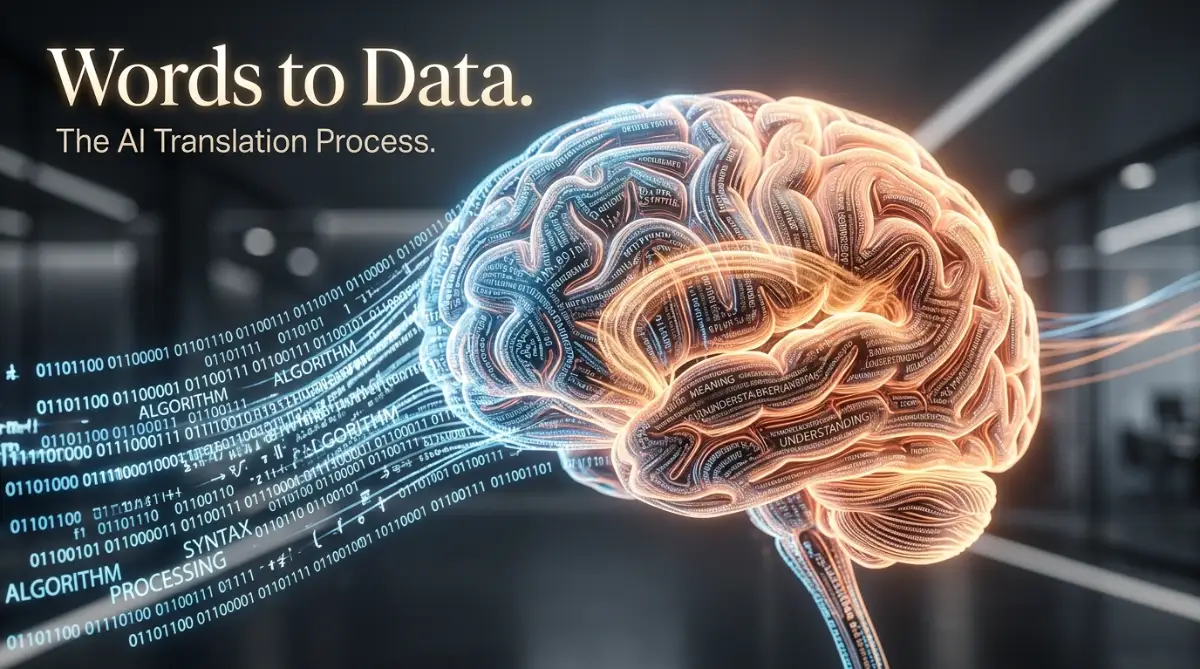
To fix the communication gap between humans and computers, developers created a special branch of artificial intelligence. It acts as a digital translator. This technology takes our messy, emotional, human sentences and turns them into organized math.
Computers only understand zeros and ones. They do not naturally know what "sad" or "refund" means. So, how do we force a math-based machine to understand a language-based human?
The answer lies in teaching the machine to look for patterns rather than exact dictionary definitions. When you type a message to a smart support agent online, it does not just read the words left to right. It instantly dissects your entire sentence.
It looks for the action you want to take, the product you are talking about, and the mood you are currently in. This process of deep analysis happens in milliseconds.
Expert Tip: When I tried building a basic auto-responder for my own small blog years ago, I programmed it to look for the word "shipping." But if a customer typed "When will my box arrive?", the bot ignored them entirely. I quickly learned that recognizing the true intent of a sentence is far more valuable than just scanning for specific keywords.
The Cost of Bad Communication: A Real-World Case
Let us look at a practical example of why this technology matters in real life. Meet David. He runs a successful online store selling custom leather wallets.
David was spending about 25 hours every single week just replying to basic customer emails. Questions like "Where is my order?" or "Do you ship to Canada?" were eating up all his free time. He decided to hire a part-time remote assistant for $1,200 a month to handle these messages.
But then David discovered smart conversational AI. He integrated an advanced virtual assistant into his website. This tool did not just look for keywords; it actually understood what his customers were asking, even if they misspelled words.
Here is the math on how this shift changed his business:
- Previous monthly cost for human support: $1,200
- Cost of advanced AI software: $99 per month
- Time saved for David: 25 hours per week
- Financial savings per year: $13,212
David no longer had to wake up at 6 AM to clear his inbox. His automated system handled 80% of the routine questions, leaving only the complex issues for him to answer personally.
Old School Rules vs. Modern AI Thinking
People often get confused about the difference between older automated systems and modern intelligent ones. They assume all chatbots are the same. This is a massive misconception.
An older system is basically a giant flowchart. If you say "A", it replies with "B". If you say "C", it breaks down and says, "I do not understand."
A modern system learns from context. It uses massive amounts of past data to guess what you really mean, even if you express it poorly. Let us look at a clear comparison between the two.
How Does a Machine Actually Read Your Words?
We need to understand the actual steps a computer takes to read a sentence. Imagine you are trying to teach a toddler how to build a complex Lego castle. You cannot just throw a giant box of bricks at them. You have to sort the pieces by color and size first.
Computers do the exact same thing with our sentences. When you send a message, the software chops your sentence into tiny, digestible pieces.
Breaking Sentences Like a Chef
Think of a chef prepping ingredients for a soup. They do not throw a whole unpeeled onion into the pot. They peel it, chop it, and measure it.
When you type, "I want to cancel my flight to New York," the software instantly chops this up. "I", "want", "to", "cancel", "my", "flight", "to", "New York". This chopping process makes the data much easier for the machine to handle.
Next, it throws away the useless bits. Words like "to" or "my" do not really add heavy meaning to the core request. The machine filters those out to save processing power.
Then, it reduces words to their absolute basic form. If you type "cancelled" or "canceling," the machine changes both of them to the root word: "cancel." This prevents the computer from getting confused by different tenses of the same action.

Why Teaching Sarcasm to a Computer is Hard
One of the most fascinating things about smart systems is how they try to figure out your mood. This is where things get highly complex.
If you tweet at an airline, "Thanks for losing my bags, great job!", a human instantly knows you are furious. But a basic computer sees the words "Thanks" and "great job" and might categorize your message as a happy compliment.
To prevent this, engineers train these systems with a massive amount of emotional data. The software assigns positive or negative scores to different phrases based on historical context. It learns that the combination of "losing bags" and "great job" usually means intense frustration.
If the system detects a highly negative mood score, it immediately stops trying to solve the problem itself. Instead, it quietly alerts a human manager to take over the chat to prevent making you even angrier.
The Hidden Magic of Recognizing Intent
Understanding the actual goal of a user is the holy grail for these tools. You can say "I need to reset my password" in a hundred different ways.
You might say:
- "Forgot my login."
- "Can not get into my account."
- "My password is not working."
A well-trained system maps all of these wildly different phrases back to one single goal: Password Reset. It completely ignores how you said it, and focuses entirely on what you want to achieve.
Want to see exactly how these algorithms are trained behind the scenes? Watch this simple breakdown of how machines turn our daily conversations into raw data.
The Pros and Cons of Automated Conversations
While this technology is incredibly impressive, it is definitely not perfect. There are huge advantages to letting software handle our communication, but there are also distinct drawbacks that businesses must carefully manage.
If you are thinking about interacting with or implementing these tools, you need an honest look at the reality.
The Pros:
- Instant Responses: You never have to wait on hold listening to terrible elevator music again.
- 24/7 Availability: The system does not need to sleep, meaning you can get help at 3 AM on a Sunday.
- Multilingual Support: Smart systems can instantly translate and converse in dozens of languages perfectly.
- Emotionless Consistency: A machine will never lose its temper, no matter how rude a customer might be.
The Cons:
- Lack of Empathy: A machine cannot genuinely feel sorry for you if you are dealing with a personal tragedy.
- Edge Cases Fail: If you have a highly unique problem that the system has never seen before, it will likely get stuck.
- High Setup Effort: Making a system truly smart takes a lot of time, data, and initial testing.
- Privacy Concerns: People often worry about how much of their personal conversation data is being stored and analyzed.

The Human Element: Where the Screen Fails
No matter how advanced our algorithms become, there is a fundamental barrier between a screen and a human heart. We rely heavily on tone of voice, facial expressions, and shared life experiences to truly communicate.
If someone's flight is canceled because they are traveling to a family funeral, a smart assistant can quickly process the refund. It can even generate an apology text. But it cannot offer genuine, heartfelt sympathy.
Machines are perfect for speed. Humans are necessary for grace.
As we move forward, the most successful companies are not trying to replace their human staff entirely. Instead, they are using these smart systems to handle the boring, repetitive tasks.
By letting the software answer questions about shipping times and forgotten passwords, human workers are finally free. They have the energy and time to deal with the complicated, emotional, and highly specific problems that require a real heartbeat to solve.
The next time you get a fast, helpful answer from a chat window, you now know the invisible math happening behind the scenes. Millions of calculations, sorting through roots and emotional scores, just to make your life a little bit easier.
Taking Control of Smart Conversations
Many people think setting up a smart assistant is a one-time job. You simply plug the software into your website and expect it to run perfectly on its own. The reality is quite different.
To get real value from automated systems, you have to guide them continuously. Think of it like training a brand new employee on their first week. They need regular feedback to improve their communication skills over time.
Pro Tip: Always review the "unrecognized queries" log in your chatbot dashboard every single week. This simple habit shows you exactly what your customers are asking that your machine fails to understand, giving you a direct roadmap to improve its training.
Let us look at how different levels of training affect the actual user experience.
We often underestimate how much a machine learns from our daily interactions. When you use AI to automate repetitive daily tasks at work, you must have a clear strategy. You cannot just guess what your users want.
Quick Action Checklist
- Define the primary goal of your automated system (sales, support, or direct booking).
- Write down the top 20 questions your audience asks the most frequently.
- Test the bot yourself using slang and heavy typos before launching it to the public.
- Assign one dedicated team member to review failed conversations every Friday.
- Update the machine's knowledge base immediately based on those weekly reviews.

Where Chatbot Implementation Usually Fails
I see small business owners make the exact same costly errors when adding digital assistants to their platforms. They expect pure magic without putting in the foundational work. This creates a massive disconnect between the user and the software.
Common Mistakes
- Hiding the human option: Forcing frustrated users into an endless digital loop without a clear way to talk to a real person.
- Pretending to be human: Tricking visitors into thinking they are speaking to a real human, which immediately destroys trust when they realize it is a bot.
- Ignoring user sentiment: Failing to program the system to pause when a customer uses angry, aggressive, or highly frustrated language.
- Setting and forgetting: Never updating the system after the first day it goes live.
If you try to mask poor customer service with an automated tool, you will actually lose customers much faster. An unhelpful machine is far more annoying than simply waiting on hold listening to music. According to a detailed report from the Harvard Business Review on customer service automation, businesses that force customers through rigid, unhelpful bots see a sharp drop in repeat sales.
How to Build Your First Smart Assistant
You do not need an advanced coding degree to start using this technology today. The modern tools available are incredibly user-friendly and highly visual. You just need a solid execution plan to get started.
Step 1: Choose a platform that natively supports intent recognition rather than just basic keyword scanning.
Step 2: Connect your existing company database or frequently asked questions document directly to the software.
Step 3: Train the assistant by feeding it hundreds of examples of how real customers actually speak. You need to understand how machine learning works step by step to see why feeding it highly varied data is so necessary.
Step 4: Run a private test with your own staff to intentionally find the breaking points.
Step 5: Launch it to the public, but keep a human agent heavily monitoring the chats for the first two weeks.
Required Document / Preparation Checklist
- A clean, formatted document containing your top 50 actual customer questions and honest answers.
- Your exact brand voice guidelines (e.g., should the bot use friendly emojis or stay strictly formal and corporate?).
- API keys or basic login credentials for your website or messaging platform.
- A clearly defined escalation protocol (what exactly happens when the software completely fails to help).
Debunking AI Conversation Myths
There is a lot of fear and general misinformation surrounding automated intelligence. People hear wild stories online and instantly assume the worst. Let us clear up the absolute biggest confusions right now.
Embracing the Future of Human-Computer Chats
The way we interact with screens has changed forever. We are no longer forced to speak like stiff robots just to get a simple answer from a machine. Modern algorithms are working tirelessly behind the scenes to meet us exactly where we are.
Whether you are managing personal tasks through FinanceInfoIn resources or running a massive company, this technology is here to help you scale. It beautifully bridges the gap between cold binary numbers and our messy, emotional human language. To get the best possible results, you simply need to know how to write effective prompts and clearly guide the system.
I remember spending hours typing the exact same basic answers over and over again to my early blog readers. Once I set up a smart system to handle those repetitive basics, my daily stress vanished completely. I finally had the time and energy to focus on creating better content instead of acting like a human search engine.
Which part of your daily routine would you want a smart digital assistant to take over? Let me know in the comments below!
Most Common Questions About Machine Conversations
What does natural language processing actually do?
It acts as a digital translator between humans and computers. It breaks down our messy spoken or written language into structured data that a machine can easily read and analyze.
Can smart systems really understand my emotions?
They do not "feel" emotions, but they can detect them. The software assigns mathematical scores to words, allowing it to accurately guess if you are happy, frustrated, or extremely angry.
Do I need to know how to code to use these tools?
Not anymore. Most modern communication tools feature highly visual, drag-and-drop builders that require absolutely zero technical coding skills to set up.
Why do some automated chats still fail to help me?
Many companies still use outdated, rule-based systems instead of modern learning algorithms. If a system is not properly trained on thousands of varied phrases, it breaks easily when you use slang or make typos.
How does the software learn new slang words?
It constantly scans massive amounts of fresh internet data and daily interactions. When engineers notice a new phrase popping up frequently, they feed that data directly into the machine's learning model.
Is it safe to give my personal data to a virtual assistant?
It depends entirely on the company's security policies. Reputable companies encrypt your chats and automatically hide sensitive details like credit card numbers from the system logs.
What is the difference between intent and keywords?
Keywords are just specific words the machine looks for, like "password." Intent is the actual goal of your sentence, allowing the machine to help you even if you never type the exact word "password".
Can these programs translate languages accurately?
Yes, modern algorithms are incredibly good at real-time translation. They analyze entire sentence structures rather than translating word-by-word, which keeps the original meaning intact.
How much does a modern digital assistant cost to run?
Basic conversational tools for small businesses can start as low as $50 to $100 per month. Large enterprise systems handling millions of users can cost thousands of dollars monthly.
Will artificial intelligence replace real human customer service?
No, it will simply change the role of human agents. Machines will handle the basic, repetitive questions, freeing up humans to solve deeply complex and highly emotional customer issues.
Trusted Legal Resources
- Federal Trade Commission (FTC) AI Guidelines
- National Institute of Standards and Technology (NIST) AI Risk Management Framework
- European Commission General Data Protection Regulation (GDPR)
- California Consumer Privacy Act (CCPA) Guidelines
- IBM Natural Language Processing Documentation
- Stanford University Artificial Intelligence Index Report
Disclaimer: The information provided in this article by FinanceInfoIn and its authors is for educational and informational purposes only and does not constitute technical, legal, or financial advice. While we strive to provide accurate and up-to-date information, technology is rapidly changing. Readers should consult with certified IT professionals, legal counsel, or specific platform documentation before making business, software, or data privacy decisions. Neither the author nor FinanceInfoIn shall be held liable for any damages or losses resulting from the use or implementation of the software or practices mentioned herein.
About the Author
Reviewed by Mithun Halder (Personal Finance & SEO Expert) & The FinanceInfoIn Editorial Team
The FinanceInfoIn Editorial Team researches personal finance, investing, insurance, mortgages, cryptocurrency, and consumer financial topics. Every article is carefully reviewed to provide clear, practical, and trustworthy educational information based on credible sources and industry best practices.
©2026 FinanceInfoIn. All rights reserved.