🕒 Reading Time: 14 Mins | ✍️ Reviewed By: FinanceInfoIn Editorial Team
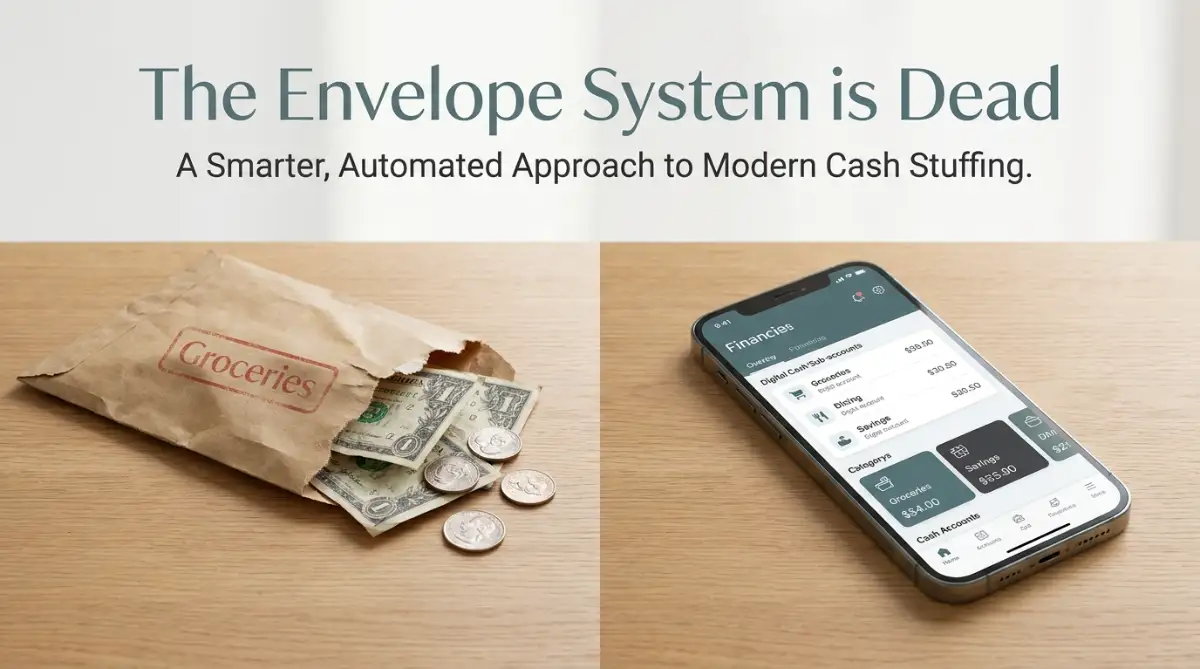
The Envelope System is Dead: Try This Digital Cash Stuffing Method Instead
A routine audit of my checking ledger revealed an embarrassing $142 leak in minor convenience fees and untracked ATM surcharges. For three straight months, I had been diligently withdrawing physical cash, dividing it into color-coded paper envelopes, and trying to run my household like it was decades ago. It looked neat on social media clips.
In practice, my grocery envelope sat forgotten on the kitchen counter while I stood at the supermarket checkout running a debit card anyway.
The traditional paper envelope system sounds wonderful on paper. You pull out paper bills on payday, stuff them into designated folders, and stop spending once an envelope hits zero. But trying to run a modern household with dollar bills is like trying to navigate a metro subway with wooden tokens. The mechanics of the economy simply no longer support it.
Carrying stacks of paper bills creates constant background friction. You miss out on fraud protections, you forfeit competitive yield on idle cash, and you waste precious hours driving to ATMs. When an unexpected bill hits your email inbox, paper cash in a desk drawer cannot pay it.
That constant disconnect between how we actually buy things and how we track our money creates real fatigue. You start the week with good intentions. Then life happens: an online school fee appears, your vehicle needs fuel at an automated pump, or you order groceries for curbside pickup to save two hours of your weekend.
Every single digital transaction breaks your paper tracking system. You tell yourself you will deposit the cash back into the checking account tomorrow to balance the books. Days pass, the receipts pile up, the numbers no longer balance, and guilt quietly creeps in. That guilt is completely unnecessary. The problem is not your discipline; it's an outdated tool that refuses to match modern consumer reality.
Quick Summary
The traditional paper cash envelope method fails because modern commerce runs on encrypted digital payments, automated billing, and electronic checkouts. Digital cash stuffing solves this problem by using automated bank sub-accounts, high-yield vaults, and dedicated debit cards to replicate categorical spending limits. This approach protects your money with federal insurance, earns steady interest, and eliminates the stress of managing physical cash.
Key Takeaways
-
Frictionless Spending Control: Digital cash stuffing applies the psychological spending boundaries of paper envelopes directly to online and card-based transactions.
-
Earn Competitive Yield: Moving cash from closet binders to FDIC-insured high-yield sub-accounts lets your idle sinking funds earn interest rather than losing value to inflation.
-
Automated Allocation: Scheduled paycheck transfers automatically distribute your income across fixed bills, emergency funds, and discretionary spending buckets without manual effort.
-
Overdraft Immunity: Isolating day-to-day spending on a secondary debit card prevents impulse purchases from draining rent and mortgage reserves.
-
Fraud Protection: Unlike physical cash, digital bank deposits are shielded by federal consumer protection rules and electronic theft recovery protocols.
Why the Traditional Cash Envelope Method Fails Today
The traditional paper cash envelope system was built for an economy that ran on paper checks and counter registers. Today, commerce happens across encrypted checkout portals, automated recurring debits, and tap-to-pay terminals. Recent transaction tracking from the Federal Reserve shows that electronic and card-based payments now account for the vast majority of consumer purchases, while physical cash transactions continue to drop across every major demographic.
When you force your household into an all-cash system, you run directly into institutional friction. Banks are quietly closing branch locations and reducing physical teller windows. Modern financial institutions design their core systems for automated electronic transfers, not for retail customers withdrawing precise paper denominations every second Friday.
Beyond the logistical headache, pulling cash off the table comes with a hidden financial penalty. When paper money sits in a decorative binder in your bedroom closet, its purchasing power steadily erodes against inflation. Consumer price inflation silently eats away at idle cash. Worse yet, that money earns an absolute zero percent return while high-yield savings accounts at FDIC-insured institutions are paying competitive yields on short-term deposits.
Then there is the matter of security. Federal laws, such as the Electronic Fund Transfer Act enforced under CFPB guidelines, provide consumer liability protection against unauthorized electronic transfers if reported promptly. Drop a paper envelope stuffed with $600 in the supermarket parking lot, however, and your money is simply gone. No fraud department will open an investigation to recover cash lost on the sidewalk.
The True Cost: Paper Budgeting vs. Digital Cash Management
To understand why so many households burn out on paper budgeting, you'll want to look at how the practical logistics compare side by side.
The Behavioral Science Behind Digital Cash Stuffing
Digital cash stuffing takes the core psychological genius of the envelope method—strict visual boundaries and zero-based category caps—and moves it into modern banking software. Instead of stuffing dollar bills into paper slots, you use dedicated sub-accounts, targeted virtual envelopes, and smart debit routing. Every dollar still gets a specific job before you spend it, but the money stays secure, insured, and liquid.
"Your brain respects categorical limits, not physical paper fibers." Behavioral economists have long noted that separating funds into distinct mental buckets significantly curbs impulse spending. Digital cash stuffing harnesses that exact psychological quirk without the archaic busywork.
When your direct deposit lands, an automated rules engine distributes your paycheck across isolated digital reservoirs. You don't have to calculate bills at the kitchen table late at night. The system executes your plan silently in the background while you sleep.
The Three-Tier Account Architecture
You don't need a dozen different banks to make this strategy hum. You just need the right banking structure. Most modern online banks and consumer credit unions now allow customers to open multiple sub-savings accounts or partitioned "vaults" under a single master login, completely free of monthly maintenance fees.
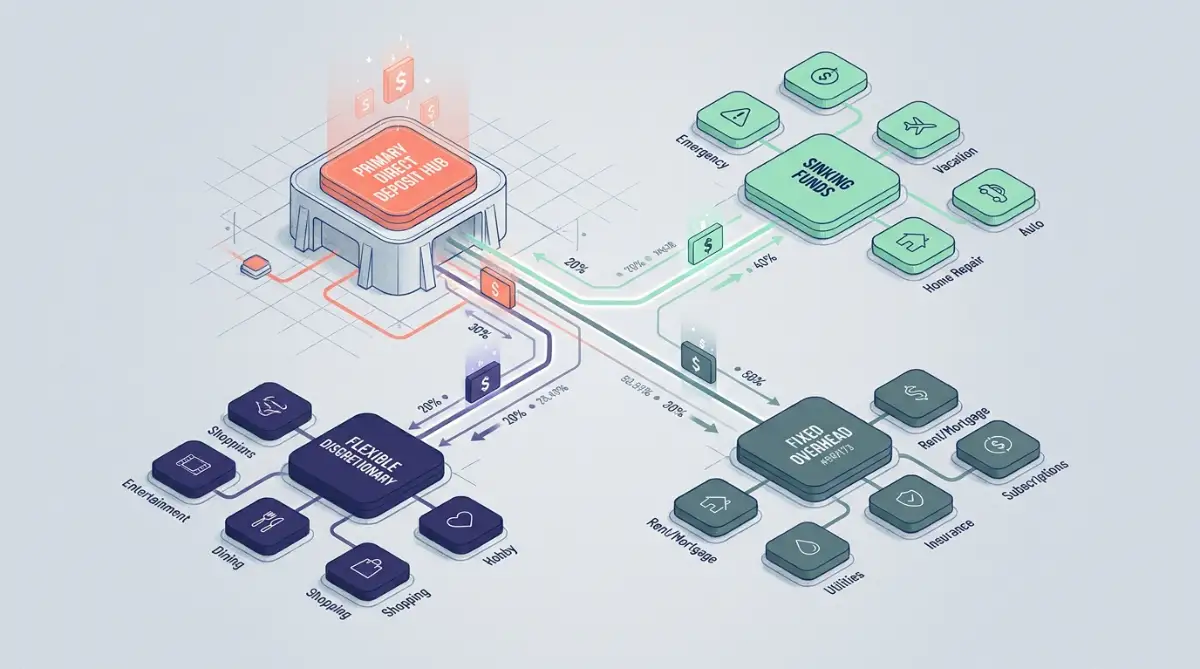
To build an airtight system, financial advisors often recommend grouping your money into three primary operational tiers: Fixed Overhead, Sinking Buckets, and Daily Discretionary.
-
Primary Operations Hub: Your net paycheck lands directly into your main checking account where fixed obligations clear automatically.
-
High-Yield Sinking Vaults: Automated rules sweep predetermined amounts into separate, interest-bearing folders for irregular expenses and emergencies.
-
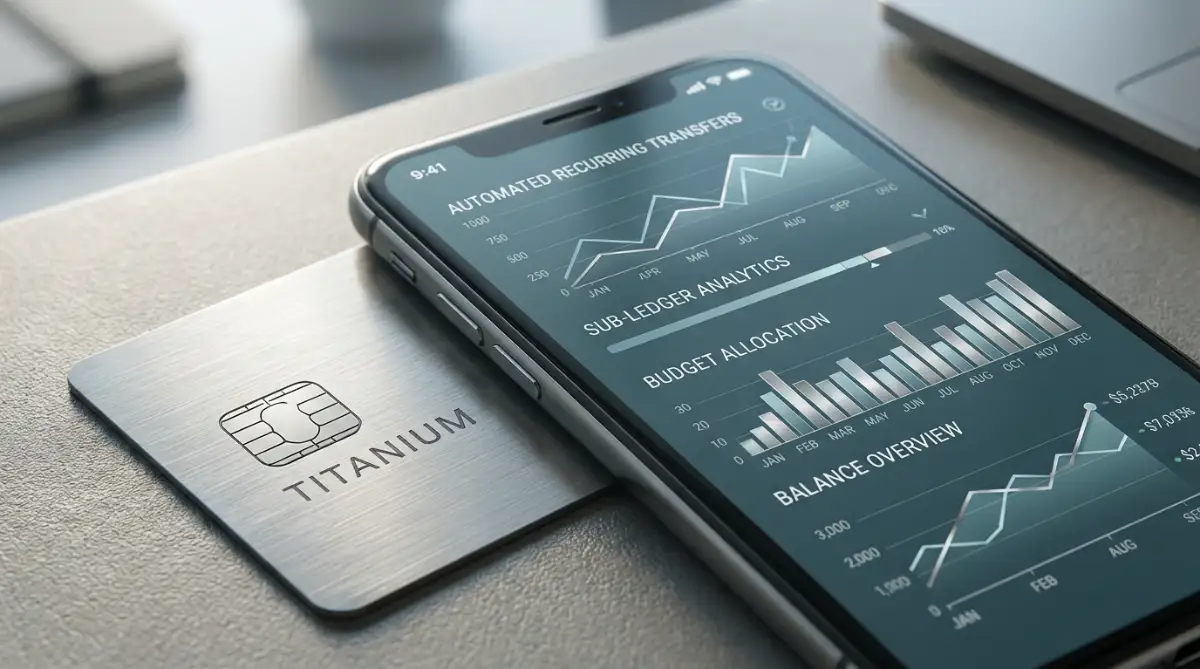
Variable Spending Card: A distinct checking account receives your weekly spending allowance, backed by its own dedicated debit card.
Tier 1: Fixed Obligations (The "Never Touch" Account)
This is your primary operating checking account. Your paycheck lands here, and all non-negotiable fixed expenses leave from here via automated clearing house (ACH) transfers.
Think rent or mortgage payments, insurance premiums, utility bills, and minimum loan repayments. Because these numbers are predictable, you fund this account with the exact total required each month, plus a modest $200 buffer to prevent accidental overdrafts. You never carry the debit card tied to this account in your wallet.
Tier 2: Sinking Funds (The High-Yield Vaults)
This is where digital cash stuffing truly shines over paper envelopes. Sinking funds are designated holding pools for irregular, lumpy expenses that you know are coming: car maintenance, annual insurance renewals, dental copays, holiday gifts, and home repairs.
Instead of keeping $1,200 for car repairs tucked into a drawer, you park it inside an interest-bearing sub-account. It stays fully protected under FDIC limits, earns monthly interest, and sits ready for when a mechanic replaces your brake calipers. When the invoice arrives, you transfer the exact dollar amount to your checking account with two taps on your smartphone.
Tier 3: Variable Discretionary (The Spending Card)
This bucket replaces the grocery, dining out, and entertainment envelopes. It is an entirely separate checking account paired with its own dedicated debit card.
At the start of each pay period, an automated transfer sweeps your predetermined discretionary allowance into this account. When you head out for dinner or buy weekly groceries, you swipe this specific card. If the balance reaches zero three days before payday, your dining budget is done. There is no guessing, no tracking receipts across multiple apps, and zero risk of spending rent money on restaurant meals.
Real-Life Math: A Transparent Cash Flow Blueprint
Let's look at how this plays out in real numbers. Consider a household bringing home a predictable USD 5,200 net monthly income across two bi-weekly paychecks (USD 2,600 per pay cycle).
Under the old paper method, this household would withdraw roughly $1,400 in cash every two weeks, deal with long teller lines, and manually partition paper notes. Under an automated digital cash stuffing architecture, the allocation executes via scheduled splits the moment payroll clears.
Notice the mechanical advantage here. The $1,000 allocated monthly toward sinking funds and emergency reserves isn't sitting in paper notes under a mattress. In a modern high-yield account paying roughly 4% to 5% APY, that floating balance yields meaningful passive interest every single cycle. Over a multi-year timeline, those interest payments can cover an entire month of auto insurance without you working an extra hour.
Step-by-Step Implementation: Building Your Automated Money Flow
Moving away from paper envelopes doesn't require complex technical skill. You can establish this entire workflow in an afternoon.
Step 1: Audit Your True Baseline
Review your bank statements from the past ninety days. Pull out all recurring fixed obligations and separate them cleanly from your variable expenses. Identify your average grocery spending, fuel consumption, and those pesky irregular subscriptions that tend to sneak up on you.
Step 2: Select Your Banking Partner
Look for institutions that provide unlimited digital sub-accounts or visual spending envelopes with zero maintenance charges. You’ll want to look at features like instant internal transfers between sub-vaults, high-yield interest on all savings balances, and the ability to issue virtual debit cards linked directly to specific spending categories.
Step 3: Establish the Sweep Sequence
Set your payroll direct deposit to land in your primary Fixed Bills account. Then, program recurring scheduled transfers for the day immediately following your payday:
-
Fixed amounts transfer automatically into your designated High-Yield Sinking Vaults.
-
Your variable spending total transfers directly to your Secondary Discretionary Checking Account.
Once those rules are active, your day-to-day spending decision is dead simple. You check one single balance on your phone: your discretionary account. If it says $85, you have $85 to spend until Friday. You don't have to check five different paper envelopes or calculate whether an impending utility bill has cleared.
Expert Pro Tip: Early in my banking journey, I made the mistake of leaving my sinking fund accounts connected to my everyday debit card for overdraft protection. Whenever I overspent at dinner, the bank automatically swept money out of my auto repair fund to cover the meal. It completely destroyed the discipline of the system. My advice would be to disable all automated overdraft links between your discretionary spending card and your long-term sinking vaults. If a card declines at a restaurant, let it decline. That friction is precisely what protects your savings goals.
Navigating the Trade-Offs: The Pros and The Cons
No personal finance system is universally flawless. While digital cash stuffing fixes the glaring shortcomings of paper envelopes, it comes with its own set of rules and limitations that you must respect.
The Pros
-
Zero Transaction Friction: Works seamlessly with mobile wallets, tap-to-pay, recurring subscription models, and digital checkouts.
-
Earns Interest on Stored Reserves: Your sinking funds generate steady yields instead of losing ground to inflation in a bedroom drawer.
-
Institutional Security Protections: Every dollar remains shielded by FDIC/NCUA insurance limits and federal electronic fraud recovery mandates.
-
Zero Manual Cash Runs: Eliminates ongoing ATM visits, cash withdrawal fees, and physical coin handling.
-
Real-Time Visibility: You always know your exact category balances on your smartphone without counting bills.
The Cons
-
Initial Setup Time: Requires opening complementary accounts and programming recurring transfer schedules.
-
Digital Decoupling: Swiping a piece of plastic or tapping a phone carries less tactile psychological resistance than handing over physical cash.
-
Transfer Delays: Moving funds between different external financial institutions can occasionally take one to two business days if accounts are not housed together.
Direct Sub-Accounts vs. Third-Party Budgeting Apps
A lot of people assume that buying a subscription to a third-party budgeting app is the same thing as digital cash stuffing. It isn't. In fact, relying solely on third-party aggregation apps is where many well-intentioned budgeters run into trouble.
Third-party budgeting apps tell you that you overspent on dining out three days after you ate the meal. That is retroactive bookkeeping, not proactive cash management.
Digital cash stuffing, on the other hand, prevents the overspending before it starts. If your discretionary account holds $30, you simply cannot buy a $60 dinner on that card without making a conscious, deliberate choice to log into your portal and transfer supplemental funds. That brief moment of pause is all you need to keep your financial goals intact.
Advanced Strategies for Frictionless Cash Management
Making the switch to digital envelopes is more than just setting up account nicknames. To get the most out of your money, you have to understand how banking rails operate under the hood.
Commercial banks generate substantial revenue through what financial insiders call the deposit spread. When your funds sit in an ordinary checking account, the institution lends those reserves out overnight to corporate borrowers, pocketing the yield while paying you a fraction of a percent.
By strategically routing your sinking funds into isolated high-yield digital buckets, you recapture that spread for yourself. You keep your liquidity while ensuring your unspent cash actively works for your balance sheet every single day.
Recent banking data monitored by the Federal Reserve indicates that households that automate savings allocations save significantly more over multi-year cycles compared to those relying on manual transfers. Automation removes human willpower from the equation entirely.
To prevent transfer friction, you need to understand automated clearing house (ACH) settlement windows. Most ACH transfers require one to three business days to clear between different financial institutions.
If your fixed bills come due on the first of the month, schedule your automated digital stuffing sweeps at least two business days prior. Aligning your internal transfers with banking clearing windows completely eliminates missed payment penalties and accidental overdraft charges.
Automated Sweep Cadence and Timing Matrix
The key to long-term success is building a transfer rhythm that coordinates smoothly with your payroll provider. Here is how you can map your monthly transfer triggers:
Pro Tips: Treat your automated sweeps like an employer treats a retirement payroll deduction. When you move discretionary spending money to a secondary card on a strict weekly schedule rather than dumping an entire month's allowance at once, you instantly eliminate the painful third-week budget squeeze.
If you are currently carrying variable debt while setting up this system, you might also be looking at navigating zero-interest promotional offers or evaluating whether weighing annual fee credit cards fits into your daily routine. Keep those promotional accounts strictly separated from your core household operations so introductory terms never disrupt your cash flow.
Common Traps That Can Derail Your Digital Budget
Transitioning away from physical cash is exciting, but it comes with distinct behavioral challenges. When you handle paper bills, you physically watch the stack shrink, which triggers a natural psychological brake on your spending.
Plastic debit cards and digital phone taps do not trigger that same sensory warning. If you do not check your digital sub-account balances before pulling out your card, you risk spending blindly simply because the plastic swipe feels so effortless.
Another frequent issue is over-engineering the architecture. People often start by creating thirty different sub-accounts for every micro-expense, from pet treats to morning lattes.
Managing dozens of tiny buckets quickly becomes overwhelming. Within a few weeks, tracking turns into a chore, and you abandon the entire routine. Simplicity is what keeps this system sustainable year after year.
Common Mistakes
-
Linking Debit Cards to Fixed Bill Accounts: Keeping an everyday spending card attached to your primary mortgage or rent account exposes critical housing money to debit skimming and impulse card swipes.
-
Over-Splitting Categories: Setting up too many sub-accounts creates unnecessary administrative friction and makes transfer schedules nearly impossible to track.
-
Ignoring Banking Transfer Limits: Forgetting standard regulatory withdrawal limits or internal monthly transfer caps on savings accounts can lead to unexpected account lockouts or penalty fees.
-
Failing to Fund an Irregular Buffer: Leaving out an open buffer for non-monthly expenses—like quarterly water bills or seasonal tire changes—forces you right back into relying on high-interest credit lines.
-
Over-Relying on Rewards Optimization: Obsessing over rewards points instead of sticking to hard cash caps often leads to overspending, especially since credit card rewards losing real purchasing power has become standard industry practice.
Digital Envelope Myth vs. Reality
A lot of budgeters carry misconceptions about what digital cash management actually involves. Looking at the facts helps you set realistic expectations from day one:
Practical Setup and Required Preparation
You can build a reliable digital envelope system without any specialized technical skills. Taking just an hour to organize your documents and set up your accounts will save you hundreds of hours of manual tracking over the coming year.
Required Document and Preparation Checklist
Before opening new sub-accounts or setting up automated sweeps, gather these essential items:
-
Official Identification: A valid government-issued driver’s license, state ID, or passport to satisfy federal identity verification rules.
-
Taxpayer Information: Your Social Security Number (SSN) or Individual Taxpayer Identification Number (ITIN) for tax and interest reporting.
-
Recent Paycheck Stubs: Two consecutive pay stubs to pinpoint your exact net take-home pay and payroll deposit schedule.
-
Trailing Bank Statements: The past 90 days of checking account statements to accurately itemize your fixed monthly commitments.
-
Direct Deposit Routing Details: Your employer’s human resources portal login or direct deposit authorization forms to program automatic account splits at the source.
The Step-by-Step Execution Guide
Step 1: Calculate Your Baseline Fixed Nut
Review your last three months of bank records. Add up rent or mortgage, utility minimums, fixed vehicle costs, and regular monthly debts.
If you are dealing with auto debt, it helps to understand the real trade-offs of stretching debt schedules so you can make sure your monthly car payments do not crowd out your essential sinking funds. This combined baseline number is your non-negotiable monthly "nut."
Step 2: Open Dedicated Functional Accounts
Set up your multi-account system with an FDIC or NCUA insured institution. You need two checking accounts and one high-yield savings account that supports separate buckets:
-
Checking Account A: Designated exclusively for fixed bills and automated ACH deductions.
-
Checking Account B: Designated for variable everyday discretionary spending, paired with a dedicated physical and digital debit card.
-
High-Yield Vaults: Sub-accounts dedicated strictly to emergency funds, annual insurance payments, and long-term maintenance.
Step 3: Establish Payroll Split Instructions
Log into your employer's payroll management portal. Most payroll platforms allow employees to split net direct deposits across up to three different routing and account numbers.
Route your exact fixed-bill allocation directly to Checking Account A. Route the remainder into your savings or discretionary hub, ensuring your essential obligations are covered before you ever see the money.
Step 4: Set Up Account Rules and Disable Overdraft Protection
Program automatic recurring internal transfers for any sub-accounts your payroll system couldn't split directly. Make sure to adjust these transfers to run the day after payday.
Finally, contact your bank or adjust your app settings to turn off automatic overdraft transfers between your discretionary spending card and your savings vaults. Keeping those accounts separate creates a natural boundary that helps you stick to your budget.
Account Architecture and Yield Optimization Matrix
Structuring your accounts properly lets you capture competitive yields while keeping your day-to-day spending completely organized.
Quick Action Checklist
- Download your last three months of checking statements and highlight all fixed, non-negotiable bills.
- Confirm that your primary financial institution provides free, unlimited digital sub-accounts or virtual sinking fund folders.
- Verify that your depository accounts carry full FDIC or NCUA insurance backing up to legal limits.
- Open a secondary checking account designated strictly for variable day-to-day spending.
- Set up direct deposit splits with your employer to fund your fixed bill account automatically on payday.
- Deactivate all automatic overdraft sweep links between your spending card and your emergency savings accounts.
- Add your variable spending card to your mobile phone wallet, and remove the fixed bills debit card from your wallet.
- Schedule a recurring fifteen-minute calendar reminder once a month to review bucket balances and adjust for upcoming seasons.
Taking Full Control of Your Financial Engine
Transitioning from physical cash envelopes to an automated digital architecture is one of the most liberating upgrades you can make to your personal finances. "You keep the clear boundaries and intentional budgeting that make cash envelopes so effective, while gaining the speed, security, and interest-earning power of modern banking."
Over the years, managing my own household finances taught me that sustainable money management is rarely about sheer willpower. It comes down to designing simple systems that work quietly in the background without constant micromanagement.
The day I stopped carrying paper envelopes and let automated banking rules handle the heavy lifting, the stress around everyday spending completely vanished. You deserve that same clarity and peace of mind with your money. Start by setting up your first two digital sub-accounts this week, and watch how quickly your financial confidence builds.
Which spending category tends to break your budget most often, and how are you planning to structure your new digital buckets? Drop your thoughts in the comments below!
Frequently Asked Questions About Digital Cash Stuffing
Does opening multiple digital sub-accounts hurt my credit score?
No, opening multiple checking or savings sub-accounts does not impact your credit score. Deposit accounts do not involve borrowed money, so banks do not report your daily balances or account quantities to credit bureaus like Experian or TransUnion. You can run as many sub-vaults as your bank allows without any negative credit impact.
How does digital cash stuffing prevent overspending compared to physical cash?
It establishes hard limits by separating your variable spending into an isolated checking account with its own debit card. When that designated balance hits zero, your spending stops for that pay cycle. This gives you the clear boundary of a cash envelope without the hassle of carrying paper money.
What happens if an unexpected emergency occurs and my spending bucket is empty?
You simply open your mobile banking app and manually transfer the needed funds from your dedicated emergency vault to your spending account. Because the accounts are housed at the same institution, the funds move instantly. The brief extra step makes you pause and confirm the expense is a true emergency, helping prevent impulse spending.
Can I practice digital cash stuffing if my employer does not allow direct deposit splits?
Yes, you can easily manage this yourself by setting up automated recurring transfers inside your online banking portal. Simply have your full paycheck land in your primary fixed-bills checking account, then schedule automatic transfers to sweep money into your savings vaults and discretionary account the next morning.
Are digital cash stuffing accounts protected if my phone is stolen?
Yes, digital bank accounts offer significantly better protection than physical cash envelopes. Mobile banking apps are protected by biometric encryption, two-factor authentication, and federal consumer liability caps under CFPB regulations. If your phone is lost, your funds remain secure and accessible from any computer.
Will banks charge me extra monthly maintenance fees for maintaining five or six sub-accounts?
Most modern online banks and consumer-friendly credit unions offer unlimited sub-accounts or savings buckets with zero monthly maintenance charges. However, you should always check an institution's fee schedule to ensure they do not require minimum balances for each separate folder.
What is the ideal number of digital envelopes for a beginner?
Beginners should keep things simple by starting with three core buckets: Fixed Monthly Bills, Irregular Sinking Funds, and Variable Discretionary Spending. Once you feel comfortable with that basic structure, you can branch out into specific savings vaults for goals like travel or home maintenance.
How do I handle shared household spending with a partner using this method?
Couples can maintain an automated joint checking account for shared household bills and groceries, while keeping separate individual discretionary accounts for guilt-free personal spending. This structure ensures all household obligations are funded automatically while preserving personal financial autonomy for both partners.
How does digital cash stuffing compare to credit-building tactics?
Digital cash stuffing is designed for cash flow control and everyday budgeting rather than credit building. If your goal is establishing a strong credit history, you can explore strategies like using credit-builder accounts or credit-building tactics like piggybacking accounts alongside your digital budgeting system.
Can I use a credit card instead of a debit card for my daily discretionary bucket?
You can use a credit card for everyday spending, but it requires strict discipline. If you choose this route, you must manually pay off the credit card balance directly from your variable spending bucket every single week. If you tend to carry a balance, sticking with a dedicated debit card is much safer and helps prevent accidental debt.
Trusted Legal and Financial Resources
-
Consumer Financial Protection Bureau (CFPB) Consumer Guidance: Federal resources explaining consumer protections, electronic fund transfer rights, and banking fee transparency.
-
Federal Deposit Insurance Corporation (FDIC) Deposit Insurance Overview: Official regulatory details detailing federal coverage limitations and security standards for individual depository bank accounts.
-
National Credit Union Administration (NCUA) Share Insurance Portal: The primary federal regulatory resource explaining how funds deposited in credit unions are backed by the full faith of the United States Government.
-
Federal Reserve Consumer Information on Payments: Research, payment trend analysis, and regulatory frameworks governing automated clearinghouse operations and digital fund settlements.
-
Financial Industry Regulatory Authority (FINRA) Personal Finance Tools: Independent educational guides on managing liquid reserves, budgeting methods, and understanding automated cash sweeps.
-
Federal Trade Commission (FTC) Identity Theft and Account Security: Official guidelines on securing mobile banking accounts, preventing unauthorized electronic access, and recovering from payment card fraud.
Important Financial Disclaimer
This content is published strictly for educational, informational, and general financial literacy purposes. It should not be interpreted as personalized banking, accounting, investment, legal, or tax advice. Financial products, deposit account features, automated transfer settlement policies, interest rates, and fee schedules vary across individual banking institutions and are subject to change without notice.
Neither the author nor FinanceInfoIn guarantees specific savings outcomes or financial results by implementing the organizational strategies described. Readers are strongly encouraged to assess their personal financial circumstances, review their institution’s account agreements, and consult with a licensed financial planner or certified banking specialist before making significant structural changes to their banking arrangements.
About the Author & Review Process
Written & Fact-Checked by: Mithun Halder & The FinanceInfoIn Editorial Team
Mithun Halder is a dedicated personal finance researcher and educator with a deep focus on insurance, investing, and wealth management. At FinanceInfoIn, our editorial team rigorously researches and cross-references every topic with official government resources, insurance regulations, and industry best practices. Our mission is to break down complex financial jargon into clear, actionable, and trustworthy guidance, helping you make informed decisions about your financial security.
📧 Contact Mithun: [email protected] | 💼 Connect on LinkedIn: Mithun Halder