
🕒 Reading Time: 13 Mins | ✍️ Reviewed By: FinanceInfoIn Editorial Team
Navigating Loan Refinancing Safely: Avoid The Debt Cycle
The Reality Behind "Lower Monthly Payments"
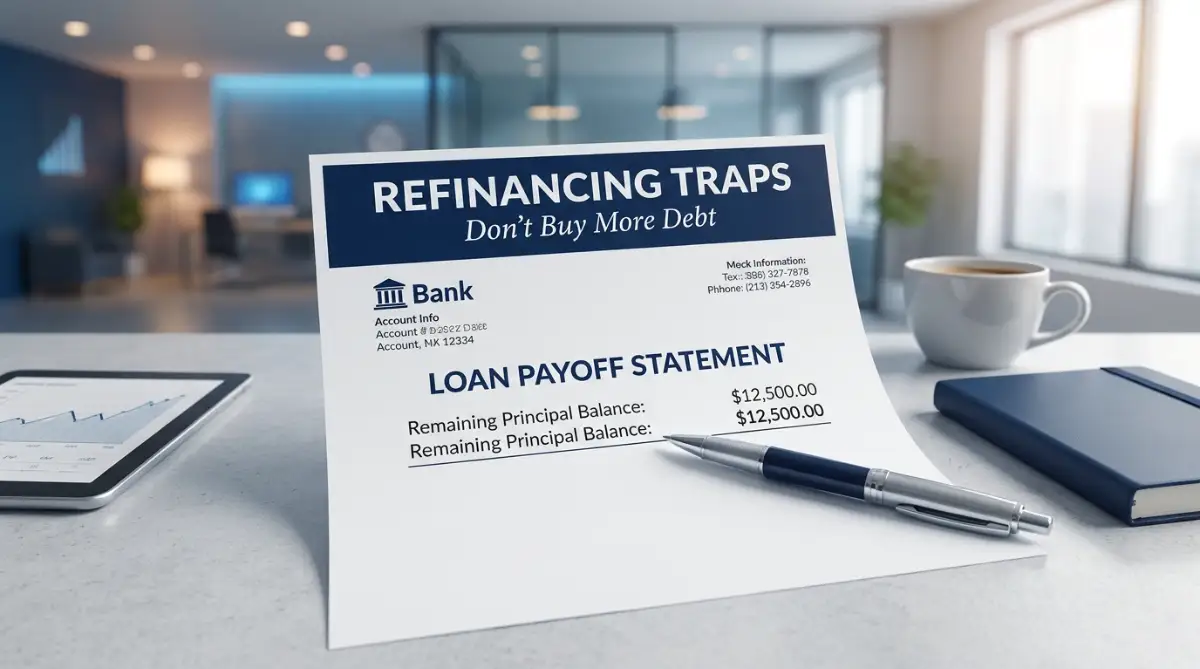
Staring at a recent loan payoff statement, the math sometimes just refuses to make sense. You log into your banking portal, expecting to see a significantly lower balance after two years of steady payments. Instead, you realize the principal amount has barely moved at all.
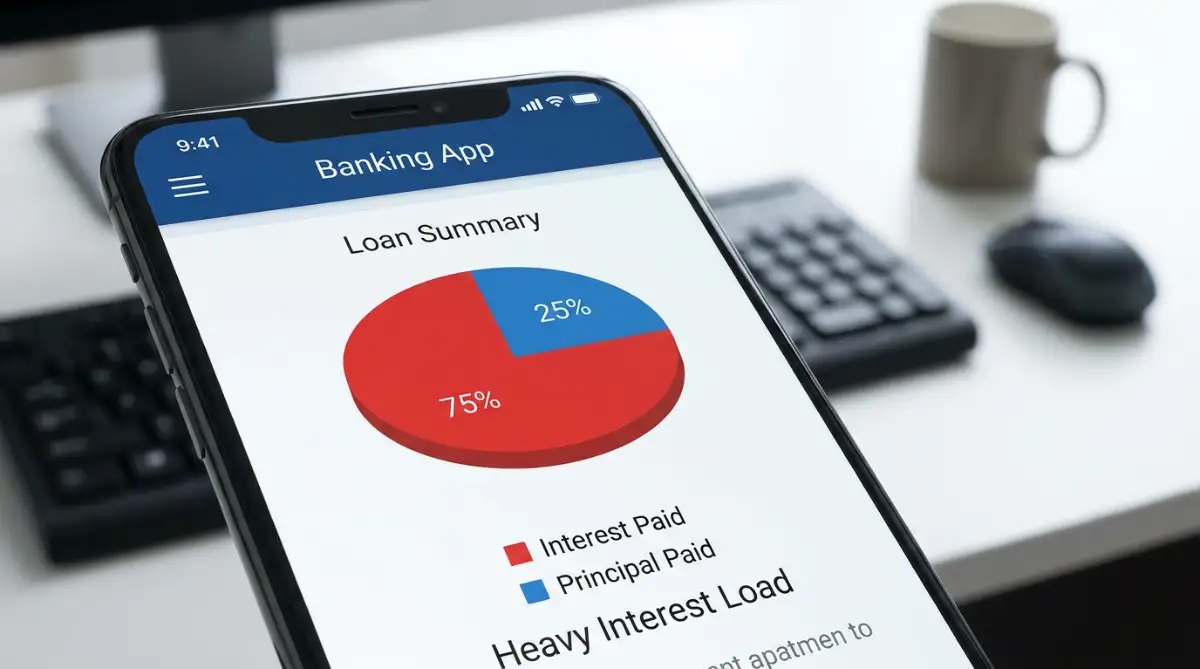
You’ll want to look at exactly where your money is going. The hard truth is that a massive chunk of those early payments goes straight toward interest, not the actual debt. This is the exact moment many borrowers realize that their previous refinancing deal wasn't quite the victory they thought it was.
When a borrower renegotiates a loan, the focus is almost always on getting a smaller monthly bill. The bank happily obliges, offering a shiny new term that makes the monthly budget feel much lighter. But all these things combined mean you are often just buying more time at a massive premium.
Instead of actually paying off what you owe, you end up resetting the clock. The reality is that lenders thrive on this exact psychology. They know that a lower monthly payment feels like immediate financial relief.
You might run into a situation where a new loan offers a much lower interest rate, which sounds like a total win on paper. But if that new loan also stretches your repayment schedule out by another five years, the total cost of borrowing skyrockets.
At the end of the day, you have to ask yourself if you are actually saving money or just renting it for a longer period. Getting out of debt requires paying down the principal, plain and simple. If your refinancing strategy doesn't prioritize that, you are probably steering straight into a longer debt cycle.
The Insider Mechanics of Amortization
To put it simply, you need to understand how banks actually structure these loans. This isn't a glitch, it's actually by design. Lenders use something called an amortization curve to guarantee their profits upfront.
During the first few years of any standard installment loan, your payments are heavily front-loaded with interest. As you get closer to the end of the term, a larger percentage of your payment finally goes toward the principal.
Here is the breakdown. When you refinance an existing loan, you don't just change the interest rate. You actually wipe out the old amortization schedule and start a brand-new one from day one.
Because of this reset, you go right back to paying mostly interest again. We’ve seen that banks absolutely love it when borrowers refinance multiple times. They get to collect that front-loaded interest premium over and over again without ever taking on more risk.
Recent tracking by institutions like the Consumer Financial Protection Bureau highlights a growing trend in extended loan terms. Current market trends indicate that borrowers are keeping debt longer than ever, specifically through continuous refinancing cycles. Watch out for lenders who aggressively push you to refinance solely based on a lower monthly payment.
Decoding the True Cost of Your Loan Options
If you're anything like me, you probably rely heavily on visual comparisons before making a big financial move. It's incredibly easy to confuse different types of financial products when they are all marketed as "debt relief."
A lot of people assume that refinancing and debt consolidation are the exact same thing. While they can overlap, the mechanisms behind them affect your credit and wallet very differently.
Here is how the most common options actually stack up against each other.
All these things combined mean you have to look past the marketing language. You've got a few options, but each comes with a specific hook designed to keep you in the banking ecosystem.
The Math Behind the Trap (A Real-Life Example)
Looking at the numbers, it seems the best way to understand this is through a concrete example. Let's look at a homeowner financing a major $30,000 home improvement project.
Initially, they take out a 5-year personal loan at a 9% interest rate. Their monthly payment is roughly $622. After paying exactly on time for two full years, they have paid around $4,500 just in interest, and their remaining balance is down to about $19,500.
Then, they get an offer in the mail. A lender offers to refinance that remaining $19,500 at a lower 7% rate. The new monthly payment drops to just $386.
It feels like a massive win, right? Quick heads-up: the catch is that the new loan is for another full 5-year term.
By taking this deal, the homeowner resets the clock. They will now pay an additional $3,600 in interest over the next five years. Combined with the interest they already paid on the first loan, they end up spending over $8,100 in total interest.
If they had just stuck with the original loan, their total interest would have been around $7,300, and they would have been completely debt-free two years sooner. That’s probably a bad idea if your ultimate goal is financial freedom.
A Step-by-Step Approach to Smarter Refinancing
Here's how to get it done without falling into the lender's trap. Experts suggest that you should never refinance out of desperation or just to get a little extra breathing room in your monthly budget.
Every time you sign a new loan agreement, you are making a mathematical trade-off. The most important thing is to ensure that the trade-off strictly benefits your net worth, not the bank's quarterly earnings report.
Step 1: Calculate Your Break-Even Point
You can get the best results by simply doing the math before you ever talk to a loan officer. Every refinancing deal comes with hidden costs like origination fees, appraisal fees, or closing costs.
You need to know exactly how many months it will take for your monthly savings to cover those upfront fees. If a lender charges a $500 origination fee, and your new loan saves you $50 a month, your break-even point is 10 months.
If you plan to sell the asset or pay off the loan before those 10 months are