🕒 Reading Time: 13 Mins | ✍️ Reviewed By: FinanceInfoIn Editorial Team
The Shock of the First Statement Cycle
I was auditing a standard expense report recently when I noticed something that completely wiped out a year's worth of financial planning. A $550 annual fee had just posted to a travel rewards credit card account.
Looking at the numbers, it seemed the cardholder had only earned about $320 in actual cash-back value over the past twelve months. That meant they effectively paid the bank $230 just for the privilege of holding a heavy, shiny metal card in their wallet.
This isn't a glitch, it's actually by design. A lot of people assume that if a card has a high upfront cost, it automatically means it's a superior financial product.
You start spending money on things you don't even need, just to "earn back" that steep fee. It quickly becomes a stressful, exhausting game of chasing points.
You might run into situations where you are booking flights you didn't even plan to take, just to use a $200 airline incidentals credit before the calendar resets.
"Instead of the card serving you, you end up serving the card." The mental gymnastics required to track every single monthly dining credit, Uber allowance, and hotel voucher can quietly drain your peace of mind.
The reality is, paying an upfront cost for borrowed money messes with your head. It creates a false sense of urgency to spend.
If you're anything like me, you want your financial tools to make your life easier, not give you a part-time job as an amateur accountant.

Quick Summary
Wondering if that heavy metal card is actually worth the high upfront cost? This guide breaks down the honest math behind credit card annual fees and how banks profit from your unused perks. You'll learn how to calculate your true break-even point, avoid lifestyle creep, and discover the exact steps to downgrade or negotiate your current fee without hurting your credit score.
Key Takeaways
-
Do the real math: Always calculate your exact break-even point based on your natural, organic spending, not forced purchases.
-
Beware of "breakage": Banks rely heavily on you forgetting to use the travel credits and perks you pre-paid for.
-
Protect your credit: You can usually downgrade a high-fee card to a no-fee version to keep your account history perfectly intact.
-
Negotiate before paying: Calling the retention department before your fee is due can often result in a fee waiver or bonus point offer.
Decoding the Business Behind the Plastic
You'll find that banks don't just charge these fees randomly. There is a deeply calculated science behind every single dollar they ask for upfront.
Recent tracking by the Federal Reserve shows that consumer credit balances are shifting heavily toward premium rewards products. But how do banks actually afford to give away airport lounge access and massive sign-up bonuses?
The insider secret here is a concept the banking industry calls "breakage."
Breakage refers to the specific perks and credits that cardholders pay for via the annual fee, but simply forget to use. Banks heavily rely on this specific metric to stay profitable.
They know that a massive percentage of users will gladly pay a $395 fee for the idea of luxury travel, but will never actually step foot in an airport lounge.
All these things combined mean the bank is collecting pure profit on unredeemed benefits. On top of that, premium cards command higher "interchange fees."
This is the hidden swipe fee the merchant pays every time you use the card at a register. To put it simply, the bank gets paid by you, and they get paid by the store, all while hoping you forget to use your travel perks.
Doing the Break-Even Math (The Right Way)
Here is how to get it done without falling into the bank's marketing trap. You need to calculate your exact break-even point based on your organic spending.
Let's look at a highly realistic scenario. A household is considering upgrading to a premium grocery rewards card that charges a $95 annual fee.
This premium card offers 6% cash back on groceries. The free alternative from the exact same bank offers 3% cash back on groceries.
A lot of people just look at the 6% and think it's a massive win. But here is the thing: you are only gaining a 3% advantage over the free card.
To cover that $95 fee using only that 3% difference, this household needs to spend exactly $3,166 a year on groceries.
If they spend $3,000, they are actually losing money compared to just holding the free card. You can get a clear picture of your finances by simply running this basic math before you ever hit the apply button.
Stop Chasing Lifestyle Creep
One of the biggest issues with premium fee cards is how they subtly alter your spending habits. Financial advisors often recommend auditing your lifestyle before auditing your wallet.
If a card offers a $240 digital entertainment credit, but you currently only pay $10 a month for Spotify, you aren't saving money.
You are actually being manipulated into subscribing to services you didn't originally want or need. This isn't a glitch, it's actually by design to create ecosystem loyalty and keep you hooked.
I'd steer clear of valuing perks that force you to change your natural spending habits.
Pro Tip: I recently audited my own wallet and realized I was paying $250 a year for a hotel card just because it gave me one "free" night. But I realized I was forcing myself to take random road trips just to use the certificate. The takeaway is simple: "If a perk requires you to spend extra cash to use it, it’s not a perk. It’s a targeted advertisement."
Visualizing the Good and the Bad
When it comes to deciding if that upfront cost makes sense, you have to weigh the absolute facts against your daily reality.
Search engines and financial forums are packed with conflicting advice. So, let's look at why this happens and break down the reality.
The Pros:
-
Massive Sign-Up Bonuses: These often offset the first year's fee entirely if you meet the initial spending requirement.
-
High-Multiplier Categories: You earn points much faster on specific categories like global travel and fine dining.
-
Premium Insurances: Trip delay, lost baggage insurance, and primary rental car coverage can save thousands in an emergency.
-
Luxury Access: Bypassing security lines with TSA PreCheck or relaxing in private airline lounges.
The Cons:
-
Upfront Cost: You are instantly in the negative on day one and have to earn your way back to zero.
-
High APRs: Premium cards almost always have punishing interest rates if you carry a balance.
-
Benefit Tracking: It requires constant attention to make sure your monthly and annual credits don't expire.
-
Psychological Pressure: The lingering feeling that you "have" to spend money to validate holding the card.
Knowing When to Walk Away
There's a chance you already hold a card with an annual fee that no longer serves your lifestyle.
Maybe you used to travel constantly for work, but now you work remotely from your living room.
Watch out for the sunk cost fallacy. Just because you have had a card for five years doesn't mean you automatically need to pay the fee for a sixth year.
Here is a quick intro to one of the most effective strategies for handling a fee you no longer want to pay.
Before You Cancel Your Card, Watch This Quick Guide on Downgrade Paths:
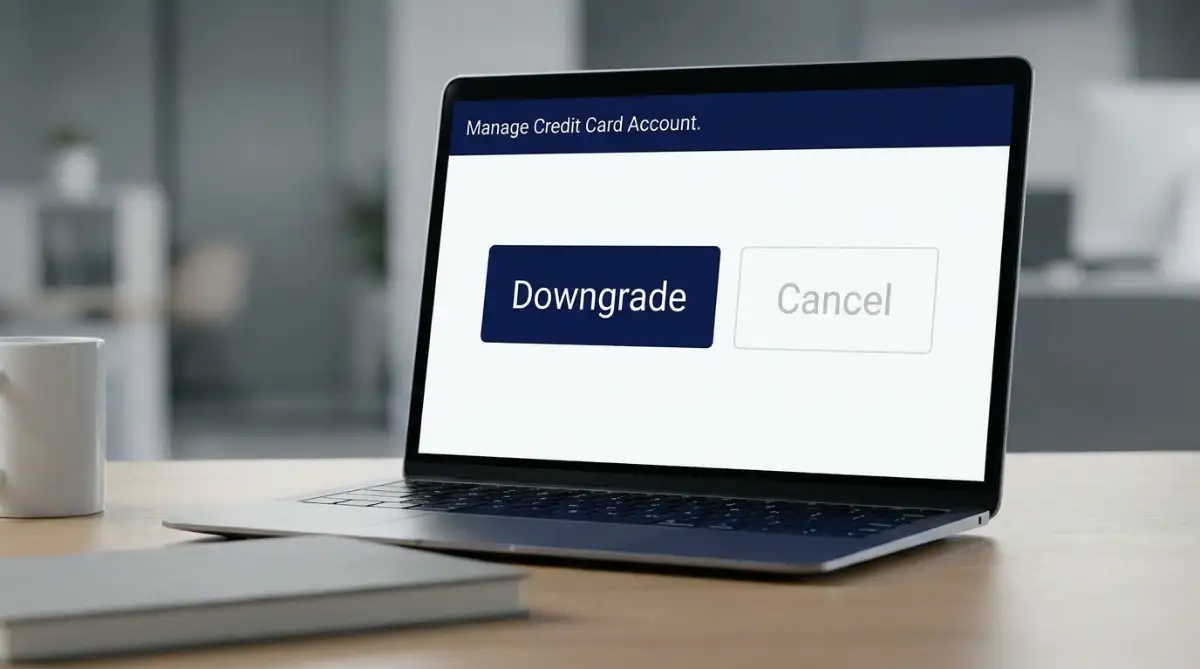
Experts suggest that instead of outright canceling the card—which can temporarily impact your credit history—you should ask for a product change.
You can call the number on the back of your card and request a downgrade to a no-annual-fee version within the same bank family.
This preserves your exact credit limit and the age of the account. Doing this keeps your credit score perfectly intact while instantly eliminating the out-of-pocket cost.
The Art of the Retention Offer
Fun fact: you don't always have to accept the annual fee exactly as it is presented to you on your statement.
When it comes to credit card issuers, customer acquisition is incredibly expensive. Banks spend hundreds of dollars in marketing just to get you to sign up in the first place.
Because of this, they are often highly motivated to keep you from leaving for a competitor.
If you call the bank and mention that you are thinking about closing the account because the fee is too high, you'll want to look at what they offer you to stay. This is known in the industry as a retention offer.
The Insider Script: Front-line customer service reps usually don't have the power to waive fees. You have to specifically use the words "I am considering closing this account" so their system routes you to the Retention Department.
The representative might offer to waive the fee entirely for one year. Then again, they might offer you a lump sum of bonus points that equals the value of the fee, provided you meet a small spending requirement over the next three months.
My advice would be to always make this phone call before the fee is actually due. The worst they can say is no, and you've got a few options from there.
Assessing Your True Risk Tolerance
Looking at the numbers, it seems a lot of consumers ignore the risk premium attached to these premium cards.
If you are someone who occasionally carries a balance from month to month, an annual fee card is almost always a terrible idea.
The compounding interest charges will instantly obliterate any value you get from points, miles, or cash back.
Quick heads-up: reward cards fund their lavish perks by charging much higher Annual Percentage Rates (APRs) than standard cards.
If you are currently paying down debt, your primary focus should be on low-interest products or balance transfer cards, completely ignoring rewards programs.
All these things combined mean that premium cards are exclusively for people who treat their credit card exactly like a debit card—paying the balance off in full, every single month.
Mastering the Premium Card Game: Insider Mechanics
To truly understand if an upfront fee makes sense, you need to look at how lenders operate behind closed doors. Banks don't just guess when pricing their financial products.
They use advanced underwriting models and algorithmic trust scores to predict exactly how you will behave over the next five years. According to ongoing research by the Consumer Financial Protection Bureau (CFPB), credit card issuers generate a massive portion of their revenue from late fees and interest, alongside those merchant swipe charges.
The industry mechanic here is called "retention modeling." The bank's software calculates the exact probability of you canceling the card right before the second year's fee hits.
To counter this, they strategically delay certain perks. For example, they might offer a massive travel credit that only activates on your account anniversary.
They do this because they know the psychological weight of "losing a perk" will keep you paying the fee. You are fighting against billion-dollar algorithms designed to keep you subscribed to their credit ecosystem.
Pro Tip: My advice would be to set a calendar alert exactly 11 months after you open any new premium account. This gives you a full 30 days to review your actual spending data and decide if the math still works before the bank automatically charges you for year two.
The Hidden Pitfalls of the Rewards Chase
People often stumble when they try to outsmart the credit card companies without a solid, data-backed plan. The most common mistakes usually happen when emotion takes over logic.
Common Mistakes to Avoid:
-
Holding Overlapping Cards: You don't need three different cards from different banks that all offer TSA PreCheck. You are paying multiple fees for a benefit you can literally only use once every five years.
-
Carrying a Balance for Points: Earning 3% cash back is mathematically useless if you are paying a 24% APR on your carried debt. The bank always wins this trade.
-
Ignoring the Annual Audit: People blindly pay the fee every year without checking if their spending habits have shifted.
-
Chasing Unnecessary Upgrades: Getting a heavy metal card just for airport lounge access when you only fly once a year is a classic financial trap.
These simple missteps can easily cost you hundreds of dollars a year. If you are struggling with everyday expenses, you'll want to focus on how to create a personal budget when living paycheck to paycheck instead of worrying about luxury travel points.
When you mismanage premium cards, it can quickly negatively impact your overall credit profile. If you've recently been rejected for a new product, you might want to look at why your credit card application was denied and how to fix it today.
The Execution Guide: Making Your Move Today
If you've run the numbers and realized your current card is draining your wallet, here is how to get it done. You don't have to just accept the charge sitting on your statement.
You can take back control of your finances by following a very specific, measured approach. Experts suggest calling your bank prepared, polite, and armed with your own data.
Step 1: Audit Your Recent Statements
Log into your account and pull up your last 12 months of transactions. Add up exactly how much cash back or how many travel credits you actually redeemed, not what you "planned" to redeem when you signed up.
Step 2: Check for Downgrade Paths
Before calling, research what free cards your bank offers. You want to specifically ask the representative to transition your account to a no-fee product to keep your credit line open and active.
Step 3: Make the Negotiation Call
Call the number on the back of your card. Politely inform them that the fee no longer aligns with your spending, and ask if they have any retention offers available. If you are also dealing with high balances on other cards, you might want to learn how to negotiate with credit card companies to lower your interest rate.
Step 4: Secure the Final Decision
If they offer a statement credit that covers the fee, accept it and set a calendar reminder for next year. If they refuse, confidently ask them to process the product change to the free version immediately.
Required Document & Preparation Checklist
Before you pick up the phone or log into your banking portal, make sure you have these specific items ready on your desk:
-
Your latest monthly statement clearly showing the annual fee charge.
-
A calculated list of the exact monetary value of the perks you used last year.
-
The exact name of the specific no-fee card you want to downgrade to.
-
Your current account balance (this must be paid off or transferred before closing a card).
-
Any unused reward points (have a plan to transfer or cash them out so you don't lose them to the bank).
Your Quick Action Checklist
You can start optimizing your wallet right now. Don't put this off until the bank automatically charges you again.
-
List all your active cards: Write down every card you own and the exact fee they charge you annually.
-
Calculate the net return: Subtract the fee from the actual cash value of the rewards you earned last year.
-
Identify the overlaps: Spot any benefits (like streaming credits or hotel statuses) that you are paying for twice across different cards.
-
Set your calendar alerts: Mark down exactly when your account anniversary hits so you can decide your next move 30 days in advance.
-
Secure your accounts: While reviewing your banking apps, always ensure you understand online phishing scams explained simple ways to keep your bank account safe.
Making The Final Call For Your Wallet
At the end of the day, premium credit products should serve your lifestyle, not dictate it. You are the one in control of your financial tools, not the other way around.
If the math clearly shows you are coming out ahead, enjoy the lounge access and the free flights. But if the numbers reveal that you are just subsidizing the bank's profit margins, it's time to make a decisive change.
I recently downgraded two of my oldest premium cards, and the relief of not having to track random dining credits was honestly incredible. You'll find that simplicity often leads to much better financial growth.
Keep your strategy clean, trust your own math, and don't let flashy metal cards distract you from your real financial goals, like managing your debt-to-income ratio for a home loan.
Which old credit card are you planning to downgrade or negotiate this week? Let me know in the comments below!
Common Questions About Credit Card Fees
What happens if I simply refuse to pay my annual fee?
If you ignore the fee, the bank will eventually charge you late fees and report a missed payment to the credit bureaus. This will severely damage your credit score, so it's always better to properly cancel or downgrade the card.
Will downgrading my card hurt my credit score?
No, a product change usually preserves your account history and total credit limit. The bank simply swaps your current card for a no-fee version, which keeps your credit profile perfectly intact.
Can I get an annual fee refunded after it posts to my account?
Most banks give you a strict 30-day grace period after the fee appears on your statement. If you call and cancel or downgrade within that exact window, they will typically refund the charge completely.
Are premium travel cards actually worth it for average spenders?
Usually, no. If you only travel once or twice a year, a standard no-fee cash-back card will almost always provide better, more consistent value for your everyday grocery and gas spending.
How often should I evaluate my credit card strategy?
Financial experts strongly suggest auditing your wallet once a year, right before your account anniversaries. This ensures your current cards still match your current lifestyle and spending habits.
Do business credit cards have different fee structures?
Yes, business cards often feature much higher fees but come with massive benefits tailored to high corporate spending. However, keep in mind you are personally liable for the debt even if your business closes.
Can I transfer my reward points before canceling the card?
Absolutely. You should always transfer your points to a travel partner or redeem them for statement credits before closing an account, otherwise, you will lose them back to the bank forever.
Is it hard to get an annual fee waived by customer service?
It depends entirely on your spending history and the bank's current retention policies. High spenders have a much better chance of getting a waiver or a bonus point offer to offset the cost.
Does a metal credit card mean it's a better financial product?
Not at all. The heavy metal is purely a psychological marketing tactic designed to make the card feel exclusive in your hand, subtly encouraging you to swipe it more often.
Should I keep an old fee card just for the credit history?
If the fee is very small and it's your oldest account, it might be worth keeping. However, if the fee is hundreds of dollars, it is rarely worth paying just to maintain a slightly older age of credit.
Trusted Legal Resources
-
Consumer Financial Protection Bureau (CFPB) on Credit Cards: Official government guidelines on understanding credit card terms, hidden fees, and consumer rights.
-
Federal Trade Commission (FTC) Credit Basics: A trustworthy guide on managing credit securely and disputing unfair billing practices.
-
Federal Reserve System Consumer Data: Deep insights and economic tracking on consumer credit behaviors and banking regulations.
-
Office of the Comptroller of the Currency (OCC): Federal resources providing answers to common questions about national banks and credit card policies.
-
FDIC Consumer Assistance: Verified educational materials regarding bank account safety, lending laws, and financial protection.
-
National Foundation for Credit Counseling (NFCC): A highly respected non-profit organization offering trusted debt management and credit strategy advice.
Financial Disclaimer: The information provided in this article is strictly for educational and informational purposes only and does not constitute professional financial, legal, or tax advice. FinanceInfoIn and its authors are not licensed financial advisors. Credit card offers, terms, and bank policies change frequently; always read the specific terms and conditions provided by the lender before making any financial decision. We strongly recommend consulting with a certified financial planner or legal professional regarding your unique personal situation to ensure you do not undertake undue financial risk.
About the Author & Review Process
Written & Fact-Checked by: Mithun Halder & The FinanceInfoIn Editorial Team
Mithun Halder is a dedicated personal finance researcher and educator with a deep focus on insurance, investing, and wealth management. At FinanceInfoIn, our editorial team rigorously researches and cross-references every topic with official government resources, insurance regulations, and industry best practices. Our mission is to break down complex financial jargon into clear, actionable, and trustworthy guidance, helping you make informed decisions about your financial security.
📧 Contact Mithun: [email protected] | 💼 Connect on LinkedIn: Mithun Halder