Reading Time: 12 Minutes
Difficulty Level: Beginner to Intermediate
Reviewed By: FinanceInfoIn Editorial Team
The Heavy Weight of the Monthly Rent Check
Staring at the freshly printed lease renewal notice on my kitchen counter, my stomach dropped. The property management company wanted another $150 a month, and there was absolutely nothing I could do about it. I had exactly $34 in my checking account until payday, and the thought of packing up boxes again made me physically exhausted.
Every single month, handing over that massive chunk of my paycheck felt like tossing cash into a roaring fireplace. I was paying off someone else's mortgage while my own financial progress remained completely stuck.
I would walk through my neighborhood at dusk, looking at the warm lights glowing from the living rooms of houses I could never seem to afford. It is a very specific type of quiet frustration. You work hard, you pay your bills on time, but you still feel like a permanent guest in your own living space.
You cannot paint the walls the color you actually want. You have to ask permission to adopt a small dog. If the hot water heater breaks down, you are at the total mercy of a landlord who might take three days to send a repairman.
This endless cycle of renting drains more than just your bank account. It slowly chips away at your sense of stability and peace of mind. You are constantly wondering if you will be priced out of your own neighborhood next year.
Millions of hardworking people wake up every day with this exact same anxiety. We all dream of holding that shiny brass key to a front door that actually belongs to us. But dreaming about a house and being financially equipped to handle one are two very different realities.
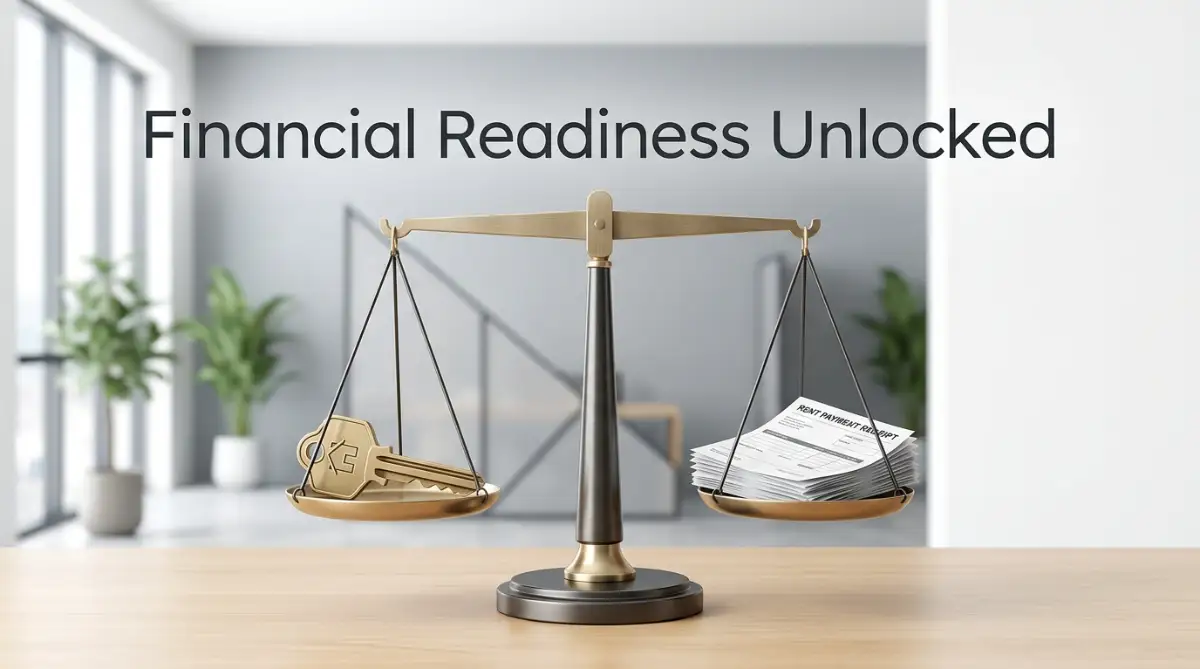
Table of Contents
- The Heavy Weight of the Monthly Rent Check
- The Hidden Reality of Becoming a Homeowner
- The Green Lights of Financial Stability
- Mastering the Down Payment Game
- The Debt-to-Income Reality Check
- Surviving the Hidden Costs of Homeownership
- Taking the Final Step Toward Your Own Front Door
Quick Summary
Transitioning from renting to buying requires more than just a strong desire for your own space. You must have a solid emergency fund, a healthy debt-to-income ratio, and cash saved for hidden closing costs. Buying a house ties you to long-term financial commitments that renters never face. Understanding these specific financial signs will help you decide if you are truly ready to make the biggest purchase of your life.
Key Takeaways
- Consistent Income is Mandatory: You need a predictable, reliable income history for at least two years.
- Emergency Funds Save Homes: Never drain your entire savings just to cover the down payment.
- Understand Your DTI: Mortgage lenders care deeply about how much debt you carry compared to your income.
- Hidden Costs Add Up: Property taxes, maintenance, and insurance will drastically change your monthly budget.
The Hidden Reality of Becoming a Homeowner
Let us have a completely honest conversation right now. The internet is filled with people telling you that renting is always a waste of money. They make it sound like buying a house is a magical fix for all your money problems.
The truth is a lot more complicated. When you rent an apartment, your monthly payment is the maximum amount you will spend on housing that month. If the roof starts leaking or the refrigerator dies, you simply make a phone call.
When you own a home, your mortgage payment is just the baseline minimum you will spend. If the air conditioning unit explodes in the middle of a heatwave, the entire financial burden falls directly on your shoulders.
This is exactly why you cannot rush the transition. You need to look for specific, undeniable signals that your bank account is prepared for the shock of homeownership.
Monthly Cost Differences Between Renting and Buying (Plain Text Comparison):
- Monthly Payment: Fixed for the lease term (Renter Experience) vs. Variable if property taxes or insurance increase (Homeowner Experience).
- Maintenance: Completely covered by the landlord (Renter Experience) vs. 100% homeowner financial and physical responsibility (Homeowner Experience).
- Property Taxes: Built directly into the rent price (Renter Experience) vs. Paid separately or managed through a mortgage escrow account (Homeowner Experience).
- Lawn and Exterior Care: Usually managed and paid for by the property owner (Renter Experience) vs. Requires your own time, tools, and money (Homeowner Experience).
The Green Lights of Financial Stability
How do you actually know when it is time to stop browsing real estate apps and start calling a real estate agent? The first major sign is the health of your emergency fund.
A lot of eager first-time buyers make a massive mistake. They scrape together every single penny they have just to afford the down payment. Then, they move into their new house with exactly zero dollars left in the bank.
This is a recipe for an immediate financial disaster. As a homeowner, you need a robust safety net. You should have at least three to six months of basic living expenses saved up, completely separate from your house fund.
If you lose your job the week after you close on the house, the mortgage company will still expect their payment on the first of the month. Having that emergency cash gives you the breathing room to survive unexpected storms.
Expert Tip: Before you start house hunting, try taking the difference between your current rent and your estimated future mortgage payment, and put that exact amount into a savings account every month. If you can live comfortably without touching that extra money, you are on the right track.
Mastering the Down Payment Game
Another clear indicator of readiness is your ability to handle the upfront costs. Everyone talks about the famous 20% down payment rule. While you certainly do not need a full 20% to buy a house today, putting down a solid amount shows tremendous financial discipline.
If you put down less than 20%, you will usually have to pay Private Mortgage Insurance (PMI). This is an extra fee added to your monthly bill that protects the lender, not you.
Being financially ready means you have calculated exactly how much cash you need to close the deal. You are not relying on a sudden windfall or a risky loan from a family member.

Let me share a very real lesson I learned the hard way.
I thought having the exact down payment meant I was totally ready to buy. I completely forgot to factor in closing costs, which ended up being thousands of dollars for appraisals, inspections, and loan origination fees. I had to scramble and empty my emergency fund just to get the keys, which left me completely broke on moving day.
The Debt-to-Income Reality Check
Lenders do not just look at how much money you make. They care deeply about how much of that money is already promised to other people. This brings us to your debt-to-income ratio (DTI).
Your DTI is the percentage of your gross monthly income that goes toward paying debts. This includes your car payments, student loans, minimum credit card payments, and your future mortgage.
If you are spending half your paycheck paying off old credit card debt, adding a massive mortgage on top of that will drown you.
Most mortgage lenders want to see a total DTI of 36% or less, though some will allow you to go slightly higher depending on the loan type. If your current consumer debt is very low or completely paid off, that is a massive flashing green light that you are ready to buy.
Understanding Your Debt-To-Income (DTI) Levels (Plain Text Breakdown):
- Below 36%: Excellent financial position. You have plenty of breathing room in your budget. Lenders are very likely to approve you with great interest rates.
- 36% to 43%: Average position. You are managing your debts, but monthly funds might get tight. Lenders will likely approve you, but loan terms may be stricter.
- 44% to 50%: Danger zone. You have a high risk of missing future payments. Lenders may require a co-signer or demand a much larger down payment to approve the loan.
- Above 50%: Overwhelmed. Too much of your income is going to past debts. Lenders are almost guaranteed to deny the mortgage application.
Here is a great way to understand how much house you can actually afford:
Watch this quick breakdown on calculating your true mortgage limit before you talk to a bank.
Surviving the Hidden Costs of Homeownership
When you rent, your monthly budget is fairly predictable. You pay the rent, you pay the electric bill, and you buy your groceries.
Transitioning to homeownership introduces a whole new world of invisible expenses. Have you looked at the property taxes in your desired neighborhood? These taxes can easily add hundreds of dollars to your monthly payment.
Then there is homeowners insurance. Depending on where you live, especially if you are near a coast or a flood zone, insurance premiums can be shockingly high.
Are you looking at properties in a community with a Homeowners Association (HOA)? That is another mandatory monthly fee you have to budget for.
You also need to become your own property manager. Lawnmowers, weed whackers, snow shovels, and basic hand tools cost real money. When you move from a small apartment to a three-bedroom house, you suddenly realize how much furniture you actually need to buy.
Being financially ready means you have padded your monthly budget to absorb all these extra hits without breaking a sweat.
The Hidden Monthly Costs Buyers Often Forget (Plain Text Breakdown):
- Property Taxes: Can range from $150 to $600+ per month. This matters because it varies wildly by county and can increase after property reassessments.
- Homeowners Insurance: Usually costs between $70 and $200+ per month. This matters because it protects your massive investment against fire, theft, and major storm damage.
- HOA Fees: Typically range from $50 to $400+ per month. This matters because it is a mandatory legal expense for many newer communities and condo buildings.
- Routine Maintenance: Expect to save 1% to 2% of your home's total value annually. This matters because you will eventually need to pay for fresh paint, plumbing fixes, HVAC servicing, and landscaping.
Expert Tip: A great rule of thumb is to save 1% to 2% of your home's total purchase price every year specifically for maintenance. If you buy a $300,000 house, you should expect to spend roughly $3,000 a year just keeping it in good working condition.
Taking the Final Step Toward Your Own Front Door
Buying a home is deeply emotional. It is about planting roots, building a safe haven, and creating a space that is entirely yours. But you cannot let those warm emotions override cold, hard math.
Take a hard look at your career stability. Do you plan on staying in the exact same city for at least the next five to seven years? Buying a house and selling it two years later almost always results in a financial loss due to real estate agent commissions and closing costs.
You need to feel completely confident in your current job and your long-term geographic plans.
If you have paid down your bad debt, built a thick cushion of emergency savings, and accurately estimated the true monthly cost of owning a property, you are no longer just dreaming.
You have done the hard work. You have made the sacrifices. You are officially ready to trade those frustrating rent receipts for a set of keys that actually belong to you.
Building Long-Term Financial Habits for Homeownership
Getting your finances in order is only the first part of the journey. The real challenge is maintaining that financial health long enough to actually close on a property. You cannot just save aggressively for three months and then revert to old spending habits.
Lenders will scrutinize your bank statements right up until the day you sign the final paperwork. Any sudden changes to your credit profile or cash reserves can easily derail your approval. You need to treat your financial profile like a fragile glass sculpture during this entire period.
One of the smartest moves you can make is locking down your credit utilization rate. This simply means you should never use more than 30% of your available credit card limits. If you have a credit card with a $10,000 limit, never let the balance go above $3,000 at any point during the month.
Keeping this number extremely low proves to the bank that you are not desperate for borrowed money. If you want to dive deeper into how lenders view your credit report, the Consumer Financial Protection Bureau provides excellent guidelines on credit reporting standards.
Pro Tip: I always tell my friends to completely freeze their credit files once they start house hunting. This prevents any accidental hard inquiries from department stores or auto dealerships, which can instantly drop your score right before your mortgage closing date.
You also need to start test-driving your new housing payment right now. Do not wait until you move in to figure out if you can afford the lifestyle. If your future mortgage is going to be $500 more than your current rent, automatically transfer that $500 into a savings account on the first of every month.
This strategy forces you to live on a tighter budget while simultaneously building up your cash reserves. You will quickly realize if that extra expense causes you anxiety or if you can handle it easily. You should also spend time calculating your true affordability limit before you even look at property listings.
How Your Credit Score Directly Affects Your Monthly Payment (Plain Text Breakdown):
- Credit Score 760 or Higher: You unlock the absolute lowest interest rates available. This saves you tens of thousands of dollars over a 30-year loan.
- Credit Score 700 to 759: You will get very good rates, but your monthly payment will be slightly higher than top-tier borrowers.
- Credit Score 640 to 699: You will likely be approved, but lenders will charge you a premium rate to offset their risk.
- Credit Score Below 640: Approval becomes extremely difficult. You will face high interest rates and mandatory extra fees.
If you successfully practice this exact routine for at least six months, the shock of your first real mortgage payment will completely disappear. You will step into your new home with total confidence instead of financial panic.

Dangerous Traps to Avoid Before Buying a House
We have all seen people get swept up in the emotion of house hunting. They walk into a beautiful open house, see the shiny kitchen countertops, and completely forget basic math. This emotional blindness leads to some of the most expensive mistakes a person can make.
The biggest trap is falling in love with a property that pushes you to the absolute limit of your pre-approval amount. Just because a bank says you can borrow half a million dollars does not mean you actually should. The bank does not care if you want to go on vacation, eat at restaurants, or save for retirement.
When you max out your budget on the house itself, you become "house poor." You might have a gorgeous living room, but you will not have any cash left to buy furniture to put inside it. This is why understanding the true cost of owning your first property is non-negotiable.
Another massive mistake is skipping or rushing the inspection process to beat out other buyers. I have seen buyers waive their right to an inspection just to get their offer accepted in a competitive market. Six months later, they discover a cracked foundation that costs $20,000 to fix.
Common Mistakes Buyers Make During the Transition:
- Applying for new credit cards or buying a new car right before closing.
- Emptying their entire emergency savings to cover a larger down payment.
- Forgetting to budget for closing costs, moving trucks, and utility setup fees.
- Focusing purely on the monthly payment while ignoring the long-term tax history of the neighborhood.
- Failing to research the exact rules and monthly fees of a local Homeowners Association (HOA).
Always take the time to learn about spotting major warning signs before you sign a binding contract. If a seller pushes you to skip an inspection, walk away immediately. No house is worth a lifetime of structural nightmares.
The Financial Impact of Common Buying Mistakes (Plain Text Breakdown):
- Opening New Credit Lines Before Closing: Can instantly drop your credit score. Lenders will pull your file again on closing day, which could cause a total loan denial.
- Waiving the Home Inspection: You accept 100% of the risk for hidden plumbing, roof, or electrical issues. This single mistake can cost you tens of thousands of dollars.
- Ignoring Closing Costs: Buyers often assume the down payment is the only upfront fee. Closing costs add an extra 2% to 5% to the total purchase price, leaving you scrambling for cash.
- Maxing Out the Pre-Approval Limit: Leaves absolutely no room in your monthly budget for groceries, medical emergencies, or basic entertainment. You become a prisoner to your mortgage.
Quick Action Checklist
- Pull a free copy of your credit report and dispute any errors immediately.
- Calculate your exact Debt-to-Income (DTI) ratio using your gross monthly income.
- Set aside a specific, untouchable savings account strictly for unexpected home repairs.
- Practice paying your estimated future mortgage amount for three consecutive months.
- Research the historical property tax trends in your top three target neighborhoods.
- Gather two full years of tax returns and W-2 forms in a secure digital folder.
Stepping Confidently Into Your New Living Space
Trading your lease agreement for a property deed is one of the most powerful financial moves you will ever make. It completely shifts your mindset from temporary living to long-term wealth building. However, this transition requires deep patience, strict budgeting, and a very honest look at your spending habits.
You do not have to rush this process just because your friends are buying houses. Renting gives you the incredible gift of time. Use this time to aggressively pay down your student loans, build a massive cash safety net, and learn the real estate market inside and out.
When your bank account is fully prepared, the mortgage application process becomes a simple checklist rather than a terrifying ordeal. You will walk into the closing room knowing exactly what you are doing.
I distinctly remember the evening I finally cleared my last high-interest credit card balance. I sat at my kitchen table, looked at the zero balance on my screen, and realized I was finally ready to call a real estate agent. The peace of mind I felt that night was worth every single skipped vacation and packed lunch.
Take a hard look at your debts today and make a firm decision to take control of your financial future. Which debt are you planning to pay off first? Let me know in the comments below!
Homebuyer Readiness: Frequently Asked Questions
How much money should I save before buying a house?
You should aim to save enough to cover your down payment, closing costs (usually 2% to 5% of the loan amount), and a separate emergency fund. Your emergency fund should hold at least three to six months of total living expenses.
Is renting really just throwing money away?
Absolutely not. Renting buys you flexibility, predictability, and freedom from major maintenance bills. It is a highly effective way to keep your housing costs fixed while you pay off debt and build savings.
What is a good debt-to-income ratio for a mortgage?
Most conventional lenders want to see a total debt-to-income (DTI) ratio below 36%. However, some government-backed loans will allow your DTI to go slightly higher if you have an excellent credit history.
Should I pay off all my student loans before buying?
You do not need to be completely debt-free to buy a home, but your monthly loan payments must easily fit within your budget. If your student loan payments are pushing your DTI past 45%, you should focus on paying them down first.
How long does the pre-approval process take?
If you have all your financial documents organized, getting formally pre-approved can take as little as 24 to 48 hours. Lenders just need to verify your income, employment history, and current credit score.
Do I really need a 20 percent down payment?
No, the 20 percent rule is a common myth. Many first-time buyer programs allow you to put down as little as 3% to 3.5%, though you will have to pay mortgage insurance until you build enough equity.
What happens if I buy a house and lose my job?
If you lose your job, the mortgage company still requires their monthly payment on time. This is exactly why having a fully funded emergency cash reserve is a strict requirement before you buy.
Are property taxes included in my monthly mortgage payment?
Usually, yes. Most lenders set up an escrow account where they collect a portion of your yearly property taxes and insurance premiums every month. They then pay those massive bills on your behalf when they are due.
How much should I save for home maintenance?
A safe estimate is to set aside 1% to 2% of the home's total purchase price every single year. For a $400,000 house, you should expect to spend about $4,000 to $8,000 annually on repairs and upkeep.
What are closing costs and who pays them?
Closing costs are the administrative fees required to process your loan, including appraisals, title searches, and attorney fees. The buyer is usually responsible for paying these costs, which must be paid in cash on closing day.
Trusted Legal Resources
- U.S. Department of Housing and Urban Development (HUD)
- Federal Trade Commission (FTC) - Consumer Advice
- Consumer Financial Protection Bureau (CFPB)
- Internal Revenue Service (IRS) - Homeowner Tax Tips
- Fannie Mae - Homebuyer Education
- Freddie Mac - Financial Literacy
Disclaimer: The information provided in this article is for educational and informational purposes only and does not constitute financial, legal, or real estate advice. Real estate markets, tax laws, and lending guidelines change frequently and vary by location. Always consult with a licensed financial advisor, certified public accountant (CPA), or qualified real estate attorney before making any major financial decisions or signing a real estate contract. FinanceInfoIn and its authors accept no liability for any financial losses or damages incurred by following the information outlined in this post.
About the Author
Reviewed by Mithun Halder (Personal Finance & SEO Expert) & The FinanceInfoIn Editorial Team
The FinanceInfoIn Editorial Team researches personal finance, investing, insurance, mortgages, cryptocurrency, and consumer financial topics. Every article is carefully reviewed to provide clear, practical, and trustworthy educational information based on credible sources and industry best practices.
© 2026 FinanceInfoIn. All rights reserved.