

Reading Time: 14 Minutes
Difficulty Level: Beginner to Intermediate
Reviewed By: FinanceInfoIn Editorial Team
Waking Up to Zero Power: The Dangerous Urge to Scrape
Staring at a solar app showing absolute zero energy production on a freezing morning is the fastest way to ruin your mood. A massive overnight storm had just dumped a foot of heavy, wet snow directly across my expensive rooftop array. Standing in the driveway, already dreading the upcoming grid electricity bill, I made a terrible, panicked decision. I grabbed a stiff garage broom and headed straight for the icy ladder.
Halfway across the yard, a sudden realization stopped me in my tracks. Scraping that fragile photovoltaic glass with hard plastic bristles would instantly void my warranty and permanently scratch the anti-reflective coating. Dropping that broom right then and there probably saved me thousands of dollars in ruined equipment.
If you are looking at a buried solar array right now, you need a safe plan. We are going to break down exactly how to handle this winter headache and get your power flowing again without doing permanent, expensive harm to your home.
Quick Summary
Clearing snow off your solar array requires specific, non-abrasive tools to prevent expensive scratches on the photovoltaic glass. Standard brooms, metal shovels, and rock salt will permanently damage your system and void the warranty. Using a soft foam roof rake from the ground is the safest manual method. Often, the best approach is allowing the dark glass to absorb ambient sunlight and melt the snow naturally.
Key Takeaways
- Never use abrasive materials like standard brooms or metal shovels on solar glass.
- Stay on the ground whenever possible to avoid dangerous slips on icy roofs.
- A soft foam roof rake is your best friend for winter solar maintenance.
- The dark color of your panels acts as a natural heater to slide snow off.
- Micro-scratches from improper cleaning can permanently lower your energy output.
Waking Up to Zero Power: The Winter Dilemma
You invest heavily in a home energy system to save money. Seeing it buried under a white blanket feels entirely counterproductive. The anxiety kicks in quickly. You watch your grid usage tick up, and you realize you are paying for electricity when your own micro-power plant is sitting right above your head.
It is completely normal to feel a sudden urge to climb up there and scrape it all off. We all want a quick fix. But making a rushed decision in freezing temperatures often leads to disastrous mistakes.
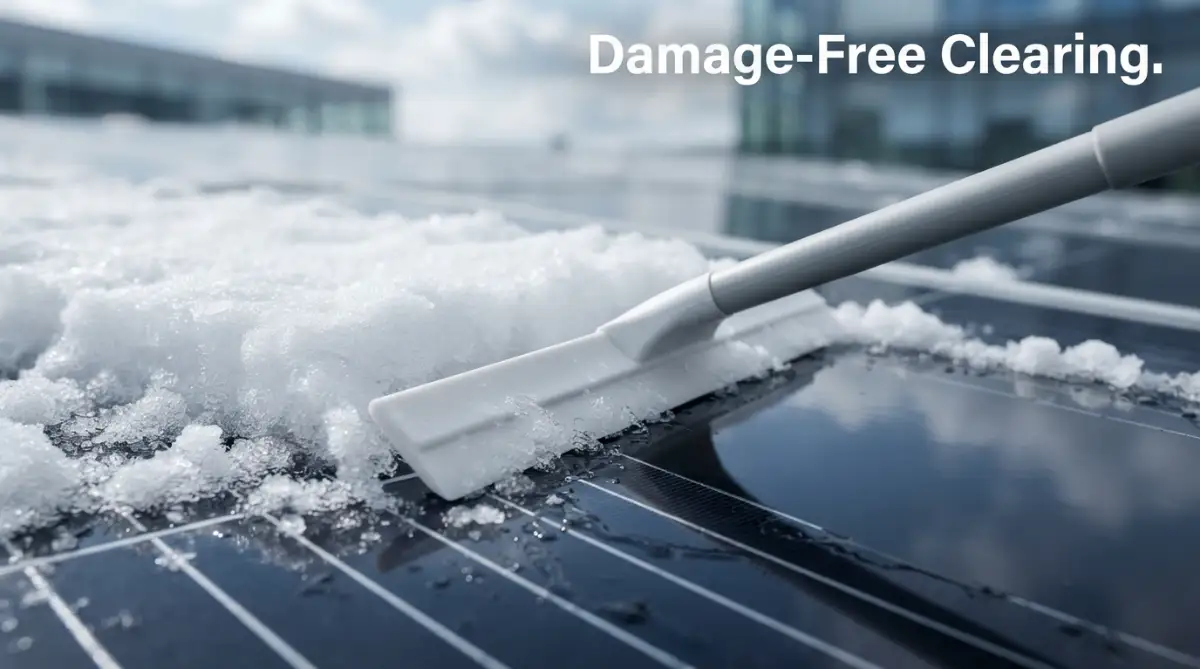
The main problem is not just the lost energy. The real issue is the potential damage you can cause by using the wrong tools. Photovoltaic glass is strong against hail, but it is highly sensitive to scraping. You need a clear plan to protect your investment.
Why You Cannot Just Ignore Heavy Snowfall
Many people think snow will simply blow away. Light dustings usually do. But heavy, wet storms pack a serious punch.
When a thick layer freezes, it blocks all sunlight from reaching the cells. Your system essentially goes to sleep. If you live in an area with long, dark winters, leaving it covered means missing out on weeks of valuable energy generation.
Furthermore, excessive weight puts stress on your mounting hardware. While most modern racks are rated for heavy loads, a combination of deep snow and ice buildup can test the limits of your roof structure.
The Hidden Dangers of DIY Clearing (What Not to Do)
Before we talk about the right way to do things, we must address the wrong ways. The internet is full of terrible advice. I have seen neighbors using everything from ice scrapers to hot water.
Pouring hot water on a freezing glass surface causes rapid thermal expansion. The glass will likely shatter instantly. This mistake is entirely on you, and no warranty will cover it.
Similarly, tossing rock salt or chemical de-icers onto your roof will corrode the aluminum frames and eat away at the protective seals.
This table shows how easy it is to confuse regular home maintenance with specialized solar care. The rules are completely different up there.
Step-by-Step: Safe Ways to Clear Your Array
Getting your system back online takes a bit of patience. You want to focus on removing just enough white stuff to let the sun do the rest of the job.
Invest in a Foam Roof Rake
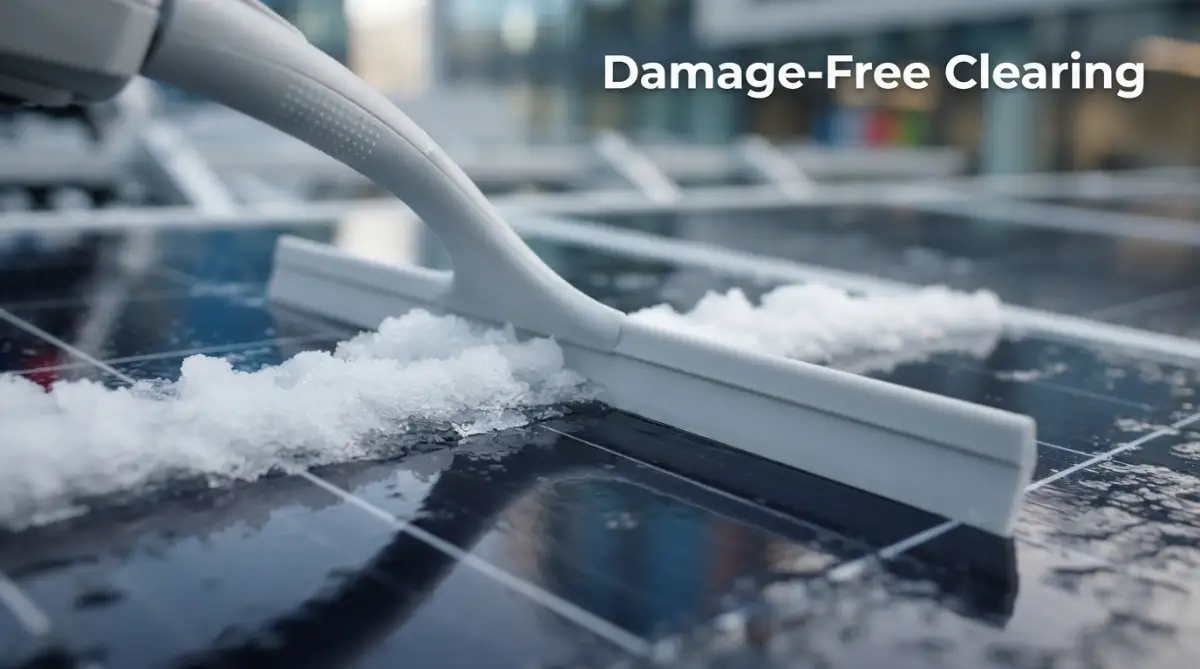
This is the absolute best tool you can buy. A foam roof rake has a completely soft, non-abrasive head. It is designed to pull material down without leaving a single scratch on the glass.
You attach it to a long fiberglass extension pole. You stand safely on the ground, reach up, and gently pull. You do not need to scrape it completely clean.
The Pro Tip: I learned the hard way that you only need to clear the bottom few inches of a panel. Once sunlight hits that small exposed dark strip, it heats up the entire glass surface. The rest of the snow will slide right off in a few hours. I used to exhaust my arms trying to get every inch perfectly clean. Now, I just clear the bottom edge and let physics take over.
Here is a great visual demonstration of how the sun helps you out.
Watch how quickly a partially cleared panel sheds the rest of its heavy load.
The Nerf Ball Technique
This sounds like a joke, but it works wonderfully for light, powdery accumulations. You simply take a soft foam ball, like a kids' Nerf ball, and toss it gently onto the high part of the array.
As it rolls down the slick glass, it creates a tiny avalanche effect. It pulls the powder down with it. It is entirely safe, keeps your feet firmly on the ground, and works surprisingly well for minor dustings.
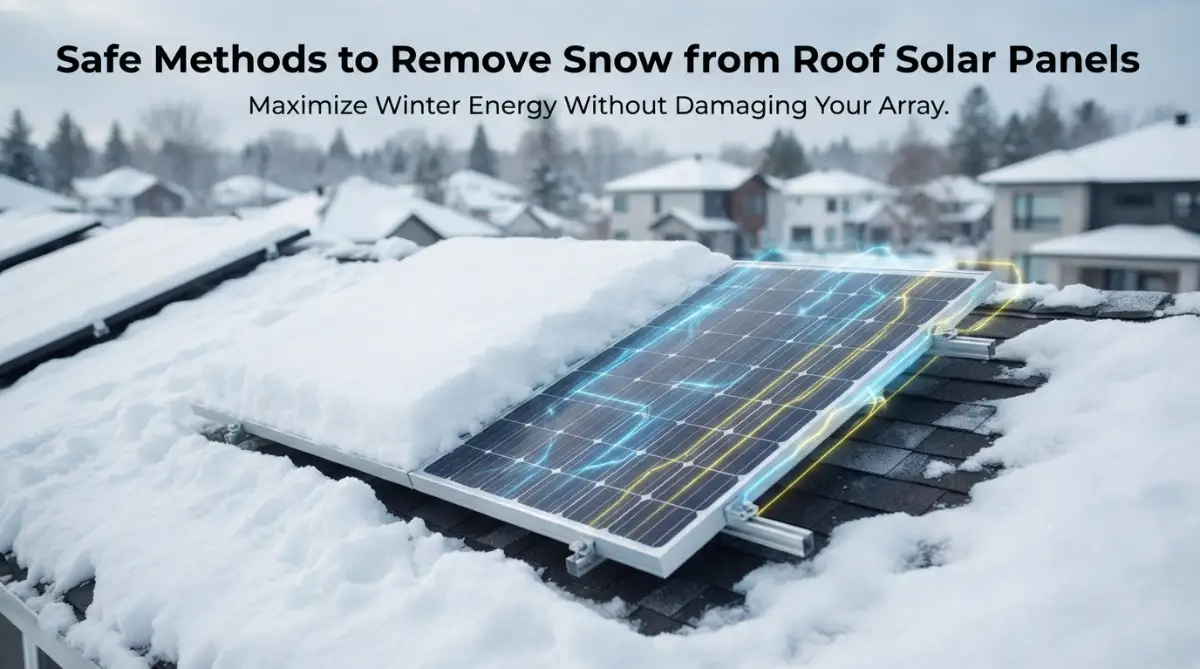
Using an Air Compressor
If you happen to have a very long extension wand for an air compressor or a lightweight leaf blower, you can blow dry powder away.
You must be careful about your footing. If your roof is easily accessible from a safe deck or balcony, this works beautifully. However, never climb an icy roof just to use a leaf blower. A broken leg costs a lot more than a week of lost power.
The Real Cost: A Practical Math Example
Sometimes people hesitate to buy a specialized $100 foam rake. Let us look at a practical scenario to see if the investment makes sense.
Meet David. David has a 10 kW system on his roof. During a sunny winter month, his system normally produces about $150 worth of electricity. A massive blizzard hits, covering his array completely.
If David waits three weeks for it to melt naturally because temperatures stay below freezing, he loses roughly $112 in energy production.
If David spends $85 on a soft foam extension rake, he clears the bottom edges in 20 minutes. The sun melts the rest the next day. He immediately starts generating power again. The tool literally pays for itself during the very first major storm.
Plus, David now owns the tool for all future storms. The math clearly shows that having the right equipment is a smart financial move.
Essential Tools for Damage-Free Maintenance
You need to treat your photovoltaic glass the same way you treat a brand-new car windshield. You would never drag a stiff push broom across your car hood.
The glass has a special anti-reflective coating. This coating helps grab sunlight from different angles. Micro-scratches from bad tools will ruin this coating.
When the coating gets scratched, light bounces away instead of going into the solar cells. Your efficiency drops permanently.
Always look for tools labeled specifically for solar arrays. They usually feature high-density soft foam, silicone blades, or heavy-duty microfiber cloths. The poles should be lightweight aluminum or fiberglass so your arms do not get tired holding them up.
Pros and Cons of Manual Clearing
Before you rush out to buy tools, you should weigh whether manual clearing makes sense for your specific home.
The Honest Pros and Cons
- The Pros: Immediate restoration of energy production. Faster financial return on winter days. Prevents heavy ice dam buildup at the bottom of the array.
- The Cons: Requires physical effort in cold weather. Finding storage for a 20-foot extension pole can be annoying. If you have a two-story home, ground tools might not reach the panels.
If your home is very tall, you might just have to accept the downtime. Safety always comes before electricity production.
Letting Nature Do the Heavy Lifting
Sometimes, doing absolutely nothing is the smartest strategy.
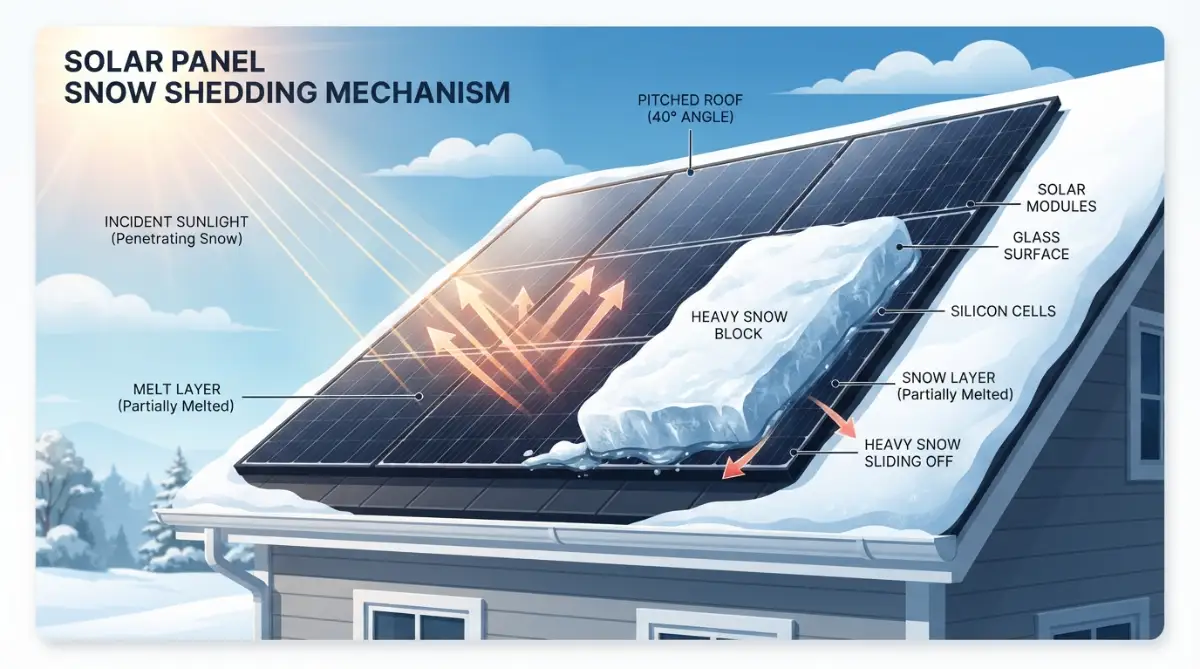
Solar panels are dark. Dark colors absorb heat rapidly. Even on a freezing day, ambient sunlight penetrates through a thin layer of white powder.
As the dark glass warms up, it creates a microscopic layer of water between the glass and the ice block. Because the panels are installed on a tilt, gravity takes over.
You will suddenly hear a loud "whoosh" sound. An entire sheet will slide off the roof and crash into the yard. It is deeply satisfying to watch.
Just be sure you do not park your cars directly under the drip edge of the roof during the winter. A falling sheet of frozen material can easily dent a car roof or break a windshield.
Designing for Winter: Long-Term Prevention Tips
If you are reading this while planning a new installation, you have a massive advantage. You can design your system to minimize winter headaches.
First, consider the tilt angle. The steeper the angle, the faster things slide off. A flat array will hold accumulation until spring. A steep array sheds its load almost instantly.
Talk to your installer about "snow guards." If your array is positioned directly above a walkway or a driveway, falling ice is a huge hazard. Snow guards break up the sliding sheets into smaller, harmless pieces before they drop.
If you live in a heavy snow region, microinverters are a lifesaver. With a traditional string system, if just one panel is covered, the entire group shuts down. Microinverters allow the clean panels at the top of your roof to keep generating money while the bottom panels are still buried.
Final Thoughts on Winter Care
Winter does not have to be a dead season for your energy production. By understanding the physics of your system and using the exact right tools, you can keep the power flowing.
Keep your feet on the ground. Buy a soft foam rake. Clear just the bottom few inches. Let the dark glass do the heavy lifting.
If you follow these simple, safe methods, you will protect your expensive warranty and enjoy lower utility bills all winter long. Stay warm, stay safe, and keep generating that clean power.
Advanced Tactics to Maximize Winter Energy
Once you understand the basic clearing methods, it is time to look at how the pros handle heavy winter weather. You do not have to fight the elements every single morning. There are smarter, highly effective ways to keep your system generating power even during the coldest months.
One of the best secrets in the industry involves understanding thermal dynamics. Your solar array actually generates a small amount of its own heat while converting sunlight into electricity. If you keep the ambient temperature around the glass in mind, you can time your clearing efforts perfectly.
You should always aim to remove the bulk of the snow right before the sun hits its peak angle in the sky. If you pull off the top layer at 10:00 AM, the midday sun will quickly warm the dark glass. The remaining ice will melt and slide off naturally by noon.
Pro Tip: Never try to wash your panels with warm soapy water during the winter months. I once saw a neighbor try this to melt a stubborn ice patch. The water instantly flash-froze across his entire array, creating a thick ice rink that took weeks to thaw. Always rely on dry, soft tools or natural sunlight during freezing weather.
For those planning to expand their system, panel placement is a massive factor. If you set up your panels on a south-facing roof section, they will receive the maximum amount of direct winter sunlight. This positioning drastically reduces the amount of manual work you need to do.
If you are just getting started on your green energy journey, understanding how to position things correctly is a game-changer. You can review this guide on how to calculate home solar panel requirements for beginners to make sure you have enough panels to offset lower winter production.
How Different Roof Slopes Handle Accumulation
The angle of your roof plays a massive role in how much physical work you have to do. A steeper roof essentially cleans itself. Let us look at how different angles perform during a heavy storm.
As you can see, the physical design of your home dictates your winter maintenance schedule. If you have a relatively flat roof, you need to be prepared with your foam rake after every single storm.
You also need to think about the health of the roof underneath. A solid structural foundation prevents water from pooling when the massive blocks of ice finally melt. You can easily learn how to prep your roof for solar panels and avoid costly leaks to ensure your home stays dry all year.
Step-by-Step: Your Winter Clearing Action Plan
If you are staring at a covered array right now, here is exactly how you should handle the situation today.
Step 1: Ground Safety Assessment
Walk around your yard and find a completely flat, non-icy spot to stand. Never stand directly under the bottom edge of the array. The sliding ice can easily weigh 50 pounds or more and can cause serious injury if it hits you.
Step 2: Extend Your Soft Tool
Take out your soft foam roof rake. Extend the fiberglass pole just enough to reach the bottom six inches of the lowest panel row. Make sure the locking mechanisms on the pole are tight so it does not collapse while you pull.
Step 3: The Gentle Pull
Place the foam head gently on the glass. Do not press down hard. Slowly walk backward to pull the bottom layer of snow off the roof. Repeat this across the entire bottom row until you see the dark glass exposed.
Step 4: Step Back and Wait
Put your tools away and go inside to grab a cup of coffee. As the sun hits that exposed dark edge, the heat will travel upward. Within a few hours, you will hear a loud sliding noise as the rest of the accumulation falls off naturally.
The Most Destructive Pitfalls to Avoid
It is incredibly easy to make a panicked decision when you see your energy production flatlining. People often grab whatever tool is closest in the garage. This is the exact moment when thousands of dollars in damage happens.
One of the biggest blunders is using a standard snow shovel with a metal wear strip. That sharp metal edge will gouge the anti-reflective coating on your photovoltaic glass in a single swipe. Once that coating is compromised, your system will permanently lose efficiency. If you want to dive deeper into proper glass care, you should definitely read about how to clean solar panels safely without scratching them.
Another massive mistake is climbing an icy ladder. I cannot stress this enough. Walking on a slanted, frozen roof is incredibly dangerous. According to the Occupational Safety and Health Administration (OSHA), roof falls during winter maintenance are a leading cause of severe residential injuries. No amount of electricity savings is worth a trip to the emergency room.
Understanding Equipment Tolerances
You might be surprised to learn what your system can actually handle. Knowing the difference between safe and dangerous tools will save your warranty.
This is why preparation is so important. If you wait until a blizzard hits to buy a foam rake, the hardware stores will likely be sold out. You will be tempted to use that dangerous nylon broom. This simple mistake ranks high among the major solar panel installation mistakes that waste your money.
Separating Fact from Fiction
There is a lot of bad advice floating around neighborhood Facebook groups. Let us clear up some of the most common misunderstandings right now.
Understanding these realities helps you stay calm. You do not need a perfectly spotless array to get your grid tied system working again. If you are curious about how your credits are calculated when the power finally kicks back on, understanding how net metering works will give you total peace of mind.
Required Preparation Checklist
Before the first snowflake falls, you need to have your administrative and physical preparations in order. Here is exactly what you need to gather.
- Your Warranty Paperwork: Keep a digital copy on your phone. Read the exact section regarding approved cleaning methods.
- Installer Contact Number: Save your original installer's phone number. If a massive ice dam forms, you may need a professional crew to remove it safely.
- A Soft Foam Roof Rake: Order this online in October, long before the winter rush begins.
- Home Insurance Policy: Verify that your policy covers structural roof damage from severe ice weight, just in case nature delivers an unusually heavy storm.
- A Safe Ground Vantage Point: Identify the exact spot in your yard where you can stand safely with a 20-foot extension pole away from power lines.
Having these items ready completely removes the stress from winter storms. You will know exactly what to do, what tools to use, and who to call if things get out of hand.
Quick Action Checklist
When the snow starts falling rapidly, run through this simple list to protect your home.
- Turn off your inverter if you suspect severe ice weight is damaging the cables.
- Move all vehicles away from the roof drip edge.
- Check your monitoring app to see if the panels are naturally shedding.
- Extend your foam rake and clear only the bottom row.
- Let the afternoon sun handle the remaining ice block.
Keep Your Energy Flowing All Winter
Dealing with harsh weather does not have to be a miserable experience. By taking a calm, calculated approach, you can easily protect your expensive equipment and keep your home powered. It all comes down to using the right tools and letting natural thermal dynamics work in your favor.
I know how frustrating it feels to watch a sunny winter day go to waste because your array is buried. But the first time you use a foam rake to expose that bottom edge, and you watch a giant sheet of ice slide off harmlessly an hour later, you will feel like a maintenance genius.
You have invested in a brilliant piece of technology. Treat it with care, keep your feet firmly on the ground, and your system will reward you with decades of clean, free energy.
Which winter maintenance tool are you planning to buy before the next big storm hits? Let me know in the comments below!
High-Converting Questions About Winter Solar Maintenance
Do solar panels work when covered in snow?
No, if they are completely covered by a thick, heavy layer, they will not produce electricity because sunlight cannot reach the cells. However, even a thin, partially transparent dusting can allow enough light through to generate a small amount of power.
Will snow naturally melt off my solar array?
Yes, because the panels are dark, they absorb ambient heat very quickly. As long as the temperature is not severely below freezing, the sun will warm the glass, creating a slippery water layer that causes the snow to slide off.
Is it safe to use a regular broom to sweep off my roof?
You should never use a standard household broom with stiff plastic or nylon bristles. These bristles will leave permanent micro-scratches on the anti-reflective coating, which will permanently reduce your energy output.
What is the best tool for clearing solar glass safely?
The absolute best tool is a soft foam roof rake attached to a lightweight fiberglass extension pole. The foam head pulls the accumulation down gently without applying abrasive pressure to the delicate glass surface.
Can the weight of winter storms damage my roof system?
Modern mounting hardware is engineered to hold a significant amount of weight, but extremely heavy, wet storms combined with thick ice can stress your roof structure. If you are concerned about your specific limits, you should review how to calculate home solar panel requirements easily to understand load distribution.
Should I climb onto my roof to clean my system?
No, climbing an icy, slanted surface during the winter is incredibly dangerous and highly discouraged. You should always use long extension poles to clear your system while standing safely on dry ground.
Can I spray hot water to melt the ice quickly?
Absolutely not. Pouring hot water on freezing glass will cause rapid thermal shock, which will instantly shatter the panels. This type of severe damage is never covered by manufacturer warranties.
Do I need to clear every single inch of the glass?
No, you only need to clear the bottom few inches of the lowest row. Once the sun hits that exposed dark strip, the heat will naturally transfer upward and cause the rest of the block to slide off.
Can chemical ice melt be used on solar arrays?
You should never throw rock salt or chemical de-icers onto your array. These harsh chemicals will severely corrode the aluminum mounting frames and destroy the weatherproofing seals around the cells.
Are microinverters better for regions with heavy snowfall?
Yes, microinverters are excellent for winter climates. If the bottom row of your array is buried, the top rows that are exposed to the sun can still produce electricity independently, unlike traditional string inverter systems.
Trusted Solar Energy & Planning Resources
Before investing in a home solar system, we highly recommend verifying federal incentives, local policies, and solar performance data through these trusted official sources: