
Reading Time: 12 Minutes
Reviewed By: FinanceInfoIn Editorial Team
Staring At The Monthly Electricity Bill Disaster
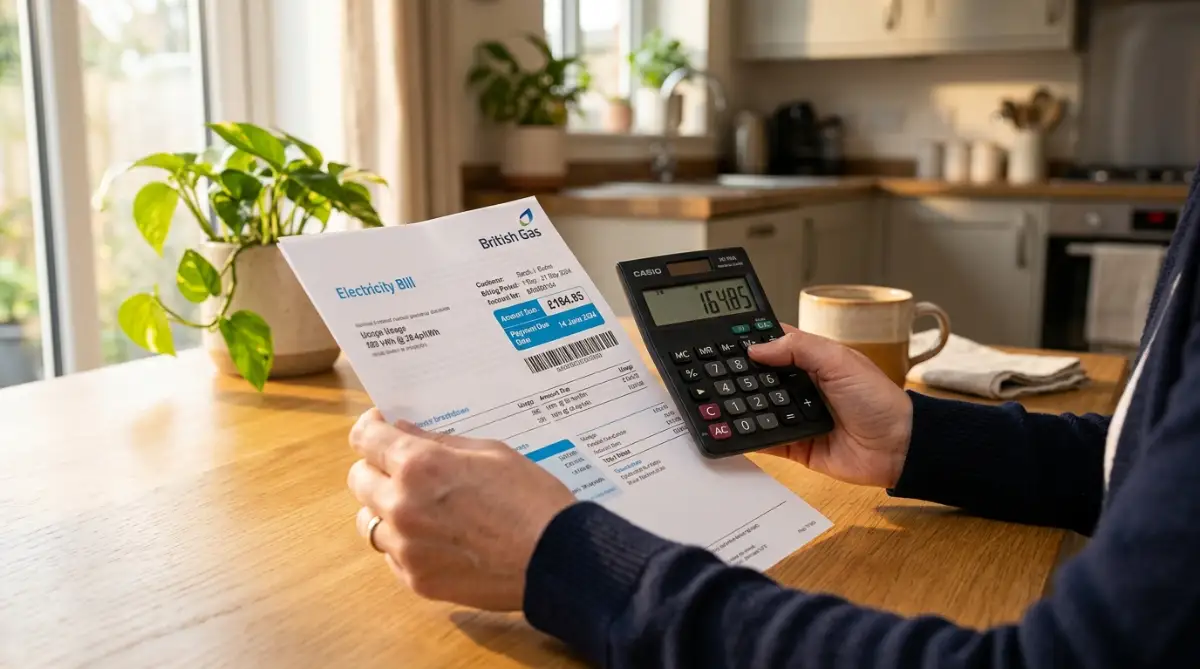
I was standing at my kitchen counter, holding a piece of paper that made my stomach drop entirely. It was my summer electricity bill. I had just come back from the grocery store, having carefully counted every dollar to stay within my weekly budget.
Seeing that massive energy charge completely ruined my day. I felt totally trapped. No matter how many times I told my family to turn off the lights or how high I set the air conditioner, the numbers kept climbing.
It felt like pouring my hard-earned money into a bottomless pit. You try your best to get ahead, but these unavoidable utility costs just keep dragging you backward. This is the exact moment many of us start dreaming about capturing energy from the sun.
We look up at our roofs and wonder if we can finally break free from this endless cycle of paying power companies. But then, reality hits. The moment you search for how to set up a system, you are bombarded with engineering terms, confusing math, and pushy salespeople.
The mental peace you hoped to gain is quickly replaced by total confusion. You just want a clear answer on how many panels you actually need to power your home without getting scammed. I understand that frustration deeply, and today, we are going to fix it together.
Quick Summary
Figuring out your solar needs comes down to four simple things. First, you find out your daily energy usage from your utility bill. Second, you figure out the usable sunlight hours in your specific city. Third, divide your usage by your peak sun hours to get your system size. (To learn the baseline formula, check our guide on how to calculate home solar panel requirements, but today we are testing specifically if a standard 6 kW array fits your home) Finally, you check if your roof actually has enough space to hold the panels.
Finding Your True Daily Energy Appetite
Before you can build a system to power your life, you have to know exactly how much power your life consumes. Think of it like planning a dinner party. You cannot cook the right amount of food if you do not know how many guests are coming and how much they eat.
In the energy world, your appliances are the guests. Your electricity bill holds the exact answer to this mystery. Grab your most recent statement and look for the letters kWh (Kilowatt-hours).
This is the standard measurement power companies use to track your usage. Do not just look at one single month. A home uses much more power during a boiling summer than a mild spring.
You need to find your total usage for the entire year and divide it by 365. This simple step gives you your true daily energy appetite. Once you have that daily number, everything else becomes incredibly easy to plan.
Key Takeaways
- Your electricity bill is the ultimate roadmap for your solar planning.
- Kilowatt-hours (kWh) is the only measurement you really need to care about right now.
- Always average your usage out over a full year to account for seasonal weather changes.
- Knowing your daily power appetite prevents you from buying a system that is too small.
The Difference Between Daylight And Power Hours
One of the biggest mistakes beginners make is looking at the sunrise and sunset times. They assume that if the sun is up for twelve hours, their system will generate maximum power for twelve hours. This is simply not true.
The sun is weakest in the early morning and late afternoon. To accurately measure your potential, we use something called Peak Sun Hours. A peak sun hour happens when the sunlight is strong enough to hit your roof with 1,000 watts of power per square meter.
Depending on where you live, you might get anywhere from three to six of these highly productive hours a day.
I actually made this mistake myself when I first started looking into renewable energy. I assumed my long summer days meant I could buy a tiny system. Realizing I only had about four actual "peak" hours completely changed my entire setup plan and saved me from a huge power shortage.
If you live in a cloudy region, your peak hours will naturally be lower. You can easily find your local average by doing a quick web search for your specific city.
The Simple Kitchen Table Math
Now we get to the fun part. I promise this does not require any advanced algebra. We are just going to combine the daily energy appetite we found earlier with your local sunlight hours.
Imagine you are trying to fill a large water tank, and you only have a few hours of running water a day to do it. You need a pipe wide enough to push all that water through in a short time. Your solar system works the exact same way.
To find your required system size, you take your daily kWh usage and divide it by your daily peak sun hours.
Let us say your family uses 30 kWh every single day. Let us also say your city gets 5 peak sun hours. You divide 30 by 5, which gives you 6. This means you need a 6 kW (kilowatt) system to cover your daily needs perfectly.
It really is that straightforward. You now know exactly how much raw power your roof needs to generate. However, we have to remember that things in the real world are rarely perfect.
Dust on the glass, heat waves, and wiring distance can cause small losses in efficiency. Because of these normal variations, it is always a smart idea to add a little bit of extra padding to your final number.
Making Sure Your Roof Is Ready For The Upgrade
You have done the math, and you know you need a 6 kW system. The very last hurdle is figuring out if your house can physically hold that equipment. Not all panels are created equal.
Some are physically larger, and some capture light more efficiently than others. Most modern residential panels produce around 400 watts each. Since 1 kW equals 1,000 watts, a 6 kW system equals 6,000 watts.
If you divide 6,000 by 400, you discover you need exactly 15 panels.
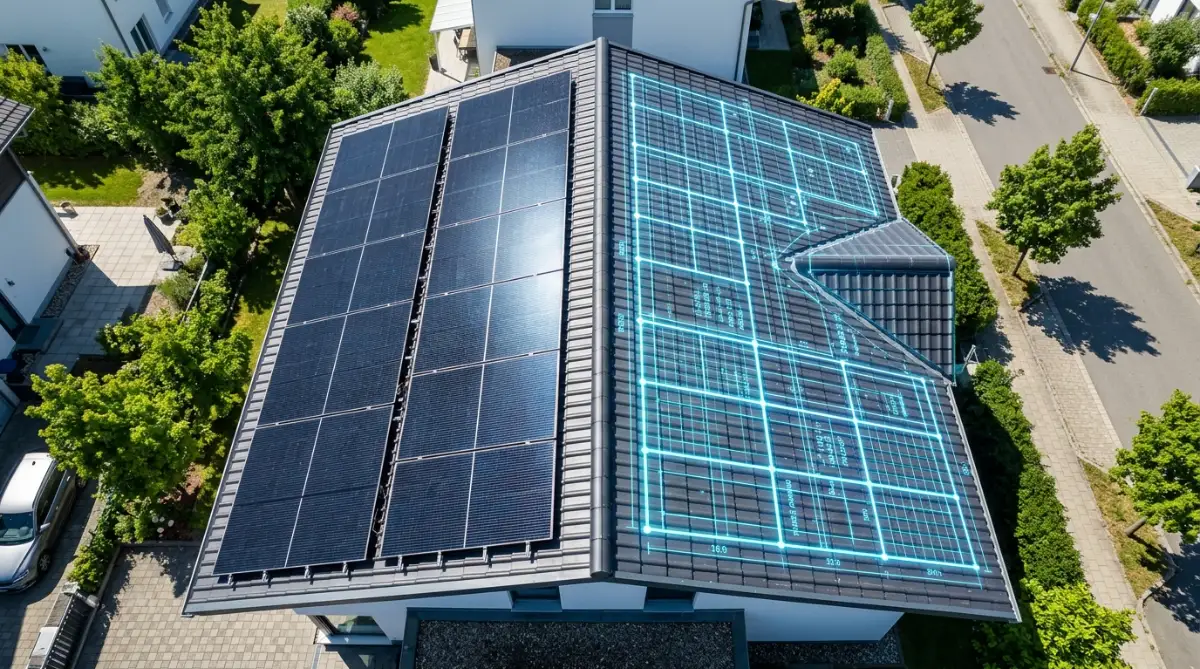
Expert Tip: Always measure your available, unshaded roof space facing south (if you are in the northern hemisphere). A standard residential panel is about 65 inches tall and 39 inches wide. Make sure you map out obstacles like chimneys or large vents before ordering anything.
Knowing these physical dimensions protects you from buying a massive system that spills over the edges of your house. It gives you the confidence to talk to local installers without feeling lost. You can now look at a quote, see the number of panels, and immediately know if they are overcharging you.
Taking control of your energy future starts with this basic understanding. You have successfully moved from staring blankly at a terrifying electricity bill to holding a clear, actionable plan in your hands. Now, you are ready to take the next step toward energy independence.
Going Beyond The Basics: Pro Strategies For Maximum Energy Capture
Getting the basic math down is a great start, but real-world conditions are rarely perfect. The sun does not shine with the exact same intensity every single day. Dust, extreme heat, and wiring distance will naturally lower your system's overall output.
Think of it like buying a car. The manufacturer might claim it gets forty miles per gallon, but driving up steep hills with the air conditioning running changes that number completely. To get truly accurate results, you need to account for a "derate factor."
This is simply a professional way of saying we need to build a safety net into your calculations. Most industry experts recommend adding an extra 20% to your final system size. If your basic math says you need a 5 kW setup, bumping it to a 6 kW array ensures you never fall short during cloudy weeks.
You also need to think about how you plan to store the energy you generate. If you work away from home during the day, your panels will produce the most power when you are not there to use it. A battery backup system acts like a massive energy savings account.
It captures all that beautiful afternoon sunlight and saves it for when you turn on your television at night. Understanding these advanced dynamics takes you from being a confused buyer to a highly educated homeowner.
Pro Tip: Always size your battery storage capacity based entirely on your nighttime electricity usage, not your total daily usage. You only need the battery to carry you through the dark hours until the sun rises again.
Quick Action Checklist
- Call your utility provider to ask if they offer "net metering" programs.
- Check your attic for any signs of roof sagging or severe water damage.
- Measure the exact width and height of the unshaded portions of your south-facing roof.
- Download your hourly energy usage data from your power company's online portal.
- Document any large trees that might grow taller and cast shadows in the future.
If you decide to keep your system tied directly to the local power grid, you need to understand local regulations. The Office of Energy Efficiency & Renewable Energy provides excellent resources on how grid connections work. You want to make sure your utility company actually compensates you fairly for any extra power you send back to them.
Keeping your equipment running perfectly over time also requires a tiny bit of routine care. Dirt, pollen, and bird droppings act like a heavy blanket over your panels. You can easily protect your investment by learning how to clean solar panels safely without scratching them.

The Heartbreaking Pitfalls That Cost Homeowners Thousands
It is genuinely painful to watch someone spend their hard-earned savings on an energy system that fails to deliver. People often get so excited about slashing their utility bills that they rush the planning phase. Skipping over the small details can lead to massive financial headaches down the road.
Common Mistakes
- Ignoring the Roof's Health: Installing a thirty-year energy system on a roof that needs replacing in three years is a financial disaster. You will have to pay thousands of dollars just to remove and reinstall the panels when the roofers arrive.
- Underestimating Winter Darkness: Many beginners only look at their bright summer production numbers. They completely forget that winter brings shorter days and a much lower sun angle.
- Trusting Shady Sales Quotes: Believing a salesperson who promises to eliminate your bill with a tiny, cheap system will leave you extremely disappointed. Always do your own math first.
- Forgetting About Future Changes: Buying an electric vehicle or adding a hot tub will aggressively increase your daily power consumption. Your current system size will not be able to handle that sudden spike.
I once spoke with a homeowner who placed their entire array right next to a massive oak tree. They assumed a few hours of afternoon shade would not matter much. Sadly, traditional string inverters act like a garden hose with a kink in it.
If a shadow blocks just one panel, the power output of the entire row drops instantly. This is why avoiding major solar panel installation mistakes that waste your money is incredibly important before signing any contracts.
If you live in an area with complex weather patterns, taking a deeper look at long-term radiation data is highly recommended. The National Renewable Energy Laboratory (NREL) offers fantastic mapping tools to help you verify your local sunlight potential accurately.
If you ever feel lost while dealing with contractors, simply pause the process. You can always go back to basics by double-checking your initial solar calculations to regain your confidence. Trust your own numbers above a salesperson's pressure tactics.
Maximizing Your Long-Term Energy Savings
Taking control of your home's power supply is one of the most rewarding practical investments you can make. While fixed utility connection fees mean a true "zero-dollar" bill is rare, a properly configured 6 kW array can eliminate the vast majority of your monthly electricity charges. Seeing your net meter offset your daytime consumption gives you predictable control over your energy budget.
My own journey to energy independence started with a lot of frustration and a very tight budget. I remember staring at my roof, wondering if I was making a huge mistake. But taking the time to understand the math changed everything for me, and I know it will do the exact same for you.
Which appliance in your home uses the most electricity, and are you planning to cover it entirely with solar energy? Let me know in the comments below!
Your Top Solar Sizing Questions, Answered
How many solar panels are needed to run a standard house?
A typical home requires anywhere from 15 to 20 panels to cover its energy needs completely. This heavily depends on how much electricity you use daily and your geographic location. Homes in cloudier regions will naturally need a few more panels to compensate.
Can I run my entire home on solar power alone?
Yes, you can absolutely run your entire home on sunlight. However, you will need to invest in a robust battery storage system to provide power at night. Without a battery, you will still pull energy from the local grid after the sun goes down.
Does the physical size of my house determine the system size?
No, the physical size of your home matters much less than your lifestyle habits. A massive, energy-efficient house might use less power than a tiny home with an old, inefficient air conditioner running constantly. Always base your calculations on your utility bill, not your square footage.
What happens to my power if it rains for a week?
During heavy rain or thick clouds, your panels will still generate power, but at a heavily reduced rate. If you are connected to the grid, your home will automatically pull standard electricity to make up the difference. You will never suddenly lose power just because it is raining.
Do solar panels produce power at night?
No, these systems require active daylight to generate electricity. Once the sun sets, production completely stops until the next morning. You must rely on grid power or a home battery system to keep your lights on overnight.
Should I calculate my system size based on winter or summer?
You should look at your total energy usage over an entire year and find the daily average. This prevents you from overbuilding for extreme summer peaks while still keeping you covered during darker winter months. Averaging it out gives you the most financially balanced system size.
Will buying higher wattage panels save me money?
Higher wattage panels generate more electricity per square inch, which means you need fewer of them on your roof. While they cost slightly more upfront, they often save money on mounting hardware and installation labor. They are especially useful if you have very limited roof space.
Does air conditioning drastically change my solar requirements?
Yes, cooling systems are usually the biggest energy consumers in any home. Running a central air conditioner frequently will force you to buy a significantly larger array. If you plan to install an AC unit later, factor that massive power draw into your math today.
Can I start with a small system and add more panels later?
Adding panels later is entirely possible, but it requires careful upfront planning. You must buy an inverter that is large enough to handle the future expansion, otherwise, you will have to buy a brand new inverter later. It is usually much cheaper to install the correct size all at once.
Does a steep roof change how much power I generate?
The angle of your roof plays a massive role in how directly the sunlight hits the glass. If your roof is too flat or incredibly steep, the panels might not capture peak radiation efficiently. Installers can easily fix this by using angled mounting brackets to tilt them into the perfect position.
Trusted Solar Energy & Planning Resources
Before investing in a home solar system, we highly recommend verifying federal incentives, local policies, and solar performance data through these trusted official sources:
-
- U.S. Department of Energy (DOE) - Homeowner’s Guide to Going Solar (For official basics on residential solar setups)
- National Renewable Energy Laboratory (NREL) - PVWatts Calculator (The industry standard tool to estimate the energy production of your roof)
- DSIRE - Database of State Incentives for Renewables & Efficiency (To find specific solar tax credits and rebates available in your specific state)
- Solar Energy Industries Association (SEIA) - Consumer Protection (For guidelines on choosing a reputable and certified solar installer)
- U.S. Environmental Protection Agency (EPA) - Green Power Partnership (To understand the environmental benefits of your residential solar switch)
Disclaimer
The information provided in this article is for general educational and informational purposes only and does not constitute professional financial, legal, or engineering advice. Solar panel sizing and energy calculations vary significantly based on individual circumstances, local weather, and specific home configurations. We strongly encourage you to consult with a certified solar installation professional and a licensed electrician before making any financial investments or modifying your home's electrical systems. We are not responsible for any financial losses, structural damages, or voided warranties resulting from the use of this information.
About the Author
Reviewed by Mithun Halder (Consumer Finance & Renewable Energy Researcher) & The FinanceInfoIn Editorial Team.
The FinanceInfoIn Editorial Team researches personal finance, investing, insurance, mortgages, cryptocurrency, and consumer financial topics. Every article is carefully reviewed to provide clear, practical, and trustworthy educational information based on credible sources and industry best practices.
© FinanceInfoIn. All rights reserved.