The Heavy Burden of Borrowing Blindly
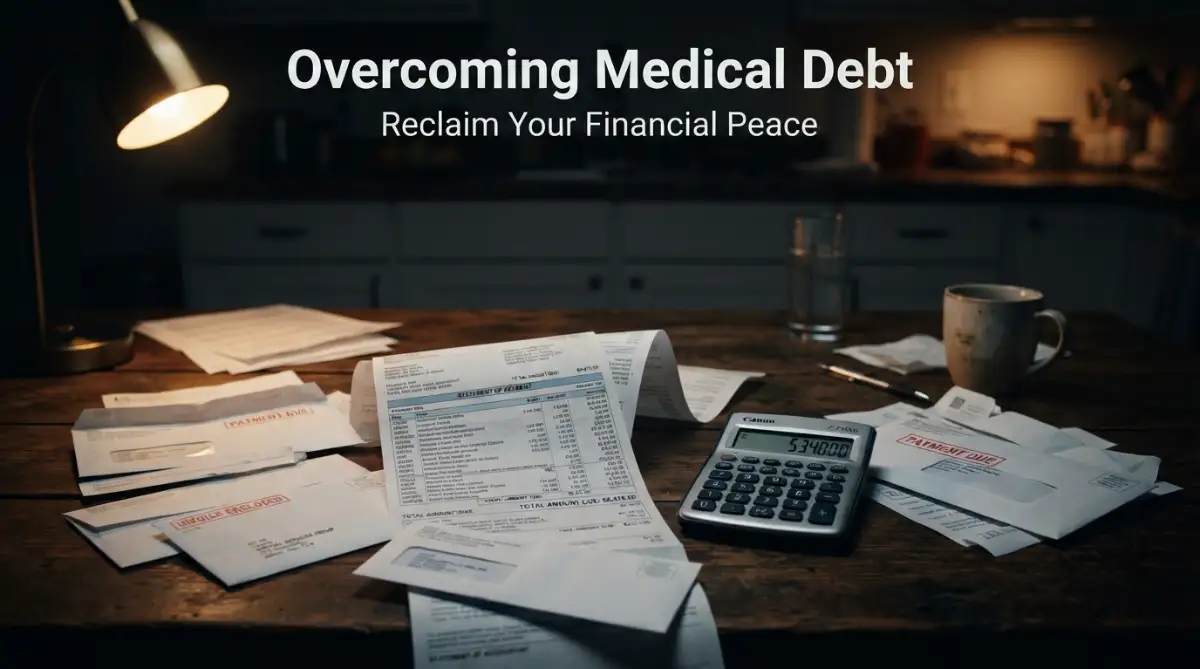
I will never forget the sinking feeling in my stomach when I checked my bank account just three days after taking out my first personal loan. I desperately needed cash for an unexpected medical bill, so I rushed through the first online application I could find on my phone.
The approval was incredibly fast, but I completely ignored the actual terms hiding in the small print of the digital contract. A few weeks later, I realized my monthly payment barely even covered the massive interest rate they had secretly attached to my account.
I felt like I had walked straight into a financial trap that I built with my own hands. My quick fix suddenly turned into a heavy burden that took me endless extra shifts at work to finally escape.
When you are stressed about needing money, your brain naturally looks for the fastest and easiest solution available. We stop reading the details and just look for the fastest approval button we can click on the screen.
This panic leads ordinary people into making terrible financial decisions that haunt them for months or even long into the future. You think you are solving a temporary emergency, but you are actually creating a long-term disaster for your budget.
Every single day, hardworking people lose sleep worrying about how they will make their next EMI payment. They sit at the kitchen table, staring at their calculator, realizing that a huge portion of their paycheck is going straight to a bank.
The mental peace in our daily lives is completely destroyed when we feel trapped by our own financial commitments. You constantly wonder how a simple loan for a home repair or a wedding turned into such an unmanageable monster.
Arguments about money start ruining family dinners, and the constant stress physically impacts your health. Nobody deserves to feel this level of pressure just because they made a few simple errors during an application process.

Quick Borrowing Checklist
Navigating the Borrowing Maze Safely
If you want to borrow money without ruining your financial future, you must understand exactly how lenders think. Banks and financial institutions are not your friends; they are businesses designed to make a maximum profit from your situation.
Every time you sign a contract, you are playing a very specific game with rules designed by financial experts. To win this game, you have to learn how to spot their traps before you hand over your signature.
Let us break down the exact logical steps you need to follow to protect your hard-earned money. By completely avoiding these frequent errors, you will easily secure the funding you need without destroying your monthly budget.
Failing to Check Your Credit Profile First
Your credit score is essentially your financial report card that tells a lender exactly how responsible you are with money. Many people blindly apply for funding without even looking at their current credit report to see what the bank sees.
If your score is surprisingly low due to an old unpaid bill or a reporting error, you will automatically be charged a much higher interest rate. The bank views a low score as a high risk, and they charge you extra money to take on that risk.
My Personal Pro Tip: I once got rejected for a great credit offer simply because my old apartment complex falsely reported a missed utility payment on my file. Now, I always pull my free credit report two months before I ever plan to apply for new financing so I can dispute any silly errors.
You must review your financial history and fix any mistakes before a lender ever looks at your application.
Credit Score vs Loan Interest
A simple ten-point increase in your credit score can literally save you thousands of dollars in interest charges.
The Illusion of the Small Monthly Payment
This is perhaps the biggest and most dangerous trap that borrowers fall into when speaking with a loan officer. Lenders love to ask you how much you can afford to pay each month, rather than focusing on the total cost of the loan.
If you say you can only afford two hundred dollars a month, they will happily stretch your repayment schedule over seven or eight years. Your monthly payment looks incredibly small and manageable, making you feel like you scored a fantastic deal.
Myth vs Reality: The Extended Term Trap
The Common Myth: Choosing the longest repayment term is the smartest way to keep your personal budget safe and stress-free.
The Shocking Reality: Stretching out your payments means the bank gets to charge you compound interest for a much longer period of time.
Let us look at a real-life mathematical scenario to understand why this is so dangerous for your wallet. Imagine you borrow ten thousand dollars at a ten percent interest rate.
Short-Term vs Long-Term Loan Costs
If you pay it back in three years, you will pay roughly one thousand six hundred dollars in total interest. But if you stretch that exact same loan out to seven years, your total interest charges jump to nearly four thousand dollars.
You just paid the bank an extra two thousand four hundred dollars just to have a slightly smaller monthly bill. Always choose the shortest repayment timeline you can safely afford to keep your total costs as low as mathematically possible.
If you are a visual learner who wants to fully understand the math behind how interest rates secretly drain your bank account, watch this brilliant explanation below.
The Danger of Multiple Applications
When people need money fast, they often panic and apply to five or six different banks on the exact same afternoon. They assume this is like casting a wide fishing net to see who will offer them the best possible deal.
However, the banking system uses technology that actively punishes you for doing this. Every single time you submit a formal application, the bank performs something called a "hard inquiry" on your credit file.
Each hard pull acts like a small penalty, temporarily dropping your credit score by a few points. When a lender sees six hard inquiries in one week, you look incredibly desperate and financially unstable in their system.
They will immediately assume you are trying to borrow way too much money from too many different places. This often leads to an instant rejection, even if you have a decent job and a solid income history.
Instead of doing hard applications everywhere, look for online lenders that offer a "pre-qualification" feature. Pre-qualifying only requires a "soft pull," which gives you an estimated interest rate without damaging your official credit score at all.
Ignoring the Sneaky Hidden Fees
Lenders are masters at advertising incredibly low interest rates on huge billboards to grab your attention. But once you sit down at the desk, they quietly add a long list of extra administrative charges to your final paperwork.
The most common trap is called an origination fee, which is a charge just for processing your paperwork. This fee is often a percentage of your total loan amount, sometimes stealing up to five percent right off the top.
If you borrow ten thousand dollars with a five percent origination fee, the bank takes five hundred dollars immediately. You only receive nine thousand five hundred dollars in your bank account, but you still have to pay back the full ten thousand plus interest.
Another dangerous hidden charge is the prepayment penalty, which sounds completely illogical to a normal person. If you get a bonus at work and try to pay off your debt early, the bank actually fines you for doing it.
They charge you a penalty because by paying early, you are preventing them from collecting years of future interest payments. Always read the fine print carefully and completely refuse to sign any contract that includes a prepayment penalty.
Before Signing Checklist
Borrowing More Than Your Actual Emergency
When a bank approves you for financing, they often offer you a much higher limit than you originally requested. You might only need five thousand dollars for a car repair, but the bank happily tells you that you qualify for fifteen thousand.
The psychological temptation to accept the larger amount is incredibly strong for most people. You start thinking about how nice it would be to finally buy that new television or take a weekend vacation with the extra cash.
You must remember that every single dollar you accept is a dollar you have to pay back with interest. Borrowing extra money for fun things means you are paying high-interest rates on items that lose their value almost instantly.
That television will eventually break, but you will still be paying off the debt you used to buy it. Calculate the exact amount you need to survive your emergency, borrow only that specific amount, and politely decline the rest.
Misunderstanding Your Debt-to-Income Ratio
Before handing over their money, a bank wants to know exactly how much of your monthly paycheck is already promised to other people. They calculate a specific metric called your Debt-to-Income (DTI) ratio.
To find this number, they add up all your current monthly debt payments, like your mortgage, car loan, and credit cards. Then, they divide that total number by your gross monthly income before taxes are taken out.
If your current debts already consume more than forty percent of your monthly income, lenders get very nervous. They know that one unexpected medical bill or car breakdown will likely cause you to miss their payment.
Many people apply for new financing without calculating their own DTI first, leading to surprising rejections. If your ratio is currently too high, you must focus on paying down your existing credit cards before asking for new cash.
A high DTI not only leads to rejections but also guarantees that you will be offered the worst possible interest rates. Taking a few months to aggressively pay down your current balances makes you look much safer to future lenders.
Blindly Trusting Variable Interest Rates
When you look at loan offers, you will usually see two different types of interest rates: fixed and variable. A variable rate often looks much more attractive at first glance because the starting number is usually lower.
Fixed vs Variable Interest Rate
However, a variable rate is directly tied to the overall economy and can change at any given moment. If national interest rates rise, your monthly payment will automatically increase without any warning from the bank.
This makes it absolutely impossible to create a reliable monthly budget for your household. You might start out paying three hundred dollars a month, only to find out next year that your payment has jumped to four hundred.
A fixed interest rate might start slightly higher, but it locks your payment in place for the entire duration of the contract. You get total peace of mind knowing exactly what you owe every single month until the balance hits zero.
By taking the time to understand these banking mechanisms, you instantly elevate yourself above the average consumer. You transform from an easy target into an educated borrower who knows exactly how to protect their own financial future.
Expert-Level Strategies for a Flawless Loan Application
Once you understand the basic traps of borrowing money, you are already ahead of most average consumers. However, if you want to secure the absolute best interest rates, you need to think exactly like a bank manager.
Lenders reward borrowers who appear completely organized, financially stable, and totally prepared. By taking a few extra steps before you ever fill out an application, you can force banks to offer you their most competitive deals.
These advanced strategies require a little bit of patience and planning up front. But that small amount of extra effort can literally save you thousands of dollars over the lifespan of your borrowing period.
The Magic of the Rate Shopping Window
Many people are terrified of applying for multiple loans because they fear it will destroy their credit score. While it is true that hard inquiries drop your score, the credit bureaus actually have a built-in safety net for smart shoppers.
The major credit scoring models understand that consumers need to compare different interest rates to find the best deal. Because of this, they group similar inquiries together if they happen within a specific time frame, usually between fourteen to forty-five days.
According to guidelines from the Consumer Financial Protection Bureau on credit reports, multiple inquiries for the same type of loan within a short window are often treated as just one single inquiry. This means you can safely apply at three different local banks in the same week without facing multiple penalties.
You should gather all your rate estimates at the exact same time to compare them side by side. Once you find the lowest rate, you can confidently sign the paperwork knowing your credit score took minimal damage.
Mastering the APR Over the Interest Rate
If you want to spot hidden fees instantly, you must stop looking at the advertised interest rate on the billboard. Instead, you need to focus entirely on a completely different number called the Annual Percentage Rate, or APR.
The standard interest rate only tells you how much it costs to borrow the raw money. It completely ignores all the sneaky administrative fees, processing charges, and origination costs the bank adds to your bill.
The APR actually combines your interest rate with all of those hidden fees to give you the true yearly cost of the loan. A lender might advertise a low five percent interest rate, but their heavy fees could push the actual APR up to nine percent.
Always ask the loan officer to clearly state the APR before you agree to anything. Comparing the APR between two different banks is the only mathematically accurate way to see which deal is actually cheaper.
Why Credit Unions Are Your Best Secret Weapon
Most people default to asking their giant, national corporate bank for a loan simply because they already have a checking account there. But these massive banks have huge overhead costs, expensive marketing budgets, and shareholders who demand massive profits.
Instead of going to a giant corporation, you should seriously consider talking to a local credit union in your neighborhood.
Credit unions are technically non-profit organizations that are completely owned by their members, not by wealthy Wall Street investors.
Because they do not have to generate massive corporate profits, they almost always offer significantly lower interest rates to their members. They also tend to have much lower fees and are far more forgiving if your credit history has a few minor bumps.
Opening a simple savings account with a local credit union gives you access to their borrowing products. Building a relationship with a community lender is a cornerstone of solid financial management strategies that will serve you well for decades.
Getting Your Debt-to-Income Ratio Perfect
Before you ask for new money, you have to prove that you can comfortably handle the debts you already have. Lenders calculate your Debt-to-Income (DTI) ratio to see how much of your monthly paycheck is already eaten up by other bills.
If your DTI is sitting above forty percent, most conservative lenders will automatically reject your application or charge you extreme rates. They simply believe you do not have enough leftover cash to safely afford another monthly payment.
You need to actively push this number down before you even think about applying. You can achieve this by either paying off a small credit card completely or picking up some temporary overtime at work to boost your gross income.
Many people face surprising rejections because they never learned how to lower your debt to income ratio before a mortgage application or any other major financial request. Taking two months to clean up your current balances makes you look like an incredibly safe investment to any bank.
If you constantly feel like you have no extra money to pay down those small debts, you need to stop and evaluate your spending. Mastering how to create a personal budget when living paycheck to paycheck is the foundation of getting your DTI ratio low enough to secure prime borrowing rates.

The Financial Traps That Secretly Destroy Your Bank Account
Even highly educated people make terrible mistakes when they are sitting across a desk from a persuasive loan officer. These professionals are trained to sell you the most expensive product possible while making it sound like a massive favor.
When you borrow money incorrectly, you do not just lose a few dollars in extra fees. You risk getting trapped in a long, painful cycle of debt that completely drains your savings and destroys your mental health.
Let us clearly identify the most dangerous traps hiding in the lending industry. If you can successfully dodge these specific pitfalls, you will easily protect your wealth and your sanity.
Real-Life Scenario: The Variable Rate Disaster
Imagine you take out a twenty-thousand-dollar loan with a variable interest rate because the starting payment looks incredibly cheap. For the first twelve months, everything is going perfectly, and you easily make your payments on time.
Suddenly, the global economy shifts, and the central banking system decides to raise interest rates across the entire country. You open your mail one morning and discover your monthly payment just jumped by a hundred and fifty dollars.
Because your rate is variable, the bank is legally allowed to increase your payment whenever the national economic index changes. This completely destroys your monthly budget, forcing you to scramble for extra cash just to keep your account current.
You should almost always insist on a fixed interest rate when signing a contract. A fixed rate locks your payment in place forever, meaning inflation and economic crashes will never impact your specific monthly bill.
Borrowing Money for Speculative Investments
One of the most dangerous trends today is people taking out personal loans to invest in highly volatile markets. People see their friends making money online and decide to borrow cash just to jump into the hype.
They use borrowed money to buy unpredictable stocks or digital currencies, hoping to double their cash and pay the bank back instantly. This is not investing; this is literally gambling with money that you do not even own.
If the market suddenly crashes, your investment becomes completely worthless, but you still owe the bank every single penny plus interest. Never borrow cash for things that do not have a guaranteed return on investment.
If you are interested in the digital economy, you should study how to read a crypto whitepaper like a pro step by step using only your spare savings. You should also focus on learning smart contract basics learn how to protect your crypto funds instead of risking your financial security on borrowed debt.
Falling for the "Guaranteed Approval" Scam
If you have a low credit score, you might feel desperate to find a lender who will accept your application. You might see online advertisements screaming "No Credit Check!" or "Guaranteed Approval for Everyone!"
These are massive red flags signaling that you are about to deal with a predatory lender. Legitimate financial institutions always check your credit because they need to verify your ability to actually repay the money.
Lenders who skip the credit check usually trap you with something called a payday loan or a title loan. The Federal Trade Commission strongly warns consumers that these predatory products can carry an APR of four hundred percent or more.
If you miss a single payment with these aggressive companies, the late fees will multiply faster than you can ever pay them off. It is always better to wait, rebuild your credit slowly, and borrow from a trusted bank than to step into a guaranteed approval trap.
The Prepayment Penalty Trap
It sounds completely crazy, but some banks will actually punish you financially for being responsible and paying off your debt early. They hide a specific clause in the paperwork known as a prepayment penalty.
Banks make their money by collecting interest from you every single month for the entire duration of the contract. If you get a big bonus at work and pay off your balance three years early, the bank loses out on three years of expected profit.
To protect their profits, they charge you a massive fee just for closing the account ahead of schedule. This completely ruins your ability to become debt-free on your own terms.
You must specifically ask the loan officer if there are any penalties for early payoff before you sign the bottom line. If they say yes, you should immediately stand up, thank them for their time, and take your business to a different institution.
Co-Signing a Loan for Someone Else
Your friend or family member might come to you begging for a favor because they cannot get approved for funding on their own. They ask you to simply co-sign the application, promising that they will make every single payment on time.
What most people do not understand is that co-signing is not just a character reference. When you sign that paper, you are taking one hundred percent legal responsibility for the entire debt if your friend stops paying.
If they lose their job and miss a payment, the bank will immediately report the late payment to your personal credit file, ruining your score. The bank will then come after your wages and your bank account to collect the money.
Co-signing frequently destroys lifelong friendships and tears families apart when the payments eventually stop.
If you cannot afford to simply give them the money as a free gift, you absolutely cannot afford to co-sign their loan.
Do's and Don'ts of Personal Borrowing
- Do check your official credit report for errors at least two months before you plan to apply.
- Do calculate your monthly budget carefully so you know exactly how much you can afford to repay.
- Do shop around with local credit unions and online lenders to compare their Annual Percentage Rates.
- Don't borrow more money than you absolutely need just because the bank offered you a higher limit.
- Don't sign any paperwork without reading the specific rules regarding origination fees and late payment penalties.
- Don't use a personal loan to pay off credit cards if you have not fixed the bad spending habits that caused the debt in the first place.
Your Action Plan for Safe and Smart Borrowing
Taking on debt is a serious financial decision, but it does not have to be a terrifying experience. When you approach the process with education and confidence, a personal loan becomes a highly useful tool rather than a dangerous trap.
The banking system relies heavily on the fact that most consumers are too lazy or too scared to read the fine print. By taking just a few extra minutes to calculate the true APR and check your own credit score, you instantly protect yourself from their most expensive tricks.
Always remember that you are the customer in this transaction, and the lender wants your business. You have the absolute right to ask difficult questions, demand clear answers, and walk away if the terms make you feel uncomfortable.
My Personal Promise to You: I used to let bank managers intimidate me into accepting terrible interest rates because I simply did not know any better. Now, I walk into those offices knowing exactly how to negotiate the best possible deal for my family. Take control of your financial knowledge today, and you will never let a lender take advantage of your hard-earned money again.
Key Takeaways
✔ Always compare APR instead of just interest rate.
✔ Borrow only what you actually need.
✔ Check your credit report before applying.
✔ Avoid lenders with hidden fees.
✔ Choose fixed interest rates whenever possible.
✔ Never sign a loan agreement without reading every term.
Still have questions?
Common Questions About Borrowing Money Safely
Does checking my own credit score lower it before I apply?
No, checking your own credit score is considered a soft inquiry and has absolutely zero impact on your score. You can check it as many times as you want without facing any penalties. It is highly recommended to check it frequently so you can spot and dispute errors early.
What is a good credit score to get a reasonable interest rate?
Generally, a score of seven hundred or above is considered good and will unlock very competitive interest rates. If your score drops below six hundred and fifty, you will likely face much higher APRs and tougher approval conditions. Taking a few months to boost your score before applying can save you thousands.
Can I use a personal loan to pay off my expensive credit cards?
Yes, using a loan to consolidate high-interest credit card debt is actually one of the smartest ways to use this financial tool. You can pay off multiple cards that charge twenty percent interest and replace them with a single loan at ten percent. Just make sure you do not start running up huge balances on those credit cards again.
How long does it usually take to get the money in my bank account?
The speed of funding depends entirely on the lender you choose to work with. Many online lenders have automated systems that can deposit the cash into your checking account within twenty-four hours. Traditional physical banks might take a few days to fully process your paperwork and release the funds.
Should I choose a secured or an unsecured loan?
An unsecured loan requires no collateral, meaning you do not have to risk your house or car to get the money, but the interest rates are slightly higher. A secured loan requires you to pledge an asset like your car, which lowers the interest rate significantly. However, if you miss your payments on a secured loan, the bank will legally seize your property.
What exactly happens if I miss a monthly payment?
Missing a payment triggers a late fee and damages your relationship with the lender. If you are more than thirty days late, the bank will report it to the credit bureaus, which will severely damage your credit score for years. If you know you are going to be late, call the bank immediately to ask for a temporary hardship program.
Is it normal for a lender to ask for money upfront before approval?
No, this is almost always the sign of a massive financial scam. Legitimate lenders will never ask you to wire them cash or buy prepaid gift cards to secure your loan approval. Any fees they charge, like an origination fee, are simply deducted from the total amount they send you, not paid upfront out of your pocket.
Disclaimer: The information provided in this blog post is for educational and informational purposes only and does not constitute professional financial or legal advice. Interest rates, loan terms, and credit impacts vary wildly based on your specific location, lender policies, and personal financial history. Always consult with a certified financial planner or a professional loan advisor before making major borrowing decisions or signing legal financial contracts.