

Reading Time: 12 Minutes
Difficulty Level: Beginner to Intermediate
Reviewed By: FinanceInfoIn Editorial Team
Quick Summary
Solar panels are a massive investment designed to lower your monthly energy costs, but they do not last forever at peak performance. Their actual lifespan is heavily determined by natural degradation rates, local weather patterns, and the quality of your maintenance routine. While the panels themselves can generate power for years, secondary components like inverters require earlier replacement. Understanding these variables helps you maximize your system's efficiency and financial return.
Key Takeaways
- Most modern systems experience a minor power output drop each year, known as the degradation rate.
- Extreme weather, including high heat and severe hail, can accelerate physical wear and tear.
- Inverters act as the brain of your setup and usually need replacing long before the actual panels do.
- Regular, gentle cleaning and professional inspections significantly boost long-term energy production.
- Comparing your current setup with alternatives helps you set realistic expectations for home energy planning.
The Heavy Burden of Unpredictable Energy Bills
I still clearly remember staring at a piece of mail that completely ruined my morning. It was an unusually hot summer, and my monthly electricity bill had just arrived.
My heart sank as I looked at the bold number printed at the bottom of the page. It felt like I was being punished just for trying to keep my home comfortable.
Every time I turned on the air conditioner, a nagging guilt crept into my mind. I knew the meter was spinning outside, draining my hard-earned money away. This constant anxiety over unpredictable utility costs pushes many of us to seek a permanent escape.
We look up at our roofs and imagine a future powered by the sun. We dream of cutting ties with the grid and securing predictable, affordable energy. But making that leap requires a huge upfront financial commitment.
Once you decide to invest your savings into a renewable energy system, a new kind of worry takes over. You start wondering if these shiny blue and black rectangles will actually survive the harsh elements.
Will they last long enough to pay for themselves, or will you be left with expensive repairs down the road? The fear of the unknown often holds everyday families back from achieving true energy independence.
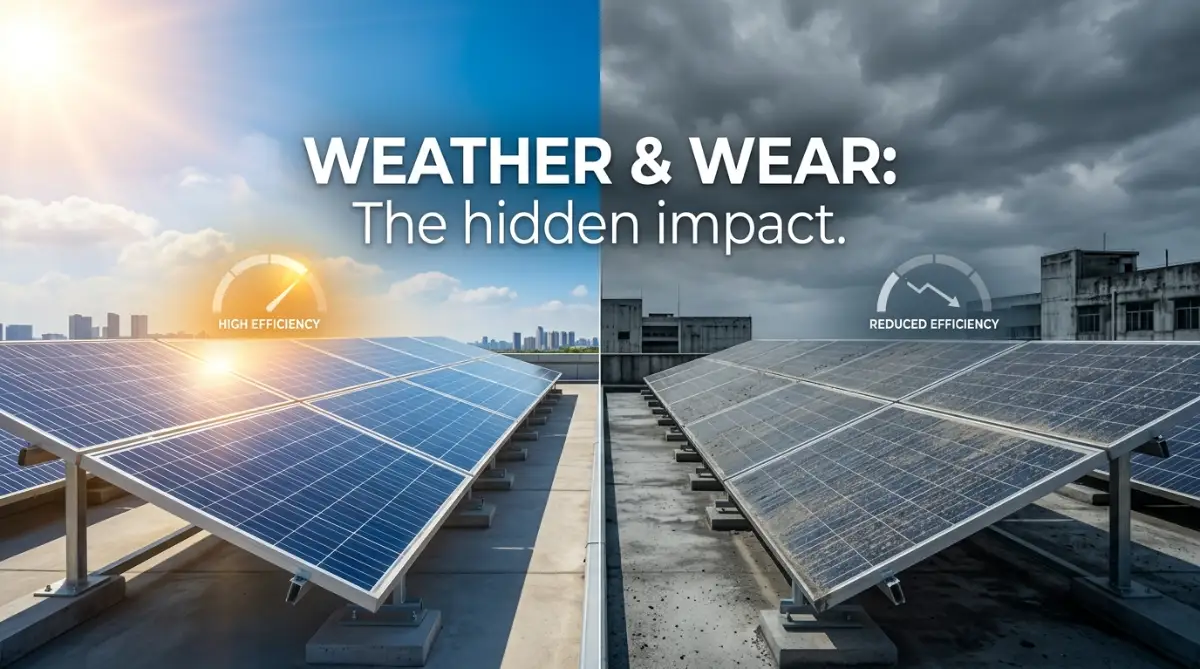
Understanding the Silent Energy Thief: Panel Degradation
When you buy a brand-new smartphone, the battery lasts all day without breaking a sweat. Fast forward a few seasons, and you suddenly find yourself searching for a charger by late afternoon.
Your rooftop energy system goes through a very similar aging process. This gradual loss of power capacity is widely known in the industry as the degradation rate.
It is completely normal, but the speed at which it happens determines the true value of your investment. Every time the sun rises and sets, the physical materials inside the modules expand and contract.
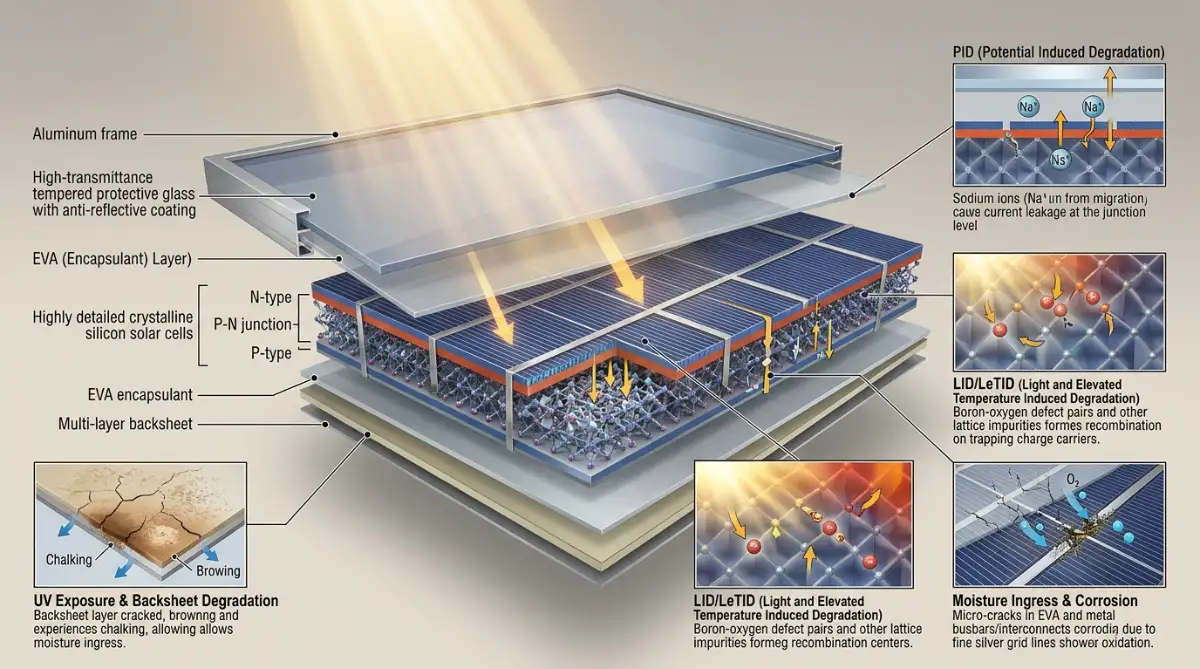
This daily thermal cycling creates microscopic cracks in the silicon cells. Over time, these tiny imperfections make it harder for the cells to convert sunlight into usable electricity.
Most high-quality manufacturers guarantee that their products will only lose a tiny fraction of a percent of their efficiency each year. However, cheaper materials might degrade much faster, eating into your expected monthly savings.
| Panel Type | Average Annual Degradation Rate | Expected Useful Life |
| Premium Monocrystalline | 0.3% to 0.5% per year | 25 to 30+ Years |
| Standard Polycrystalline | 0.5% to 0.7% per year | 20 to 25 Years |
| Thin-Film / Flexible | 0.7% to 1.0% per year | 15 to 20 Years |
The Real-Life Math Behind Power Loss
Let us look at a practical example to see how this actually affects a homeowner's wallet. Meet David, a homeowner who installed a standard 10-kilowatt (kW) system on his roof.
When his setup was brand new, it produced enough power to cover 100% of his family's monthly needs. His chosen equipment has a verified degradation rate of exactly 0.5% every single twelve-month cycle.
After ten years of seasons passing, his system has lost roughly 5% of its original maximum output. This means his 10 kW system now operates closer to a 9.5 kW system under perfect conditions.
By the time he reaches the end of his standard warranty period, the output will likely drop to about 87%. David will still generate plenty of free electricity, but he might need to buy a small amount of power from the grid during high-usage months.
Weather and Climate: The Uncontrollable Variables
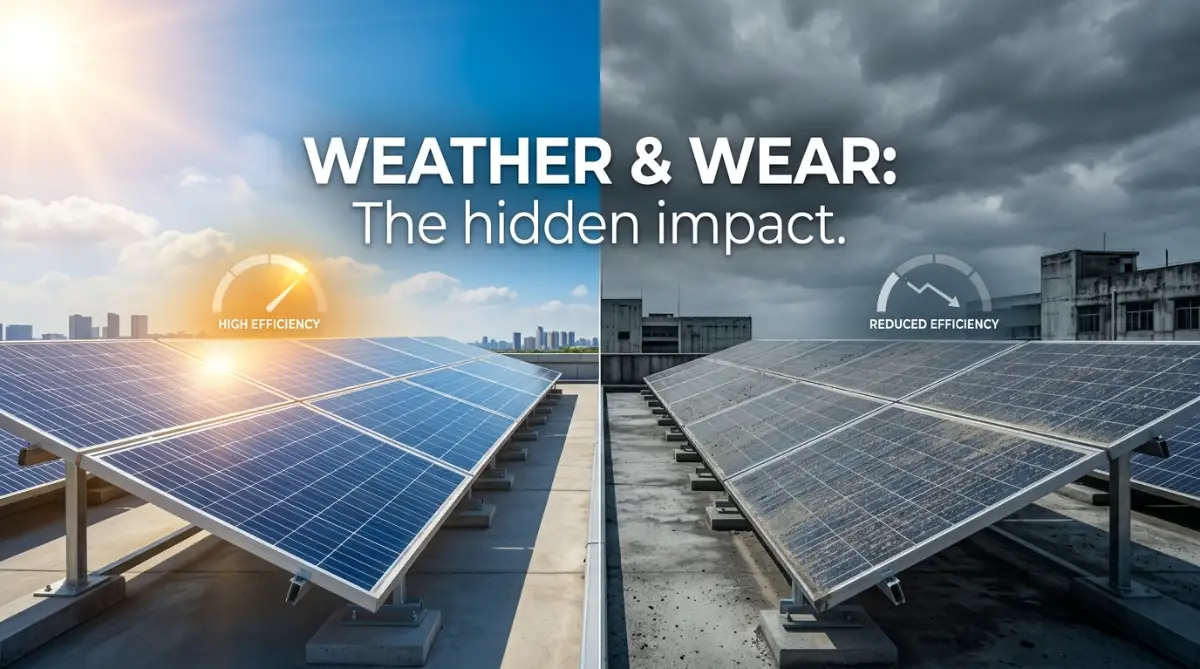
You cannot control the weather, but it plays a massive role in how your rooftop investment ages. Many people assume that hotter climates are perfect for harvesting sunshine.
The reality is that extreme heat is actually the enemy of electronic efficiency. When the temperature climbs too high, the electrical components struggle to push the current through the wiring.
Prolonged exposure to blistering summer heat accelerates the breakdown of the protective backsheets. On the other hand, freezing temperatures are generally fine, but the heavy weight of thick snow can stress the mounting hardware.
Heavy hail is another major concern for families living in storm-prone regions. Modern tempered glass is incredibly strong, designed to withstand impacts from falling debris.
However, golf-ball-sized hail hitting the glass at high speeds can still cause invisible micro-fractures. Even heavy wind can cause the aluminum frames to flex slightly, putting pressure on the delicate silicon wafers inside.
Traditional Panels vs Alternative Solar Solutions
Homeowners often get confused between traditional mounting racks and newer, integrated roofing materials. It is highly important to understand the difference because their lifespans vary drastically.
Integrated solar shingles look amazing because they blend seamlessly into your roofline. However, they sit completely flat against the wood, trapping heat underneath them.
This trapped heat can cause the internal materials to degrade slightly faster than traditional raised racks. Rack-mounted systems allow cool wind to blow underneath them, keeping the operating temperatures lower.
The Overlooked Heroes: Inverters and Batteries
People spend so much time worrying about the glass modules on the roof that they forget about the rest of the system. The panels only generate direct current (DC), which your home appliances cannot use.
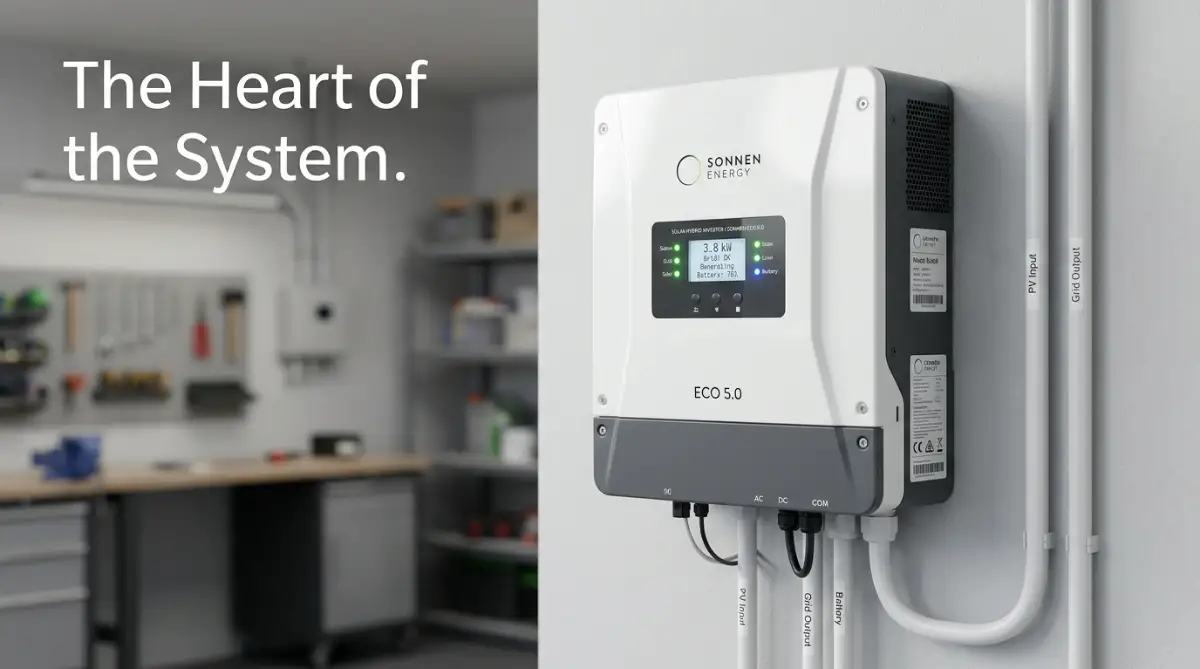
The inverter is the hardworking machine that flips that raw power into alternating current (AC). Because it is constantly working under heavy electrical loads, the inverter will almost certainly fail before the roof modules do.
Most string inverters tucked away in your garage have a lifespan of about a decade before they need a complete replacement. Microinverters, which sit right underneath the roof modules, tend to last a bit longer but are harder to access.
If you decide to add a battery bank for nighttime power, you face another maintenance hurdle. Lithium-ion storage units degrade exactly like your cell phone battery, meaning they require a costly replacement after about 10 to 15 years.
Honest Pros & Cons Box
The Advantages (The Pros)
- Significantly lowers or entirely eliminates your monthly utility dependence.
- Increases the overall resale value of your property.
- Extremely low physical maintenance compared to traditional generators.
The Disadvantages (The Cons)
- High upfront installation and equipment costs.
- Power output naturally decreases slowly over time.
- Inverters and storage batteries require expensive replacements down the road.
Active Maintenance and Care Strategies
You do not need to be an engineer to extend the life of your renewable energy setup. Just like buying a car, a little bit of preventative care goes a very long way.
The most common issue is simple dirt, pollen, and dust building up on the glass surface. This thin layer of grime blocks the sunlight, immediately forcing your system to underperform.
Depending on where you live, a gentle wash with a soft brush and clean water a few times a year is highly recommended. Never use harsh chemicals or abrasive sponges, as scratching the anti-reflective coating will permanently damage the glass.
Expert Tip: Keep a close eye on the trees surrounding your property. Branches that grow too close not only cast harsh shadows but also drop heavy sap and acidic bird droppings directly onto your expensive equipment.
I remember making a very silly mistake during my first year of ownership. I noticed my daily production had dropped significantly, and I immediately panicked, thinking the hardware was broken.
It turned out that a thick layer of spring pollen had essentially painted the glass yellow. A quick ten-minute rinse with a garden hose restored my system to peak performance instantly.
We strongly suggest scheduling a professional inspection every few seasons to check the wiring. Squirrels and birds love to build warm nests underneath the metal frames.
These pests can easily chew through the exposed wiring, creating a massive fire hazard. A professional will secure the wires and install specialized mesh guards to keep the animals out for good.
The Honest Truth About Solar Ownership
When you finally pull the trigger on a rooftop power station, you are buying peace of mind. Yes, the materials will slowly age, and the power output will slightly dip as time goes on.
But understanding these factors means you are no longer operating in the dark. You can accurately plan for future inverter replacements without feeling blindsided by sudden costs.
You take control of your financial future rather than leaving it in the hands of the utility companies. By choosing high-quality materials and performing basic upkeep, your system will provide massive value long after the initial investment is paid off.
| Component Category | Estimated Useful Lifespan | Primary Cause of Eventual Failure |
| Photovoltaic Modules | 25+ Years | Gradual cell degradation and thermal stress. |
| Central String Inverters | 10 to 15 Years | Electrical component fatigue and overheating. |
| Lithium Battery Storage | 10 to 15 Years | Chemical exhaustion from daily charging and discharging. |
Owning your power source is a deeply rewarding journey. Just treat the equipment with respect, keep an eye on your production app, and let the sun do the heavy lifting for you.
Expert Strategies to Keep Your Power Flowing
Getting the most out of your rooftop investment requires a bit of proactive thinking. Many homeowners assume that once the hardware is bolted down, they never have to look at it again.
While these systems are incredibly self-sufficient, a hands-off approach will slowly drain your potential savings. The secret to long-term energy independence is actively monitoring your daily production numbers.
Most modern setups come with a smart mobile application that tracks exactly how much electricity you generate. By checking this app once a week, you can quickly spot sudden drops in performance that indicate a physical problem.
For instance, if your app shows a 20% drop in power right after a windy thunderstorm, you likely have debris blocking a module. Catching this early prevents weeks of lost power and keeps your household running efficiently.
According to extensive field studies published by the National Renewable Energy Laboratory, properly monitored residential systems suffer far less long-term degradation. It simply comes down to addressing small issues before they multiply into expensive repairs.
Pro Tip: Always check your energy tracking app the morning after a severe weather event. Finding a blown fuse or a shaded module immediately can save you hundreds of dollars in grid electricity costs over a single billing cycle.
Routine Care Schedule vs Long-Term Output
The Costly Blunders New Solar Owners Make
Even well-intentioned homeowners can accidentally shorten the life of their equipment. One of the most frequent errors is using harsh tap water to spray down the roof modules.
Unfiltered tap water contains heavy minerals like calcium and magnesium. When the sun bakes these water droplets onto the hot glass, it leaves behind a stubborn, cloudy residue.
This hard water scaling actually blocks more sunlight than regular airborne dust does. If you want to handle the maintenance yourself, always learn exactly how to clean solar panels safely without scratching them using distilled water and a soft squeegee.
Another massive oversight is ignoring the expanding tree canopy in your yard. A tiny sapling planted near your garage might seem harmless today, but its growing branches will eventually cast long shadows.
When a single panel in a string array falls into deep shade, it drastically lowers the output of the entire connected group. It is highly advised to avoid these major solar panel installation mistakes that waste your money by mapping out your future landscaping plans beforehand.
Common Mistakes That Drain Your Savings
- Walking directly on the glass modules during DIY roof inspections, which causes invisible micro-cracks.
- Failing to update the digital firmware on smart inverters, leading to software communication errors.
- Ignoring bird nests built underneath the mounting racks, which creates dangerous fire hazards from chewed wires.
- Assuming heavy rain will perfectly clean the glass, leaving behind sticky tree sap and stubborn bird droppings.
Debunking Home Energy Myths
Your Immediate Action Plan (Execution Guide)
Taking control of your home energy production does not have to be overwhelming. If you are ready to maximize your system's lifespan, you can start taking action right now.
Step 1: Locate your original installation contract and find the specific degradation guarantee for your hardware brand.
Step 2: Log into your utility provider's online portal and download your last three months of energy consumption data.
Step 3: Compare your actual household usage against what your solar app says you are currently generating.
Step 4: Contact a local certified technician to schedule a routine physical inspection if your production is falling unusually short.
Taking these simple steps ensures you are fully prepared to understand how to prep your roof for solar panels and avoid costly leaks if you ever need to expand your current array.
Essential Paperwork & Preparation Checklist
Before you call a technician or attempt to file a warranty claim, you need to gather your paperwork. Having the right documents organized will speed up any support requests significantly.
- Your original signed contractor agreement and itemized equipment list.
- The manufacturer's warranty booklets for both the roof modules and the central inverter.
- A physical copy of your local city building permit and final electrical inspection sign-off.
- Your initial approval letter from the utility company explaining your specific grid connection terms.
Having these documents ready makes it incredibly easy to understand exactly how net metering works a simple guide to solar savings when reviewing your monthly statements.
Tracking Your Warranty Timelines
| Hardware Component | Standard Industry Warranty | What Is Actually Covered |