

🕒 Reading Time: 14 Mins | ✍️ Reviewed By: FinanceInfoIn Editorial Team
Sitting at the kitchen table with five different credit card bills spread out in front of me felt entirely suffocating. The total minimum payments alone took up almost half of my monthly paycheck. Every time my phone rang with an unknown number, my stomach dropped. I was absolutely terrified it was another collection agency reminding me of money I simply did not have.
I would spend hours doing mental math, trying to figure out which bill I could delay just so I could buy groceries that week. Paying $35 here and $50 there felt like trying to empty the ocean with a tiny teaspoon. The balances never seemed to go down, no matter how hard I tried. The heavy weight of high interest was silently eating away at my hard-earned money.
My sleep was ruined, and my anxiety was at an all-time high. I felt completely trapped in a never-ending cycle of due dates, late fees, and shrinking credit scores. It is a lonely, exhausting place to be when you are working hard but still falling behind every single month.
If you are reading this right now, I know exactly how tired you are of juggling multiple payments. You just want a simple way out, a clear path to finally breathe again without the constant financial pressure. That is exactly why understanding your options is the very first step to getting your life back.
Quick Summary
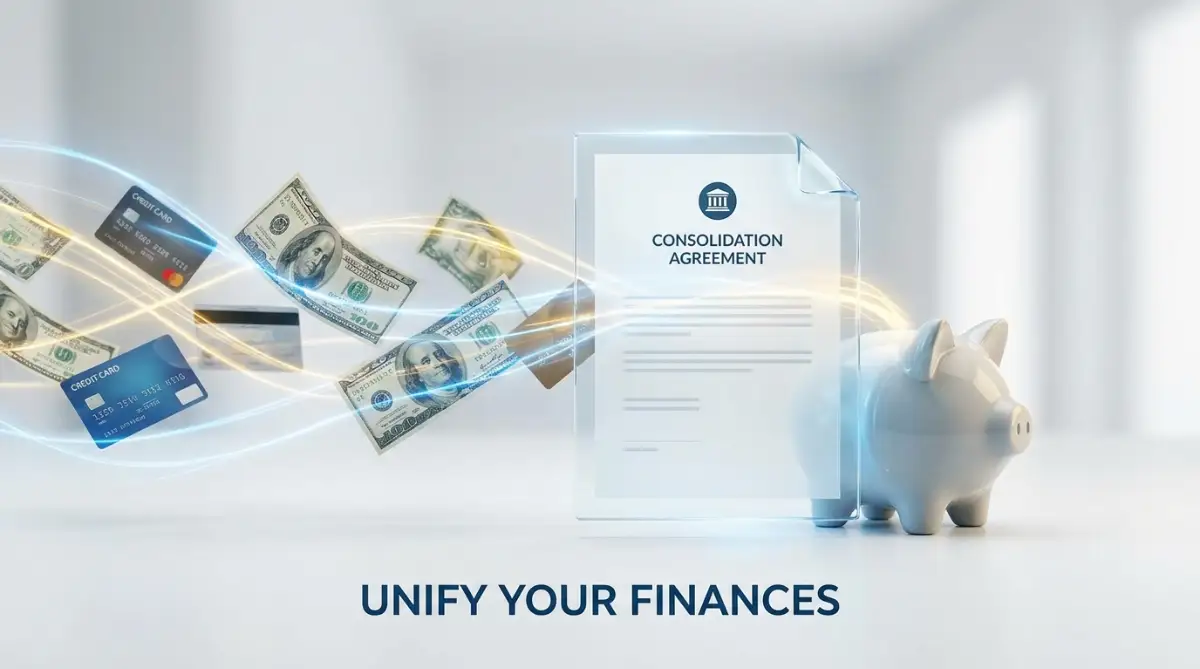
A debt consolidation loan allows you to combine multiple high-interest debts into one single loan. This strategy leaves you with just one fixed monthly payment instead of juggling several bills. By securing a lower interest rate, you can save money and pay off what you owe much faster. It simplifies your budget and helps you regain control over your financial health.
Escaping the Monthly Minimum Payment Trap
When you are stuck paying multiple creditors, the biggest enemy is not the original amount you borrowed. The real enemy is the compounding interest that gets added to your accounts every single month. It keeps your balances artificially high.
Think of it like carrying five small, leaky buckets of water on a long hike. Every bucket requires your attention, and you keep losing water along the way. Debt consolidation is like pouring all that water into one sturdy, sealed backpack. It does not reduce the total weight immediately, but it makes carrying it entirely manageable.
Instead of keeping track of different due dates, you only have one deadline to remember. This simple shift takes a massive amount of mental pressure off your shoulders. You no longer have to worry about missing a payment and getting hit with a painful late fee.
The Core Concept: Merging Your Balances
So, what exactly happens when you decide to take this route? In the simplest terms, you are taking out a brand-new loan to completely pay off all your existing smaller loans or credit cards. You owe the same total amount of money, but now you owe it to only one lender.
This new lender essentially buys your debt from the other companies. Let us say you owe money on three different store cards and one medical bill. The new bank pays off those four balances directly. Suddenly, those four accounts show a zero balance.
Now, your only financial obligation is to the new bank. Because personal loans generally offer better terms than standard credit cards, you usually get a much lower interest rate. This means more of your monthly payment actually goes toward the principal amount, rather than just feeding the bank's profit margins.
Key Takeaways
- Combining debts means taking out one new loan to pay off multiple older ones.
- The main goal is to secure a lower interest rate and a single fixed payment.
- It does not erase what you owe, but it reorganizes it into a better structure.
- This method protects your credit score from missed payment penalties.
The Inner Workings of a Single Payment Plan
Understanding the mechanics behind this process is surprisingly straightforward. First, the lender will look at your current credit score and total income to decide if you are reliable. They want to ensure you have the means to pay back the new combined amount.
Once approved, the funds are distributed. Some lenders will directly send the money to your old creditors, completely handling the messy work for you. Other lenders might deposit the lump sum directly into your checking account. If they give you the cash, it becomes your strict responsibility to log in and pay off those old balances immediately.
After those old accounts are cleared out, your new repayment schedule begins. You will have a clear timeline, maybe 36 or 60 months, to pay off the new balance. Every payment you make chips away at the actual debt in a very predictable way.
Watch This Helpful Breakdown
If you want to see a visual breakdown of how these funds move from one bank to another, this quick video explains the process perfectly. Take a moment to watch it before moving to the next step.
Expert Tip:
I made a huge mistake early on in my own financial journey. I paid off three credit cards with a new combined loan, but I kept the physical cards in my wallet. Within six months, I swiped them for "emergencies" and maxed them out again. Always lock away or close those old accounts once they are paid off, or you will end up with double the financial trouble.
Real Numbers: How Your Math Changes
To really grasp how this helps your wallet, we have to look at the math. Credit cards are notorious for having variable rates that can spike up to 25% or more. If you are only paying the minimum, the math works heavily against you.
Let us assume you have $10,000 scattered across various high-interest accounts. The average rate is dragging your progress to a total halt. When you shift that exact same $10,000 into a fixed personal loan at 10%, everything shifts in your favor.
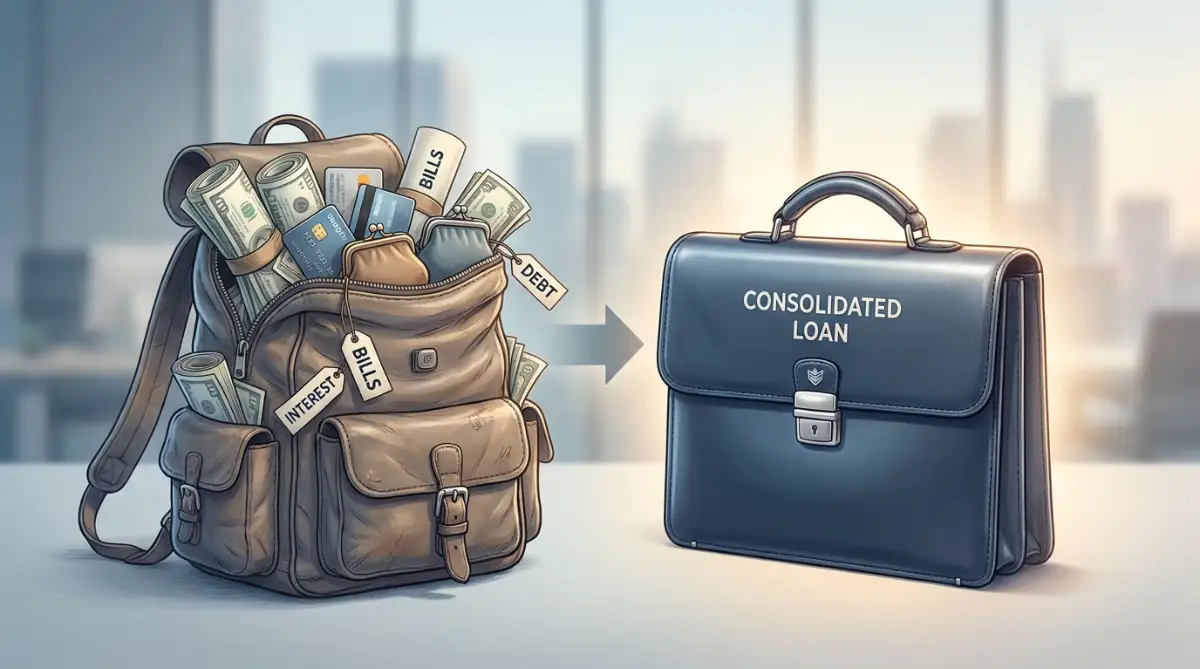
With the new setup, the end date is guaranteed as long as you make the monthly payments. You are not trapped in a revolving door of endless interest charges. This predictability allows you to actually plan for your future. You can start saving for a house or an emergency fund because you know exactly when your debt will hit zero.
Are You the Right Candidate for This Strategy?
This financial tool is incredibly powerful, but it is not a magic wand for everyone. You need to have a decent credit score to qualify for the lower interest rates. If your credit is already heavily damaged, lenders might reject your application or offer a rate that is just as bad as your current cards.
You also need to have a stable income. The new lender wants proof that you can handle the single monthly payment without defaulting. If you are currently in between jobs, getting approved can be quite difficult.
Most importantly, you must be ready to change your spending habits. If you use a loan to clear your credit cards but continue overspending, you are setting a dangerous trap for yourself. You need a solid budget to back up this new strategy.

Alternative Paths to Explore
If a traditional personal loan does not fit your current situation, you still have other excellent routes to consider. One popular method is a balance transfer credit card. These cards often offer a 0% introductory rate for 12 to 18 months, giving you a completely interest-free window to pay down your principal.
However, balance transfers require extreme discipline. If you do not pay off the full amount before the promotional period ends, the interest rate usually skyrockets. You also have to watch out for balance transfer fees, which typically cost around 3% of the total amount you move over.
Another option for homeowners is tapping into their home equity. Because the loan is secured by your property, the bank takes less risk, meaning you get a remarkably low rate. But remember, this puts your actual house on the line if you fail to make payments.
Taking control of your finances requires total honesty with yourself. Whether you choose a single personal loan, a balance transfer, or another method, the goal remains exactly the same. You are simplifying your life, protecting your peace of mind, and building a foundation where your money finally works for you, not against you.
Strategies to Maximize Your Debt Payoff Journey
Once your single loan is active, the real work begins. You must shift your mindset from just surviving to actively winning. Many people relax after getting approved, but this is the perfect time to attack your balance aggressively.
To start, try setting up automatic payments through your checking account. This completely eliminates the risk of human error and painful late fees. Some lenders even offer a small interest rate discount just for enrolling in an auto-pay system. It is a tiny step that saves real money over the life of the loan.
Next, you need to deeply rethink your daily spending habits. Without a solid plan, it is dangerously easy to fall back into old routines. I highly recommend learning how to create a personal budget when living paycheck to paycheck. Knowing where every single dollar goes gives you absolute power over your financial future.
Pro Tip: Always throw any extra cash directly at the principal balance of your new loan. Whether it is a work bonus or a small tax refund, applying extra money here will shave months off your repayment timeline.
It also helps to keep an eye on your overall financial health during this process. If you ever plan to buy a home, lenders will scrutinize how much you owe compared to what you earn. Understanding how to lower your debt to income ratio before a mortgage application is a smart move right now. Paying down this combined balance directly improves those numbers.
Let us look at a breakdown of how paying just a little bit extra changes everything. This visual comparison shows the true power of overpaying.
Another great strategy is to use the extra room in your budget to prepare for the unexpected. A single car repair or medical bill can force you right back into credit card reliance. That is why discovering how to build an emergency fund when your income is small provides an essential safety net.
If you find yourself with extra funds, consider combining different financial strategies. You might remember the excitement of the snowball strategy from other financial lessons. While you have one main payment now, you can still apply similar focus. For example, reading up on how to pay off student loans faster using the debt snowball method can teach you aggressive payment tactics that apply here too.

The Biggest Traps People Fall Into When Combining Debts
The path to becoming debt-free is full of hidden traps that can entirely derail your progress. The most destructive mistake is keeping your old credit cards active and in your wallet. Once those balances hit zero, the temptation to spend on them again is incredibly high. If you do not lock them away, you might end up paying for a new loan plus brand-new credit card bills.
Another common error is failing to read the fine print before signing the loan agreement. Some lenders charge hefty origination fees just to process your initial application. If a bank charges a 5% fee on a large loan, you lose hundreds of dollars right from the start. Always calculate if the hidden fees cancel out the interest you are supposedly saving.
Common Mistakes
- Leaving newly zeroed credit cards in your purse or wallet.
- Ignoring hidden origination fees and harsh prepayment penalties.
- Failing to create a strict written budget after getting the loan.
- Accepting the very first interest rate offer without comparing lenders.
- Closing old credit accounts immediately, which can hurt your credit score.
People also tend to accept the first offer they receive out of sheer desperation. Shopping around is highly encouraged because different banks assess financial risk differently. Even a small drop in your interest rate can mean keeping thousands of dollars in your pocket. Before jumping in, you might even try learning how to negotiate with credit card companies to lower your interest rate to see if you can fix the problem without taking on a new loan entirely.
Closing old accounts is actually a very tricky subject. While you want to stop using those cards, shutting them down completely reduces your total available credit. This sudden drop can negatively impact your credit score in the short term. The smartest move is to cut up the physical plastic but leave the actual accounts open.
Quick Action Checklist
- Freeze your credit cards in a block of ice or cut them up today.
- Review three different loan offers before signing any paperwork.
- Read the loan agreement specifically for origination or hidden fees.
- Set up an automatic transfer for your new single monthly payment.
- Check your credit report to ensure old balances now show as zero.
Your Final Roadmap to Becoming Debt-Free
Taking the step to merge your balances is a massive victory for your personal finances. It proves that you are finally ready to stop letting high interest steal your hard-earned money. You are moving from a place of constant panic to a highly structured, predictable plan.
Remember, the loan itself is simply a tool, not a magical cure. Your long-term success entirely depends on the daily financial choices you make from this day forward. Stick to your new budget, avoid new borrowing, and watch your principal balance drop month by month.
I spent years feeling completely crushed by the weight of my own past financial mistakes. The day I made my final single payment, I felt a literal weight lift off my chest. I know exactly how hard this journey feels right now, but I promise you the freedom waiting at the finish line is entirely worth the effort.
Which debt are you planning to pay off first? Let me know in the comments below!
Frequently Asked Questions About Debt Consolidation
Does consolidating my debts hurt my credit score?
Initially, your score might drop a few points because of the hard credit check by the lender. However, as you make consistent, on-time payments, your score will steadily improve. Lowering your overall credit utilization by paying off revolving accounts is actually fantastic for your long-term credit health.
Can I still use my credit cards after paying them off?
Technically yes, but doing so is a very dangerous financial trap. If you start charging items again, you will end up with double the monthly payments. It is best to lock those cards away safely until the new loan is entirely paid off.
What credit score do I need to get approved?
Most traditional lenders look for a score of at least 650 to offer favorable terms. If your score is lower, you might still get approved, but the interest rates will be much higher. Building your score up slightly before applying is always a smart and profitable move.
Are there any hidden fees I should worry about?
Yes, you always need to watch out for origination fees and prepayment penalties. Some banks charge a percentage of the loan upfront just for processing the paperwork. Read the fine print carefully to ensure these fees do not erase your potential interest savings.
How long does it take to pay off the new loan?
Most repayment terms range anywhere from two to five years. Choosing a shorter term means higher monthly payments but less interest paid overall. A longer term gives you a smaller payment but costs you more money over time.
Is a balance transfer better than a personal loan?
A balance transfer card is excellent if you can pay the debt completely during the 0% promotional period. If you need more than 12 to 18 months, a personal loan provides a much safer, fixed rate. It really depends on your exact timeline and personal financial discipline.
Can I include medical bills in this process?
Absolutely, you can use these funds to clear almost any type of unsecured personal obligation. Medical bills, high-interest store cards, and even old payday loans are perfectly acceptable to combine. Just ensure the new interest rate is actually lower than what you are currently paying.
What happens if I miss a payment on the new loan?
Missing a payment will trigger late fees and immediately damage your credit score. If you fall severely behind, the lender can send your account to a collections agency. Setting up automatic bank transfers is the absolute best way to prevent this disaster.
Can I pay off the new loan early?
In most cases, you can pay it off ahead of schedule without any issues. However, you must verify that your specific lender does not charge a sneaky prepayment penalty. Paying extra each month is a powerful way to reach financial freedom much faster.
Should I close my old accounts once they are empty?
It is usually better to leave the oldest accounts open with a zero balance. Closing them reduces your total available credit, which can cause your score to drop temporarily. Simply cut up the physical plastic so you cannot swipe them at the store anymore.