
Reading Time: 12 Minutes
Difficulty Level: Beginner to Intermediate
Table of Contents
- My Personal Wake-Up Call with Skincare
- Quick Summary
- Key Takeaways
- The Hidden Reality of Daily Scrubbing
- What Exactly Happens to Your Skin Barrier?
- The Surprising Signs You Are Doing Too Much
- A Simple Strategy to Reset Your Face
- Hydration Over Correction
- Moving Forward with a Safer Routine
Quick Summary
Exfoliating your face every night might feel like a good idea for glowing skin, but it actually creates invisible damage. Daily scrubbing strips away your natural oils, leading to a broken skin barrier, severe redness, and unexpected breakouts. Healing this condition requires stopping all active ingredients immediately. Focus entirely on gentle hydration and skin-repairing ceramides to restore your natural balance.
Key Takeaways
- Washing your face with scrubs or strong acids every single night leads to long-term sensitivity.
- A damaged skin barrier cannot protect you from bacteria, causing sudden and persistent acne.
- You need at least two to four weeks of a "skin diet" to fix the invisible damage.
- Less is always more when it comes to healthy, clear, and glowing skin.
My Personal Wake-Up Call with Skincare
I still remember waking up one morning and feeling an intense, burning sensation across my cheeks. I walked into the bathroom, looked in the mirror, and saw bright red patches covering my face. My skin felt tight, shiny, and incredibly uncomfortable.
I reached for my usual daily moisturizer, hoping for some quick relief. But the second I rubbed it in, my face stung like I had just touched a hot stove. I had to splash cold water on my face just to stop the pain, and I felt completely helpless.
For months, I thought I was doing everything right by following a strict nightly routine. I was using a strong chemical liquid to clear out my pores, followed by a gritty scrub to make my skin feel super smooth. I desperately wanted that perfect, glass-like glow everyone talks about on social media.
Instead, I accidentally destroyed my natural defense system. My constant desire for perfect skin left me with endless breakouts, extreme dryness, and a face that could not tolerate even plain water. It took me a long time to realize that my obsession with daily scrubbing was the exact reason my skin was falling apart.
The Hidden Reality of Daily Scrubbing
Many of us believe that if a little bit of something is good, a lot of it must be better. We apply this logic to our skincare routines without realizing the heavy toll it takes on our faces. When you forcefully remove dead cells every single night, you never give your body a chance to heal.
Think of your skin as a brick wall protecting your home. The dead cells are the bricks, and your natural oils are the mortar holding everything together. If you scrape away that wall every single day, the cold air and outside dirt will easily get inside your house.
This is exactly what happens when you use strong facial pads, brushes, or granular washes too often. The protective wall completely breaks down. Your face loses its ability to hold onto water, and outside bacteria easily enter your pores.
What Exactly Happens to Your Skin Barrier?
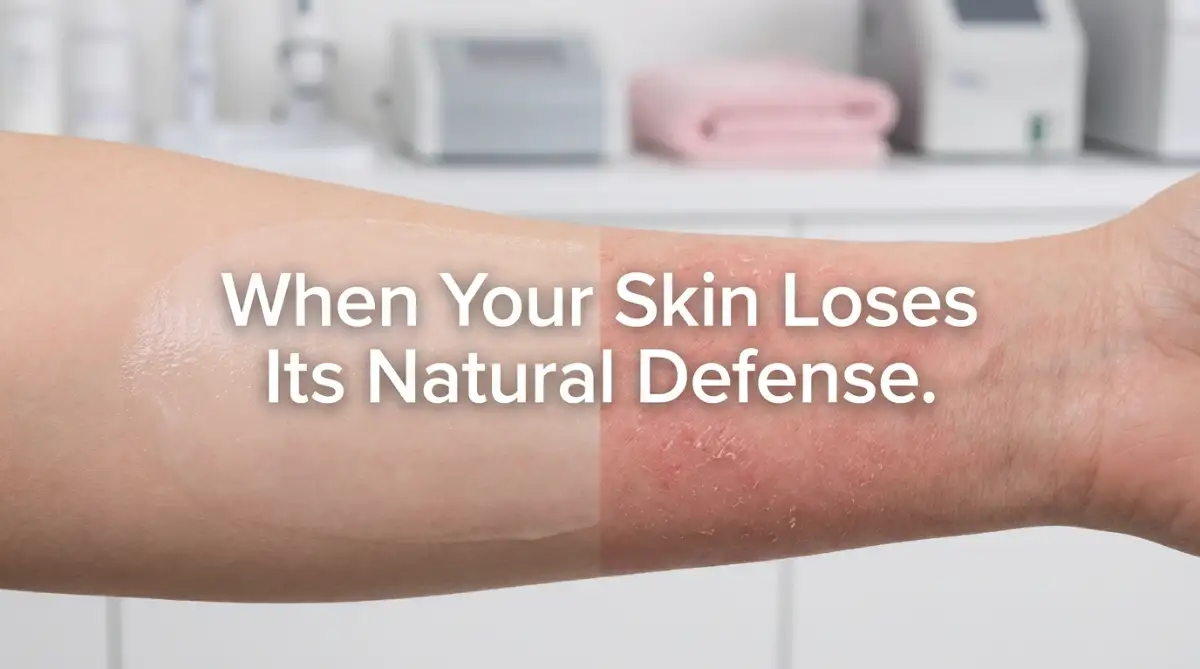
To truly fix the issue, we need to understand the biological mechanics of our faces. Our skin has an invisible, slightly acidic shield called the acid mantle. This thin layer is your first line of defense against the outside world.
When you over-exfoliate, you aggressively strip away this acidic shield. This leaves the fresh, raw layers of skin completely exposed to pollution, wind, and harsh indoor heating. The immediate result is a massive loss of hydration, a process experts call Transepidermal Water Loss.
Your face becomes incredibly dehydrated on the inside while simultaneously getting super oily on the outside. Your body panics and pumps out excess oil to compensate for the missing moisture. This is why many people experience a sudden, confusing mix of dry, peeling patches and painful cystic acne.
Here is a simple look at the difference between a healthy face and one that has been pushed too far.
The Surprising Signs You Are Doing Too Much
Sometimes the damage is completely silent. You might not wake up with a bright red face like I did. Instead, you might notice very subtle changes that you brush off as normal bad skin days.
One of the biggest red flags is a sudden change in how your makeup sits on your face. If your foundation starts separating by noon or clings to tiny dry flakes around your nose, your barrier is likely compromised. Your canvas is no longer smooth because the microscopic layers of your skin are lifted and damaged.
Another clear sign is increased sensitivity to temperature changes. Do your cheeks get intensely flushed and hot when you step out of a warm shower? Does cold wind make your face feel raw and irritated? This happens because your nerve endings are literally closer to the surface.
Are you constantly fighting sudden breakouts that leave dark marks behind? Check your bathroom cabinet right now. If your nightly wash contains salicylic acid, and your toner has glycolic acid, you are unknowingly setting a trap for your own face.
This hidden mistake is exactly why dermatologists are begging people to stop scrubbing.
A Simple Strategy to Reset Your Face
If you recognize any of these painful symptoms, you must stop what you are doing immediately. You cannot fix a broken barrier by adding more active ingredients. You have to put your face on a strict, temporary diet.
First, take every single scrub, facial brush, and chemical liquid out of your routine. Put them in a drawer where you cannot see them. For the next two to four weeks, your only goal is gentle hydration and repair.
You should only wash your face with a mild, milky cleanser that does not foam up excessively. Foaming cleansers often contain harsh detergents that will only irritate your raw face further. Wash with lukewarm water, as hot water strips away the tiny bit of oil you have left.
I know it feels scary to stop treating your breakouts. You might worry that your face will get worse before it gets better.
I had this exact same fear when I finally stopped using my daily acne wash. I thought my face would explode with pimples. But surprisingly, within just five days of doing absolutely nothing but moisturizing, the angry redness faded, and my existing breakouts actually started shrinking.
Hydration Over Correction
During this healing phase, your moisturizer is your best friend. You need thick, comforting creams that act like a liquid band-aid for your face. Look for products that contain skin-repairing elements rather than skin-peeling ones.
Understanding what to put on your face during a crisis is a game-changer. Let us look at what ingredients will help you heal and what will keep you in a cycle of pain.
After gently washing your face, apply your healing cream while your skin is still slightly damp. This traps the water beneath the barrier, giving your cells the moisture they need to rebuild.
If you are dealing with extreme peeling, you can apply a very thin layer of healing ointment over your moisturizer at night. This technique locks everything in and prevents any water from escaping while you sleep.
Expert Tip: When your skin is highly reactive, always patch-test a new soothing cream on your jawline for 24 hours. Even the gentlest ingredients can trigger a response when your natural defenses are completely down.
Moving Forward with a Safer Routine
Once your face stops burning and the redness completely fades, you might feel tempted to go back to your old habits. Please resist this urge. The goal is to build a sustainable routine that gives you a healthy glow without the hidden damage.
You only actually need to remove dead skin cells one to two times a week. Your body naturally sheds cells on its own, so you are only stepping in to give it a tiny bit of help.
When you do restart your routine, choose a very gentle liquid exfoliant instead of a gritty physical scrub. Liquids work by gently dissolving the glue between dead cells, rather than tearing them off by force. Apply it on a night when you are not using any other strong treatments.
To make things incredibly simple, you can follow a basic skin cycling method.
This cycle ensures that your face gets exactly what it needs without ever being pushed past its breaking point. It gives your natural barrier plenty of time to rest, repair, and prepare for the next step.
Your skin is an incredibly smart organ that wants to heal itself. When you stop fighting against it with daily scrubbing, you will finally see the calm, clear, and resilient face you have been working so hard to achieve. Listen to your body, respect your natural boundaries, and remember that sometimes, doing less is the absolute best thing you can do.
Expert Strategies for Long-Term Skin Protection
Fixing a damaged face requires more than just throwing away your harsh scrubs. You need to create an environment where your skin feels completely safe to rebuild itself. One of the best ways to do this is by mastering the moisture sandwich technique.
This simple method involves applying your skincare in strategic layers to trap maximum hydration. Think of your face like a dry sponge resting on your kitchen counter. If you put a heavy dollop of thick cream directly onto a bone-dry sponge, it just sits on the surface. But if you slightly dampen that sponge first, it easily absorbs everything you put on it.
Start by splashing your face with lukewarm water. While your face is still dripping wet, gently pat in a hydrating serum containing glycerin or hyaluronic acid. Immediately follow this with your thick ceramide moisturizer to lock that water inside your cells.
Pro Tip: Never let your face air dry completely after washing it. You have a tiny window of about sixty seconds to apply your moisturizer before the surrounding air starts pulling the water out of your skin.
Another massive factor in skin recovery is managing your internal stress levels. When you are constantly worried or anxious, your body releases high amounts of cortisol. This stress hormone directly weakens your natural defenses and drastically slows down the wound-healing process.
I noticed my face stayed red and irritated much longer during weeks when I felt overwhelmed with work. If you find yourself holding onto a lot of tension, taking a few minutes to calm your mind with simple breathing exercises can genuinely help your skin heal faster. A relaxed body repairs itself much more efficiently.
Understanding the chemical balance of the items in your bathroom is also a major secret to clear skin. Your face naturally prefers a slightly acidic environment to keep bad bacteria away.
Using a harsh bar soap completely neutralizes your protective acidic shield. It takes your body several hours to restore that balance. During those hours, your face is completely vulnerable to outside dirt and pollution. Stick to cleansers that specifically advertise a balanced pH.

The Hidden Pitfalls That Keep Your Face Irritated
Recovering from over-exfoliation is a slow process, and it is very easy to fall into a few hidden traps along the way. When your face is breaking out and peeling, your first instinct is usually to attack the problem with strong acne medicine. This is the absolute worst thing you can do.
Applying a strong spot treatment over a broken barrier is exactly like pouring salt directly into an open paper cut. The medicine penetrates way too deeply, causing severe chemical burns and leaving dark brown scars behind. You have to ignore the temporary breakouts and focus purely on healing the underlying canvas.
Common Mistakes
- Washing with hot water: Steamy showers feel amazing on your body, but hot water instantly melts away the essential lipids your face desperately needs to hold onto moisture.
- Using a towel to rub dry: Aggressively rubbing your face with a rough cotton towel creates micro-tears in the already fragile surface. Always gently pat your face with a soft microfiber cloth instead.
- Skipping sunscreen because it feels heavy: UV rays severely degrade the healing process. Leaving raw skin exposed to the sun guarantees permanent hyperpigmentation and dark spots.
- Constantly touching your face: Your hands carry millions of invisible bacteria. Touching your raw cheeks transfers those germs straight into your exposed pores, triggering massive cystic breakouts.
Sometimes, a stubborn skin issue is not just about what you put on the outside. Your internal health strongly dictates how fast your body can repair surface damage.
For instance, a lack of essential nutrients can slow down cellular turnover, making your face look dull and exhausted. Many people do not realize that a hidden Vitamin D deficiency can directly impact their skin's ability to stay strong and healthy. Taking care of your whole body naturally results in a better complexion.
Mixing the wrong ingredients together is another guaranteed way to ruin your progress. The skincare industry heavily markets complex routines, but combining multiple strong serums usually ends in a painful disaster.
Keep your routine as boring and predictable as possible. Your damaged face does not want exciting new serums; it just wants peace, quiet, and a lot of hydration.
Quick Action Checklist
- Throw away or hide all gritty facial scrubs immediately.
- Switch your foamy cleanser to a gentle, non-lathering milky wash.
- Buy a thick, plain moisturizer containing ceramides or panthenol.
- Wash your face using only lukewarm or cool water.
- Apply your soothing cream while your face is still slightly wet.
- Commit to doing absolutely zero exfoliation for at least one full month.
Your Blueprint for a Calm, Resilient Complexion
Rebuilding a healthy face requires extreme patience and a complete shift in how you view personal care. We are often taught that beauty requires a bit of pain, and that if a product tingles or burns, it must be working. You now know that this is entirely false. Healthy skincare should never hurt.
When you simplify your routine, you are finally allowing your body to do what it does best. Your cells know exactly how to shed naturally, and your natural oils are there to give you a genuine, healthy glow. As you overhaul these daily habits, you might even feel inspired to improve other areas of your lifestyle.
Simple, consistent changes make the biggest difference, much like managing high blood pressure naturally through daily diet changes. Finding balance in your daily life always brings the best long-term results. You can find more practical guides for everyday balance at FinanceInfoIn.
I spent way too much money trying to scrub away my problems before I realized my face just needed rest. Now, my evening routine takes less than five minutes, and my skin has never looked more vibrant or felt more comfortable. You have the power to fix this issue completely, and your journey to a calm, resilient complexion starts by simply putting the scrub down tonight.
What gentle moisturizer are you planning to use to heal your face? Let me know in the comments below!
Common Questions About Skin Barrier Repair
How long does it take for an over-exfoliated face to heal?
It generally takes between two to four weeks for a mildly damaged face to repair itself. However, if you have been scrubbing aggressively for months, your skin might need up to three months of a strict, hydrating diet to completely rebuild its protective shield.
Can I wear makeup while repairing my skin barrier?
It is highly recommended to avoid heavy foundations while your face is healing. Makeup can easily clog your exposed pores, and the process of aggressively wiping it off at night will cause further irritation to your fragile skin.
Does drinking water help repair a damaged face?
Drinking plenty of water supports your overall bodily functions, but it will not instantly fix a broken barrier. You must apply topical moisturizers to physically seal the surface and prevent the water inside your body from evaporating into the air.
Is it normal for my face to sting when applying a basic moisturizer?
No, stinging is a massive warning sign that your natural defenses are completely broken. When your acidic shield is stripped away, even the most gentle, plain lotion will feel like a chemical burn on your raw nerve endings.
Should I use sunscreen on a damaged face?
Yes, applying a gentle, mineral-based sunscreen is absolutely mandatory. Your exposed skin is highly vulnerable to UV rays, which can easily cause permanent dark spots and severely delay the natural healing process.
Can a damaged barrier cause permanent acne scarring?
When your defenses are down, breakouts become highly inflamed and deep. If you pick at these severe breakouts while your skin is weakened, it can absolutely lead to deep, permanent physical scarring.
What is the fastest way to soothe red, burning skin?
The quickest relief comes from applying a cool, damp cloth to your face, followed immediately by a thick layer of plain petroleum jelly or a heavy ceramide ointment. This instantly stops the air from irritating your raw nerves.
Should I stop washing my face completely?
You should not stop washing completely, as you still need to remove daily pollution and sunscreen. Simply switch to washing only once a day in the evening, using a very mild, non-foaming cleanser and lukewarm water.
Trusted Legal Resources
- U.S. Food and Drug Administration (FDA) - Cosmetics Guidance
- American Academy of Dermatology (AAD) - Public Safety Guidelines
- National Institutes of Health (NIH) - Skin Care and Aging
- Centers for Disease Control and Prevention (CDC) - Hygiene Standards
- Consumer Product Safety Commission (CPSC) - Cosmetic Safety
- World Health Organization (WHO) - Dermatological Health Policies
Disclaimer
The content provided in this article is strictly for educational and informational purposes only and should not be construed as medical, dermatological, or legal advice. Every individual's skin reacts differently, and what works for one person may not work for another. We strongly advise consulting with a board-certified dermatologist or healthcare professional before making any sudden changes to your skincare routine, especially if you are experiencing severe pain, infection, or prolonged irritation. FinanceInfoIn and its team members assume no liability for any adverse reactions, damages, or losses resulting from the application of the information contained within this post. Use all products and methods at your own risk.
About the Author
Reviewed by Mithun Halder (Personal Finance & SEO Expert) & The FinanceInfoIn Editorial Team
The FinanceInfoIn Editorial Team researches personal finance, investing, insurance, mortgages, cryptocurrency, and consumer financial topics. Every article is carefully reviewed to provide clear, practical, and trustworthy educational information based on credible sources and industry best practices.
© FinanceInfoIn. All rights reserved.