Reading Time: 12 Minutes
Difficulty Level: Beginner to Intermediate
Reviewed By: FinanceInfoIn Editorial Team
The Silent Weight of Daily Worry (And Why We Feel Trapped)
Many people describe feeling overwhelmed by everyday anxiety. One common experience is struggling to catch a full breath during stressful moments. During one particularly stressful period in my life, I often noticed myself taking short, shallow breaths while sitting quietly at my kitchen table. That experience made me realize how closely stress and breathing are connected.
Imagine waking up in the morning, and before your feet even touch the floor, your heart is already racing. Your chest feels tight, and a heavy cloud of worry hangs over your head.
This is the harsh reality of dealing with daily stress. It feels like carrying a heavy, invisible backpack that you are never allowed to take off.
We smile at our coworkers, take care of our families, and pretend that everything is perfectly fine. But deep down, our nervous system is exhausted and screaming for a break.
Every single day, millions of people wake up fighting this exact same silent battle. We try so hard to push through the day, hoping the heavy feeling in our chest will just magically disappear.

Why You Keep Hitting a Wall When Looking for Help
When you finally decide to seek help for this heavy burden, you usually run into a wall of confusion. The internet is filled with advice, but most of it is completely useless for a normal person.
Here is why so many people fail to find a real solution and end up feeling even more frustrated:
- Complicated Medical Jargon: People search for easy answers but only find heavy scientific articles that require a medical degree to understand.
- The Quick-Fix Trap: Social media influencers constantly push expensive supplements and pills that promise instant peace but deliver nothing.
- Unrealistic Expectations: Many online "gurus" promote extreme, two-hour daily meditation routines that busy beginners simply cannot fit into their schedules.
- Overload of Information: With so many conflicting voices telling you what to eat, drink, or think, you just feel paralyzed by the overwhelming noise.
When you try these confusing methods and they do not work, you start to blame yourself. You begin to believe that your worry is permanent, which only makes the problem worse.
How This Hidden Burden Destroys Your Mental Peace
Living in a constant state of worry does not just ruin your mood. It slowly chips away at your overall quality of life, affecting things you might not even realize.
Here is exactly how unmanaged tension destroys your confidence and mental peace:
- Constant Brain Fog: You simply cannot focus on basic daily tasks because your mind is running a hundred miles an hour, jumping from one worry to the next.
- Endless Sleepless Nights: You lie awake staring at the ceiling, replaying awkward conversations from the day and imagining worst-case scenarios for tomorrow.
- Loss of Self-Confidence: When you constantly feel on edge and nervous, you start doubting your own abilities and second-guessing every decision you make.
- Strained Relationships: Small arguments easily turn into big fights because your patience is completely drained, and you end up snapping at the people you love.
We often accept these struggles as a normal part of growing up and having responsibilities. But living in a constant state of fear and exhaustion is not normal, and you do not have to accept it.
The truth is, you already possess the most powerful tool to calm your mind. It is completely free, available 24 hours a day, and you have been doing it since the moment you were born.
That tool is your breath. By simply learning how to control the way air enters and leaves your body, you can help your mind and body respond to stress in a calmer, healthier way.
How to Reclaim Your Calm: Three Science-Backed Breathing Methods
Taking control of your breathing is the easiest way to tell your brain that you are safe. When we feel worried, our breathing becomes short, shallow, and entirely trapped in our upper chest.
This shallow breathing sends a danger signal directly to the brain. It triggers a "fight or flight" response, making you feel panicked even when there is no immediate danger.
By slowing and controlling your breathing, you encourage your body to shift toward a calmer, more relaxed state. Slow, controlled breathing may help activate your body's natural relaxation response, often referred to as the "rest and digest" state, helping your body begin to relax.
Let us look at three incredibly simple, step-by-step breathing techniques that you can start using right now.
The Science of Calm: Activating Your Vagus Nerve
You might wonder why something as simple as breathing can stop a panic attack. The secret lies in a major nerve running from your brain to your abdomen, called the Vagus Nerve. When you take slow, deep breaths (especially when your exhale is longer than your inhale), you physically stimulate this nerve. It acts like a brake pedal for your nervous system, instantly sending chemical signals to your heart to slow down and to your brain to stop releasing stress hormones like cortisol. You aren't just tricking your mind; you are hacking your biology.
Breathing Exercise Selection Guide
😊 A Quick Smile First
Relax—there's no breathing exam today. Just press play, follow along, and let your lungs do what they've been doing all your life
Prefer learning by watching? Start with the short video below to see these simple breathing exercises demonstrated step by step. Then continue reading to discover practical tips for using these techniques during stressful moments and making them part of your daily routine for lasting relief.
Step 1: The 4-7-8 Relaxing Breath (Your Natural Nervous System Reset)
The 4-7-8 breathing method is one of the most famous techniques in the world for an excellent reason. It acts as a calming technique for the nervous system.
This specific pattern forces your mind and body to slow down, no matter how chaotic your surroundings might be. It is incredibly helpful when you feel a sudden wave of panic hitting you out of nowhere.
How to Practice the 4-7-8 Method:
Find a comfortable place to sit or lie down, and keep your back relatively straight. Rest the tip of your tongue gently against the roof of your mouth, just behind your upper front teeth.
First, exhale completely through your mouth, making a soft "whoosh" sound. Now, close your lips and inhale quietly through your nose while counting to four in your head.
Next, hold your breath and count to seven. Finally, exhale completely through your mouth, making that same "whoosh" sound, for a full count of eight.
This completes one full cycle. You should repeat this cycle three more times, for a total of four deep breaths.
Real-Life Scenario: The Office Panic
Imagine you are sitting at your desk, and your boss suddenly hands you an impossible deadline. Instantly, your chest tightens, and panic sets in.
Instead of freezing or getting angry, you close your eyes for just one minute. You do four cycles of the 4-7-8 method right at your desk.
Because the exhale is twice as long as the inhale, your heart rate naturally slows down. By the time you open your eyes, you feel calmer, more focused, and better prepared to handle the situation.
4-7-8 Breathing Quick Guide
Step 2: Box Breathing (The Secret Technique Used by Professionals)
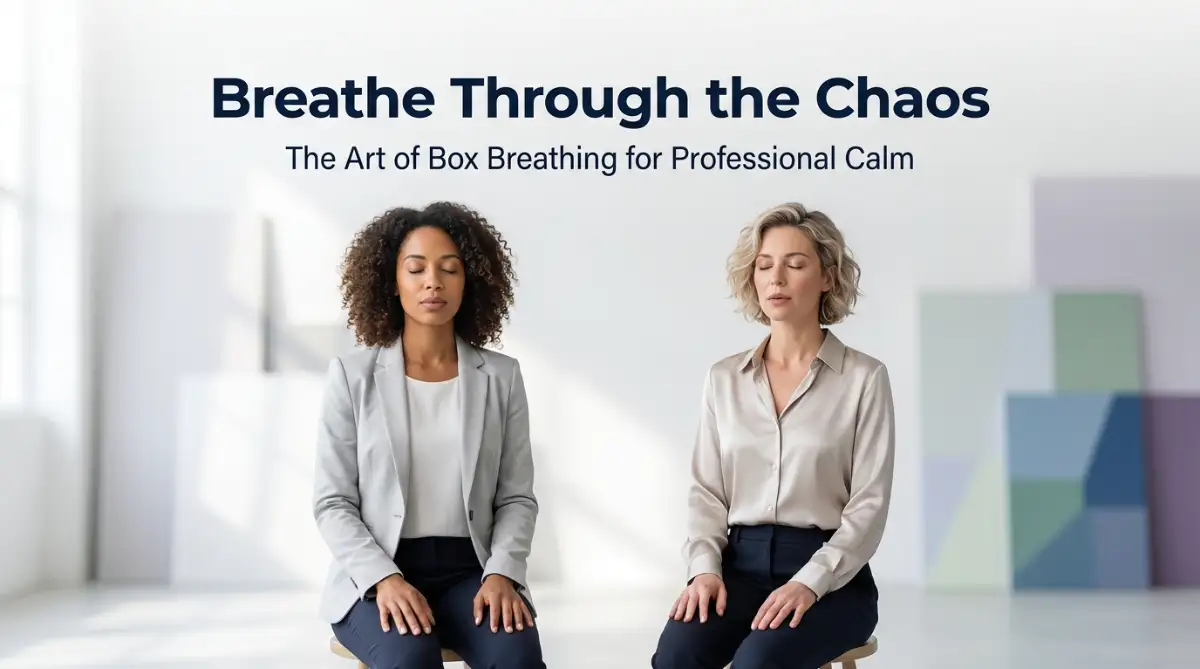
Box breathing is a powerful technique heavily used by emergency responders, athletes, and police officers. Also known as square breathing, it is designed to clear your mind and deeply focus your attention.
When you feel completely overwhelmed by a busy environment, box breathing is your best friend. It gives your active mind a simple, repetitive task to focus on, which stops the endless spiral of negative thoughts.
How to Practice Box Breathing:
Picture a square box in your mind. Just like a square has four equal sides, this technique has four equal steps.
Begin by slowly exhaling all the air out of your lungs. Now, inhale gently through your nose while counting slowly to four.
Once your lungs are full, hold your breath inside for a count of four. Try not to clamp your mouth shut or create pressure in your throat; just pause naturally.
Next, slowly exhale the air out through your mouth for a count of four. Finally, hold your lungs completely empty for a final count of four before breathing in again.
Real-Life Scenario: The Traffic Jam Anger
You are stuck in terrible traffic on your way home from a long day. Suddenly, a careless driver cuts you off and honks their horn aggressively.
Your blood starts to boil, and you feel the urge to shout. Instead of letting the anger take over, you keep your hands on the wheel and start box breathing.
In for four, hold for four, out for four, hold for four. You picture the sides of a box drawing themselves in your mind.
Because your brain has to focus on counting and visualizing the box, it cannot focus on being angry. Within two minutes, you are perfectly calm, and the reckless driver is just a forgotten memory.
Step 3: Diaphragmatic Belly Breathing (Unlocking Deep Relaxation)
Most adults have forgotten how to breathe properly. If you look closely, you will notice that most of us breathe only into our upper chest, barely moving our stomachs at all.
This habit develops over years of sitting at desks and sucking in our stomachs to look thinner. But chest breathing is highly inefficient and keeps the body in a state of mild, constant tension.
Diaphragmatic breathing, commonly known as belly breathing, returns us to the way we breathed as babies. It pulls air deep into the lowest parts of the lungs, bringing massive amounts of oxygen into the bloodstream.
How to Check Your Current Breathing Style:
Place one hand flat on your upper chest and the other hand gently on your belly button. Take a normal, relaxed breath in.
Which hand moved the most? If the hand on your chest moved, you are a chest breather. If you want to find true relaxation, we need to get the hand on your belly moving instead.
How to Practice Belly Breathing:
It is best to learn this technique while lying flat on your back, perhaps on your bed or a yoga mat. Put a small pillow under your head and another under your knees for maximum comfort.
Place one hand on your chest and one on your belly again. Breathe in slowly and deeply through your nose, sending the air straight down into your stomach.
You should feel the hand on your belly push upward, like you are inflating a small balloon inside your stomach. The hand on your chest should remain completely still.
Now, tighten your stomach muscles gently and let them fall inward as you exhale through pursed lips. The hand on your belly should lower back down to its starting position.
Real-Life Scenario: The Bedtime Struggle
You are lying in bed at night, completely exhausted, but sleep refuses to come. Your mind is racing, worrying about bills, family issues, and everything you have to do tomorrow.
Instead of tossing and turning, you place a hand on your stomach and begin belly breathing. You focus all your attention on the gentle rise and fall of your hand.
Deep belly breathing encourages the diaphragm to move more fully, can help reduce physical tension throughout the body, and may naturally help lower blood pressure. Within minutes, this physical relaxation may help you feel calmer and more ready for sleep. Within minutes, the physical relaxation in your body tricks your brain into feeling tired, and you drift off to sleep peacefully.
Signs You're Doing Belly Breathing Correctly
Advanced Breathing Techniques for Deep Mental Focus
Once you master the basic relaxation methods, you might notice that different types of stress require different solutions. Sometimes you do not just need to relax; you actually need to clear brain fog and regain your sharp focus.
Financial worries, for instance, are one of the biggest triggers for a racing heartbeat. Whether you are constantly worrying about a new business failing early or trying to manage a tight household budget, money stress physically hurts your body.
When big life changes happen, like trying to lower your financial debt before a big purchase, your chest instantly tightens up. This is exactly where advanced breathing patterns become your secret weapon.
Research suggests that slow, controlled breathing may influence the body's stress response and help promote a sense of calm. It stops the panic cycle before it completely takes over your day.
Similarly, the Mayo Clinic notes that relaxation techniques can help reduce stress and may slow the heart rate for many people. You do not need expensive therapy to feel these amazing benefits right now.
Let us explore two pro-level techniques that will help you maintain long-term peace of mind.
Step 4: Alternate Nostril Breathing (The Brain Balancer)
This technique comes from ancient yoga traditions, but modern science fully supports its amazing benefits. It is designed to balance the left and right sides of your brain, bringing you into a state of deep, focused calm.
When you feel entirely overwhelmed by a big project or an upcoming exam, your brain feels scattered. Alternate nostril breathing works perfectly to bring all your scattered thoughts back into one single, peaceful line.
How to Practice This Method:
Find a quiet place to sit down and hold your right hand in front of your face. Rest your pointer finger and middle finger gently between your eyebrows.
You will use your right thumb to close your right nostril, and your right ring finger to close your left nostril. Start by closing your right nostril with your thumb and exhaling completely through the left nostril.
Now, breathe in deeply through that same left nostril. Once your lungs are full, close the left nostril with your ring finger, release your thumb, and exhale through the right nostril.
Breathe in through the right nostril, close it, and exhale through the left. This entire process counts as one full round, and you should aim to complete five full rounds.
Real-Life Scenario: The Big Presentation
Imagine you are about to step into a meeting room to give a presentation to top management. Your hands are shaking, and you cannot remember your opening sentence.
You excuse yourself to the restroom for just two minutes. You stand in front of the mirror and complete five rounds of alternate nostril breathing.
By the time you walk back into the meeting room, your heart is beating normally. Your mind feels sharp, clear, and ready to handle any question they throw at you.
Alternate Nostril Flow
Step 5: The Physiological Sigh (The Instant Panic Button)
Sometimes, panic hits you so fast that you do not have time to count to four or hold your breath. For these sudden moments of intense fear, the physiological sigh is the fastest way to calm down.
Our bodies actually do this naturally when we cry or when we are in a deep sleep. It is a quick double-inhale followed by a long, slow exhale that instantly pops open collapsed air sacks in your lungs.
How to Practice the Physiological Sigh:
Take a quick, sharp breath in through your nose until your lungs feel almost full. Immediately take a second, smaller breath in through your nose to pack a little more air inside.
Then, open your mouth and let out a long, slow sigh until your lungs are completely empty. It should sound like a deep sigh of relief after finishing a very hard task.
You only need to do this two or three times to feel a noticeable sense of relief in your nervous system. Many people find this technique calming because the long exhale helps regulate breathing and promotes relaxation.
How to Turn These Exercises Into Permanent Habits
Learning these techniques is wonderful, but remembering to use them is the hardest part. When we feel worried, our brains forget all the good advice we read online.
The secret to long-term success is a concept called "habit stacking." This means you attach your new breathing exercise to a habit you already do every single day.
For example, promise yourself that every time you stop at a red traffic light, you will do three belly breaths. Or, every time you wait for your morning coffee to brew, you will practice box breathing for one minute.
By tying your breath to daily triggers, you train your body to relax on autopilot. Eventually, you will notice that your baseline level of daily tension has dropped significantly.
Free Digital Tools to Support Your Practice
If you struggle to count in your head or remember to practice, your smartphone can actually be a tool for peace instead of stress. Here are some highly rated apps that can guide you through these exact breathing exercises:

Hidden Pitfalls That Ruin Your Progress (And How to Dodge Them)
Even though breathing is completely natural, trying to change your breathing patterns can sometimes feel awkward at first. Many beginners make a few common mistakes that accidentally increase their tension instead of lowering it.
If you try these exercises and feel dizzy or more anxious, you are likely falling into one of these traps. Here are the biggest mistakes you must avoid to get the best results.
1. Trying Too Hard and Forcing the Air
Many people think that taking a "deep breath" means sucking in as much air as humanly possible. They forcefully expand their chests and gasp for air like they are swimming underwater.
This aggressive breathing actually signals your brain that you are in danger, which creates more panic. A deep breath should be gentle, slow, and completely effortless.
The Fix: Never fill your lungs to 100% capacity. Aim for about 85% full, keeping the breath soft and completely silent.
For the longest time, I made the same mistake. Whenever anxiety hit, I would gasp for air, thinking deeper breaths would help, but they only left me feeling lightheaded and even more frightened. Over time, I learned that slow, gentle breathing worked far better. Once I stopped forcing every breath, my body gradually relaxed, and my mind finally started to believe I was safe.
2. Waiting Until a Panic Attack Strikes
This is the most common and damaging mistake beginners make. They only try to practice their breathing when they are already in the middle of a full-blown panic attack.
Trying to learn a new relaxation skill during a panic attack is like trying to learn how to swim while you are drowning. Your brain is entirely too overwhelmed to focus on counting or holding your breath.
The Fix: Practice these exercises when you are already perfectly calm. Train your body during peaceful moments so that the habit is ready to save you during stressful times.
3. Breathing Through the Mouth Instead of the Nose
When we feel highly stressed, we naturally start breathing through our mouths. Mouth breathing leads to chest breathing, which keeps the body locked in a state of high alert.
Your nose is specifically designed to filter, warm, and slow down the air entering your lungs. Breathing entirely through your nose naturally adds resistance, which forces your breathing to slow down.
The Fix: Always inhale through your nose unless a specific technique tells you otherwise. If you have a blocked nose, simply do your best and keep the breaths as slow as possible.
4. Ignoring the Root Cause of the Stress
Breathing exercises are amazing for calming your physical body, but they cannot fix real-world problems. Sometimes, your physical tension is a loud warning sign that you need to take real action.
For example, if you are buying a house, you might panic over spotting hidden property issues. Breathing helps calm you down, but you still need to hire a professional to fix the actual problem.
Maybe you are losing sleep over digital safety and need better steps to protect your online assets. You must use your breath to clear your mind first, and then take logical steps to secure your investments.
The Fix: Use your breath to find a calm state of mind. Once you are calm, use that clear mental energy to actually solve the problem that caused the worry in the first place.
5. Giving Up After One Bad Attempt
Sometimes, you will sit down to practice box breathing, and your mind will completely refuse to cooperate. Your thoughts will wander, you will lose count, and you might feel highly frustrated.
Many people experience this on day one and instantly say, "This does not work for me." They walk away from a free, life-changing tool just because it felt awkward at first.
The Fix: Treat your mind like a puppy you are training to sit. When your mind wanders away, gently and kindly bring it back to the breath without judging yourself.
6. Fighting Against Too Much Caffeine
You can do all the breathing exercises in the world, but if you have consumed four cups of strong coffee, your nervous system will still be buzzing. High doses of caffeine mimic the physical symptoms of anxiety (racing heart, shallow breath, jitters).
The Fix: If you suffer from daily anxiety, try limiting your caffeine intake, especially in the afternoon. Pair your morning coffee with a glass of water and a quick box breathing session to keep your baseline calm.
Common Beginner Mistakes
Stepping Into a Calmer, Happier Version of You
Living with a heavy cloud of worry does not have to be your permanent reality. You do not have to accept sleepless nights, a racing heart, and constant nervous energy as a normal part of getting older.
By simply changing the way air moves in and out of your body, you take the control wheel back from your anxious mind. You now have practical breathing techniques that can help you respond to stressful moments more calmly and encourage your nervous system to return to a more relaxed state.
Let us quickly review the powerful tools you can start using today:
- Use the 4-7-8 method when you need a natural reset for a racing mind.
- Rely on Box Breathing when you feel angry, overwhelmed, or stuck in traffic.
- Practice Belly Breathing in bed to physically relax your organs and fall asleep faster.
- Try the Physiological Sigh when sudden fear hits you out of nowhere.
Daily Breathing Habit Tracker
Your Personal Challenge for Today
Reading about these amazing benefits is great, but taking action is what changes your life. I want to give you a very simple, one-minute challenge to complete right now.
Before you close this page or open another app, sit back in your chair. Drop your shoulders away from your ears, and place one hand gently on your stomach.
Take just three slow, deep breaths, letting your belly push your hand outward. Notice how the muscles in your neck and jaw begin to relax.
You have the power to create this peaceful feeling anytime, anywhere, and completely for free. Your breath is your safest place, and it is always right there waiting for you.
Start small, be gentle with yourself, and watch how quickly your days become brighter and much more joyful.
Which Technique Should You Choose?
Quick Summary
- ✔ Learn one breathing technique at a time.
- ✔ Practice every day—not only during stressful moments.
- ✔ Breathe slowly through your nose whenever possible.
- ✔ Never force your breathing.
- ✔ Use breathing to calm yourself, then address the source of your stress.
Need-to-Know Facts:
1. Why Breathing Exercises Help Calm Your Mind
Simple breathing exercises activate your body's natural relaxation response. Just a few minutes of slow, controlled breathing can lower stress and improve mental clarity.
2. Box Breathing for Instant Stress Relief
Box breathing follows a simple pattern: inhale, hold, exhale, and hold again for equal counts. It helps reduce anxiety and improves focus during stressful moments.
3. Deep Belly Breathing for Better Relaxation
Breathing deeply from your diaphragm increases oxygen flow and releases muscle tension. This technique promotes a greater sense of calm and emotional balance.
4. The 4-7-8 Breathing Technique
The 4-7-8 method is a popular exercise for easing stress and improving sleep quality. Regular practice can help calm a racing mind before bedtime.
5. Make Breathing Exercises Part of Your Routine
Practicing breathing exercises for just 5–10 minutes daily can support long-term stress management. Small, consistent habits often lead to lasting mental wellness.

Trusted Health & Wellness Resources
For further reading on the science of breathing, stress management, and mental health, explore these trusted authorities:
- Harvard Medical School - Relaxation techniques: Breath control helps quell errant stress response
- Mayo Clinic - Stress management: Breathing exercises for relaxation
- American Psychological Association (APA) - Stress Relief
- Anxiety & Depression Association of America (ADAA) - Breathing Techniques
- National Center for Complementary and Integrative Health (NCCIH)
Medical Disclaimer: The information provided in this blog post is for educational and informational purposes only and does not constitute professional medical advice. Always consult with a qualified healthcare provider or medical professional before starting any new wellness practices, especially if you have asthma, heart conditions, or severe anxiety disorders.
About the Author
Reviewed by Mithun Halder (Personal Finance & SEO Expert) & The FinanceInfoIn Editorial Team
The FinanceInfoIn Editorial Team researches personal finance, investing, insurance, mortgages, cryptocurrency, and consumer financial topics. Every article is carefully reviewed to provide clear, practical, and trustworthy educational information based on credible sources and industry best practices.
©2026 FinanceInfoIn. All rights reserved.