Reading Time: 10 Minutes
Difficulty Level: Beginner to Intermediate
Reviewed By: FinanceInfoIn Editorial Team.
My hands were shaking so much I could barely grip the steering wheel of my car. I was parked outside an office building, staring blankly at the dashboard, completely overwhelmed by an unexpected financial problem that had hit me out of nowhere. My chest felt tight, as if an invisible weight was pressing down on my lungs.
Every single thought in my head was a disaster scenario. My heart was pounding so loudly I could hear it in my ears, and no matter how hard I tried, I simply could not catch a full breath. I felt trapped inside my own body.
That terrifying feeling of losing control is something millions of people experience every single day. When panic strikes, logical thinking completely shuts down. You cannot just tell yourself to "calm down" because your brain is already sending danger signals to every muscle in your body.
When everyday pressures build up—whether it is an unpaid bill, a heavy workload, or a personal conflict—our bodies react as if we are facing a physical threat. This constant state of high alert drains our energy and destroys our mental peace. We end up snapping at our loved ones, losing our focus at work, and lying awake for hours at night staring at the ceiling.
Living with this constant, heavy burden of tension is completely exhausting. It makes simple tasks feel impossible and steals the joy out of normal daily activities.

Quick Summary
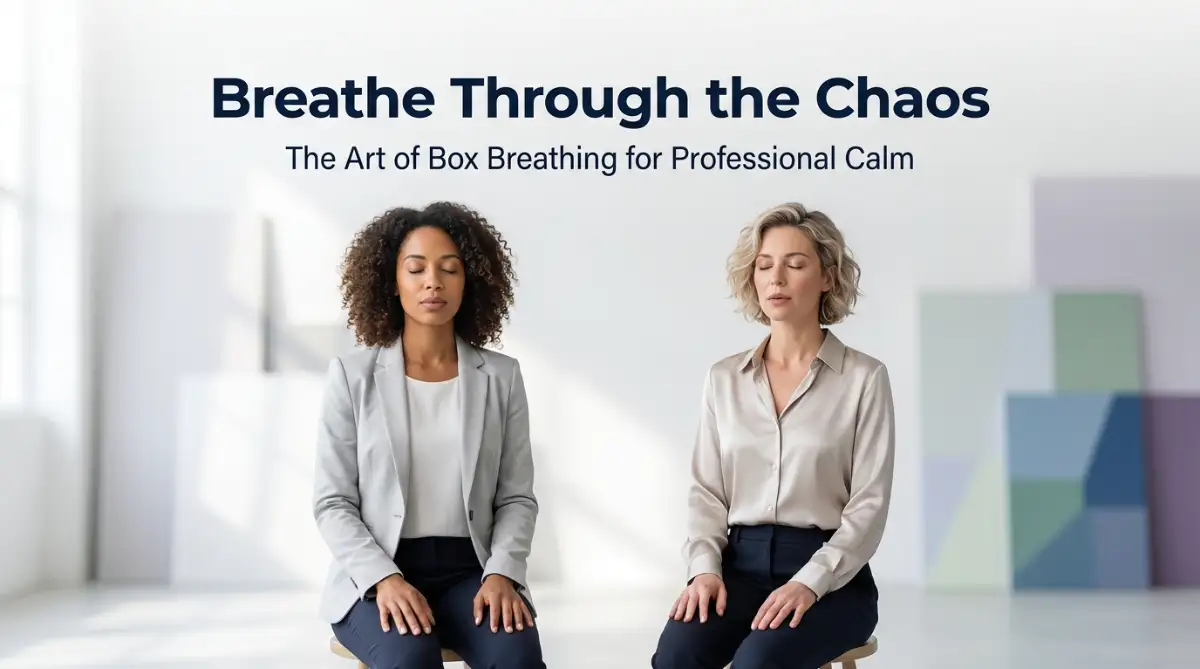
Box breathing is a highly effective, scientifically proven method to quickly calm your nervous system. By inhaling, holding, exhaling, and holding your breath in equal four-second intervals, you can manually lower your heart rate. This simple practice helps reduce anxiety, clears your mind, and restores a sense of control over your body.
Table of Contents
- The Physical Reality of Overwhelming Tension
- What Actually Happens Inside Your Body When You Panic
- The Science Behind Deep Airflow Regulation
- How to Perform the Four-Square Breathing Method
- Integrating the Practice into Your Daily Routine
- Common Mistakes to Avoid During Your Sessions
- Long-Term Benefits for Your Mind and Body
The Physical Reality of Overwhelming Tension
When stress hits you, it does not just stay in your mind. It instantly changes the way your physical body operates.
Think of your nervous system like a highly sensitive car alarm. When something triggers it, the siren starts blaring, and everything goes into emergency mode. Your breathing becomes shallow, staying only in the upper chest, which actually sends more panic signals back to your brain.
Your body begins pumping out cortisol and adrenaline. This chemical rush makes your muscles tense up, particularly in your neck and shoulders, preparing you to either fight or run away. The problem is, you cannot physically run away from an angry email or a stack of bills.
Because we cannot burn off that physical energy, it stays trapped inside us. This trapped energy turns into that horrible, restless anxiety that makes it hard to sit still or focus on a single task. You end up feeling completely exhausted, yet somehow too wired to actually rest.
The Science Behind Deep Airflow Regulation
To stop this physical panic cycle, we have to find a way to communicate with our brain. We have to send a clear, biological signal that we are actually safe.
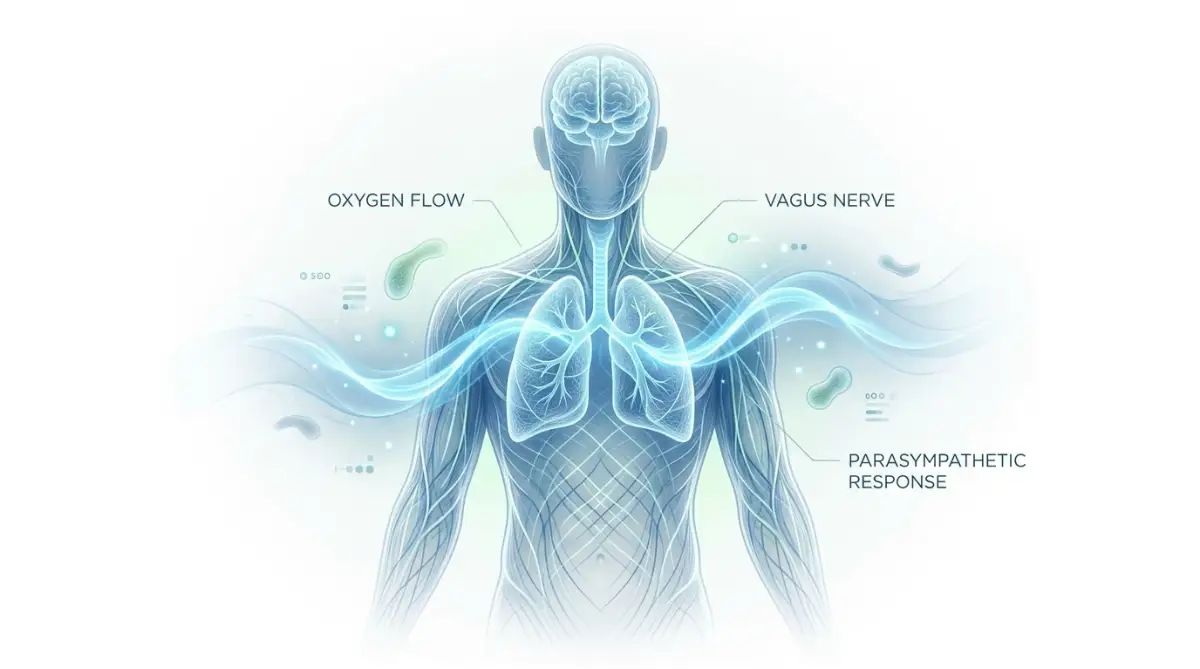
This is exactly where strategic breathing exercises come in. By intentionally slowing down the pace of our breath, we activate the parasympathetic nervous system. This is the part of your body responsible for resting and digesting.
When you take deep, controlled breaths from your diaphragm, you stimulate the vagus nerve. This important nerve runs from your brain down through your chest and abdomen. Stimulating the vagus nerve acts like a brake pedal for your anxiety.
It physically forces your heart rate to slow down. As your heart rate drops, your blood pressure follows, and your brain finally stops releasing those exhausting stress hormones.
Key Takeaways:
- Stress is a physical reaction, not just a mental one.
- Shallow breathing makes anxiety worse by keeping the body in a state of alarm.
- Deep, controlled breathing physically forces your heart rate to slow down.
- Activating the vagus nerve is the fastest way to stop a panic response.
Expert Tip: Always focus on making your exhale slightly longer or stronger than your inhale. A strong exhale is what truly signals your body to drop its defenses and relax.
How to Perform the Four-Square Breathing Method
Now, let us look at the exact technique that helps reset your body in real time. This specific pattern is highly structured, which gives your wandering mind something concrete to focus on.
Instead of worrying about the future, your brain is forced to count and regulate. This completely breaks the cycle of anxious thoughts.
Get YouTube Video viewers' attention:
Want to see exactly how this technique looks in action? Watch this incredibly simple visual guide that breathes along with you to instantly slow down a racing heart.
The process is broken down into four equal parts. You can imagine drawing a square in your mind, where each side of the square takes exactly four seconds to complete.
First, gently push all the old air out of your lungs. Sit comfortably with your feet flat on the floor, and relax your shoulders away from your ears.
Step 1: The Deep Inhale
Breathe in slowly and deeply through your nose for a count of four. Feel the air moving down past your chest and into your belly. Your stomach should expand outward like a balloon filling with air.
Step 2: The First Pause
Hold your breath at the very top of the inhale for another slow count of four. Do not clamp your throat shut or tense your body. Just let the air rest softly in your expanded lungs.
Step 3: The Complete Release
Exhale slowly and smoothly through your mouth for four seconds. Push the air out gently, pulling your belly button back toward your spine. Imagine you are blowing out a candle very slowly, without trying to extinguish the flame.
Step 4: The Final Rest
Hold your lungs empty for a final count of four. This empty hold is often the most relaxing part of the cycle. It provides a deep sense of stillness before you start the next inhale.
I used to think deep breathing was just some spiritual nonsense that would not actually solve my real-world problems. My perspective completely shifted when I started doing this technique in the bathroom during stressful work events; I realized it actually gave me the physical energy to handle the chaos without breaking down.
Integrating the Practice into Your Daily Routine
The real beauty of this method is that it is completely invisible. You can practice it anywhere, at any time, and nobody around you will even notice.
You do not need an hour of quiet meditation to see results. Even three to four cycles of this pattern can dramatically shift your mental state.
Try doing a few rounds right before you open a stressful email or right before you walk into a difficult meeting. It centers your focus and stops your hands from trembling.
It is also incredibly helpful for those nights when your brain refuses to shut down. If you are lying in bed worrying about tomorrow, use the counting method to distract your brain. The rhythm of the counting combined with the slow oxygen intake will naturally make your eyelids heavy.

Common Mistakes to Avoid During Your Sessions
When people first try this, they often try too hard. They force their lungs to expand too much, which actually creates more tension in the chest.
Your breathing should always feel smooth and effortless. If holding your breath for four seconds makes you feel dizzy or panicked, simply lower the count. Try a three-second square instead.
Do not raise your shoulders when you breathe in. This is a common habit of shallow chest breathers. Keep your shoulders heavy and relaxed, and let your belly do all the work.
If your mind wanders to your stress while you are counting, do not get angry at yourself. Just acknowledge the thought and gently bring your attention back to the numbers.
Long-Term Benefits for Your Mind and Body
By practicing this simple technique regularly, you are actually training your body to handle stress better. You are building mental resilience.
Over time, you will notice that little annoyances do not trigger you the way they used to. Your baseline level of anxiety will drop, and your overall mental clarity will improve.
You cannot control the stressful events that happen in your life. Bills will come, people will be difficult, and unexpected problems will arise.
However, you always have control over your breath. By mastering this simple, internal tool, you can create your own immediate sense of peace, no matter what is happening outside.
Leveling Up Your Routine: Expert Secrets for Daily Calm
Once you understand the basic counting method, you can start using it as a shield against the heavy demands of daily life. The real secret to success is not just doing it when you are already panicking. You need to train your body to remember what relaxation actually feels like before the storm hits.
Many people treat relaxation like a fire extinguisher, only pulling it out when a massive problem occurs. If you wait until your heart is already racing out of your chest, your body will fight back against the sudden drop in oxygen. Instead, you need to practice this technique when you feel completely fine.
Think of your nervous system like a muscle that needs regular conditioning. When you practice deep airflow regulation on a calm Sunday morning, you build a physical memory of relaxation. This makes it infinitely easier to calm your mind with simple breathing exercises when a sudden work deadline drops on your desk.
I highly recommend pairing your breathing sessions with an existing daily habit. This concept is known as habit stacking, and it completely removes the pressure of finding "extra time" in your busy schedule. You simply attach a four-minute breathing routine to something you already do every single day without fail.
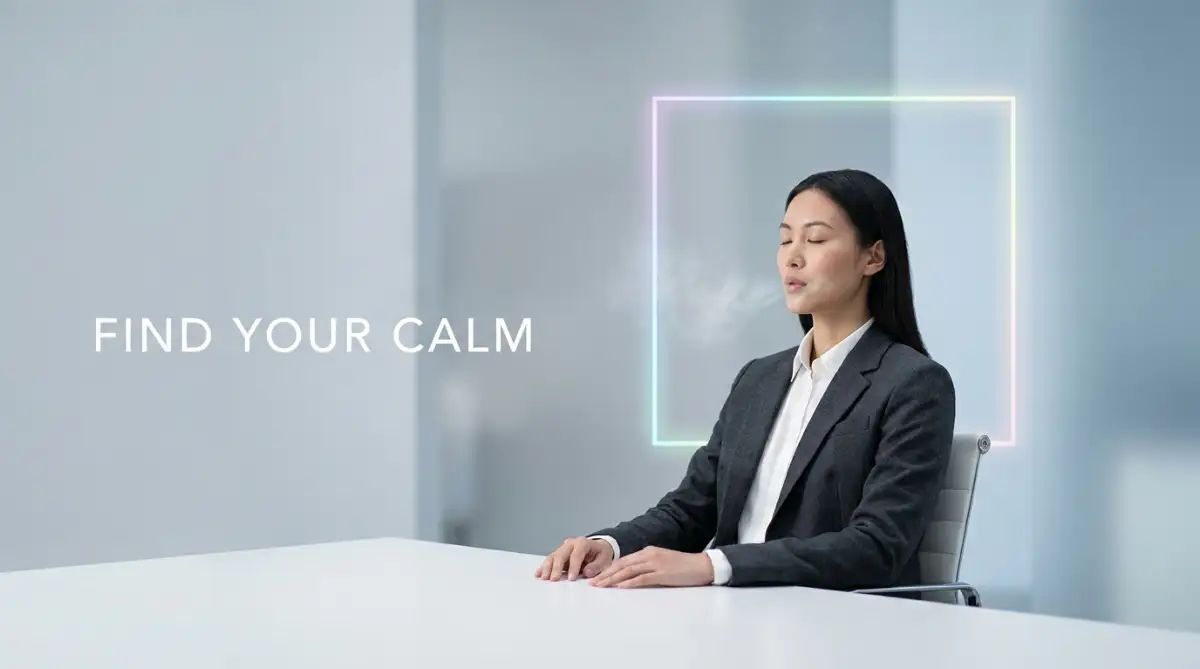
Pro Tip: Always close your eyes and physically visualize a bright, glowing square in your mind while you count. Tracing the edges of the box with your mind’s eye acts as an anchor, instantly stopping intrusive thoughts from sneaking back into your brain.
For example, when you are standing in the kitchen waiting for your morning coffee to brew, do not stare at your phone. Use those exact three minutes to complete a few cycles of the four-square method. You will notice an immediate difference in how you handle your morning commute.
Another excellent trigger point is the moment you sit inside your car after finishing work. Before you turn the key in the ignition, take four slow cycles to reset your brain. This prevents you from carrying office stress into your living room and taking out your frustration on your family.
Taking control of your oxygen intake does more than just relax your muscles. Over time, consistent practice actively lowers your resting heart rate. This means you are actively protecting your heart, which is a fantastic way to manage high blood pressure naturally without relying solely on medications.
Hidden Traps That Sabotage Your Progress
When you first start adjusting your oxygen intake, your body might feel a little confused. This happens because most adults have spent decades breathing incorrectly without even realizing it. We hold our stomachs in to look thinner, which forces us to take tiny, shallow sips of air straight into our upper chest.
One of the most dangerous things you can do is force your lungs to over-expand during the counting phase. If you try to suck in as much air as humanly possible, you will strain the muscles in your neck and chest. This actually triggers your brain to release more stress hormones, completely ruining the entire purpose of the exercise.
Common Mistakes
- Breathing High into the Chest: This keeps your body locked in a state of panic and restricts oxygen to your lower lungs.
- Clenching Your Jaw During Holds: Tensing your facial muscles sends an immediate danger signal directly to your brain.
- Counting Too Quickly: Rushing through the four seconds defeats the biological process of slowing your heart rate.
- Pushing the Air Out Hard: Exhaling forcefully like you are blowing up a balloon causes unnecessary physical strain.
- Practicing Only During Panic Attacks: Waiting until a crisis hits makes it much harder to control your physical reactions.
If you ignore these warnings, you might actually end up feeling lightheaded or dizzy. When you hyperventilate by breathing too hard, your carbon dioxide levels drop too fast. This makes your hands tingle and can send you into a deeper state of anxiety, making you believe the method does not work for you.
Another major trap is expecting absolute perfection from your wandering mind. You will absolutely have moments where you lose count because you suddenly remembered a bill you forgot to pay. Getting angry at yourself creates emotional tension, which physically tightens your chest.
When your brain wanders, you must practice extreme self-compassion. Just imagine the distracting thought is a passing cloud in the sky. Let it float by, gently reset your focus, and start counting from number one again.
Your physical posture plays a massive role in how successfully you can take in oxygen. If you are slumped over a laptop, your ribcage collapses downward, physically crushing your diaphragm. You cannot expect to feel better if your own skeleton is blocking your airway.
Sometimes, our bodies show us we are struggling in ways we completely ignore. You might pick up nervous habits like biting your nails or over-exfoliating your face as a physical outlet for nervous energy. By recognizing these signs early, you can stop the cycle with a few deep breaths.
Even a constant feeling of tiredness or body aches can be a sign your body is completely drained from holding onto stress. Sometimes we blame this on other issues, thinking we might have silent signs of a hidden vitamin d deficiency. While medical checks are important, do not underestimate how deeply unmanaged tension drains your physical health.
For an in-depth understanding of how stress impacts your physical organs, you can explore detailed research from the National Center for Complementary and Integrative Health, which explains the biological markers of chronic tension.
Quick Action Checklist
- Find a quiet, distraction-free spot where you will not be interrupted for five minutes.
- Sit in a chair with both feet flat on the floor to ground your physical body.
- Rest your hands gently on your lap with your palms facing the ceiling.
- Empty your lungs completely before taking your very first counted breath.
- Complete four full cycles before deciding to open your eyes.
Reclaiming Your Peace of Mind Today
You do not have to live your entire life feeling like you are constantly running late for a train. The heavy, suffocating pressure in your chest is a biological reaction, not a permanent personality trait. You have the power to manually switch off that alarm system anytime you choose.
It is incredibly empowering to realize that the ultimate tool for relaxation is something you carry with you everywhere you go. You do not need to buy an expensive app, attend a distant retreat, or read a dozen self-help books. Your breath is the remote control for your entire nervous system.
By dedicating just a few quiet minutes to yourself each day, you build an invisible armor against the chaos of the world. The small annoyances will bounce off you, and the major challenges will feel much more manageable. You are giving your brain the gift of space, clarity, and genuine comfort.
I spent years letting my anxiety completely dictate my mood, ruining family dinners because I was too stressed to be present. The moment I started intentionally slowing my breath, I felt like I finally got the steering wheel of my life back. You truly deserve to feel that exact same sense of freedom.
Which specific time of day are you planning to practice this simple counting method first? Let me know in the comments below!
Common Questions About Deep Airflow Regulation
How long does it take for this method to actually work?
You can usually feel a noticeable physical shift within three to four full cycles. The entire process takes less than two minutes to physically lower your heart rate.
Can I practice this while lying down in bed?
Absolutely. Lying completely flat on your back is actually one of the best positions because your spine is fully supported. It allows your stomach to expand naturally without fighting against gravity.
Why do I feel slightly dizzy when I try to hold the air in?
Dizziness usually happens because you are pulling in too much air too quickly. Try breathing softer and making your inhales smaller, ensuring you are not straining your chest.
Is this safe for people who have asthma or breathing issues?
Yes, but you should never force the holds if it makes you uncomfortable. If a four-second pause causes physical distress, simply reduce the count to two seconds.
How many times a day should I do this routine?
There is no maximum limit, but aiming for two or three small sessions a day is highly effective. Try doing it once in the morning and once right before you go to sleep.
Does this really lower my heart rate, or is it just a placebo?
It is pure biology. Slow exhales physically stimulate your vagus nerve, which sends a direct electrical signal to your heart muscle to slow down its rhythm.
Can children use this technique to calm down before school?
Yes, kids respond incredibly well to the visual idea of drawing a square. It gives their brain a fun, simple task that distracts them from their worries.
Should I breathe through my mouth or my nose?
Always try to inhale smoothly through your nose to filter and warm the air. You can choose to exhale either through your nose or gently blow the air out of your mouth.
What should I do if I keep losing my place while counting?
Do not panic or judge yourself for losing track of the numbers. Simply take a normal breath, reset your thoughts, and start over from number one.
Does this technique help stop sudden panic attacks?
Yes, it acts as a grounding tool to bring your mind back to the present reality. By forcing your body into a rhythm, you stop the panic cycle from escalating further.
Trusted Legal Resources
- American Psychological Association (APA)
- Harvard Medical School: Relaxation Techniques
- National Institute of Mental Health (NIMH)
- Mayo Clinic: Stress Management
- World Health Organization (WHO): Doing What Matters in Times of Stress
- Cleveland Clinic: Diaphragmatic Breathing
Disclaimer
The information provided in this article is strictly for educational and informational purposes only and does not constitute professional medical, psychological, or psychiatric advice. While breathing exercises are generally safe, they are not a substitute for professional medical treatment or therapy. Always consult with a qualified healthcare provider or licensed medical professional before starting any new wellness routine, especially if you have a history of respiratory issues, cardiovascular conditions, or severe anxiety disorders. The authors, publishers, and the website assume no liability for any adverse effects, physical discomfort, or consequences resulting from the application of the information discussed in this content.
About the Author
Reviewed by Mithun Halder (Personal Finance & SEO Expert) & The FinanceInfoIn Editorial Team
The FinanceInfoIn Editorial Team researches personal finance, investing, insurance, mortgages, cryptocurrency, and consumer financial topics. Every article is carefully reviewed to provide clear, practical, and trustworthy educational information based on credible sources and industry best practices.
©2026 FinanceInfoIn. All rights reserved.