Why Opening That Monthly Utility Envelope Used to Give Me Anxiety
I still clearly remember staring at my kitchen counter, holding an electric bill that completely ruined my weekend. My hands actually shook a little as I read the total printed in thick black ink.
I felt like I was working extra hours just to pay for lights and air conditioning I barely even noticed using. It made me so frustrated because I honestly thought I was already doing everything right.
I turned off the lights when leaving a room, yet the numbers kept climbing higher and higher. Every single month, that paper envelope felt like a personal punishment waiting in the mailbox.
I found myself randomly yelling at everyone in the house to shut off the television, turning me into an annoying and grumpy energy cop. My own home stopped feeling like a relaxing safe space.
It feels terrible when your hard-earned money just drains away into invisible expenses that you cannot see or touch. You try your best to budget for family dinners or a small weekend trip, but that giant utility bill just eats up all your savings.
Regular people everywhere are losing sleep worrying about how high their next bill will be, especially during extreme summer or winter weather. We sit in the dark, sweating or freezing, just to save a few pennies at the end of the month.
The mental peace in our daily lives is completely destroyed when we feel like we have no control over our own household expenses. We constantly wonder if a broken appliance or a hidden leak is secretly draining our bank accounts.
Nobody deserves to feel this level of stress just to keep the lights on and their family comfortable. You deserve to run your home efficiently without sacrificing your peace of mind or your paycheck.
The Invisible Energy Thieves Draining Your Bank Account
If you want to lower your monthly utility bill, you have to understand exactly where your power is going. Most people blame their air conditioner or their heater, but the truth is often hiding in plain sight.
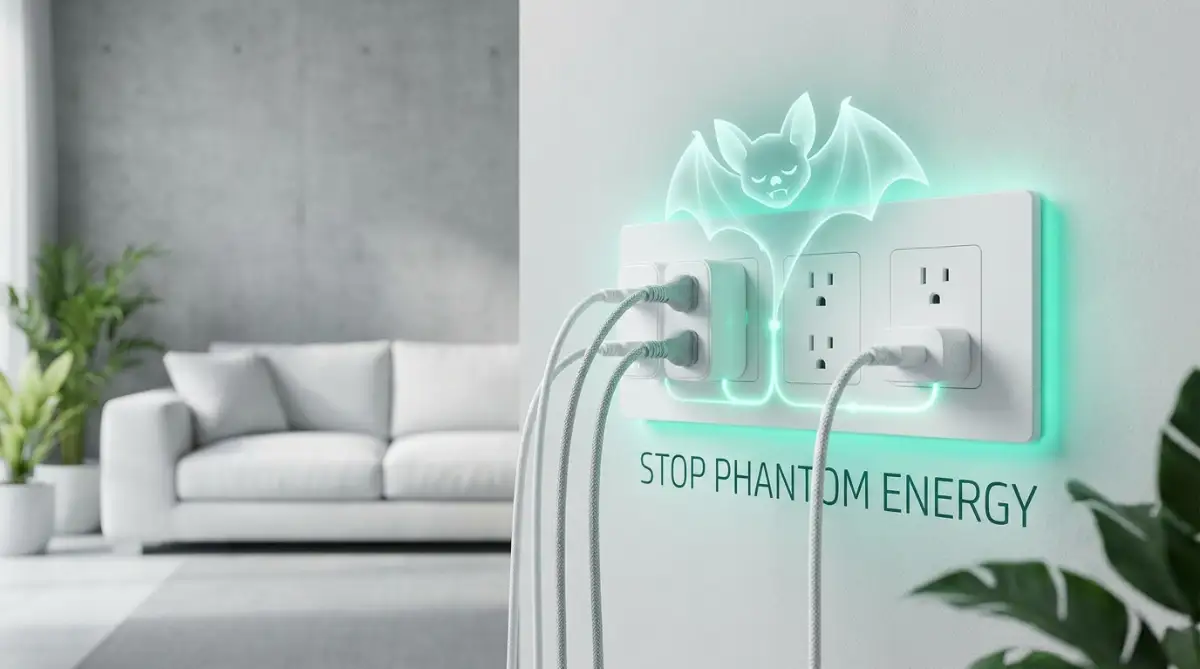
Right now, as you read this, there are probably dozens of devices in your house quietly stealing electricity. We call this phenomenon "phantom energy" or "vampire power."
These are the electronics and appliances that consume power even when you think they are completely turned off. If a device has a little glowing standby light or a digital clock, it is actively drinking electricity.
Myth vs Reality: The Standby Mode Trap
The Common Myth: When you press the power button on your television remote, the TV stops using electricity.
The Shocking Reality: Modern electronics never truly go to sleep. They enter a standby mode, constantly searching for a remote signal or updating background software, which continuously adds to your electric bill.
I used to ignore these small things because I thought a tiny glowing light could not possibly cost that much money. But when you add up the microwave, the coffee maker, the television, the gaming console, and all those phone chargers left plugged in, the numbers get scary.
Those innocent-looking plugs can account for nearly ten percent of your total monthly utility bill. Stopping this invisible drain is one of the easiest simple habits to save electricity without changing your lifestyle.
My Personal Pro Tip: I realized how much money I was wasting when I touched my plugged-in laptop charger and felt that it was warm, even though my laptop was in another room. Now, I use a smart power strip for my entertainment center that completely cuts the power with one click when I go to bed.
If you are a visual learner who wants to see exactly how these energy vampires operate in real-time, watch this eye-opening breakdown below.
Mastering the Art of Temperature Control
Heating and cooling make up the biggest slice of the pie when it comes to home energy use. We often set our thermostats to extreme temperatures because we want the house to cool down or heat up faster.
However, your system works at the exact same speed no matter what number you set it to. Setting the air conditioner to freezing cold will not cool the room quicker; it just forces the system to run much longer than necessary.
A great habit to build is the "Two-Degree Adjustment Rule." Simply adjust your thermostat by just two degrees closer to the outside temperature.
If it is hot outside, set it two degrees warmer than your usual preference. Your body will barely notice this tiny shift in temperature, but your air conditioning unit will get a massive break.
This small adjustment can reduce your heating and cooling costs by up to ten percent over time. You will stay perfectly comfortable while watching your monthly expenses drop significantly.
Before Replacing an Appliance
Before spending money on a new appliance, check whether the existing one simply needs maintenance.
- Clean air filters
- Defrost freezers
- Clean refrigerator coils
- Check door seals
- Review thermostat settings
- Measure actual electricity usage if possible
Many older appliances become inefficient because of poor maintenance rather than permanent failure.
Using Ceiling Fans the Right Way
Many people think ceiling fans actually lower the temperature of the room. In reality, fans only cool the people in the room by creating a wind-chill effect on your skin.
If you leave a ceiling fan running in an empty room, you are just wasting electricity and burning out the motor. Turn them off the exact second you walk out the door.
Also, make sure your ceiling fan is spinning in the correct direction for the season. During warm weather, the fan should spin counterclockwise to push cold air straight down onto you.
When the weather gets cold, switch the direction to clockwise and run it on a low speed. This pulls cool air up and gently pushes the warm air that gets trapped near the ceiling back down into the living space.
Rethinking Your Laundry Day Strategy
Washing machines and dryers are massive energy hogs, mostly because of how they heat the water. Up to ninety percent of the energy used by a standard washing machine goes directly toward heating the water.
Switching to cold water washing is a total game-changer for your monthly utility bill. Modern laundry detergents are scientifically designed to clean heavy stains perfectly well in cold water.
You do not need hot water unless you are sanitizing heavily soiled items like cloth diapers or greasy work clothes. Making cold water your default setting will instantly shave dollars off your bill.
Another major mistake is running the machine when it is only half full. The machine uses roughly the same amount of water and electricity for a small load as it does for a completely full load.
Wait until your hamper is actually full before you start the wash cycle. You will do laundry less frequently, which saves your own personal time while also saving money.
The Refrigerator Reality Check
Your refrigerator is one of the only appliances in your house that runs twenty-four hours a day, seven days a week. It is a necessary expense, but there are simple ways to make it run more efficiently.
First, check the temperature settings inside both the fridge and the freezer compartments. Your refrigerator only needs to be kept between thirty-five and thirty-eight degrees Fahrenheit to keep food perfectly safe.
Setting it any colder just forces the compressor to work harder, burning extra electricity for no good reason. Your freezer should sit comfortably right at zero degrees Fahrenheit.
Next, pay close attention to how you store your food inside the fridge. An empty refrigerator actually has to work much harder to stay cold than a full one.
When you open the door of a full fridge, the cold items inside help maintain the overall temperature. If your fridge is looking a bit empty, put a few large jugs of tap water inside to help hold the cold air.
Also, make sure you pull the fridge away from the wall once a year to clean the back coils. When those coils get covered in thick dust and pet hair, the motor has to run much longer to release the heat.
Lighting Upgrades That Actually Make Sense
We have all heard that we need to turn off the lights when leaving a room. It is great advice, but upgrading the actual bulbs makes a much bigger financial impact.
If you still have older incandescent bulbs hidden around your house, they are costing you a lot of unnecessary money. Those old glass bulbs waste ninety percent of their energy producing heat instead of actual light.
Switching to LED bulbs might cost a little more up front at the hardware store. However, they use up to eighty-five percent less electricity and last for years without burning out.
Focus on replacing the bulbs in the rooms you use the most, like the kitchen, living room, and outdoor porch lights. You will start seeing a return on your investment within just a few short months.
Try to rely on natural sunlight as much as possible during the daytime hours. Open your curtains wide in the morning instead of automatically flipping the light switch on the wall.
Window Treatments and Smart Insulation
Your windows can be your best friend or your worst enemy when trying to control energy costs. A huge percentage of your home's heat escapes right through the glass during the colder months.
During hot weather, direct sunlight pouring through a window works exactly like an oven, baking your living room. You can easily fix this by getting smarter with your window curtains and blinds.
Keep your blinds tightly closed on the sunny side of the house during hot summer afternoons. This blocks the heat from entering, meaning your air conditioner will not have to turn on as frequently.
When the weather turns freezing cold, open those same curtains during the day to let the free heat from the sun warm up your rooms. As soon as the sun goes down, close the curtains tightly to trap that free heat inside.
If you notice a cold breeze coming from the edges of your windows, buy some cheap weather stripping from a local store. Sealing those tiny invisible gaps prevents your expensive conditioned air from leaking out into the neighborhood.
Rethinking How You Cook Dinner
The oven is a fantastic tool for family dinners, but it requires an incredible amount of electricity to heat up that massive metal box. For smaller meals, try using smaller countertop appliances instead.
A microwave, a toaster oven, or an air fryer uses significantly less energy than your main kitchen stove. They also cook your food much faster, saving you valuable time in the evening.
If you do need to use the big oven, try cooking multiple dishes at the exact same time. You can bake a chicken and roast a pan of vegetables simultaneously, maximizing the heat you are already paying for.
Resist the urge to open the oven door to check on your food while it is cooking. Every time you open that heavy door, the temperature drops rapidly, forcing the oven to pull more electricity to heat back up.
Keep the glass window clean and use the internal oven light to monitor your dinner's progress instead. Small adjustments in the kitchen add up to significant savings over an entire year.
Smarter Water Heating Habits
Most people never even think about their water heater until the water runs freezing cold mid-shower. However, it is constantly drawing power to keep a giant tank of water hot around the clock.
Check the dial on your water heater tank and see what temperature it is currently set to. Many manufacturers set them extremely high by default, sometimes up to one hundred and forty degrees.
You can easily turn that dial down to one hundred and twenty degrees without noticing any difference in your shower. It is still plenty hot for bathing and washing dishes, but it drastically reduces your energy usage.
If your water heater is located in a cold garage or an unfinished basement, it is losing heat to the surrounding air. Wrapping the tank in an inexpensive thermal blanket keeps the heat securely inside the tank.
The Dishwasher Strategy
Washing dishes by hand actually uses far more hot water than running a modern dishwasher. But you only get those energy savings if you use the machine correctly.
Never run the dishwasher for just a few plates and cups. Wait until it is completely loaded from front to back before hitting the start button.
Also, skip the heated dry setting that comes turned on by default on most modern machines. The heated dry option uses a massive electric coil to bake the moisture off your plates.
Instead, simply open the dishwasher door a few inches when the wash cycle finishes. The steam will escape, and your dishes will naturally air dry without costing you an extra dime.
By applying these thoughtful strategies across your entire home, you stop being a victim to your utility company. You regain complete control over your household budget, ensuring every dollar stays exactly where it belongs—in your wallet.
Next-Level Strategies to Keep Your Power Usage at Rock Bottom
Once you master the basic changes around your house, you might wonder how you can push your savings even further. This is where a little bit of planning and insider knowledge can truly transform your monthly expenses.
Many people stop at just turning off the lights, but there is an entire world of smart energy management waiting for you. By adopting these expert-level habits, you will not just lower your bill temporarily; you will keep it low for the long haul.
Let me share a few hidden secrets that utility companies rarely talk about in their standard monthly newsletters. These methods require a tiny bit of effort up front, but the financial payoff is absolutely massive over time.
Weekly
✅ Turn off standby devices
✅ Check thermostat settings
✅ Run dishwasher only when full
Monthly
✅ Inspect HVAC filter
✅ Review utility bill
✅ Clean refrigerator door seal
Yearly
✅ Clean refrigerator coils
✅ Check attic insulation
✅ Inspect weather stripping
✅ Service HVAC system
Mastering the Utility Company's Hidden Schedule
Did you know that electricity actually costs more at certain times of the day? Many utility providers use something called "Time-of-Use" pricing, which means power is more expensive during busy hours.
Usually, the late afternoon and early evening are considered peak hours because everyone is coming home from work. People immediately turn on their televisions, crank up the air conditioning, and start cooking dinner all at the same time.
Because the demand on the local power grid is so high, the electric company charges you a premium rate for every kilowatt you use. Understanding these off-peak hours is a massive advantage for your household budget.
Try shifting your heavy energy chores to the late evening or very early morning. Run your dishwasher right before you go to bed, or set your washing machine on a delay timer so it runs long after midnight.
According to guidelines from the U.S. Department of Energy regarding time-based rates, running appliances during off-peak hours can cut your appliance running costs significantly. You are using the exact same amount of electricity, but you are buying it when it is on sale.
The "Straw Method" for Your Heating and Cooling System
I want you to imagine trying to run a marathon while breathing through a tiny, paper drinking straw. Your lungs would burn, your heart would race, and you would probably collapse from exhaustion within a few minutes.
That is exactly what your central air conditioning and heating system experiences when you forget to change the air filter. A dirty, clogged filter restricts the airflow, forcing the main blower motor to work incredibly hard just to push air into your living room.
This simple maintenance task is easily forgotten, but it destroys your energy efficiency. Checking your air filters every single month is one of the smartest habits you can possibly develop.
If you hold a filter up to the light and cannot see through it, it belongs in the trash can immediately. Replacing a cheap air filter regularly saves you an incredible amount of money by helping your system run smoothly.
Experts at the Environmental Protection Agency's indoor air quality division highly recommend frequent filter changes to improve both system efficiency and family health. Clean filters mean a lower electric bill and less dust floating around your home.
Embracing the Smart Home Revolution
You do not need to turn your house into a futuristic spaceship to benefit from modern technology. A few well-placed smart devices can automatically manage your energy consumption without you having to lift a finger.
A smart thermostat is easily the best investment you can make for your home's energy efficiency. These clever devices actually learn your family's daily schedule and adjust the temperature completely on their own.
They know when you leave for work and will let the house warm up a bit to save money while nobody is home. Right before you walk back through the front door, the smart thermostat automatically cools the house back to your favorite comfortable temperature.
Many local utility companies even offer massive rebates or free smart thermostats just for signing up for their energy-saving programs. Over time, taking control of your home management directly improves your overall money management strategies, leaving you with more cash for the things you actually love doing.
The Free Weekend Energy Audit
You can actually perform a professional-level inspection of your home without paying an expensive contractor. Pick a quiet Saturday morning and walk slowly around your house with a simple stick of incense or a lit candle.
Hold the smoke near the edges of your windows, exterior doors, and even electrical outlets located on outside walls. If you see the smoke blowing sideways, you have just found an invisible leak where your expensive air is escaping.
A tube of clear silicone caulk costs almost nothing at the hardware store, but it can stop these leaks instantly. Sealing up your house acts like putting a warm winter coat on your building, keeping the inside temperature perfectly stable.
You can also check the insulation in your attic just by sticking your head up through the access hatch. If you can easily see the wooden floor joists, you definitely do not have enough insulation holding the heat inside your living space.

The Costly Traps That Sabotage Your Savings
Even when we try our absolute best, it is incredibly easy to fall into bad habits that secretly waste electricity. I have personally made several of these mistakes, and they always show up as a nasty surprise on the next billing statement.
Sometimes we think we are doing the right thing, but we are actually forcing our appliances to work much harder. Let's look at the most common pitfalls so you can protect your wallet from these invisible energy traps.
The "Set It and Forget It" Refrigerator Disaster
Many families buy a second refrigerator or a deep freezer to keep in their hot garage or dusty basement. They plug it in, fill it with extra meat or frozen pizzas, and completely forget about it for months.
However, putting a cooling appliance in an unconditioned space is a terrible idea for your electric bill. During the summer, that garage gets boiling hot, and the poor refrigerator has to run its compressor non-stop just to survive the heat.
If you really need a second freezer, try to find a spot for it inside the house where the air is already conditioned. If you must keep it in the garage, make sure it is heavily insulated and kept out of direct sunlight.
Buying "Cheap" Replacements Instead of Smart Ones
When an old television or washing machine finally breaks, the natural instinct is to rush out and buy the cheapest replacement possible. You might feel like you scored a great deal at the store, but you are actually setting a trap for yourself.
Cheap appliances are almost always built with older, power-hungry technology that wastes electricity every single time you turn them on. Always look for the blue Energy Star label when shopping for anything that plugs into a wall.
According to independent testing by the Energy Star program, certified appliances use significantly less electricity without sacrificing any performance. Paying a tiny bit more upfront saves you hundreds of dollars over the lifespan of that specific machine.
The Thermostat Battleground
In many households, the thermostat becomes a daily battlefield where family members constantly fight over the temperature. Someone feels hot and drops the dial to sixty degrees, then an hour later someone else freezes and pushes it up to eighty.
This extreme yo-yo effect forces your heating and cooling system to constantly cycle on and off, which draws massive surges of electricity. Every time the heavy compressor has to restart, your utility meter spins a little bit faster.
Have a family meeting and agree on a comfortable middle ground for the house temperature. If someone is still cold, encourage them to wear a comfortable sweater instead of immediately touching the main thermostat dial.
Constant arguments over money and bills can seriously damage your mental peace and physical well-being. Finding a happy compromise at home is just like learning simple breathing exercises to reduce daily anxiety; it instantly makes your daily life feel much more relaxed.
Ignoring the Outside of Your House
We spend so much time worrying about the lights and plugs inside our home that we completely ignore the exterior. Those beautiful outdoor security lights and garden path lamps can quietly consume a massive amount of power.
Leaving heavy floodlights on all night long is completely unnecessary and highly expensive. Switch to motion-sensor outdoor lighting so the bulbs only activate when a person or a car actually approaches the driveway.
You can also invest in solar-powered pathway lights for your garden or front yard. The sun charges them completely for free during the day, and they provide lovely ambient light all night long without touching your electric meter.
Spending more time outside in the evening instead of watching television inside is a fantastic way to save power. You might even want to start your first backyard vegetable garden to enjoy the fresh air while letting your home's electrical system rest.
Falling for Fake Energy-Saving Gadgets
If you scroll through social media, you will eventually see an advertisement for a small, magic box that promises to slash your power bill by fifty percent. They tell you to just plug it into any wall outlet and watch your meter slow down.
Please do not waste your hard-earned money on these scam devices. Independent consumer watchdogs and the Federal Trade Commission have repeatedly warned that these plug-in gadgets do absolutely nothing to reduce your actual power consumption.
There are no magic shortcuts or secret cheat codes to lower your utility bill overnight. True savings only come from changing your daily habits, maintaining your appliances, and stopping phantom power drains at the source.
Your Blueprint for a Stress-Free Monthly Bill
Taking control of your energy consumption is not about sitting in the dark or feeling miserable in your own home. It is simply about getting smarter with how and when you use your heavy appliances.
By unplugging hidden energy vampires, adjusting your thermostat slightly, and shifting your habits to off-peak hours, you instantly take the power back from the utility company. You will stop paying for electricity that you are not even actively enjoying.
Think about what you could do with an extra fifty or a hundred dollars staying in your bank account every single month. You could put it toward family vacations, a better grocery budget, or simply building a safer emergency fund for the future.
Eating better, lowering your stress, and managing your home efficiently all connect to a happier life. Just like making healthy daily diet changes improves your physical health, making smart energy choices improves your financial health.
You do not have to tackle every single tip mentioned here by tomorrow morning. Pick just two or three simple habits, like washing clothes in cold water and unplugging your entertainment center at night, and start there.
My Personal Promise to You: I remember the exact day I finally opened an electric bill and actually smiled instead of panicking. I want that exact same feeling of total relief and financial control for you and your family. Start building these simple habits today, and you will absolutely love the numbers you see on next month's statement.
*Actual savings vary by home size, appliance efficiency, utility rates, and climate.
Summer
✅ Close curtains during afternoon
✅ Increase thermostat 2°
✅ Use ceiling fan
✅ Replace AC filter
✅ Avoid oven during daytime
Winter
✅ Open curtains during sunny hours
✅ Seal window leaks
✅ Lower water heater temperature
✅ Reverse ceiling fan direction
✅ Check insulation
Biggest Energy Saving Mistakes
Common Questions About Managing Your Home Electricity
Does unplugging appliances every day actually save real money?
Yes, it absolutely does make a noticeable difference on your final bill. Devices on standby mode constantly draw a small amount of power, and when you multiply that by twenty devices over thirty days, it adds up to real cash. Using a smart power strip makes unplugging everything happen with just one simple click.
Why is my electric bill suddenly so high this month?
A sudden spike is usually caused by extreme weather forcing your heating or cooling system to run constantly. It could also mean you have a dirty HVAC filter, a failing appliance pulling too much power, or a sudden change in your utility company's seasonal rate structure. Check your filter first and then review your usage graph on the provider's website.
Are LED light bulbs really worth the expensive upfront cost?
They are one hundred percent worth the investment for your home. While they cost a little more at the cash register, they use a fraction of the power of old bulbs and last for many years. You will easily make your money back in energy savings within the first few months of installing them.
Should I leave the ceiling fan on to keep the dog cool while I am at work?
No, you should never leave a ceiling fan running in an empty house. Fans do not lower the actual temperature of the room; they only make human skin feel cooler due to the wind chill effect. Leaving it on for a pet just burns electricity without actually lowering the heat inside the room.
Is it cheaper to wash my dishes by hand instead of using the dishwasher?
Surprisingly, modern dishwashers are actually much more efficient than washing by hand. A certified dishwasher uses less hot water and less electricity than leaving the kitchen faucet running for fifteen minutes. Just make sure you only run the machine when it is completely full to maximize your savings.
Will turning my air conditioner off completely while at work save me money?
It is usually better to set the thermostat a few degrees higher rather than turning it completely off. If you turn it off on a very hot day, the walls and furniture absorb massive amounts of heat. When you get home, the system has to work twice as hard and run for hours just to remove all that trapped heat from the building.
Do smart meters actually help lower my power bill?
The meter itself does not magically lower your bill, but the data it provides is incredibly valuable. Smart meters let you see exactly when you are using the most power, usually through an app on your phone. You can use that information to find your household's bad habits and fix them immediately.
Disclaimer: The information provided in this blog post is for general educational and informational purposes only and does not constitute professional financial or electrical advice. Utility rates, energy savings, and appliance efficiency vary widely based on your specific location, local power grid, and household usage. Always consult with a licensed electrician or your local utility provider before making major changes to your home's electrical systems.