Reading Time: 12 Minutes
Difficulty Level: Beginner to Intermediate
Reviewed By: FinanceInfoIn Editorial Team
The Clutter Trap: When Your Cooking Space Fights Back
I clearly remember standing in my cramped cooking area, trying to find a simple glass mixing bowl to make a salad. I opened the upper cabinet door, and a literal avalanche of mismatched plastic containers came crashing down on my head. I stood there, staring at the mess on the floor, feeling completely overwhelmed by such a basic task. My countertops were completely hidden under random appliances, tangled cords, scattered spice jars, and unopened mail.
I realized that my own home was actively stressing me out instead of being a place to relax and unwind. If you have ever felt like cooking is a daily battle against your own house, I know exactly how that feels. A small kitchen with barely any cabinets feels like a trap that slowly drains your mental energy.
Every time you bring home groceries, you have to play a frustrating game of Tetris just to put things away. It makes you want to drop the grocery bags on the floor and walk away. You start avoiding cooking altogether because the cleanup seems mathematically impossible.
Ordering takeout becomes a daily habit, simply because you do not want to face the confusing mess hiding behind those cabinet doors. This lack of physical space steals your peace of mind and turns a basic daily chore into a heavy burden. But you do not need to tear down walls or spend thousands on renovations to find real relief.
Quick Summary
Living with a tiny kitchen does not mean you have to live with constant clutter. By rethinking how you use your vertical areas, empty walls, and cabinet doors, you can double your storage capacity. This guide walks you through practical, everyday strategies to clear your counters and organize your tools without needing a massive renovation budget.
Table of Contents
- The Clutter Trap: When Your Cooking Space Fights Back
- Rethinking Your Small Cooking Space Rules
- Vertical Real Estate: Look Up, Not Down
- The Cabinet Chaos: Taming Pots, Pans, and Lids
- Uncovering Hidden Storage Zones You Already Have
- Clearing the Countertop Completely
- Keeping the Mess Away Permanently
Key Takeaways
- Think vertically: Use the empty spaces above your cabinets and high up on your walls.
- Use the doors: The back of every cabinet door is free storage real estate.
- Zone your items: Group items by how often you use them, not just by what they are.
- Keep counters clear: Only items used daily should live on your main countertops.
Rethinking Your Small Cooking Space Rules
We often believe that more space is the only answer to our storage problems. The truth is, how you arrange things matters much more than the square footage you own. When you organize a small kitchen with limited cabinet space, you must change the way you view your items.
Not everything belongs in a closed drawer. Some of the most beautiful and functional kitchens actually display their tools proudly in the open.
By categorizing your pots, pans, and dry goods into specific zones, you remove the guesswork out of meal prep. You stop running from one end of the room to the other just to make a cup of tea.
Vertical Real Estate: Look Up, Not Down
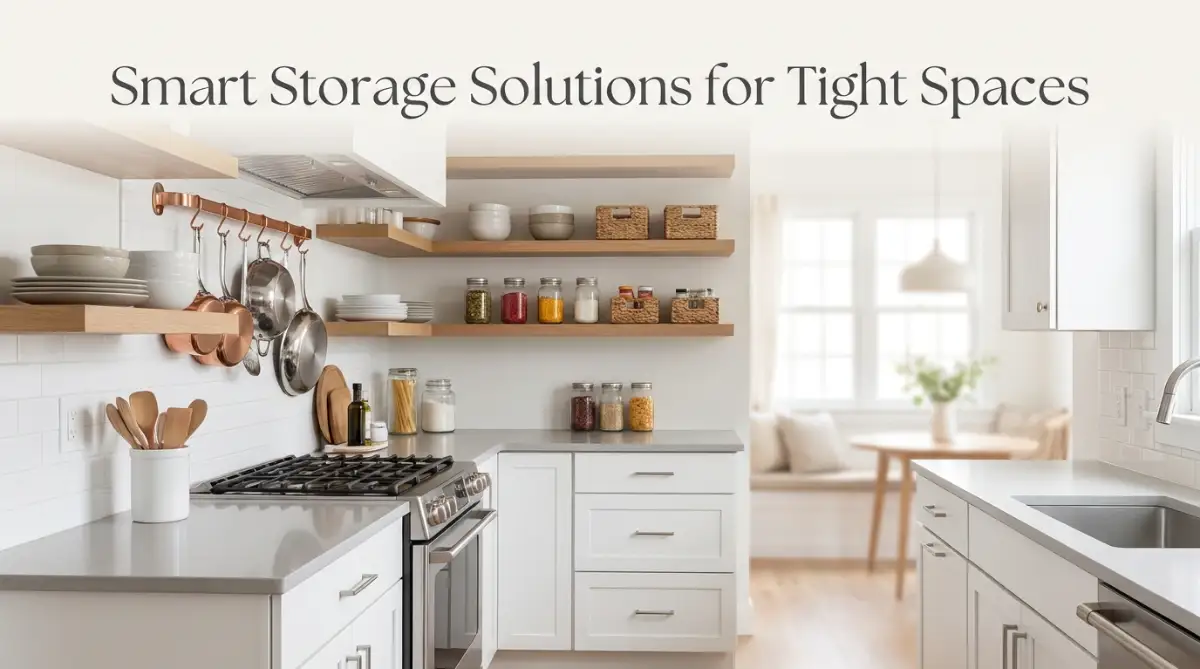
If you cannot expand your footprint outward, you must build upward. Take a good look at your walls right now. There is probably a massive amount of empty space between your upper cabinets and the ceiling, or above your sink.
Installing simple, sturdy floating shelves can instantly solve your storage shortage. You can place your heaviest, most beautiful cast-iron pots on these shelves, turning them into practical decor.
If shelves feel too heavy for your walls, consider a classic metal pegboard. Hardware stores sell them for cheap, and they can hold everything from frying pans to measuring cups. It keeps your daily tools exactly where you need them: right at your fingertips.
Watch This Genius Storage Breakdown
If you want to see exactly how to mount these space-saving racks without damaging your walls, watch this quick demonstration below. It will completely change how you view empty wall space.
Tension Rods and Shelf Risers
You do not need power tools to create extra layers in your kitchen. A basic tension rod, like the one you use for a shower curtain, is a secret weapon. Place one vertically inside a cabinet to hold cutting boards and baking sheets upright.
They will slide out like books from a library shelf, instead of forcing you to lift a heavy stack just to get the bottom pan.
Another incredible tool is the simple wire shelf riser. These instantly double the surface area inside a tall cabinet, allowing you to put plates on the bottom and bowls directly above them without stacking them directly together.
The Cabinet Chaos: Taming Pots, Pans, and Lids
Dealing with pots and pans is easily the most annoying part of having limited room. They are bulky, awkwardly shaped, and their lids never seem to stay in place.
The smartest approach is to stop nesting them completely if you use them every day. Instead, hang the pots and separate the lids.
You can attach a simple wire rack to the inside of your cabinet door specifically designed to hold lids. This single change will free up half of your cabinet floor instantly.
Expert Tip: I used to stack my non-stick pans directly on top of each other to save room. Not only did I scratch the expensive coating on all of them, but I also hated cooking because getting the middle pan was so frustrating. I bought a cheap wire file organizer from an office supply store and placed it in my cabinet to hold the pans sideways. It changed my life completely.
Uncovering Hidden Storage Zones You Already Have
When you organize a small kitchen with limited cabinet space, you have to become a treasure hunter. Every small gap is an opportunity.
Look at the space between your refrigerator and the wall. Is there a three-inch gap? You can slide a slim, rolling pantry cart right into that space to hold all your canned goods and spices.
What about the side of your fridge that faces the stove? That large metal surface is perfect for heavy-duty magnetic shelves. You can store your olive oil, salt, pepper, and paper towels right on the side of the fridge, completely freeing up a whole cabinet.
Even the space right above your sink can be maximized. An over-the-sink drying rack allows your wet dishes to drip directly into the drain, eliminating the need for a bulky drying mat on your precious counter space.
Clearing the Countertop Completely
Your countertop is your primary workspace, not a storage unit. When counters are full, cooking feels impossible.
The rule here is simple: if you do not use an appliance every single day, it does not belong on the counter. The blender you use once a month for smoothies? Put it on top of the fridge or in a closet in the next room.
The toaster you use every morning? That can stay.
To keep everyday items organized, use a small tray next to the stove. Group your cooking oil, salt cellar, and a small jar of wooden spoons on this tray. When things are grouped intentionally, they look like stylish decor rather than random clutter.
Keeping the Mess Away Permanently
Getting your kitchen clean is one thing, but keeping it that way requires a slight shift in your daily habits. The "One-In, One-Out" rule is highly effective here.
If you buy a new coffee mug, an old one must go to charity. If you buy a new spatula, the melted, cracked one goes into the trash. This strict boundary stops new clutter from secretly invading your freshly organized space.
You also need to set aside five minutes every single night before bed to reset the room. Wipe down the empty counters, put the clean dishes away, and ensure nothing is left sitting out.
Waking up to a clear, functional cooking area sets a positive tone for your entire day. You will start to feel in control of your home again. You will actually want to cook dinner, try new recipes, and maybe even invite friends over.
By applying these thoughtful strategies, you transform a cramped, stressful room into a highly efficient workspace. You do not need massive cabinets to have a great kitchen; you just need to be smart about where everything goes.
Next-Level Space Hacking Strategies
Finding extra room in a tiny cooking area requires you to think outside the traditional storage box. You must start looking at the invisible spaces you interact with every single day. One of my favorite methods is utilizing the bottom side of your upper cabinets.
You can easily mount magnetic strips or small screw-in hooks right underneath these upper cabinets. This creates a floating storage zone for your favorite coffee mugs or heavy metal utensils. By doing this, you keep your tools out of the way but completely accessible for your morning routine.
Another highly effective strategy is the art of decanting your dry goods. When you buy pasta, rice, or cereal, the cardboard boxes take up a massive amount of unnecessary room. Transferring these foods into tall, clear, stackable containers completely changes the game.
You can fit twice as much food in the exact same shelf area. Plus, clear containers let you see exactly how much inventory you have left before you go grocery shopping. Keeping your home organized actually helps you save money by preventing duplicate purchases.
Pro Tip: Always label the bottom of your clear containers with the expiration date using a piece of masking tape. I once threw away a whole batch of expensive almond flour because I forgot when I bought it, simply because I threw the original box away too quickly!
Thinking in terms of "micro-zones" is another secret weapon for small layouts. Instead of putting all your spoons in one drawer and all your baking items in another, organize by activity. Create a dedicated coffee-making zone, a baking zone, and a meal-prep zone.
Place your cutting boards, favorite knives, and measuring cups right next to the counter where you actually chop your vegetables. If you grow your own herbs, keep them near the window but away from the stove's heat. If you want to expand your fresh ingredients, you might even consider setting up a small outdoor space, much like learning how to start your first backyard vegetable garden with zero experience.
Grouping your tools by purpose stops you from running back and forth across the room. It treats your kitchen like a professional ship's galley, where every single inch has a strict purpose.
Storage Zones and Item Frequency
Using the inside of your cabinet doors for flat items is another smart move. You can attach slim wire racks to hold your cutting boards, foil, and plastic wrap. This tiny adjustment frees up an entire drawer that you can now use for larger pots.
You should also pay attention to how you manage your energy and focus while cleaning. Sometimes the mess feels so overwhelming that you just walk away. Building a habit of cleaning as you cook requires discipline, much like figuring out how to train your mind to focus on reading books again.
The Sneaky Storage Traps Ruining Your Kitchen
Even with the best intentions, it is very easy to fall back into bad habits when you organize a small kitchen with limited cabinet space. Many people buy beautiful, expensive organizing bins before they actually measure their shelves.
They bring the bins home only to find out the cabinet doors will not close properly. You end up wasting money and creating even more visual clutter. Always measure the depth, width, and height of your spaces before buying a single plastic tub.
Another massive pitfall is holding onto single-use gadgets that you never touch. The strawberry slicer, the bulky avocado tool, and the electric can opener take up premium real estate. A good quality chef's knife can do the exact same job while taking up a fraction of the room.
Common Mistakes
- Buying containers first: Never buy bins without sorting and measuring your exact shelf dimensions first.
- Keeping novelty tools: Throw out or donate gadgets that only serve one highly specific purpose.
- Ignoring the walls: Leaving empty wall space bare while cramming everything into dark lower cabinets.
- Hoarding plastic bags: Shoving hundreds of grocery bags under the sink takes up valuable cleaning supply space.
- Overstuffing the fridge top: Piling heavy boxes on top of the refrigerator looks messy and creates a fire hazard.
When you pack your cabinets so tightly that items cannot breathe, you cause hidden damage. Heavy stacks of plates can crack the bottom shelves. A disorganized, overflowing refrigerator makes the motor work harder, which ultimately costs you money.
In fact, maintaining good airflow around your appliances is a great way to improve efficiency, similar to how to lower your monthly utility bill with extremely simple habits. The more organized your space is, the better your appliances perform.
Common Organizing Errors and Quick Fixes
Quick Action Checklist
- Empty out your single most annoying cabinet right now.
- Throw away any expired food or broken plastic containers.
- Wipe down the empty shelves with a damp cloth.
- Group the remaining items by how often you use them.
- Place the daily items in the front and occasional items in the back.
Reclaim Your Counters And Peace Of Mind
You do not need a massive cooking space to make incredible meals or feel comfortable in your own home. Organizing a tiny layout is all about being intentional with the items you choose to keep around you. By utilizing your walls, doors, and vertical areas, you can fit an amazing amount of utility into a tight footprint.
When you follow these practical strategies, the heavy feeling of clutter starts to disappear. You will open your cabinets and actually see exactly what you need without a second thought. Cooking will become a relaxing, creative hobby instead of a frustrating daily chore.
I know exactly how stressful it feels to fight against a messy, cramped room just to make a quick breakfast. But the moment I stopped hoarding useless gadgets and started treating my walls as storage, my daily routine changed completely. You have the power to take control of your space today, starting with just one single drawer.
Which organizing trick are you planning to try first? Let me know in the comments below!
Frequently Asked Questions About Small Kitchen Organization
How can I store pots and pans without bulky cabinets?
You can hang your pots and pans on a heavy-duty wall pegboard or a ceiling-mounted rack. This keeps them easily accessible while completely freeing up your lower storage areas.
What is the best way to handle a tiny pantry?
Remove items from bulky original packaging and use slim, clear, airtight containers. Stack these containers vertically to use the full height of your pantry shelves.
Where should I keep my trash can in a small layout?
If you have no floor space, mount a small sliding trash bin inside the cabinet door under your sink. This hides the mess and stops the bin from blocking your walking path.
How do I organize all my random spice jars?
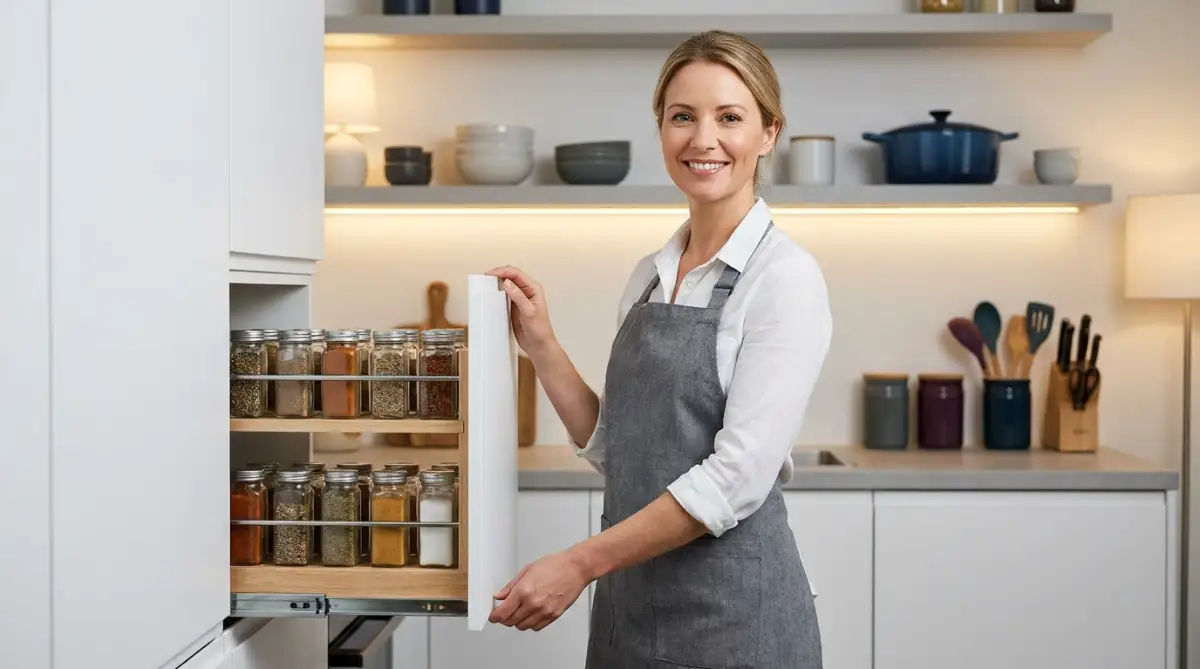
Attach a magnetic spice rack to the side of your refrigerator or place a tiered insert inside a shallow drawer. This allows you to read all the labels instantly without moving bottles around.
Are open shelves a good idea for small spaces?
Yes, open shelves force you to keep things tidy and make the room feel much larger. Just make sure to only display items you use and wash regularly to avoid dust buildup.
How do I store Tupperware without creating a huge mess?
Keep all the bottoms nested together in one stack and store the lids vertically in a separate small bin. You can also use a tension rod in the drawer to keep the lids standing upright.
What should I do with appliances I rarely use?
Move any appliance you use less than once a week out of the kitchen entirely. Store them in a hallway closet, the garage, or the dining room buffet to protect your main countertops.
How can I create extra counter space for chopping?
Buy a large wooden cutting board that fits securely over your sink basin or stovetop burners. This instantly provides you with a massive, temporary prep station.
Where do I store baking sheets and large trays?
Never stack baking sheets flat. Use a vertical wire rack inside a narrow cabinet to stand them upright like books on a shelf.
How do I keep my countertops permanently clear?
Adopt a strict rule where only daily essentials like the coffee maker are allowed on the surface. Everything else must go back into a designated zone the moment you finish washing it.
Trusted Legal Resources
- Consumer Product Safety Commission (CPSC) - Appliance Safety
- Food and Drug Administration (FDA) - Safe Food Storage Guidelines
- Centers for Disease Control and Prevention (CDC) - Kitchen Hygiene
- Environmental Protection Agency (EPA) - Indoor Air Quality
- National Fire Protection Association (NFPA) - Cooking Fire Safety
- Occupational Safety and Health Administration (OSHA) - Housekeeping & Slip Prevention
Disclaimer: The information provided in this article is for general educational and informational purposes only and does not constitute professional home renovation, architectural, or legal advice. Every home structure is different. Always consult with a licensed contractor or building professional before making permanent changes, drilling into walls, or altering plumbing and electrical systems. The authors and publishers of this content are not responsible for any damage, injury, or loss resulting from the application of these tips.
About the Author
Reviewed by Mithun Halder (Personal Finance & SEO Expert) & The FinanceInfoIn Editorial Team
The FinanceInfoIn Editorial Team researches personal finance, investing, insurance, mortgages, cryptocurrency, and consumer financial topics. Every article is carefully reviewed to provide clear, practical, and trustworthy educational information based on credible sources and industry best practices.
©2026 FinanceInfoIn. All rights reserved.