
The Credit Score Wake-Up Call That Changed My Financial Future
I still remember walking into a car dealership, excited to buy my first reliable vehicle. After choosing a modest sedan, I sat down to complete the financing paperwork. A few minutes later, the salesperson quietly explained that my credit score was too low to qualify for the loan. I left without a car, feeling disappointed and frustrated. That moment forced me to take an honest look at my financial habits and finally understand how much a credit score can influence everyday life.
For a long time, my low credit score seemed to follow me everywhere. It made borrowing more expensive, limited my financial options, and created unnecessary stress whenever I applied for credit or signed a new agreement. It often felt as though past mistakes were standing in the way of future opportunities.
What made the situation even harder was the constant uncertainty. I worried about unexpected bills, higher interest rates, and whether another application would be rejected. Over time, I realized that poor credit affects more than your finances. It can also impact your confidence and peace of mind.
The turning point came when I learned that a credit score is not permanent. With consistent habits, responsible borrowing, and patience, it can improve over time. You do not need expensive credit repair services or advanced financial knowledge. You simply need a practical plan and the commitment to follow it. Once I understood that, rebuilding my financial future finally felt possible.
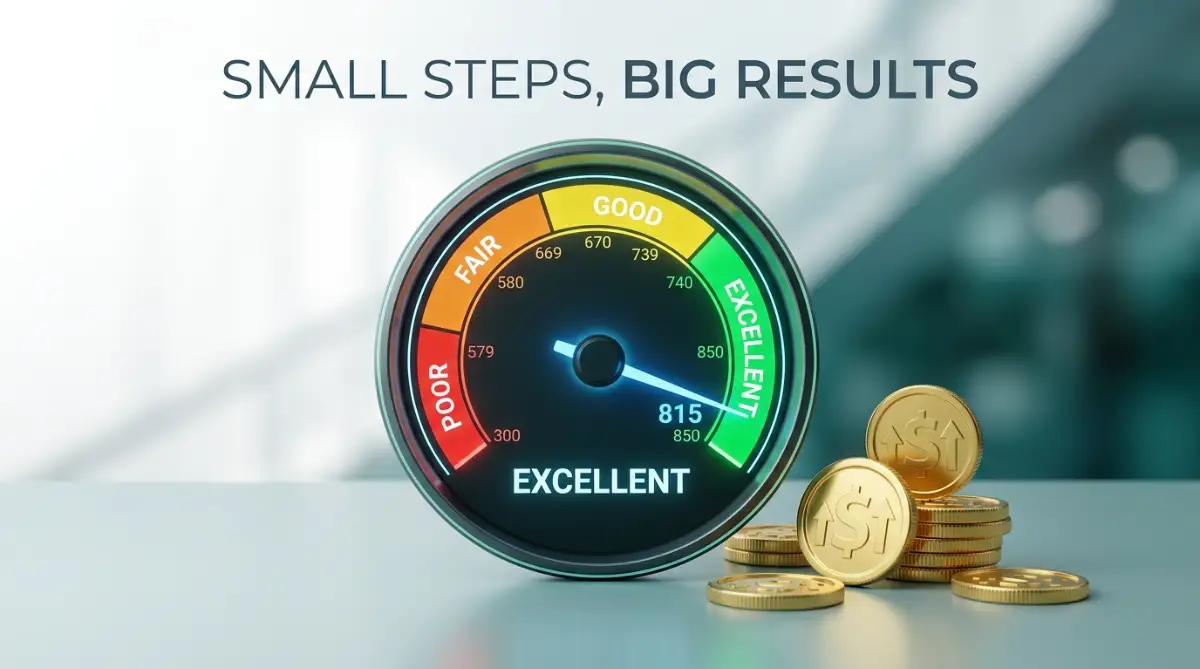
The Honest Truth About Your Financial Reputation
Before we can fix the problem, we need to understand exactly how banks and lenders view us. Your credit history works more like a financial track record that lenders review whenever you apply for credit. It helps them estimate how responsibly you have managed borrowed money over timeWhenever you ask a bank for money, they check this report to see if you are a safe person to trust.
If your history shows missed payments and maxed-out limits, the bank sees a giant red flag. They assume you are going to take their money and never pay it back. To change their minds, we have to start sending them clear, positive signals every single thirty days.
This process takes a little bit of patience, but the changes will start reflecting much faster than you might think. By consistently following healthy credit habits, many people begin to notice meaningful improvements over several months. Results vary depending on your current credit profile and financial history. Let us break down the exact actions you need to take starting today.
Uncovering the Hidden Errors Dragging You Down
You cannot fix what you cannot see, which is why your very first step is pulling your official records. There are three major companies that track your money: Equifax, Experian, and TransUnion. They collect data from your lenders and compile it into a detailed report about your life.
The shocking truth is that these companies make mistakes all the time. Reviewing your credit reports at least once a year is a smart financial habit, even if you are not actively applying for new credit.
Sometimes, a medical bill you paid off years ago still shows up as an active, unpaid debt. If you do not actively check these records, these mistakes will sit there for years, dragging your average down. You are legally entitled to get a completely free copy of this report from all three companies once a year.
Once you have your reports, grab a red pen and highlight anything that looks incorrect. If you find a mistake, you can write a simple dispute letter to the company asking them to remove it. By law, they have to investigate your claim and remove the error if they cannot prove it is accurate.
The Ultimate Power of On-Time Payments
If you want to know the biggest secret to this entire game, it comes down to your payment history. This single factor makes up the largest portion of your overall score calculation. Payment history is one of the most influential factors used by most major credit scoring models.
Missing a payment by just thirty days can cause your score to drop by a massive amount overnight. It tells lenders that your life is currently unstable and that you are struggling to manage your cash flow. If you want to see a big improvement in six months, you have to promise yourself to never miss a due date again.
To make this completely foolproof, you need to rely on technology rather than your own memory. Set up automatic payments for at least the minimum amount due on every single one of your bills. If you cannot do automatic payments, set loud calendar reminders on your smartphone three days before the money is due.
When you string together six consecutive months of perfect, on-time payments, positive payment history gradually becomes a stronger part of your credit profile, which may contribute to future score improvements. Your recent good behavior begins to overshadow the mistakes you made in the past. It is the most reliable way to prove to lenders that you have changed your habits.
If you are a visual learner, understanding how banks actually calculate these numbers makes everything much easier. Watch this short and incredibly helpful video breakdown to see exactly how your daily choices affect your final number.
Mastering the Art of Credit Utilization
This next concept sounds complicated, but it is actually incredibly simple once you understand the basic math. Credit utilization is just a fancy term for how much of your available limit you are currently using. Next to your payment history, this is the second most important factor in your entire profile.
Imagine you have a single credit card with a total limit of one thousand dollars. If you spend nine hundred dollars on that card, your utilization rate is sitting at ninety percent. A high credit utilization ratio may suggest to lenders that you are relying heavily on borrowed credit, which can negatively affect your score.
The golden rule of the banking world is to keep this number below thirty percent at all times. Using our previous example, you should never let your balance go over three hundred dollars. If you can keep it below ten percent, maintaining a low credit utilization ratio may support stronger credit score improvement over time
Here is where many people get confused. You do not actually have to carry a balance and pay interest to get a good score. You can make small purchases and pay the card off completely before the statement date hits.
This shows the algorithms that you actively use the tools they give you, but you are responsible enough to pay the money back immediately. If your balances are currently maxed out, your main focus for the next six months should be aggressively paying them down. As your balances drop, your available credit goes up, and your profile looks significantly healthier.
The Piggyback Strategy for Faster Results
If you are starting from scratch or trying to recover from a major setback, time is your biggest enemy. Building a good reputation organically takes months of perfect behavior. However, there is a completely legal shortcut known as becoming an authorized user.
This strategy involves asking a highly responsible family member or partner to add your name to their oldest, cleanest credit card. You do not even need them to give you the physical card to use in stores. You just need your name attached to the account in the bank's internal system.
When they add you, their long history of perfect payments and low balances gets copied directly onto your personal report. Becoming an authorized user may allow positive account history to appear on your credit report, depending on the lender and credit scoring model. The algorithm sees this old, perfectly managed account and immediately gives your profile a healthy boost.
I honestly thought I was doing the right thing when I closed my oldest credit card after finally paying it off. My score dropped the very next day because I suddenly wiped out five years of good history. Do not close your old accounts, even if you never use them.
If you decide to use the authorized user strategy, you must choose your partner very carefully. If the person who adds you suddenly misses a payment or maxes out the card, that bad behavior will also transfer to your report. Only use this strategy with someone who has an absolute rock-solid history of financial responsibility.
Understanding the Danger of Hard Inquiries
When you are desperately trying to fix your situation, it is tempting to apply for every new card or loan you see online. You might think that getting more cards will give you more available limits. This is a massive trap that will actively push your goals further away.
Every single time you apply for new financing, the bank performs something called a "hard pull" or hard inquiry on your report. The system notes that you are actively seeking out new money. One or two of these checks per year is completely normal and expected.
However, if you apply for five different cards in a single month, Multiple hard inquiries within a short period may indicate higher borrowing risk to lenders. It assumes you are in deep financial trouble and urgently need cash to survive. Each hard inquiry temporarily lowers your overall number by a few points.
For the next six months, you need to put a strict freeze on applying for anything new. No new store cards, no auto loans, and no personal financing applications. Let your current accounts age quietly and focus entirely on paying down your existing balances.
Why Patience is Your Best Strategy
We live in a world where we expect instant results for everything we do. We want fast food, fast internet, and fast financial repairs. The truth is, fixing your financial background is much like trying to lose weight; it requires consistency over time.
You might do everything perfectly for the first thirty days and only see a tiny improvement of three or four points. This is exactly the moment when most people get frustrated and give up entirely. You have to remember that you are fighting against months, or sometimes years, of previous bad data.
The algorithms are designed to reward long-term stability, not short-term bursts of effort. As you cross the three-month mark, the changes will start to become more noticeable. By the time you reach month six, the compound effect of your good decisions will create a completely different financial picture.
You just have to trust the process and stick to the daily rules. Pay every bill on time, keep your card balances low, and do not apply for anything new. If you can maintain that simple discipline, the math will naturally work in your favor.
Setting Up a Weekly Financial Review
To stay on track for the next six months, you need to change how you interact with your money. Regularly reviewing your accounts helps you stay organized and reduces the risk of missed payments or unexpected balances. You need to become actively involved in the daily management of your cash.
Pick one day a week, perhaps Sunday morning, to sit down with your laptop for just fifteen minutes. Look at your bank accounts, review your upcoming due dates, and check your current card balances. This small weekly habit keeps you completely aware of your situation.
When you know exactly where your money is going, you eliminate the nasty surprises that lead to missed payments. You stop relying on guesswork and start operating with real facts. This sense of control is the foundation of long-term financial success.
As you continue this weekly practice, you will notice your anxiety around money start to fade. You will no longer fear opening your mail or answering the phone. Regular financial reviews help you stay informed and make more confident financial decisions over time.
Next-Level Habits to Maintain an Excellent Financial Reputation
Getting your numbers up is an amazing feeling, but keeping them high requires a permanent shift in your daily routine. Once you cross into that excellent territory, the algorithms become highly sensitive to any sudden changes in your spending. You need a solid system to protect your progress so you never have to start over from scratch again.
The Micro-Payment Strategy
Most people wait for their monthly statement to arrive before they pay their bank. This is a very common approach, but it completely misses a massive opportunity to Making smaller payments throughout the month may help keep your reported credit utilization lower. Instead of making one giant payment every thirty days, you should break your payments into small weekly chunks.
I call this the micro-payment method, and it is incredibly powerful for keeping your utilization rate near zero. Every Friday afternoon, log into your banking app and pay off whatever you spent that week. Because you are constantly clearing the balance, depending on your card issuer's reporting schedule, lower balances may be reflected when account information is reported.
This habit also forces you to look at your actual spending every single week. When you see exactly where your cash is going, you stop wasting money on things you do not actually need. It is a brilliant way to stay on track, especially if you are working on creating a solid personal budget even on a tight paycheck.
Getting Rewarded for Your Everyday Bills
For a very long time, you could only build a good reputation by using traditional credit cards or auto loans. You could pay your rent and electricity perfectly for ten years, and the banks would never even notice. Thankfully, the financial industry has finally modernized to help everyday consumers.
Today, you can sign up for special reporting services that track your everyday utility and rent payments. These third-party services connect directly to your bank account and verify that you pay your landlord on time. They then send that positive data directly to the major reporting bureaus to boost your overall profile.
Before you sign up for any service, you should always verify their legitimacy. You can read official government guidance on the Consumer Financial Protection Bureau (CFPB) website regarding rent reporting tools to ensure you choose a safe option. This can be a helpful option for eligible consumers who consistently pay rent on time.
The Ultimate Security Move: The Credit Freeze
As your reputation improves, you actually become a much bigger target for identity thieves. Scammers love stealing the information of people with excellent financial histories because they can open massive loans in your name. If someone steals your identity, they can destroy six months of your hard work in a single afternoon.
To prevent this nightmare, you need to use a completely free tool called a credit freeze. You simply log into the three major reporting bureaus and lock your profile with a secure PIN. When your profile is frozen, a credit freeze makes it significantly more difficult for identity thieves to open new credit accounts in your name without your authorization.
You can read exactly how to set this up safely through the official Federal Trade Commission (FTC) identity theft portal. When you actually need to apply for a loan yourself, you just log in and temporarily unfreeze your account for twenty-four hours. Just like securing your traditional bank accounts is just as important as protecting modern digital funds with smart contracts, freezing your profile is strongly recommended as an additional layer of identity theft protection for modern security.
Pro Tip from My Own Experience: I used to think checking my accounts every day would cause me more anxiety. In reality, logging in every morning for thirty seconds completely cured my financial fear. When you know your exact numbers, the unknown stops being scary, and you start making incredibly confident decisions.

The Silent Money Traps That Destroy Financial Reputations
Even with the best intentions, it is terribly easy to fall into hidden traps that can wipe out all your progress. The banking system is unforgiving, and one emotional decision can set you back for several years. We need to talk about the dangerous mistakes that most people do not see coming until it is too late.
The Devastating Mistake of Co-Signing
We all want to help our friends and family when they are struggling. When your cousin asks you to co-sign on a new car loan because their history is bad, your heart tells you to say yes. You need to understand that co-signing is not just a character reference; it is a serious legal contract.
When you co-sign, the bank places the entire weight of that debt directly onto your personal report. If your cousin loses their job and misses a payment by thirty days, your beautiful financial history takes the massive hit. I have seen families completely torn apart because a co-signed loan ruined a young couple's chance to buy their first home.
You are legally promising to pay the entire balance if the other person walks away. If you want to help a family member, give them cash if you can afford it. Carefully consider the financial risks before agreeing to co-sign any loan or credit agreement.
The Revenge Spending Trap
When your numbers finally go up, you will suddenly start receiving amazing offers in the mail. Banks that previously rejected you will start begging you to take their premium cards with massive limits. It feels like a massive victory, and the temptation to reward yourself is incredibly strong.
Many people fall into the trap of "revenge spending" to celebrate their new financial status. They accept a card with a ten thousand dollar limit and immediately buy a huge television or book an expensive vacation. Within thirty days, their utilization rate spikes to maximum capacity, and their score plummets right back to the bottom. Maintaining disciplined spending habits is just as important after your score improves as it is during the rebuilding process.
You have to view these high limits as a safety net, not free money. If you are preparing for a major life event, like buying a home, this mistake can disqualify you instantly. You should be actively reducing your debt-to-income balance before talking to a mortgage lender, not adding useless consumer debt to your plate.
Abusing the Dispute System
Earlier, we discussed how important it is to dispute errors on your official reports. However, some people take this advice too far and try to dispute entirely accurate negative marks. They think if they send enough angry letters, the bank will eventually get tired and delete a legitimate missed payment.
The reporting bureaus use highly advanced automated systems to flag abusive dispute behavior. If they determine that your disputes are frivolous, they can legally refuse to investigate any future claims you make. You can learn more about how accurate information is legally protected on the Office of the Comptroller of the Currency (OCC) consumer protection page.
If you made a mistake in the past, the best approach is absolute honesty. Sometimes, calling your lender and politely asking for a "goodwill adjustment" on a late fee works wonders. Submit disputes only when you genuinely believe the reported information is inaccurate.
Ignoring the Fine Print on Agreements
When you are finally approved for a new account, it is so exciting that you usually just click "Accept" without reading anything. This is a massive trap, as many starter cards carry ridiculous hidden fees or penalty interest rates. If you miss one payment, your interest could legally jump to an unpayable percentage overnight.
You must treat every financial contract with extreme seriousness and attention to detail. Just like you wouldn't invest your hard-earned cash without understanding complex digital project documents like crypto whitepapers, you should never sign a loan without reading the fee schedule. Protecting yourself from bad terms is the ultimate sign of financial maturity.
Your Daily Blueprint for Financial Freedom
We have covered exactly how the system works and how to force the math in your favor. You now know that your payment history and your utilization rates are the twin pillars of a healthy financial profile. You understand the hidden dangers of co-signing and the incredible power of the micro-payment method.
This entire journey is about taking your personal power back from the banking institutions. For far too long, that three-digit number has dictated where you can live, what you can drive, and how much stress you carry. By applying these simple habits over the next six months, you are rewriting your own future.
Do not focus on perfection right out of the gate; focus on simple consistency. Set up those automatic payments tonight, check your balances every Friday afternoon, and keep your credit completely frozen until you truly need it. Building a wealthy mindset is exactly what you will find on any reliable finance info platform, and you are now fully equipped to make it happen.
I remember staring at my own terrible financial history, feeling totally hopeless and completely buried by past mistakes. But when I finally took a deep breath and started applying these exact daily habits, my entire reality shifted.
My money no longer controls my peace of mind, and I know you can reach that exact same freedom starting today. Remember that rebuilding credit is a gradual process. Consistency is often more important than speed, and even small improvements can create better financial opportunities over time.
1. Pay Every Bill on Time Without Exception
Payment history is one of the biggest factors that influence your credit score. Even a single late payment can stay on your credit report for years and slow your progress. If improving your score within six months is your goal, making every payment on time should become your highest priority.
- Set up automatic payments whenever possible.
- Use calendar reminders for due dates.
- Pay at least the minimum amount if you cannot pay the full balance.
- Monitor your accounts regularly to avoid missed payments.
2. Lower Your Credit Utilization Ratio
Using too much of your available credit can signal financial stress to lenders. A lower credit utilization ratio shows that you manage credit responsibly and may help improve your score more quickly.
- Aim to use less than 30% of your available credit.
- For even better results, keep utilization below 10%.
- Pay down existing balances whenever possible.
- Consider making multiple payments throughout the month to reduce reported balances.
3. Review Your Credit Report for Errors
Mistakes on your credit report are more common than many people realize. Incorrect late payments, duplicate accounts, or outdated information can unfairly lower your score. Reviewing your report gives you the opportunity to identify and dispute inaccurate information.
- Check your credit reports regularly.
- Look for incorrect balances or payment histories.
- Dispute any errors with the appropriate credit bureau.
- Keep records of all communications during the dispute process.
4. Avoid Applying for Multiple New Credit Accounts
Every new credit application can trigger a hard inquiry, which may temporarily lower your credit score. Opening several new accounts within a short period may also make lenders view you as a higher-risk borrower.
- Apply for new credit only when necessary.
- Space out credit applications over time.
- Research eligibility before submitting an application.
- Focus on improving existing accounts before seeking additional credit.
5. Build Positive Credit Habits and Stay Consistent
Improving your credit score is rarely about one big change. Instead, it comes from consistently practicing good financial habits month after month. Small improvements can add up to meaningful results over a six-month period.
- Keep older credit accounts open when appropriate.
- Pay balances consistently and avoid carrying unnecessary debt.
- Track your progress with regular credit score updates.
- Stay patient and maintain responsible financial habits even after your score improves.
Real Answers to Your Biggest Credit Questions
Can paying off my car loan actually lower my numbers?
Yes, it is very common for your score to temporarily drop by a few points right after you pay off an installment loan. This happens because the account is marked as closed, which slightly shifts your active account mix. Do not panic; the drop is temporary, and the massive benefit of being debt-free far outweighs the small dip.
Will checking my own profile hurt my financial reputation?
Absolutely not. When you check your own data through a reputable banking app or website, it counts as a "soft inquiry." You can check your own numbers fifty times a day without causing a single point of damage to your profile.
How long does a collection account really stay on my record?
By federal law, most negative marks, including collection accounts and late payments, remain visible on your report for seven years. However, as those negative marks get older, they cause significantly less damage to your current average.
Does my income or job title change how banks rate me?
Your salary, job title, and the amount of cash in your checking account are never factored into this specific three-digit calculation. The algorithm only measures how responsibly you manage borrowed money, meaning anyone can achieve a perfect score regardless of their paycheck size.
Is it safe to hire a professional repair company to fix my history?
Most reputable experts advise against paying expensive repair clinics. These companies charge hundreds of dollars to do basic tasks like sending dispute letters, which you can easily do yourself for free. Stick to building healthy daily habits instead of looking for expensive shortcuts.
Does getting married instantly merge my history with my partner's?
No, your financial profiles remain completely separate even after you get married. However, if you open a new joint loan or mortgage together, that specific shared debt will show up on both of your individual reports.
What should I do if an automatic payment accidentally fails?
If a technical glitch causes your payment to fail, call your bank immediately before the thirty-day mark hits. If you manually pay the bill before it becomes thirty days late, it will not be reported as a negative mark to the bureaus.
Disclaimer: The information provided in this article is strictly for educational and informational purposes only and does not constitute financial, investment, or legal advice. Credit scoring models and lending rules change frequently. Always conduct your own research and consider consulting with a certified financial professional before making any major decisions regarding your personal credit or debt management.Rates, eligibility requirements, fees, and promotional offers may change without notice. Always verify current terms directly with the financial institution before opening an account.