
The Hidden Cost of Those Late Nights
I used to believe that sleeping four or five hours a night was simply the price of getting more done. At first, it seemed manageable, but the effects slowly became impossible to ignore. My afternoons were filled with brain fog, simple tasks took twice as long, and I constantly relied on coffee just to stay awake. Even worse, I found myself getting sick more often, feeling irritable over small things, and struggling to concentrate throughout the day.
If this sounds familiar, you're not alone. Millions of people sacrifice sleep in the hope of becoming more productive, without realizing that they are actually reducing their focus, weakening their immune system, and making everyday decisions more difficult. Poor sleep doesn't just leave you feeling tired—it affects your memory, mood, metabolism, and your body's ability to recover from daily stress.
The good news is that quality sleep isn't just about spending more hours in bed. It's about giving your brain and body the consistent recovery time they need to function at their best. Small changes to your daily routine can make a remarkable difference in how you think, feel, and perform.
In this guide, you'll discover the science behind what happens inside your brain and immune system when you don't get enough sleep. More importantly, you'll learn practical, evidence-based habits that can help you sleep better, wake up refreshed, improve your focus, and support your long-term physical and mental health.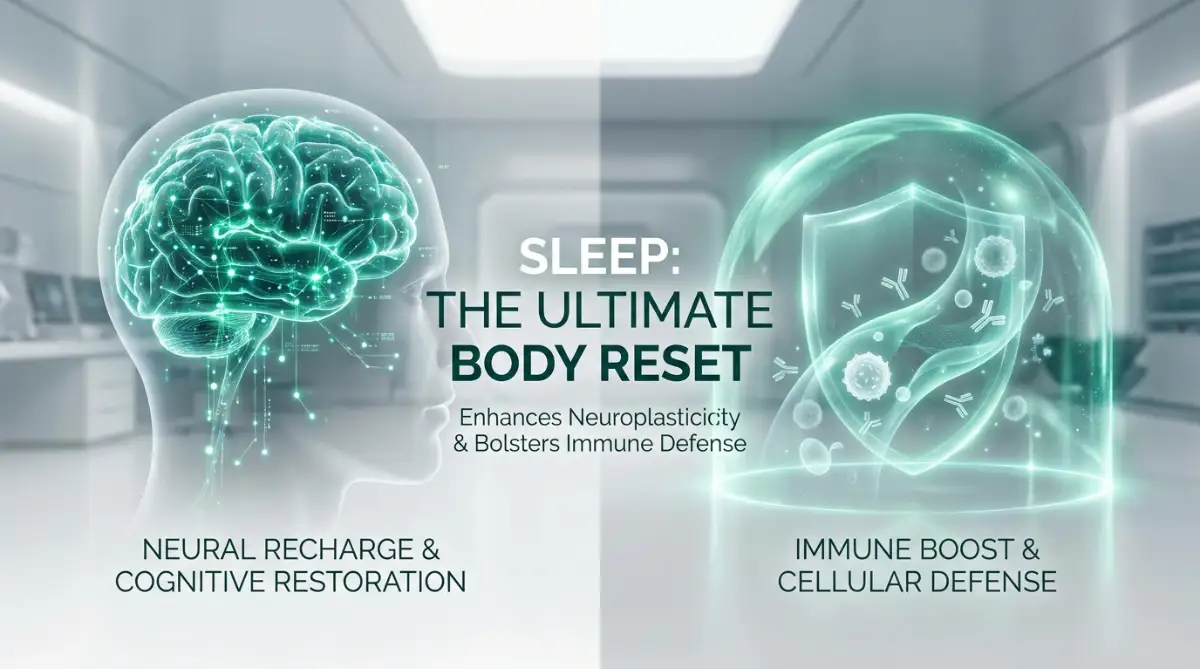
What Happens Inside Your Head When You Stay Up Late
Many of us think of sleep as a time when the body simply shuts off. We imagine our brain just resting quietly in the dark. But the reality is completely different.
When you close your eyes and fall into deep slumber, your brain actually goes to work. It becomes incredibly active. Think of your brain like a massive office building filled with busy workers.
During the day, this office gets extremely messy. Information piles up on desks, trash cans get full, and things get unorganized. When you finally go to bed, the night shift cleaning crew steps in to fix everything.
The Brain's Nightly Cleaning Crew
Scientists call this cleaning process the glymphatic system. Research suggests that during sleep, the glymphatic system helps remove metabolic waste products from the brain, supporting overall brain health. During deep sleep, brain cells slightly reduce in volume, allowing cerebrospinal fluid to flow more efficiently through brain tissue. This creates small spaces between your brain cells.
Fluid washes through these spaces to clean out toxic waste proteins that build up during the day. If you do not sleep, these toxins stay locked inside your head. This is exactly why you feel that heavy brain fog the next morning.
When that toxic waste builds up, your memory starts to fail. You forget where you put your keys or struggle to remember simple words during a conversation. Over time, this daily buildup of toxins can lead to serious memory issues.
Emotional Rollercoasters and Bad Decisions
Have you ever noticed that you crave junk food when you are tired? There is a very real, scientific reason for this.
A lack of rest directly hits the frontal lobe of your brain. This is the area responsible for logic, self-control, and making smart choices. When this area is tired, your emotional center takes over completely.
This means you are highly likely to make bad decisions. You might skip the gym, order a large pizza instead of eating a salad, or buy things you do not really need. Your brain simply does not have the energy to say no.
The Immune System’s Secret Weapon
Now, let us talk about your body's defense system. Your immune system is like a personal army that fights off viruses, bacteria, and hidden infections.
When you get a full night of deep rest, your immune system creates special proteins called cytokines. These proteins are specifically designed to target inflammation and fight sickness. Think of cytokines as the weapons your army needs to win the war against a cold.
If you cut your rest short, Sleep deprivation may reduce the production of protective immune molecules such as cytokines, making it harder for your body to fight infections
This is why people who sleep less than six hours a night get sick much faster. If someone coughs near you on the bus, a tired immune system cannot fight off those germs.
A Quick Reality Check: Sleep vs No Sleep
To really understand the difference, let us look at a simple comparison of how your body reacts.
As you can see, cutting back on your nighttime routine affects every single part of your life. It changes who you are, how you feel, and how you interact with the world.
Breaking Down the Myths
There are so many bad rumors out there about how our bodies handle rest. Let us clear up a massive myth right now.
Myth: "I can just catch up on my sleep during the weekend."
Reality: You cannot pay off a sleep debt like a credit card bill.
If you starve your body of rest for five days straight, sleeping for ten hours on Saturday will not fix the damage. Your brain and immune system need a consistent daily rhythm to function correctly.
Binge-sleeping on the weekend actually confuses your internal body clock even more. This makes waking up on Monday morning feel completely miserable.
Practical Steps to Reset Your Body Clock
So, how do we actually fix this? You cannot just magically force yourself to fall asleep. However, you can control the environment and habits leading up to bedtime.
Instead of treating rest as an afterthought, you must treat it like a serious daily appointment. Here are some highly effective, science-based steps to train your brain and immune system to recover.
Step 1: Master the Morning Sunlight Trick
Your nighttime routine actually begins the moment you wake up. Your brain has a natural internal clock known as the circadian rhythm.
This clock tells your body when to release energy hormones and when to release sleep hormones. The strongest trigger for this clock is natural daylight.
If you wake up and immediately stare at a bright phone screen in a dark room, your brain gets confused. It does not know what time of day it is.
Actionable Advice: Within the first 30 minutes of waking up, step outside. Spend 10–15 minutes outdoors in natural daylight shortly after waking. Avoid looking directly at the sun. This simple action tells your brain to stop making melatonin and start waking up.
By setting this anchor in the morning, your brain will naturally know when to make you tired 14 hours later.
Step 2: Create a Fake Sunset in Your Home
Just as morning light wakes you up, evening light destroys your ability to wind down. We live in a world filled with bright, artificial LED lights and massive glowing screens.
When you sit under bright living room lights at 10 PM, your brain thinks the sun is still shining. It completely stops producing the hormones you need to fall into deep, healing rest.
Actionable Advice: Start dimming the lights in your house about two hours before you want to go to bed. Turn off the big overhead lights and use small, warm-colored desk lamps instead.
Reducing bright screen exposure or enabling night mode may help some people wind down before bed. You are essentially creating a fake sunset inside your home.
I actually started doing this a few months ago, and the change was amazing. My brain slowly starts shutting down naturally just by changing the lighting in my living room. I do not have to force myself to feel tired anymore.
Are You Destroying Your Rest Without Knowing It?
Before we move on to the next major steps, you need to understand the hidden habits that ruin your night. The short video below breaks down exactly how modern daily habits secretly destroy our body clocks.
Step 3: Manage the Caffeine Half-Life
Many people think they can drink a cup of coffee at 4 PM because they easily fall asleep by 11 PM. This is a massive misunderstanding of how caffeine works inside your body.
Caffeine has a half-life of roughly five to six hours. This means if you drink a strong coffee at 4 PM, half of that caffeine is still actively bouncing around your brain at 10 PM.
Even if you manage to fall asleep, that hidden caffeine can reduce the amount of deep sleep your brain gets. You might sleep for eight hours, but you will still wake up feeling completely exhausted.
Actionable Advice: Set a strict caffeine curfew. Stop drinking any coffee, energy drinks, or strong teas at least 10 hours before your target bedtime. If you want a warm drink in the afternoon, switch to herbal tea or warm water with lemon.
Step 4: Drop Your Body Temperature
Have you ever tried to sleep in a hot, sweaty room? It is nearly impossible.
Your body temperature naturally needs to drop by a few degrees to initiate sleep. If your room is too warm, or if you wear heavy clothes to bed, your brain stays awake trying to cool you down.
Actionable Advice: Keep your bedroom surprisingly cool. The ideal temperature for human rest is around 65 degrees Fahrenheit (18 degrees Celsius).
You can also take a warm shower about an hour before bed. The warm water brings heat to the surface of your skin. When you step out of the shower, your core body temperature rapidly drops, which strongly signals your brain that it is time to sleep.
Step 5: Empty Your Brain on Paper
One of the biggest reasons people stare at the ceiling at night is anxiety. Your brain loves to remind you of unpaid bills, upcoming meetings, and awkward conversations right when you close your eyes.
When you try to keep all your tasks inside your head, your brain stays in a state of high alert. It is afraid you will forget something important.
Actionable Advice: Keep a small notebook and pen right next to your bed. Before you turn off the lights, spend five minutes writing down everything that is bothering you.
Write down your to-do list for tomorrow. Write down any random thoughts or worries. By putting these thoughts on physical paper, you are giving your brain permission to stop thinking about them.
Understanding the Power of Consistency
Doing these steps for one single night will not magically fix years of bad habits. Your body needs time to trust the new routine you are building.
Try to go to bed and wake up at the exact same time every single day. Yes, this even includes weekends. Consistency is the ultimate secret to fixing your internal clock.
When your brain knows exactly when it will get rest, it optimizes the cleaning process. Your immune system knows exactly when it can start producing those powerful fighting proteins.
You will notice the changes quickly. The heavy brain fog will start to lift. You will find yourself reading emails once and actually understanding them. Your patience with your family will return.
Most importantly, you will stop getting every single cold that goes around your office. Your body will finally have the strength it needs to protect you.
Building a strong immune system and a sharp brain does not require expensive pills or magical treatments. It simply requires you to respect your body's natural need to shut down and repair itself. Make your bedroom a quiet, dark sanctuary, and watch how quickly your daily energy transforms.
Leveling Up Your Nightly Routine
Fixing your basic sleep habits is a great start. However, if you really want to wake up feeling like a completely different person, you need to go a bit deeper.
Over the years, I have tried almost every single trick out there to stop tossing and turning. Most of the standard advice is helpful, but there are a few expert-level secrets that completely changed the game for me.
These are not quick fixes. These are long-term strategies that physically rewire how your brain handles stress before bedtime.
The 90-Minute Brain Buffer
One of the biggest reasons people cannot fall asleep is that they work right up until the minute they lay down. You cannot sprint at top speed and expect to instantly stop and fall asleep. Your brain needs a massive buffer zone.
I call this the 90-minute brain buffer. Exactly 90 minutes before your target bedtime, you must completely stop any activity that causes stress.
This means no checking work emails, no looking at your bank account, and definitely no arguing with your partner. If you want to learn more about calming your thoughts during this time, you can check out some simple breathing exercises to reduce daily anxiety that work perfectly during this buffer period.
During these 90 minutes, you only do things that signal safety to your body. You can read a physical book, listen to soft music, or gently stretch.
This simple period tells your nervous system that the day is officially over. By the time your head hits the pillow, your brain has already transitioned into a calm state.
Rethinking Your Evening Meals
What you put into your stomach heavily affects what happens in your head at night. Many people eat massive, heavy dinners right before bed.
When your stomach is working incredibly hard to digest a heavy meal, your core body temperature stays high. As we discussed earlier, your body temperature must drop for you to reach deep, healing sleep.
Try to finish your last large meal at least three hours before you plan to sleep. If you get genuinely hungry later, keep it extremely light.
A small handful of almonds or a tiny bowl of plain yogurt is perfect. These small snacks will not force your digestive system into overdrive. Managing what you eat late in the day is just as important as managing high blood pressure naturally through daily diet changes when it comes to overall health.
The Magnesium Connection
I used to wake up constantly in the middle of the night feeling tense. My muscles felt tight, and my mind would start racing instantly.
A doctor friend finally asked me if I was getting enough magnesium. Some people may not consume enough magnesium through diet, and adequate magnesium intake has been associated with better sleep quality in certain studies.
Magnesium plays a massive role in calming your nervous system. It naturally helps lower stress levels and relaxes tight muscles.
You can get magnesium naturally from foods like spinach, pumpkin seeds, and black beans. Some people also prefer a high-quality magnesium glycinate supplement about an hour before bed. According to recent sleep studies from the National Institutes of Health, proper magnesium levels are directly tied to better sleep quality.
Just like you should watch out for silent signs you have a hidden vitamin d deficiency, keeping an eye on your magnesium intake can radically change your nights.
Embracing the Power of Silence
We live in an incredibly loud world. Even when we think it is quiet, there is usually background noise. A humming refrigerator, a distant highway, or neighbors walking upstairs.
Your brain naturally monitors all of these sounds while you sleep. If a sound is too sudden or too loud, it pulls you out of your deep sleep stages. You might not fully wake up, but your rest is completely ruined.
To fix this, introduce a constant, predictable sound to your room. Some people find consistent background sounds, such as a fan or white noise, helpful for masking disruptive noises.
This constant sound creates a blanket over all the sudden, annoying noises outside your room. Many people gradually adapt to consistent background noise, making sudden sounds less disruptive during sleep.

Daily Habits That Secretly Destroy Your Rest
It is incredibly frustrating when you feel like you are doing everything right, but you still wake up tired. Usually, this means there is a hidden habit completely sabotaging your progress.
Many of us accidentally train our bodies to stay awake. We do things during the day that completely ruin our internal clocks, and we do not even realize it.
If you do not fix these specific mistakes, your brain and immune system will continue to suffer. Let us look at the most common ways people accidentally ruin their own rest.
Using Your Bed for Everything
This is probably the biggest mistake people make, especially if they work from home.
If you sit on your bed to answer emails, watch intense action movies, or eat lunch, you are confusing your brain. Your brain naturally builds associations with the spaces you use.
If you work in bed, your brain starts to view your bed as a place of high stress and focus. When you finally try to sleep there at night, your mind is still in work mode.
The Fix: Your bed should only be used for sleeping and intimacy. If you want to read, sit in a chair. If you want to watch a movie, go to the living room. Train your brain to understand that touching the mattress means it is time to shut down.
The Weekend Sleep Binge
We touched on this earlier, but it is so common that it needs its own spotlight. The weekend sleep binge is destroying your Monday mornings.
If you sleep from midnight to 6 AM during the week, but then sleep from 2 AM to 11 AM on Saturday, you are basically giving yourself jet lag. Your body clock has no idea what time zone it is living in.
When Sunday night arrives, you will not feel tired at your normal time. You will toss and turn until 2 AM, and then wake up miserable on Monday.
The Fix: You must hold a consistent wake-up time every single day. Even if you stay up a bit late on Saturday, force yourself to wake up within an hour of your normal weekday time. You might feel a bit tired on Sunday, but your internal clock will stay perfectly locked in place.
The Sneaky Evening Alcohol
Many people enjoy a glass of wine or a heavy drink before bed because it makes them feel sleepy. This is a massive trap.
While alcohol might help you pass out faster, it completely destroys the second half of your night. While alcohol may help you fall asleep faster, it can reduce REM sleep and increase nighttime awakenings. REM sleep plays an important role in memory, emotional processing, and overall brain recovery.
As the alcohol leaves your system in the middle of the night, your body experiences a tiny rebound effect. You will likely wake up feeling hot, anxious, and completely unable to go back to sleep. Research published by the Sleep Foundation confirms that even small amounts of alcohol before bed heavily disrupt the architecture of your rest.
The Fix: If you enjoy a drink, try to finish it at least three to four hours before you go to bed. Drink plenty of water afterward to help your body process it before you lay down.
Staring at the Clock
We have all been there. It is 3 AM, you are wide awake, and you keep looking at the glowing red numbers on your alarm clock.
Every time you look at the time, your brain does the math. "If I fall asleep right now, I will get exactly three hours and twelve minutes of sleep." This creates massive anxiety.
Your heart rate goes up, your stress hormones flood your system, and sleep becomes completely impossible.
The Fix: Turn your clock completely around so you cannot see the numbers. If you use your phone as an alarm, place it face down across the room. If you wake up in the middle of the night, never look at the time. Just trust that your alarm will go off when it needs to.
Your Ultimate Sleep Checklist
1. Build a Consistent Sleep-Wake Schedule
Your body performs best when you go to bed and wake up at the same time every day. An inconsistent sleep schedule confuses your internal body clock, making it harder to fall asleep and wake up feeling refreshed.
- Go to bed and wake up at the same time daily.
- Avoid sleeping in for several hours on weekends.
- Set a fixed bedtime reminder every night.
- Give your body at least one week to adjust to the new routine.
2. Create a Bedroom That Promotes Deep Sleep
Your sleeping environment has a direct impact on sleep quality. A quiet, dark, and cool bedroom helps your brain enter deeper sleep stages where recovery and healing happen.
- Keep your bedroom cool (around 18°C / 65°F).
- Use blackout curtains to block outside light.
- Reduce unnecessary noise with a fan or white noise.
- Remove bright electronic lights from the room.
3. Avoid Heavy Meals Before Bedtime
Eating large meals late at night forces your digestive system to stay active while your body is trying to rest. This can make it harder to fall asleep and reduce overall sleep quality.
- Finish dinner at least 2–3 hours before bedtime.
- Avoid spicy or greasy foods late at night.
- Choose a light snack if you're genuinely hungry.
- Stay hydrated, but avoid excessive fluids before bed.
4. Make Your Bed a Sleep-Only Zone
Your brain forms associations with places. If you work, watch movies, or scroll social media in bed, your mind stops connecting your bed with sleep.
- Use your bed only for sleeping and relaxation.
- Work or study at a desk instead.
- Avoid watching TV while lying in bed.
- Train your brain to associate the bed with rest.
5. Don't Ignore Ongoing Sleep Problems
Occasional sleepless nights are common, but persistent sleep issues may indicate an underlying health condition. Seeking help early can prevent long-term physical and mental health problems.
- Track your sleep patterns for several weeks.
- Consult a healthcare professional if insomnia continues.
- Don't rely on sleeping pills without medical advice.
- Address stress or medical conditions that affect sleep.
Reclaiming Your Energy and Health
Living with constant brain fog and a weak immune system is no way to go through life. You were not built to feel exhausted every single day.
By understanding exactly how your body handles rest, you now have the power to change it. You know that morning sunlight sets your internal clock. You know that dimming the lights creates a natural sunset in your home.
You understand the importance of cooling down your room and emptying your thoughts onto paper. Most importantly, you know that consistency is the only way to lock these good habits into place.
Your brain needs those deep, quiet hours to clean out toxins and store your memories. Your immune system desperately relies on that time to build the proteins that keep you healthy.
Do not try to change every single habit tonight. That will just cause more stress. Pick just one or two simple things, like stepping outside for morning light or turning your alarm clock around.
When I finally started taking my nighttime routine seriously, everything changed. I stopped feeling so angry at small things, my memory sharpened, and I actually started enjoying my mornings again. You deserve to wake up feeling exactly like that—refreshed, strong, and ready for whatever the day brings.
Important Questions About Sleep and Health
Can poor sleep actually make me gain weight?
Yes, it absolutely can. When you are constantly tired, your body produces more ghrelin, the hormone that makes you hungry. It also lowers leptin, the hormone that tells you when you are full, leading to intense cravings for junk food.
Is it normal to wake up in the middle of the night?
Waking up briefly once or twice a night is completely normal for most adults. The problem only starts if you cannot fall back asleep within 20 minutes due to anxiety or a racing mind.
Do naps ruin my nighttime sleep?
Short naps under 30 minutes in the early afternoon are usually fine and can boost your energy. However, taking a two-hour nap late in the day will definitely destroy your ability to fall asleep at your normal bedtime.
Why do I always get sick when I travel?
Traveling often ruins your normal sleep schedule and creates a massive sleep debt. This immediately lowers the protective proteins your immune system creates, leaving you completely exposed to airport and hotel germs.
Does reading on a tablet count as a screen before bed?
Yes, most tablets emit the same bright blue light as a smartphone or television. If you want to read before bed, use a physical book or an e-reader specifically designed without a backlit screen.
How long does it take to fix my sleep schedule?
If you stick to a very strict wake-up time and manage your morning light, you can usually reset your internal clock in about a week. Your body adapts quickly when you give it consistent signals.
Can regular exercise help me sleep better?
Exercising during the day is fantastic for building sleep pressure, helping you fall asleep much faster at night. Just try to avoid highly intense workouts right before bed, as they can keep your body temperature too high.
Disclaimer: The information provided in this article is for educational and informational purposes only. It is not intended to be a substitute for professional medical advice, diagnosis, or treatment. Always seek the advice of your physician or other qualified health provider with any questions you may have regarding a medical condition or severe sleep disorder. Never ignore professional medical advice or delay seeking treatment because of information found in this article.