

🕒 Reading Time: 13 Mins | ✍️ Reviewed By: FinanceInfoIn Editorial Team
Quick Summary
Securing digital assets does not require a degree in computer science. By understanding the basic threats like phishing and malicious smart contracts, you can protect your funds. Moving long-term holdings offline and strictly guarding your recovery phrases are the most effective actions you can take. This guide breaks down exact, actionable methods to effectively safeguard your digital wealth against common threats.
Key Takeaways
- Never store your seed phrase on an internet-connected device.
- Separate your daily spending funds from your long-term savings.
- Always double-check contract approvals before clicking confirm.
- Hardware wallets are mandatory for any significant amount of digital wealth.
- Treat random direct messages and surprise token airdrops as immediate threats.
The Silent Anxiety of Digital Ownership
Staring at a pending transaction you never authorized is a very specific type of digital heartbreak. Your stomach drops, your palms sweat, and your mind races through every link you clicked over the past week.
We work incredibly hard to build our financial portfolios. Yet, the very system that gives us total freedom also leaves us completely exposed.
Imagine carrying your entire life savings in your back pocket while walking through a crowded street market. That is exactly what you are doing when you leave significant funds in an unprotected, everyday mobile app.
The stress of waking up in the middle of the night just to check your balance is real. People are losing sleep because they do not fully understand where their money actually lives.
They read horror stories on social media about normal users waking up to zero balances. This creates a constant, lingering fear that ruins the excitement of financial independence.
We often blame hackers for being brilliant. The truth is, they mostly rely on our simple daily mistakes.
They trick us into handing over the keys voluntarily. This happens because most people confuse a password with true cryptographic ownership.
The good news is that stopping these threats is entirely within your control. You do not need to be a programmer to build a fortress around your wealth.
Why Convenience is the Enemy of Safety
When we first start managing our own digital money, we naturally look for the easiest options. We download popular browser extensions and keep our funds just a single click away.
This friction-free experience feels amazing when you are making quick trades. However, convenience always trades places with true security.
An app that lets you access your money instantly also lets a potential attacker access it just as fast. The browser you use to watch videos and download files is the same browser holding your private keys.
If you accidentally click a malicious link or download compromised software, your browser becomes a direct bridge to your funds.
Let us look at the most common ways people accidentally open the door for attackers.
To protect yourself, you need to intentionally add friction to your financial routine.
The Real Difference Between Hot and Cold Storage
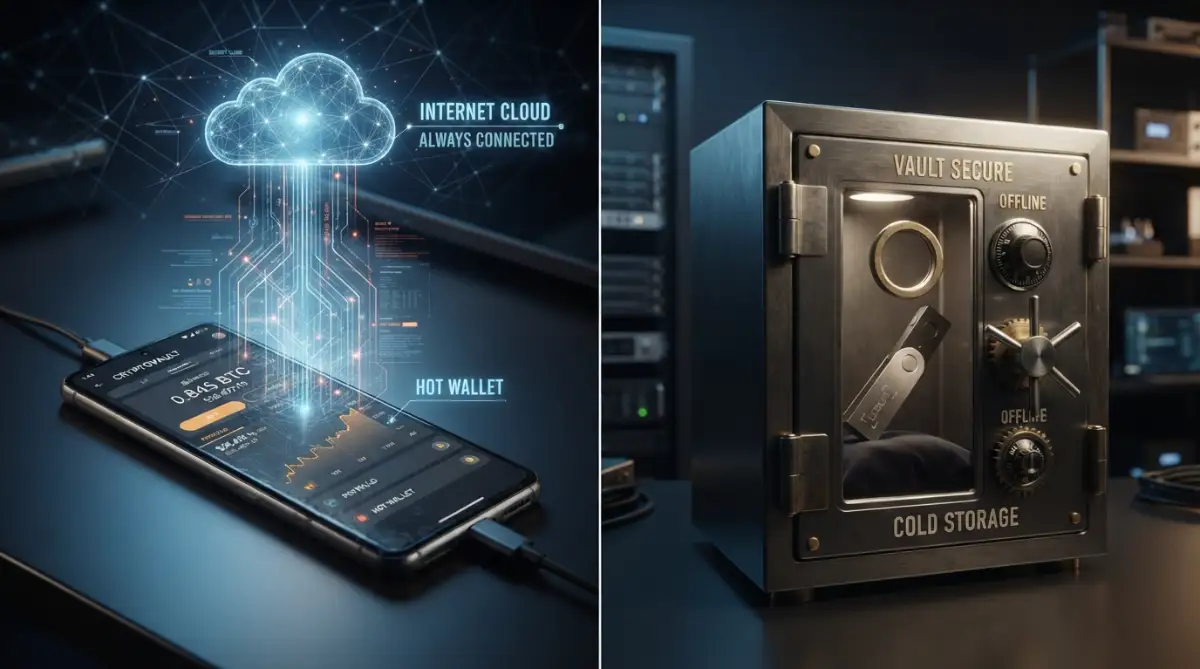
Understanding where your keys live is the foundation of protecting your digital wealth. People often think the tokens are inside the app on their phone.
In reality, your digital money lives on the public ledger. Your app just holds the secret key that proves you own it.
If that key is stored on a device connected to the internet, it is considered a Hot Wallet.
Hot wallets are like the physical leather wallet you take to the grocery store. You keep a small amount of cash in it for daily use, but you would never put your life savings inside it.
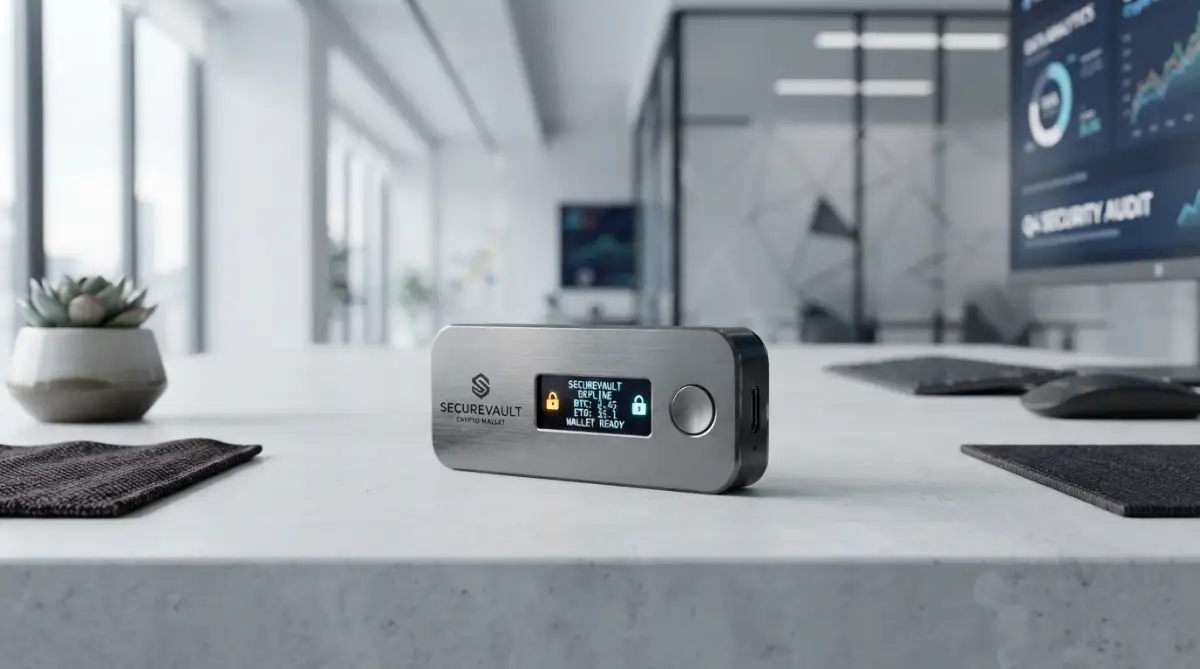
For anything you cannot afford to lose, you need a Cold Wallet. This is usually a physical hardware device that stores your private keys completely offline.
When you want to send funds, you plug the device into your computer. The transaction is signed inside the physical device, meaning your secret keys never touch the internet.
Here is a simple breakdown of how you should divide your assets for peace of mind.
By keeping 90% of your net worth strictly offline, you instantly eliminate the majority of remote cyber threats.
Mastering Your Recovery Seed Phrase
When you create a new account, the software generates a list of 12 or 24 random words. This list is your absolute master key.
If someone gets this list of words, they can reconstruct your entire portfolio on their own device and drain everything. There is no customer support desk to call if this happens.
Most beginners take a screenshot of these words or type them into a notes app on their phone. This is the single biggest mistake you can make.
Cloud backups often sync photos and notes automatically. If your email gets hacked, your master key is instantly exposed to the attacker.
Expert Tip: I once saved my 12-word recovery phrase in an encrypted password manager, thinking I was being incredibly smart. A few months later, a massive data breach hit that specific software company. My stomach instantly tied into knots. I spent a frantic six hours transferring all my assets to a brand-new offline setup. Since that day, my recovery words only exist stamped into fireproof titanium plates hidden in a physical safe.
Your recovery words must live in the physical world only. Write them down with a pen on high-quality paper.
If you want maximum protection, invest in metal stamping kits. Houses can flood or catch fire, and paper easily turns to ash. Solid metal ensures your family can recover the funds decades from now.
Setting Up Resilient Access Barriers Around Your Funds
Once your offline storage is sorted, you need to protect your daily transaction accounts.
Two-Factor Authentication (2FA) is an absolute minimum requirement for any platform holding your personal data. However, not all 2FA is created equal.
Using SMS text messages for security codes is highly dangerous. Attackers can bribe or trick mobile phone company employees into transferring your phone number to a new SIM card.
Within minutes, they receive your security text messages and bypass your passwords.
Instead, use a dedicated authenticator app on your phone. These apps generate offline codes that change every thirty seconds.
For even better protection, use a physical security key like a YubiKey. You have to physically touch the key plugged into your computer to log in.
Understanding Smart Contract Approvals
When you interact with a new digital platform, a popup usually asks for permission to access your tokens.
Most people just blindly click "Approve" because they want to finish the task quickly.
Watch This Quick Security Breakdown
Before you click another approval button, take a minute to understand what you are actually signing. This brief video perfectly explains how silent approvals can drain your funds without you realizing it.
Many poorly designed platforms ask for "unlimited" spending approval. This means if the platform gets hacked six months from now, the hackers can use that old approval to empty your pockets.
Always edit the permission limit. If you only want to trade 50 tokens, manually type "50" into the approval box.
Routine Audits: Trimming the Digital Fat
Digital hygiene is just as important as setting up initial protections. Over time, we connect to dozens of different platforms, marketplaces, and testing networks.
Each of these connections leaves a tiny digital door open. You need to routinely walk back through your history and lock those doors.
Make it a habit to check your active permissions at least once a month.
There are trusted tools available online that allow you to scan your public address and see exactly which contracts have access to your money.
If you see a platform you have not used in weeks, revoke the access immediately. It costs a tiny transaction fee, but it buys you massive peace of mind.
Here is a simple monthly checklist to keep your digital house clean.
Treat this routine like changing the oil in your car. Ignoring it will eventually lead to a total engine failure.
Building a Resilient Security Mindset
Scammers rely heavily on creating a false sense of urgency. They send emails warning that your account will be locked in 24 hours if you do not click a link.
They drop random, highly valuable-looking tokens into your public address. When you try to sell them, the smart contract you interact with quietly steals your other assets.
If something makes you feel panicked, excited, or rushed, stop immediately.
Step away from the computer, take a deep breath, and evaluate the situation logically. True opportunities and legitimate platforms will never force you to act in a blind rush.
By slowing down, keeping your main savings offline, and guarding your physical recovery words, you remove the target from your back. You can finally sleep peacefully, knowing your digital wealth is entirely under your control.
Taking Your Digital Defense to the Next Level
Most people stop at buying a hardware device and assume they are entirely safe from the outside world. However, serious investors use advanced strategies to protect their wealth from both remote hackers and physical threats.
As you work to grow your digital asset portfolio, you need a system that removes single points of failure. This ensures that a single mistake will never wipe out your entire savings.
Let us explore the concept of a multi-signature setup, often simply called multisig. Instead of one single key opening your vault, a multisig setup requires two or three separate keys to approve any outgoing transaction.
Think of it like a safety deposit box at a physical bank. The bank manager holds one key, and you hold the other. The box only opens when both keys turn at the exact same time.
If a thief breaks into your home and steals one hardware device, they still cannot move your funds anywhere. They would need to find your other devices hidden in completely different geographical locations.
Here is a simple breakdown of how different security models compare as your wealth scales.
Another incredibly effective strategy is dedicating a cheap, clean laptop solely for your financial transactions. You never use this specific laptop to read the news, download random software, or browse social media feeds.
By keeping this device completely sterile, you eliminate the risk of accidentally downloading background malware. When you combine this clean setup with a strong understanding of smart contract basics, you become almost invisible to common scammers.
Pro Tip: I bought a factory-reset, refurbished laptop for less than a hundred dollars to use exclusively for my digital finances. I only power it on when I need to make a major transfer, and I connect it to a dedicated mobile hotspot instead of my home Wi-Fi. This tiny investment gave me complete peace of mind, knowing my daily web browsing habits can never infect my main portfolio.
You also must take your physical privacy just as seriously as your digital habits. Do not talk about your investments with strangers online, and never wear clothing that advertises the digital assets you own.
Taking these easy security steps will make you a much harder target for criminals.
The Trapdoors of Digital Wealth
Even with a thick steel vault, human psychology remains the weakest link in any security plan. Scammers know they cannot break the complex cryptography guarding your funds.
Instead, they focus entirely on tricking you into handing over the keys voluntarily. This is exactly why you need to train your brain to spot red flags instantly.
The digital space is full of hidden traps designed to look exactly like real, highly profitable opportunities.
Common Mistakes
- Ignoring the test transaction: Always send a tiny amount of funds first to verify the correct receiving address before sending a massive sum.
- Saving keys in the cloud: Taking a screenshot of your recovery phrase substantially increases the risk that it will end up on a compromised internet server.
- Trusting direct messages: Legitimate support staff will never send you a private message first to fix a technical issue.
- Falling for fake urgency: Rushing to secure a limited-time bonus is the easiest way to accidentally click a malicious link.
- Reusing common passwords: Using the same password for your exchange account and your personal email is a massive security hazard.
One of the most dangerous traps today is the unexpected token airdrop. You might check your public address on an explorer and see thousands of dollars worth of a random new coin.
Your first natural instinct is to trade that unexpected coin for something stable. However, the moment you try to swap it on an exchange, the smart contract requests permission to access your entire balance.
These malicious contracts are designed to quietly steal your legitimate assets the second you interact with their fake tokens. When you try to survive digital asset volatility, simple greed can easily blind your better judgment.
Here is a simple framework to help you quickly evaluate unexpected situations.
According to cybersecurity reports from trusted organizations like the National Institute of Standards and Technology (NIST), social engineering attacks remain the leading cause of digital theft. They rely heavily on your fear of missing out.
If a stranger on the street offered to double the money in your pocket if you handed over your wallet, you would walk away. You must apply that exact same real-world logic to your internet interactions.
Quick Action Checklist
- Verify the URL of every financial website character by character before connecting your account.
- Bookmark your most-used trading platforms to avoid clicking on fake search engine ads.
- Purchase your hardware device directly from the official manufacturer, never from a third-party reseller.
- Review and revoke active smart contract permissions at the end of every single month.
- Write down your emergency recovery plan and securely tell a trusted family member where to find it.
Your Master Plan for Resilient Self-Custody Security
Taking full custody of your own wealth is one of the most empowering things you can possibly do. Yes, the responsibility feels a little heavy at first, but the complete freedom it provides is entirely worth the effort.
You are no longer relying on a traditional bank to tell you when and where you can move your hard-earned money. By implementing these practical defenses, you transform your portfolio into a highly resilient, well-defended digital vault.
Start small, take your time, and do not let technical jargon intimidate you. Whether you are reading technical documents or simply moving funds offline, every step puts you miles ahead of the average investor.
I still remember the very first time I confidently moved my life savings into deep offline storage. The initial fear completely melted away, replaced by a profound sense of independence and absolute control over my financial future.
Which security step are you going to implement first today? Let me know in the comments below!
Top Questions About Protecting Your Digital Assets
Can someone guess my 12-word seed phrase?
No, it is practically impossible for someone to guess your exact seed phrase. The number of possible word combinations is greater than the number of atoms in the observable universe. As long as you generate the words offline, brute-force guessing is not a valid threat.
Is a mobile phone safe for storing large amounts?
Mobile phones are constantly connected to the internet and regularly download background app updates. This makes them highly vulnerable to malware and clipboard hijackers. You should only keep small spending amounts on a mobile device.
What happens if the hardware wallet company goes out of business?
Your funds do not live inside the physical device; they live on the public blockchain. If the company disappears, you can simply enter your written seed phrase into a different brand's hardware wallet. Your funds will instantly restore on the new device.
How do I know if a smart contract is totally safe?
You can never be entirely sure unless you understand the underlying code yourself. However, you can minimize risk by only interacting with highly reputable platforms that have been publicly audited. Always set a manual spending limit when approving any contract.
Can I recover funds sent to the wrong address?
Unfortunately, blockchain transactions are completely irreversible. There is no centr