Reading Time: 10 Minutes
Difficulty Level: Beginner to Intermediate
Reviewed By: FinanceInfoIn Editorial Team.
The Crushing Reality of an Unprotected Journey
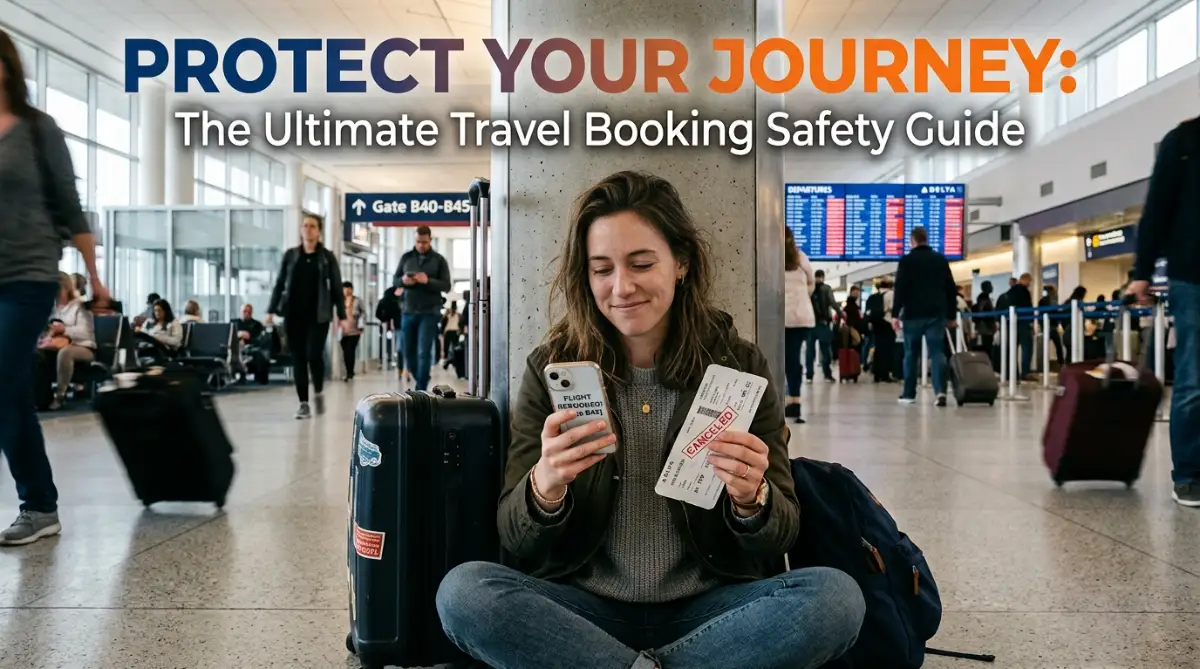
The airport terminal was freezing, but I was sweating completely through my shirt. The large departures board above my head had just flashed a bright, blinding red "CANCELED" directly next to my long-awaited flight to Tokyo.
My heart sank into my stomach. I stood there, holding a tiny cup of awful airport coffee, realizing my entire prepaid hotel reservation and non-refundable tour tickets were currently draining down the sink.
I had saved up for months for this specific adventure. I specifically remembered clicking the "skip" button on the trip protection page because I wanted to save a measly forty dollars.
That small decision suddenly felt like a massive weight on my chest. I watched other passengers calmly calling their providers, getting their hotels rebooked and their expenses covered without a single worry.
Meanwhile, I was quietly doing the mental math of how many thousands of dollars I was about to lose entirely. It is a deeply sickening feeling when your hard-earned vacation turns into an unexpected financial nightmare.
Every single day, countless families and solo adventurers face this exact same heart-breaking scenario. You plan the perfect getaway, you pay upfront, and then life happens in the most unpredictable ways.
An unexpected illness, a sudden severe weather event, or an airline going bankrupt can instantly wipe out your entire vacation budget. The anxiety of losing your money can completely destroy the joy of traveling.
You deserve to explore the world with absolute peace of mind. Protecting your investment is not just about getting a refund; it is about securing your mental well-being when you are far away from home.
Table of Contents
- The Crushing Reality of an Unprotected Journey
- Quick Summary
- Key Takeaways
- Credit Card Coverage vs. Real Protection
- The Real-Life Math of Medical Emergencies
- The Honest Truth: Pros and Cons
- Step-by-Step: Securing Your Investment Today
- Navigating the Tricky Fine Print
- Filing a Successful Claim Without Headaches
- Final Thoughts on Your Peace of Mind
Quick Summary
Protecting your travel investment requires more than simply hoping for the best. By selecting a comprehensive plan, you safeguard yourself against expensive cancellations, sudden medical emergencies, and lost baggage. Relying purely on basic credit card perks often leaves dangerous gaps in your safety net. Understanding the exact terms before purchasing ensures a completely stress-free adventure.
Key Takeaways
- Always read the specific covered reasons for trip cancellation before buying any plan.
- Primary medical coverage pays you directly without involving your regular health provider first.
- Basic credit card perks rarely cover severe medical emergencies or emergency evacuations.
- Document everything meticulously from the moment a delay or cancellation happens.
- Buying protection within 14 days of your initial deposit often unlocks extra benefits.
Credit Card Coverage vs. Real Protection
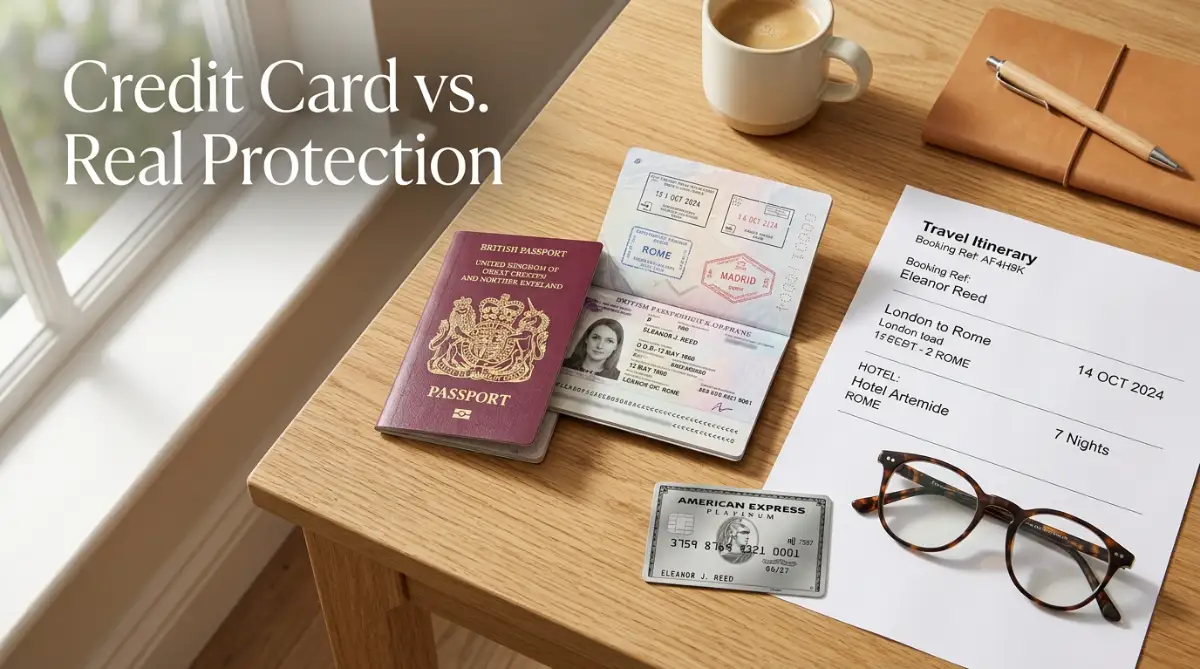
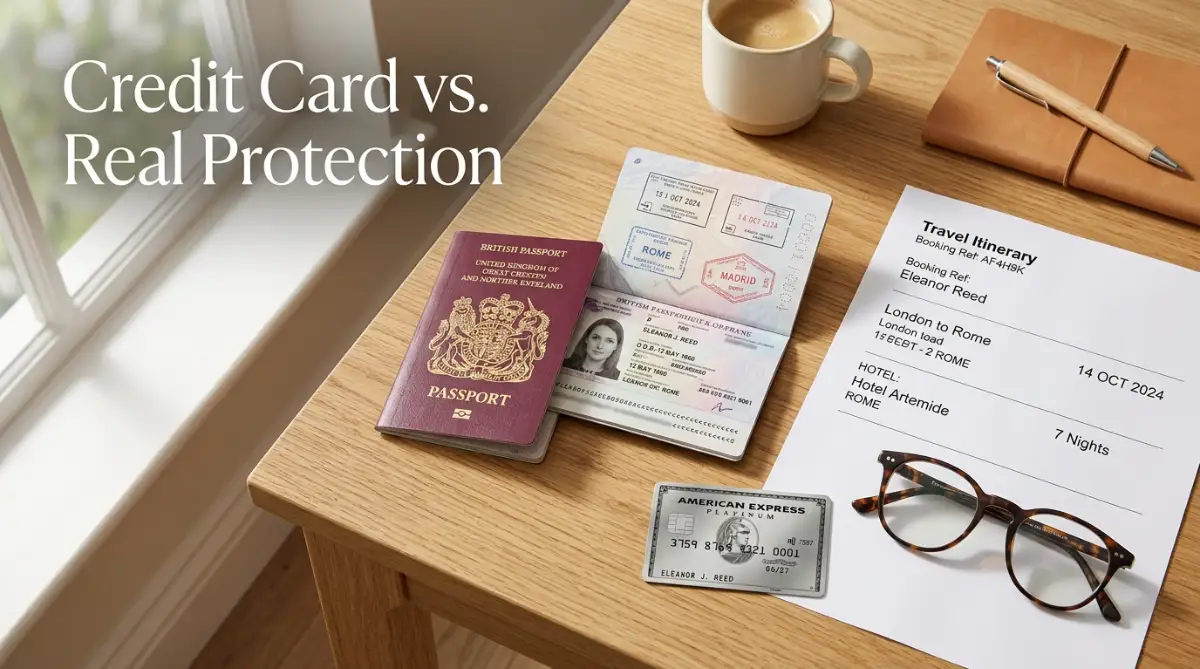
Many smart travelers assume they are totally safe because they booked their flights with a premium credit card. This is easily the most common and dangerous misunderstanding in the travel community.
Your credit card might offer some decent perks for minor inconveniences. If your bag arrives a day late, they might buy you a toothbrush and a change of clothes.
But what happens if you get appendicitis while hiking in a remote area? A standard credit card will simply not cover a fifty-thousand-dollar helicopter medical evacuation.
Let us clearly break down the massive differences so you never get caught off guard.
The Real-Life Math of Medical Emergencies
Let us look at a completely realistic situation to understand the financial impact of traveling unprotected. Meet Sarah, a regular office worker who saved exactly $4,000 for a two-week dream vacation to Europe.
She booked non-refundable flights, boutique hotels, and highly sought-after train tickets. Three days into her trip, Sarah tripped on an old cobblestone street in Rome and severely fractured her ankle.
She needed an immediate ambulance, an emergency room visit, X-rays, and emergency surgery to place pins in her bone. The total hospital bill came to an astonishing $18,500.
Because her domestic health plan offered zero coverage overseas, Sarah had to put the entire medical bill on her personal credit cards. Furthermore, she could not take her planned flights back home.
She had to purchase a last-minute, one-way first-class ticket so she could keep her leg elevated, costing an additional $3,200. Her $4,000 dream trip suddenly transformed into a crushing $21,700 debt.
If Sarah had spent roughly $180 on a comprehensive policy before she left, her out-of-pocket medical costs would have been zero. The provider would have also covered the upgraded flight home due to strict medical necessity.
The Honest Truth: Pros and Cons
Every financial decision comes with its own set of advantages and drawbacks. You need to know exactly what you are paying for to avoid bitter disappointment later.
Here is a clear look at both sides of the coin.
The Pros:
- Reimburses non-refundable expenses if you must cancel for covered reasons.
- Protects you from bankrupting overseas hospital bills.
- Provides 24/7 emergency hotline support in your native language.
- Covers the cost of replacing stolen passports and delayed baggage.
The Cons:
- Adds an extra upfront cost to your overall vacation budget.
- The claim process can require a lot of annoying paperwork and patience.
- Pre-existing medical conditions might be excluded if you buy the plan too late.
- Extreme adventure sports usually require an expensive upgrade.
Step-by-Step: Securing Your Investment Today
Finding the right safety net does not have to be a complicated, migraine-inducing task. You just need to know exactly what elements to prioritize for your specific style of travel.
Analyze Your Non-Refundable Risk
Start by calculating every single dollar you would lose if you could not leave your house tomorrow. This includes flights, Airbnb deposits, theme park passes, and cruise payments.
Do not insure fully refundable expenses. If your hotel allows free cancellation up to 24 hours before arrival, exclude that amount from your total trip cost to lower your premium.
Target High Medical Limits
If you are traveling internationally, your domestic health coverage is likely useless. Look for a plan that offers at least $100,000 in emergency medical coverage.
Demand Emergency Evacuation
Getting treated at a local clinic is one thing. Getting transported safely back to a world-class hospital in your home country is completely different.
Always insist on a minimum of $250,000 for emergency medical evacuation. Medical flights are unbelievably expensive and must be paid upfront if you are unprotected.
Check for Primary Coverage
You always want to look for the word "Primary" when reading about medical benefits. Primary coverage means the travel provider pays the hospital directly, or pays you first.
Secondary coverage forces you to file a claim with your regular home health provider first, which guarantees months of frustrating delays.
Consider Cancel For Any Reason (CFAR)
Standard plans only let you cancel for strict reasons like severe illness or a death in the family. If you just change your mind or feel scared to travel, you get nothing.
CFAR is an optional upgrade that usually costs 40% more. It allows you to cancel your entire trip simply because you do not want to go, returning about 75% of your money.
The Tricky Fine Print Explained
The biggest mistakes travelers make usually happen in the tiny text at the bottom of the contract. You must understand how the industry views pre-existing conditions.
If you have high blood pressure and have changed your medication in the last 60 days, that is usually considered a pre-existing condition. If that condition causes you to cancel your trip, standard plans will deny your claim entirely.
To bypass this problem, you must purchase your policy within 10 to 14 days of making your very first trip deposit. Doing this usually unlocks a "pre-existing condition waiver."
Pro Tip: I learned this the hard way during a family trip to Mexico. I waited until a week before departure to buy our coverage, completely forgetting my husband had visited the doctor for asthma a month prior. When he had a severe asthma attack on the trip, our claim was completely denied because I missed that 14-day purchase window. I now set a strict calendar alarm the exact second I book a flight.

Filing a Successful Claim Without Headaches
Having great protection means absolutely nothing if you do not know how to actually use it when disaster strikes. The way you handle the first few hours of an emergency determines if you get paid.
Call the Emergency Hotline Immediately
Do not assume you can just pay cash and figure it out later. If you get sick or your flight gets severely delayed, call the 24/7 hotline provided on your plan document.
They need to open a case file immediately. They can also direct you to an approved hospital where they might pay the bills directly on your behalf.
Keep Every Single Receipt
The claims department will not take your word for anything. They operate entirely on hard proof and physical documentation.
If an airline delays you overnight, force the gate agent to print a statement confirming the reason for the delay. Keep the receipts for your emergency hotel, your meals, and your taxi rides.
Do Not Accept Vouchers Quietly
Sometimes airlines will offer you a $200 travel voucher to make up for a canceled flight. If you accept this voucher, your protection plan might view that as a settled case.
Speak to your provider before accepting alternative compensation from an airline or hotel.
Here is a quick checklist to help you stay organized during a stressful situation.
The Ultimate Peace of Mind
There is an incredible psychological shift that happens when you know your investment is totally secure. You stop stressing about the dark clouds forming outside your window.
You stop checking the news every five minutes worrying about airline strikes. Instead, you can actually focus on planning your daily itinerary and getting excited about the food you will eat.
A Powerful Video Resource
If you want to see exactly how industry insiders evaluate different protection packages, taking a few minutes to watch a visual breakdown can be incredibly helpful. The video below clearly highlights the exact questions you should ask a representative before handing over your credit card.
Booking a vacation should be the happiest part of your year. Do not let the anxiety of the unknown steal that joy from you.
Take the extra fifteen minutes to compare your options thoroughly. Spend the small extra fee to build a strong safety net around your travel plans.
When you are sitting on a beautiful beach, listening to the waves crash, you will not be thinking about the money you spent on coverage. You will simply be living in the moment, exactly as you deserve.
Always travel smart, read the terms carefully, and never leave your hard-earned money exposed to random chance. Protect your journey today, and explore the world with absolute confidence tomorrow.
Next-Level Strategies for a Bulletproof Vacation
You already know the basic reasons why securing your trip is a smart move. Now, let us look at the advanced tactics that industry insiders use to get the absolute most value out of their policies.
The secret to maximizing your benefits is understanding exactly how different coverage types interact with each other. If you are planning an extensive journey across Europe or Asia, you need a strategy that goes beyond clicking the first suggested option on a booking website.
For instance, many people do not realize that you can actually stack different policies to create a completely impenetrable safety net. You might rely on your premium credit card for minor baggage delays, while purchasing a dedicated medical plan for major health emergencies.
This approach saves you money because you are not paying twice for the same basic perks. When you learn how to book multi-city flights step-by-step, you quickly realize that missing one connection can cause a massive domino effect.
Having a robust protection plan means that a single missed flight will not force you to pay out-of-pocket for three subsequent rebookings. You simply call your provider, explain the delay, and let them handle the expensive logistics.
It is also incredibly smart to buy your coverage the exact same day you make your very first trip deposit. Insurance companies call this the "Golden Window," which usually lasts about ten to fourteen days after your initial payment.
Purchasing within this specific timeframe almost always unlocks a pre-existing medical condition waiver for free. If you wait until a week before departure, you completely lose this essential protection and put your entire investment at severe risk.
Pro Tip: Always download your provider’s official mobile app before you leave your house, and save your policy number directly into your phone's emergency contacts. If you are standing in a foreign hospital with a weak internet connection, you do not want to be frantically searching through thousands of old emails to find your medical ID card.
Myth and Reality
Understanding the truth behind popular misconceptions can save you from a financial disaster overseas. Look at this breakdown of what people believe versus how the industry actually works.
If you plan to rent a car during your travels, check if your current auto provider extends their benefits internationally. Buying collision waivers at the rental counter is usually a massive waste of money if your main protection plan already includes vehicle damage.
Additionally, always verify the specific definition of "family member" in your policy documents. If you have to cancel your trip because your aunt gets sick, standard plans might deny the claim unless aunts are explicitly listed as covered family members.
The Financial Traps That Catch Smart Travelers
Even highly experienced globetrotters sometimes fall into dangerous traps simply because they assume all plans are exactly the same. Skimming through the terms and conditions is a guaranteed recipe for a denied claim.
Imagine spending thousands of dollars on a dream African safari, only to realize your provider excludes coverage for "extreme adventure activities." When things go wrong in a remote location, a simple misunderstanding can cost you tens of thousands of dollars.
To ensure you are fully protected, you must be completely honest about the true value of your vacation. Under-insuring your trip to save ten dollars on the premium is one of the worst financial decisions you can make.
If you only declare $2,000 of non-refundable costs, but your total risk is actually $5,000, the company will legally cap your payout at the lower amount. Knowing the exact mistakes to avoid when booking international flights online goes hand in hand with selecting the perfect coverage limit.
Common Mistakes
Here is exactly where most people go wrong when they try to protect their hard-earned vacation money. Avoid these errors at all costs.
- Waiting until the last minute: Buying a plan a few days before departure disqualifies you from pre-existing condition waivers and severe weather protections.
- Ignoring the hazardous sports list: Standard plans will not cover injuries from scuba diving, bungee jumping, or even riding a scooter unless you buy a specific upgrade.
- Insuring fully refundable items: Including hotel rooms that allow free cancellation inflates your total trip cost and forces you to pay a much higher premium.
- Failing to provide medical records: If you file a medical claim, you must provide signed doctor notes from the foreign hospital, not just a credit card receipt.
If a major airline suddenly declares bankruptcy, your tickets instantly become worthless pieces of paper. Standard credit cards will not refund you, but a high-quality protection plan with "Financial Default" coverage will step in and save the day.
What You Expect vs. What You Get
It is extremely helpful to clearly visualize the difference between basic assumptions and actual contractual guarantees.
When you are looking at different options, always check the official U.S. Department of State Travel Advisories or your local equivalent. If a country is listed as a Level 4 "Do Not Travel" zone, many providers will immediately void your coverage the second you cross the border.
If you ever find yourself stuck at an airport, understanding how to handle a cancelled flight booking without losing money requires immediate action and clear documentation. Do not leave the airline desk until they print out a signed document stating the exact reason for the delay, as your claims adjuster will demand this later.
Your Practical Execution Guide: From Research to Purchase
Now that you understand the deep mechanics of travel safety, it is time to take direct action. You can complete this entire process from your living room couch in less than thirty minutes.
Following a strict sequence ensures you never overpay and never miss a tight deadline. Treat this process with the same level of care you use when picking your resort.
The Exact Step-by-Step Execution
Step 1: Calculate Your True Financial Risk
Sit down with a calculator and add up every single dollar you have paid out of pocket so far. Only include expenses that the vendor explicitly refuses to refund if you cancel today.
Step 2: Utilize an Independent Comparison Tool
Never buy the default plan offered directly at the airline checkout screen. Go to a trusted third-party aggregator website to compare at least three different providers side-by-side.
Step 3: Filter for Primary Medical Coverage
Use the website filters to hide any plans that only offer secondary medical benefits. You want the provider to handle hospital bills directly so you do not have to drain your personal savings.
Step 4: Purchase on the Same Day You Book
Once you select a plan, use a secure credit card to buy it immediately after making your initial hotel or flight deposit. This locks in your protection against pre-existing conditions and future weather events.
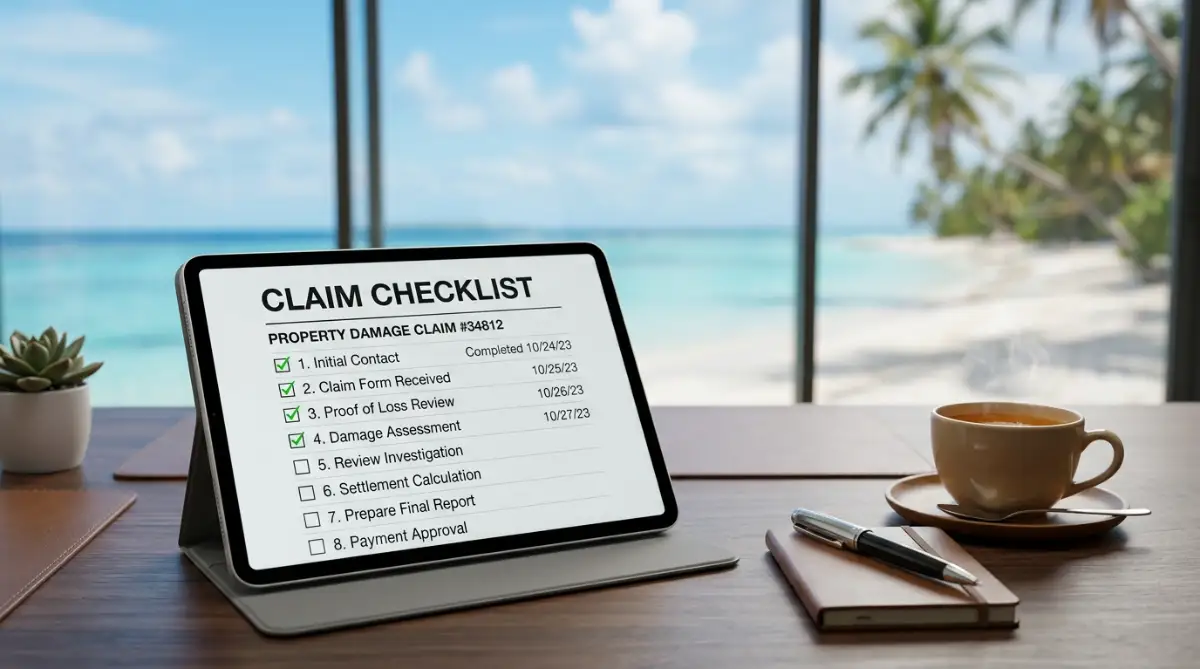
Required Document Checklist
To make the purchase and successfully file a claim later, you must gather these specific items before you travel.
- A finalized spreadsheet of all non-refundable trip costs.
- Digital copies of every single flight itinerary and hotel confirmation email.
- Your current primary health provider details (just in case they need to coordinate).
- Clear photographs of the specific items packed in your checked luggage.
- A printed copy of your complete policy terms, including the 24/7 emergency hotline number.
Quick Action Checklist
- Calculate total non-refundable expenses today.
- Compare three different independent quotes online.
- Verify the medical evacuation limit is over $250,000.
- Set a phone alarm to purchase within 10 days of your first booking.
- Download the provider's emergency assistance app.
The Timeline of Protection Actions
Timing is absolutely everything when it comes to securing your money. Let this visual guide dictate your schedule.
Remember that hidden resort fees and unexpected taxes can quietly drain your budget. Figuring out how to avoid hidden fees when booking a hotel online is a great way to free up extra cash that you can then invest into a premium protection plan.
Embrace the Joy of Stress-Free Exploration
Your upcoming vacation is supposed to be a beautiful escape from the daily grind, not a source of constant financial worry. By taking control of your risk today, you are giving yourself the ultimate gift of peace of mind.
You have learned how to look past the empty promises of basic credit cards and secure true, comprehensive protection. You now possess the exact knowledge needed to handle medical emergencies, avoid common pitfalls, and submit flawless claims without a headache.
I remember the profound sense of relief I felt during a severe hurricane warning in the Caribbean, knowing every single dollar of my trip was fully protected. I simply sat back, watched the rain, and waited for my provider to handle my completely covered flight home.
Do not let fear dictate your adventures. Secure your safety net right now, pack your bags with confidence, and go create memories that will last a lifetime.
Which dream destination are you planning to visit next with your newly secured peace of mind? Let me know in the comments below!
Top Questions Travelers Always Ask
What exactly is a pre-existing medical condition waiver?
This waiver forces the provider to cover medical emergencies related to illnesses you already have, like diabetes or high blood pressure. You usually get it for free automatically if you buy your plan within 14 days of your very first trip payment.
Does my coverage start the day I buy it?
Your trip cancellation benefits start at 12:01 AM the day after you purchase the plan. However, medical and baggage benefits do not activate until the exact moment you leave your home for the airport.
Do I really need protection for a domestic trip?
Yes, especially if you have prepaid thousands of dollars for non-refundable mountain cabins, domestic flights, or theme park tickets. While your regular health plan works domestically, it will not reimburse you for a canceled trip if you get sick.
Can I cancel my trip just because I am afraid to fly?
Standard plans will absolutely deny a claim based on fear or simple a change of mind. You must purchase the optional "Cancel for Any Reason" (CFAR) upgrade if you want the freedom to back out without a medical excuse.
How do I prove the value of items stolen from my luggage?
You must keep original purchase receipts for high-value items like laptops, cameras, and jewelry. If you do not have receipts, claims adjusters will aggressively depreciate the value of your stolen items.
Will I be covered if I catch a sudden virus before my trip?
Yes, standard plans cover trip cancellations due to unforeseen medical emergencies. You just need a signed note from a licensed doctor stating that you are physically unfit to travel on your scheduled dates.
Is it cheaper to buy protection directly through the airline?
Usually, the default plans offered on airline checkout pages are extremely overpriced and offer very weak medical limits. You will almost always find better coverage and lower prices by comparing options on an independent broker website.
What is the difference between primary and secondary medical coverage?
Primary coverage pays your overseas medical bills directly or reimburses you first without involving your home provider. Secondary coverage requires you to file a claim with your domestic health plan first, which creates massive delays.
Does it cover my pets if they get sick while I am away?
Some premium plans offer specialized pet care benefits if your return flight is delayed and you incur extra boarding kennel fees. However, standard policies do not cover trip cancellations just because your pet gets sick.
What happens if the airline simply loses my bag forever?
The airline will eventually offer a small settlement, but it rarely covers the true cost of your belongings. Your protection plan steps in to cover the remaining financial gap up to your specific policy limit.
Trusted Legal Resources
- Consumer Financial Protection Bureau (CFPB)
- U.S. Department of Transportation - Aviation Consumer Protection
- National Association of Insurance Commissioners (NAIC)
- Federal Trade Commission (FTC) Travel Scams Guide
- USA.gov Travel Safety Information
- Smart Traveler Enrollment Program (STEP)
Disclaimer: The information provided in this article is strictly for educational and informational purposes only and does not constitute financial, legal, or professional medical advice. Always read the specific terms, conditions, and exclusions of any contract before making a purchase. The FinanceInfoIn team assumes no liability for any financial losses or damages resulting from the use of this information. Please consult with a licensed professional to review your individual needs.
About the Author
Reviewed by Mithun Halder (Personal Finance & SEO Expert) & The FinanceInfoIn Editorial Team
The FinanceInfoIn Editorial Team researches personal finance, investing, insurance, mortgages, cryptocurrency, and consumer financial topics. Every article is carefully reviewed to provide clear, practical, and trustworthy educational information based on credible sources and industry best practices.
©2026 FinanceInfoIn. All rights reserved.