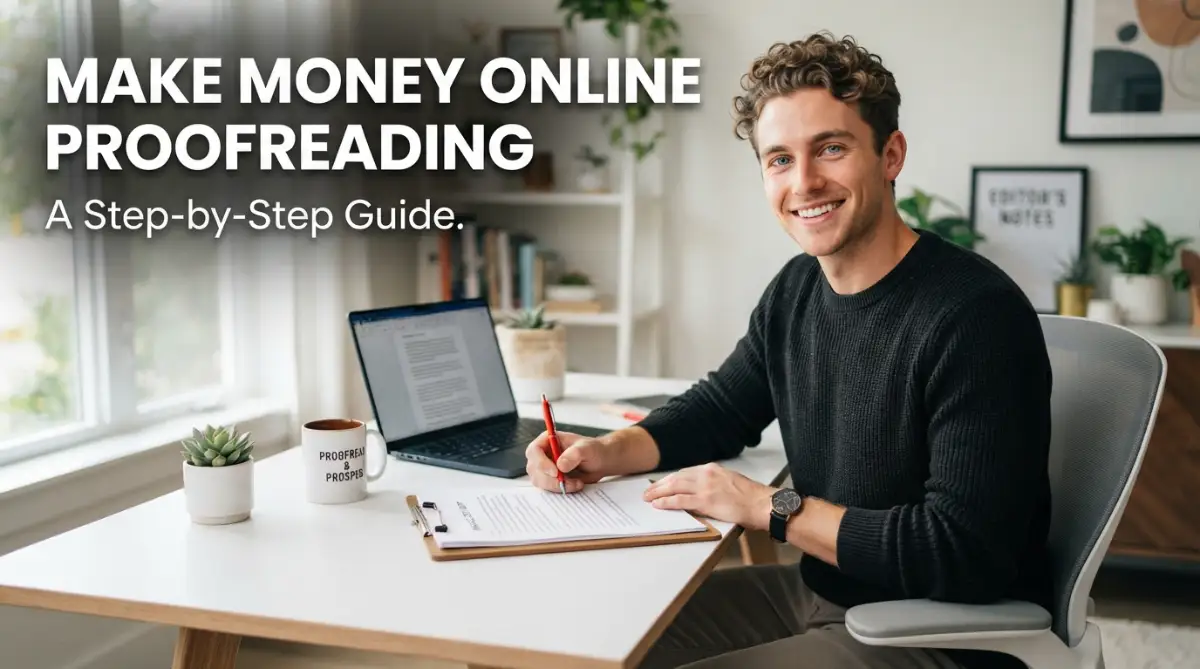
The Hidden Struggle of Finding Real Online Income
I remember sitting at my kitchen table late at night, feeling completely overwhelmed by all the fake online side hustles. I spent months trying ridiculous survey apps that barely paid enough to buy a cup of coffee. It was not until I accidentally stumbled upon freelance proofreading that my entire financial situation actually started to change.
Living paycheck to paycheck can feel incredibly exhausting for anyone trying to build a better life. You wake up every morning wondering if there is a realistic way to earn extra cash from the comfort of your home. Many people dream of working in their pajamas, setting their own flexible hours, and finally breaking free from the traditional daily commute.
Yet, the internet is flooded with empty promises and confusing schemes that leave you feeling entirely lost. You just want an honest, straightforward method to bring in some extra cash without getting scammed or wasting your precious time.
Why Finding the Right Path Feels Impossible:
- You constantly run into fake online gurus promising overnight wealth with zero actual work.
- Most popular "work from home" methods require huge upfront investments that you simply cannot afford right now.
- You spend hours trying out endless survey sites that end up paying mere pennies for your hard work.
- Confusing and contradictory advice scattered across the internet leaves you paralyzed and unsure where to even begin.
- You end up wasting your valuable energy on outdated strategies that simply do not work in the real world anymore.
How This Endless Search Ruins Your Peace of Mind:
- You start doubting your own natural abilities, feeling like making money online is only reserved for tech geniuses.
- The constant cycle of trial and error strips away your confidence, making you want to give up completely.
- Financial stress keeps you awake at night, wondering how you will comfortably pay the upcoming monthly bills.
- You feel isolated and deeply frustrated because your friends and family do not understand your struggle to find remote work.
- Every new setback makes the beautiful dream of financial independence feel completely out of your reach.

How to Turn Your Reading Habit into a Profitable Income Stream
Let me share a very simple secret with you today. If you are the kind of person who constantly notices spelling mistakes on restaurant menus, you already have a highly profitable skill. Proofreading is simply the art of catching errors that other people miss.
You do not need a fancy college degree to start making money in this field. You just need a sharp eye, a lot of patience, and a willingness to learn exactly how the online marketplace operates. I am going to walk you through exactly how you can build this income stream from scratch.
Step 1: Master the Core Basics of Professional Error Spotting
Why do online proofreaders make such great friends?
Because they will never judge your past, but they will absolutely correct your tense! 😄
Before you can ask clients to pay you, you need to understand what a proofreader actually does. Proofreading is the very final step of the writing process before a document is published. You are not writing the content, and you are not restructuring heavy paragraphs.
Your main job is to act like a safety net for the writer. You are hunting for simple typos, double spaces, missing commas, and basic grammatical mistakes. Think of it like washing and polishing a car right before it goes into the showroom. You are not building the engine; you are just making sure the outside looks absolutely flawless.
To get started, you need to brush up on common grammar rules that easily confuse people. For example, knowing the exact difference between "their," "there," and "they're" is an absolute must. You should also understand how to properly use commas, semicolons, and apostrophes in professional business writing.
I highly recommend taking a few free online grammar quizzes today just to see where your current skill level sits. Do not feel bad if you make a few mistakes during your practice sessions. Even the most successful English teachers use reference guides when they get stuck on a tricky sentence.
You also need to train your brain to read slowly and methodically. When we read normally, our brains naturally skip over small words and fill in the blanks automatically. A professional proofreader has to fight this natural habit and look at every single letter on the page.
Try reading documents backward, word by word, to completely break the natural flow of the sentence. This strange little trick forces your brain to focus entirely on the spelling of the words instead of the story itself. Practice this method on public blogs or news articles today to train your eyes.
If you are a visual learner, watch this short video below to see exactly how a professional proofreader catches hidden mistakes in real time, and then keep reading below for my exact guide on setting up your workspace.
Step 2: Set Up Your Distraction-Free Editing Workspace
You do not need to rent an expensive commercial office to become a highly paid online proofreader. However, you absolutely must create an environment inside your home that allows for deep, unbroken concentration. Proofreading requires immense mental focus, and you simply cannot do it properly while watching television.
Find a quiet corner in your house where you can set up a sturdy desk and a comfortable, ergonomic chair. Good lighting is incredibly important because you will be staring at a computer screen for several hours at a time. If possible, set your desk near a window to get plenty of natural sunlight, which helps prevent massive eye strain.
Next, you need to understand the standard software tools that the industry relies on every single day. The vast majority of your clients will expect you to use either Microsoft Word or Google Docs. You must learn exactly how to use the "Track Changes" feature in Microsoft Word.
This specific tool highlights every single correction you make in red, allowing the client to see exactly what you fixed. If you are using Google Docs, you will use the "Suggesting" mode to do the exact same thing. Clients love transparency, and showing them your exact edits builds a massive amount of trust.
You should also use modern technology to act as your digital assistant. Tools like Grammarly or ProWritingAid are fantastic for catching obvious mistakes quickly before you begin your manual review. However, you must never rely on these software programs completely.
Artificial intelligence often misunderstands the human context of a sentence and will suggest completely incorrect changes. Use these tools as a basic first pass to clean up the document, but always trust your own human eyes for the final polish. Your human judgment is exactly what the client is paying for.
Step 3: Build a Magnetic Proofreading Portfolio from Scratch
The biggest hurdle beginners face when trying to make money online is the classic "experience trap." Clients want to hire someone with previous experience, but you cannot get experience without getting hired first. The best way to break this frustrating cycle is to simply create your own experience.
You can easily build a powerful, trust-building portfolio without ever having a single paying client. A portfolio is simply a collection of before-and-after documents that prove you know how to spot mistakes. When a client sees your actual work, they instantly feel confident about handing you their money.
Start by visiting websites that offer public domain books or free articles that have obvious grammatical errors. Copy a messy page of text into your word processor and aggressively correct every single mistake you can find. Take a clear screenshot of the original, messy text, and then take a screenshot of your clean, corrected version.
Put these two images side-by-side in a simple PDF document labeled "Before and After Editing Sample." You can do this with three or four different types of documents, such as a blog post, a formal email, and a short story. This simple PDF now serves as your professional resume.
Another highly effective strategy is to offer your services for free to a few local small business owners. Go to the websites of local plumbers, dentists, or restaurants in your area and look closely at their text. If you spot embarrassing spelling mistakes, politely email the owner and offer to fix their homepage for free.
Tell them you are simply trying to build your new online portfolio and ask for a short written review in return. Most business owners will happily say yes because you are offering massive value at zero cost to them. Once you collect three good reviews from real business owners, you will easily start landing high-paying clients online.
When I first started out, my biggest mistake was waiting until I felt perfectly "ready" before pitching to any clients. I quickly realized that nobody expects you to be a flawless grammar robot; they just want a reliable human who cares about making their writing look professional. Do not overthink your first few practice edits—just dive in and start building your confidence.
How to Scale Your New Freelance Editing Income
Now that you have your very first practice portfolio and a few local reviews, it is time to turn this side hustle into a real income stream. You have built a solid foundation of trust, but finding clients who are willing to pay top dollar requires a slightly different strategy. You cannot just sit back and wait for people to find you; you have to put yourself directly in front of the right buyers.
Many beginners make the error of immediately jumping onto crowded freelance platforms and competing for the lowest possible price. Instead of fighting for pennies, I am going to show you how to position yourself as an expert that clients actually want to hire. By following these next steps, you will learn how to build a sustainable and highly profitable daily routine.
Step 4: Pitch Directly to Independent Content Creators
The internet is absolutely packed with independent creators who desperately need a second set of eyes on their work. Self-published authors, personal finance bloggers, and independent podcasters produce a massive amount of written content every single week. These creators often struggle to catch their own typos because they are too close to their own work.
Instead of waiting for them to post a job listing, you can send them a polite, friendly email directly. Introduce yourself briefly, compliment a specific piece of their recent work, and let them know you offer freelance proofreading services. You can even offer to review their next short newsletter for free just to prove how much value you can provide.
New businesses are also fantastic targets because they cannot afford to look unprofessional to their new customers. A messy, error-filled website can completely ruin a company's reputation and push buyers away. In fact, many new business owners struggle with multiple challenges, similar to why bootstrapped startups collapse early without proper cash flow planning. By fixing their grammar, you directly help them look more trustworthy and secure more sales.
When sending these direct pitches, keep your emails extremely short and easy to read. No one likes reading a massive wall of text from a stranger they just met online. Simply state who you are, what exact problem you solve, and link directly to your clean before-and-after portfolio.
Step 5: Choose a Highly Profitable Specialty Niche
When you first start out, it makes total sense to proofread absolutely anything you can get your hands on. You need the practice, and taking on general blog posts or simple emails helps build your daily confidence. However, if you want to double or triple your hourly rate, you eventually need to specialize in a specific industry.
Think about the difference between a general family doctor and a specialized brain surgeon. The specialist always makes significantly more money because they possess rare knowledge that very few other people have. The exact same rule applies to the online proofreading market. Clients will gladly pay premium rates for someone who understands the specific terminology of their industry.
For example, proofreading complex financial documents or technical guides pays much better than editing a simple travel blog. If you edit articles explaining complicated topics like lowering your debt to income ratio for a mortgage application, you instantly become a highly valued specialist. You do not need a finance degree to do this; you just need to familiarize yourself with basic industry terms.
To learn these specialized terms, I highly recommend reading authority resources regularly. You can study official writing guidelines from the Purdue Online Writing Lab (OWL) to understand strict academic formatting. Alternatively, reading popular small business advice on Forbes will help you understand the professional tone corporate clients expect from you.
Establishing Long-Term Client Relationships
Getting a new client is exciting, but keeping that same client for several months is where real financial freedom happens. Repeat business is the ultimate secret to a stress-free freelance career because you no longer have to spend unpaid hours looking for new work. To keep clients coming back, you must deliver your finished work on time, every single time.
Always communicate clearly with your clients about your exact working hours and expected delivery dates. If a client sends you an email asking for an update, reply promptly to let them know you are actively working on their project. Small gestures of professionalism, like a friendly weekly update, make you completely irreplaceable to busy business owners.
As your income grows, you will likely start working with international clients who prefer different modern payment methods. Some clients may even prefer paying you through digital wallets or online transfer platforms. If you ever deal with digital assets, always prioritize your digital safety and follow basic security steps to secure your crypto wallet or payment accounts.

The Biggest Beginner Traps That Destroy Your Reputation
Even with the best intentions, many new freelancers accidentally ruin their chances of success by making easily avoidable errors. When you are working directly with clients, your personal reputation is your most valuable business asset. A single bad review from an angry client can make it incredibly difficult to find new paying jobs.
I want to share the most common stumbling blocks that cause new proofreaders to fail in their first few months. By understanding these pitfalls right now, you can completely skip the painful trial-and-error phase. Protecting your professional reputation should always be your number one priority when working online.
1. Relying Entirely on Automated Grammar Software
This is easily the most dangerous mistake a new freelance proofreader can make today. It is incredibly tempting to run a client's document through a popular grammar checker and blindly accept every single suggestion it makes. After all, software is supposed to be smarter than us, right?
Unfortunately, artificial intelligence simply does not understand human emotion, cultural context, or intentional humor. A grammar checker might tell you to delete a slang word that the author deliberately used to connect with their specific audience. If you blindly change the author's personal voice into a robotic, boring text, they will absolutely refuse to work with you again.
2. Confusing Proofreading with Deep Copy Editing
Many beginners completely misunderstand what they are actually being paid to do. Proofreading is strictly about fixing objective errors like spelling, basic punctuation, and obvious typos. Copy editing, on the other hand, involves rewriting bad sentences, moving paragraphs around, and improving the overall flow of the story.
If a client hires you to proofread, they do not want you to rewrite their entire article. Changing their actual sentence structure without permission often offends the original writer and causes massive arguments. Always stick strictly to fixing clear errors unless the client specifically pays you extra for heavy editing services.
3. Taking on Technical Projects Without Proper Knowledge
As you look for higher-paying jobs, you might be tempted to accept projects in highly complex industries. However, accepting a medical, legal, or deep technical document without understanding the basic vocabulary is a recipe for disaster. You will end up "correcting" words that are actually perfectly correct within that specific industry.
For example, imagine taking a job reviewing dense real estate reports without knowing the proper terminology. If you try to proofread documents about major warning signs in a home inspection, you might accidentally change specific structural terms that must remain exact for legal reasons. Always be honest with yourself about your current knowledge level and decline projects that are too far outside your comfort zone.
4. Setting Your Hourly Rates Way Too Low
When you are desperate for your first few clients, it feels perfectly logical to offer the cheapest rate on the market. You might think that pricing your services at three dollars an hour will guarantee you a massive flood of incoming work. However, in the professional freelance world, this strategy usually completely backfires on you.
High-quality clients automatically associate extremely cheap prices with terrible, low-quality work. The only people who will hire you at those rock-bottom prices are incredibly demanding, difficult clients who will treat you poorly. Value your own time and set a reasonable beginner rate that proves you actually take your new career seriously.
5. Missing Deadlines Due to Poor Time Management
When you finally start working from home, you will quickly realize how many distractions are sitting right next to you. The television, your family members, and your smartphone will constantly fight for your attention throughout the day. Without a strict boss watching over your shoulder, it becomes dangerously easy to procrastinate until the very last minute.
Missing a single client deadline is the fastest possible way to lose a long-term business relationship forever. Clients plan their entire publishing schedules around the exact date you promise to deliver the corrected text. Treat every single freelance deadline exactly as you would treat a strict deadline at a traditional corporate office job.
Your Next Steps Toward Financial Freedom
Building a brand new income stream from scratch takes real dedication, a lot of patience, and a willingness to step outside your comfort zone. You now have a complete, step-by-step roadmap to turn your natural reading habits into a highly profitable online business. The days of feeling completely stuck and stressed about finding legitimate online work are officially over for you.
Remember that every single successful freelancer you see online started at the exact same zero point that you are at right now. They did not have special connections, magical software, or an unfair advantage over you. They simply decided to take action, set up their workspace, and send out their very first client pitch.
You already possess the basic skills required to start making money by spotting simple errors today. Do not let the fear of rejection or the worry of making a small mistake hold you back from your potential. The online world is incredibly vast, and there are thousands of busy creators out there right now who desperately need your sharp eyes.
Take out a piece of paper today and write down exactly when you will create your first practice portfolio. Commit to spending just one hour this week reviewing free online articles and finding common spelling mistakes. Your journey to earning money from the comfort of your own home begins with that very first, simple step.
Five short nots:
01.Understand What Online Proofreading Involves – Learn the responsibilities of a proofreader, including correcting grammar, spelling, punctuation, and formatting errors while preserving the writer’s original message.
02.Develop the Skills Clients Look For – Strengthen your grammar knowledge, attention to detail, and editing accuracy to stand out as a reliable online proofreader.
03.Start with Trusted Proofreading Platforms – Explore reputable freelance marketplaces and proofreading companies that offer beginner-friendly opportunities and transparent payment systems.
04.Build a Portfolio That Wins Clients – Create a collection of polished editing samples to demonstrate your skills, increase credibility, and attract higher-paying proofreading projects.
05.Increase Your Earnings Through Quality and Consistency – Deliver accurate work on time, communicate professionally with clients, and earn positive reviews that lead to repeat projects and long-term income opportunities.
Looking back, deciding to trust my own reading skills was one of the best decisions I ever made for my family. If I can go from feeling completely lost on the internet to building a steady daily income from my laptop, I know you can absolutely do it too. Take a deep breath, clear off your desk, and go get your very first practice document today.
Disclaimer: The information provided in this article is for educational and informational purposes only and does not constitute financial or career advice. Earnings and success as a freelance proofreader depend entirely on your individual effort, market conditions, and personal skill level. Always research independently before offering professional services online.