

Reading Time: 10 Minutes
Difficulty Level: Beginner to Intermediate
Reviewed By: FinanceInfoIn Editorial Team
Quick Summary
Understanding your property protection shouldn't require a law degree. This guide breaks down the core elements of a standard policy, including dwelling protection, personal property, and liability limits. We strip away the confusing jargon to show you exactly how your home, belongings, and financial future are protected when unexpected disasters strike.
Key Takeaways
- Dwelling Coverage protects the physical structure of your house against specific perils like fire and wind.
- Personal Property covers your belongings, but payouts depend heavily on whether you choose Actual Cash Value or Replacement Cost.
- Liability Protection acts as a financial shield if someone is injured on your property and decides to sue.
- A standard policy explicitly excludes major natural disasters like floods and earth movements, requiring separate riders.
- Home insurance covers sudden, accidental damage, while a home warranty handles the wear and tear of daily appliances.
That Sinking Feeling When Disaster Strikes
Imagine standing in your driveway at 2 AM, cold rain soaking completely through your pajamas. You are staring at a massive, heavy oak tree resting exactly where your living room ceiling used to be just an hour ago.
That was my reality a while back, and the only thing colder than the heavy rain was the sudden, terrifying thought about my bank account. I had a piece of paper stuffed in a filing cabinet somewhere that said "Homeowners Policy," but I had absolutely no idea what those pages actually meant.
Would they pay to remove the tree? What about my completely ruined television sitting under the debris? Where was my family supposed to sleep for the next month?
When you do not understand your coverage, every single drop of rain or strange noise in the house becomes a massive source of anxiety. We work incredibly hard to buy our homes, pouring our life savings into a down payment and mortgage.
Yet, most of us blindly pay our monthly premiums without ever looking at the details. We just cross our fingers and hope that if the worst happens, some magical check will appear in the mail to make it all better.
The heavy mental toll of this uncertainty is exhausting. When you are hit with a sudden disaster, the last thing you want to do is sit on a phone call with an adjuster, begging to know if you are financially ruined.
People lose sleep wondering if a minor kitchen fire will wipe out their child's college fund. We hesitate to invite guests over because we are quietly terrified someone might trip on the front steps and sue us for everything we own.
This constant background stress destroys your peace of mind at home. Your house is supposed to be your ultimate safe haven, not a giant financial question mark waiting to explode.
You deserve to look around your living room and know exactly how every single item and wall is protected. Let's break down the confusing industry language into plain English, so you never have to stand in the rain wondering if you are safe.

The Core Components: Demystifying Your Policy Details
Let's imagine your standard property protection as a highly organized toolbox. Each specific coverage type is a different tool designed to fix a very specific problem.
Insurance companies label these tools with letters (Coverage A, Coverage B, etc.), which immediately confuses most normal people. But once you look at what these sections actually do, the entire concept becomes surprisingly simple.
We will focus on the most common type of policy, known in the industry as an HO-3. This is what the vast majority of families have attached to their mortgage.
Dwelling Protection (Coverage A): The Structural Shell
Think of dwelling protection as a giant invisible forcefield wrapping strictly around the physical structure of your house. If you can physically attach something to the frame of your home, it usually falls under this category.
This includes your roof, the exterior walls, your built-in plumbing, and the central air conditioning unit outside. If a raging fire destroys your kitchen, or a heavy windstorm rips off your shingles, this is the part of your policy that pays to rebuild.
However, this forcefield is incredibly specific about exactly what causes the damage. The industry calls these causes "perils."
Pro Tip: I learned the hard way that "dwelling coverage" needs to match the cost to rebuild your home from scratch, not the current real estate market value. If a developer built your house today, the cost of raw lumber and modern labor is likely much higher than what you paid for the house years ago. Always ensure your Coverage A limit is high enough to handle modern construction prices.
Personal Property (Coverage C): The Shake Test
Now, imagine picking up your house and shaking it completely upside down. Everything that falls out is considered your personal property.
This means your furniture, your massive television, your clothes, and your expensive pots and pans. Your policy protects these items even if they are not physically inside the house at the time of the incident.
If your laptop is stolen out of your car while you are grabbing groceries, your personal property coverage usually steps in to help.
Liability Protection (Coverage E): Your Financial Shield
This is arguably the most powerful, yet wildly overlooked, section of your entire policy. Liability coverage acts as a massive financial bodyguard if someone gets hurt on your property.
If your friendly dog suddenly bites the mail carrier, or a delivery driver slips on your icy driveway and breaks an arm, they can easily sue you for medical bills and lost wages.
Your liability protection pays for your legal defense team and covers the settlement costs, keeping your personal savings totally safe. Most experts highly suggest carrying at least $300,000 in liability limits, as medical lawsuits are incredibly expensive today.
Are You Going to Subscribe to Read More? Check out this video first!
If you are still feeling slightly lost about how all these letters and limits blend together, you are not alone. Take a quick moment to watch this incredibly helpful visual breakdown by an industry expert, which explains these core coverages using brilliant animations.
Real-Life Math: Navigating Claim Payouts
Understanding what is covered is only half the battle. You also desperately need to understand how the company will actually pay you when things go completely wrong.
Let’s look at a realistic scenario with a homeowner named David. David bought a gorgeous, top-of-the-line leather sofa for $3,000 about five years ago.
Unfortunately, a severe electrical fire just destroyed his entire living room, turning that expensive sofa into literal ashes. David proudly calls his agent, expecting a $3,000 check to go buy the exact same couch again.
Instead, the adjuster hands him a check for a measly $800. David is furious, confused, and feeling totally scammed.
David’s anger stems from not understanding the massive difference between two specific payment methods.
Because David had an "Actual Cash Value" policy, the company calculated that a five-year-old used sofa was only worth $800 on the open market today.
If David had spent just a few extra dollars a month for "Replacement Cost" coverage, he would have received the full amount needed to walk into a store and buy a brand new couch. Always review your declarations page to ensure your personal property is covered under replacement cost.
Additional Living Expenses (Coverage D)
Let's keep looking at David's situation. His living room is totally destroyed, the house smells like heavy smoke, and there is no electricity.
He cannot safely live there while the construction crew rebuilds the walls. Where does he go?
This is exactly where Loss of Use (or Additional Living Expenses) coverage becomes a lifesaver. This specific section pays for David to stay in a nice hotel, buy restaurant meals since he cannot cook, and even cover extra fuel costs if his commute to work is longer.
The company will maintain his normal standard of living until his home is completely safe to inhabit again.
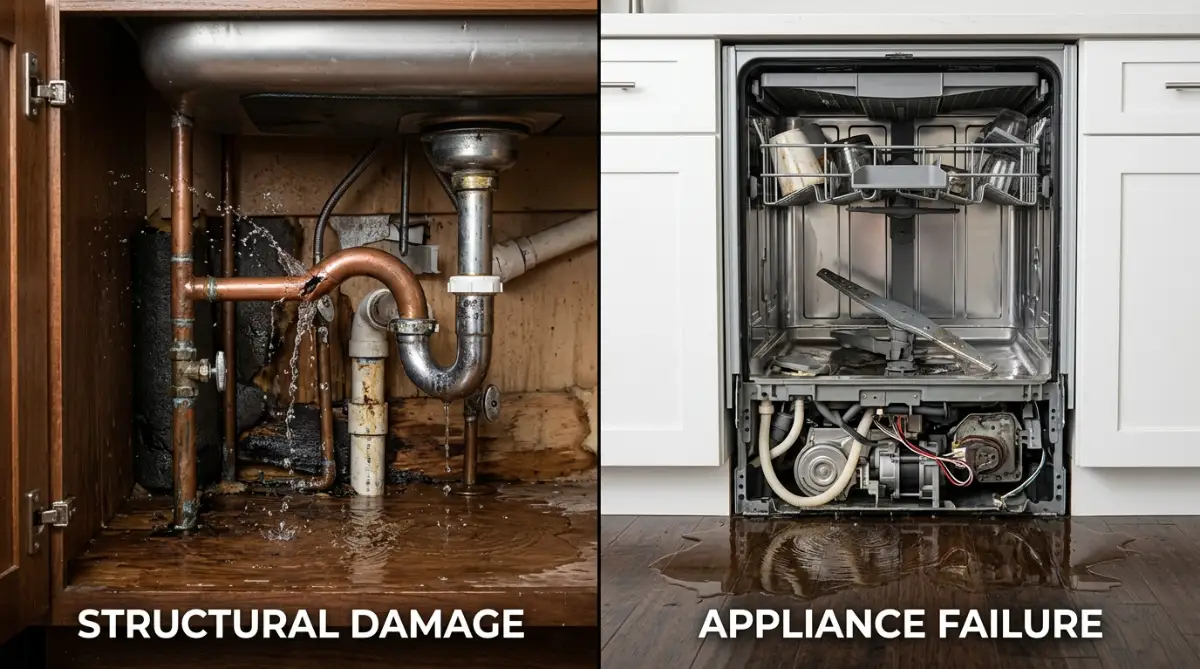
The Big Mix-Up: Home Insurance vs. Home Warranty
One of the most frequent reasons people get incredibly angry at their insurance agent is due to a fundamental misunderstanding of what a policy is designed to do.
Many new homeowners confuse their standard insurance policy with a home warranty program. They assume that if something breaks inside the house, they are automatically entitled to a repair.
Let's be incredibly clear: homeowners insurance is fundamentally designed for sudden, unexpected, and accidental disasters. It is absolutely not a maintenance plan for your aging property.
If your ten-year-old refrigerator simply stops blowing cold air one quiet Tuesday afternoon, your insurance company will politely hang up the phone.
To help clear this up permanently, let's look at a direct comparison.
If you want true peace of mind, you often need both tools working together. The warranty fixes the broken machine, and the insurance cleans up the massive mess the machine caused.

The Honest Pros & Cons of Standard Policies
To give you the most transparent view possible, here is exactly what you need to know about standard property protection.
- The Pros:
- Provides massive financial protection against total bankruptcy after a fire.
- Pays for your expensive legal defense if someone gets injured on your property.
- Covers your daily living expenses if your house becomes totally uninhabitable.
- Protects your personal belongings anywhere in the world, not just inside your house.
- The Cons:
- Explicitly denies coverage for slow, gradual maintenance issues (like a slow roof leak).
- Requires high out-of-pocket deductibles before they pay a single cent.
- Excludes major natural disasters like ground flooding and earthquakes by default.
- Often defaults to Actual Cash Value for belongings unless you specifically upgrade.
Expert Tip: Whenever you make a major purchase, like a massive new television or an expensive piece of jewelry, immediately take a picture of the receipt and email it to yourself. Building a digital inventory while times are good is infinitely easier than trying to remember what you owned while staring at a pile of ashes.
The Harsh Reality: What Standard Policies Ignore
We cannot talk about property protection without discussing the uncomfortable gaps in the standard contract.
Many families assume that "fully insured" means they are protected against literally everything under the sun. This false sense of security leads to absolute heartbreak during widespread natural events.
The biggest shock always comes from water damage. If a pipe violently bursts inside your wall, you are covered. But if a heavy hurricane causes the local river to overflow, sending two feet of muddy water into your living room, your standard policy will deny the claim entirely.
Groundwater flooding is explicitly excluded from almost every standard policy in the country. You must purchase a separate flood policy to protect against this specific nightmare.
Similarly, if the ground shakes violently and cracks your foundation, a standard policy offers zero help. Earth movement, sinkholes, and landslides require dedicated, separate coverage riders.
Never assume you are protected just because you pay a premium. You must actively read the exclusion list on your specific contract.
By taking just one hour this weekend to sit down, grab a cup of coffee, and read your declarations page, you can erase years of background anxiety. You will finally know exactly what happens if the wind blows a little too hard or a pipe suddenly gives out in the middle of the night.
Smart Strategies to Upgrade Your Coverage Game
Now that we know exactly how the basic components of a property policy work, it is time to look at the finer details. Most families buy a standard policy and never think about it again.
However, your life changes constantly, and your protection should absolutely grow with you. If you want to truly protect your financial future, you need to understand a few expert-level strategies that insurance agents rarely volunteer to explain.
One of the smartest moves you can make is asking your provider about an "Inflation Guard" endorsement. Building materials and labor costs naturally go up over time.
If your policy limit stays exactly the same for five years, you might not have enough money to rebuild after a disaster. An inflation guard automatically adjusts your dwelling limit upward to keep pace with current construction costs in your specific zip code.
Pro Tip: Never rely on your memory to prove what you owned after a fire. Grab your smartphone, turn on the video camera, and simply walk through your house opening every closet and drawer while narrating what you see. Upload this single video to a secure cloud drive, and you will instantly have a bulletproof inventory if you ever need to file a major claim.
Another massive oversight happens with expensive personal items like jewelry, fine art, or high-end electronics. Standard policies put strict, shockingly low limits on theft protection for these specific categories.
For example, your policy might cover $100,000 in general personal property, but only pay out a maximum of $1,500 if someone steals your wife's engagement ring. To fix this, you must "schedule" these valuable items separately on your policy.
When you take the time figuring out exactly how much homeowners coverage you need, you start to realize where the gaps are. If your net worth is growing, you should also look into a personal umbrella policy.
An umbrella policy kicks in when your standard liability limits run out. If someone sues you for a million dollars after a bad accident on your property, this extra layer of protection keeps lawyers away from your retirement accounts and savings.

Where Most Homeowners Get Caught Off Guard
We make a lot of assumptions when it comes to financial products. We assume the big companies will automatically look out for our best interests.
Unfortunately, this assumption leads to massive financial heartbreak when a storm actually hits. The most common pitfall I see is families aggressively trying to lower their monthly premium without understanding the true cost.
People will choose a massive $5,000 deductible just to save twenty dollars a month on their bill. They forget that if a tree falls on their roof, they have to produce that $5,000 in cash before the insurance company pays a single dime.
If you do not have your deductible sitting safely in an emergency savings account right now, your deductible is entirely too high.
Another devastating error is ignoring "Ordinance or Law" coverage. Building codes change frequently to make houses safer and more energy-efficient.
If you have to rebuild a house built a few decades ago, the city will force you to update the plumbing and electrical systems to match modern codes. A standard policy only pays to replace what was originally there, leaving you to pay out-of-pocket for these expensive mandatory upgrades.
Adding Ordinance or Law coverage is usually very cheap and saves you from a massive construction nightmare.
Taking the time to fully understand reading your insurance declaration page is the only way to catch these hidden traps. Many homeowners also forget to tell their provider about major lifestyle changes, like getting a new dog breed or starting a home-based business.
If you run a daycare out of your living room and a child gets hurt, your standard homeowners liability will likely deny the claim entirely. You must have specific business coverage for commercial activities in your house.
Your Blueprint for Bulletproof Coverage
Knowledge without action will not protect your family when a pipe bursts. You need to take control of your financial safety net right now.
Do not wait until there is a massive storm warning on the local news to wonder if you are covered. By taking a few simple steps today, you can lock in your peace of mind.
The Step-by-Step Execution Guide
- Step 1: Locate Your Documents. Log into your online portal or find the physical folder in your cabinet. You are specifically looking for a document called the "Declarations Page," which summarizes your limits and deductibles.
- Step 2: Check Your Valuation Method. Look at Coverage C (Personal Property). Make sure it specifically says "Replacement Cost" and not "Actual Cash Value." If it says ACV, call your agent today to request a quote for the upgrade.
- Step 3: Review Your Deductible. Look at the dollar amount you are responsible for paying. Check your current bank account balance and honestly ask yourself if you could comfortably pay that amount tomorrow morning.
- Step 4: Audit Your Valuables. Walk around your house and list any items worth more than $1,500. Call your agent to see if these specific items need to be "scheduled" for extra protection.
- Step 5: Bundle for Savings. If you are paying too much, ask your provider about discounts for bundling. Combining this with your vehicle coverage is a great way to save, as explained in this guide about what your auto policy actually covers.
Required Document & Preparation Checklist
Before you call your agent to make changes, have these items sitting on the table in front of you:
- Your current Declarations Page for quick reference.
- A rough estimate of your home’s current square footage and custom features (like granite counters or hardwood floors).
- Receipts or recent appraisals for expensive jewelry, art, or equipment.
- Details about recent home upgrades (a new roof or upgraded electrical panels often lower your premium).
Quick Action Checklist
- Verify you have Replacement Cost coverage for your belongings.
- Film a 10-minute digital inventory video of your home.
- Confirm your liability coverage is at least $300,000.
- Ask your agent if you need a separate flood or earthquake policy.
- Ensure your deductible matches your emergency fund balance.
Understanding the difference between what your policy handles and why claims get denied puts you entirely in the driver's seat.
Securing Your Peace of Mind Starting Today
Dealing with contracts and financial terms can feel incredibly overwhelming, but taking control of this process is totally worth the effort. Your home is so much more than just wood, drywall, and shingles.
It is the place where you raise your family, celebrate holidays, and feel truly safe from the outside world. Protecting that sanctuary should never be left to chance or guesswork.
When I finally sat down with my own agent and fixed the massive holes in my coverage, it felt like a giant weight was lifted off my chest. I knew exactly what would happen if a storm hit, and I knew my savings account was completely protected from lawsuits.
You have the power to create that exact same feeling of security for your own family today. It only takes a single phone call and a few simple questions to ensure your invisible financial forcefield is as strong as it can possibly be.
I challenge you to pull up your declarations page this evening and take a hard look at your personal property limits. Which specific coverage are you planning to review first on your declarations page? Let me know in the comments below!
The Most Asked Questions About Property Protection
Understanding the nuances of your coverage often brings up highly specific questions. Here are the clear, simple answers to what most families are searching for online.
Does my policy cover roof leaks and water damage?
It entirely depends on the exact cause of the leak. If a sudden windstorm rips off your shingles and rain pours in, you are covered. However, if your roof is twenty years old and simply rotting away from neglect, the insurance company will deny the claim as a maintenance failure.
Is my cell phone or laptop protected if I drop and break it?
Standard policies usually do not cover accidental clumsiness like dropping a phone in the toilet. However, if your laptop is stolen from your car or destroyed in a house fire, your personal property coverage will step in to replace it.
Will insurance pay if a termite infestation ruins my walls?
No, pest damage is almost universally excluded from standard property protection. Insurance companies view termites, mice, and bedbugs as preventable maintenance issues that homeowners should handle proactively.
What happens if my dog bites a neighbor or delivery driver?
Your liability coverage usually pays for the victim's medical bills and your legal defense if they sue. However, many companies have strict exclusion lists for specific "aggressive" dog breeds, so always check with your provider when adopting a new pet.
Will my policy reimburse me if a porch pirate steals my packages?
Yes, stolen packages generally fall under your personal property coverage. Keep in mind that filing a claim for a $50 stolen package makes no sense if your deductible is $1,000, as you would get zero money back.
Do I need extra coverage if I run a business from my guest room?
Absolutely, because standard policies heavily restrict coverage for business equipment and explicitly exclude business-related liability. If a client visits your home office, trips over a rug, and sues you, a standard policy will completely deny the claim.
Are the fences and sheds in my backyard covered?
Yes, they fall under a specific section called "Other Structures" (Coverage B). This typically covers detached garages, fences, and sheds up to 10% of your main home's dwelling limit.
How much liability coverage should a normal family actually have?
Most financial advisors recommend carrying an absolute minimum of $300,000 to $500,000 in liability protection. Medical bills and legal fees escalate incredibly fast, and a minimum $100,000 limit can be wiped out in a single hospital visit.
Does filing a small claim make my monthly premium go up?