Reading Time: 12 Minutes
Difficulty Level: Beginner to Intermediate
Reviewed By: FinanceInfoIn Editorial Team
Table of Contents
- The Panic of the Ticking Clock
- Why Smart Students Blank Out on Reading Sections
- Quick Summary
- Shifting from Passive Looking to Active Reading
- The Art of Strategic Skimming
- Mapping the Passage Like a Blueprint
- Key Takeaways
- Building Mental Endurance for Long Exams
- Decoding the Hidden Meaning in Questions
Quick Summary
Mastering reading passages on big exams requires more than just knowing words. It involves active reading, smart time management, and understanding the structure of the text. By learning how to skim effectively and map out paragraphs, you can answer questions faster. This guide breaks down exact methods to stop rereading and start scoring higher.
The Panic of the Ticking Clock
I still remember staring at the glowing screen during my first major standardized exam. My palms were sweating, and the clock in the top right corner was ticking down aggressively. I was reading the exact same paragraph about 18th-century economics for the fifth time, and absolutely nothing was making sense.
My brain felt like a foggy window, completely shut down by the sheer wall of text in front of me. I had studied for months, spending late nights going over vocabulary flashcards. Yet, my dream score felt like it was slipping through my fingers just because I could not process the words fast enough.
That feeling of helpless panic is something I will never forget. You feel completely alone in a room full of people. You start guessing on answers just to move forward, knowing deep down you are throwing points away.
The truth is, struggling with long text blocks on big exams is a very common nightmare. Many brilliant individuals find themselves paralyzed when faced with dense, academic paragraphs under strict time limits. You are expected to read like a machine, analyze like a scholar, and answer like a psychic.
When you cannot grasp the main idea quickly, your confidence drops immediately. You start second-guessing every choice. You read a sentence, look at the options, and suddenly all four answers seem perfectly correct.
This daily struggle creates a huge mental block for test-takers everywhere. It drains your energy and makes the rest of the exam feel like an impossible mountain to climb. The fear of running out of time forces you to rush, which only leads to more careless mistakes.

Why Smart Students Blank Out on Reading Sections
The biggest mistake we make is treating a standardized test passage like a casual novel. When you read a book at home, your brain relaxes and visualizes the story at a comfortable pace. You let the words wash over you without pressure.
On an exam, this relaxed approach is a recipe for disaster. The text is specifically designed to be dry, dense, and slightly confusing. The test makers intentionally hide the main idea behind complex sentence structures and obscure vocabulary.
If you read passively, your eyes move across the words, but your brain does not register the meaning. This is why you reach the end of a paragraph and realize you have no idea what you just read. You must change the way you interact with the text.
Key Takeaways
- Passive reading destroys your exam time limit.
- Test passages require a highly aggressive reading strategy.
- You do not need to understand every single word to get the right answer.
- Building mental stamina is just as important as knowing the subject.
Shifting from Passive Looking to Active Reading
Active reading means having a silent conversation with the author as you go. You should always be asking yourself why the author wrote a specific sentence. Are they making a new point, or just giving an example of the previous point?
When you actively engage, you tell your brain what to look for. You are no longer just absorbing words; you are hunting for information. This keeps your mind sharp and prevents you from spacing out.
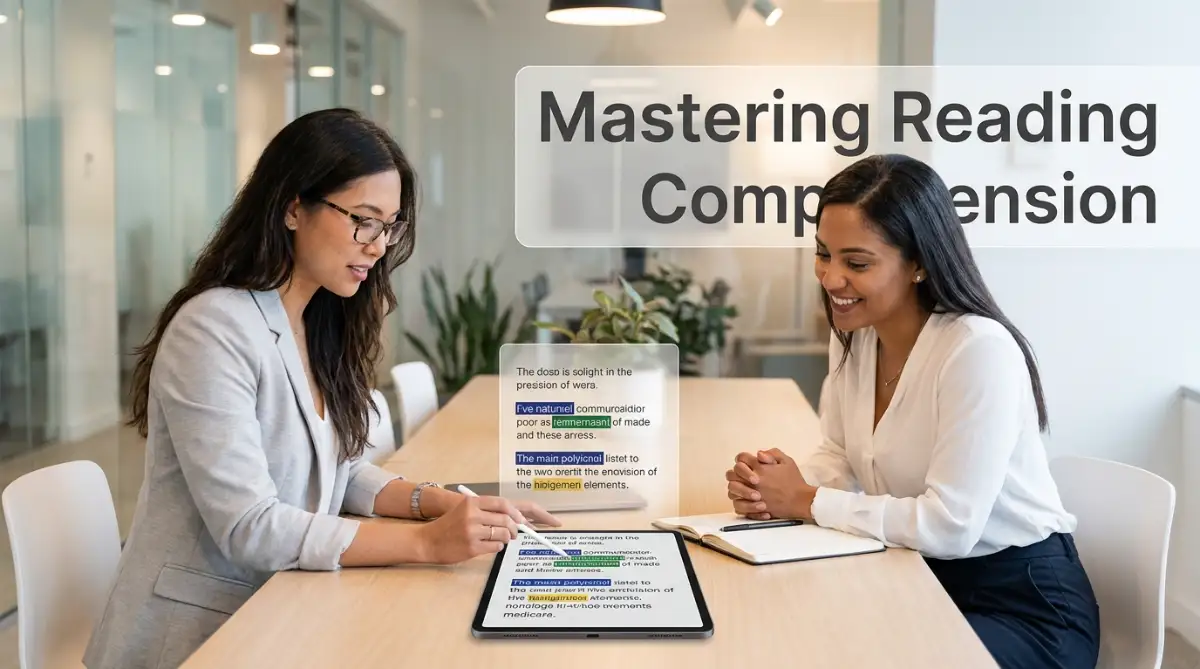
To do this effectively, use your pencil or mouse cursor to guide your eyes. Highlight or underline transition words like "however," "therefore," and "despite." These words are massive road signs that show you where the author is changing direction.
The Art of Strategic Skimming
Skimming does not mean skipping words blindly. It is a highly tactical way of extracting the most important data from a paragraph in the shortest amount of time. You need to know exactly where the gold is buried.
Think of a reading passage like a house. You do not need to memorize the color of every brick to understand the layout. You just need to know where the front door is and how the rooms connect to each other.
In most academic writing, the first sentence of a paragraph introduces the main topic. The last sentence usually wraps it up or connects it to the next idea. The middle is often just fluff, facts, and supporting details.
Bold and captivating intro for video:
If you constantly run out of time on reading sections, watching a visual breakdown of skimming can completely change your testing game. This quick video explains exactly how to train your eyes to scan for answers without reading every single word.
Mapping the Passage Like a Blueprint
When you are building a puzzle, you always look at the picture on the box first. Passage mapping is creating that picture for your brain before you dive into the questions. It acts as your personal navigation system.
After reading a paragraph, write down a two-word summary next to it. For example, if the paragraph is about a scientist failing an experiment, just jot down "experiment fails." When a question asks about the experiment, you know exactly which paragraph to look at.
This saves you from the terrible trap of rereading the entire text. You will naturally build a mental outline of the whole passage. You will know exactly where the author's opinion lives and where the raw data is stored.
Pro Tip:
I used to waste so much time trying to memorize dates and strange names while reading. I quickly realized that if a specific date was important, the test would ask a direct question about it. Now, I just circle the weird names and move on, knowing exactly where to find them later.
Building Mental Endurance for Long Exams
Standardized tests are marathons, not sprints. You might be great at reading one passage, but how does your brain feel on the fifth passage after two hours of testing? Fatigue is the silent killer of great scores.
You have to train your brain to stay focused for long periods. You cannot expect to run a marathon on exam day if you only ever jogged for ten minutes during practice. Your practice sessions must mimic the real testing environment.
Sit at a desk with no music, no phone, and a hard time limit. Force yourself to read complex articles from scientific journals or major newspapers every morning. The more you expose your brain to boring, dense material, the less shocking it will be on test day.
Expert Tip:
Whenever you practice, do not check your answers immediately after one passage. Complete at least three or four passages back-to-back before looking at the answer key. This trains your mind to maintain high focus without the immediate reward of knowing if you were right.
Decoding the Hidden Meaning in Questions
Sometimes the passage is easy, but the questions are incredibly tricky. Test makers love to use answers that sound correct but are actually slightly off. They prey on students who read too fast and jump to conclusions.
Always read the full question carefully. Pay close attention to words like "except," "not," or "most likely." Missing one of these tiny words will completely change the meaning of the question and lead you straight to a trap answer.
When you look at the answer choices, play a game of elimination. It is often easier to find three wrong answers than one perfectly right answer. If an answer choice contains extreme words like "always," "never," or "must," it is usually incorrect.
If you practice these exact methods daily, you will notice a massive shift in your testing performance. You will no longer feel intimidated by a massive wall of text. Instead, you will see a structured puzzle just waiting to be solved.
You will start predicting the questions before you even read them. Your confidence will naturally grow, and the ticking clock will stop being a source of panic. Taking control of your reading habits is the smartest way to secure the score you truly deserve.
Next-Level Strategies for High-Scoring Readers
Taking your reading skills from average to excellent requires a shift in your daily habits. You cannot just read more passages and hope for a better score magically. You must train your brain to recognize patterns in academic writing instantly.
One of the most effective ways to master this is by testing your memory immediately after reading. Instead of just highlighting, try closing the book and summarizing the page out loud. This method is often tied to what experts call active recall, which acts as a simple guide to better learning and exam success.
You must also learn how to predict the answers before you ever look at the multiple-choice options. Test makers design the answer choices to confuse you. If you look at them too early, your brain will try to justify the wrong answers.
When you read a question, cover the choices with your hand. Come up with your own simple answer based on your understanding of the text. Then, uncover the options and find the one that matches your prediction exactly.
Pro Tip: I always recommend reading the first and last sentence of a dense paragraph twice. These sentences hold the core structure, completely saving you from getting lost in the middle details.
To maintain this level of focus, you need a highly structured practice routine. Practicing randomly on weekends will not build the mental endurance you need. You should treat test prep like a job and build an online class study schedule that actually works for your daily life.
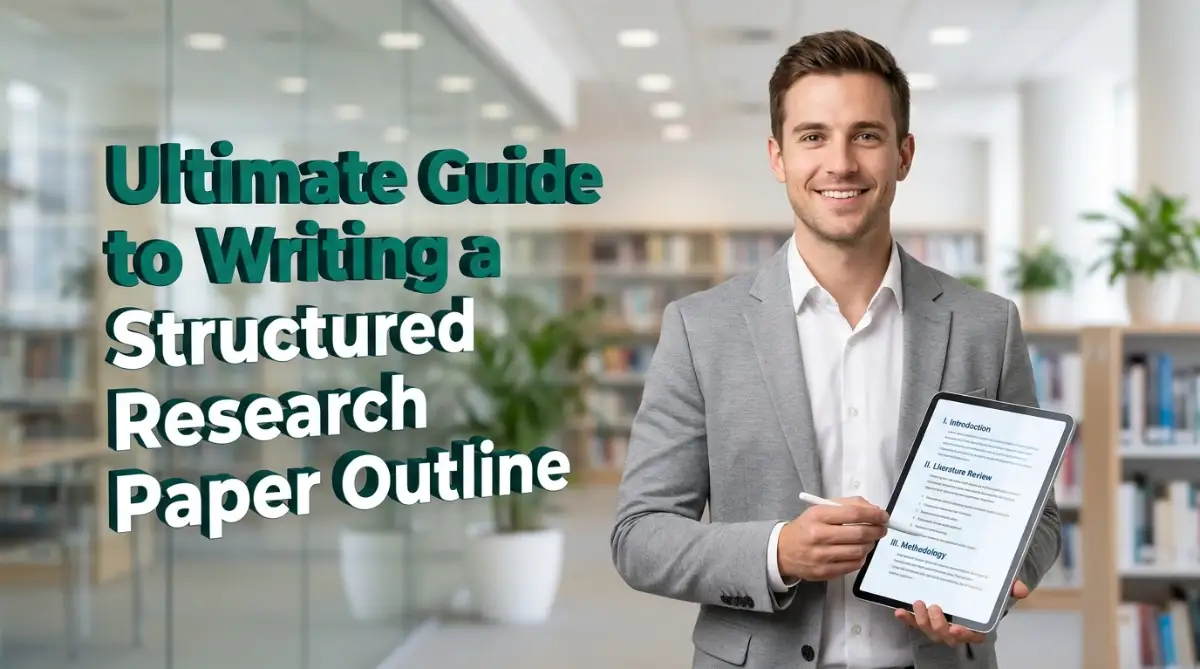
Understanding how authors organize their thoughts will also give you a massive advantage. Authors do not just throw facts onto a page randomly; they follow a strict skeleton. If you know how to create a research paper outline, you can easily reverse-engineer the passages on your exam.
The Hidden Traps That Destroy Your Exam Score
Even the smartest individuals fall apart during reading sections because they rely on bad habits. When the clock is ticking, panic makes you abandon your strategies. You revert to what feels comfortable, which is usually reading passively.
The most dangerous trap is obsessing over a single word you do not understand. Standardized tests will always include advanced vocabulary meant to scare you. If you stop and stare at a strange word, you waste precious minutes and lose the entire flow of the story.
Instead of panicking, look at the words around it to find context clues. Treat the unknown word like a blank space and guess what simple word could fill the gap. The test is rarely testing your dictionary knowledge; it is testing your ability to adapt.
Common Mistakes
- Over-Highlighting the Text: Highlighting entire paragraphs makes nothing stand out. You should only mark transition words and core arguments.
- Reading the Questions First: This forces you to read the passage frantically looking for specific keywords, causing you to miss the main idea entirely.
- Arguing with the Author: You might disagree with the text, but your personal opinion does not matter. Only answer based on what is strictly written on the page.
- Ignoring Tone Indicators: Missing words like "unfortunately" or "surprisingly" can completely change your understanding of the author's true feelings.
Another massive pitfall is letting test anxiety control your breathing and focus. When you get stuck on a hard passage, your heart rate spikes and your brain stops processing information. You can learn more about managing this specific stress through resources provided by the American Psychological Association.
If you do not correct these mistakes early, you will continue to hit a wall in your practice tests. Your score will remain stagnant, leading to extreme frustration. A low score here could even explain why your college scholarship applications keep getting rejected.
Quick Action Checklist
- Set a hard timer for 10 minutes every time you read a practice passage.
- Stop reading after every paragraph to silently summarize the main point.
- Circle every transition word you see (but, therefore, alternatively).
- Cover the answer choices with your hand and predict the answer first.
- Review your wrong answers and write down exactly why you fell for the trap.
- Read one complex article from a scientific journal every single morning.
Your Blueprint for Exam Day Confidence
Mastering the reading section of any major exam is not about being a naturally fast reader. It is completely about having a solid game plan and sticking to it under pressure. By actively engaging with the text, you turn a boring wall of words into a solvable puzzle.
You have the power to stop letting these dense passages intimidate you. Start implementing these active reading habits today, and you will see your comprehension skyrocket. The strategies we discussed are just a small part of the educational resources available on our finance and education platform, designed to help you succeed.
I remember the exact moment my practice scores finally started going up. The heavy feeling of panic in my chest was replaced with a sense of control and calm. I stopped running out of time, and I finally felt proud of the hard work I was putting in.
You can absolutely reach that same level of confidence with consistent, smart practice. Take a deep breath, trust your new strategies, and tackle your next exam with a clear mind.
Which reading strategy are you planning to test out during your next practice session? Let me know in the comments below!
Frequently Asked Questions About Test Prep Reading
How can I stop running out of time on the reading section?
You must stop trying to memorize every single detail in the text. Focus entirely on mapping the main ideas and understanding the author's structure. When you know where information is located, you can find answers much faster without rereading.
Is it better to read the questions before the passage?
No, this is a very common trap that hurts your overall score. Reading the questions first forces you to scan for random keywords, completely destroying your understanding of the main idea. Always skim the passage first to build a mental blueprint.
What should I do if I do not understand a vocabulary word?
Do not panic or stare at the word hoping the definition magically appears. Look at the sentence before and after it to gather context clues. Try substituting the difficult word with a simple blank space and guess what fits best.
How do I stay focused on extremely boring passages?
You have to force your brain to actively engage by having a silent debate with the author. Pretend you are a detective looking for flaws in their argument. Using your pencil to track your reading also keeps your eyes from wandering.
Why do I keep narrowing it down to two answers and picking the wrong one?
Test makers specifically design one wrong answer to look highly attractive. Usually, the wrong choice uses extreme language like "always" or "never," or it is only half correct. Read every single word of the answer choice carefully before selecting it.
How much should I practice reading comprehension every day?
Quality is much more important than quantity when it comes to test prep. Doing two passages a day with intense, focused review is better than rushing through ten passages. Always spend time analyzing why you got a question wrong.
Can reading regular books help my exam score?
While reading for pleasure is great, it will not directly improve your standardized test score. Exam passages are uniquely dense and structured to challenge you. You need to practice with high-level academic journals, scientific articles, and historical documents instead.
What is the best way to review my mistakes?
Keep a dedicated notebook just for your reading errors. Write down the type of question you missed and exactly why the trap answer tricked you. Reviewing this notebook weekly will stop you from making the same mistakes twice.
How do I handle test anxiety during the reading section?
When you feel panic setting in, close your eyes and take three deep breaths. Remind yourself that you have a specific reading strategy to fall back on. Focus entirely on the immediate sentence in front of you, not the ticking clock.
Does highlighting everything on the page help?
Absolutely not. If you highlight every sentence, your brain cannot distinguish what is actually important. Only highlight main ideas, sudden changes in tone, and transition words to keep your page clean and readable.
Trusted Educational & Legal Resources:
- Harvard University Academic Resource Center
- Stanford University Learning Lab
- The College Board Official Test Prep
- U.S. Department of Education
- American Psychological Association - Study Skills
- National Center for Education Statistics
Disclaimer: The information provided in this article is for educational and informational purposes only and does not constitute professional academic, legal, or financial advice. Standardized test formats and scoring methods change frequently. Always consult official exam guidelines and professional educators for the most current information. We make no guarantees regarding specific test scores or outcomes resulting from the use of these strategies.
About the Author
Reviewed by Mithun Halder (Personal Finance & SEO Expert) & The FinanceInfoIn Editorial Team
The FinanceInfoIn Editorial Team researches personal finance, investing, insurance, mortgages, cryptocurrency, and consumer financial topics. Every article is carefully reviewed to provide clear, practical, and trustworthy educational information based on credible sources and industry best practices.
©2026 FinanceInfoIn. All rights reserved.