
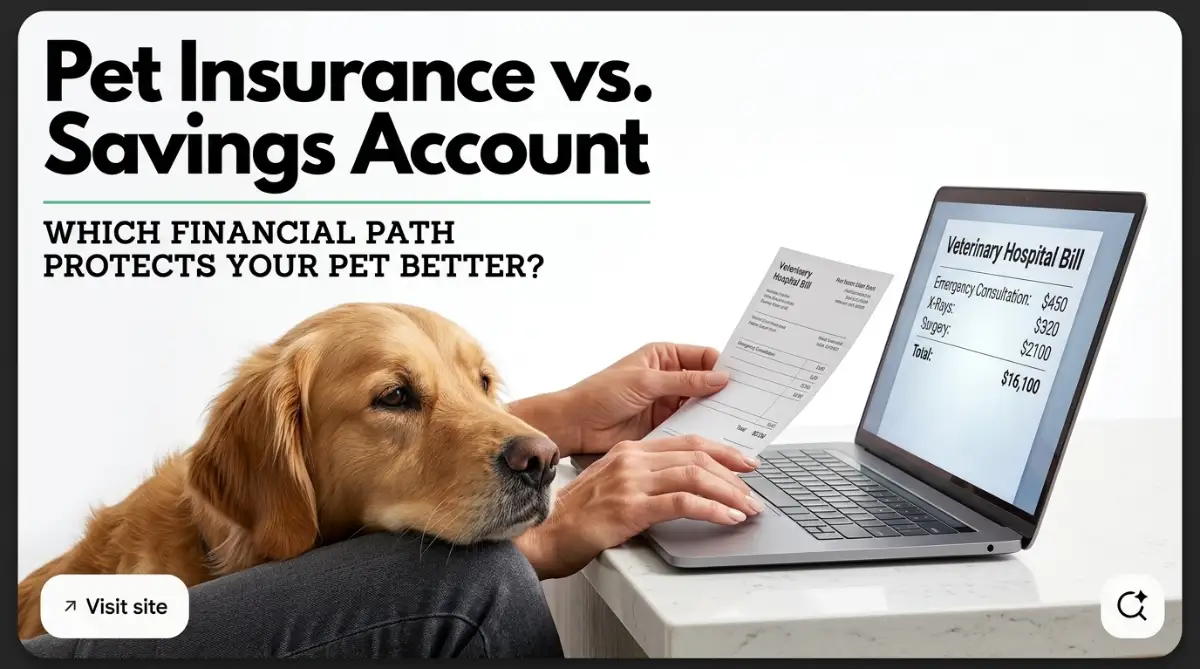
Reading Time: 12 Minutes
Difficulty Level: Beginner to Intermediate
Reviewed By: FinanceInfoIn Editorial Team
The Heavy Burden of Unexpected Vet Bills
I still clearly remember staring at the bright white payment terminal at the emergency vet clinic at two in the morning. My cat, Luna, was shivering in a small cage in the back room. The front desk staff had just handed me a printed estimate for an emergency stomach surgery, and the total was $4,500.
I pulled out my phone and opened my banking app, watching the little blue loading circle spin. My heart was pounding out of my chest. I only had about $800 in my regular checking account, and a couple of credit cards already near their limits.
The sinking feeling in my stomach wasn't just about my beloved pet's health. It was the terrifying realization that I was totally unprepared for this financial hit. I had to decide between going into massive debt or saying goodbye to my best friend simply because I did not have the cash.
This exact nightmare is something thousands of pet owners face every single day. We bring these amazing animals into our homes and treat them like family members. But we often ignore the hidden reality of how expensive their medical care can actually be until an emergency strikes.
You desperately want to provide the best possible medical care for your furry companion. When an unexpected accident or illness happens, the stress can literally keep you awake at night. The anxiety of balancing your love for your pet against your family's financial security is a terrible emotional burden.
Staring down thousands of dollars in veterinary bills can wipe out your hard-earned savings in an afternoon. It forces people to borrow money from family, launch crowdfunding campaigns, or take on high-interest personal loans. You should never have to put a price tag on your pet's life, but the reality of modern veterinary care forces us to do exactly that.

Quick Summary
Choosing between pet insurance and a dedicated savings account depends entirely on your financial discipline and risk tolerance. Pet insurance offers immediate peace of mind for massive, unexpected medical bills. A savings account gives you complete control over your money if your pet stays healthy. The best strategy often involves a hybrid approach that balances guaranteed coverage with accessible cash.
Key Takeaways
- Financial Discipline: A savings account only works if you consistently deposit money and never touch it for non-pet expenses.
- Risk Management: Pet insurance protects you against catastrophic, multi-thousand-dollar bills that most savings accounts cannot cover early on.
- Hidden Rules: Insurance companies often do not cover pre-existing conditions, making early enrollment very important.
- The Hybrid Option: Combining a high-deductible insurance policy with a smaller savings fund offers the ultimate safety net.
Understanding the True Cost of Pet Ownership
Modern veterinary medicine has advanced incredibly fast over the last decade. Vets can now perform MRI scans, complex cancer treatments, and specialized orthopedic surgeries on dogs and cats. This means our pets are living much longer and happier lives.
However, this advanced medical technology comes with an extremely high price tag. A simple swallowed toy can result in a $3,000 surgical bill. Treating a chronic condition like diabetes or arthritis can easily cost hundreds of dollars every single month.
When you are trying to figure out how to pay for these things, you generally have two main paths. You can either self-fund your pet's care using a dedicated savings account, or you can transfer the risk to an insurance company by paying a monthly premium. Both methods have passionate defenders, and both have serious blind spots.
Let us look closely at how these two very different financial strategies stack up against each other in real-world situations.
The Math Behind the Medical Bills
Sometimes the easiest way to understand this choice is to look at a realistic math example. Let us imagine a fictional pet owner named David who just adopted a healthy Golden Retriever puppy named Max.
David decides to open a high-yield savings account for Max. He deposits $50 every single month like clockwork. After two full years of saving, David has accumulated exactly $1,200, plus a tiny bit of interest.
One afternoon, Max manages to eat a pair of David's athletic socks. The dog becomes incredibly sick and needs emergency intestinal surgery. The total vet bill comes out to $4,500.
David's savings account only has $1,200 in it. He is now forced to come up with the remaining $3,300 out of his own pocket on the spot. His savings strategy failed because the emergency happened before the fund was large enough.
Now imagine if David had spent that same $50 a month on a pet insurance policy. He would have paid $1,200 in premiums over those two years. When the $4,500 bill hit, his insurance would cover it. After paying a $500 deductible and a 10% copay, David's total out-of-pocket cost at the vet would be just $900.
Expert Tip: Always ask your local veterinary clinic for a printed list of their most common emergency procedures and their exact costs. This local data will help you set a realistic goal for your savings account or choose the right insurance deductible.
The Personal Challenge of Self-Funding
Building your own emergency fund sounds like the smartest financial move on paper. You do not have to deal with annoying claim forms, and you never lose money to a massive corporation. If your pet lives a long, perfectly healthy life, you get to keep thousands of dollars.
But self-funding requires an immense amount of personal discipline. It is incredibly easy to look at a large pile of cash sitting in a bank account and find a reason to spend it. When your car breaks down or your roof starts leaking, that pet fund looks very tempting.
Pro Tip: When I first tried to self-fund my dog's medical care, I failed completely. I manually transferred money each month, but eventually, I skipped a few months when money got tight. My biggest realization was that I needed to set up an automatic transfer on payday, sending the money to a completely separate bank so I would not be tempted to touch it.
Comparing Apples to Oranges: Insurance vs. Wellness Plans
One of the biggest reasons people get frustrated with their pet's healthcare costs is simple confusion. People often buy a product without fully understanding what it actually does.
You need to clearly understand the difference between traditional pet insurance and a routine wellness plan. Many owners assume their insurance covers annual checkups and vaccines. They get very angry when their claims get denied.
Insurance is designed specifically for the unexpected. It covers broken bones, cancer, sudden illnesses, and accidental injuries. A wellness plan is essentially a budgeting tool for expected, routine care.
Let us break down the exact differences so you never pay for the wrong type of coverage.
Understanding this exact difference will stop you from wasting money on a policy that does not fit your actual needs.
If you are still confused about how the math works, taking a moment to learn about insurance terminology is incredibly helpful.
Understanding the exact difference between a deductible and a copay can save you thousands. Watch this quick breakdown to see exactly how these numbers impact your wallet before you sign any paperwork.
The Honest Pros & Cons
To make this decision easier, we need to strip away the marketing hype. Both strategies have completely valid benefits and very frustrating downsides. You need to look at these points and decide which ones align with your lifestyle.
The Pros of Pet Insurance
- Provides an immediate, massive safety net for catastrophic emergencies.
- Gives you immense peace of mind, knowing you will not have to put your pet down over money.
- Protects your personal life savings and keeps you out of high-interest credit card debt.
The Cons of Pet Insurance
- You will lose all the money you pay in premiums if your pet never gets sick.
- Insurance companies almost never cover any pre-existing medical conditions.
- Premiums naturally go up every single year as your pet gets older.
The Pros of a Savings Account
- You retain absolute control over every single dollar you save.
- You can use the money for anything, including food, toys, or boarding.
- There are no confusing claim forms, waiting periods, or denied coverages.
The Cons of a Savings Account
- It takes many years of strict discipline to build a fund large enough for surgery.
- If a major emergency happens in the first year, you will still go into debt.
- Inflation can slowly eat away at the purchasing power of your saved cash.
Making the Right Choice for Your Family
There is no single correct answer that works perfectly for every pet owner. Your choice depends entirely on your current financial situation, your personality, and the breed of your pet. Some dog breeds are notoriously prone to expensive health issues.
If you own an English Bulldog or a Great Dane, their genetic history almost guarantees expensive vet bills in the future. In these specific cases, transferring the financial risk to an insurance company is usually a very smart move.
On the other hand, if you adopt a mixed-breed cat that stays strictly indoors, their risk of major injury is generally lower. A dedicated savings account might make a lot more sense for this specific animal.
You also need to take a very honest look at your own financial behavior. If you are someone who struggles to save money, a forced monthly premium might be exactly what you need.
Let us look at a practical decision matrix to help you figure out your best path forward.

A Hybrid Approach for Maximum Safety
You do not actually have to choose just one side of this debate. Many smart pet parents are now using a clever hybrid strategy. This combination gives you the absolute best of both worlds.
Here is how the hybrid method works in practice. First, you buy a pet insurance policy, but you choose the highest possible deductible they offer. This might be a $1,000 or even a $2,000 deductible.
Because you chose such a high deductible, your monthly premium will drop drastically. You might only pay $20 a month instead of $70. The insurance is now acting simply as a catastrophic safety net for massive disasters like cancer or getting hit by a car.
Next, you open your high-yield savings account. You take the money you saved on the cheaper monthly premium and deposit it into this account. You use this cash fund to easily cover routine visits, minor illnesses, and that initial high deductible.
This hybrid method protects you from absolutely terrifying $10,000 surgical bills. At the same time, it allows you to build a personal cash reserve that you control. It removes the stress of small expenses while preventing total financial ruin.
At the end of the day, the absolute worst strategy is doing nothing at all. Hoping that your pet will simply never get sick is not a financial plan. It is a gamble with incredibly high emotional stakes.
Take an hour this weekend to sit down and review your budget. Look at the real costs of veterinary care in your specific city. Decide right now how you will handle a medical emergency, and put that plan into action before you ever need it.
Your pet relies on you for absolutely everything in their world. Taking the time to build a strong financial safety net is one of the most loving things you can do for them. It ensures that when they need you the most, you can focus entirely on their recovery, rather than the numbers on a credit card machine.
Next-Level Strategies to Safeguard Your Pet's Health
Mastering your pet's healthcare expenses goes far beyond simply picking a policy or opening a bank account. You have to actively manage these financial tools to get the maximum benefit for your money. Sticking to a 'set it and forget it' mindset usually leads to overpaying for coverage you do not actually need.
One smart strategy is to re-evaluate your pet's coverage as they age. A policy that makes perfect sense for a clumsy puppy might become entirely too expensive when that same dog turns nine. You always have the power to negotiate or adjust your terms to fit your current budget.
If your monthly premiums start creeping up, do not panic and cancel the policy immediately. Instead, call the provider and ask them to raise your deductible. This simple phone call can instantly drop your monthly bill while keeping your safety net intact.
Pro Tip: Never accept the default reimbursement rate when signing up for a new policy. Most providers automatically select a 90% reimbursement rate, which carries the highest monthly cost. Dropping that number to 80% or 70% can save you hundreds of dollars annually while still preventing total financial disaster.
If you prefer the self-funding route, you must ensure your money is actually working for you. Keeping thousands of dollars in a standard checking account is a massive missed opportunity. You are essentially losing money to inflation every single day that cash sits idle.