The Hidden Fear of Starting a Business Legally
Years ago, I almost threw away my dream of starting a business because a local lawyer quoted me thousands of dollars just to file basic paperwork. I sat at my kitchen table with a massive headache, staring at complex government forms that made me feel completely lost and defeated. That night, I promised myself I would figure it out on my own, and that struggle is the exact reason I wrote this guide for you today.
You have a brilliant business idea, and you can already feel the excitement of making your first sale. But then, a cold wave of worry hits you when you start thinking about the actual legal paperwork.
You stare at complex government websites, and suddenly, your dream feels like a giant wall of scary terms and expensive traps. You wonder if you need to pay thousands of dollars to a lawyer just to get started without getting sued.
That fear is real, and it stops thousands of amazing people from ever launching their businesses.
Why Most People Get Stuck in the Setup Phase
Many people struggle to find a clear path forward when setting up their business legally. They often run into the same painful blocks:
- Confusing online advice: Online forums and search results often give conflicting legal advice that leaves you more confused than before.
- Hidden website fees: Many online filing services trick you into buying packages with useless add-ons you do not actually need.
- Complex government words: State registry websites use difficult legal language that makes you feel like you need a college degree just to read them.
- Unreliable free templates: Using random legal templates from Google can leave your personal savings unprotected if something goes wrong.
How Legal Worry Hurts Your Dream and Your Peace of Mind
Starting with the wrong information does not just cost money. It also takes a heavy emotional toll on your daily life:
- Constant fear of making mistakes: You worry that one wrong form could lead to a massive IRS penalty or a lawsuit that takes your home.
- Loss of startup momentum: You spend weeks researching laws instead of building your product, which kills your creative drive.
- Feeling like an imposter: Without official business papers in hand, you might feel like your business is just an expensive hobby.
- Sleepless nights of doubt: You lie awake wondering if you are operating legally or if you are breaking local rules without knowing it.
The truth is that the system is not as impossible as it looks. Law firms want you to believe that business setup is too hard for normal people so they can charge you big fees.
In reality, the government designed these basic setup steps for regular citizens. You do not need a law degree to fill out simple forms, pay a small state fee, and protect your personal bank account.
With the right guide, you can confidently check every legal box yourself. You will save your precious startup cash for things that actually grow your brand.
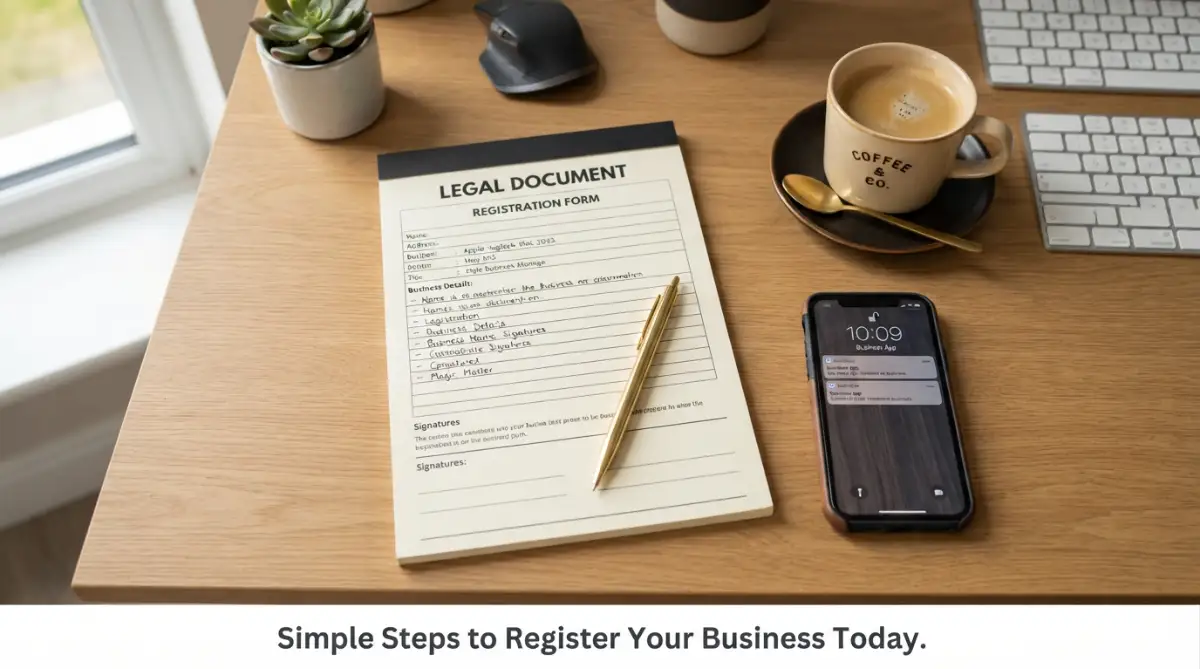
The Complete DIY Guide to Registering Your Business Legally
You do not need to feel overwhelmed by the legal setup of your company. Let us break down the exact steps you can take today to make your business official.
The Sole Proprietorship (The Easiest But Riskiest Path)
A sole proprietorship is the default option when you start selling things alone. You do not have to file special state papers to create it.
However, you and your business are the same legal entity. If your business gets into debt or faces a lawsuit, your personal assets like your car and home are at risk.
The Limited Liability Company or LLC (The Best Choice for Most)
An LLC is often the perfect choice for small business owners. It creates a protective wall between your personal wealth and your business activities.
If someone sues your LLC, they can only go after your business bank account, not your personal savings. I highly recommend this setup for its safety and easy tax rules.
The Corporation (For High-Growth Startups)
Corporations are ideal if you plan to get money from venture capitalists or offer stock. They have very strict rules, require board meetings, and have more complex tax filings.
For a simple home business or local service, a corporation is usually too much work and too expensive to run.
Secure Your Perfect Business Name and Search State Records
Your business name is the face of your brand, but it also has to pass state legal checks. You cannot use a name that another business in your state is already using.
Search Your State's Database First
Every state has a business registry database, usually on the Secretary of State website. Go to this search tool and type in your desired name.
If a similar business name shows up, you must change yours slightly to avoid confusion. Always do this search first before ordering business cards or building a website.
Check Online Domains and Social Media
Make sure the web domain (.com) is open for your chosen name. Also, check Instagram, Facebook, and Pinterest to see if the handle is free.
Even if the state lets you use a name, you do not want to fight another brand online for social media space.
Register a DBA (Doing Business As) if Needed
If you run a sole proprietorship but do not want to use your real name, you need a DBA. For example, if your name is John Smith but you want to call your shop "Sunny Day Bakes," you must file a DBA form with your local county.
This tells the public who is legally running the business behind the brand name.
Get a Free Federal Tax ID (EIN) From the IRS
An Employer Identification Number (EIN) is like a Social Security Number for your business. It is a unique number that identifies your company for tax purposes.
Why You Need an EIN
You will need an EIN to hire employees, open a business bank account, and pay federal taxes. It also helps you protect your identity because you do not have to give your personal SSN to clients on tax forms.
How to Get It for Free in Ten Minutes
Many third-party websites will try to charge you $50 to $150 to get an EIN for you. Never pay for this service because it is completely free on the official IRS website.
Simply go to IRS.gov, search for "Apply for an EIN online," and fill out the quick form. You will get your official EIN letter to download immediately.
Watch this quick step-by-step walkthrough to see exactly how to navigate the official government portal and secure your free EIN in real-time. Once you finish watching, make sure to read the section below to avoid the hidden traps that often shut down new businesses!
Apply for Local Business Licenses and Permits
Getting registered with your state is just one part of the process. You also need to make sure your city or county allows you to operate.
Check with Your City Hall
Most cities require a general business license to operate within city limits. This is usually a small annual fee of $25 to $100.
Go to your local city hall website and look for the "business tax" or "licensing" section to find the forms.
Look Into Special Industry Permits
If you sell food, run a daycare, or offer beauty services, you will need special health and safety permits. Selling physical goods also means you must get a seller's permit from your state tax office.
This permit lets you collect sales tax from your customers and send it to the government.
Open a Separate Business Bank Account
One of the biggest mistakes new business owners make is mixing their personal and business money. This bad habit can destroy your LLC's legal protection.
Keep Your Money Separated
If you pay for your personal groceries with your business card, a court can rule that your LLC is a sham. This is called "piercing the corporate veil."
To keep your personal asset shield strong, you must keep every single penny of business money separate.
What You Need to Open the Account
Walk into a local bank or sign up with an online business bank. You will need to bring:
- Your official state business registration papers (like your Articles of Organization).
- Your free federal EIN letter from the IRS.
- A government-issued photo ID.
Once open, use this account for all business sales and business expenses. It will make your accounting simple and stress-free when tax time arrives.
When I first got my LLC, I made the foolish mistake of buying a quick office lunch with my personal debit card, thinking I could just balance it out later on paper. My accountant quickly warned me that this tiny mistake could have ruined my entire liability shield if someone sued my business. My biggest advice to you is to keep a physically separate wallet for your business cards so you never make this mistake by accident.
Advanced Steps to Protect and Maintain Your New Business
Now that you have the basic paperwork done, you need to think like a seasoned business owner. Registering your business is just the first step in your exciting journey.
To keep your assets safe, you must follow the right operational steps. A great place to start is reviewing the SBA guide on licenses and permits to ensure you meet all state-level requirements.
These rules are not difficult to follow once you know what they are. Let us look at the advanced steps that will keep your brand safe for years to come.
Step 5: Write an Operating Agreement for Your Business
An operating agreement is a simple document that outlines how your business runs daily. It details who owns what percentage of the company and how profits are shared.
Even if you are the only owner of your LLC, you still need this document. It proves to courts and banks that your business is a real, separate legal entity.
If you do not have an operating agreement, your state's default rules will apply to your business. This can cause major issues if you ever decide to take on a partner or sell your company.
You can easily find free templates online to draft this document yourself. Once you write it, you do not need to file it with the state; just keep it safely in your business files.
To make sure your tax setup matches your operating structure, you should also review the official IRS guide on EIN registration to keep your records straight.
Step 6: Do a National Trademark Search to Avoid Lawsuits
Registering your business name with your state only protects your name in that specific state. It does not stop a company in another state from using your name or suing you for using theirs.
Before you spend money on logos and marketing, check the national trademark database. You can do this easily online for free through the official patent and trademark office website.
If you find another business with a trademark on your name, you should change yours immediately. Using a trademarked name can lead to expensive lawsuits and force you to rebrand your entire business.
It is much easier to choose a unique, safe name now than to face legal threats later. This simple search takes less than thirty minutes but can save you thousands of dollars down the road.
How to Keep Your Business Active and Safe in the Long Run
Setting up your business is a one-time task, but keeping it active requires ongoing effort. Many new owners forget that states require regular updates to keep your business in good standing.
You must pay attention to your cash flow and financial health from day one. Many new founders ignore these simple steps, which is a major reason why bootstrapped startups collapse early and cash flow fixes are so important to learn.
You should also keep your personal financial health in great shape as you grow. If you need to borrow money for your business later, lenders will look at your personal debt.
Knowing how to lower your debt to income ratio before a mortgage application or a business loan can make a massive difference in your approval odds. Keep your personal cards clean while you build your commercial credit.
In addition, you should secure all your modern digital business assets. If you plan to accept digital currencies, following easy security steps to secure your crypto wallet will protect your hard-earned business funds from online thieves.

Major Traps and Legal Mistakes You Must Avoid
Many new business owners make simple mistakes during the setup phase that cause huge problems later. These mistakes can cost you your business, your savings, and your peace of mind.
Understanding these pitfalls will help you avoid them completely and keep your business safe. Here are the five most common traps you need to watch out for.
1. Mixing Personal and Business Bank Accounts
This is the fastest way to lose the legal protection of your LLC. If you pay for personal items using your business card, a court can ignore your LLC status.
This means you can be held personally liable for business debts and lawsuits. Always keep two completely separate financial lives for yourself and your company.
2. Forgetting to File Annual State Reports
Most states require LLCs and corporations to file an annual or biennial report. This report usually comes with a small state fee that you must pay to stay active.
If you miss the deadline, the state can dissolve your business automatically. You could lose your business name and face heavy late fees.
3. Ignoring Your Local Zoning Laws
Just because you registered your business online does not mean you can operate it anywhere. Many towns have strict rules about running physical businesses out of a residential home.
Check with your local zoning office to make sure your business activity is allowed in your area. This will prevent you from getting expensive city fines or being forced to close down.
4. Failing to Get a State Sales Tax License
If you sell physical products, most states require you to collect sales tax from your customers. You must register with your state's department of revenue to get a sales tax permit.
If you sell goods without this permit, you can face severe tax audits and heavy penalties. It is simple to set up, so make sure you do not skip this step.
5. Using Weak or Incomplete Client Contracts
Even if you are working with friends, you must put every business agreement in writing. Verbal agreements are incredibly hard to prove in court if a dispute arises.
Use simple, clear written contracts for every client project or product sale. This protects your revenue and sets clear expectations for everyone involved.
Your Clear Path to Confident Business Ownership
You now have the exact knowledge you need to register and run your small business legally. You do not need to pay thousands of dollars to a lawyer for steps you can easily do yourself.
By taking control of this process, you are building a strong foundation for your future brand. You are protecting your personal life while giving your business the official status it deserves.
The legal system can seem intimidating at first glance, but it is made for people just like you. Do not let fear or confusion hold you back from starting your dream company today.
Take this guide, follow the steps one by one, and make your business official. Your future self will thank you for the time and money you saved by doing it right.
When I look back at the day I finally got my official business certificate in the mail, I realize it was the most empowering moment of my career. You do not need to wait for a perfect day or an expensive legal team to build your dream life. Take that very first step today, because once you cross this legal finish line, nothing can stop you from growing your brand.
Disclaimer
The information provided in this article is for educational and informational purposes only. It does not constitute formal legal or financial advice. Business laws and registration requirements vary significantly by state, country, and industry. Always consult with a certified public accountant (CPA) or a licensed local attorney regarding your specific business situation and tax obligations.