
Reading Time: 14 Minutes
Difficulty Level: Beginner to Intermediate
Reviewed By: FinanceInfoIn Editorial Team
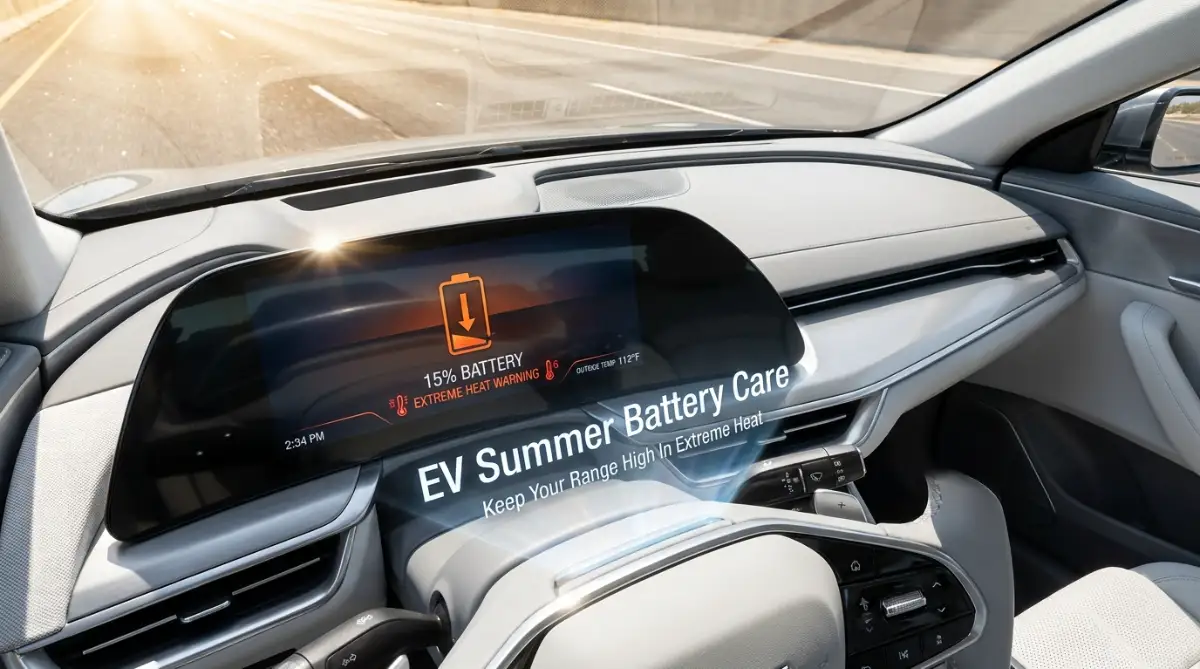
I was stuck in a massive traffic jam with the blazing sun beating down on my windshield. The outside temperature gauge on my dashboard read 102 degrees. I watched my electric vehicle's estimated range drop by 15 miles in just ten minutes.
My chest tightened with sudden panic. I only had 30 miles left to get home, and the nearest charging station was completely out of my way. I was blasting the air conditioning to keep cool, but every blast of cold air was eating away at my battery.
I realized I had been treating my electric car exactly like my old gas-powered vehicle. That simple mistake almost left me stranded on the side of a melting highway. If you have ever watched your EV battery percentage drop like a rock on a hot July afternoon, you know exactly how stressful this feels.
Range anxiety becomes a heavy mental burden during the hot summer months. When you see your battery draining faster than normal, your peace of mind disappears completely. You start turning off the air conditioning, choosing to sit in a pool of sweat just to save a few extra miles of range.
You find your eyes constantly darting down to the dashboard instead of watching the road ahead. This constant, nagging worry takes the joy out of driving your beautiful car. Many electric vehicle owners live in fear that extreme heat will permanently destroy their expensive battery packs.
The thought of paying thousands of dollars for a replacement battery keeps people awake at night. This hidden stress ruins family road trips and turns daily commutes into a highly anxious guessing game. Instead of enjoying a smooth, quiet, and eco-friendly ride, you become obsessed with finding shade and planning routes around charging stations. Heat does not just drain your car battery; it drains your mental energy.
Table of Contents
- The Hidden Impact of High Temperatures on Lithium-Ion Cells
- Why EV Batteries Drain Faster in the Summer
- The Golden Rule of Summer Charging
- Pre-Conditioning: Your Secret Weapon Against Heat
- Why Fast Charging is Dangerous on Hot Days
- Smart Parking Strategies to Save Your Range
- Daily Driving Habits for Maximum Efficiency
Quick Summary
Extreme summer heat puts heavy stress on electric vehicle batteries, causing faster drain and potential long-term degradation. You can easily protect your battery by parking in the shade, avoiding rapid chargers during peak afternoon heat, and keeping the daily charge level between 20 and 80 percent. Pre-cooling your car cabin while it is still plugged in at home saves massive amounts of driving range. Simple, proactive daily habits will extend the life of your EV battery for thousands of extra miles.
Key Takeaways
- Never leave your EV parked in direct sunlight with a 100% full charge.
- Always cool down the interior of your car while it is still connected to the home charger.
- Avoid using DC fast chargers when the outside temperature is extremely high.
- Keep your daily battery charge limit set to 80% to reduce thermal stress on the cells.
- Use your vehicle's eco-mode to manage air conditioning power consumption smoothly.
Understanding the Heat Threat to Your EV
To properly maintain an electric vehicle battery, we first need to understand why heat is such a big problem. Think of your EV battery like a human body running a marathon.
When a person runs in cool weather, they feel fine and their heart rate is steady. If that same person runs in a heavy winter coat on a 100-degree day, they will quickly overheat, sweat heavily, and eventually collapse. Your lithium-ion battery reacts to extreme heat in the exact same way.
When the temperature rises, the chemical reactions inside the battery speed up dramatically. This rapid chemical movement creates even more internal heat. Your car has to work incredibly hard to cool itself down, which takes a massive amount of energy away from actually driving the car.
People often confuse how electric cars handle heat compared to traditional gas cars. The two machines react to summer weather very differently.
Many new EV owners think their car is broken when they see their range drop in July. The car is not broken at all. It is simply using a large chunk of its stored power to run the internal liquid cooling pumps to protect the battery from catching fire.
The Real Cost of Summer Battery Degradation
Let us look at a real-life math example to understand why protecting your battery is so important. Meet David, a daily commuter who drives a popular electric SUV with a 300-mile maximum range.
David parks his car in an uncovered asphalt parking lot at work every day. During the summer, the temperature in that lot hits 105 degrees. David also fast-charges his car to 100% every single afternoon right in the middle of the heat.
Because of this constant extreme heat exposure and aggressive charging, David's battery degrades by about 4% per year. After just three years, his car's maximum range drops from 300 miles to roughly 265 miles. He permanently lost 35 miles of range just from bad summer habits. If David ever needs to replace that damaged battery pack out of warranty, he is looking at a massive bill of $12,000 to $15,000.
The Golden Rules of Summer Charging
The way you put electricity into your car matters just as much as how you drive it. Charging a battery creates internal heat. If you add that charging heat to the extreme summer heat outside, you are asking for trouble.
You should always try to charge your electric vehicle overnight. When the sun goes down, the ambient temperature drops significantly. Charging your car in a cool, dark garage puts zero stress on the battery's thermal management system.
Expert Tip: Set up a charging schedule in your car's mobile app. Tell the car to only accept power between midnight and 6:00 AM. This not only protects the battery from afternoon heat, but it also usually saves you money on off-peak electricity rates.
You also need to change how full you fill the battery. For daily city driving, you should never charge your car to 100% during the summer.
A fully charged battery is a highly stressed battery. Imagine eating a massive Thanksgiving dinner until you are completely stuffed, and then someone asks you to go run a mile in the hot sun. That is how your battery feels at 100% charge in the summer.
Keep your daily charge limit set to exactly 80%. Only charge to 100% if you are leaving immediately for a very long road trip.
Honest Pros & Cons: Using DC Fast Chargers in Summer
The Pros:
- Gets you back on the road in 30 minutes during long summer road trips.
- Highly convenient when you are far away from your home charger.
- Modern EVs have liquid cooling to help manage the fast-charging heat.
The Cons:
- Pushes extreme amounts of heat into the battery very quickly.
- Forces the car's cooling fans to run at maximum, annoying speed.
- Frequent use in high heat causes permanent battery degradation over time.
Pre-Conditioning: Your Secret Weapon
One of the biggest mistakes new electric vehicle owners make is hopping into a blazing hot car and turning the air conditioning to maximum. Cooling down a 120-degree cabin takes a massive amount of electricity.
If you do this while driving down the road, you are pulling all that energy directly from your battery. This is why you see your estimated range instantly drop by 15 or 20 miles the second you touch the AC button.
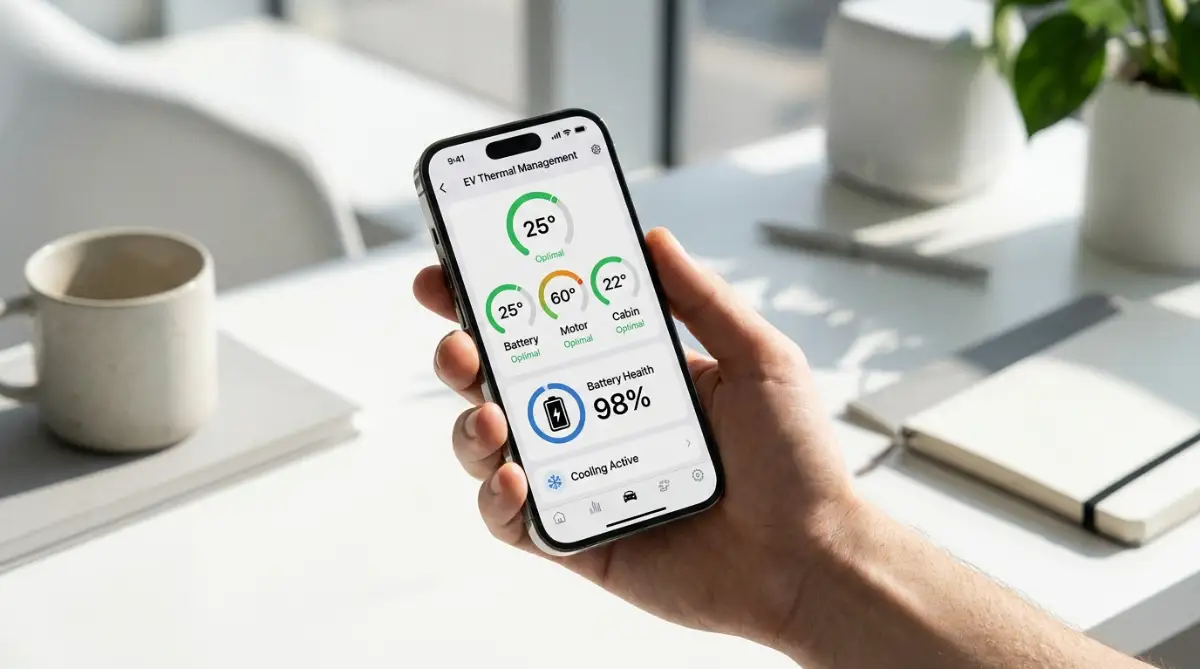
I learned this the hard way during my first summer with an EV. I used to unplug my car in the morning, get in, and blast the AC on my way to work. I could not figure out why my battery was dying so fast. Then I discovered the magic of pre-conditioning. Now, I use my phone app to turn on the AC 15 minutes before I leave the house, while the car is still safely plugged into the wall. The car uses electricity straight from my house to cool the cabin, leaving my battery 100% full and ready for the drive.
Pre-conditioning is the single most effective way to maintain your range on a hot day. The car is perfectly cool when you get in, and the battery only has to maintain that temperature, which uses very little power.
Watch This Smart Battery Cooling Strategy!
Seeing how the thermal management system works makes protecting it much easier. This amazing video walks you through the exact settings and dashboard clicks to properly schedule your charging and pre-cool your cabin without draining your range.
You should also get into the habit of leaving your car plugged in at home, even if the battery is at your 80% limit. When the car is plugged in, it can use the wall power to gently circulate cooling fluid around the battery on extremely hot afternoons.
If the car is unplugged sitting in your driveway, it has to wake itself up and drain its own battery just to keep the cells from overheating.
Smart Parking Strategies to Save Your Range
Where you leave your car during the day has a massive impact on battery health. Asphalt parking lots act like giant frying pans. They absorb the sun's energy all day and radiate that extreme heat directly up into the bottom of your car, right where the battery pack lives.
Whenever possible, you must hunt for shade. Parking under a tree or next to a tall building can lower the temperature around your car by up to 20 degrees.
If you have a garage at home, clean it out and actually use it. A closed garage keeps direct sunlight off the vehicle and provides a stable, cooler environment for the battery to rest.
If you absolutely must park in the direct sun at work, you should invest in a high-quality, reflective windshield sunshade.
The sun shining through the glass turns your car interior into a greenhouse. The cabin temperature can easily reach 140 degrees. This extreme interior heat forces the car to turn on its internal cooling fans just to protect the computer screens and dashboard electronics, quietly draining your battery while you work.
Daily Driving Habits for Maximum Efficiency
How you handle the accelerator pedal on a hot day also matters. High-speed driving forces the battery to discharge energy very rapidly, which generates more internal heat.
If you combine high-speed highway driving with a blazing hot summer day, your thermal management system will be working on overdrive.
Try to use your car's "Eco" mode during the summer. This setting gently limits how fast the car accelerates. It also slightly reduces the power of the air conditioning compressor, helping the system run much more efficiently.
You should also pay attention to your tires. Extreme heat causes the air inside your tires to expand. If your tires are over-inflated or under-inflated, they create more friction on the road.
More friction means the battery has to push harder to move the car forward. Checking your tire pressure once a month during the summer guarantees you are getting the smoothest, most efficient ride possible. By combining smart charging, shade parking, and gentle driving, you make the summer heat completely manageable.
Next-Level Thermal Management Hacks for Peak Performance
Your electric car is basically a highly advanced computer on wheels. The smartest thing you can do during the summer is let that computer do its job without interference. Every modern electric car has a dedicated Battery Management System (BMS).
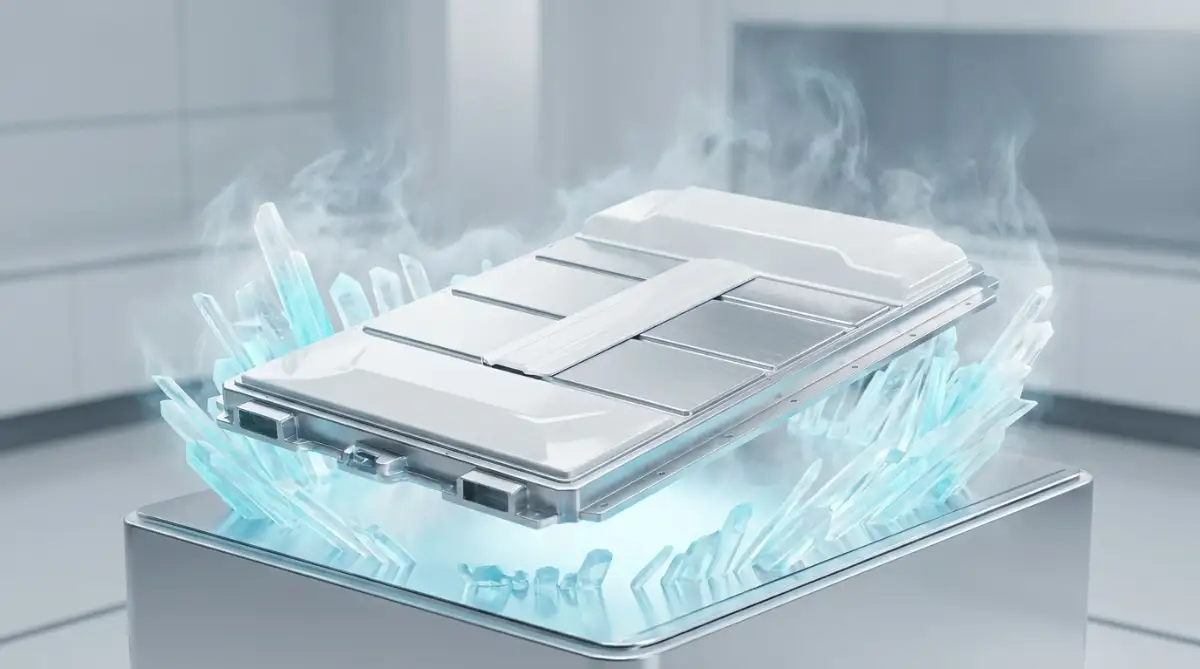
This internal computer constantly monitors the exact temperature of thousands of individual lithium-ion cells. When you leave the car plugged into a wall outlet, the BMS uses the grid electricity to run tiny liquid cooling pumps. This keeps the battery in a state of absolute comfort, even if your garage feels like an oven.
Many drivers wonder why their car makes quiet humming noises while parked. That sound is just your thermal management system actively protecting your investment. If you are still using a basic standard wall plug, it might not provide enough power to cool the battery and charge it at the same time.
This is why understanding the difference between Level 1 and Level 2 EV charging becomes so important for summer maintenance. Upgrading to a stronger home charging unit ensures your cooling system never has to steal power from the battery itself.
Pro Tip: I always set my charging limit to exactly 70% if I know the car will sit in my driveway for a few days during a heatwave. I learned that keeping the battery at a slightly lower state of charge reduces the chemical pressure inside the cells, which drastically slows down heat-related wear and tear.
You might also notice your car taking much longer to charge at public stations during peak afternoon heat. The car's computer intentionally slows down the incoming power to prevent the battery from melting. If you frequently experience this frustration, learning why EV charging slows down will help you plan your stops for cooler hours.
Dangerous Summer Habits That Destroy Cells
Watching a brand new battery lose its capacity is a painful experience. People often make completely innocent mistakes because they treat their new electric vehicle just like their old gas car.
The most destructive mistake you can make is leaving your car sitting at a 100% state of charge in a hot, uncovered parking lot. When a battery is completely full, the chemical energy is packed incredibly tight. Adding intense environmental heat to that tight space creates severe internal stress, quietly destroying the battery's ability to hold a charge.
You should also never ignore the warning messages on your dashboard. If your car tells you that motor power is reduced due to heat, pull over safely and let the system catch its breath. Pushing the accelerator pedal to the floor when the battery is already overheating can cause permanent damage to the power inverter.
Common Mistakes to Avoid:
- Forgetting to set a maximum charge limit in the mobile app, accidentally hitting 100% every single day.
- Parking on hot black asphalt instead of finding a shaded grass or concrete spot.
- Blasting the air conditioning to maximum immediately after getting into an unplugged, roasting car.
- Using public DC fast chargers in the middle of a 100-degree afternoon just for convenience.
- Driving aggressively with heavy acceleration and harsh braking on boiling hot roads.
If you are trying to maximize your EV range on long road trips, these bad habits will force you to stop for a charge much earlier than you planned. The extra heat you generate through aggressive driving literally evaporates your driving distance.
To avoid these stressful pitfalls, you need a solid strategy for extreme weather days. A reputable study by the National Renewable Energy Laboratory (NREL) confirmed that consistent exposure to high temperatures is the primary driver of premature lithium-ion cell failure.
Step-by-Step Execution: Prepping for a Heatwave
When the weather forecast predicts a massive summer heatwave, you need to prepare your car exactly like you prepare your home. Follow these exact steps to protect your expensive battery pack from irreversible damage.
Step 1: Open your vehicle's mobile app the night before the heatwave hits and lower your maximum charge limit to 70% or 80%.
Step 2: Plug your car in before you go to sleep, ensuring the charging schedule is set for the coolest hours (usually between 1 AM and 5 AM).
Step 3: Set your morning departure time in the app so the car automatically pre-cools the cabin using grid power before you unplug it.
Step 4: Place a heavy-duty, reflective sunshade in your front windshield immediately after parking at your workplace.
Step 5: Turn on your vehicle's "Eco Mode" to gently limit acceleration and reduce the power draw from the air conditioning compressor.
Required Document & Preparation Checklist:
- Download and update your vehicle's official mobile app for remote climate control.
- Purchase a custom-fit, highly reflective windshield sunshade for your specific car model.
- Locate at least three shaded parking spots near your office or daily destination.
- Keep your home electrical breaker panel inspected before following our guide on setting up your home EV charger.
- Set up a smart charging schedule in your vehicle's dashboard menu.
Quick Action Checklist:
- Always leave the car plugged in at home, even when it is not actively charging.
- Park in the shade or inside a garage whenever humanly possible.
- Avoid highway speeds exceeding 70 mph during the hottest part of the afternoon.
- Check your tire pressure, as heat causes expansion and affects rolling resistance.
Your Roadmap to Summer Driving Confidence
Maintaining an electric car in the summer does not have to be a stressful, complicated chore. Once you understand how lithium-ion cells react to temperature, protecting them becomes second nature.
You simply need to treat the battery like a living thing that needs shade, gentle usage, and cool resting periods. By using your mobile app to pre-cool the cabin and keeping your daily charge limit reasonable, you instantly solve 90% of your summer range anxiety.
If you want a deeper dive into protecting your investment year-round, exploring our complete guide on extending EV battery life will give you total peace of mind.
I remember the total relief I felt when I finally stopped worrying about my dashboard range and just enjoyed the smooth, quiet ride of my car. Taking these small preventative steps today guarantees your battery will stay incredibly healthy for years to come.
Which of these summer cooling strategies are you going to test out on your commute tomorrow? Let me know in the comments below!
Frequent EV Summer Maintenance Queries Answered
At what exact temperature does an EV battery start taking damage?
Most lithium-ion batteries start experiencing accelerated degradation when constantly exposed to temperatures above 95°F (35°C). The internal cooling system works hard to prevent the actual cells from reaching this temperature.
Should I leave my electric car plugged in every single night in the summer?
Yes, keeping it plugged in is highly recommended. The car can use the electricity from your house to run its battery cooling fans, saving your driving range for the morning.
Does parking on grass instead of asphalt really help the battery?
Absolutely. Asphalt absorbs massive amounts of solar radiation and reflects extreme heat directly under your car. Grass stays significantly cooler, reducing the thermal stress on your battery pack.
Will turning off the air conditioning save my battery from damage?
Turning off the AC will save a few miles of driving range, but it will not protect the battery itself. The battery has its own separate cooling loop that runs automatically to prevent heat damage.
Why does my regenerative braking feel weaker on very hot days?
When the battery is extremely hot or completely full, the car's computer limits regenerative braking.