
🕒 Reading Time: 14 Mins | ✍️ Reviewed By: FinanceInfoIn Editorial Team
The Silent Struggle of Living Paycheck to Paycheck
I was standing at the grocery checkout when the total came up on the screen. My balance was three dollars short.
I took a box of cereal out of the bag and handed it back to the cashier. My face was hot. I was working 40 hours a week, and it still wasn’t enough.
A second job wasn’t an option. I had no energy left for one. So I started looking for ways to earn online, and I spent most evenings scrolling through ideas that sounded great until I read the fine print. Some needed a big upfront investment. Some meant shipping boxes from my apartment. Others wanted coding skills I didn’t have.
Meanwhile the stress followed me everywhere. I’d lie awake doing the same math over and over, then drag myself through the next shift. Any surprise cost, a flat tire or a medical bill, felt like it could knock everything over.
Then I came across digital products, specifically printable worksheets that parents and teachers download and print at home. It looked almost too simple. It turned out to be worth a serious look.
Clearing Up the Confusion: Digital vs Physical Models
When I first researched online businesses, the terminology confused me. Plenty of people lump digital downloads and dropshipping together, but they work very differently.
Dropshipping means you sell physical products that a supplier ships to your customer. With printables, you make a file once. The buyer pays, downloads it right away, and prints it at home. You never pack a box, buy a shipping label, or chase a lost package.
Here is how the two compare:
One caution. “Passive” doesn’t mean “effortless.” The file delivery is automatic, but the listing, the photos, the keywords, and the questions from buyers are still your job, especially in the first few months. What you get is a product that can keep selling after the work is done, which is different from earning with no work at all.
Real Numbers: How the Math Actually Works
“Passive income” sounds like a slogan until you put numbers on it. So here is a simple, hypothetical example. Treat it as a calculation, not a promise.
Say a former teacher makes a bundle of kindergarten math worksheets and prices it at $4.00. On Etsy, the seller pays a listing fee (around 20 cents per listing), a transaction fee (6.5% of the sale), and payment processing (roughly 3% plus 25 cents in the US). Those rates have changed over the years, so check the current fee page before you plan around them. On a $4 sale, that leaves her with about $3.15.
What that looks like at different sales levels:
Ten sales a day, which works out to 300 a month, is a good result for an established shop. It is not where a new shop starts. Most beginners spend the first few weeks with very few sales, and that’s normal.
The part that does work in your favor is that the worksheet bundle took one Sunday afternoon to make. Whether it sells 5 copies or 500, you don’t make it again. Your income doesn’t depend on how many hours you work in a given week.
Finding High-Demand Ideas for Your Shop
The most common beginner mistake is making what they personally like without checking whether anyone is searching for it. Your buyers are parents, teachers, and homeschoolers who are looking for something specific, usually right now.
Printables cover a wide range, from preschool coloring pages to high school study planners. What they have in common is that each one solves a small problem. A parent whose toddler can’t hold a pencil properly will gladly pay $3 for a good line-tracing sheet.
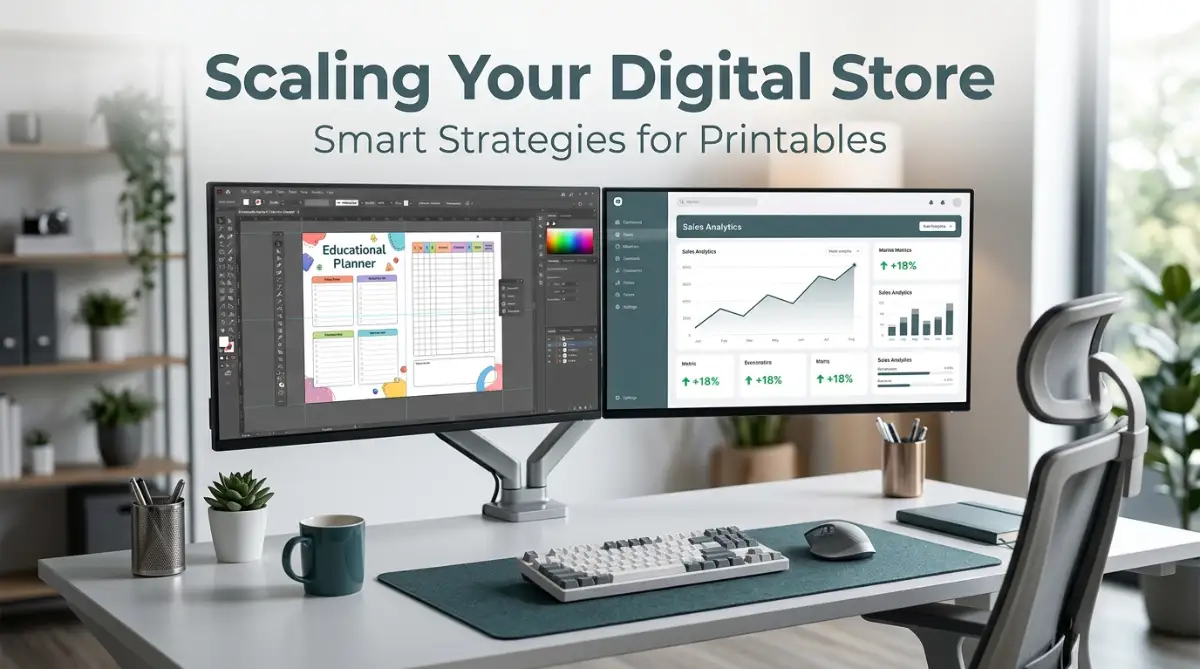
Here are some categories that sell consistently:
How to check demand before you make anything. Type a broad term like “kindergarten worksheets” into the Etsy search bar and look at the suggestions that appear. Those are real searches. Then open a few top listings and check how many reviews they have. A product with hundreds of reviews proves there is demand. A niche with strong sellers but only a few of them can be a good place to start. Also look at what the reviewers complain about. “Too much ink” or “no answer key” are product ideas handed to you for free.
Expert Insight: When I started, I spent weeks polishing one complicated worksheet because I thought it had to be perfect. It barely sold. What worked was making many small, simple variations aimed at one specific problem, such as the same tracing sheet in different themes or levels. My first real sales came after I stopped aiming for a masterpiece.