My Complete Meltdown at the Paris Train Station
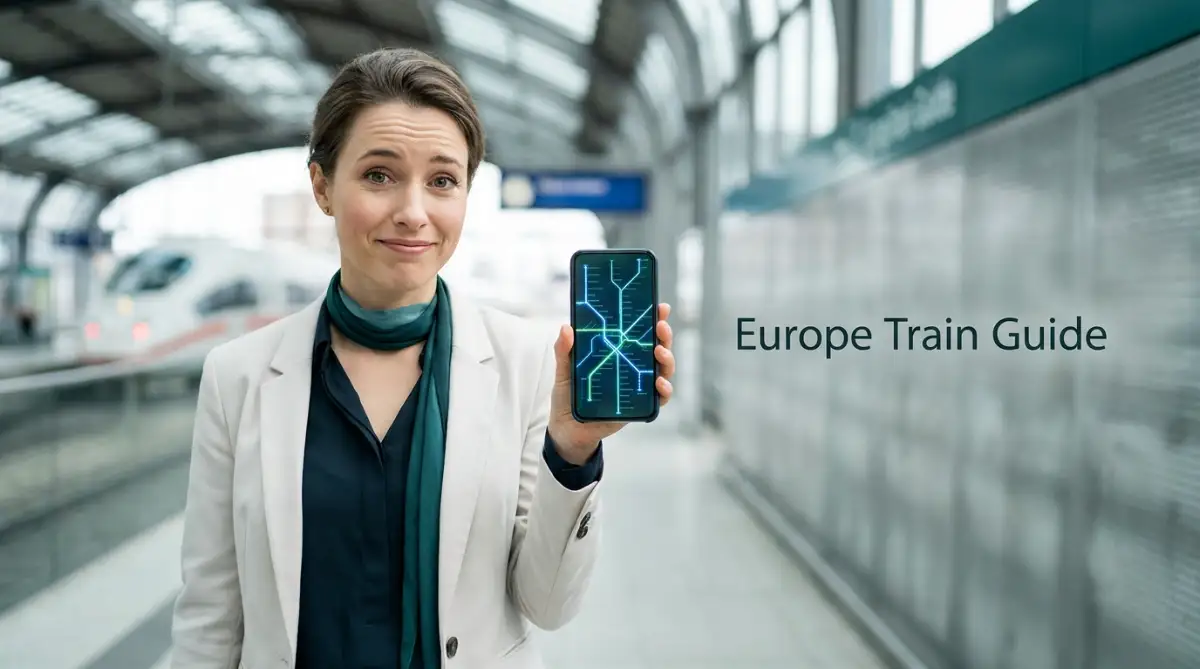
I will never forget the feeling of total panic standing in the middle of Gare du Nord in Paris. My hands were sweating as I stared blankly at my phone screen. I had a train to catch to Amsterdam in less than twenty minutes, but my ticket simply would not scan.
I thought I had done everything right by purchasing a global rail pass months in advance. I assumed this magic pass gave me the freedom to just hop on any train and grab a seat. Nobody told me that certain high-speed routes required a mandatory, separate seat reservation just to get through the gates.
As I watched my train slowly pull away from the platform without me, I felt a heavy mix of frustration and embarrassment. I had to buy a completely new, incredibly expensive ticket for the next available train. That single mistake cost me a huge chunk of my travel budget and ruined my entire afternoon.
I realized right then that the transportation network across this continent is an absolute maze for outsiders. The websites are confusing, the rules change at every border, and the hidden fees seem to pop up out of nowhere. I promised myself I would figure out exactly how this massive puzzle works so I would never feel that helpless again.
If you are planning a trip across the Atlantic right now, I know exactly what is going through your mind. You are probably staring at three different booking websites, scratching your head at the massive price differences. It feels like you need a university degree just to figure out how to get from Rome to Florence without getting ripped off.
Millions of everyday travelers experience this exact same anxiety when trying to plan their dream vacations. You save up your hard-earned money for months, only to feel paralyzed by the fear of making a costly booking mistake. This confusion ruins the excitement of trip planning and replaces it with late-night stress headaches.
Why the System Feels Like a Giant Puzzle
The main reason you feel overwhelmed is that there is no single, unified railway company that covers the entire continent. Instead, you are dealing with dozens of completely separate national companies. Every single country runs its own national railway with its own specific rules, pricing models, and websites.
To make things even more complicated, many countries now have private companies competing on the exact same tracks. This means you might search for a trip from Madrid to Barcelona and see three totally different train companies offering the same route. They all have different luggage policies, different seat styles, and different cancellation rules.
When you try to book a journey that crosses an international border, the system often breaks down completely. The French website might tell you the train is sold out, while the German website happily sells you a ticket for the exact same seat. It is enough to make anyone want to throw their laptop out the window.
But I want you to take a deep breath and relax. The system actually makes perfect logical sense once you understand the hidden framework behind it. Today, I am going to break down this massive network into bite-sized, easy-to-understand pieces.
National Operators vs. Private Competitors
Think of national train operators just like major airlines. France has SNCF, Germany has Deutsche Bahn (DB), and Italy has Trenitalia. These government-backed companies own most of the trains and operate the vast majority of the routes.
If you are traveling entirely within one country, you generally want to start your search on that specific national operator's official website. These official sites usually give you the most accurate real-time schedules. They also offer the best customer service options if a delay happens.
However, the game has changed entirely over the last few years with the introduction of private rail companies. Italy introduced Italo to compete directly with Trenitalia on major high-speed routes. Spain recently welcomed low-cost operators like Ouigo and Iryo to challenge their national carrier, Renfe.
This competition is actually amazing news for your wallet. It forces prices down and improves the quality of service on board. The catch is that you now have to check multiple websites to make sure you are getting the best deal for your specific travel day.
The Three Main Types of Trains You Will Encounter
To book the right ticket, you first need to understand the different types of machines running on the tracks. Not all trains are created equal, and knowing the difference will save you a massive amount of time and money.
The undisputed kings of the network are the High-Speed Trains. These engineering marvels travel at over 300 kilometers per hour, connecting major cities in record time. Examples include the TGV in France, the ICE in Germany, and the Eurostar connecting London to Paris.
High-speed routes are expensive, and their ticket prices fluctuate wildly just like airline tickets. You are paying a premium for comfort, speed, and efficiency. These services almost always require a strict, assigned seat reservation before you can board.
Next, we have the Regional and Intercity Trains. These move a bit slower and make frequent stops at smaller towns along the way. They are the absolute backbone of local daily commutes.
Pro Tip: I used to ignore regional trains because I wanted to get everywhere as fast as possible. But I quickly realized that taking the slower, regional route through the Swiss Alps or along the Italian coast offers the most breathtaking views you will ever see. Now, I actively choose slower routes just for the experience.
Finally, you might come across Sleeper or Night Trains. These are making a massive comeback right now as a sustainable alternative to short flights. You book a bed in a shared or private cabin, fall asleep in one country, and wake up in another. Night trains require booking very far in advance because space is extremely limited.
[Want to see exactly what it looks like inside these different trains?]
Before we dive into the exact steps of buying your tickets, take a quick look at this helpful video breakdown. It shows you the real differences in legroom, luggage space, and comfort levels between regional and high-speed options. Watching this will help you visualize exactly what you are paying for.
Train Types Comparison Table
The Secret Timeline of Advance Booking Windows
The biggest mistake travelers make is assuming they can buy a train ticket a week before their trip and get a fair price. Rail ticketing operates on a dynamic pricing model, heavily driven by demand. The earlier you buy, the cheaper your ticket will be.
Most national operators open their booking windows exactly 60 to 90 days before the date of departure. High-speed international routes, like the Eurostar, sometimes open up to 120 days in advance.
The very moment these tickets become available online, they are sold at their absolute lowest promotional price. Once that small block of cheap tickets sells out, the price automatically bumps up to the next tier.
If you wait until the day of travel to buy a ticket at the station, you will pay the maximum, fully flexible walk-up fare. A ticket from Paris to Lyon that cost twenty bucks three months ago might cost you over one hundred and fifty bucks on the day of departure.
Best Time to Book
Aggregators vs. Official Websites: Where to Buy
When you type your travel plans into Google, you will likely see ads for third-party booking platforms. Websites like Trainline, Omio, and Rail Europe are known as aggregators. They are incredibly popular, but you need to understand exactly how they work.
Aggregators pull schedule data and pricing from dozens of different national and private operators into one clean, English-friendly website. They make it exceptionally easy to plan a complicated trip that involves multiple different train companies. You can pay with your normal credit card without worrying about international payment errors.
The downside is that aggregators charge a small service fee or markup on top of the ticket price. Sometimes they also lack the ability to let you pick your exact seat on a digital map.
Booking directly through the official national websites (like Trenitalia or SNCF) means you avoid all third-party fees. You also get direct email updates from the operator if your specific departure is delayed or canceled.
The rule of thumb is simple. Use aggregators to research your routes and compare prices quickly. If the price difference is small, the convenience of the aggregator is often worth the extra few dollars. If you want maximum control and zero fees, book directly with the official operator.
Where Should You Buy Your Ticket?
The Great Debate: Rail Passes vs. Individual Tickets
For decades, buying a multi-country rail pass was considered the ultimate rite of passage for backpackers. You paid one flat fee and got a physical paper pass that allowed unlimited travel on almost any route. But the modern digital booking environment has completely changed this dynamic.
A global rail pass is a fantastic tool if you value extreme flexibility and want to change your plans on a whim. If you wake up in Munich and suddenly decide you want to visit Vienna instead, a pass lets you do that without buying a new ticket. It offers unmatched peace of mind for spontaneous travelers.
However, a pass is rarely the most cost-effective option anymore. If you know exactly which cities you want to visit and exactly what days you will travel, point-to-point individual tickets will almost always be cheaper.
If you buy your individual tickets a few months in advance, the total cost of your trip will likely be much lower than the upfront cost of a rail pass. You are trading flexibility for massive financial savings.
Before you buy a pass, take a piece of paper and write down your exact itinerary. Look up the advance ticket prices for those specific routes and add them together. Compare that final number to the cost of a global pass to see which option actually makes sense for your wallet.
Rail Pass vs Individual Tickets
The Hidden Trap That Ruins Vacations: Seat Reservations
This is the exact issue that caused my massive meltdown in Paris. Having a ticket or a rail pass in your hand does not automatically guarantee you a place to sit on every single train.
On local and regional services, seating is usually a free-for-all. You just hop on board and sit wherever you find an empty spot. But on high-speed and international services, seat reservations are strictly mandatory.
If you are buying an individual point-to-point ticket, the seat reservation is usually included automatically in the final price you pay. You will see a specific carriage and seat number printed directly on your digital receipt.
The danger mostly applies to people using rail passes. A pass acts as your basic admission ticket to the network, but you still have to pay an extra fee to reserve a physical seat on fast routes. These reservation fees can range from five to thirty dollars per trip.
More importantly, rail companies only allocate a limited number of pass-holder seats on each train. Even if the train has empty seats for regular paying customers, the pass-holder quota might be completely sold out. This means you must book your seat reservations weeks in advance during the busy summer months.
Decoding Ticket Classes and Comfort Levels
When you finally go to click that buy button, you will be faced with several different class options. Unlike airlines, the difference between rail classes is usually not that extreme.
Second Class (or standard class) is perfectly comfortable and is what the vast majority of locals use. You get a clean seat, plenty of legroom, air conditioning, and usually a fold-down tray table. On modern routes, you will even find power outlets and free Wi-Fi in standard class.
First Class typically offers wider seats, slightly more legroom, and a quieter atmosphere. The seating arrangement is usually three seats across the aisle instead of four. This is a great option if you need to work on a laptop during the journey or if you just want a more peaceful environment.
Sometimes, the price difference between standard and first class is incredibly small if you book far enough in advance. I always check the price of both classes before checking out. If the upgrade is only ten or fifteen dollars, I will gladly pay it for the extra space and quiet.
Some premium operators offer even higher tiers, like "Business" or "Executive" class. These often include a complimentary hot meal served at your seat and access to private lounges at the station. While nice, these premium tiers are generally aimed at corporate travelers with large expense accounts.
Managing Your Digital Tickets Safely
Gone are the days when you had to print physical paper tickets at a dusty station kiosk. Almost every operator now relies entirely on mobile QR codes.
When you complete your purchase, you will receive an email with a PDF attachment containing your ticket. You simply open this PDF on your phone and hold the screen up to the scanner at the gates. The conductor on board will also scan this exact same screen.
Always take a direct screenshot of your QR code and save it to your phone's photo gallery. Station internet connections can be notoriously unreliable, and you do not want to be stuck waiting for an email to load while a line of angry commuters forms behind you.
If your phone battery dies, you are in serious trouble. Train staff are very strict, and without a scannable code, you will be treated as if you have no ticket at all. Always carry a portable power bank in your day bag to ensure your phone stays charged during long travel days.
Dealing with Strikes and Unexpected Delays
It is a simple fact of life that transportation networks sometimes face disruptions. European rail unions occasionally hold planned strikes to negotiate better working conditions. These strikes can cause widespread cancellations for a day or two.
The good news is that strikes are almost always announced several weeks in advance. If you book directly with the official operator or a reputable aggregator, you will receive an alert if your route is affected. You are legally entitled to a full refund or a free rebooking if your service is officially canceled due to a strike.
Minor delays of ten to twenty minutes are fairly common, especially during extreme weather. When planning a journey that requires changing trains, always give yourself a buffer of at least thirty to forty-five minutes at the connection station. Trying to sprint across a massive, crowded station with heavy luggage to make a five-minute connection is incredibly stressful.
If your first train is delayed and causes you to miss a guaranteed connection, the rules are generally in your favor. As long as both trips were purchased together on the same ticket, you can usually just hop on the next available service at no extra charge. Just make sure to speak to the staff at the station information desk to get your ticket properly stamped.
Understanding the Name on the Ticket Rule
One small detail that catches many foreigners off guard is ticket transferability. In most cases, high-speed and advance-purchase tickets are tied directly to the specific passenger.
When you buy online, you must enter the exact name as it appears on your passport. Conductors frequently check ID cards along with the ticket scan to prevent the black-market reselling of cheap advance fares.
If you make a spelling mistake or need to give your ticket to a friend, you cannot just hand it over. You usually have to go into the booking system and pay a small fee to officially change the passenger name before departure. Regional train tickets are sometimes exceptions to this rule, but it is always safest to use your exact legal name for every single booking.
By breaking down the system into these logical steps, the entire process becomes much less intimidating. You just need to choose your route, understand the train type, book early for the best price, and double-check those tricky seat reservations. The railway network is honestly one of the greatest engineering achievements in the world, and once you master the booking process, it will completely transform the way you travel.
Mastering the Tracks: Next-Level European Rail Strategies
Once you understand the basic difference between national and private operators, you can start using some amazing insider tricks. These are the exact strategies I use to save money and travel like a true local. Most tourists never learn these secrets until their third or fourth trip across the continent.
One of my absolute favorite tricks is called "split ticketing" for long international journeys. Sometimes, booking one single direct ticket from Amsterdam to Berlin is incredibly expensive. But if you break that exact same journey down into smaller pieces, the price drops magically.
You might buy one ticket from Amsterdam to a border town in Germany, and a second ticket from that border town to Berlin. You stay on the exact same train and sit in the exact same seat. The only difference is that you show the conductor two different digital tickets instead of one.
Before trying complex tricks like this, you should always consult detailed independent train guides to verify the route rules. It takes a little extra research, but the financial savings can be absolutely massive. This strategy leaves extra cash in your pocket for better meals and nicer hotels.
Harnessing the Power of Local Railway Apps
Many travelers just rely on third-party aggregator apps for their entire trip. While these are great for buying tickets, they are not always perfect for day-of-travel updates. If a massive storm hits and delays the network, aggregators are usually the last to know.
To stay completely safe, I always download the official national railway app for whichever country I am visiting. If I am in France, I have the SNCF Connect app on my home screen. If I am in Germany, the DB Navigator app is my absolute best friend.
These official apps send push notifications to your phone the second a platform changes. They also show you the exact layout of the train before it even arrives at the station. This means you know exactly where to stand on the platform to find your specific carriage.
When you plan a trip involving multiple countries, you should treat it just like planning a complex multi-city itinerary. You need real-time data from the actual operators to ensure everything flows smoothly. Relying on local apps eliminates the panic of running around a foreign station asking for directions.
The Secret of the Station Departure Board
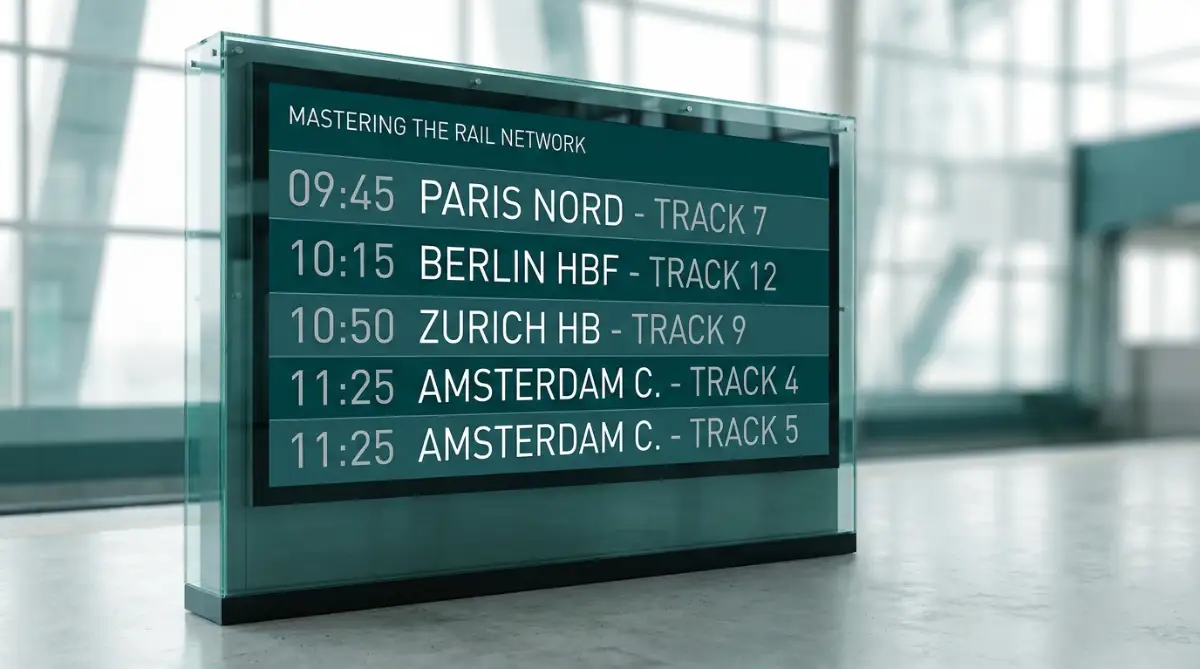
Reading a European departure board can be incredibly confusing if you do not know the trick. Most beginners stare at the giant screen looking for their specific destination city. But this is a terrible strategy that causes people to miss their rides every single day.
Very often, your destination is just a quick stop in the middle of a much longer route. For example, you might be traveling from Florence to Bologna. But the departure board will only show the final destination of that train, which might be Milan or Venice.
If you just look for the word "Bologna," you will never find your platform. Instead, you must always look for your exact Train Number. Your ticket will clearly show a specific train number, like "FR 9540".
You simply match that exact number on the glowing board to find your correct platform. This one tiny shift in how you read the station screens will save you so much anxiety. Following expert European travel advice often highlights this exact tip as the number one rule for beginners.
Why the Dining Car is Your Best Friend
Sometimes, despite your best efforts, you end up with a terrible seat assignment. You might be seated next to a crying baby, or perhaps the air conditioning in your specific carriage is broken. Instead of suffering in silence for four hours, you have a secret escape route.
Almost every major high-speed and intercity train features a dedicated dining car or bistro section. Anyone is allowed to walk into this car and buy a coffee or a sandwich. But the best part is that you are usually allowed to sit in the dining car booths while you eat and drink.
I have spent countless hours working on my laptop from the quiet comfort of a Swiss dining car. You get a massive table, huge windows, and a completely different atmosphere. As long as you purchase a small snack or drink, the staff will generally let you relax there for a long time.
It completely changes the dynamic of a stressful travel day. Instead of feeling cramped in a standard seat, you get to sip a warm espresso while watching beautiful countryside roll by. It is one of those small joys that makes rail travel superior to flying.

The Heartbreaking Booking Errors You Must Avoid
Even with the best preparation, the European rail network has a few hidden traps waiting for unsuspecting tourists. I have personally fallen into almost every single one of these traps over the years. They are expensive, stressful, and entirely preventable if you know what to look for.
The most common trap involves not understanding the scale of major European cities. Paris, London, and Rome do not just have one single train station. They have massive, sprawling networks of completely different stations scattered across the city.
A classic mistake is booking a ticket out of Paris and assuming you just go to the closest station. Paris actually has six major railway terminals. Trains heading north to London leave from Gare du Nord, while trains heading south to the French Riviera leave from Gare de Lyon.
If you show up at the wrong building, you will not have enough time to cross the city in traffic. You will watch your train leave without you, and getting a refund is nearly impossible. It feels just as frustrating as trying to navigate getting a refund for a canceled trip when it is deemed your own fault. Always double-check the exact station name on your ticket the night before you travel.
Common Mistakes to Avoid
The Paper Ticket Validation Nightmare
While mobile QR codes are becoming the standard, you will still occasionally receive physical paper tickets for regional routes. This is especially common in countries like Italy and France. Buying the paper ticket is only the first half of the process.
Before you step onto the train, you must physically stamp or "validate" that paper ticket in a small machine on the platform. These machines are usually yellow or green and punch a time-stamp onto your paper. This proves you are actually using the ticket on that specific day and not saving it for later.
If you forget to punch your ticket and hand it to the conductor on board, you will face a massive problem. They do not care if you are a confused tourist who honestly did not know the rule. You will be slapped with a heavy on-the-spot cash fine, sometimes well over fifty euros.
I once watched a sweet elderly couple get fined heavily in Florence because they simply walked past the validation machine. It ruined their entire afternoon and left them extremely bitter. Always look around the platform for a stamping machine if you are holding a physical piece of paper.
The Illusion of the Five-Minute Connection
When you use online booking engines, they will often suggest itineraries with extremely tight connection times. The computer might tell you that changing trains in Frankfurt with a six-minute window is a perfectly logical choice. I am here to tell you that the computer is completely wrong.
European train stations are massive, multi-level complexes with dozens of platforms. If your first train is delayed by just four minutes, you only have two minutes to sprint across the station. You will be dragging heavy luggage up and down broken escalators while dodging thousands of daily commuters.
Missing a tight connection creates a miserable domino effect for the rest of your travel day. It can mess up your hotel check-in times and even lead to avoiding extra overnight charges if you arrive after the front desk closes.
Always manually adjust your search filters to allow for at least a twenty to thirty-minute connection window. If you have mobility issues or are traveling with small children, give yourself forty-five minutes. Use that extra time to buy a fresh pastry, use a clean bathroom, and find your next platform without sweating through your shirt.
Getting Caught by Private Operator Baggage Rules
For decades, the golden rule of European train travel was that luggage was completely free and unrestricted. You could bring two massive suitcases and a backpack, and nobody would say a word. This freedom is one of the main reasons people prefer trains over budget airlines.
However, the rise of cheap private operators has quietly changed this standard. Low-cost companies like Ouigo in France or Iryo in Spain offer dirt-cheap base fares, but they make their money back through airline-style baggage fees.
If you buy a promotional ten-euro ticket, it might only include a small backpack that fits under your seat. If you show up at the platform dragging a heavy roller bag, they will force you to pay a massive penalty fee right there on the spot. This totally defeats the purpose of buying a cheap ticket in the first place.
Always read the fine print regarding luggage dimensions before you check out on a private operator's website. If you are a heavy packer, it might actually be cheaper to stick with the traditional national operators. According to official EU rail passenger rights, companies must clearly display these extra fees during the booking process, so pay close attention.
1. Check for Engineering Works Before Weekend Travel
Many European rail networks carry out maintenance work during weekends or public holidays. Even if your ticket is confirmed, part of your journey may be replaced by a bus or delayed due to temporary track closures.
Quick Tips:
- Check planned engineering works a few days before departure.
- Read any service alert emails from your train operator.
- Leave extra travel time during weekends and holidays.
- Don't assume the normal timetable always applies.
2. Learn the Difference Between Refundable and Non-Refundable Tickets
The cheapest ticket isn't always the best value. Many promotional fares cannot be changed or refunded, while flexible tickets allow date changes or cancellations if your travel plans change unexpectedly.
Quick Tips:
- Read fare conditions before payment.
- Compare savings against flexibility.
- Buy flexible tickets for uncertain travel plans.
- Keep cancellation deadlines in mind.
3. Store Important Travel Documents Offline
Mobile internet may be unreliable inside tunnels, rural areas, or foreign countries. Depending entirely on cloud storage can create unnecessary stress during your journey.
Quick Tips:
- Save tickets as PDFs on your phone.
- Download offline maps before departure.
- Keep passport and booking copies stored offline.
- Carry a small printed itinerary for emergencies.
4. Understand Border and Passport Checks
Although many European countries belong to the Schengen Area, some international routes still include passport or identity inspections. Services such as Eurostar also require airport-style security procedures.
Quick Tips:
- Carry your passport on international journeys.
- Check entry requirements before traveling.
- Arrive earlier for trains with security screening.
- Keep identification easily accessible.
5. Know Your Passenger Rights During Major Delays
European rail passengers are protected by passenger rights regulations. Depending on the operator and the length of the delay, you may qualify for compensation, assistance, or ticket reimbursement.
Quick Tips:
- Keep your original ticket until your trip ends.
- Ask station staff for delay confirmation if needed.
- Submit compensation claims promptly.
- Save receipts for extra expenses when applicable.
Your Action Plan for Stress-Free Travel
Planning a rail journey across multiple foreign countries is always going to feel a little intimidating at first. You are dealing with different languages, unfamiliar geography, and totally new booking systems. But you do not need to be a logistics expert to pull this off smoothly.
Just remember to take things one step at a time. Map out your dream route, compare the cost of point-to-point tickets against a global pass, and book as early as humanly possible. Treat your train tickets just like you treat a strict personal finance planning budget; small bits of early research save you massive headaches later.
Making a minor mistake is simply part of the adventure, so do not beat yourself up if you take a wrong turn in a station. The trains run so frequently that there is almost always another option right around the corner. Every trip you take builds your confidence and makes you a smarter, more capable traveler.
I honestly believe that looking out the window of a fast-moving train is the single greatest way to see this beautiful continent. I hope these tips give you the exact confidence you need to stop worrying about the logistics and start getting excited about the journey. My biggest wish is that your next railway adventure is completely smooth, highly scenic, and totally unforgettable.
Frequent Curiosities About European Trains
Do I absolutely need to print my digital tickets?
No, you rarely need to print anything anymore. Almost all national and private operators fully accept digital QR codes displayed directly on your smartphone screen. Just make sure your phone is fully charged before heading to the station.
What exactly happens if I miss my scheduled train?
If you hold a strict advance-purchase ticket, you will likely lose your money and have to buy a brand new ticket at full price. However, if you hold a fully flexible ticket or a rail pass, you can usually just hop on the next available train. Always check the specific fare conditions on your booking receipt.
Are overnight sleeper trains considered safe for solo travelers?
Yes, they are generally very safe and highly regulated by European railway safety research standards. If you book a private cabin, you can lock the door firmly from the inside. If you are in a shared couchette, just keep your small valuables in bed with you while you sleep.
How early should I arrive at the station before departure?
Unlike airports, you do not need to arrive hours in advance. Arriving about twenty to thirty minutes before departure is absolutely perfect. This gives you enough time to check the departure boards and walk to your specific platform without rushing.
Can I just buy tickets directly from the station ticket window?
You certainly can, and it is a very popular option for short regional day trips. However, buying high-speed or international tickets at the window on the day of travel is incredibly expensive. You will pay the absolute highest walk-up fare available.
Are there clean bathrooms available on board the trains?
Yes, almost all intercity and high-speed trains have multiple bathrooms located between the carriages. They are generally well-maintained, but the soap and paper towels often run out toward the end of a long journey. It is always a smart idea to carry a small pack of tissues and hand sanitizer in your pocket.
Will my train have free Wi-Fi and power outlets?
Most modern high-speed routes offer free onboard Wi-Fi, though the connection speed can drop when passing through tunnels or deep valleys. Power outlets or USB ports are now extremely common at almost every seat. However, older regional trains might not have these amenities, so charge your devices beforehand.
Disclaimer: The information provided in this guide is for educational and informational purposes only. Train schedules, operator rules, and ticket prices change frequently. Always verify current policies, baggage limits, and travel requirements directly with the official railway operators before making any final bookings.