

Reading Time: 10 Minutes
Reviewed By: FinanceInfoIn Editorial Team
Quick Summary
Travel insurance acts as a financial safety net for unexpected medical emergencies, trip cancellations, and lost baggage while abroad. However, most policies contain strict exclusions, such as accidents related to alcohol, extreme sports, or pre-existing medical conditions. Understanding the fine print and knowing exactly what your policy covers can save you from massive out-of-pocket expenses. Always compare coverage limits, deductibles, and specific claim requirements before purchasing a plan.
The Unexpected Nightmare of Traveling Unprotected
I stood frozen at a foreign pharmacy counter with exactly two dollars in my pocket. I was staring at a medical bill for a sudden allergic reaction that I simply could not pay.
My stomach dropped as the pharmacist handed me an invoice that cost more than my entire round-trip flight ticket. I had purchased a basic travel protection plan online in a total rush before heading to the airport.
I confidently handed over my policy details, expecting the fees to vanish. Turns out, my cheap plan had a hidden clause excluding outpatient pharmacy visits without a prior hospital admission.
That single moment of standing in line, feeling completely helpless and embarrassed, changed how I view travel protection forever.
Most people think of trip insurance as an unnecessary extra fee added at the checkout page of an airline website. We imagine nothing bad will ever happen to us on vacation.
But the reality of traveling is highly unpredictable. Flights get canceled due to severe weather, luggage disappears into the void of connecting airports, and sudden illnesses strike when you least expect them.
Without a solid safety net, a dream vacation can quickly turn into a financial nightmare. You are essentially gambling with your hard-earned savings every time you step on a plane unprotected.
The stress of dealing with an emergency thousands of miles away from home is overwhelming. Add a massive, unexpected hospital bill to that situation, and your peace of mind is entirely destroyed.
Understanding what your policy actually covers is the only way to travel with true confidence. It is not just about buying a random plan; it is about knowing exactly how that plan defends you when things go wrong.

Key Takeaways
- Medical emergencies abroad can easily drain your savings if you lack proper coverage.
- Not all policies cover basic inconveniences like minor flight delays or lost sunglasses.
- Pre-existing medical conditions are automatically excluded from most standard plans.
- Always read the fine print to understand exactly what activities void your coverage.
Breaking Down the Protection Net: What Is Actually Covered?
Buying a policy without reading the details is like buying a parachute without checking if it has strings. You need to know exactly how your financial safety net functions before you take the leap.
Most comprehensive plans are built around a few core pillars of protection. The biggest and most significant of these is emergency medical coverage.
If you get hit by a scooter in Bali or develop severe food poisoning in Mexico, your domestic health insurance back home will likely not pay a single dime. This is where a robust travel medical plan steps in to cover hospital stays, surgeries, and emergency evacuations.
Another major pillar is trip cancellation and interruption protection. Life is unpredictable, and sometimes you have to cancel your trip the day before you leave due to a sudden family emergency.
How Much Does It Actually Cost?
A common rule of thumb is that a standard travel insurance policy will cost between 4% to 10% of your total non-refundable trip cost. For example, if you are booking a $5,000 vacation, expect to pay between $200 and $500 for comprehensive coverage. Age, destination, and the level of coverage you choose will affect the final price.
Expert Tip: Always look for a policy with primary medical coverage rather than secondary. Primary coverage means the travel insurer pays the hospital directly or reimburses you first, without forcing you to file a claim with your regular health insurance back home.
Trip cancellation reimburses you for non-refundable expenses like flights and hotel deposits. It ensures you do not lose thousands of dollars just because life threw a curveball your way.
Then, there is baggage and personal effects coverage. If the airline sends your suitcase to Paris while you fly to Tokyo, your policy will give you a daily allowance to buy essential clothes and toiletries.
It is incredibly comforting to know you can buy a clean shirt and a toothbrush without stressing about the cost.
Understanding the Importance of Medical Evacuation
Sometimes, the local clinic in a remote village simply cannot treat a severe injury. You might need a private medical helicopter to transport you to a major city with a proper trauma center.
Medical evacuation costs can easily exceed tens of thousands of dollars. A good policy will cover this massive expense, ensuring you get the life-saving care you need without bankrupting your family.
Pro Tip: I once assumed my premium travel credit card covered everything I needed for a month-long backpacking trip. I realized later that the credit card policy only covered trips up to fifteen days, leaving me completely uninsured for the second half of my journey. Always check the maximum trip duration limits on your coverage.
Pre-Existing Conditions and How They Impact You
This is where many travelers get completely caught off guard. Standard plans typically do not cover any medical issues you already had before buying the policy.
Watch This Quick Explanation
Understanding how insurance companies define pre-existing conditions is the single most important step to avoid a denied medical claim.
If you have asthma and need emergency treatment for an attack abroad, a standard plan will deny your claim. However, some companies offer a pre-existing condition waiver if you purchase the plan within a few days of making your first trip deposit.
The Hidden Fine Print: Common Exclusions You Need to Know
Insurance companies are businesses, and they have strict rules about when they will not pay out a claim. These rules are known as exclusions, and they are buried deep in the fine print.
One of the most common reasons claims get denied is the involvement of alcohol or illegal substances. If you break your leg slipping near a pool after having a few too many cocktails, the company will likely reject your hospital bills.
They require you to act responsibly. Any reckless behavior directly voids your financial protection.
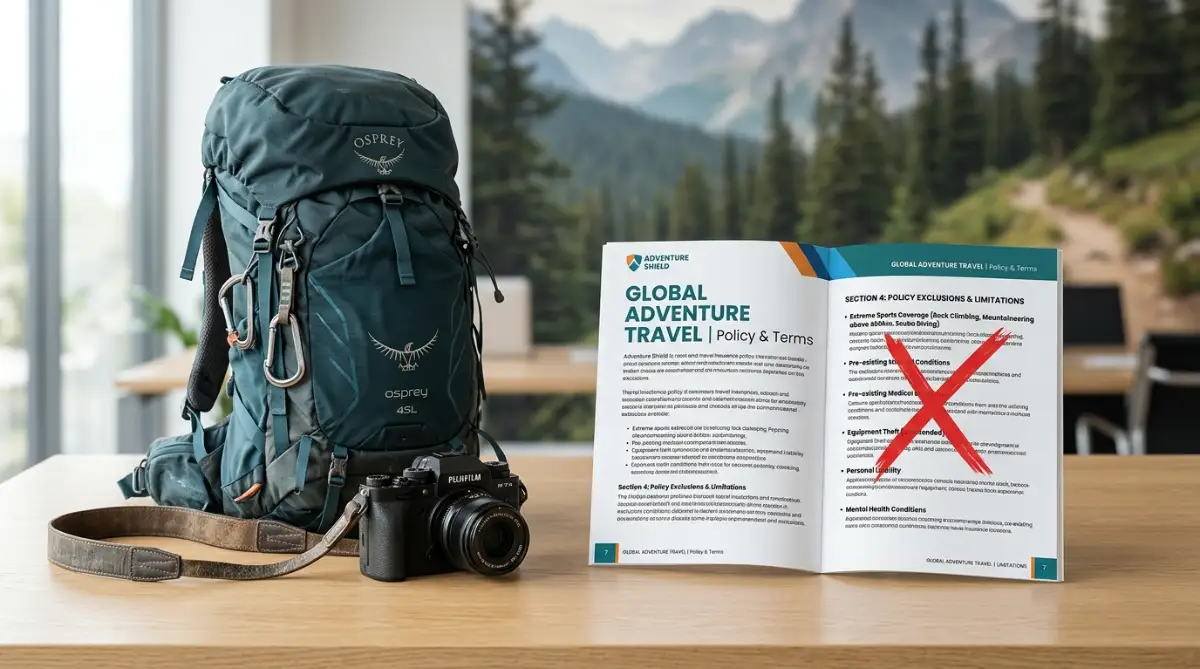
Extreme sports are another massive blind spot for adventurous travelers. Activities like skydiving, bungee jumping, and even scuba diving are often excluded from basic plans.
If you plan on doing anything more extreme than walking around a museum, you need to buy an adventure sports add-on. Do not assume your standard policy covers your mountain climbing expedition.

Leaving Items Unattended
Baggage protection sounds great until your laptop gets stolen from a café table while you went to the restroom. If you leave your belongings unattended in a public place, your claim for stolen items will be instantly denied.
You must act as if you do not have protection. Always keep your valuables within sight or locked in a secure hotel safe.
Another hidden trap involves traveling against government advice. If your government issues a strict "Do Not Travel" warning for a specific country, your coverage is automatically voided if you decide to go there anyway.
How to Choose the Right Plan for Your Journey
Not every trip requires the exact same level of protection. A weekend drive to a neighboring state needs a very different plan than a month-long trek through the Himalayas.
First, consider the total cost of your trip. If you are only spending a few hundred dollars on cheap flights and staying with a friend, expensive cancellation protection might not make sense.
However, if you are dropping five thousand dollars on a non-refundable luxury cruise, cancellation coverage is an absolute must. You should insure the exact amount of money you would lose if the trip falls apart.
Where to Compare and Buy Policies
Never buy the first policy you see at the airline checkout. Instead, use comparison engines (aggregators) like InsureMyTrip, Squaremouth, or Forbes Advisor to compare quotes from dozens of providers side-by-side.
For Digital Nomads and Long-Term Backpackers: If you travel full-time or bounce from country to country, standard plans might not fit. Look into specialized providers like SafetyWing or World Nomads, which offer subscription-based models and flexible extensions while you are already abroad.
If you travel frequently, an annual multi-trip plan is usually much cheaper than buying individual policies for every single flight. It covers you for a full year of adventures, saving you time and money.
Paying Attention to Deductibles
A deductible is the amount of money you have to pay out of your own pocket before the company starts paying the rest. A plan with a lower premium usually has a much higher deductible.
Always calculate if you can actually afford the deductible in a moment of panic. It is often smarter to pay a slightly higher premium upfront for a zero-deductible plan.
That way, if you need a quick visit to a local doctor for a severe cold, you will not have to pay anything out of pocket.
Navigating the Claim Process Without the Headache
The absolute worst time to figure out how to file a claim is when you are sitting in a foreign hospital room. You need to prepare your documents before you ever leave your house.
Save the 24/7 global assistance emergency phone number directly into your smartphone contacts. When an emergency strikes, you need to call them immediately.
Many companies require you to notify them before you undergo any major medical procedures. If you fail to call them first, they might refuse to pay the bill.
Keep a digital copy of every single receipt, police report, and medical diagnosis. If your bag is delayed, get a written confirmation letter from the airline staff before you leave the airport.
Without hard proof on paper, your claim is just a story. The more evidence you collect at the exact moment of the incident, the faster you will get your money back in your bank account.
Follow this exact 4-step checklist if an emergency happens:
- Call First: Save the 24/7 global assistance hotline in your phone. Call them before receiving major medical care. If you fail to call, they might deny the claim.
- Ask for "Itemized Bills": This is crucial. Insurance companies will not accept a generic credit card receipt. You must ask the foreign hospital for a detailed, itemized bill (preferably translated into English) showing exactly what treatments you received.
- Get a Police Report (For Theft): If your bag is stolen, you must file a local police report within 24 hours. Without a formal police report, your theft claim will be instantly denied.
- Keep Airline Proof: If your bag is delayed or lost by the airline, get a written Property Irregularity Report (PIR) from the airline desk before leaving the airport.
Without hard proof on paper, your claim is just a story. Collect evidence at the exact moment of the incident.
Mastering Your Travel Protection Strategy
Many people buy a policy, print the confirmation email, and never think about it again. That is a massive mistake that can leave you completely vulnerable abroad. You need a solid game plan to actually use your benefits when an emergency strikes out of nowhere.
One of the smartest things you can do is learn how to understand your insurance declaration page without confusion. This single document outlines your exact limits, your deductibles, and the specific phone numbers you must call. Print two physical copies of this page before you head to the airport.
Keep one copy in your carry-on bag and leave the other with a trusted family member back home. Having a digital copy on your phone is great, but a dead battery can ruin your access during a crisis. A physical piece of paper is a foolproof backup plan.
If you are planning an extended trip, you need to understand how primary and secondary coverages interact. Relying on the wrong type of plan can temporarily drain your savings.
Always strive to purchase primary medical coverage whenever possible. It saves you from draining your bank account while waiting months for a reimbursement check to arrive. Just like learning what is a deductible in health insurance a simple guide, knowing exactly how much you owe upfront is essential for managing your travel budget.
Pro Tip: I always take a quick video of my open suitcase before zipping it up for a flight. If an airline loses my luggage, I have time-stamped visual proof of every single clothing item and electronic device I packed, making the payout process incredibly smooth.
The Biggest Traps Travelers Fall Into
Common Mistakes
- Assuming your domestic health network covers international hospital visits automatically.
- Failing to call the 24/7 global assistance hotline before receiving medical care abroad.
- Leaving expensive electronics unattended in hotel lobbies or airport cafes.
- Participating in extreme sports like ATV riding without a specific adventure add-on.
- Paying cash for local doctor visits without getting an official written medical report.
Many people think standard protection plans act as a magical shield against any minor inconvenience. This false sense of security leads to reckless decisions and frustratingly denied payouts. For instance, ignoring local traffic laws while renting a scooter in Thailand will instantly invalidate your medical protection if you crash.
You must treat your travel policy with the same seriousness as your domestic policies. If you already know how to stop your auto insurance company from denying claims, you understand that strict documentation is everything. Without a formal police report for a stolen bag, the company will simply not believe your story.
Another massive pitfall is booking a trip while completely ignoring government travel warnings. The U.S. Department of State Travel Advisories issues clear safety levels for every country. If you travel to a region with a strict "Do Not Travel" warning, your entire protection plan becomes completely useless the moment you cross the border.
Quick Action Checklist
- Check your destination's specific medical requirements and safety warnings.
- Read the fine print to confirm your exact medical deductible amount.
- Save the 24/7 emergency hotline number directly to your phone favorites.
- Take clear photos of your packed luggage and all valuable electronics.
- Email a copy of your policy documents to yourself and a close family member.
When you face an unexpected crisis, panic is your worst enemy. If you do not follow the strict reporting rules, you will end up paying for everything yourself. Just as you would research what does comprehensive auto insurance actually cover in a crisis, you must know exactly what emergency steps your travel provider demands.
Your Blueprint for Stress-Free Travel
Securing the right protection plan is the ultimate foundation of a relaxing and safe journey. When you know exactly what is covered, you can finally stop worrying about the "what-ifs" and truly enjoy your vacation. A solid policy acts as a silent bodyguard, ready to step in when life throws unexpected challenges your way.
Take the time to compare limits, understand your personal health needs, and read those tricky exclusion clauses. It might feel tedious right now, but that small effort guarantees your financial safety abroad. Choosing the right protection is exactly like figuring out how to choose the right health insurance plan simple guide—it requires patience, but the long-term peace of mind is entirely worth it.
I have personally felt the intense relief of having a massive foreign hospital bill completely covered by my policy. My best advice is to never leave your home country without a printed copy of your coverage documents and the emergency phone number saved in your contacts. It completely changes the entire way you experience the world.
Which dream destination are you planning to visit next, and what specific coverage are you looking for? Let me know in the comments below!
Frequent Questions About Travel Protection Rules
Does my credit card travel protection cover medical emergencies?
Most premium travel credit cards offer excellent trip delay and cancellation benefits. However, their emergency medical coverage is often very limited or entirely non-existent. You should always read the specific benefits guide of your card before relying on it for overseas health issues.
Can I buy a policy after I have already started my trip?
A few specialized companies allow you to purchase post-departure protection, but it is extremely rare. Standard policies require you to buy the plan before you physically leave your home country. Buying it early also unlocks extra benefits like pre-existing condition waivers.
Will I get a refund if my visa application gets denied?
Visa denials are generally not covered under standard cancellation reasons. If you are traveling to a country with a strict visa process, you must buy a "Cancel For Any Reason" upgrade. This upgrade ensures you get a portion of your money back regardless of why you cannot travel.
Do these policies cover emergency dental work?
Yes, most comprehensive plans include a small allowance for sudden, acute dental pain or injury. This covers emergency extractions or temporary fillings to stop severe pain while abroad. Routine checkups, teeth cleanings, or lost crowns are never covered.
What happens if an airline goes bankrupt before my flight?
If an airline completely ceases operations due to financial default, a good policy will cover your lost ticket costs. However, you must check if your specific provider lists "financial default" as a covered reason. Purchasing the plan early usually secures this specific benefit.
Are natural disasters covered if they ruin my vacation?
If a sudden hurricane destroys your booked resort before you leave, your cancellation benefits will normally kick in. However, if a storm was already named and forecasted before you bought the policy, your claim will be denied. Timing is everything when dealing with weather-related claims.
Does travel protection cover mental health emergencies?
Standard policies almost always exclude psychological or psychiatric emergencies. If you need sudden treatment for a panic attack or severe depression abroad, you will likely have to pay out of pocket. You should consult a specialized broker if you specifically need mental health coverage overseas.
Can I cancel my trip because I am afraid to travel?
Standard plans will never let you cancel simply because you feel scared of an upcoming event or local news report. To cancel out of fear or general hesitation, you absolutely need a "Cancel For Any Reason" (CFAR) policy. CFAR plans usually refund up to seventy-five percent of your non-refundable costs.
Are pregnant travelers covered for medical issues?
Routine pregnancy care, normal childbirth, and morning sickness are universally excluded from standard travel plans. However, unforeseen complications of pregnancy are sometimes covered if they occur before a specific trimester limit. Always call the provider directly to confirm their exact pregnancy rules.
How long does it take to get a claim approved and paid?
If you submit a perfect claim with all required receipts and police reports, it usually takes fifteen to thirty days for approval. Missing documents or complicated hospital bills can delay the process for several months. Providing clear, organized evidence from day one drastically speeds up your payout.