
Reading Time: 12 Minutes
Difficulty Level: Beginner to Intermediate
Reviewed By: FinanceInfoIn Editorial Team
The Night I Learned What "Covered" Actually Means
It was just past two in the morning when I found myself under the fluorescent lights of an emergency vet clinic, watching my golden retriever Bailey shake on the exam table. She'd started limping out of nowhere that evening with no fall, no rough play, and nothing obvious. The vet wanted x-rays and pain meds right away, quoting the total cost just under a thousand dollars.
I didn't even hesitate handing over my card. I'd been paying for a pet insurance plan for nearly a year, and honestly, moments like this were the entire reason I'd signed up in the first place.
Then the denial letter showed up in my inbox about a week later.
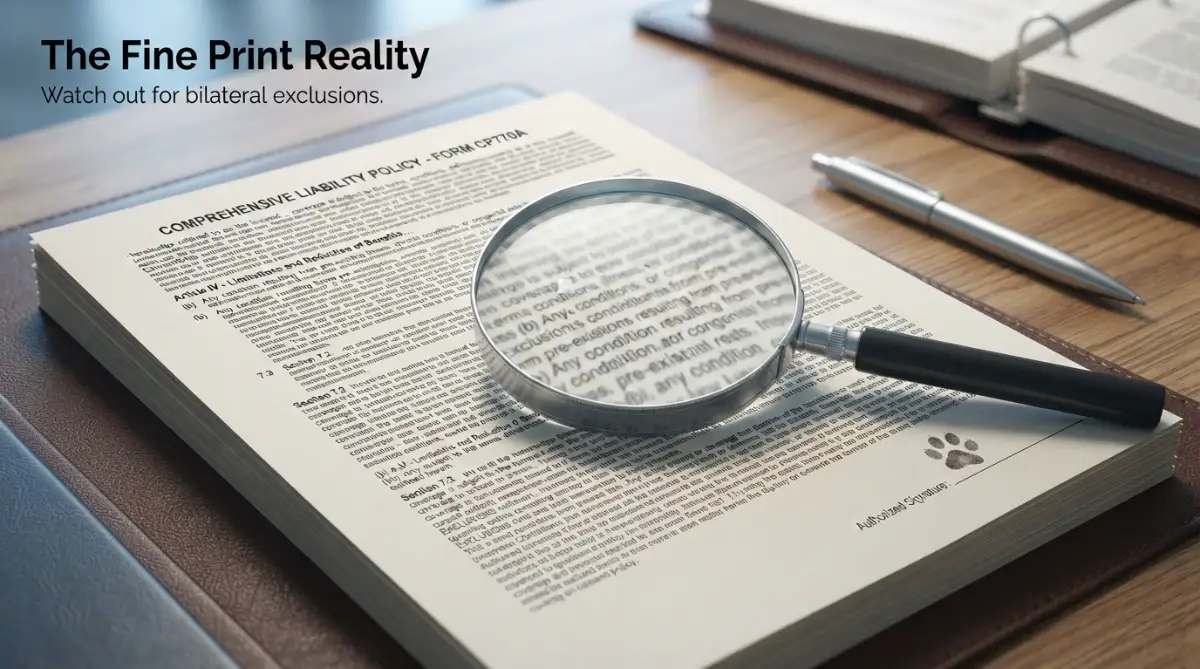
Not "partially covered." Not "we need more information." A flat no. Buried somewhere in the policy was a clause about "bilateral conditions," and because Bailey had a minor issue with her left knee before I bought the policy, any problem with her right knee was permanently off the table.
I hadn't caught that line when I signed up. Almost nobody does.
I was angry, honestly, and out roughly fourteen hundred dollars I hadn't planned for.
That's the lesson a lot of pet owners learn the hard way: paying your premium every month doesn't automatically mean every illness or emergency gets covered.
Why Pet Insurance Feels Confusing
Most people treat pet insurance the way they treat a smoke detector: install it, forget about it, and trust it'll do its job the one time it matters. But a pet policy is a legal contract packed with complex definitions, waiting periods, and payout limits. Most owners only start reading the fine print after something expensive has already gone wrong.
That's a rough time to start learning technical jargon. You're worried about your dog or cat, trying to make treatment decisions on the fly, and suddenly you're arguing with an adjuster about whether a comment your vet jotted down years ago counts as a symptom.
The financial hit is bad enough on its own. Having to fight an uphill battle while you're already stressed makes it so much worse.
The Short Version, If You're Skimming
-
A policy can genuinely help you without covering every single expense; that's normal, not a scam.
-
Pre-existing conditions remain the single biggest reason claims get denied.
-
One old note in a vet record, even without a formal diagnosis, is often enough to block a claim.
-
A problem on one knee, hip, eye, or ear can rule out coverage for the matching part on the other side.
-
Exam fees, deductibles, copays, and payout caps all chip away at what you actually get back.
-
The best time to understand your policy is before your pet gets sick, not after.
How Insurers Actually Define "Pre-Existing"
This is the part that catches people off guard the most. A pre-existing condition doesn't require a formal diagnosis or a vet visit specifically about the issue. If there's any note in your pet's file suggesting a symptom existed before your policy started, that's often enough for an adjuster.
Say you mentioned to your vet a while back that your dog seemed to be "scratching more than usual." You probably forgot about it within an hour, but the insurance company won't. If you file a claim later for an allergy-related skin condition, that single sentence in an old chart note can become the basis for a denial.
Understanding the truth about pet insurance and why pre-existing conditions are excluded can save you from unexpected financial surprises when you need help most.
What Happens the Moment You File a Big Claim
Once you submit a claim above a certain threshold, insurers typically pull your pet's entire medical history. That means records from your regular vet, emergency clinics, past shelters, and even clinics in other cities if you ever traveled together.
An adjuster then reviews years of notes looking for anything that predates your start date. This is where casual conversation becomes a liability.
If you're chatty with your vet tech, small talk sometimes ends up written into the permanent record. It's smart to request your pet's full medical file yourself so you know exactly what words are in there before an adjuster sees them.
The Bilateral Clause: Insurance's Sneakiest Trick
"Bilateral" simply means anything involving a matched pair, such as knees, hips, eyes, and ears. If your cat developed a cataract in one eye before your coverage began, most policies will exclude the other eye too, even if it never shows a single symptom.
The insurer's logic is that one side failing is evidence the other side is structurally likely to fail eventually. This is especially painful for cruciate ligament injuries in dogs.
If your dog tears one ligament and later damages the other, the second surgery can be entirely on you. Before buying any plan, search the contract specifically for bilateral-condition wording so you know what is at risk.
A Real Example of What You Actually Pay
Numbers make this much easier to picture, so here's a straightforward walk-through of how costs break down in real life.