
Reading Time: 10 Minutes

Difficulty Level: Beginner to Intermediate

Reviewed By: FinanceInfoIn Editorial Team

Table of Contents

  1. The Day My Portfolio Disappeared Without Warning
  2. Quick Summary
  3. Key Takeaways
  4. Breaking Down the Illusion of Wealth
  5. The Real Estate Analogy: Seeing the Unseen
  6. Decoding the Financial Metrics Step-by-Step
  7. The Secret Game of Venture Capitalists
  8. Actionable Steps to Protect Your Money

Quick Summary

Many investors buy digital assets looking only at the current market value, entirely ignoring the hidden future supply. When those locked coins are finally released into the market, the massive oversupply crushes the price. Understanding the gap between circulating coins and total promised coins is the single most effective way to avoid buying into a sinking ship. This guide breaks down exactly how to read these metrics before spending a single dollar.

Key Takeaways

  • Always check how many coins are locked away compared to the amount currently available for trading.
  • A massive gap between current value and fully diluted value indicates a high risk of future inflation.
  • Big private investors often dump their newly unlocked coins on regular retail buyers.
  • You can protect your money by studying the project's vesting schedule and tokenomics document.

The Day My Portfolio Disappeared Without Warning

I was standing in line at the local grocery store, staring at my phone screen with shaking hands. The cashier was waiting, but my debit card had just been declined for a simple basket of food. I had nervously transferred a large chunk of my rent and grocery money into a "top 20" digital asset the night before. I felt incredibly smart because the total market size looked massive and safe.

The project had billions of dollars in daily trading volume, and social media influencers were loudly claiming it was the next big thing. I thought I was early to a life-changing financial opportunity. I did not realize that I was walking blindly into a carefully designed financial trap.

While the current value of the project looked incredibly strong, I failed to notice one hidden detail. Over eighty percent of the total coin supply was locked up in private wallets belonging to early investors. Overnight, a massive portion of those locked coins was released into the open market. The sudden flood of new supply instantly crushed the price, wiping out half of my savings in a matter of hours.

This is the exact moment I learned the brutal difference between what a project is worth right now, and what it claims to be worth in the future. The mental stress of watching your hard-earned money vanish due to a metric you did not understand is completely devastating. You lose sleep, you wake up randomly at 3 AM to check charts, and you feel a deep sense of betrayal.

Millions of normal, hardworking people fall into this exact same trap every single day. They buy a digital asset thinking they found a solid investment, completely unaware that a tidal wave of new supply is about to hit the market. Your peace of mind gets destroyed simply because nobody taught you how to read the fine print.

Breaking Down the Illusion of Wealth

To stop this from happening to you, we need to completely change how you look at value. The numbers displayed on most tracking websites only tell you half of the story. If you only look at the first number they show you, you are flying completely blind.

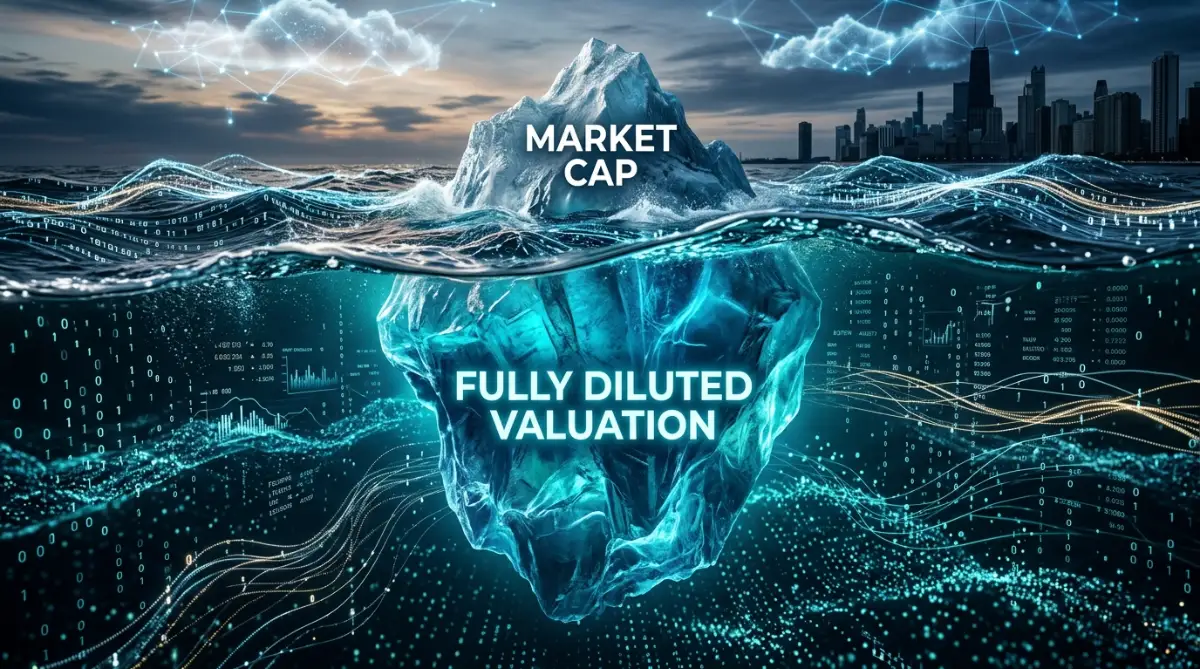
Market Capitalization is simply the current price of one coin multiplied by the number of coins currently available to trade. It represents the present reality. It shows you exactly how much money the public is moving around today.

Fully Diluted Valuation (FDV) is an entirely different beast. This number takes the current price and multiplies it by every single coin that will ever exist for that project. It calculates a theoretical future where every locked, hidden, and promised coin is suddenly available.

Here is a direct comparison of how these two metrics function in the real world.

Metric NameWhat It Actually MeasuresLevel of Immediate RiskWhy It Matters For You
Market CapValue of circulating supplyModerate RiskShows current demand
Fully Diluted Valuation (FDV)Value of total maximum supplyExtremely High RiskShows future inflation
Supply GapThe difference between bothMaximum DangerTells you who is trapped


The Real Estate Analogy: Seeing the Unseen

Imagine you are looking to buy a house in a brand-new neighborhood. The developer tells you there is only one house built and available for sale. Because it is the only house on the market, multiple buyers fight over it, driving the price up to one million dollars.

You decide to buy it, feeling proud of your expensive new property. You believe the entire neighborhood is a premium, high-value area. The current "market cap" of the neighborhood is one million dollars because only one house exists.

However, you completely ignored the developer's blueprint. The blueprint clearly shows they are going to build and release 99 more identical houses next month. When those 99 houses hit the market, the supply becomes massive, but the demand stays the same.

Your house is no longer worth one million dollars. The price collapses because buyers now have 100 choices instead of just one. The "Fully Diluted Valuation" of that neighborhood was actually 100 million dollars, which was completely unrealistic. This is exactly what happens when you buy a low float, high FDV digital asset.

Decoding the Financial Metrics Step-by-Step

If you want to stop acting as exit liquidity for wealthy insiders, you need to understand the mechanics of supply and demand. You cannot control the market, but you can control what you choose to buy.

When a project launches, the founders rarely release all the coins to the public at once. They artificially restrict the supply. This makes the coin look rare and drives the price up very quickly. Regular buyers see the price going up and experience intense fear of missing out.

They rush in to buy the small amount of circulating supply. Meanwhile, venture capitalists and early private investors are sitting on mountains of locked coins. They bought these coins for pennies long before the public ever heard about the project.

Let us look at how the ratio between these numbers can completely change the safety of your investment.

Project ConditionCirculating SupplyHidden Locked SupplyVerdict on Investment
Healthy Distribution80% to 100%0% to 20%Generally Safe to Hold
Warning Zone40% to 60%40% to 60%Requires Deep Research
Red Flag Trap5% to 20%80% to 95%Extremely Dangerous


Expert Tip:

Always look for the specific date when private investor coins are unlocked. You can usually find this in the project's official documentation or "whitepaper". If a massive unlock is happening next week, simply wait. Do not buy before the floodgates open.

The Secret Game of Venture Capitalists

You might be wondering why projects lock up their supply in the first place. The official story is that locking up coins keeps the founders dedicated to the project long-term. If they cannot sell right away, they are forced to build a good product.

While this sounds great on paper, the reality is entirely different. By keeping the circulating supply extremely low, the project team can artificially inflate their Market Cap ranking. A higher ranking attracts more ordinary retail investors who assume the project is a safe bet.

Watch This Breakdown to See How Insiders Operate

If you want to see exactly how these private investors plan their exits and drop their bags on unsuspecting retail buyers, you need to watch this visual breakdown. It exposes the hidden mechanics behind sudden price drops.

Once the lock-up period ends, a process called "vesting" begins. Vesting means the hidden coins are slowly released into the market every day, week, or month. Every time new coins enter the circulating supply, they dilute the value of the coins you already hold. It is exactly like a government printing too much money.

I used to buy tokens strictly because they were trending on social media and had a cool logo. I completely ignored the vesting schedules because the math felt overwhelming. My lazy approach cost me thousands of dollars when those private investors quietly dumped their unlocked bags, leaving me holding completely worthless assets.
Spotting the Red Flags Before You Buy

You have the power to protect your portfolio by doing a simple five-minute check before making any purchase. Never trust a social media post that only talks about the price going up. Always do your own supply check.

You need to compare the Market Cap directly against the Fully Diluted Valuation. If the Market Cap is ten million dollars, but the FDV is one billion dollars, run away. That means 99 percent of the supply is hidden and waiting to crush you.

Here is a quick checklist of warning signs that show a project has predatory tokenomics.

Warning SignWhat It Looks LikeWhy You Should Avoid It
Insane Valuation GapMarket Cap is $10M, FDV is $2BYou are buying into massive future inflation.
Team DominanceFounders hold 50% of total supplyCentralized control leads to easy market dumping.
Aggressive Unlocks10% of total supply unlocks in one dayInstant price crash due to sudden selling pressure.


Actionable Steps to Protect Your Money

First, find a reliable tracking website that clearly displays both metrics side by side. Make it a strict habit to never look at the price chart until you have looked at the supply numbers.

Next, actively search for the project's inflation rate. Ask yourself how many new coins are entering the market every single day. If the demand for the project is not growing faster than the inflation rate, the price is guaranteed to go down. It is basic mathematics.

Finally, learn to walk away from hyped projects. When a new asset launches with a massive valuation but almost zero circulating supply, it is designed to extract money from you. Keep your hard-earned cash safe, wait for the hype to die down, and only invest in projects where the supply distribution is honest and transparent.


Taking Control: Advanced Strategies for Smart Buyers

Now that you understand the hidden dangers of massive supply gaps, it is time to build a strong defense. You do not have to be a math genius to protect your portfolio from wealthy insiders. You simply need to change where you look for information before spending your hard-earned money.

The most successful everyday investors completely ignore social media hype and look directly at the math. They track something called the inflation rate of a digital asset. Just like a government printing too much money destroys the value of a dollar, a project printing too many coins destroys your investment.

To find this information, you need to dig into the actual project documents. This means learning how to read a crypto whitepaper like a pro step-by-step so you can spot the hidden supply schedules. The whitepaper is the official blueprint, and it will tell you exactly when the founders are allowed to sell their locked coins.

If you see a project where the supply increases by fifty percent in a single month, you are looking at a guaranteed price drop. The only way a price can survive that much new supply is if thousands of new buyers suddenly enter the market. Relying on sudden, massive public demand to save your investment is a terrible financial strategy.

Instead, look for projects that have real, measurable utility right now. Are people actually paying fees to use the network, or are they just trading the coin hoping to get rich? A project with a high fully diluted valuation can only survive if the network generates real revenue. You can track this revenue using free on-chain data tools provided by trusted blockchain research institutions like Messari, which offer deep analytical insights into actual user activity.

Here is a breakdown of how different supply inflation rates should impact your buying decisions.

Inflation Rate LevelMarket Impact RealityYour Smartest Move
Less than 5% annuallyVery healthy, similar to traditional marketsSafe to research further for long-term holding
10% to 20% annuallyModerate dilution riskTrade carefully and monitor network growth
50% or higherExtreme danger of rapid price collapseStay entirely away, you will become exit liquidity


Pro Tip: I always set a calendar alert for major token unlock events. If a project I like has a massive unlock happening on a Friday, I wait until the following Tuesday to even think about buying. The price almost always drops after the private investors dump their bags, giving you a much safer entry point.

Once you find a healthy asset with a safe supply schedule, you still have to protect your digital property. Keeping your coins on a public exchange leaves you vulnerable to corporate bankruptcy or hacking. Taking a few easy security steps to secure your crypto wallet is just as important as reading the valuation metrics.

The Most Dangerous Traps New Buyers Fall Into

Even when people know about fully diluted valuation, they still let their emotions override their logic. One of the biggest mistakes I see involves the illusion of a cheap price. You might see a coin priced at a fraction of a penny and think it is an amazing bargain.

You tell yourself that if the coin just reaches one dollar, you will be a millionaire. This is a massive emotional trap. The price of a single coin means absolutely nothing without looking at the total maximum supply.

If a project has one hundred trillion coins in existence, it is mathematically impossible for the price to reach one dollar. There is not enough money on planet Earth to support that valuation. You have to stop looking at the unit price and start looking at the actual market size compared to the locked supply.

Another highly damaging mistake is buying immediately after a major price crash without checking why it crashed. You might think you are "buying the dip" and getting a great discount. However, if the crash happened because millions of locked tokens were just released into the market, that is not a dip. That is a permanent devaluation of the asset.

Before you interact with any digital asset, you should also understand how the underlying code handles these supply mechanics. Learning smart contract basics helps you see if a founder has the secret power to print endless tokens whenever they want. If a developer can change the total supply with a single line of code, your money is never safe.

Here is a simple matrix showing the difference between emotional reactions and logical responses when dealing with digital assets.

What You See on the ScreenThe Common Emotional MistakeThe Logical, Math-Based Action
Coin is priced at $0.00001Buying because it looks cheapChecking the total supply to find the real FDV
Huge social media hypeFear of missing out (FOMO)Looking for the early investor unlock dates
Sudden 40% price dropBlindly buying the "discount"Checking if a massive token unlock just happened


Quick Action Checklist

  • Search the name of your token alongside the words "vesting schedule" or "tokenomics".
  • Locate the exact percentage of coins currently held by the community versus private founders.
  • Identify the exact dates when new locked coins will flood the open market.
  • Compare the current circulating market cap to the fully diluted valuation.
  • Refuse to buy if the gap between those two numbers is extremely wide.

Your Final Blueprint for Safe Investing

You now possess a skill that ninety percent of retail investors completely lack. You know how to look behind the curtain and spot the hidden supply traps that destroy portfolios. By refusing to blindly trust current market caps, you instantly protect yourself from becoming someone else's exit strategy.

This knowledge gives you incredible peace of mind when you navigate digital markets. You no longer have to guess why a chart is suddenly crashing, because you already checked the inflation schedule. If you want to completely remove the stress of timing these volatile markets, learning how to use dollar-cost averaging to survive digital asset volatility is your next smartest move.

I stopped trying to catch the next rocket and started playing defense with my money years ago. My entire financial life changed when I stopped looking at unit prices and started respecting fully diluted valuations. You have worked way too hard for your money to let wealthy insiders use you as their personal liquidity pool.

Which digital asset are you going to research today using these new supply rules? Let me know in the comments below!

Common Questions About Crypto Supply Dynamics

What does market cap actually tell me?

Market cap shows you the total monetary value of all the coins currently available to trade on the open market. It gives you a snapshot of current demand. It does not tell you anything about hidden or future supply.

Why is fully diluted valuation so risky?

This metric assumes all locked, future, and hidden coins are available right now at today's price. If a massive amount of new coins hits the market, the price per coin will drop drastically. The FDV reveals the true weight of upcoming inflation.

How do venture capitalists make money on high FDV projects?

Early private investors buy massive amounts of locked tokens for a fraction of a penny. When the project launches, they use marketing hype to pump the circulating market cap. Once their lock-up period ends, they sell their cheap coins to the public at huge profits.

Can a project survive a massive token unlock?

Yes, but only if the actual real-world demand for the project is growing faster than the new supply. If a network has millions of active, paying users, the market can absorb the new coins. However, this is extremely rare in highly speculative markets.

Why do projects lock up their tokens at all?

The official reason is to force founders to stay committed to building the project over a long period. The hidden reality is that restricting supply artificially inflates the initial launch price. This helps the project look much more successful than it really is.

Where can I find the unlock schedule for my coins?

You should always read the project's official whitepaper or official documentation pages. There are also free tracking websites that aggregate vesting schedules for the top digital assets. Never buy without looking at this schedule first.

Does inflation affect digital assets like it affects regular money?

Absolutely. When how global inflation directly impacts bitcoin valuation is studied, you see that supply and demand rules apply everywhere. Printing more tokens always dilutes the purchasing power of your existing portfolio.

What is a safe gap between market cap and FDV?

There is no perfect number, but a healthy project usually has at least seventy to eighty percent of its total supply already circulating. If only ten percent of the supply is circulating, you are walking into a highly dangerous trap.

Should I buy cheap coins hoping they reach one dollar?

No, this is a terrible strategy based purely on emotion. A coin priced at a fraction of a penny usually has trillions of coins in its total supply. Reaching one dollar would require more money than exists in the global economy.

How can I grow my portfolio without falling for these traps?

Focus heavily on education, ignore social media influencers, and stick to projects with fair, transparent supply distribution. Understanding how to grow your digital asset portfolio without losing sleep requires patience and a strict refusal to buy highly inflated assets.

Trusted Legal Resources

Legal & Financial Disclaimer

The information provided in this article is strictly for educational and informational purposes only. It does not constitute financial, investment, legal, or tax advice. The digital asset market is highly volatile, and you can lose your entire investment. FinanceInfoIn and its team members are not licensed financial advisors. Always conduct your own independent research and consult with a certified financial professional before making any investment decisions.

About the Author

Reviewed by Mithun Halder (Personal Finance & SEO Expert) & The FinanceInfoIn Editorial Team

The FinanceInfoIn Editorial Team researches personal finance, investing, insurance, mortgages, cryptocurrency, and consumer financial topics. Every article is carefully reviewed to provide clear, practical, and trustworthy educational information based on credible sources and industry best practices.

ยฉ2026 FinanceInfoIn. All rights reserved.