

Reading Time: 12 Minutes
Difficulty Level: Beginner to Intermediate
Reviewed By: FinanceInfoIn Editorial Team
Table of Contents
- The Reality of Hitting the Sell Button During a Crash
- Quick Summary
- Key Takeaways
- Breaking Down the Basics: What Exactly is Crypto Liquidity?
- The Order Book: Your Best Friend or Worst Enemy
- How Thin Markets Create Dangerous Slippage
- Market Depth: The Invisible Shield Against Volatility
- Why Flash Crashes Happen When You Least Expect Them
- Pro Strategies to Protect Your Portfolio
Quick Summary
Crypto liquidity determines how easily you can buy or sell an asset without affecting its price. During sharp market movements, deep order books prevent massive price drops, known as slippage. If market depth is thin, even a medium-sized trade can cause a sudden flash crash. Understanding these mechanics helps traders protect their investments when panic sets in.
Key Takeaways
- High liquidity means you get the exact price you want when executing a trade.
- Market depth acts as a buffer against sudden and aggressive market sell-offs.
- Slippage happens when there are not enough buyers or sellers at your chosen price point.
- Trading in low-volume coins carries a hidden risk of getting trapped during market panic.
The Reality of Hitting the Sell Button During a Crash
I will never forget the sinking feeling in my stomach on a random Tuesday evening. I was watching the charts on my phone while waiting in line at the grocery store. Suddenly, a mid-cap coin I held started dumping hard.
Panic kicked in, and I quickly hit the "market sell" button to secure my remaining profits. The current price on the screen showed a decent number, so I thought I was safe. But when the trade actually went through, my heart dropped.
My order was filled at a price nearly thirty percent lower than what I saw on the screen. I stood there staring at my wallet balance, completely confused. How could a coin drop that much in a fraction of a second?
That painful grocery store moment was my harsh introduction to the hidden dangers of low crypto liquidity. When the market panics, the numbers on your screen mean absolutely nothing if there is no actual money waiting to buy your bags.
Breaking Down the Basics: What Exactly is Crypto Liquidity?
Let us make things incredibly simple to understand. Imagine you own a one-ounce gold coin and you want to sell it for cash right now. If you walk into any jewelry store, you can sell it instantly at the current market rate.
That is what we call a highly liquid market. There are always willing buyers and sellers ready to do business at fair prices. Now, imagine you are trying to sell a very rare, weirdly shaped modern art sculpture.
You might know the sculpture is worth ten thousand dollars, but finding someone willing to hand you that exact amount of cash today is almost impossible. You might have to lower your price to three thousand dollars just to get rid of it. That is a low liquidity market.
In the crypto world, liquidity refers to how easily a token can be swapped for cash or stablecoins without changing the actual market price. When a coin has high liquidity, you can sell millions of dollars worth of it, and the price will barely move.
When a coin has low liquidity, even a tiny trade can send the price crashing down.
The Order Book: Your Best Friend or Worst Enemy
To truly grasp how price movements work, you have to look under the hood of an exchange. Every major trading platform uses something called an order book. This is simply a digital list of everyone who wants to buy and everyone who wants to sell.
The buyers place their orders at specific lower prices, forming what we call bids. The sellers place their orders at higher prices, forming the asks. The gap between the highest buyer and the lowest seller is known as the spread.
When things are calm, the order book is usually stacked heavily on both sides. Buyers and sellers are actively trading, keeping the spread incredibly tight. But during sharp price movements, this entire structure can collapse in seconds.
If bad news breaks out, buyers instantly cancel their bids and step away from the market. Suddenly, the order book becomes completely empty on the buying side. When panicked sellers hit the market sell button, their orders crash through the empty book, searching for any available buyer.

How Thin Markets Create Dangerous Slippage
When buyers disappear from the order book, a terrifying phenomenon called slippage occurs. Slippage is the difference between the price you expect to get and the price you actually receive. It is the exact trap I fell into during my grocery store disaster.
If you want to sell one thousand tokens at one dollar each, you need buyers waiting exactly at the one-dollar mark. If the order book only has buyers for one hundred tokens at that price, your remaining nine hundred tokens will automatically sell to the next available buyers.
Those next buyers might be waiting all the way down at eighty cents, fifty cents, or even lower. Your single order slides down the order book like a rock falling down a cliff. You end up destroying your own portfolio value just by trying to exit.
Expert Tip
Always check the actual volume of the specific trading pair you are using, not just the overall volume of the coin. Sometimes a coin has high volume against USDT, but terrible volume against BTC. If you trade on the wrong pair, you will suffer massive slippage.
Do not let unexpected market drops steal your hard-earned money. Watch this quick breakdown on how slippage destroys profits and how to avoid it forever.
Market Depth: The Invisible Shield Against Volatility
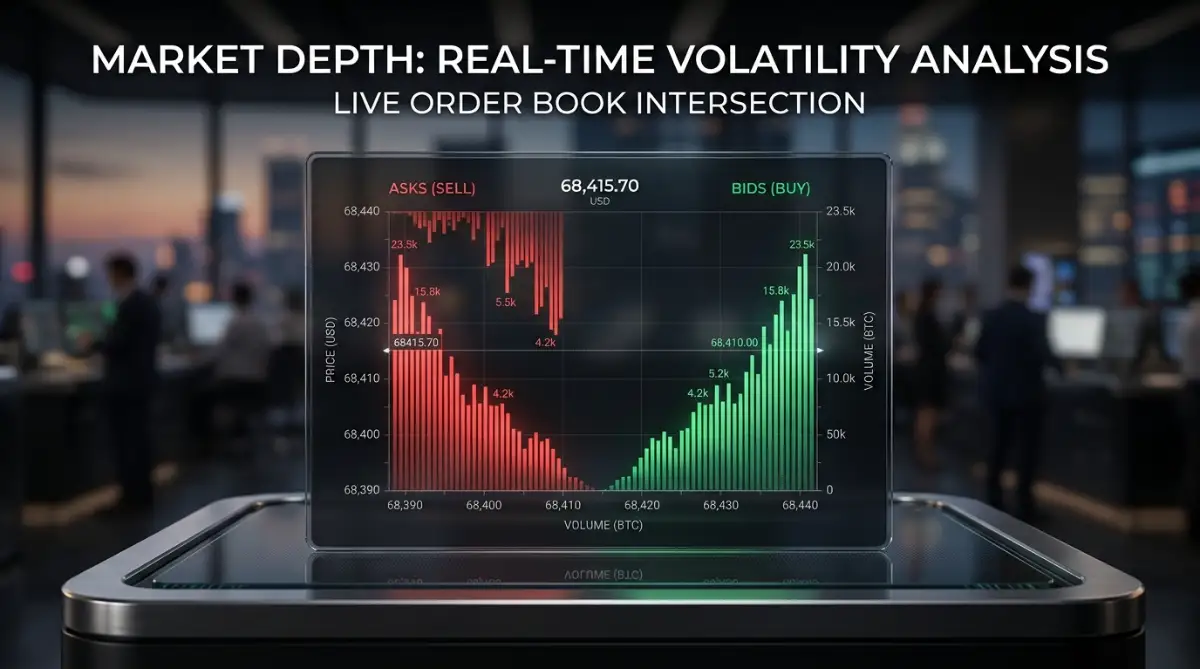
Market depth is the visual representation of the order book. It shows you exactly how much money is waiting to buy or sell at different price levels. Think of market depth as a thick brick wall protecting the price of an asset.
If a large seller comes in, they throw their coins at the buy wall. If the wall is thick and full of heavy buy orders, the large seller will be completely absorbed. The price will barely drop, and the market will continue as normal.
However, if the market depth is thin, it is like throwing a bowling ball through a paper wall. There is nothing to absorb the impact of the heavy selling pressure. The price will aggressively collapse until it finally hits a solid level of buyers far below.
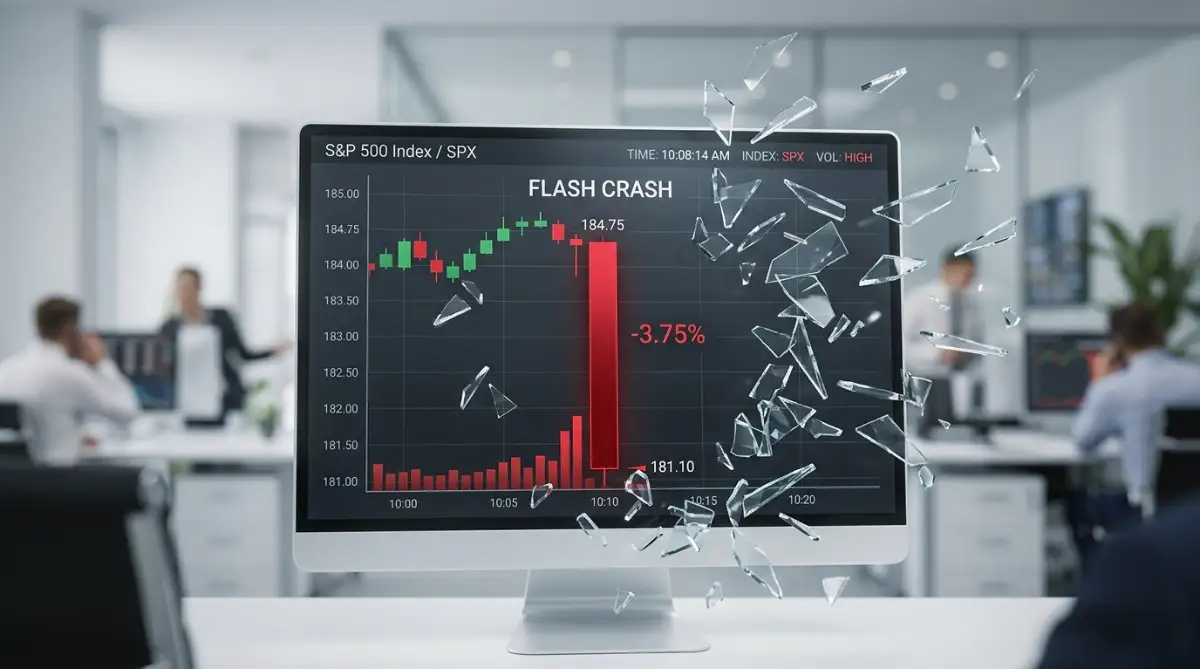
This is why looking at a basic line chart is never enough to understand the market. A coin might look perfectly stable on a regular chart, but its market depth could be completely hollow. One large market order is all it takes to ruin the illusion of stability.
Pro Tip
I used to completely ignore market depth charts because they looked too complicated. My biggest turning point was realizing that the depth chart is literally a map of where the big players have placed their money. I never enter a large trade now without checking if there is a solid wall supporting my entry price.
Why Flash Crashes Happen When You Least Expect Them
A flash crash is one of the most terrifying events in crypto. It happens when the price of a coin drops by an insane amount—sometimes fifty percent or more—in just a few seconds. Almost immediately, the price bounces right back to where it was.
These events are the direct result of a temporary liquidity crisis. Imagine a scenario where trading bots are managing most of the buy and sell orders on