
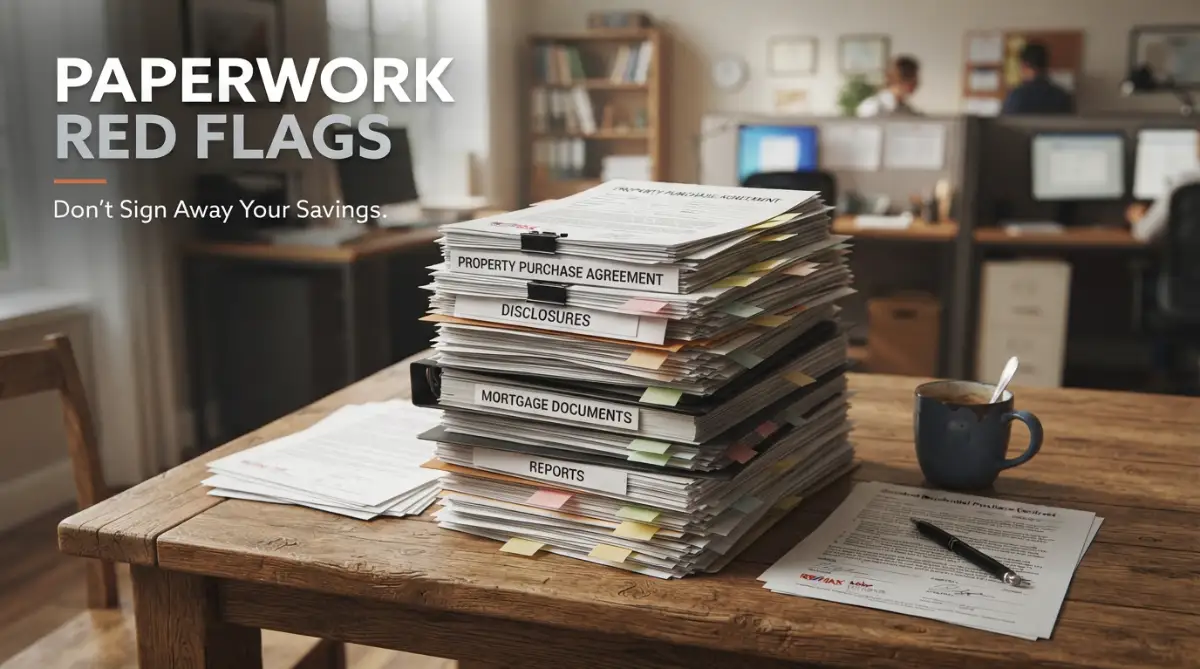
Reading Time: 13 Minutes
Difficulty Level: Beginner to Intermediate
Reviewed By: FinanceInfoIn Editorial Team
The Hidden Trapdoors in Your Dream Home's Contract
It was almost 11 p.m. and I was still at the kitchen table, laptop open, coffee gone cold, reading a purchase agreement for the third time that week. Months of house hunting, comparing listings, arranging financing, and worrying someone else would beat me to an offer had left me exhausted in a specific way — the kind where you just want to be done, not necessarily done right. My realtor had already texted asking if I'd be ready to sign in the morning. I typed "yes" before I'd finished the page I was on.
Then, on page eleven, buried under a paragraph about utility access, I found a clause giving the local water authority permanent rights to dig through the backyard for a stormwater line — no notice required, no compensation owed. The same backyard I'd already picked out a swing set for.
Nobody flagged it for me. Not my agent, not the seller's side. I found it because I happened to still be awake and stubborn enough to keep reading.
Here's the part nobody says out loud: the paperwork isn't neutral. It's written to define obligations and manage risk for the people who drafted it — the seller's attorney, the brokerage, the lender — not to look out for you specifically. Most of the time that doesn't matter, because most contracts are fine. But "most of the time" isn't a guarantee, and the one time it fails you, it can be a five- or six-figure mistake.
A quick note before we go further: exact rules around contingencies, title insurance, and disclosure requirements vary by state and country. Everything here is general, practical guidance — always get a local real estate attorney or solicitor to look at your specific contract before you sign.
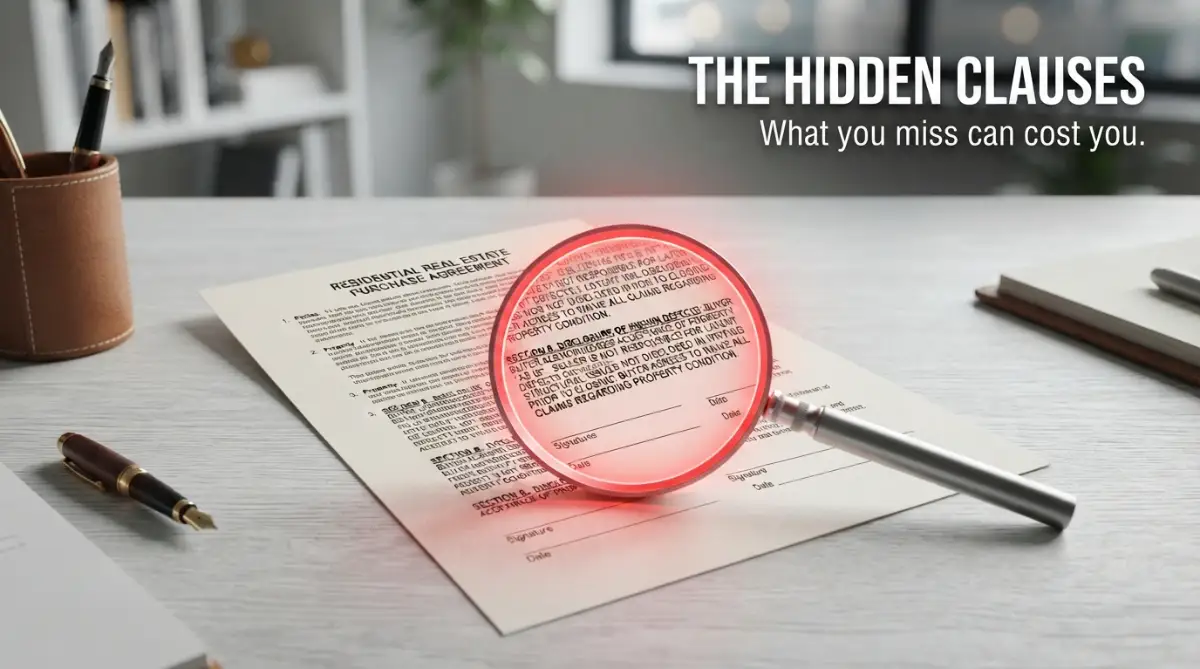
Table of Contents
-
Quick Summary
-
Key Takeaways
-
The "As-Is" Clause Isn't as Harmless as It Sounds
-
What Contingencies Actually Buy You
-
The Real Math Behind a Waived Appraisal
-
Title Searches, Liens, and the Insurance Nobody Explains Properly
-
HOA Rules and Zoning: The Paperwork Everyone Skips
-
Reading Your Closing Disclosure — and Staying Off a Fraudster's List
-
Who's Actually Representing You
-
The Mistakes Even Careful Buyers Make
-
A Step-by-Step Way to Sign Without Regret
-
What to Have Ready Before You Sign
-
Frequently Asked Questions
Quick Summary
The biggest risks in a home purchase almost never show up at the closing table — they're sitting quietly in the documents buyers rush through days or weeks earlier: vague "as-is" wording, a contingency deadline nobody calendared, a lien nobody caught, an HOA with an empty reserve fund. Catch these while you still have leverage and you can renegotiate, ask for repairs, or walk away with your deposit. Miss them, and you're the one who lives with the hidden costs of buying your first home that will break your budget for the next thirty years.
Key Takeaways
-
"Standard contract" means the seller's side wrote it — not that it protects you.
-
Contingencies are what let you keep your earnest money deposit when something goes wrong. Track every deadline.
-
A title search isn't a formality; liens and disputed ownership become your problem the moment you close.
-
HOA reserve funds matter as much as the HOA rules themselves.
-
Your final Closing Disclosure should match your original Loan Estimate closely — if it doesn't, ask before you sign.
The "As-Is" Clause Isn't as Harmless as It Sounds
Somewhere in most purchase contracts is a line about the condition of the property. Sellers like to describe an "as-is" clause as routine, especially on an older home, and sometimes it genuinely is. But it shifts real risk onto you.
In plain terms, it means the seller isn't promising to fix anything — a leaking roof, faulty wiring, a damp basement, a cracked foundation you can't see yet. Whatever's wrong becomes your bill the day after closing, known or not.
I wouldn't sign an "as-is" contract without a genuinely thorough, independent inspection first, and even then you're accepting some risk. Sometimes the clause isn't labeled clearly — it's buried in a disclosures paragraph, phrased something like "buyer accepts the property and all defects, whether patent or latent." If you see wording like that, ask two things: can it come out entirely, or is the seller willing to drop the price enough to cover repairs you can't yet see coming?
What Contingencies Actually Buy You
Contingencies are the clauses that let you back out of a deal — and keep your deposit — if something specific goes wrong before closing. Think of them as your exits. Without them, you don't have any.
The most expensive mistake isn't usually a missing contingency — it's a rushed one. A 3-day financing deadline sounds fine until you realize most lenders can't finish underwriting that fast, and the clock doesn't stop because you're busy.
The moment you get a draft contract, put every deadline into your phone calendar with a reminder 48 hours ahead. Quietly missed deadlines are one of the most common ways buyers lose a five-figure deposit.